上传

RJXA's Christmas approaches, it's time to refresh your fashion collections! Explore our high-quality lace, perfect for festive attire. Inquire now to enjoy holiday specials!

Member Center
Exit
Data is empty
0
qr Code Url

Scan the QR code to visit the mobile website

  • Home
  • Industrial
  • Renewable
  • Building & Home
  • Water Treatment
  • Automation
  • Kitchen
Home -News -Industrial Components -
Metal Pipes & Bending
-
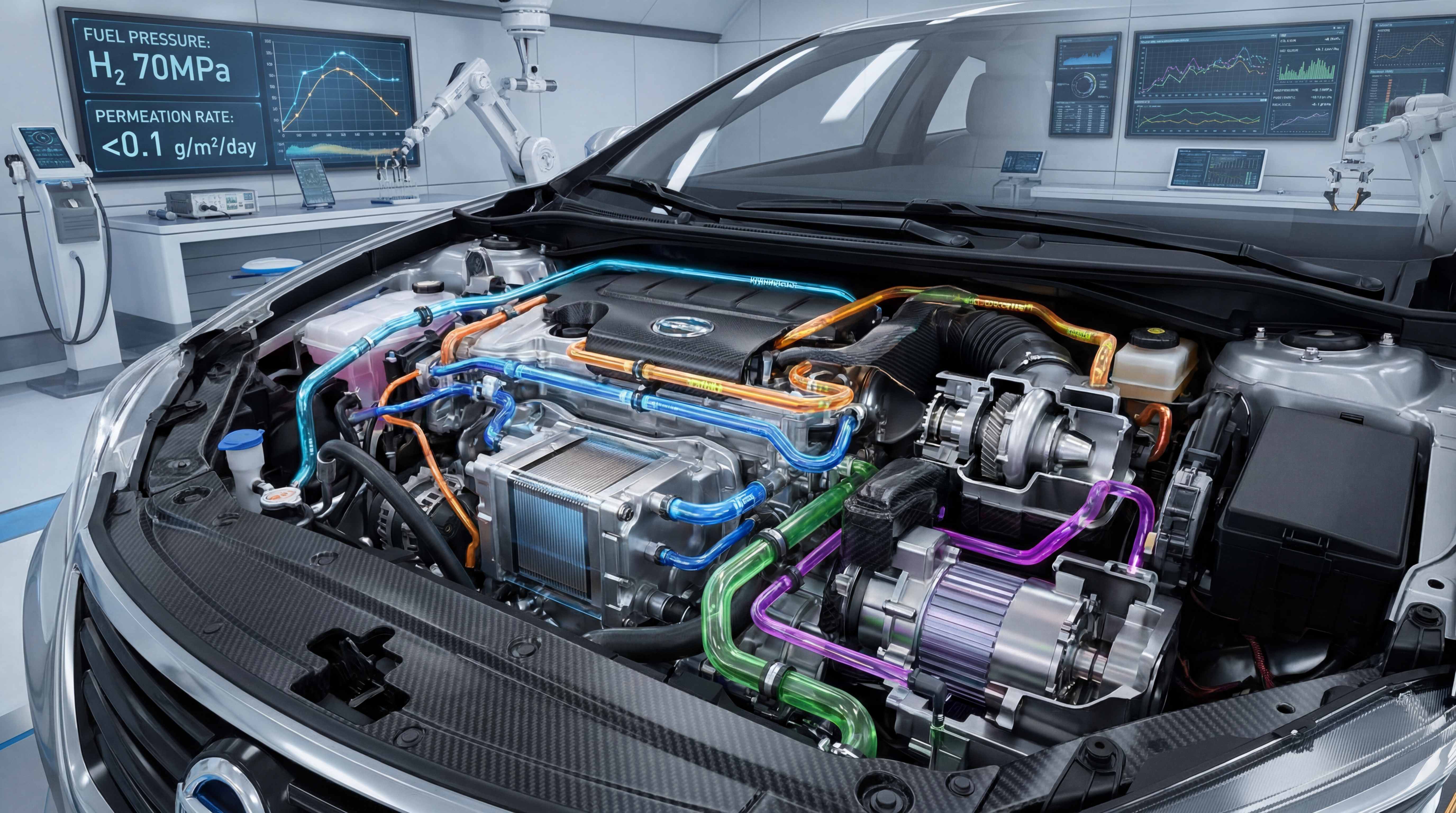
Future fuel line design concept showing hydrogen pressure, low permeation data and advanced vehicle fluid routing in a laboratory environment
2026-06-01

Future Fuel Line Design: How Hybrid Vehicles, Alternative Fuels and Aftermarket Demand Are Changing the Industry

Fuel line design is entering a new phase. Even as electric vehicles grow, fuel systems remain important in hybrids, range extenders, performance vehicles, commercial fleets, off-road machinery and global aftermarket repair. This article explains how alternative fuels, low-permeation requirements, lightweight materials, supplier capability and future service demand are reshaping fuel line products.
Learn more
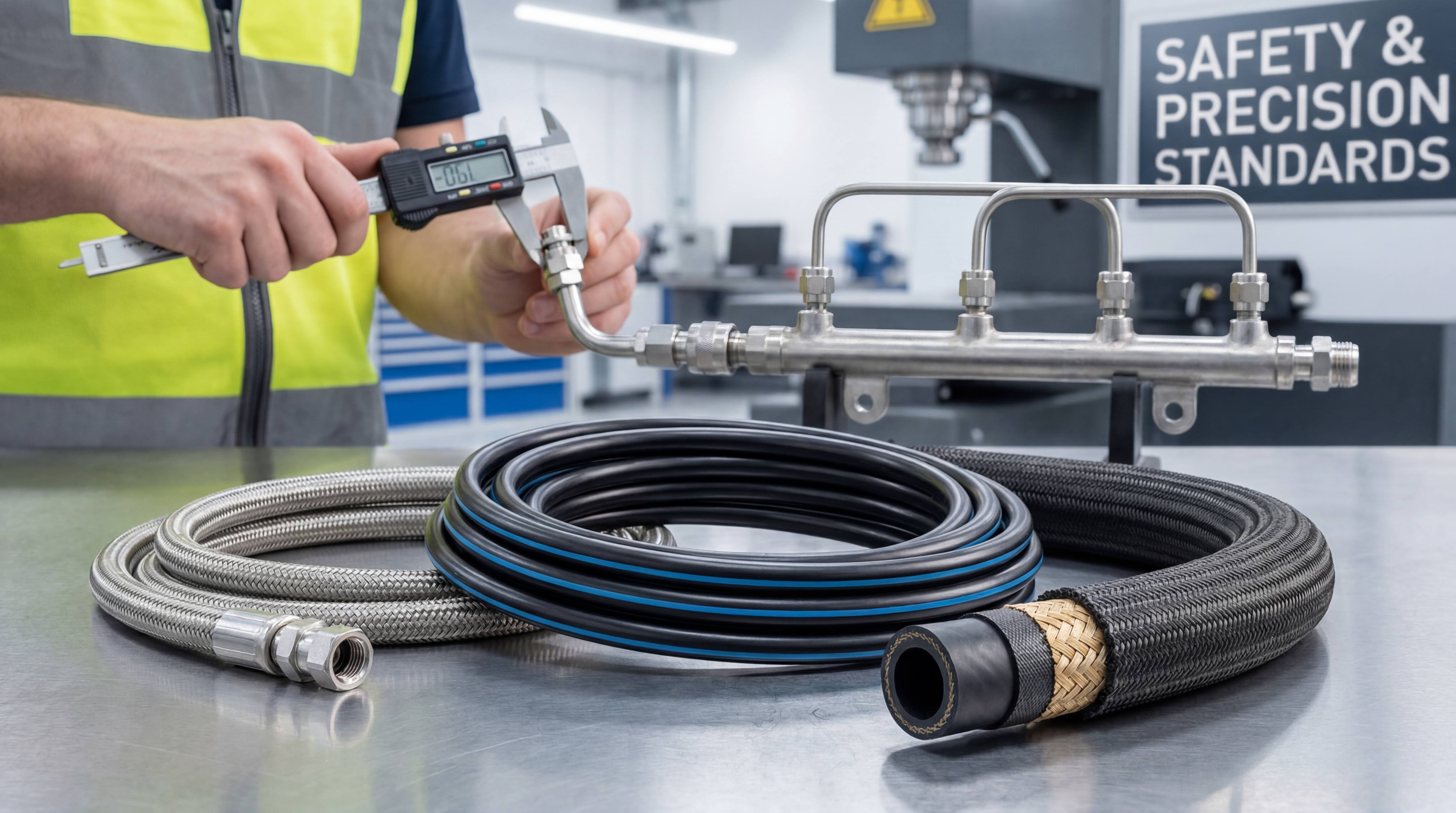
Fuel line quality inspection with braided hose, nylon tubing, metal fuel rail and precision measurement in a standards lab
2026-06-01

Fuel Line Standards and Quality Testing: What B2B Buyers Should Check Before Sourcing

Fuel line sourcing is not only about size, price and appearance. B2B buyers must evaluate fuel line standards, pressure ratings, material compatibility, batch consistency, connector quality, test documentation and supplier reliability before choosing fuel hoses, tubing or complete fuel line assemblies. This guide explains how professional buyers can reduce sourcing risk and build a stronger fuel line supply chain.
Learn more
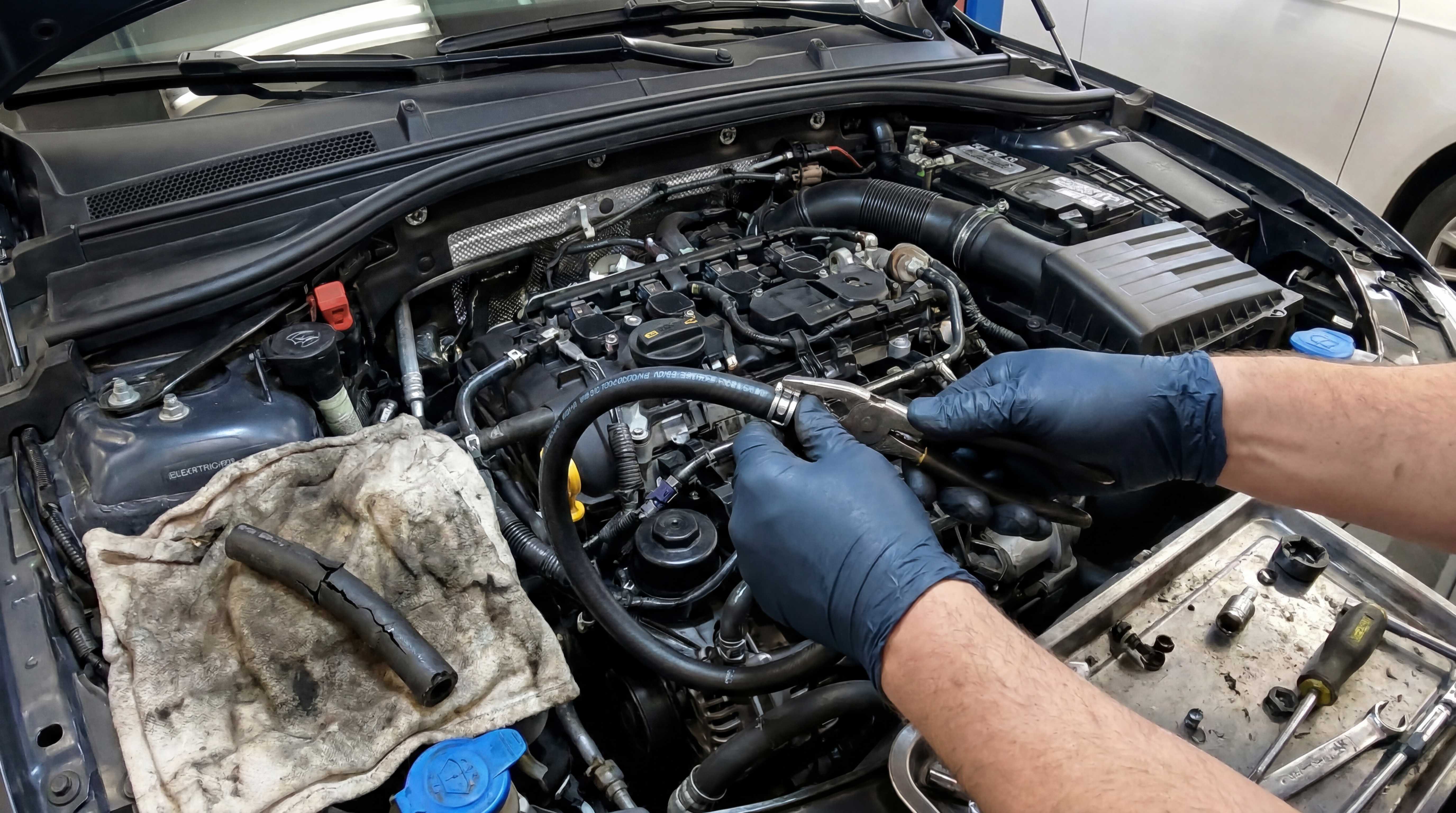
Mechanic replacing damaged rubber fuel hose in engine bay during fuel line repair and replacement service
2026-06-01

Fuel Line Repair or Replacement? How to Diagnose Leaks, Fuel Smell, Rust and Pressure Loss

Fuel line problems are not always obvious. A vehicle may have fuel smell without visible leakage, pressure loss without a broken hose, rusted hard lines under the chassis, aging rubber sections near the engine, or damaged nylon connectors near the tank. This guide explains how to inspect fuel lines, identify common failure patterns, and decide whether repair or full replacement is the safer choice.
Learn more
Performance engine bay showing routed fuel lines, AN fittings, hard lines and fuel rail connections
2026-06-01

Fuel Line Routing and Installation Mistakes: Heat, Abrasion, Vibration and Bend Radius

Fuel line routing is one of the most overlooked parts of fuel delivery system reliability. A correctly selected hose can still fail if it is routed near heat, rubbed against sharp edges, bent too tightly, unsupported, twisted at fittings or installed with poor clamps. This guide explains how routing decisions affect fuel hose safety, leak prevention, service life and vehicle performance.
Learn more
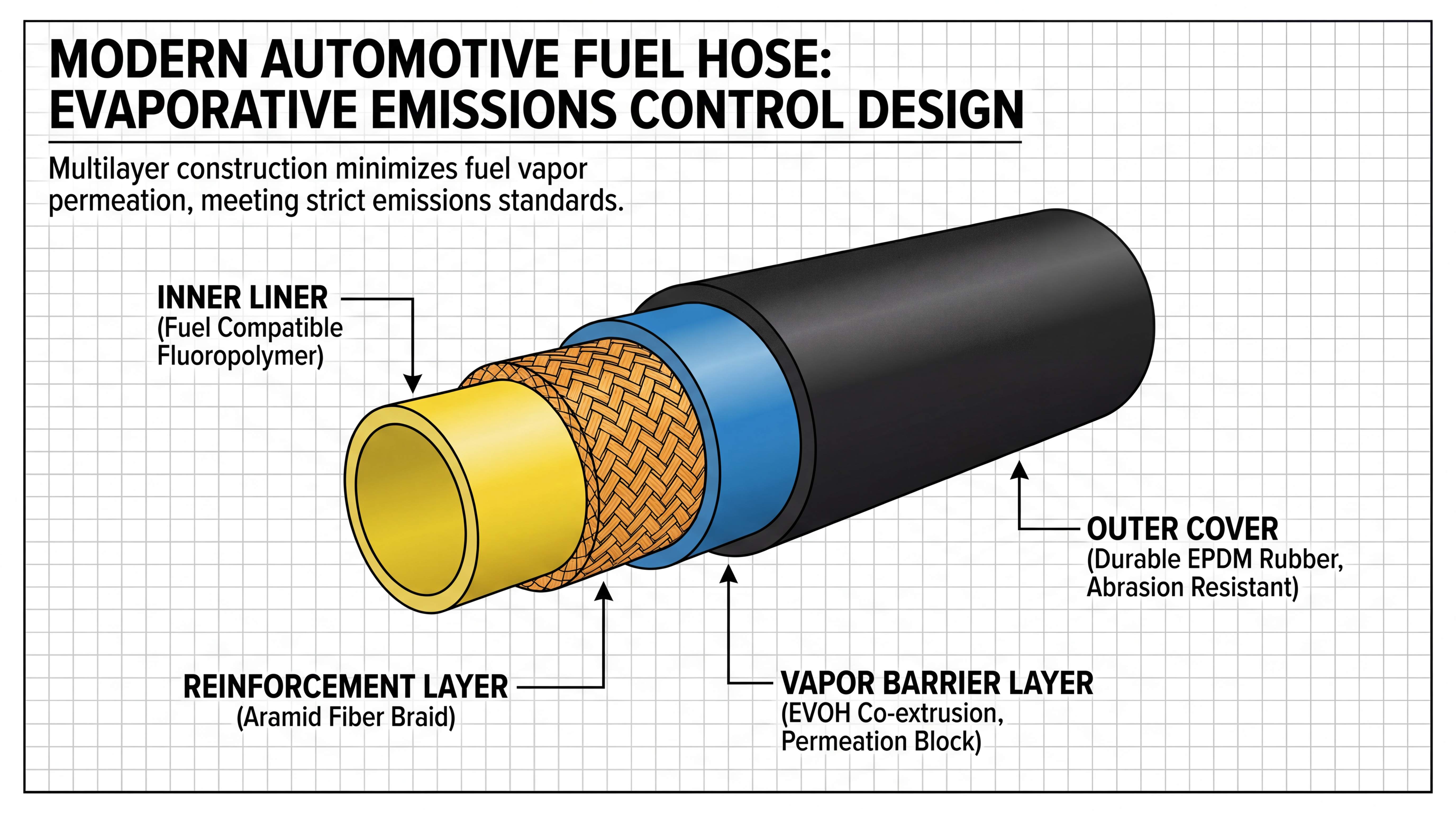
Modern automotive fuel hose design for evaporative emissions control with inner liner, reinforcement layer, vapor barrier and outer cover
2026-06-01

Low-Permeation Fuel Lines: Why Emissions Standards Are Changing Fuel Hose Design

Fuel lines are no longer judged only by whether they leak liquid fuel. Modern fuel delivery systems also need to control fuel vapor permeation, fuel odor and evaporative emissions. This guide explains how low-permeation fuel lines, multilayer hose structures, barrier layers and EVAP system requirements are changing fuel hose design for OEM, aftermarket and B2B applications.
Learn more
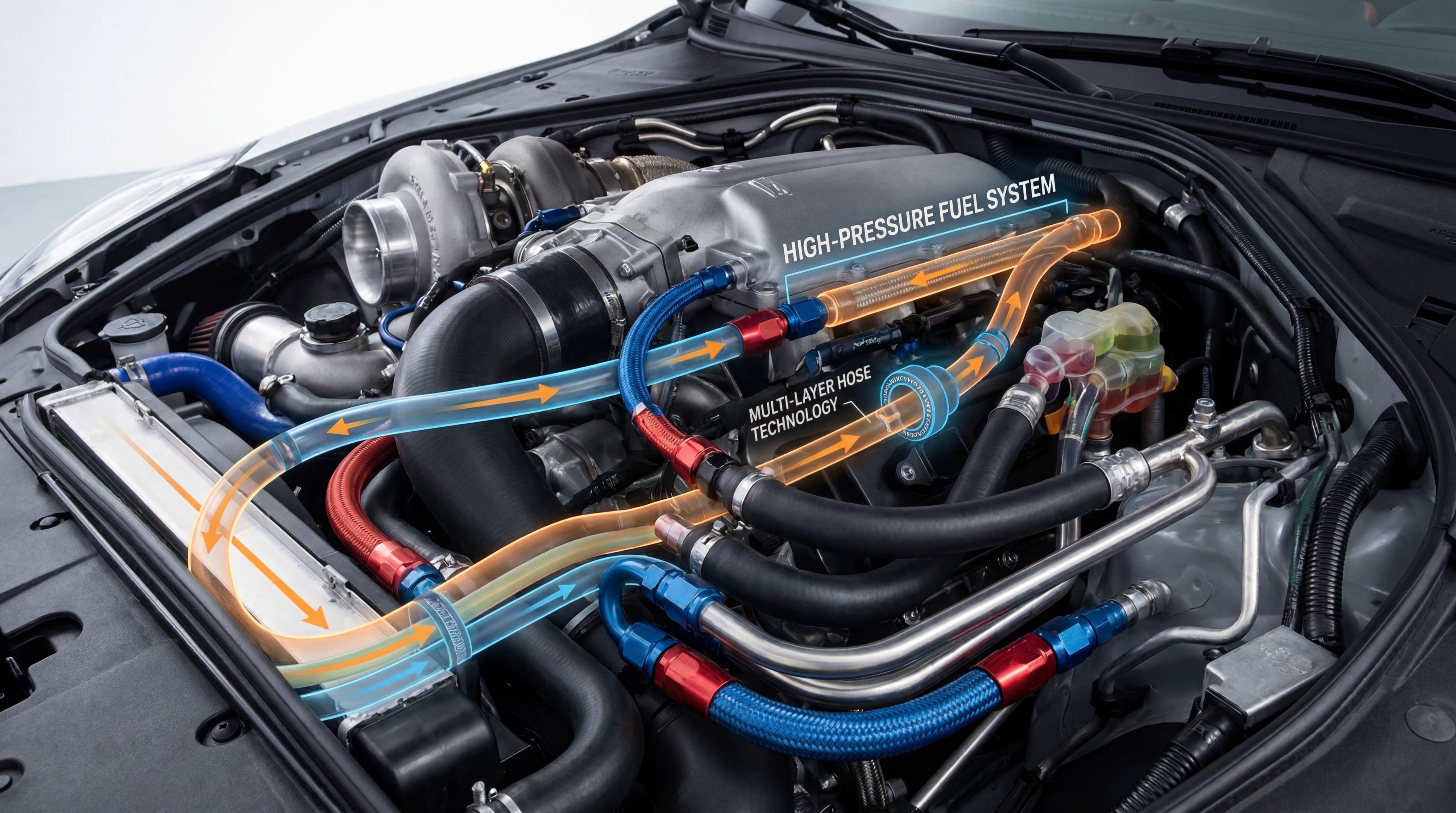
High-pressure fuel system with multi-layer fuel hose technology showing fuel flow, vapor control and engine bay routing
2026-06-01

Why Modern Fuels Are Harder on Fuel Lines: Ethanol, E85, Methanol and Biodiesel Compatibility

Modern fuels are changing the way fuel lines are selected, installed and maintained. Ethanol blends, E85, methanol, biodiesel and alternative fuel formulations can affect hose liners, seals, vapor permeation, fittings and long-term fuel system reliability. This guide explains why fuel hose compatibility matters and how to think about fuel line selection in a multi-fuel market.
Learn more
AN fuel fittings and braided fuel lines connected to a performance fuel rail and fuel pressure regulator
2026-06-01

AN Fittings, Hose Ends and Quick Connectors: The Hidden Risk in Fuel Line Assembly

Fuel line safety is not decided by the hose alone. A reliable fuel delivery system also depends on the right fittings, hose ends, quick connectors, clamps, seals and installation method. This guide explains how fuel line connectors work, why compatibility matters, and how poor assembly can create leaks, pressure loss and long-term reliability problems.
Learn more
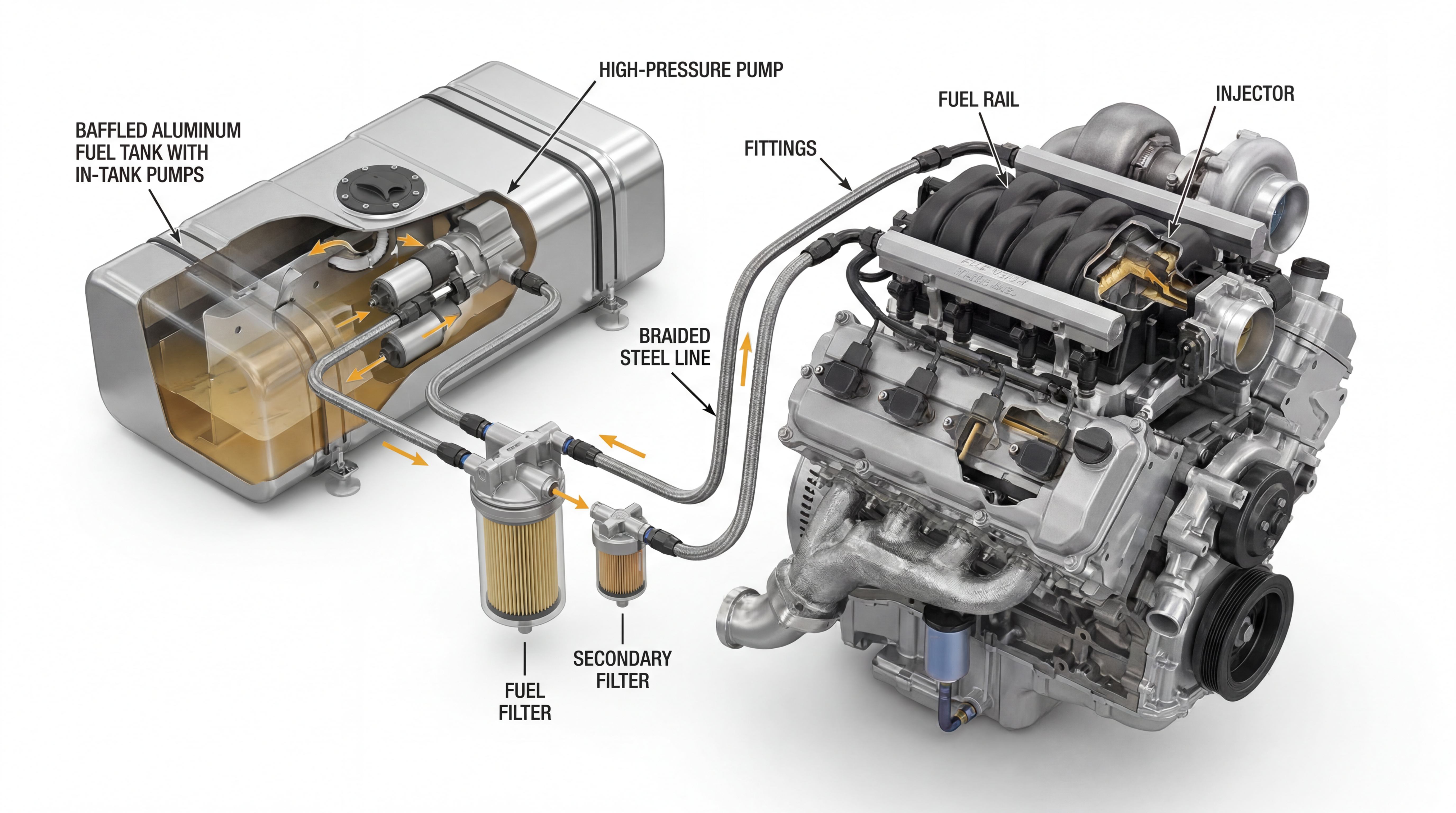
High-pressure fuel line system showing fuel tank, in-tank pumps, filters, braided steel lines, fuel rail and injectors
2026-06-01

Fuel Line Size Guide: How to Choose the Right Diameter for Carburetor, EFI and Turbo Builds

Fuel line size is not only about choosing a larger tube or copying another vehicle’s setup. The correct diameter depends on fuel pressure, flow demand, engine power, fuel type, pump capacity, regulator layout, feed line design and return line strategy. This guide explains how to think about fuel line sizing for carburetor, EFI and turbocharged fuel systems.
Learn more
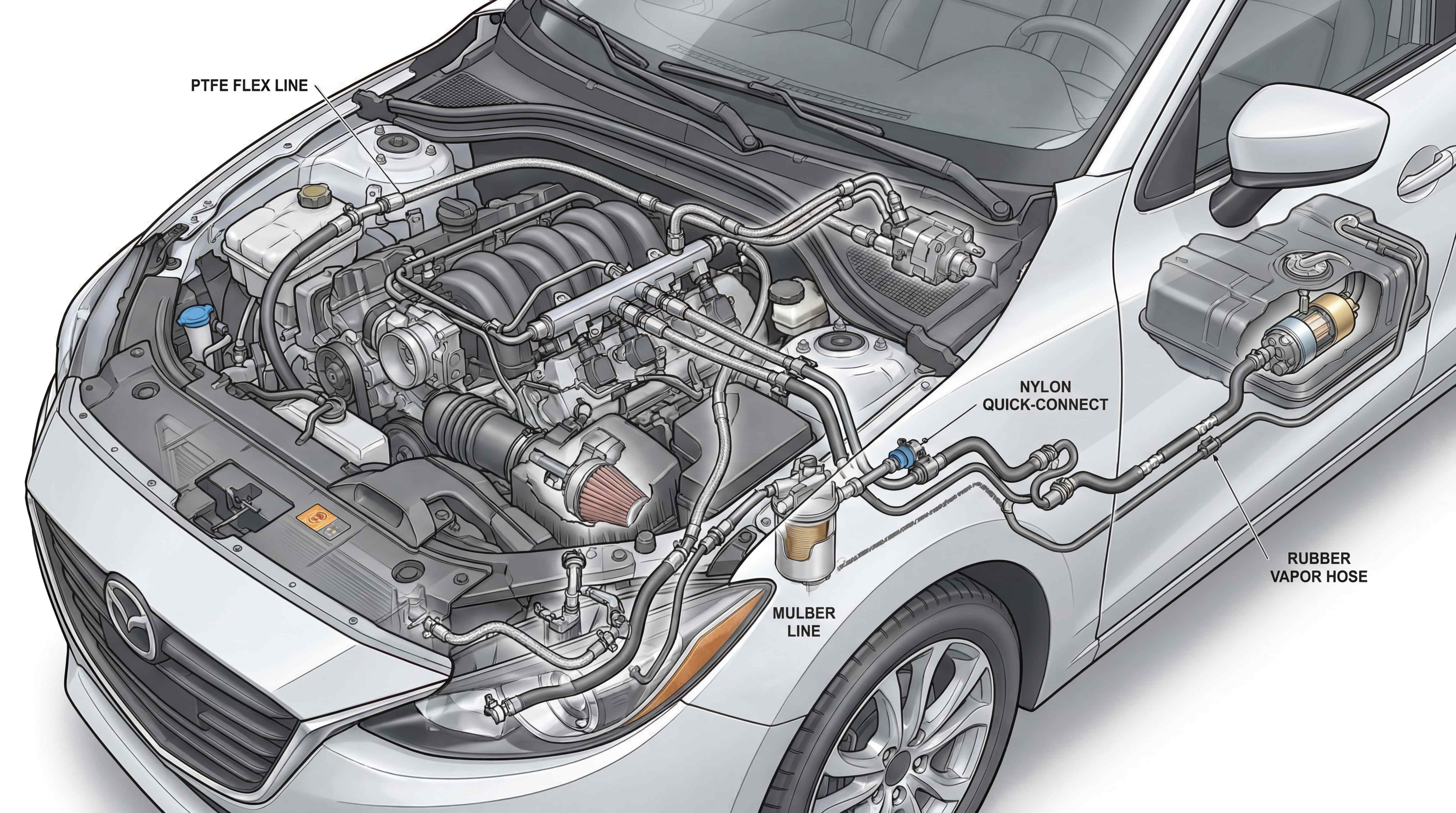
Modern vehicle fuel line system showing PTFE flex line, nylon quick-connect tubing and rubber vapor hose routing
2026-05-29

PTFE vs Rubber vs Nylon vs Metal Fuel Lines: Which Material Works Best?

Fuel line material affects fuel compatibility, pressure resistance, vapor control, installation safety and long-term reliability. This guide compares PTFE, rubber, nylon and metal fuel lines to help readers understand where each material works best in modern fuel delivery systems.
Learn more
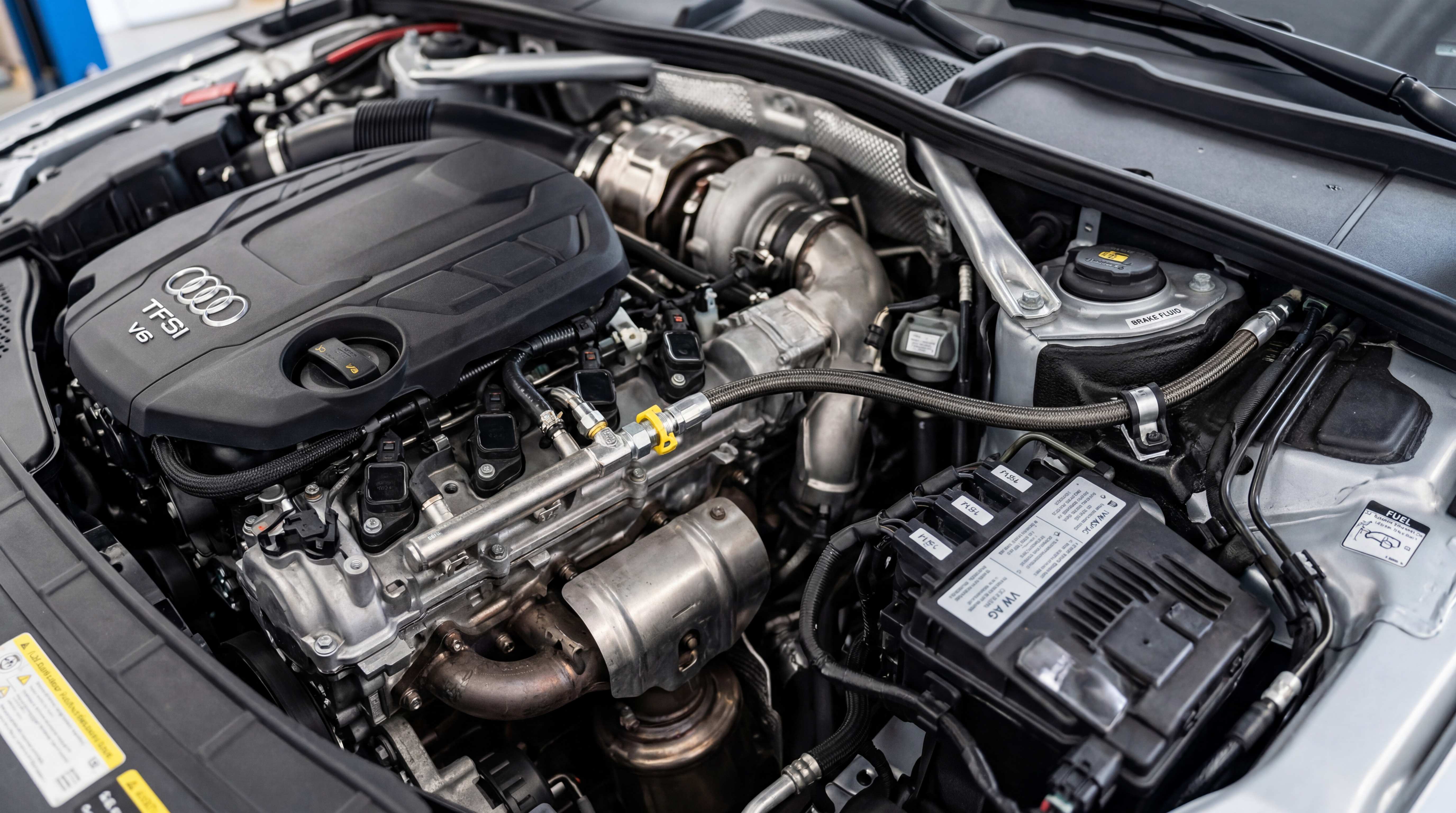
Modern engine bay showing fuel line routing, fuel rail connections and high pressure fuel delivery components
2026-05-29

What Are Fuel Lines? A Complete Guide to Fuel Delivery Lines in Modern Vehicles

Fuel lines are not just simple tubes under a vehicle. They are part of a complete fuel delivery system that connects the tank, pump, filter, engine and fuel control components. This guide explains how fuel lines work, what types are used, and why materials, routing, pressure, connectors and safety matter in modern vehicles.
Learn more
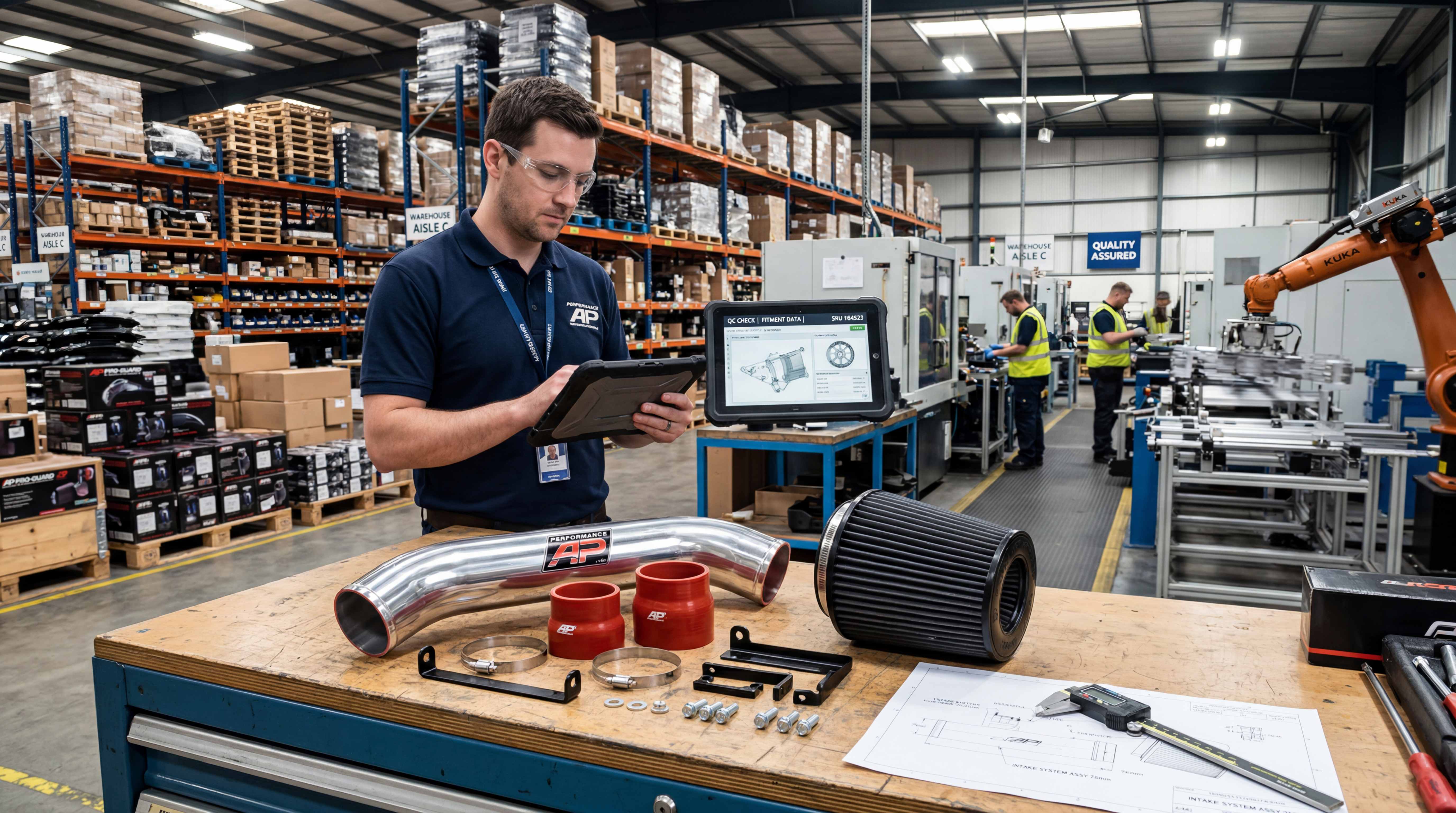
B2B intake pipe sourcing and quality control in a factory with aluminum intake tube, air filter, couplers, clamps and inventory shelves
2026-05-29

B2B Intake Pipe Sourcing Guide: How to Evaluate Air Intake Kit Suppliers Beyond Price

Sourcing intake pipes and air intake kits is not only about finding a low unit price. B2B buyers need to evaluate materials, bending accuracy, sensor compatibility, fitment validation, couplers, clamps, packaging, documentation, private-label capability and production consistency. This guide explains how distributors, brands, workshops and importers can choose the right intake system manufacturer for long-term aftermarket business.

Learn more
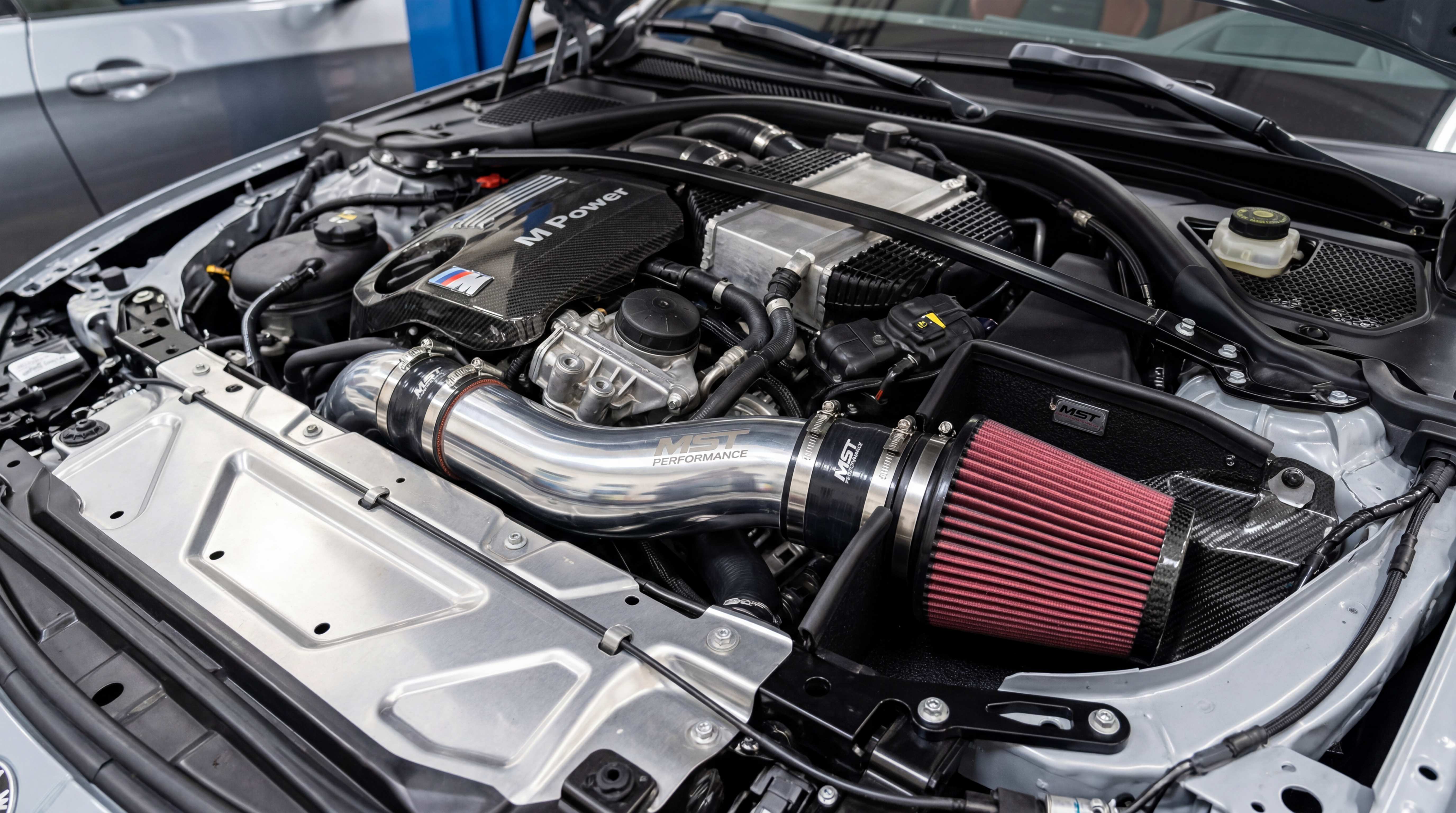
Vehicle-specific aftermarket intake system installed in an engine bay with polished intake pipe, cone air filter, heat shield and secure fitment
2026-05-29

Intake System Fitment and Installation Quality: What Makes an Air Intake Kit Reliable?

A good aftermarket intake kit is not only judged by airflow, sound or appearance. Real product quality depends on fitment accuracy, engine bay clearance, bracket strength, coupler alignment, clamp reliability, sensor compatibility, leak prevention, installation instructions and batch consistency. This guide explains how intake system fitment and installation quality affect performance, customer satisfaction and B2B sourcing decisions.
Learn more
MAF sensor intake system installed in a performance engine bay with aluminum intake pipe, cone filter and ECU control module
2026-05-29

MAF Sensor, MAP Sensor, and ECU Tuning: Why Intake Upgrades Are Not Just About Airflow

An aftermarket intake can look simple, but modern engines rely on sensors and ECU calibration to understand airflow. This guide explains how MAF sensor placement, MAP-based control, pipe diameter, turbulence, fuel trims and tuning affect intake performance, drivability and product quality.
Learn more
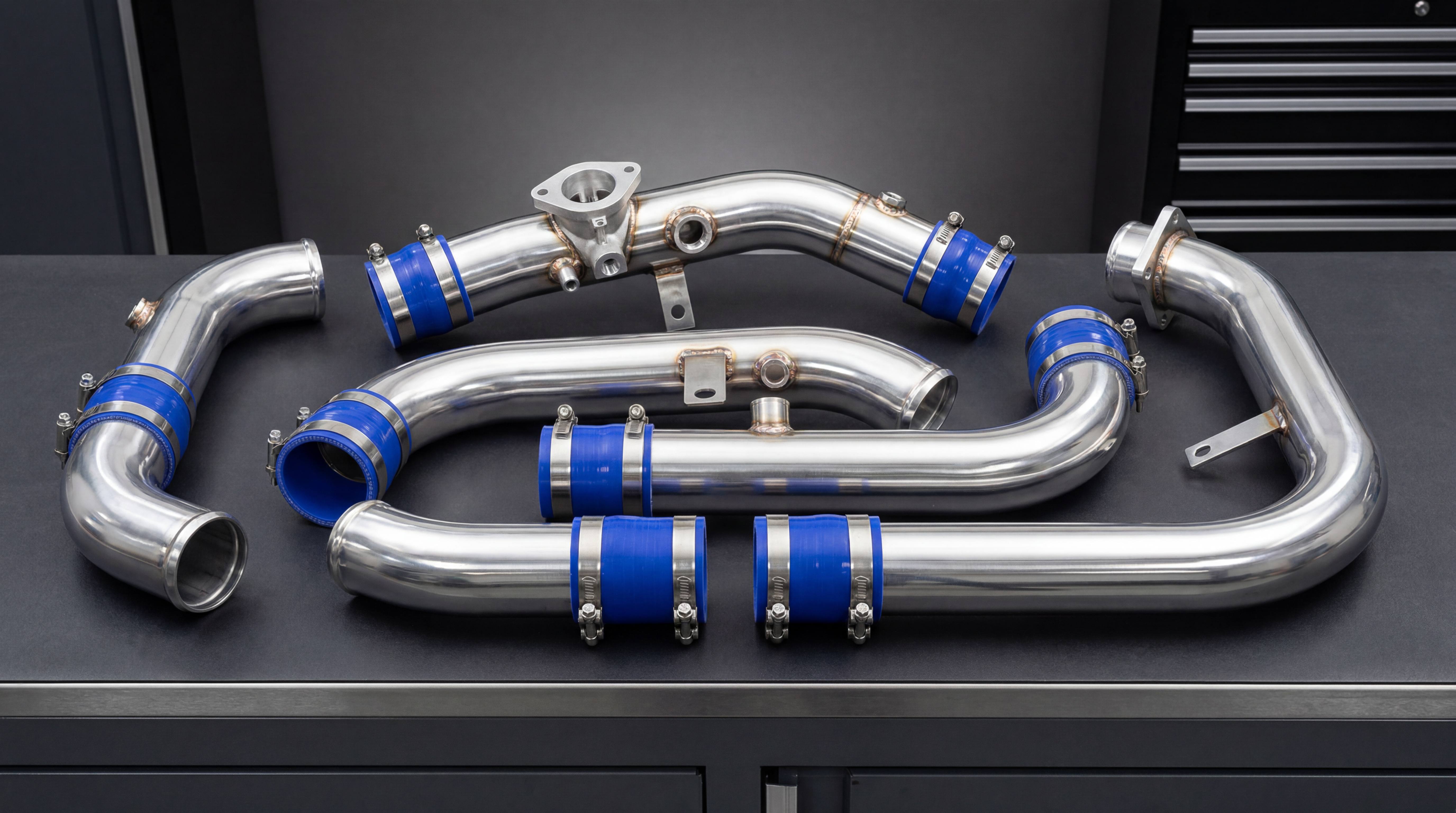
Turbo intake, charge pipe and intercooler piping kit with polished aluminum pipes, silicone couplers and clamps
2026-05-29

Turbo Intake, Charge Pipe, and Intercooler Piping: Understanding the Air Path in Boosted Engines

Turbocharged engines use a more complex air path than naturally aspirated engines. Air must enter the turbo inlet pipe, pass through the compressor, move through hot side piping, cool inside the intercooler, then travel through cold side piping and the charge pipe before reaching the engine. This guide explains how turbo intake pipes, charge pipes and intercooler piping affect airflow, boost pressure, heat control and long-term reliability.
Learn more
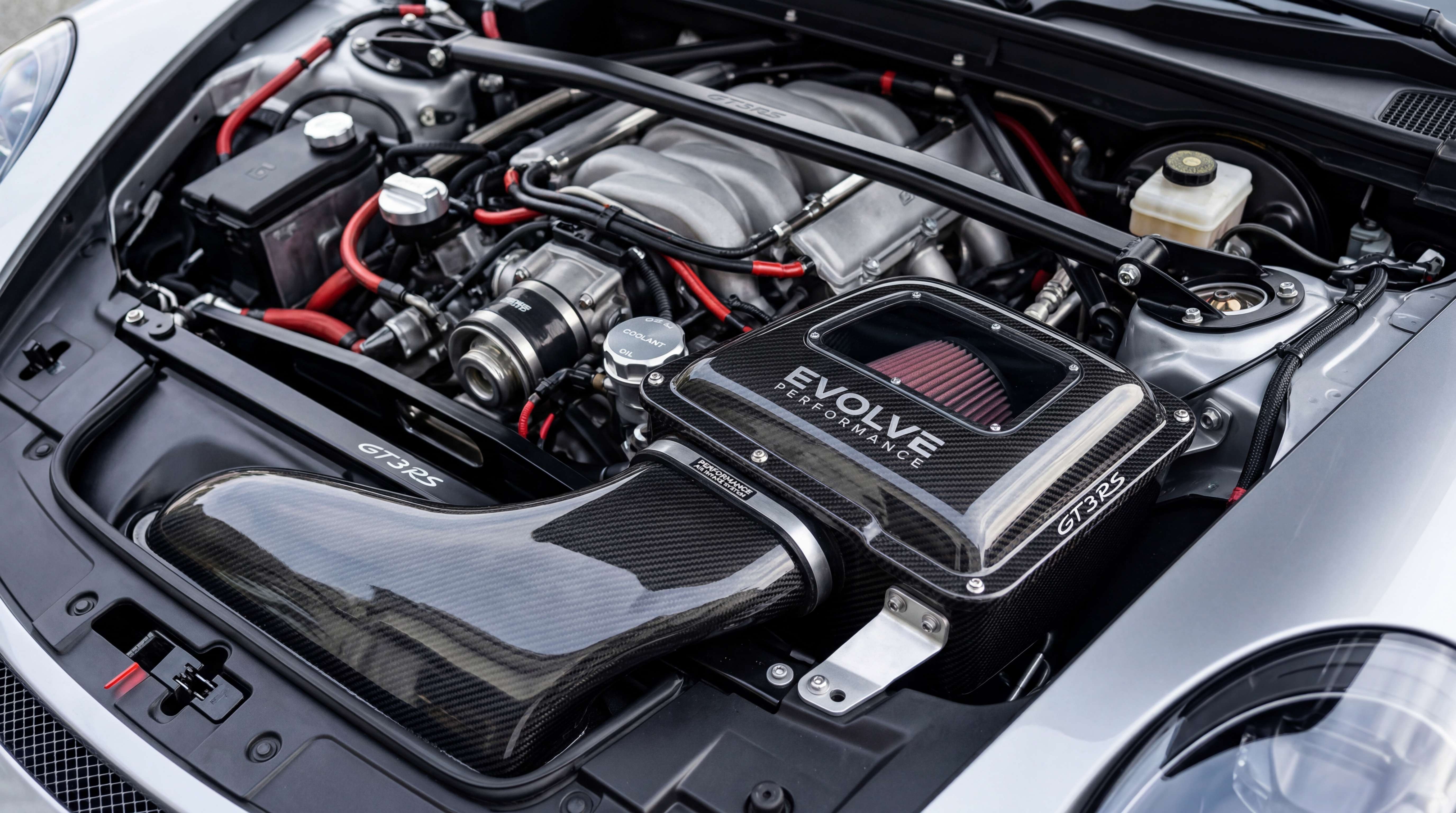
Enclosed carbon fiber cold air intake system installed in an engine bay for better intake heat management and air temperature control
2026-05-29

Intake Heat Management: Airbox, Heat Shield, and Engine Bay Temperature Explained

A cold air intake is only effective when it actually controls heat. Intake heat management depends on air source, airbox design, heat shield structure, intake pipe routing, material behavior, vehicle speed and engine bay temperature. This guide explains how heat soak works, why enclosed airboxes and heat shields matter, and how better thermal design supports real intake performance.
Learn more
Comparison of aluminum, plastic, silicone and carbon fiber intake pipe materials installed in a performance engine bay
2026-05-29

Aluminum, Plastic, Silicone, or Carbon Fiber: How to Choose Intake Pipe Materials

Intake pipe material affects more than appearance. Aluminum, plastic, silicone and carbon fiber each bring different advantages in heat behavior, strength, flexibility, manufacturing cost, fitment and market positioning. This guide explains how to choose the right intake pipe material for daily vehicles, performance builds, turbocharged engines and B2B aftermarket supply.
Learn more
Polished aluminum intake pipe installed in an engine bay showing large diameter tubing, smooth bend design and cone air filter
2026-05-28

Intake Pipe Diameter and Bend Design: Why Shape Matters as Much as Size

Intake pipe design is not only about choosing a larger tube. Diameter, bend radius, bend quality, pipe transitions, sensor location and fabrication consistency all affect airflow stability, pressure loss and engine response. This guide explains how intake pipe diameter and bend design influence performance and why professional intake fabrication requires both airflow knowledge and manufacturing discipline.
Learn more
Cold air intake installed in a performance engine bay with high-flow filter, polished intake pipe and MAF sensor housing
2026-05-28

Does a Cold Air Intake Really Add Horsepower? Understanding Flow, Temperature, and Tuning

A cold air intake can support horsepower gains in the right conditions, but it does not work like a universal power switch. Real performance depends on airflow restriction, intake temperature, ECU calibration, sensor stability, engine demand, pipe design and the full vehicle setup. This guide explains how to evaluate cold air intake performance without relying on exaggerated claims.
Learn more
Cold air intake, short ram intake and stock airbox components displayed on a workshop table for comparison
2026-05-27

Cold Air Intake vs Short Ram Intake vs Stock Airbox: What Really Changes?

Cold air intakes, short ram intakes and stock airboxes are often compared as simple performance upgrades, but the real difference depends on airflow path, intake temperature, sensor stability, engine layout and driving conditions. This guide explains what really changes when an intake system is replaced and how to judge whether an aftermarket intake upgrade is worth it.
Learn more
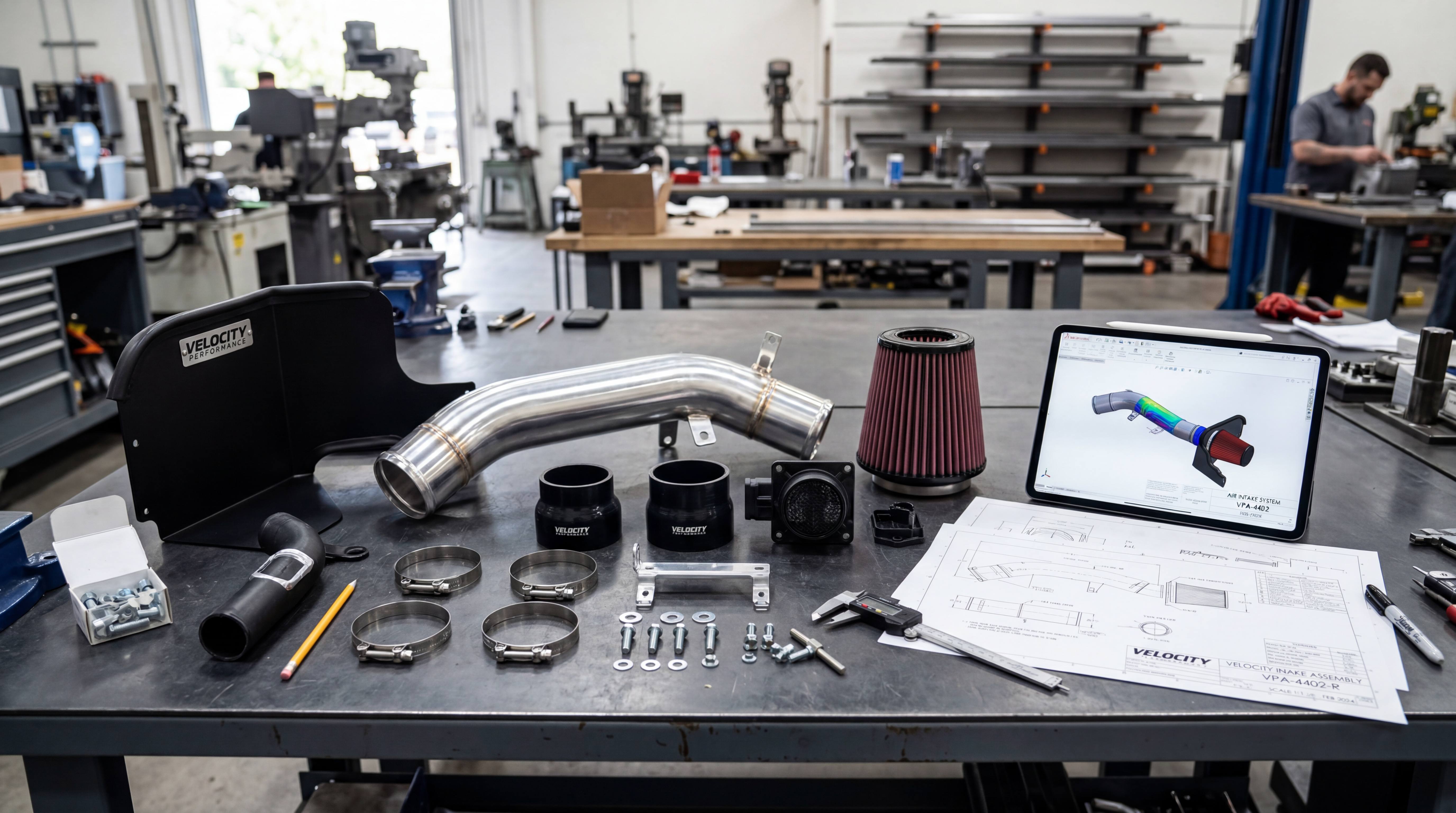
Air intake system components with aluminum intake pipe, cone filter, clamps and CAD drawing on an engineering workbench
2026-05-27

What Is an Air Intake System? More Than Just a Pipe and Filter

An air intake system is not just an exposed filter or a shiny intake pipe. It is a complete airflow path that connects filtration, pipe design, sensor accuracy, temperature control and engine response. This guide explains how intake components work together and why intake system design matters for performance, reliability and manufacturing quality.
Learn more
Future exhaust systems for hybrid vehicles, commercial trucks, agricultural machinery and construction equipment with emission reduction technologies
2026-05-26

The Future of Exhaust Systems: Why Exhaust Pipes Still Matter in the Low-Emission Era

Explore why exhaust systems still matter for hybrid vehicles, commercial fleets, industrial equipment and aftermarket sourcing.
Learn more
Custom exhaust pipe development from technical drawing, CAD model and physical prototype sample
2026-05-26

From Drawing to Delivery: How to Source Custom Exhaust Pipes from a Professional Manufacturer

Learn how to source custom exhaust pipes from drawing, sample, material, bending, welding, prototype, inspection and mass production.
Learn more
Exhaust system quality comparison showing stainless steel exhaust pipe versus corroded failing exhaust system with leaks, cracks and broken hangers
2026-05-26

Exhaust Leaks, Cracks, Corrosion and Rattles: What Failure Modes Reveal About Exhaust Pipe Quality

Exhaust system failure is rarely caused by one simple problem. A leak, crack, rust hole, loose hanger, flange gap or rattling muffler often reflects a deeper issue in material selection, welding quality, vibration control, heat management, installation accuracy or product specification. This guide explains how common exhaust failures happen and how buyers, suppliers and maintenance teams can use failure signs to improve exhaust pipe quality control.
Learn more
Application-driven exhaust pipe design guide showing why vehicle use case determines material, diameter, routing and durability requirements
2026-05-25

From Passenger Cars to Buses and Off-Road Equipment: Why Exhaust Pipe Design Changes by Application

An exhaust pipe is never designed in isolation. A passenger car, pickup truck, commercial bus, construction machine, agricultural vehicle and off-road platform each places different demands on exhaust routing, heat control, vibration resistance, corrosion protection, sound behavior, serviceability and sourcing standards. This article explains why exhaust pipe design must follow real application conditions rather than one-size-fits-all assumptions.
Learn more
Modern automotive exhaust system architecture showing cat-back, axle-back and turbo-back exhaust upgrade types
2026-05-25

Cat-Back, Axle-Back, Header-Back and Downpipe: Understanding Exhaust Upgrade Architectures

Exhaust upgrades are not all the same. A cat-back system, axle-back system, downpipe, turbo-back exhaust and header-back exhaust change different sections of the vehicle exhaust path, which means they affect sound, flow, installation difficulty, compliance risk and customer expectations in different ways. This guide explains how each exhaust architecture works and how buyers, distributors, fabricators and B2B sourcing teams should evaluate them.
Learn more
Performance exhaust system with muffler, resonator and polished tailpipes for exhaust sound tuning
2026-05-25

Muffler, Resonator and Exhaust Drone: How Exhaust Sound Is Engineered, Not Accidentally Produced

Exhaust sound is not simply the result of a louder pipe or a larger muffler. It is shaped by gas pulses, pipe diameter, resonator design, muffler structure, material thickness, engine speed and vehicle cabin behavior. This article explains how mufflers and resonators work, why exhaust drone happens, and how buyers, fabricators and suppliers should evaluate exhaust sound as an engineering and product-quality issue.
Learn more
Performance exhaust system engineering layout showing pipe diameter, wall thickness, X-pipe collector, resonator, muffler and dual tailpipes
2026-05-25

Exhaust Pipe Diameter, Wall Thickness and Bend Radius: The Hidden Parameters Behind a Reliable Exhaust System

Exhaust pipe selection is not only about choosing a tube that looks large enough. Diameter, wall thickness and bend radius directly affect exhaust flow, installation space, durability, vibration resistance, manufacturing cost and long-term reliability. This guide explains how these parameters should be understood by buyers, engineers, fabricators and exhaust pipe suppliers.
Learn more
Side-by-side comparison of smooth mandrel bend exhaust pipe and wrinkled crush bend exhaust pipe in a fabrication workshop
2026-05-25

Mandrel Bend vs Crush Bend: Why Exhaust Pipe Bending Quality Changes Flow, Fitment and Durability

Exhaust pipe bending is not only about creating the right shape. The bending process affects internal diameter, airflow stability, installation accuracy, weld stress, durability and batch consistency. This article explains the real difference between mandrel bend and crush bend exhaust pipes, and why bending quality matters for buyers, fabricators, distributors and OEM sourcing teams.
Learn more
304 stainless steel, 409 stainless steel and aluminized steel exhaust pipe material comparison in an automotive workshop
2026-05-25

304 vs 409 vs Aluminized Steel: How to Choose Exhaust Pipe Material for Real Operating Conditions

Choosing an exhaust pipe material is not simply a question of which metal is “better.” The right choice depends on corrosion exposure, temperature, vehicle type, target service life, cost expectations and market positioning. This guide explains how 304 stainless steel, 409 stainless steel and aluminized steel perform in real exhaust applications, and how B2B buyers can make smarter sourcing decisions.
Learn more
Complete vehicle exhaust system diagram showing manifold, catalytic converter, flex coupling, resonator, muffler, hangers and tailpipes
2026-05-22

Exhaust Is Not Just a Pipe: How Exhaust Systems Became Critical Components in Vehicle Performance, Safety and Industrial Sourcing

An exhaust system is more than a pipe that moves gas away from an engine. It is an engineered structure that affects airflow, heat control, noise, emissions, durability, vehicle packaging and long-term maintenance. This article explains why exhaust systems should be understood as industrial components rather than simple replacement parts.
Learn more
  • 1
    Sitemap

    Industrial Components

    Kitchen Appliances

    Renewable Energy

    Building & Home Improvement

    Chemicals & Water Treatment

    Robotics & Automation

    Email:robertkileyman@gmail.com

    (508676)
    Email
    comment