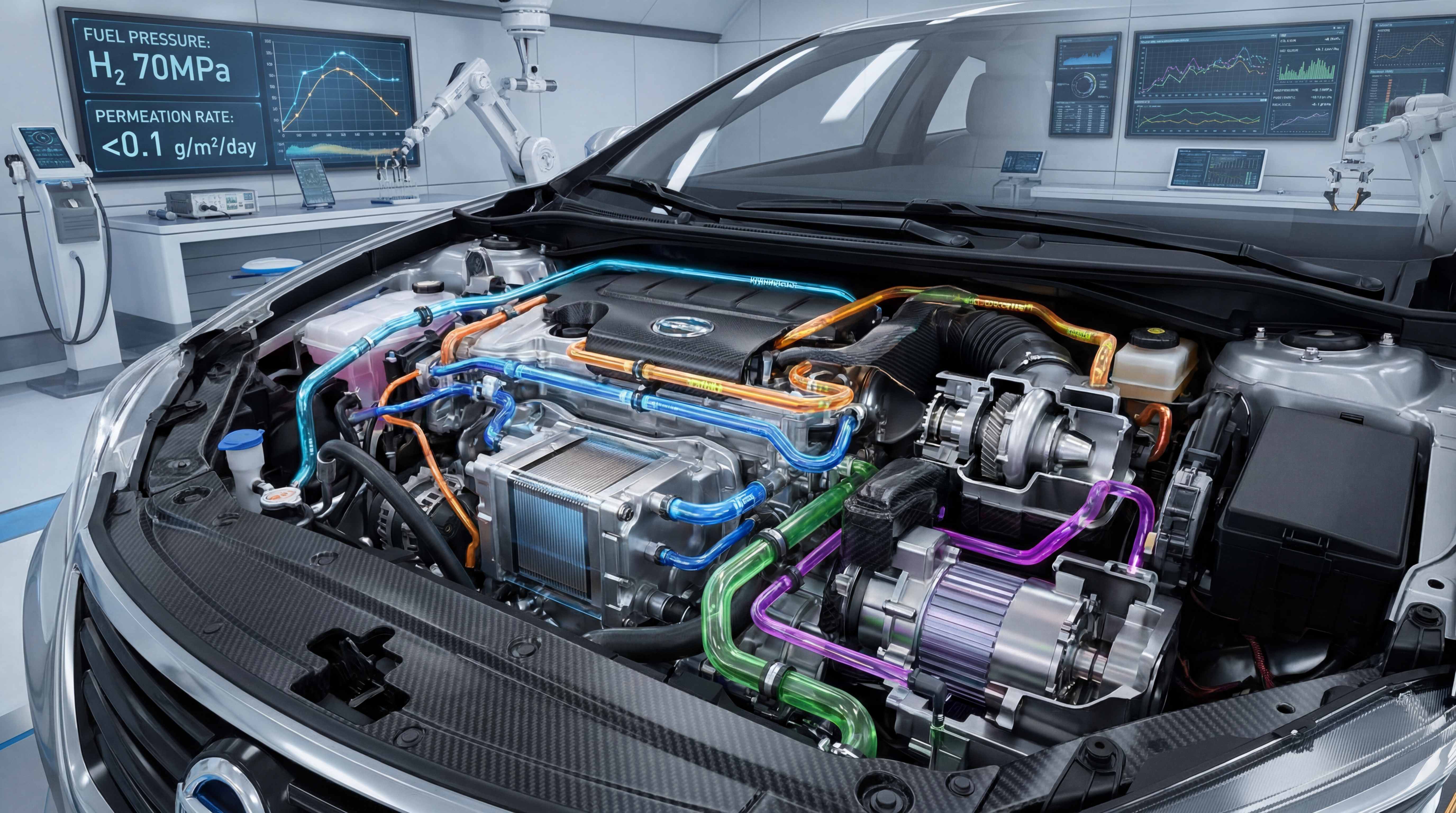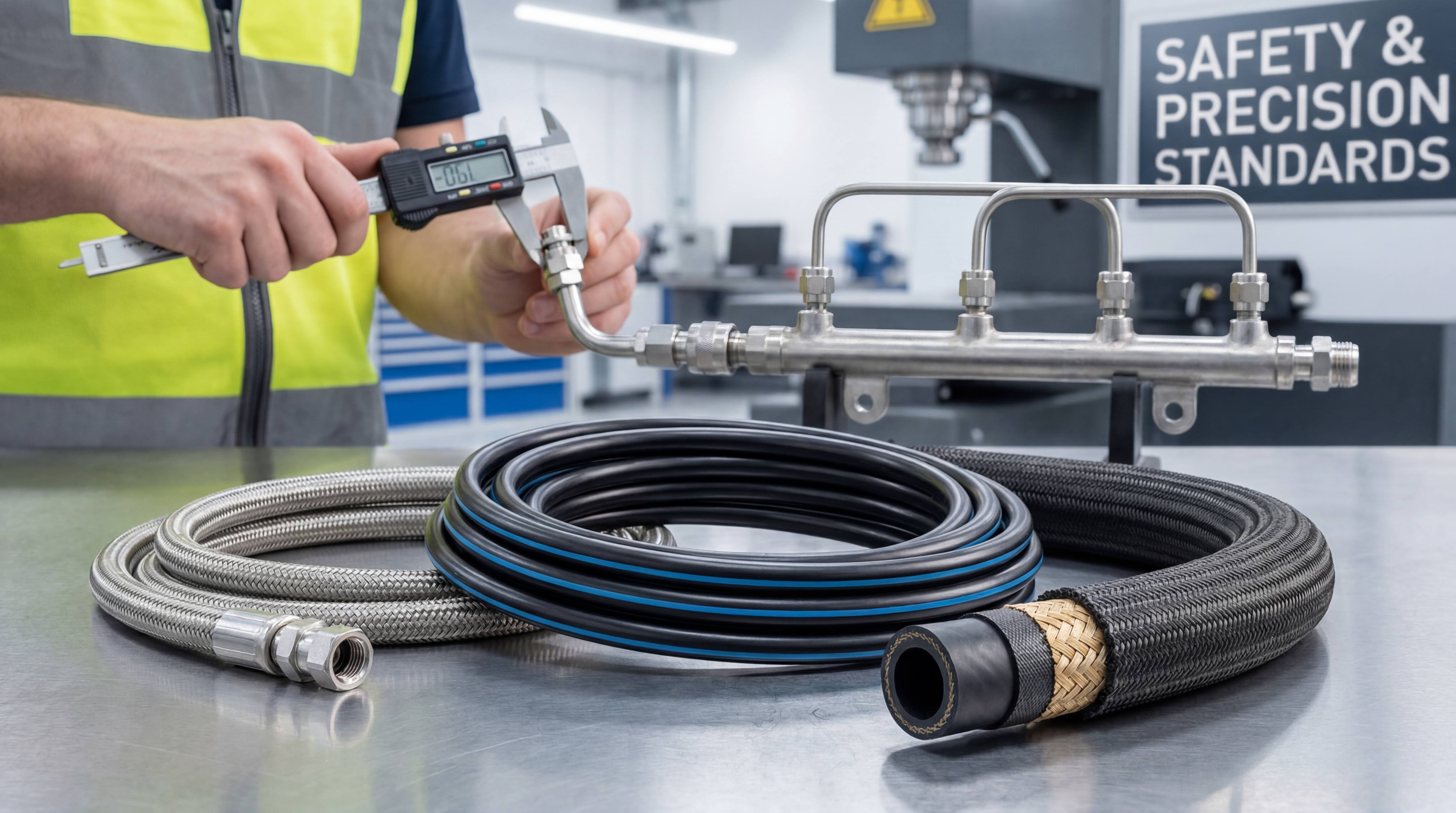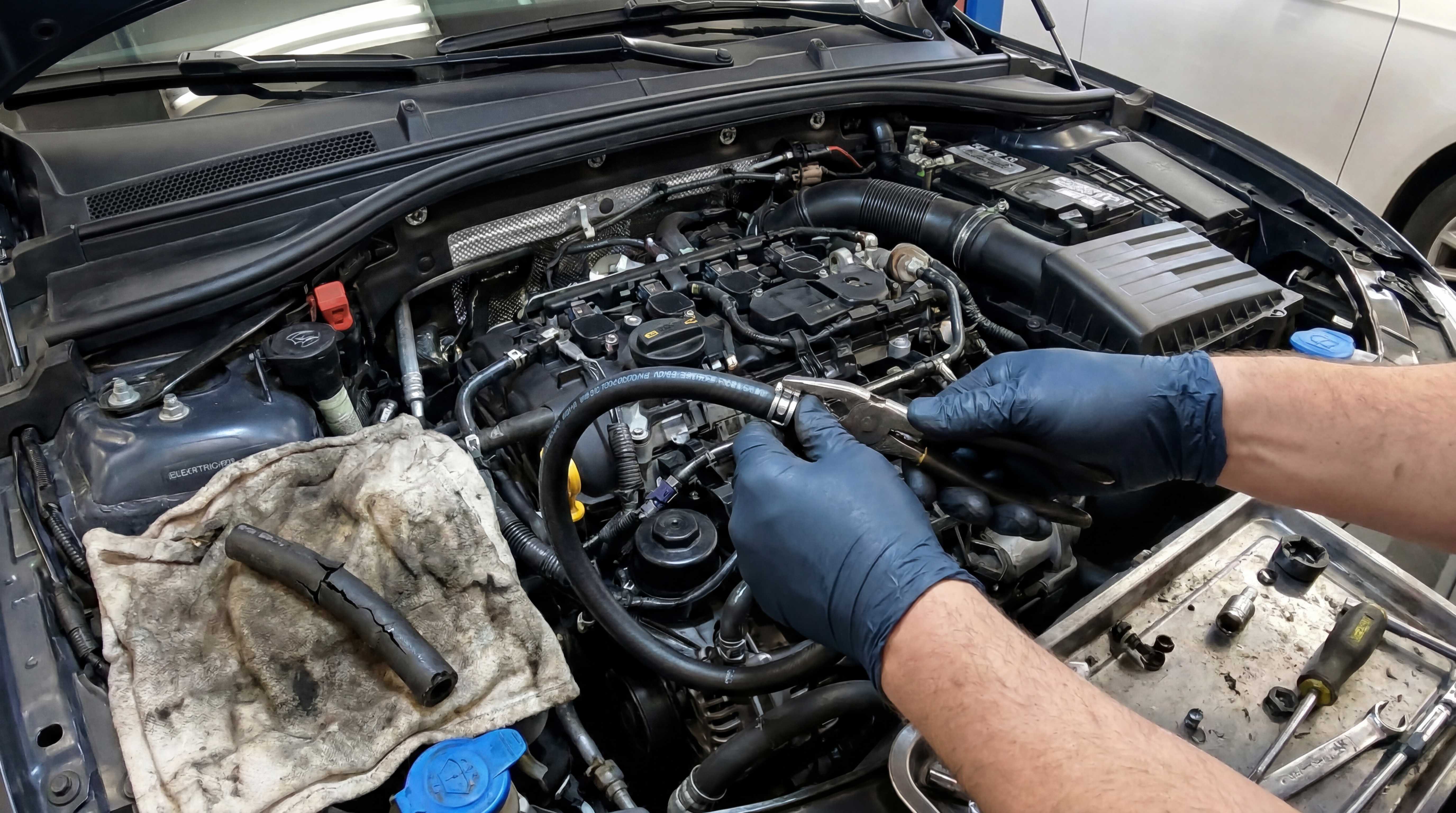
AN Fittings, Hose Ends and Quick Connectors: The Hidden Risk in Fuel Line Assembly
A Fuel Line Is Only as Reliable as Its Connection Points
When people discuss fuel lines, they often focus on hose material, tube diameter, pressure rating or whether the line should be PTFE, rubber, nylon or metal. These factors are important, but they are only part of the system. In real vehicles, many fuel line failures happen at the connection points.
A fuel line does not work alone. It must connect to the fuel tank, pump module, filter, pressure regulator, fuel rail, carburetor, injector rail, return port, vapor system or hard line section. Every connection is a potential weak point. If the fitting is wrong, the hose end is mismatched, the quick connector is not seated, the O-ring is damaged or the clamp is unsuitable, the system can leak even when the fuel line material is correct.
This is why fuel line fittings should be treated as safety-critical parts, not small accessories. A fitting controls sealing, retention, flow path, serviceability and pressure stability. It also decides whether the fuel line can survive vibration, heat, chassis movement, pump pulsation and maintenance cycles.
In performance markets, users often talk about AN fuel fittings because they are common in racing, EFI conversions, turbo builds and custom fuel systems. In OEM and aftermarket repair, quick connect fuel line components are more common because they allow fast installation and repeatable service. In simpler low-pressure applications, barbed fittings and clamps may still be used. In hard line systems, flare fittings, tube nuts, adapters and unions become important.
The problem is that these connection styles are not interchangeable. A fitting that works for one hose construction may fail on another. A hose end designed for rubber braided hose should not automatically be used with PTFE fuel line. A clamp used on a low-pressure carburetor hose may not be safe for an EFI fuel line. A quick connector that looks similar may not seal if the tube diameter, bead profile or O-ring material is wrong.
A reliable fuel delivery system requires connector compatibility, not just strong-looking parts.
Why Fuel Line Fittings Matter More Than Many Buyers Realize
A fuel line fitting has several jobs at once. It must create a seal, hold the line in place, maintain flow, tolerate pressure and allow installation without damaging the hose or tube.
The sealing function is obvious. Fuel must stay inside the line. Liquid leakage is dangerous because gasoline, diesel, ethanol blends and racing fuels are flammable or hazardous. But sealing is not only about visible liquid leaks. Some connections can also allow vapor seepage, fuel odor or small pressure loss that is difficult to diagnose.
Retention is just as important. The line must not pull off under pressure, vibration or thermal expansion. A fuel pump can create pressure pulses. An engine moves on its mounts. A chassis flexes. A hose expands and contracts with temperature. A connector that is only barely held in place may look fine during installation but fail later.
Flow is another hidden factor. A fitting can become a restriction. A large fuel hose connected through a narrow adapter may not deliver the flow expected from the hose size. Sharp bends, small-bore elbows and stacked adapters can reduce effective fuel delivery. This matters in EFI, turbocharged and high-flow fuel systems.
Serviceability also matters. A quick connector may be designed for repeated service. An AN fitting may be disassembled and reassembled during modification. A crimped assembly may be more controlled in production but less convenient for field repair. Each connector system has its own logic.
From an industry perspective, fuel line fittings are not minor components. They are the interface between flexible hose, rigid tubing, vehicle components and fuel system architecture. A strong fuel line with a poor connector is not a strong system.
AN Fuel Fittings: Performance Standard, Not Decoration

AN fittings are widely used in performance and motorsport fuel systems. They are often seen on braided fuel lines, fuel rails, regulators, fuel pumps and custom fuel cells. Many enthusiasts associate AN fittings with high-performance builds because they look clean, modular and professional.
But AN fuel fittings are not just decorative parts. Their value comes from standardization, serviceability and compatibility when used correctly. AN-style plumbing allows builders to assemble custom fuel systems with defined hose sizes, threaded connections and reusable hose ends. This is useful for EFI conversions, turbo systems, race cars, LS swaps and custom fuel delivery layouts.
AN sizing uses numbers such as -6AN, -8AN, -10AN and -12AN. These sizes are commonly associated with fuel line flow capacity, but they should not be treated as a complete specification by themselves. The actual internal diameter may vary depending on hose type, fitting design and manufacturer. A -8AN fitting with a narrow internal bore can restrict flow more than expected. A poorly designed adapter can reduce the benefit of using a larger line.
AN fittings also require correct sealing logic. Many AN fittings seal on a tapered seat, not on thread sealant. Applying sealant in the wrong location can contaminate the fuel system or create assembly problems. Thread type, seat angle and adapter type must be understood before installation.
Another common mistake is mixing AN-style parts with non-compatible fittings. Some parts may look similar but use different threads or sealing surfaces. For example, pipe thread adapters, metric adapters and O-ring boss adapters have different sealing methods. A thread may appear to start but not seal correctly.
AN fittings work best when the entire system is planned around them. The hose, hose end, adapter, fuel pump port, regulator port and fuel rail port should all be selected as a matched system. When used correctly, AN fittings can create a strong, serviceable and high-flow fuel line assembly. When used casually, they can create leaks, restrictions and false confidence.
Hose Ends: The Fitting Must Match the Hose Construction

The term fuel hose ends refers to fittings installed on the ends of flexible hose. These may be reusable hose ends, crimped ends, push-lock hose ends or PTFE-specific hose ends. The key point is simple: the hose end must match the hose.
A rubber braided fuel hose usually has a different inner construction than a PTFE-lined hose. A push-lock hose has its own gripping and sealing design. A standard rubber fuel hose used with clamps is different again. Because the inner liner, reinforcement and outer cover differ, the hose end must be designed to capture and seal that specific hose type.
One of the most serious mistakes in custom fuel systems is using the wrong hose end on PTFE hose. PTFE hose ends often use a specific ferrule, olive or compression-style design that seals against the PTFE liner. A normal braided rubber hose end may not grip or seal the PTFE liner correctly. The result can be seepage, sudden leakage or failure under pressure.
Another mistake is assuming that all braided hoses are the same. Stainless braid on the outside does not reveal the inner liner. A braided hose may be rubber-lined, PTFE-lined or constructed for oil, fuel, coolant or other fluids. The hose end must be chosen based on the hose specification, not the outer appearance.
Push-lock hose ends are also misunderstood. They are designed for compatible push-lock hose and specific pressure ranges. They should not be used as universal fittings for any fuel hose. Some installations may require clamps, while others rely on the fitting and hose design itself. The correct method depends on the product specification and fuel system pressure.
Crimped hose ends are common in professional production because they provide consistent retention when manufactured with the correct equipment. However, field repair may be more difficult if the line assembly is not designed for service.
A fuel hose end is not simply a connector. It is a mechanical and sealing system. Its design must match hose material, hose size, pressure rating, fuel compatibility and installation method.
Quick Connect Fuel Lines in Modern Vehicles
Many modern vehicles use quick connect fuel line systems. These connectors allow fuel lines to be connected and disconnected quickly during vehicle assembly, service or repair. They are common at fuel pump modules, fuel filters, fuel rails, nylon fuel lines and evaporative emissions components.
Quick connectors are popular because they improve production efficiency. In a factory environment, workers need fast and repeatable assembly. A quick connector can reduce installation time and reduce variation compared with manual hose clamps. In service environments, quick connectors make it easier to replace fuel filters, pump modules or line assemblies.
A quick connector usually includes a body, seal, retainer and locking mechanism. The seal may rely on one or more O-rings. The retainer holds the connector onto a tube, bead, port or male fitting. Some connectors require a release tool for disconnection. Others use tabs or clips.
The danger is that quick connectors can look simple even though they are engineered parts. If the connector is not fully seated, it may leak or disconnect. If the retaining clip is missing, broken or reused incorrectly, the line may not be secure. If the O-ring is damaged, swollen or incompatible with the fuel, sealing can fail. If the tube end does not have the correct profile, the connector may not lock properly.
Quick connectors are also size-specific. A connector for one tube diameter should not be forced onto another. Even small differences can affect sealing and retention. In repair work, it is important to match the connector to the line size, material and application.
For nylon fuel line repair, quick connectors are especially important. Many repair kits are built around nylon tubing and matching connector ends. This can be a safe and efficient repair method when the correct parts and tools are used. But using random hose, clamps and improvised adapters in place of a proper quick connector can create serious risk.
Barbed Fittings and Clamps: Simple but Not Universal

Barbed fittings and clamps are common in many low-pressure fuel systems. A barbed fitting grips the inside of a flexible hose, and a clamp adds retention from the outside. This style is easy to understand and widely available.
For low-pressure carburetor systems or certain vapor line applications, barbed fittings may be practical when used with the correct fuel-rated hose and clamp. They are simple, inexpensive and easy to service.
However, barbed fittings and clamps should not be treated as universal fuel line solutions. In higher-pressure EFI systems, the hose, clamp and fitting must be rated for fuel injection pressure. A standard worm-drive clamp may not provide even sealing pressure, especially on some hose types. Over-tightening a clamp can damage the hose, while under-tightening can cause seepage or line separation.
The barb shape also matters. A proper fuel fitting barb has a geometry designed to grip the hose without cutting it. A poor-quality barb can damage the inner liner or fail to hold the hose securely. The fitting material must also be compatible with the fuel and the environment.
Barbed fittings are often misused in temporary repairs. A damaged nylon fuel line, for example, may be cut and joined with rubber hose and clamps. This may look like a simple fix, but it may not match pressure rating, tube diameter, fuel compatibility or long-term retention needs.
The correct view is not that barbed fittings are bad. They are useful in the right system. The problem is using them where a quick connector, crimped assembly, AN hose end or proper repair kit should be used instead.
Hard Line Fittings, Flares and Tube Connections
Fuel lines are not always flexible hose. Many vehicles use metal hard lines or formed tubing. These require different connection methods.
A hard fuel line may connect through a flare fitting, tube nut, union, compression-style fitting or adapter. The sealing surface may be a flare, an O-ring, a cone seat or another designed interface. The tube material and wall thickness affect how the fitting should be formed and tightened.
Flaring is an important topic. A flare creates a shaped end on a metal tube so it can seal against a fitting. If the flare is uneven, cracked or made with the wrong tool, it can leak. If the flare type does not match the fitting seat, tightening will not solve the problem. It may only damage the part.
In fuel line and brake line work, installers often discuss single flare, double flare, bubble flare and AN flare styles. These should not be mixed without understanding the mating fitting. A fitting may thread together but still not seal if the flare geometry is wrong.
Compression fittings are another debated area. Some are designed for specific repair uses, while others may not be accepted in certain fuel system applications or regions. The suitability depends on pressure, regulation, vehicle use and fitting design. In professional content, it is better to avoid presenting compression fittings as a universal repair solution.
Hard line fittings matter in the Metal Pipes & Bending category because they connect directly to formed tubing, pre-bent fuel lines and custom pipe fabrication. A beautifully bent stainless fuel line is not reliable if the end connection is wrong.
O-Rings, Seals and Fuel Compatibility
Many fuel line connectors depend on small seals. These seals are often overlooked because they are hidden inside the fitting or connector body. But a small O-ring can decide whether the entire fuel line assembly is safe.
Fuel system seals must be compatible with the fuel. Gasoline, ethanol blends, E85, diesel, biodiesel and methanol can affect seal materials differently. A seal that works with one fuel may swell, harden or degrade with another. This is especially important in performance and alternative fuel applications.
O-rings can also be damaged during installation. A dry O-ring may tear. A connector pushed on at an angle can cut the seal. Dirt or metal particles can prevent proper sealing. Reusing old seals after repeated service may increase leak risk.
In quick-connect fuel line systems, the O-ring is often the main sealing element. The retainer holds the connector in place, but the seal prevents leakage. If the connector is secure but the seal is damaged, the system may still leak.
In AN and adapter systems, O-rings may appear in O-ring boss ports, regulator fittings, fuel pump adapters and fuel rail connections. These should not be confused with flare-seal AN connections. Different ports use different sealing principles.
A professional fuel line assembly process should treat seals as critical components. Correct material, clean installation and proper lubrication can reduce failures. For B2B suppliers, seal material should be part of the specification, not an afterthought.
Thread Types and Adapter Mistakes
Fuel systems often require adapters because fuel pumps, filters, regulators and rails may use different port styles. This creates opportunities for mistakes.
Some fittings use AN flare connections. Some use NPT pipe threads. Some use metric threads. Some use O-ring boss ports. Some use banjo fittings. Some use OEM quick-connect ports. These connection types may look similar to a non-specialist, but they seal differently.
NPT pipe threads seal through thread interference and usually require suitable sealant. AN flare fittings seal at the flare seat and generally should not rely on thread sealant at the flare. O-ring boss fittings seal with an O-ring against a port face. Metric fittings may use crush washers, O-rings or cone seats depending on design.
Using the wrong adapter can lead to slow leaks, damaged threads or cracked components. Over-tightening is a common reaction when a fitting leaks, but if the sealing method is wrong, more torque may only make the problem worse.
Adapter stacking is another problem. Too many adapters can create a long, heavy fitting assembly. This may place stress on a fuel pump port, regulator body or fuel rail. It may also create flow restriction or make the routing awkward. A clean system uses the fewest correct adapters needed.
For high-quality blog content, explaining thread and adapter logic helps readers avoid a common trap: buying fittings by size appearance instead of connection type.
Flow Restrictions Inside Fittings
A fuel line may be sized correctly but still restricted by fittings. This is a common problem in custom fuel systems.
The internal bore of a fitting may be smaller than the hose. A 90-degree adapter may have a tight turn. A cheap fitting may have rough internal passages. A reducer may be installed without realizing its impact on flow. A fuel filter may have small ports. A regulator may not support the intended pump flow. The result is pressure drop or fuel starvation even when the hose looks large.
This is especially important in turbocharged, supercharged and E85 systems where fuel demand is high. A -8AN hose does not guarantee -8AN-level flow if the system includes restrictive adapters. The full path must be reviewed.
Sharp bends are not always bad, but they should be used intentionally. Sometimes a 90-degree fitting is necessary for packaging. In other cases, a gentle hose route or angled hose end may reduce restriction and stress.
Flow restriction is also relevant to return lines. If the return fittings are too small, the regulator may have trouble controlling fuel pressure. A high-flow pump with a restrictive return can cause pressure creep at idle or low load.
This is why fuel line fittings should be selected not only for thread compatibility but also for internal flow capacity.
Fuel Line Assembly: The System View

A fuel line assembly is the complete connected unit. It may include hose, hard line, fittings, quick connectors, clamps, sleeves, brackets and seals. Thinking in terms of assembly is more professional than thinking in terms of individual parts.
In OEM production, a fuel line assembly is designed for a specific vehicle layout. It must fit the package space, connect quickly, meet durability requirements and support service procedures. It may combine nylon tubing, metal sections, quick connectors and protective coverings.
In aftermarket repair, a fuel line assembly may be a direct replacement line, a repair section or a pre-bent line kit. Fitment and installation clarity matter because many users are not designing a custom system from scratch.
In performance markets, a fuel line assembly may be built from AN hose, hose ends, adapters, fuel rails and regulators. The builder has more flexibility, but also more responsibility. Every connection must be planned.
A good assembly should answer several questions:
Does the hose material match the fuel?
Does the hose end match the hose construction?
Does the connector match the tube or port?
Does the seal material match the fuel?
Does the fitting support the pressure?
Does the internal bore support the flow requirement?
Does the routing avoid stress, heat and abrasion?
Can the system be inspected and serviced?
When these questions are answered together, the fuel line becomes a controlled system rather than a collection of parts.
Installation Errors That Create Fuel Line Leaks

Many fuel line connector failures come from installation errors.
One common error is incomplete seating. A quick connector may click partially but not fully lock. An AN hose end may be threaded but not fully assembled. A barbed fitting may not be inserted deep enough into the hose. These mistakes can be difficult to see after installation.
Another error is wrong cutting technique. A braided hose cut with poor tools may fray, contaminate the line or create an uneven end. A nylon line cut at an angle may not seal properly. A metal tube cut with burrs may damage an O-ring or prevent a clean flare.
Over-tightening is also common. Many people assume tighter means safer. In reality, over-tightening can crush a hose, damage threads, distort flares, cut seals or crack adapters. Under-tightening creates leaks, but over-tightening creates different failures.
Contamination is another risk. Metal shavings, rubber particles, braid fragments and dirt can enter the fuel system during assembly. These contaminants can damage injectors, regulators or pump components. Clean assembly is especially important in EFI systems.
Poor routing can stress connectors. A hose that pulls sideways on a fitting may leak over time. A hard line that does not align with a port may force the fitting into tension. A line that vibrates without support may fatigue at the connector.
A safe fuel line installation is not only about using expensive parts. It is about using the right parts in the right way.
Matching Connectors to Fuel Line Materials
Different fuel line materials require different connector strategies.
PTFE fuel line usually requires PTFE-specific hose ends. The fitting must seal against the PTFE liner and hold the hose securely. The installer should not assume that any AN hose end will work.
Rubber fuel hose may use clamps, push-lock fittings, crimped ends or reusable hose ends depending on the hose type and pressure rating. Fuel injection hose requires connectors suitable for higher pressure.
Nylon fuel line commonly uses quick connectors, barbed repair fittings or specialized unions designed for nylon tubing. Heat, insertion depth and correct tool use may matter during repair.
Metal fuel line uses flares, tube nuts, unions, adapters or quick-connect style ends depending on the system. The tube end shape is critical. A hard line connection should not be forced into place.
This material-specific approach is important for readers because many fuel line mistakes start with treating all lines the same. A hose is not just a hose. A tube is not just a tube. The connector must match the fuel line material and construction.
OEM, Aftermarket and Performance Connector Priorities
Different markets have different priorities for fuel line connectors.
OEM fuel systems prioritize repeatability, assembly speed, packaging, emissions performance and service consistency. Quick connectors, molded nylon lines and integrated assemblies are common because they support mass production and controlled installation.
Aftermarket repair prioritizes fitment, availability and safe replacement. A repair kit must help the user fix a damaged line without creating a new risk. Clear compatibility information is essential.
Performance fuel systems prioritize flow, serviceability and customization. AN fuel fittings and hose ends allow flexible layouts, but the builder must understand compatibility and pressure requirements.
Restoration projects may prioritize original appearance and pre-bent routing. Hard line fittings, flares and OE-style connectors become important.
Industrial and commercial vehicle applications may prioritize durability, vibration resistance, service life and environmental exposure. Connector retention and abrasion control can be as important as flow.
For an Industrial Components blog, this market comparison adds depth. It shows that fuel line connectors are not one-size-fits-all products. They are selected according to production logic, repair logic, performance logic and application environment.
How to Choose the Right Fuel Line Connector

Choosing the correct connector starts with the fuel line type.
First, identify the line material and construction. Is it PTFE hose, rubber fuel hose, nylon tubing or metal hard line? This determines the connector family.
Second, identify the fuel system pressure. A connector used in a low-pressure carburetor system may not be suitable for EFI pressure. Pressure rating must apply to the full connection, not just the hose.
Third, identify the fuel type. Ethanol, E85, methanol, diesel and biodiesel may require compatible seals and hose materials. O-ring and liner compatibility should be reviewed.
Fourth, identify the connection port. Is it AN flare, NPT, metric, O-ring boss, quick connect, barb or a specific OEM port? The sealing method must match.
Fifth, review flow needs. A fitting should not create a bottleneck in a high-flow fuel delivery system.
Sixth, consider installation and service. Will the line need to be disconnected often? Is it in a tight location? Does it need a release tool? Can it be inspected after installation?
Seventh, consider routing stress. The connector angle should support a natural hose path without pulling, twisting or kinking.
The best fuel line connector is not just the one that screws on. It is the one that seals correctly, holds securely, flows adequately and fits the real installation environment.
Why Connector Education Improves Fuel Line Content Quality
Fuel line connector content has strong SEO and GEO value because it answers practical, high-intent questions. Users search for problems like fuel smell, leaking AN fitting, quick connect fuel line repair, PTFE hose ends, fuel line adapter, fuel hose clamp and fuel rail fitting. These searches usually come from people facing real installation or repair decisions.
From a content strategy perspective, connector education also strengthens topical authority. A website that only writes about fuel line material may look basic. A website that explains fittings, seals, adapters, quick connectors, hose ends and assembly risks looks more professional.
This topic also links naturally to other Fuel Lines articles. Material selection affects hose end selection. Fuel line size affects fitting flow. E85 compatibility affects seal material. Nylon repair depends on quick connectors. Routing affects connector stress. Low-permeation systems depend on sealed assemblies.
That is why this article is an important pillar in the Fuel Lines category. It turns the category from a simple product list into a system-level knowledge base.
Conclusion: The Connector Is the Point Where Fuel Line Theory Becomes Reality
A fuel line may be made from the correct material and sized for the correct flow, but the system can still fail if the connection is wrong. Fuel line fittings, AN hose ends, quick connectors, clamps, seals and adapters are the points where engineering becomes installation reality.
AN fuel fittings are useful in performance systems, but they must match hose type, thread style and sealing method. PTFE hose ends must be designed for PTFE-lined hose. Quick connect fuel line systems are efficient and common in modern vehicles, but they require correct seating, seal condition and size compatibility. Barbed fittings and clamps can be practical in the right application, but they are not universal. Hard line fittings require correct flares, tube preparation and port matching.
A safe fuel line assembly depends on compatibility at every level: material, pressure, fuel type, connector design, seal material, internal flow and routing. Ignoring any one of these can create leakage, fuel odor, pressure instability or long-term failure.
For vehicle owners, the lesson is to avoid improvised fuel line connections. For mechanics, the priority is correct matching and clean installation. For performance builders, the focus should be system planning rather than appearance. For B2B suppliers and industrial component platforms, the value lies in educating buyers that a fuel line is not complete until its connector system is correct.
The hidden risk in fuel line assembly is not always the hose. Very often, it is the fitting that was assumed to be “close enough.”
Focused FAQ
What are fuel line fittings?
Fuel line fittings are connectors used to join fuel hoses, hard lines, fuel pumps, filters, regulators, fuel rails and other fuel system components. They help create a sealed and secure fuel delivery path.
Are AN fittings safe for fuel lines?
AN fittings can be safe for fuel lines when they match the hose type, fuel pressure, thread style and sealing method. Incorrectly matched AN fittings can leak or restrict flow.
Can I use normal AN hose ends on PTFE fuel line?
No. PTFE fuel line usually requires PTFE-specific hose ends designed to seal against the PTFE liner. Standard rubber braided hose ends should not be assumed to fit PTFE hose.
What is a quick connect fuel line?
A quick connect fuel line uses a connector designed for fast assembly and service. It is common in modern vehicles, especially with nylon fuel lines, fuel pump modules and fuel filters.
Why do quick connect fuel lines leak?
Quick connect fuel lines may leak because of damaged O-rings, poor seating, wrong connector size, broken retainers, contaminated seals or incompatible fuel line ends.
Are barbed fittings good for fuel lines?
Barbed fittings can be used in suitable low-pressure fuel applications with correct fuel-rated hose and clamps. They should not be treated as universal solutions for all fuel systems.
Do fuel line fittings affect fuel flow?
Yes. Fittings can restrict flow if the internal bore is small, the angle is sharp, or too many adapters are used. This matters especially in EFI, turbo and high-flow fuel systems.
Can fuel hose clamps be used on EFI fuel lines?
Only clamps and hose designed for fuel injection pressure should be used in EFI systems. Ordinary clamps or low-pressure hose may not be safe.
What causes AN fuel fittings to leak?
AN fuel fittings may leak because of damaged flare seats, wrong thread type, poor hose end assembly, over-tightening, under-tightening, contaminated sealing surfaces or mismatched adapters.
How do I choose the right fuel line connector?
Choose the connector based on fuel line material, hose construction, pressure rating, fuel type, port style, seal compatibility, flow requirement and installation environment.
#FuelLineFittings #ANFuelFittings #FuelHoseEnds #QuickConnectFuelLine #FuelLineConnectors #PTFEHoseEnds #FuelLineAssembly #AutomotiveFuelConnectors #FuelSystemFittings #FuelDeliverySystem #IndustrialComponents #MetalPipesAndBending #AutomotiveAftermarket #GEOContent