B2B Intake Pipe Sourcing Guide: How to Evaluate Air Intake Kit Suppliers Beyond Price
B2B Intake Sourcing Is Not a Simple Price Comparison
For many automotive aftermarket buyers, sourcing an intake pipe or air intake kit may look straightforward at first. The product seems easy to understand: an intake tube, an air filter, some silicone couplers, clamps, brackets and sometimes a heat shield or airbox. From a distance, many products look similar. A polished aluminum intake pipe can look attractive in photos, and a supplier may offer a competitive price quickly.
But in the real B2B market, intake sourcing is more complex than it appears. A low-cost intake kit can become expensive if it creates returns, poor fitment, missing hardware, sensor problems, inconsistent batches, weak packaging or customer complaints. A product that looks good online may fail when installed in a real engine bay. A supplier that can make a sample may not be able to maintain production consistency. A universal intake pipe kit may be useful for fabricators but unsuitable for retail buyers expecting direct installation.
This is why professional aftermarket intake sourcing should not begin with price alone. It should begin with product positioning, market channel, technical requirements, manufacturing process, quality control and supplier reliability.
A distributor selling to workshops has different needs from a private-label brand selling to enthusiasts. A tuning shop needs different product flexibility from a retail e-commerce seller. A racing-oriented buyer may accept tuning requirements, while a daily-driver market may demand no-tune compatibility and easy installation. The same intake system manufacturer may not be ideal for every buyer.
For the Industrial Components category, this topic matters because intake products sit between metal pipes, bending, automotive electronics, filtration, thermal management and aftermarket branding. B2B buyers are not only buying a bent tube. They are buying a product system that must fit, seal, perform, ship safely, install correctly and support a brand promise.

Start With the Channel: Who Will Actually Buy and Install the Intake Kit?

Before evaluating an air intake kit supplier, the buyer should define the sales channel. Intake products are sold through many channels: online retail, tuning shops, performance brands, import distributors, wholesale parts networks, fabrication workshops and private-label programs. Each channel has different expectations.
An online retail buyer usually wants a complete product that can be installed by a consumer or a local mechanic. The kit should be vehicle-specific, include clear instructions and have attractive packaging. The buyer expects good photos, stable fitment, strong reviews and minimal after-sales problems.
A tuning shop may care more about performance flexibility. It may prefer larger turbo inlet pipes, charge pipe options, universal aluminum intake pipe sections, custom filter placement or tuning-required kits. The shop may have the skill to modify parts, but it still expects good material quality and reliable hardware.
A wholesale distributor may need broad SKU coverage, stable stock, barcode labeling, consistent carton dimensions, replacement part availability and clear compatibility data. The product must be easy to manage in a warehouse and easy to sell to different customers.
A private-label performance brand needs more than standard parts. It may require custom logo plates, branded filters, unique finishes, modified packaging, installation manuals, vehicle-specific content and product differentiation. In this case, supplier communication and ODM capability become very important.
A fabrication workshop may prefer universal intake pipe kit components: straight tubes, bends, silicone couplers, reducers, clamps, velocity stacks, sensor bungs and weld-on fittings. For this buyer, component availability and material consistency may matter more than finished retail packaging.
The first sourcing question is not “what is the cheapest intake pipe?” The better question is “what kind of customer experience do we need to deliver?” Once the channel is clear, the supplier evaluation becomes much more accurate.
Product Type: Universal Components or Vehicle-Specific Kits?

One of the most important decisions in aftermarket intake sourcing is whether to buy universal components, vehicle-specific kits or both.
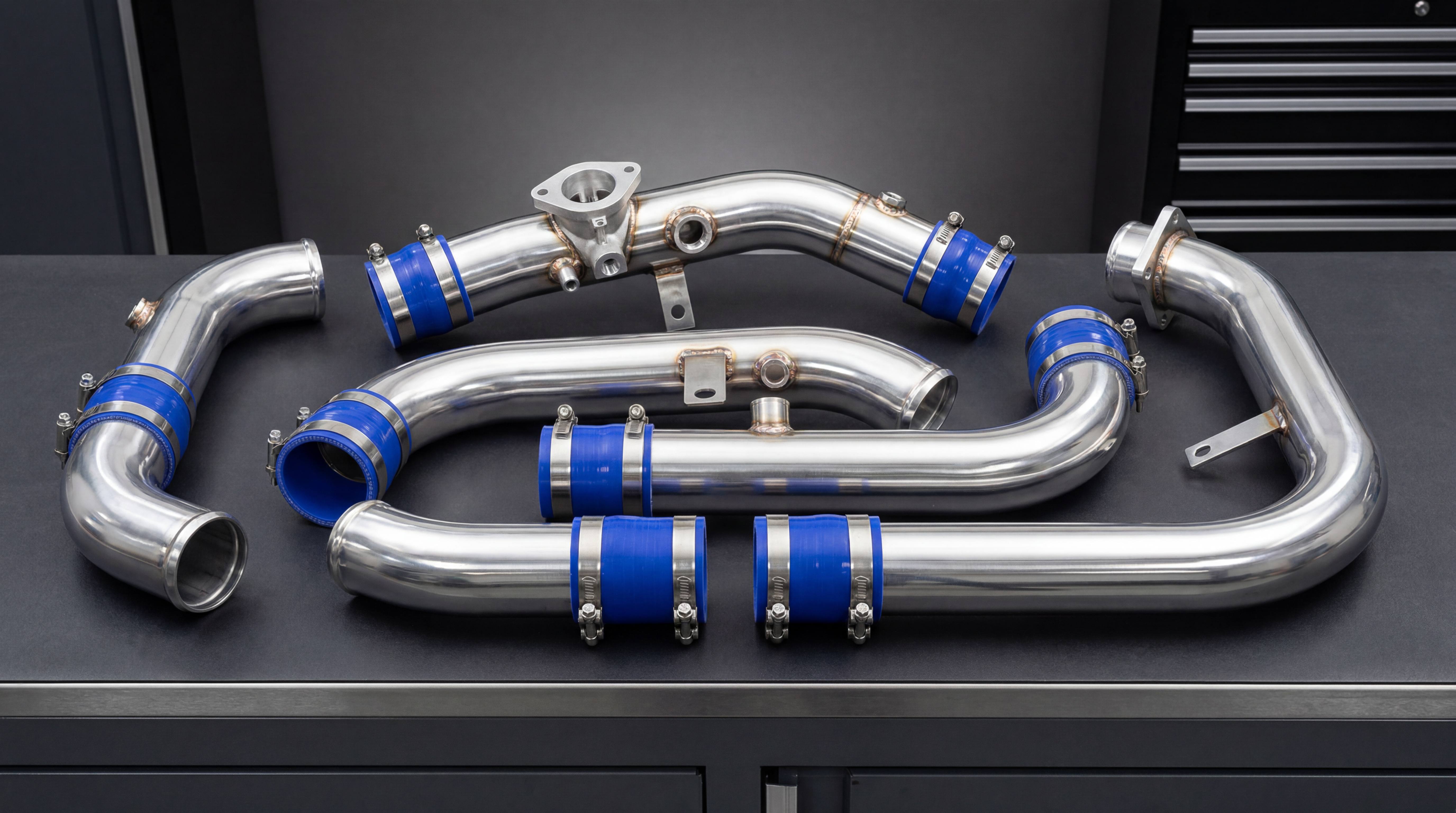
Universal intake pipe kits are useful for flexible applications. They may include mandrel bent intake tube sections, straight aluminum pipes, silicone couplers, clamps and filters. They are suitable for custom builds, engine swaps, fabrication shops and workshops that can cut and adapt parts. Universal components allow a supplier to serve many projects without developing a dedicated kit for every vehicle.
However, universal products create responsibility for the installer. The buyer must understand pipe diameter, bend angle, filter size, coupler type, sensor placement and mounting. Universal kits are not ideal for customers who expect direct fitment. If marketed incorrectly, they can create complaints.
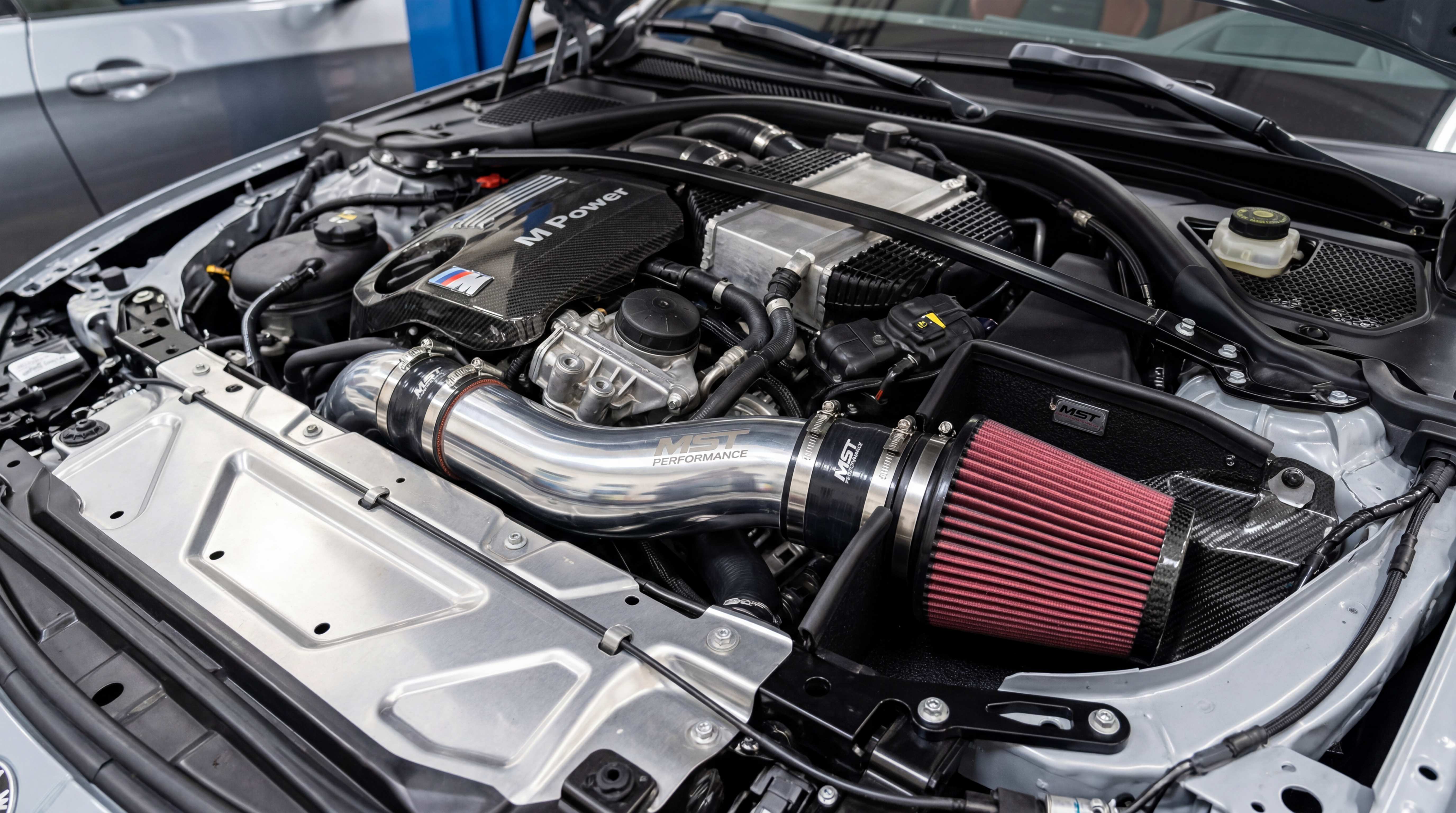
Vehicle specific intake kits are designed for a defined vehicle model, engine and year range. They usually include shaped pipes, brackets, sensor mounts, couplers, clamps, heat shields and sometimes an enclosed airbox. A good vehicle specific intake kit should fit without major modification. It should preserve sensor compatibility, engine bay clearance and installation logic.
Vehicle-specific kits have higher development requirements. The supplier must confirm fitment, sensor position, bracket mounting, airbox clearance and compatibility variations. But they are often stronger for retail channels because they reduce uncertainty for the buyer.
For a B2B importer or brand, the best strategy may include both categories. Universal components can serve workshops and custom projects, while vehicle-specific kits serve retail and distributor markets. The product architecture should match the buyer’s sales model, not simply the supplier’s existing catalog.
Material Selection: More Than Aluminum Versus Plastic

Material selection is one of the first visible differences between intake products, but it should be evaluated technically, not only visually.
Aluminum intake pipe products are common in the aftermarket because aluminum is lightweight, formable, weldable and suitable for polished, brushed or coated finishes. Aluminum can be mandrel bent to maintain smooth airflow through curves. It can also support welded brackets, sensor bungs and vacuum fittings. For many performance applications, aluminum offers a strong balance of manufacturing cost, appearance and functionality.
Stainless steel may be used where strength, heat resistance or specific visual positioning is needed. However, it is heavier and usually more expensive to process. It may be more common in custom or motorsport applications than ordinary retail intake kits.
Silicone is often used for couplers, elbows, reducers and flexible intake sections. Reinforced silicone can absorb engine movement and help fit tight engine bays. It is especially important where rigid pipes would place too much stress on connections.
Plastic intake tubes and airboxes are widely used in OEM systems because they can be molded into complex shapes and manage noise well. In aftermarket sourcing, plastic can be cost-effective for high-volume production, but tooling cost is higher and design changes are less flexible.
Carbon fiber is used in premium intake systems because it offers a high-end appearance and can reduce weight. But carbon fiber intake systems require careful bonding, sealing, heat management and quality inspection. They are not just visual products. Poorly made carbon fiber airboxes can warp, leak or fit inconsistently.
For B2B sourcing, the right material depends on product positioning. A budget universal kit, a premium carbon fiber private label intake kit and a high-volume aluminum intake pipe program should not use the same evaluation standard. The supplier should be able to explain why each material is suitable for the intended application.
Mandrel Bending and Pipe Geometry Matter
A mandrel bent intake tube is often preferred because it helps preserve internal diameter through bends. In performance intake design, bend quality directly affects airflow, installation and product appearance. A crushed bend can reduce effective flow area and create turbulence. A poorly controlled bend angle can cause fitment problems. A pipe that is rotated incorrectly can make brackets or couplers misalign.
For B2B buyers, mandrel bending should be evaluated in terms of repeatability. A supplier may show one good sample, but the real question is whether production parts stay consistent. Bend radius, angle, rotation and end length must be controlled.
Pipe geometry is especially critical for vehicle-specific intake kits. A few millimeters can matter in a crowded engine bay. If the pipe sits too high, the hood may interfere. If it sits too close to a coolant line, heat and rubbing may become problems. If the pipe angle is wrong, the filter may not sit inside the heat shield correctly.
Geometry also affects sensor behavior. In MAF-based intake systems, the sensor area should be stable and correctly sized. Sudden transitions, bends near the sensor or inconsistent MAF housing diameter can create drivability problems. This means bending accuracy and sensor placement must be considered together.
A good intake system manufacturer should use proper fixtures, templates, inspection methods and production records. For B2B buyers, this is where factory capability becomes visible. The value is not only in the pipe shape, but in the ability to repeat that shape across batches.
Sensor Compatibility Is a Core Quality Requirement
Modern intake products must work with the vehicle’s engine control system. This makes sensor compatibility a major sourcing requirement. A supplier that treats sensor mounts casually can create serious after-sales problems.
For MAF-based vehicles, the MAF housing diameter, sensor depth, orientation and flange sealing must be correct. The ECU is calibrated around expected airflow behavior. If the sensor area changes without tuning, the engine may run poorly, show abnormal fuel trims or trigger a check engine light.
For MAP-based systems, the intake may not use a MAF sensor in the same way, but pressure and temperature sensor fittings still matter. Turbocharged applications may include MAP sensor ports, IAT sensor locations, blow-off valve connections and charge pipe fittings. These components must seal under pressure and provide reliable readings.
Sensor wiring access should also be checked. The harness should reach naturally. The connector should not be stretched, twisted or routed near hot components. Installation instructions should clearly show sensor orientation and routing.
For private-label intake kit projects, the buyer should ask the supplier whether the product is no-tune compatible or tuning-required. This distinction must be communicated clearly to end users. A product designed for tuned vehicles should not be marketed as a simple plug-and-play part.
Sensor compatibility is not only an engineering detail. It affects reviews, returns, technical support and brand trust.
Fitment Validation: The Difference Between a Product and a Prototype

A prototype is not the same as a market-ready product. A supplier may be able to fabricate an attractive sample intake pipe, but a finished B2B product requires fitment validation.
Fitment validation should include installation on the target vehicle. The supplier should check pipe routing, bracket location, filter position, heat shield clearance, hood closure, sensor connection, hose routing and clamp access. The product should not require forceful adjustment. A direct-fit intake kit should install cleanly.
Validation should also consider vehicle variation. Some vehicles have different trims, regional versions, engine covers or sensor layouts. A kit that fits one model year may need changes for another. Compatibility data should be clear and honest.
Road testing is also useful. Static fitment may look fine, but engine movement, vibration and heat can reveal problems. Pipes may rub, clamps may loosen, brackets may vibrate and heat shields may contact nearby parts. A short road test and reinspection can prevent many customer complaints.
For B2B buyers, asking for fitment evidence is reasonable. Photos, installation notes, sample test reports and compatibility lists can help evaluate supplier seriousness. If a supplier cannot clearly explain how fitment was verified, the buyer should be cautious.
A reliable vehicle specific intake kit is not created by copying a shape. It is proven through installation.
Couplers, Clamps and Small Hardware Should Not Be Treated as Accessories
Many intake sourcing decisions focus on the main pipe, but small components often determine customer satisfaction. Silicone couplers, clamps, bolts, washers, brackets, grommets, seals and sensor screws are not minor accessories. They are part of the system.
A silicone coupler should match the pipe diameter, temperature environment and movement requirement. Cheap couplers may tear, deform, loosen or look poor after use. Reinforced silicone is often preferred for performance applications.
Clamps should be suitable for the application. Worm gear clamps may be acceptable for some intake sections, while T-bolt clamps may be better for higher-pressure turbo or charge pipe systems. The clamp should tighten evenly and be accessible during installation.
Brackets should be strong and accurately placed. A poorly designed intake pipe bracket can cause vibration, stress and misalignment. Rubber isolators may be useful where movement or vibration control is needed.
Gaskets and seals matter for airboxes and sensor flanges. A missing or poorly fitting seal can create leaks. Sensor screws should match the original thread or supplied insert. Hardware should not rust easily.
For B2B intake sourcing, the buyer should inspect the entire kit. A beautiful aluminum intake pipe packed with low-quality couplers and mismatched hardware is not a professional product. The end user judges the complete installation experience.
Surface Finish, Branding and Private-Label Value
Surface finish is both a technical and branding issue. Intake products are highly visible after installation, especially in performance engine bays. The finish communicates product value.
Polished aluminum provides a bright performance look. Brushed aluminum feels more technical and may hide minor marks better. Black powder coating can create an OEM-plus style and reduce visual maintenance. Anodized finishes can add brand identity but require consistency. Carbon fiber finishes serve premium positioning.
Private-label intake kit projects often require brand plates, laser marking, logo couplers, custom filter caps, printed instructions and branded packaging. These details help a brand stand out in a crowded market. However, branding should not compensate for weak product quality. A logo on a poorly fitting product can damage the brand faster than no logo at all.
Finish durability should also be checked. Polished pipes may scratch during shipping if packaging is weak. Powder coating may chip if surface preparation is poor. Carbon fiber may show resin defects or edge issues. Silicone couplers may fade or show inconsistent color.
For B2B buyers building a long-term brand, consistency matters. Customers expect the second batch to look like the first batch. A supplier’s ability to control finish quality is part of its private-label value.
Packaging Is Part of the Product
Packaging is often underestimated in automotive aftermarket sourcing. Intake kits include pipes, filters, couplers, clamps, brackets, bolts and instructions. If these parts move freely during shipping, scratches, dents and missing hardware can occur.
A professional package should protect visible surfaces. Polished aluminum and carbon fiber parts need careful wrapping. Filters should not be crushed. Small hardware should be bagged and labeled. Couplers and clamps should be organized. The carton should withstand international shipping and warehouse handling.
For e-commerce sellers, packaging must also survive parcel delivery. A box that works for pallet shipping may not be strong enough for individual courier shipments. Product damage during delivery can become a major cost.
Packaging also affects user perception. When the buyer opens the box and sees organized parts, clear instructions and protected components, the product feels more professional. This matters for private-label brands and retail channels.
B2B buyers should ask about packaging options early. Neutral packaging, branded packaging, barcode labels, carton marks, instruction inserts and spare parts packaging can all affect business operations. Packaging is not an afterthought. It is part of the supply chain and customer experience.
Documentation and Compatibility Data Reduce After-Sales Cost
Good documentation reduces confusion. An aftermarket intake kit should include a clear parts list, installation steps, sensor orientation, hose routing, bracket mounting points, clamp placement and final inspection checklist.
Compatibility data is equally important. A product listing should clearly state vehicle model, year, engine, transmission limitations if relevant, tuning requirements and any installation notes. If small differences exist between trims or regions, they should be explained.
Poor documentation creates after-sales pressure. Customers may install sensors incorrectly, leave hoses disconnected, position clamps poorly or misunderstand fitment. These problems may not be caused by the main product design, but the brand still receives the complaint.
For distributors and importers, documentation can reduce support time. For workshops, it reduces labor uncertainty. For online sellers, it improves reviews and reduces returns. For private-label brands, it strengthens professionalism.
A good air intake kit supplier should be able to provide basic technical documents or support the buyer in creating them. If the supplier only provides parts without installation knowledge, the buyer may need to invest more in content and support.
In B2B sourcing, documentation is not just paperwork. It is part of product quality.
Quality Control: What Buyers Should Actually Inspect
Intake quality control should cover more than visual appearance. A practical inspection plan should include dimensional checks, surface checks, assembly checks and packaging checks.
Dimensional checks should include pipe diameter, bend angle, end length, bracket location, sensor boss position, flange flatness and coupler size. For MAF-based products, the MAF housing internal diameter should be carefully verified.
Surface checks should include scratches, dents, coating defects, weld appearance, burrs, sharp edges and cleanliness. The inside of the pipe should be free from debris, loose metal particles or excessive weld obstruction.
Assembly checks should confirm that couplers fit properly, clamps match the pipe and coupler, brackets align, sensors mount correctly and airboxes seal as intended. If the kit includes a filter, the filter should fit the pipe and heat shield correctly.
Packaging checks should confirm all hardware is present. Missing bolts and wrong clamps are common but avoidable problems. A checklist should be used before shipment.
For production orders, buyers may request pre-shipment inspection, sample approval, batch photos or random installation checks depending on order scale. The goal is not to make sourcing difficult. The goal is to prevent expensive market problems.
MOQ, Lead Time and SKU Strategy
B2B intake sourcing must also consider business operations. A product may be technically good but difficult to manage if the MOQ is too high, lead time is too long or SKU variation is unclear.
MOQ depends on the product type. Universal aluminum intake pipe components may have lower development requirements and more flexible stock. Vehicle-specific kits may require higher MOQ because of dedicated fixtures, packaging and inventory planning. Carbon fiber or molded plastic parts may require higher upfront investment.
Lead time depends on material availability, bending, welding, finishing, packaging and inspection. Custom finishes, private-label packaging and new development projects usually take longer than repeat orders.
SKU strategy is important. A buyer should not start with too many low-demand vehicle-specific kits unless there is clear market data. It may be better to begin with high-demand platforms, universal components or modular product families. For example, a supplier may offer multiple pipe diameters, standard bends, common filter sizes and adaptable brackets for workshop channels.
For private-label brands, product roadmap planning matters. A first batch should prove quality and market response. Later batches can expand into additional models, finishes or performance levels.
Good sourcing is not only about buying parts. It is about building a manageable product line.
Supplier Capability: Questions B2B Buyers Should Ask

A serious B2B buyer should ask more than “what is the price?” The supplier should be evaluated through technical and operational questions.
Can the supplier produce mandrel bent intake tube parts consistently? What materials and wall thicknesses are available? Can they make vehicle specific intake kits? Do they have experience with MAF sensor housings, MAP ports, brackets and heat shields? Can they support private-label intake kit packaging? Can they provide installation instructions or product photos?
Buyers should also ask about quality control. How are dimensions inspected? Are welding fixtures used? How is bracket position verified? How are small hardware kits checked before packing? Can the supplier provide replacement components if a customer needs a coupler, clamp or bracket?
Production capacity matters too. Can the supplier support repeat orders? What is the normal lead time? Are finishes done in-house or outsourced? How is packaging handled? Can they support mixed SKUs?
Communication quality is also important. Automotive aftermarket products require details. A supplier that responds clearly, checks drawings, confirms compatibility and explains limitations is more valuable than a supplier that simply agrees to everything.
The best intake system manufacturer is not always the cheapest. It is the one that reduces risk and supports long-term sales.
How to Compare Supplier Quotes Correctly
When comparing supplier quotes, buyers should make sure they are comparing the same product scope. One quote may include pipes only. Another may include filter, couplers, clamps, brackets, heat shield, installation manual and branded packaging. A lower unit price may not actually be lower if important components are missing.
Material specifications should be compared. Pipe diameter, wall thickness, aluminum grade, silicone quality, clamp type and finish all affect cost. A polished pipe and a powder-coated pipe may have different pricing. A kit with reinforced silicone couplers should not be compared directly with a kit using basic rubber connectors.
Fitment development should also be considered. If one supplier has already validated the vehicle-specific kit and another has only a rough sample, the risk is different. A cheap unvalidated kit may create higher after-sales costs.
Packaging cost should be included. Export cartons, protective foam, branded boxes and instruction printing all affect price. For e-commerce, stronger packaging may save money by reducing damage claims.
Buyers should also consider the cost of poor quality: returns, bad reviews, customer support, lost distributors and brand damage. In automotive aftermarket sourcing, the cheapest quote can become expensive after the product reaches customers.
A professional quote comparison should include total product value, not just unit price.
Private Label and ODM Development: Building Differentiation
Private-label intake products are common in the aftermarket. Many brands do not own a factory, but they build value through product selection, branding, content, fitment support and customer service. The supplier’s ODM capability can help turn a standard product into a differentiated offer.
Differentiation can come from finish, logo, packaging, heat shield design, airbox shape, filter specification, coupler color, bracket refinement or documentation. It can also come from product bundles, such as intake kit plus charge pipe, intake kit plus turbo inlet pipe or universal pipe kit plus weld-on sensor bungs.
However, private-label buyers should avoid superficial differentiation only. A logo plate is not enough if the product has the same weaknesses as every low-cost alternative. Real differentiation should include better fitment, stronger hardware, clearer installation instructions, better packaging or more reliable compatibility data.
ODM development requires communication. The buyer should provide target market, vehicle application, performance positioning, expected price range, branding needs and quality expectations. The supplier should provide manufacturing feedback, cost implications and feasibility limits.
A strong private-label intake kit is the result of both market understanding and manufacturing execution.
Sustainability and Long-Term Category Development
Intake sourcing should not be treated as a one-time purchase. A buyer building a product category should think long-term. Which SKUs will remain stable? Which models have continuing demand? Which products can share components? Which parts need replacement inventory? Which products can be upgraded later?
Long-term category development also includes content strategy. Intake products benefit from technical articles, installation guides, comparison guides, troubleshooting content, product videos and FAQ pages. This helps customers understand the product and reduces support questions.
After-sales feedback should be used to improve future batches. If customers report difficult clamp access, the next version can adjust clamp orientation or coupler length. If packaging damage occurs, the carton can be improved. If fitment issues appear on a specific model year, compatibility notes can be updated.
A good supplier relationship supports this improvement cycle. The buyer and manufacturer should not only complete transactions. They should build a product line that becomes more reliable over time.
In the Industrial Components context, this is where intake pipe sourcing becomes more than trading. It becomes category management.
Final Perspective: The Right Intake Supplier Helps You Sell With Confidence
B2B intake pipe sourcing is not only about finding an intake pipe manufacturer with a competitive price. It is about finding a supplier that understands product application, manufacturing consistency, sensor compatibility, fitment validation, hardware quality, packaging and after-sales risk.
An aftermarket intake kit is a complete system. The aluminum intake pipe, mandrel bent intake tube, filter, couplers, clamps, brackets, heat shield, sensors, documentation and packaging all affect customer experience. If one part fails, the whole product may be judged poorly.
For B2B buyers, the strongest sourcing strategy begins with the market channel. Define whether the product is universal or vehicle-specific, budget or premium, no-tune or tuning-required, workshop-focused or retail-ready. Then evaluate the supplier’s ability to deliver the correct product consistently.
For suppliers and manufacturers, the opportunity is clear. Buyers do not only need low-cost parts. They need reliable products that install well, look professional, ship safely and support repeat business. A supplier that can provide quality, clarity and consistency can become a long-term partner rather than a replaceable vendor.
In the Intake category, real value is created when manufacturing capability meets market understanding. The best intake products are not just pipes that move air. They are engineered, packaged and supported systems that help brands, distributors and workshops sell with confidence.
Focused FAQ
What should B2B buyers look for in an intake pipe manufacturer?
B2B buyers should evaluate material options, mandrel bending capability, welding quality, sensor compatibility, bracket accuracy, fitment validation, coupler and clamp quality, packaging, documentation, production consistency and private-label support.
What is the difference between an air intake kit supplier and an intake pipe manufacturer?
An intake pipe manufacturer may focus mainly on metal pipe fabrication, bending and welding. An air intake kit supplier usually provides complete kits including pipes, filters, couplers, clamps, brackets, heat shields, packaging and sometimes installation documentation.
Is a universal intake pipe kit good for retail sales?
A universal intake pipe kit can be good for workshops and custom fabrication, but it may not be ideal for ordinary retail customers who expect direct fitment. Retail sales usually require clearer compatibility, installation guidance and vehicle-specific design.
Why is vehicle specific intake kit development more expensive?
Vehicle-specific intake kits require fitment testing, brackets, sensor placement, engine bay clearance checks, compatibility validation and sometimes custom packaging. The development cost is higher because the kit must fit a defined vehicle application accurately.
Why does MAF sensor compatibility matter in intake sourcing?
MAF sensor compatibility matters because incorrect housing diameter, sensor placement or airflow turbulence can affect ECU readings, fuel trims, drivability and check engine lights. A supplier must control sensor-related dimensions carefully.
What are the most important hardware items in an intake kit?
Important hardware includes silicone couplers, clamps, brackets, bolts, washers, rubber isolators, gaskets, seals and sensor screws. These components affect sealing, fitment, vibration control and installation quality.
How can B2B buyers compare intake supplier quotes correctly?
Buyers should compare full product scope, materials, wall thickness, finish, included hardware, filter quality, packaging, documentation, fitment validation and after-sales risk. A lower unit price may not be better if important components or quality controls are missing.
What makes a good private label intake kit?
A good private-label intake kit should offer reliable fitment, consistent quality, clear branding, strong packaging, complete hardware, installation documentation and meaningful differentiation. Branding should support product quality, not hide weak engineering.
Why is packaging important for aftermarket intake kits?
Packaging protects visible surfaces, prevents missing hardware, reduces shipping damage and improves customer perception. For e-commerce and international distribution, strong packaging can reduce returns and complaints.
How can an intake system manufacturer support long-term B2B business?
A strong intake system manufacturer can support repeatable production, SKU expansion, private-label customization, quality improvement, replacement parts, documentation, packaging upgrades and technical communication. Long-term support is often more valuable than the lowest initial price.
#IntakePipeManufacturer #AirIntakeKitSupplier #AftermarketIntakeSourcing #PrivateLabelIntakeKit #AluminumIntakePipe #MandrelBentIntakeTube #VehicleSpecificIntakeKit #UniversalIntakePipeKit #IntakeSystemManufacturer #AutomotiveIntakeComponents #B2BAutomotiveParts #MetalPipesAndBending