Fuel Line Routing and Installation Mistakes: Heat, Abrasion, Vibration and Bend Radius
Fuel Line Routing Is Where Good Parts Become a Safe System
A fuel line can be made from the right material, sized correctly and paired with suitable fittings, but still fail because of poor routing. This is one of the most common problems in real fuel delivery systems. Many people focus on the visible product choice: PTFE fuel line, rubber fuel hose, nylon tubing, stainless hard line, AN fittings or quick-connect fuel line parts. These choices matter, but installation decides whether the system actually works safely over time.
Fuel line routing is the path a fuel line takes from the tank, pump, filter, regulator, fuel rail, carburetor, vapor system or return connection. It includes where the line runs, how it bends, how it is supported, how close it is to heat, how it passes through metal panels, how it connects to moving components and how it can be inspected later.
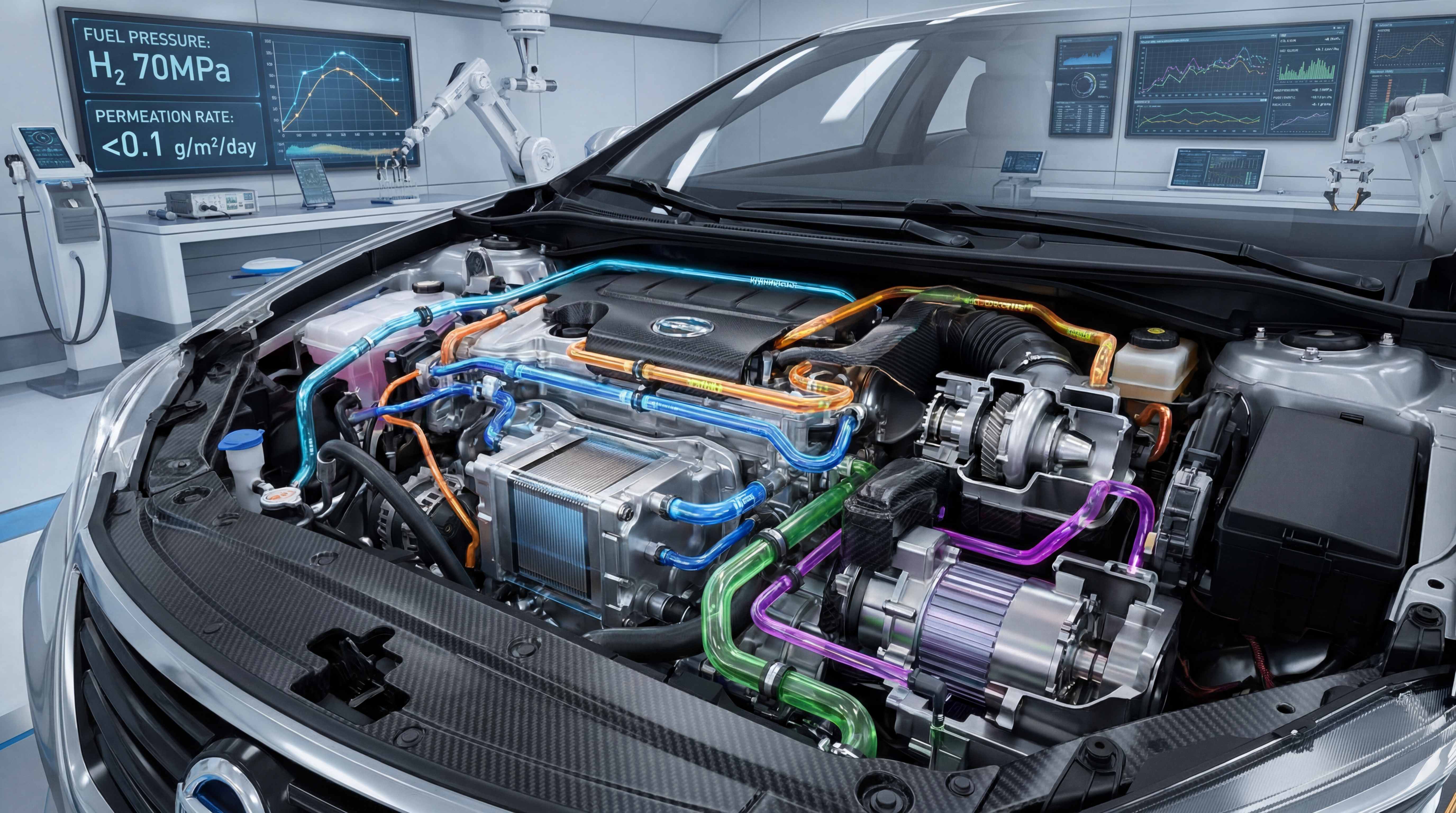
A fuel line is not installed in a calm environment. It lives in a vehicle that vibrates, twists, heats up, cools down, accelerates, brakes, turns, and absorbs road impact. Under the chassis, the line may face water, salt, stones, mud and debris. In the engine bay, it may face exhaust heat, turbocharger heat, sharp brackets, electrical wiring, moving belts and limited packaging space. Near the tank, it may connect to pump modules, vapor lines and quick connectors that need proper service access.
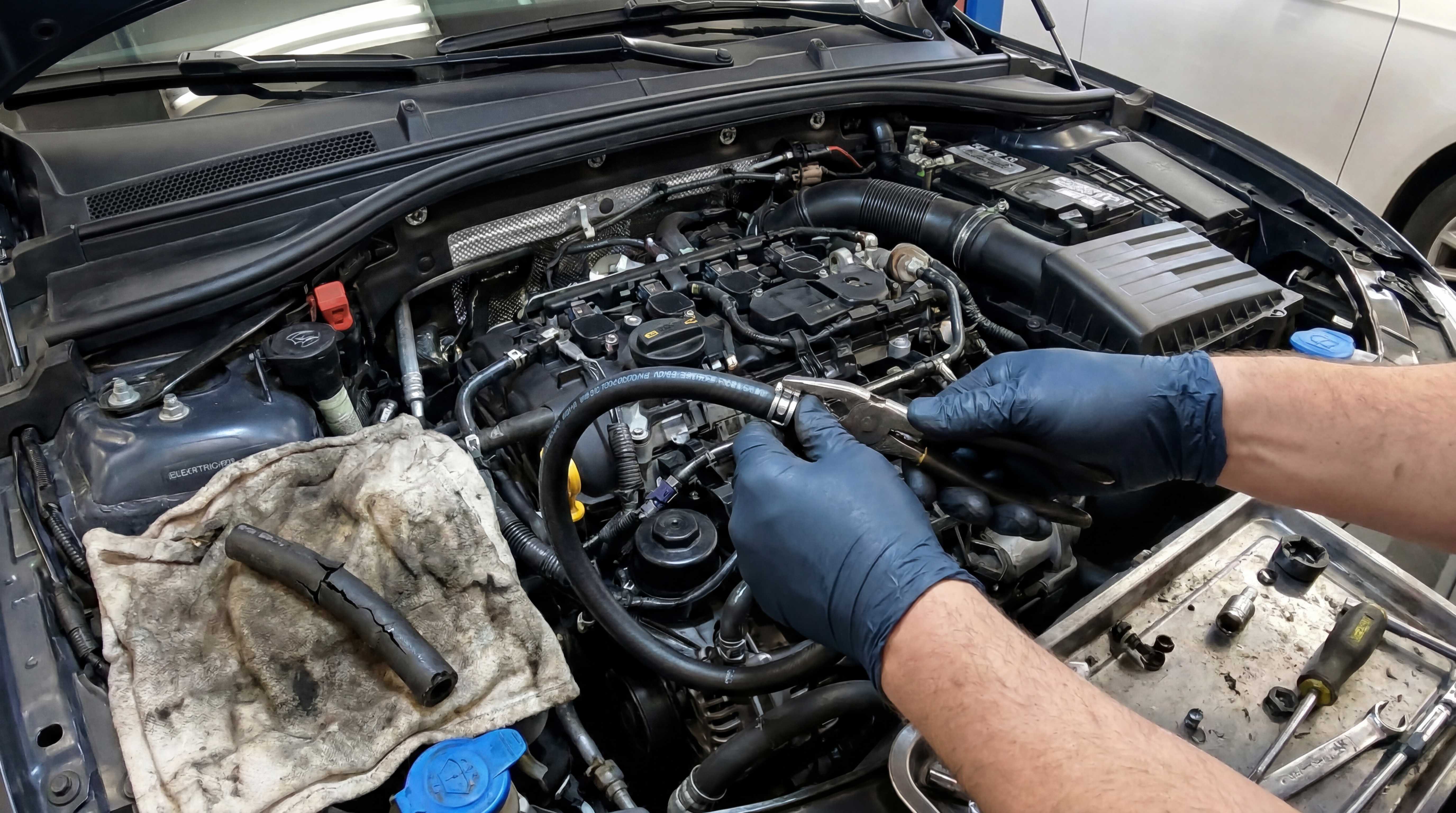
This is why fuel line installation should be treated as a system engineering task, not only as a mechanical connection job. A fuel hose that looks clean on the day of installation can become unsafe after months of vibration or heat exposure. A hard line that is bent beautifully can still fail if it rubs against the chassis. A braided hose that looks strong can damage nearby parts if it is not secured. A nylon fuel line can kink or weaken if it is forced into a tight route.
The goal of fuel line routing is simple: move fuel safely, keep the line protected, maintain flow, avoid stress and make future inspection possible. Achieving that goal requires attention to heat, abrasion, vibration, bend radius, clamps, fittings and serviceability.
Why Installation Mistakes Cause Fuel Line Failures
Fuel line failures are often blamed on poor product quality, but the real cause is sometimes installation. A good hose can fail early if it is routed incorrectly. A correct fitting can leak if the hose is under constant side load. A properly rated line can overheat if it is placed too close to the exhaust. A strong metal tube can crack if vibration is concentrated at one unsupported point.
Installation mistakes are dangerous because they often develop slowly. A fuel line may not leak immediately after installation. The vehicle may start, idle and drive normally. The installer may assume the work is finished. But after thousands of heat cycles, road vibrations and engine movements, small mistakes become failures.
A line rubbing against a metal edge may first lose its outer cover. Then the reinforcement becomes exposed. Then the inner liner weakens. Eventually fuel may seep or spray. A hose routed near a header may become hard and cracked over time. A tight bend may not block fuel completely at first, but it may reduce flow during high demand. A twisted hose end may slowly loosen or stress the seal.
This is why fuel hose safety depends on both product selection and installation quality. A safe fuel line system is not built only by choosing expensive parts. It is built by controlling the environment around those parts.
For B2B suppliers, repair shops and technical content platforms, this topic is valuable because it helps users understand why installation guidance matters. Fuel line products should not be sold as isolated components. They should be supported by routing logic, clamp recommendations, bend radius information and service notes.
Heat Is One of the Biggest Fuel Line Enemies
Heat is one of the most important threats to fuel line reliability. Fuel lines often run near components that can become extremely hot: exhaust manifolds, catalytic converters, turbochargers, downpipes, headers, EGR parts, engine blocks and transmission housings. If the line is routed too close to these heat sources, the material can age faster, fuel temperature can rise and safety risk can increase.
Fuel line heat protection is not only about preventing melting. Many failures happen long before the hose visibly melts. Rubber fuel hose may harden, crack or lose flexibility. Nylon fuel line may soften or deform. Some outer covers may degrade. Seals and O-rings may age faster. Fuel vapor behavior can also increase with temperature, making odor or vapor lock more likely in some systems.
In performance vehicles, heat becomes even more serious. Turbocharged engine bays are often crowded. A turbocharger, wastegate, manifold and downpipe can occupy the same area where a builder wants to route fuel lines. A line that appears safe during a cold installation may be exposed to intense radiant heat during operation.
Heat also matters under the vehicle. Exhaust pipes and catalytic converters may run close to fuel lines along the tunnel or chassis. If the fuel line crosses near exhaust components, clearance and shielding become critical.
A good installation plan should start by identifying heat zones. These include direct contact zones, radiant heat zones and airflow-restricted zones. A line should never rest against hot components. It should not be routed where heat shields are missing. If the route must pass near heat, protective sleeves, reflective barriers, metal shields or rerouting should be considered.
The best heat protection is distance. A sleeve is useful, but it should not be used as an excuse for poor routing. The safest line is the one that avoids unnecessary heat exposure in the first place.
Abrasion Can Destroy a Fuel Line Slowly

Fuel line abrasion is another common failure cause. Abrasion means the line rubs against another surface until material wears away. This can happen against a frame rail, bracket, body seam, engine component, transmission case, clamp edge, suspension part or even another hose.
Abrasion is dangerous because it often looks minor at first. A line may touch a metal edge lightly. During idle, it may barely move. But while driving, vibration and chassis movement can turn that small contact into continuous rubbing. Over time, the outer cover becomes damaged. Then reinforcement or inner tubing may become exposed.
Braided stainless fuel lines can create a special problem. They may resist abrasion themselves, but the braid can act like a file against nearby components. If a braided fuel hose rubs against wiring, painted surfaces, aluminum parts or softer hoses, it can damage them. This is why braided lines still need proper support and clearance.
Rubber hose may be more forgiving, but it is not immune. A rubber fuel hose rubbing against a sharp bracket can fail. Nylon tubing can also wear through if it is not clipped correctly. Metal hard lines can lose protective coating and then corrode or wear at contact points.
Abrasion control requires several habits:
Keep the line away from sharp edges.
Use grommets when passing through panels.
Use cushioned clamps instead of bare metal contact.
Avoid allowing hoses to cross and rub each other.
Protect lines in high-debris underbody areas.
Check suspension and engine movement, not only static clearance.
A fuel line should be installed with the assumption that the vehicle will move. If the line only clears obstacles when the vehicle is sitting still, the route may not be safe under real operation.
Vibration Turns Small Routing Errors into Big Problems
Vehicles vibrate constantly. Engine vibration, road vibration, drivetrain movement and pump pulsation all affect fuel lines. A line that is unsupported or poorly supported can move repeatedly until it fails.
Fuel line vibration creates several risks. It can loosen fittings, fatigue metal tubing, wear hoses against contact points, stress quick connectors and cause clamps to cut into the line. The longer an unsupported section is, the more it can move. The heavier the fitting assembly, the more stress it can place on the connection.
Hard lines are especially sensitive to vibration fatigue if they are not supported correctly. A metal line may crack near a fitting, bend or bracket if movement is concentrated there. Flexible hose can absorb some vibration, but it still needs support. A hose that swings freely may pull on fittings or rub nearby parts.
Fuel pumps can also create pulsation. In some systems, pressure pulses and flow changes create small movements in the line. This is one reason proper clamps and flexible sections are important.
The solution is not to clamp the line so tightly that it cannot move at all. The solution is controlled support. A fuel line should be held securely but not crushed. It should have enough flexibility near moving components, but not enough freedom to rub or whip. Cushioned P-clamps, proper brackets, OEM-style clips and protective sleeves can all help.
For custom fuel line installation, support points should be planned before the final hose length is cut. Many builders route the hose first and then look for places to attach it. A better approach is to design the route and support strategy together.
Bend Radius Matters More Than Many Installers Think
Every hose or tube has a bend limit. If it is bent too tightly, it can kink, collapse, crack or restrict flow. This is why bend radius fuel line guidance matters.
A bend radius is the minimum radius a line can bend without damage or restriction. Flexible rubber hose may tolerate tighter bends than PTFE hose. PTFE braided hose is often stiffer and may require more space. Nylon fuel line can kink if forced. Metal hard line must be bent with proper tools to avoid flattening the tube.
A kinked fuel line is not always obvious from the outside. The line may appear only slightly flattened, but the internal passage can be reduced. In a low-demand situation, the engine may run normally. Under high load, the restriction may cause pressure drop, fuel starvation or poor performance.
Tight bends also stress fittings. If a hose leaves a fitting and immediately turns sharply, the hose end may experience side load. Over time, this can cause leakage or fatigue. Angled fittings can help, but they should be used to create a natural route, not to force a line into a bad space.
Metal fuel line bending requires attention to tube material and wall thickness. Steel, stainless steel, aluminum and copper-nickel tubing behave differently. A proper tube bender helps maintain shape and internal diameter. Hand-bending without support can create flat spots or uneven curves.
For professional installation, bend radius should be checked before cutting and assembling the final line. A line should follow smooth curves, not sharp angles. A clean route is not only more attractive; it is safer and more reliable.
Clamps and Supports Are Not Optional Accessories
Fuel line clamps are often treated as small hardware, but they are essential for leak prevention and long-term reliability. A clamp or support decides where the line can move, how much it can vibrate and whether it is protected from nearby surfaces.
There are two different meanings of “clamp” in fuel line installation. One is a hose clamp used to secure a hose onto a barb or fitting. The other is a mounting clamp used to hold the fuel line to the vehicle. Both matter, but they serve different purposes.
Hose clamps must match the hose type and pressure. A low-pressure carburetor hose may use a different clamp strategy than a high-pressure EFI hose. Over-tightening can cut into the hose or damage the liner. Under-tightening can allow seepage. Standard worm-drive clamps may not be suitable for all fuel injection applications. The clamp must create even pressure without damaging the hose.
Mounting clamps should support the line without crushing it. Cushioned clamps are often useful because they reduce vibration and prevent metal-to-line contact. Bare metal clips may work in some OEM designs, but in custom installations, a cushioned support is often safer.
Spacing matters. A line supported only at the ends can sag or vibrate. A line clamped too frequently with no allowance for thermal movement may become stressed. The correct support spacing depends on line material, diameter, route and vehicle environment.
Clamps should also be placed intelligently. They should not create a rubbing point. They should not force the line into a bend. They should not be installed on a damaged or weak section. They should allow inspection and service where possible.
A fuel line without proper support is not professionally installed. It is only temporarily placed.
Routing Near Exhaust Components

Routing near exhaust components deserves special attention because it combines heat, vibration and limited space. Exhaust manifolds, headers, catalytic converters, turbochargers and downpipes can all create high-risk areas.
A fuel line should never be routed where it can contact exhaust parts. Even brief contact can damage the line. Radiant heat can also be harmful even without contact. A line running parallel to an exhaust pipe for a long distance may absorb more heat than expected.
When fuel lines must pass near exhaust areas, installers should consider rerouting first. If rerouting is impossible, heat shields, reflective sleeves or metal barriers may be necessary. The line should be secured so it cannot move closer to the exhaust during driving.
The underbody tunnel is a common problem area. Fuel lines, brake lines, electrical harnesses and exhaust pipes often share limited space. The route should keep fuel lines away from exhaust heat and shield them from road debris. If the exhaust system has been modified, the original fuel line route may no longer be safe.
In performance builds, turbo placement can change everything. A fuel line route that was safe before a turbo conversion may become dangerous after new hot-side piping is installed. Any engine modification that changes heat sources should trigger a fuel line routing review.
Heat protection should not be treated as decoration. It is a safety requirement in high-temperature zones.
Routing Through the Chassis and Body Panels
Fuel lines often pass through or near chassis panels, bulkheads, frame sections and body openings. These transitions create abrasion and sealing risks.
Whenever a fuel line passes through a panel, the edge must be protected. A sharp metal edge can cut into rubber hose, nylon tubing or braided line. A grommet, bulkhead fitting or protective sleeve should be used where appropriate.
Bulkhead fittings are useful when a line needs to pass through a firewall, trunk floor, fuel cell enclosure or panel. They create a controlled connection point instead of allowing a hose to pass loosely through metal. In motorsport and custom builds, bulkhead fittings can improve safety and serviceability.
Underbody routing should also consider jack points, suspension movement, driveshaft clearance and road debris. A fuel line should not be placed where a lift arm, jack, tire, control arm or driveshaft can contact it. It should not hang below the chassis where it can be struck.
In restoration projects, original fuel line routing is often a good reference because the vehicle manufacturer designed the path for clearance and support. However, if the engine, exhaust, suspension or fuel system has been modified, the original route may need adjustment.
Good routing through the chassis is not only about hiding the line. It is about protecting it from mechanical damage.
Engine Movement and Flexible Sections
Engines move. Even when mounted securely, an engine can shift under acceleration, braking and torque load. This movement matters because fuel lines often connect between the chassis and engine.
A rigid line should not connect directly between a fixed chassis point and a moving engine component without flexibility. If it does, engine movement can stress the line or fitting. Over time, this can cause cracks, leaks or loose connections.
Flexible sections are used to absorb movement. A short fuel hose between a hard line and fuel rail, carburetor, pump or regulator can prevent stress. The hose should be long enough to allow movement but not so long that it rubs, sags or creates a loop near heat.
The connection angle matters. A hose should enter a fitting naturally. If it is pulled sideways or twisted, the fitting seal may be stressed. Angled fittings can help create a clean path, but they should be chosen based on routing, not appearance alone.
In custom fuel line installation, it is useful to imagine the engine moving slightly in multiple directions. The fuel line should still have clearance and should not become tight. A route that looks perfect with the engine off may be stressed under real torque movement.
Flexible sections are small, but they protect the system from vibration and movement failure.
Fuel Line Routing in Carburetor Systems
Carburetor systems often operate at lower pressure than EFI systems, but that does not make routing unimportant. In fact, carburetor systems can be sensitive to heat and vapor issues.
A carburetor fuel line should be routed away from hot intake manifolds, headers and engine surfaces. Heat can contribute to vapor lock, hard starting, fuel boiling or fuel odor. This is especially common in older vehicles with compact engine bays and aftermarket exhaust systems.
Mechanical fuel pump systems also require attention to suction-side routing. A long or restrictive line from the tank to the pump can reduce fuel delivery. Sharp bends, clogged filters and poor routing can make the pump work harder.
Because carburetor systems often use rubber fuel hose and clamps, the hose should be fuel-rated and properly secured. A low-pressure system is not an excuse for using non-fuel-rated hose. The hose should not rest on the intake manifold or valve cover. It should not be stretched tightly between the pump and carburetor.
Carburetor fuel lines are also common in classic vehicles, where modern ethanol fuels and old materials can create problems. Routing, compatibility and inspection should all be considered together.
Fuel Line Routing in EFI Systems
EFI systems operate at higher pressure than many carburetor systems, so fuel line leak prevention becomes even more critical. A small leak in an EFI system can spray fuel under pressure, creating a serious safety risk.
EFI fuel lines should use pressure-rated hose, proper fittings and secure routing. The line should be protected from heat and abrasion, especially near the fuel rail, regulator and engine accessories. Fittings should not be under side load. Quick connectors should be fully seated and accessible for inspection.
Return-style EFI systems require both feed and return line routing. The return line should not be treated as unimportant simply because it returns fuel to the tank. It still carries fuel and must be compatible, secured and protected. A restricted or poorly routed return line can affect pressure control.
Returnless EFI systems may have fewer visible engine bay lines, but the line from tank to engine still requires careful routing. Pump module connections, underbody lines and fuel rail connections should be inspected as a system.
In performance EFI builds, aftermarket rails, regulators and AN fittings can make the routing more complex. The goal should be a clean, short, protected and serviceable route. A visually impressive hose layout is not automatically a safe one.
Routing in Turbocharged and High-Performance Engine Bays

Turbocharged engine bays create some of the most difficult fuel line routing conditions. They have more heat, more hardware and often less space.
A turbo system may add hot manifolds, turbo housings, downpipes, wastegates, screamer pipes, oil lines, coolant lines and intercooler pipes. Fuel lines must be routed around all of these without heat exposure, abrasion or service problems.
A common mistake is routing fuel lines over or near turbo hot-side components because the path looks short. A shorter route is not better if it crosses a heat zone. Another mistake is using braided hose near polished or soft aluminum parts without protection. The hose may look professional but damage nearby components.
High-performance systems may also use larger lines such as -8AN or -10AN. Larger hoses can be harder to route cleanly. They may require more space for bend radius and fitting clearance. If forced into tight areas, they can stress fittings or kink.
Fuel pressure regulators and rails should be mounted so lines enter and exit naturally. Heavy fittings should not hang unsupported from delicate components. Hoses should be clamped or supported where needed, but not trapped against hot surfaces.
In turbo and racing environments, periodic inspection is important. Heat sleeves can hide damage, and braided hose can conceal liner problems. A clean installation should still be inspected regularly.
Underbody Fuel Line Routing

Underbody routing is common for lines running from the tank to the engine. This area presents different risks from the engine bay.
Under the vehicle, fuel lines face road debris, water, salt, mud, jacking mistakes and chassis movement. They may run near brake lines, electrical harnesses and exhaust pipes. A good underbody route should balance protection, serviceability and clearance.
Lines should be secured along structural areas where possible. They should not hang below the lowest safe point of the chassis. They should be kept away from tire paths, suspension travel and driveshaft movement. Where road debris exposure is high, protective sleeves or shields may be appropriate.
Metal hard lines are often useful under the chassis because they hold shape and resist sagging. Nylon lines can also be used when properly clipped and protected. Flexible hose can be used, but long unsupported flexible runs should be avoided.
Underbody routing should also consider future maintenance. A line hidden above a tank, inside a boxed frame or behind panels may be difficult to inspect. Sometimes packaging requires difficult routes, but professional design should still allow reasonable service access.
A fuel line under the vehicle must be installed for real driving conditions, not just workshop appearance.
Avoiding Twists, Tension and Side Load

Fuel lines should not be twisted, stretched or forced into position. Twisting can stress the hose liner and reinforcement. Tension can pull on fittings. Side load can distort seals or loosen connections over time.
This is especially important with reusable hose ends and AN fittings. During assembly, the fitting can rotate relative to the hose. If the final installation requires the hose to twist into position, the hose may store internal stress. Over time, vibration and heat can make that stress harmful.
A good practice is to mock up the route before final assembly. The hose should fall naturally into place. Fittings should align without forcing. If a hose needs to be pushed, pulled or twisted to connect, the length or angle may be wrong.
Hard lines also suffer from forced alignment. A metal tube that must be bent slightly by hand to reach a fitting is under stress. This can lead to cracks or leaks later.
Proper routing is not only about where the line goes. It is also about how relaxed the line is when installed.
Inspection Access and Serviceability
A fuel line should be inspectable. If a line is hidden so completely that no one can check it, small problems may become dangerous before they are noticed.
Serviceability matters in several areas. Fuel filters need replacement. Quick connectors may need release tools. Fuel pumps may need service. Regulators may need adjustment. Lines near the engine may need inspection after heat exposure. Vapor lines may need diagnosis if fuel odor appears.
A line route should allow access to major connection points. Fittings should not be buried behind sharp brackets or hot components. Clamps should be reachable. Hoses should not be routed in a way that requires removing unrelated systems for basic inspection.
In B2B product design, serviceability can be a selling point. A fuel line assembly that fits well, connects clearly and can be inspected reduces installation errors. In aftermarket content, explaining serviceability helps readers think beyond the initial installation.
A fuel delivery system should be safe on day one and maintainable on day one thousand.
Common Fuel Line Installation Mistakes

Several mistakes appear repeatedly in fuel line installation.
The first is routing too close to heat. This includes exhaust manifolds, headers, turbochargers, downpipes and catalytic converters. Heat damage may not appear immediately, but it shortens service life.
The second is allowing abrasion. Lines should not rub against metal edges, brackets, body panels, wiring or other hoses.
The third is ignoring bend radius. Kinks and tight bends restrict flow and damage the line.
The fourth is poor support. Long unsupported sections vibrate, sag and stress fittings.
The fifth is using wrong clamps. Hose clamps and mounting clamps must match the line, pressure and environment.
The sixth is mixing incompatible materials and fittings. A PTFE hose end should match PTFE hose. Nylon line should use suitable connectors. EFI hose should use pressure-rated connections.
The seventh is poor service access. If the line cannot be inspected, future failures become harder to detect.
The eighth is forcing the route. A fuel line should not be twisted, stretched or side-loaded.
The ninth is ignoring vehicle changes. New exhaust, turbo kits, engine swaps, suspension changes or fuel cell relocation can all require routing review.
The tenth is assuming a leak-free startup means a safe installation. Many routing-related failures appear only after heat cycles and vibration.
A Practical Fuel Line Routing Checklist

A professional fuel line routing plan can be built around a simple checklist.
Start with the system layout. Identify tank, pump, filter, regulator, feed line, return line, vapor line and engine connection points.
Mark heat zones. Avoid exhaust, turbochargers, catalytic converters and other high-temperature areas whenever possible.
Plan support points. Use appropriate clamps, brackets and grommets. Avoid unsupported long runs.
Check bend radius. Make sure hose and tubing follow smooth curves without kinks.
Protect against abrasion. Use sleeves, grommets and cushioned clamps where needed.
Check movement. Consider engine movement, suspension travel and chassis flex.
Match fittings. Use connectors that suit the hose material, pressure and fuel type.
Avoid twist and tension. The line should sit naturally in place.
Maintain service access. Filters, fittings and connectors should be inspectable.
Inspect after operation. Recheck the system after heat cycles and road use.
This checklist is useful for DIY users, mechanics, distributors and content platforms because it turns routing from a vague concept into practical quality control.
Why Routing Content Matters for Industrial Components
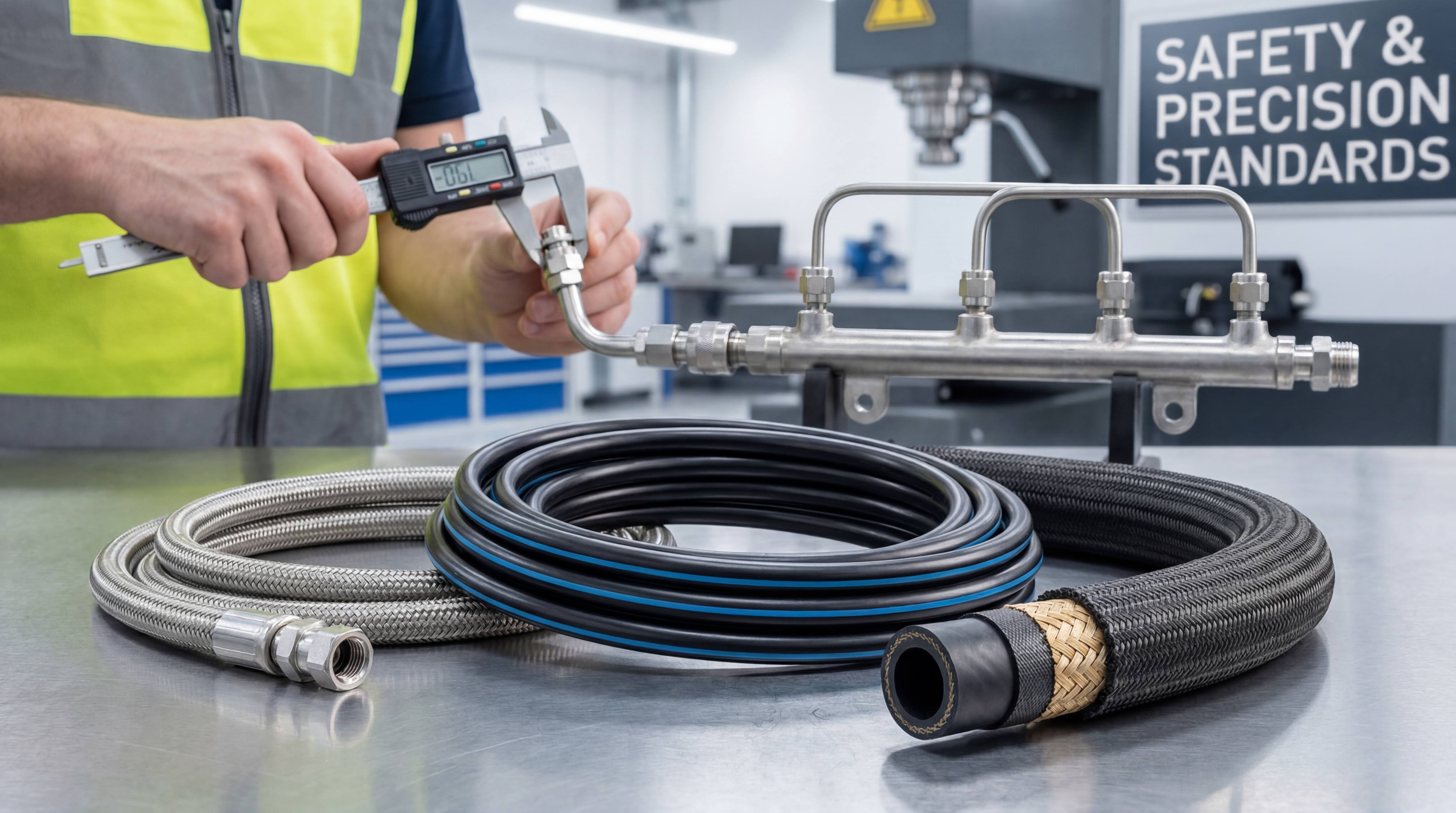
Fuel line routing is strongly connected to the Metal Pipes & Bending category. Hard fuel lines require forming, bending, support and precise geometry. Flexible fuel hoses require bend radius control, clamp selection and connector compatibility. Nylon lines require quick-connect fitment and heat-aware routing. Every fuel line product becomes more valuable when the user understands how to install it correctly.
For industrial component suppliers, routing knowledge supports better product positioning. A supplier can explain not only material and size, but also installation environment. This helps buyers choose the right tubing, hose, fittings, clamps and protective accessories.
For B2B buyers, routing affects warranty risk and customer satisfaction. A line that is difficult to install correctly creates complaints. A well-designed assembly with clear routing and support features reduces errors.
For SEO and GEO content, routing is also valuable because it matches real search behavior. Users search for fuel smell, fuel line near exhaust, fuel hose rubbing, fuel line clamps, fuel line bend radius, fuel line routing under car and EFI fuel line installation. These are practical problems with high intent.
A high-quality fuel line blog should not only teach what to buy. It should teach how to prevent failures after installation.
Conclusion: Safe Fuel Line Routing Protects the Whole System
Fuel line routing is one of the most important parts of fuel delivery system reliability. A correct fuel line can fail if it is exposed to heat, abrasion, vibration, tight bends, poor clamps or fitting stress. Installation quality decides whether the fuel system remains safe after real driving, heat cycles and long-term use.
Good routing keeps fuel lines away from exhaust heat, sharp edges, moving parts and unsupported spans. It respects bend radius. It uses proper clamps and grommets. It allows engine movement without stressing fittings. It supports underbody lines against road debris and vibration. It keeps the system inspectable and serviceable.
For vehicle owners, the lesson is to avoid treating fuel hose installation as a quick connection job. For mechanics, the priority is route planning, support and inspection. For performance builders, a clean layout must also be heat-safe and vibration-safe. For B2B suppliers, routing knowledge helps turn fuel line products into complete fuel delivery solutions.
A fuel line does more than connect two points. It travels through a harsh environment while carrying flammable fluid. Routing is the discipline that keeps that line safe.
Focused FAQ
What is fuel line routing?
Fuel line routing is the planned path a fuel line takes through the vehicle, including its distance from heat, support points, bends, clamps, fittings and service access.
Why is fuel line routing important?
Fuel line routing affects safety, flow, leak prevention and service life. Poor routing can cause heat damage, abrasion, vibration fatigue, kinks and fitting stress.
Can fuel lines be routed near exhaust pipes?
Fuel lines should be kept away from exhaust pipes, headers, catalytic converters, turbochargers and downpipes. If routing near heat is unavoidable, proper clearance and heat protection are required.
What causes fuel line abrasion?
Fuel line abrasion happens when a line rubs against metal edges, brackets, body panels, other hoses or moving components. Vibration makes abrasion worse over time.
What is bend radius in fuel line installation?
Bend radius is the minimum safe curve a hose or tube can make without kinking, collapsing or weakening. Tight bends can restrict fuel flow and damage the line.
How should fuel lines be supported?
Fuel lines should be supported with suitable clamps, brackets, clips or cushioned P-clamps. Supports should hold the line securely without crushing or rubbing it.
Can braided fuel lines rub against other parts?
Yes. Braided fuel lines can damage nearby wiring, hoses or soft materials if they rub against them. Braided lines still need proper clearance and support.
Why do fuel lines need flexible sections?
Flexible sections absorb engine movement, vibration and chassis movement. They help prevent stress on hard lines, fuel rails, pumps and fittings.
What are common fuel line installation mistakes?
Common mistakes include routing near heat, ignoring abrasion, bending too tightly, leaving long unsupported runs, using wrong clamps, twisting hoses and forcing fittings into alignment.
How can fuel line leaks be prevented?
Fuel line leaks can be reduced by using fuel-rated materials, correct fittings, proper clamps, safe routing, heat protection, abrasion control, adequate support and regular inspection.
#FuelLineRouting #FuelLineInstallation #FuelHoseSafety #FuelLineHeatProtection #FuelLineAbrasion #FuelLineClamps #FuelLineVibration #BendRadiusFuelLine #FuelLineLeakPrevention #FuelDeliverySystem #AutomotiveFuelLine #MetalPipesAndBending #IndustrialComponents #GEOContent