Intake Pipe Diameter and Bend Design: Why Shape Matters as Much as Size
Bigger Is Not Always Better in Intake Pipe Design
In the performance parts market, intake pipe diameter is often discussed in a very simple way: bigger pipe, more air, more power. This sounds logical, but it is incomplete. An intake system does need enough airflow capacity, but an oversized pipe can create its own problems. The best air intake pipe design is not the largest pipe that can fit inside the engine bay. It is the pipe size and shape that match the engine’s real airflow demand, sensor requirements, packaging space and response target.
An engine does not only need air volume. It needs air that moves in a stable, predictable and usable way. Air velocity, pressure drop, turbulence, temperature, pipe transitions and sensor accuracy all influence how the engine receives air. If the intake tubing size is too small, the pipe may become a restriction at high RPM or high boost. If it is too large, the air path may lose velocity, sensor readings may become less stable and throttle response may feel different.
This is why intake pipe diameter and intake pipe bend quality must be considered together. A smooth, well-sized tube can support consistent airflow. A large pipe with poor bends, abrupt transitions or weak fitment may perform worse than a smaller but better-designed tube. The intake pipe is not a decorative connector. It is part of the engine’s airflow control system.
For the Metal Pipes & Bending category, this topic is especially important. Intake pipes, turbo inlet pipes, charge pipes and intercooler piping all depend on controlled tube geometry. The value is not only in material selection, such as aluminum intake pipe or stainless tube. The real value is in how accurately the pipe is formed, how smoothly the bends are produced, how well the diameter is maintained and how reliably the part fits in repeated production.
What Intake Pipe Diameter Actually Controls
Intake pipe diameter controls how much air can move through the pipe and how that air behaves while moving. A smaller diameter increases air velocity at a given airflow rate, but it can become restrictive when airflow demand rises. A larger diameter can support higher flow capacity, but if it is too large for the engine, air velocity may drop and sensor behavior may become harder to control.
The right intake tubing size depends on several factors. Engine displacement matters because a larger engine generally needs more air. RPM range matters because airflow demand increases as engine speed rises. Turbocharged engines may need different sizing because compressor demand and boost levels change the amount of air moving through the system. Throttle body size, MAF sensor housing size, turbo inlet size and filter outlet size also influence the correct diameter.
A common mistake is selecting pipe size based only on outer diameter. In professional intake fabrication, internal diameter and wall thickness matter. Two tubes with the same outer diameter may not have the same internal flow area if wall thickness differs. For metal intake tubing, this detail affects both airflow and fitment with couplers, clamps and adapters.
Diameter also affects pressure drop. When air is pulled through a restrictive intake pipe, the engine or turbocharger must work harder to receive the required air. A pipe that is too small may increase pressure loss. However, simply increasing diameter without considering air velocity and sensor calibration may not create a better system. The design goal is not maximum diameter. The design goal is appropriate diameter.
A well-engineered intake pipe diameter supports the engine’s airflow demand without creating unnecessary instability. It should match the system, not just the buyer’s expectation that “larger means stronger.”
Why Pipe Shape Can Matter as Much as Pipe Size

A straight pipe with the correct diameter is easy to understand. But real engine bays rarely allow a straight path. The intake pipe often has to move around the battery, radiator support, engine cover, strut tower, throttle body, turbocharger, cooling hoses, wiring harnesses and other components. This makes bends unavoidable.
Every intake pipe bend changes airflow direction. A smooth bend allows the air to follow the pipe with less disturbance. A sharp bend or crushed bend can create separation, turbulence and local restriction. When airflow becomes unstable, the intake system may lose efficiency. In some cases, turbulence can also affect MAF sensor readings if the sensor is located too close to a disturbed section.
This is why pipe bend radius matters. A larger bend radius usually creates a smoother path for air to change direction. A tight bend may be necessary due to packaging limits, but it should be designed carefully. If the bend is too tight or poorly formed, the inner side of the bend may wrinkle and the outer side may stretch. The internal cross-section may become less consistent, reducing airflow quality.
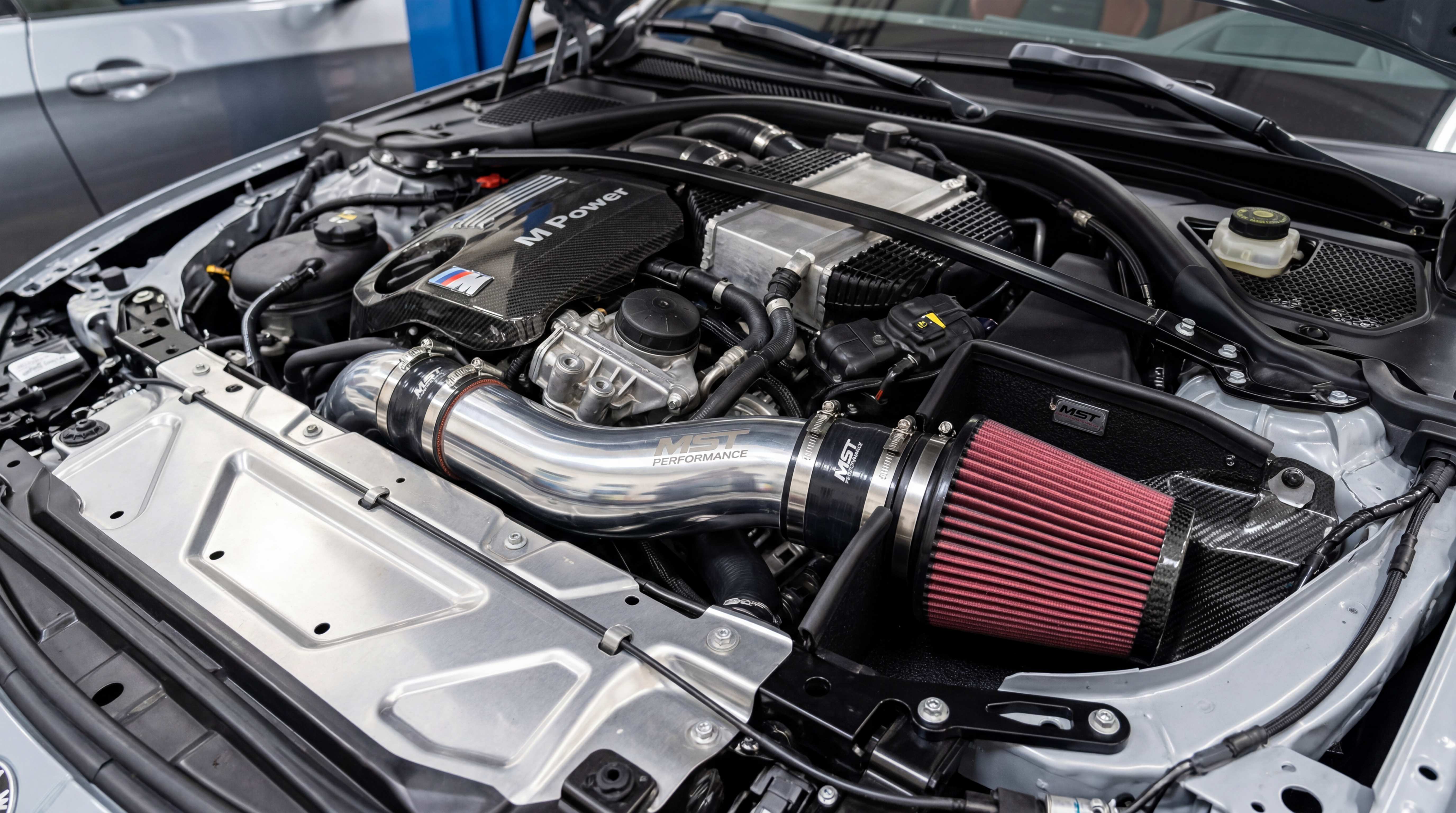
The shape of the bend should also be considered in relation to the whole route. One smooth 90-degree bend may be better than several short angled pieces welded together. A continuous mandrel bent intake pipe can maintain a cleaner internal path than a series of abrupt segments. However, in custom intake pipe fabrication, segmented welding may still be used when space is extremely limited. The key is to manage transitions carefully.
A good intake pipe is not just a tube that connects point A to point B. It is a shaped airflow path. Its geometry must work with both the engine and the vehicle structure.
Mandrel Bending and Why It Is Important

Mandrel bending is often used in performance intake and exhaust fabrication because it helps maintain a consistent internal diameter through the bend. During a normal bending process, the tube can collapse, flatten or wrinkle as it is forced into shape. A mandrel supports the inside of the tube during bending, helping the pipe keep its round shape.
For a mandrel bent intake pipe, this consistency matters. If the tube flattens at the bend, the effective flow area is reduced. A visible bend may appear acceptable from the outside, but the internal cross-section may be smaller than expected. That smaller section can act like a restriction, especially at higher airflow demand.
Mandrel bending also improves repeatability. In B2B production, one good sample is not enough. Buyers need batch consistency. The pipe angle, diameter, bend location and end position must remain stable across repeated production runs. If every part fits slightly differently, installation problems will appear in the field.
For aluminum intake pipe products, mandrel bending can be especially valuable because aluminum is lightweight and formable but still requires proper tooling and process control. Poor bending can create thinning, surface marks or inconsistent shape. High-quality bending helps preserve both performance and appearance.
This does not mean every intake pipe must be mandrel bent in every situation. Some OEM-style molded plastic parts or silicone hoses use different forming methods. But for metal intake tubing, especially in performance and fabrication markets, mandrel bending is often a sign that the manufacturer understands airflow quality and dimensional control.
Bend Radius: The Detail That Many Buyers Ignore
Pipe bend radius is one of the most important but least understood parts of intake pipe design. Bend radius describes how large or tight the curve is. A larger radius creates a more gradual direction change. A smaller radius creates a sharper turn.
In intake systems, sharp turns can increase pressure loss. They can also create uneven airflow distribution inside the pipe. The air near the outside of the bend may move differently from the air near the inside of the bend. If the bend is too aggressive, turbulence can continue downstream.
This becomes especially important when a MAF sensor is placed after a bend. The sensor needs a stable airflow profile. If the air is still swirling or uneven, sensor readings may become less accurate. That can affect fuel trims, idle quality and drivability.
A professional air intake pipe design should consider the distance between bends and sensor locations. It should also consider the distance between the filter and the sensor, the sensor and the throttle body, or the turbo inlet and the compressor. The pipe is not only carrying air; it is shaping the air before it reaches sensitive components.
In production, bend radius also affects manufacturability. Tight radius bends may require better tooling, slower processing or different material choices. If the radius is too aggressive for the tube material and wall thickness, the result may include wrinkling, thinning or deformation. This is why engineering and manufacturing should not be separated. A design that looks good in CAD must still be practical to bend consistently.
Intake Pipe Diameter for Naturally Aspirated Engines

Naturally aspirated engines rely on atmospheric pressure and engine vacuum to draw air into the cylinders. Because there is no turbocharger forcing air through the system, intake pipe diameter must support smooth flow without creating unnecessary loss of velocity.
For naturally aspirated engines, oversized tubing can sometimes reduce response. The engine may not benefit from a much larger pipe if the throttle body, intake manifold and cylinder head are not demanding more airflow. A slightly larger or smoother intake pipe may help if the original system was restrictive, but there is a point where increasing diameter no longer brings practical value.
In this type of engine, the intake pipe bend and transition quality are very important. The air path should support stable flow into the throttle body. Sudden diameter changes, rough transitions and poorly placed sensors can cause more harm than the diameter increase helps.
A naturally aspirated performance intake should be designed around the engine’s operating range. A high-revving engine may need more airflow at the top end. A daily driver may need good low-speed response and stable idle. These two goals may not use the same intake tubing size.
This is why universal sizing is risky. A pipe that works for one engine may not be ideal for another. For professional intake fabrication, engine type, displacement, RPM target and throttle body size should guide diameter selection. The goal is to support engine breathing without making the air path unstable.
Intake Pipe Diameter for Turbocharged Engines
Turbocharged engines place different demands on intake piping. Before the turbocharger, the intake pipe must feed the compressor. If the pre-turbo intake pipe is too restrictive, the compressor may have to work harder to pull in air. This can reduce efficiency and limit power potential, especially when boost levels increase.
For a turbocharged engine, the turbo inlet pipe is often a critical component. A narrow or poorly shaped inlet can create restriction before the compressor. A larger and smoother turbo inlet may support better airflow when the turbo demands more air. However, the pipe still needs to match the compressor inlet, sensor strategy and available packaging space.
After the turbocharger, the air is compressed and usually routed through intercooler piping and a charge pipe. These are technically different from the pre-turbo intake pipe, but they follow similar design principles. Diameter, bend radius, pressure drop and connection reliability all matter. In pressurized sections, coupler retention and bead-rolled pipe ends become especially important.
Turbocharged systems also face more heat. The intake pipe may be close to the turbocharger, exhaust manifold or intercooler piping. Material choice and routing become important. An aluminum intake pipe can work well, but heat shielding and air source design should be considered. A larger pipe near a heat source is not automatically better if it increases heat exposure.
For tuned turbocharged engines, airflow demand may rise significantly. In that case, intake pipe diameter becomes more important than on many stock naturally aspirated vehicles. But the same principle remains: the best size is the size that matches the system.
The Role of Pipe Transitions and Couplers

Even if the main tube diameter is correct, poor transitions can create restrictions. An intake pipe system often connects several different parts: filter outlet, MAF housing, aluminum tube, silicone coupler, throttle body, turbo inlet or airbox adapter. Each connection can either preserve smooth flow or disturb it.
A sudden step from one diameter to another can create turbulence. A poorly aligned coupler can create an internal lip. A pipe inserted too deeply into a coupler may disrupt the flow path. A rough weld bead near the inside of the tube can disturb air. These details are easy to overlook, but they matter in high-quality intake fabrication.
Silicone couplers are useful because they absorb vibration and allow some flexibility during installation. However, they must be correctly sized. A loose coupler may leak. A coupler that is too tight may be difficult to install or may deform. In turbo applications, couplers must handle pressure and temperature. T-bolt clamps are often used where stronger clamping is needed.
Pipe ends are another important detail. Bead-rolled ends help keep couplers from slipping off. This is especially important in boosted systems, but it can also improve reliability in naturally aspirated systems that experience vibration. A clean pipe end also improves installation feel and reduces the chance of damaging the coupler.
For B2B buyers, these details are strong indicators of supplier quality. A custom intake pipe is not only defined by the main tube. It is defined by the quality of every connection in the system.
MAF Sensor Stability and Diameter Control

In many modern vehicles, the MAF sensor is one of the most sensitive parts of the intake system. It measures the amount of air entering the engine so the ECU can calculate fuel delivery. If an intake pipe changes the airflow pattern around the sensor, drivability problems may appear even if the pipe looks well made.
The diameter around the MAF sensor is especially important. If the sensor housing is larger or smaller than expected, the sensor may read air differently. If the sensor is placed too close to a bend, filter or sudden transition, airflow may not be stable. If the pipe wall, sensor boss or mounting angle is inconsistent, the signal may vary.
This is why vehicle-specific intake kits require more engineering than universal tubes. The pipe must physically fit, but it must also preserve correct sensor behavior. A universal intake pipe may be useful for custom fabrication, but the installer needs to understand sensor placement.
For manufacturers, MAF sensor compatibility requires tight dimensional control. The sensor flange position, pipe diameter, boss height and rotation angle must be consistent. If the first production sample performs well but later batches vary, customers may experience issues.
Air intake pipe design should treat the sensor zone as a controlled section, not just another place to weld a fitting. Stable airflow measurement is part of performance. Without it, even a smooth-looking intake pipe can create problems.
Material Choice and Its Effect on Pipe Design
The material of the intake pipe affects how the pipe can be formed, how it handles heat, how it looks and how it performs over time. Aluminum intake pipe is one of the most common choices in performance applications because it is lightweight, formable and suitable for polished, brushed, anodized or powder-coated finishes.
Aluminum is also suitable for mandrel bending and welding, but it requires proper process control. Thin-wall aluminum may save weight but can be more sensitive to deformation. Thicker-wall tubing may be stronger but heavier and may affect cost. The right wall thickness depends on application, bend geometry and product positioning.
Stainless steel is stronger and more heat-resistant, but it is heavier and more expensive to process. It is less common for typical cold air intake tubes but may be used in certain custom or harsh environments. Plastic intake tubes are common in OEM systems because they can be molded into complex shapes and offer good heat insulation. Silicone is often used for flexible sections, elbows and couplers.
Carbon fiber is used in premium intake systems where lightweight construction and visual appeal are important. It can also reduce heat transfer compared with metal in some cases, but it requires different manufacturing capability and higher cost.
Material should not be selected only by appearance. A polished metal intake tubing product may look attractive, but it must still be routed away from heat and supported properly. A plastic tube may look less premium but may perform well in thermal management. A silicone hose may be flexible but may need reinforcement. The material must support the design goal.
Custom Intake Pipe Fabrication: Where Mistakes Often Happen
Custom intake pipe fabrication is popular among project car builders, tuning shops and performance enthusiasts. It allows the intake route to be adapted to a specific engine swap, turbo setup, front-mount intercooler layout or custom airbox. However, custom work also creates more room for mistakes.
One common mistake is choosing pipe diameter based on visual expectation rather than engine demand. A very large custom intake pipe may look aggressive, but if it disrupts sensor readings or reduces velocity unnecessarily, it may not improve performance.
Another mistake is using too many welded segments. Segmented fabrication can solve packaging problems, but every joint must be clean and aligned. Poor internal welds, uneven transitions or sharp angles can reduce airflow quality. A well-made mandrel bent intake pipe may offer a smoother path than many short welded pieces.
A third mistake is ignoring service access. The intake pipe may fit during installation, but can the filter be removed later? Can the sensor be accessed? Can clamps be tightened? Can the pipe be removed without disassembling half the engine bay? Good design considers maintenance.
A fourth mistake is poor heat management. A custom intake pipe routed near exhaust components may absorb heat. An open filter placed in a hot corner of the engine bay may reduce the benefit of a larger tube. Heat shields, ducting and pipe routing should be part of the design from the beginning.
Custom fabrication is valuable when it is done with system thinking. It becomes risky when the pipe is treated as a simple shortcut between two openings.
Manufacturing Consistency in Intake Pipe Production
For B2B buyers, manufacturing consistency is as important as the first sample. A supplier may produce one attractive prototype, but the real question is whether the same part can be repeated accurately across batches.
Intake pipe production requires control over tube diameter, wall thickness, bend angle, bend location, cut length, weld position, surface finish and packaging. Small deviations can affect installation. A bracket that is a few millimeters off may create stress. A bend that is slightly rotated may cause interference. A pipe end that is not formed consistently may affect coupler retention.
Surface finish also needs consistency. Polished aluminum intake pipe products should have a uniform appearance. Powder-coated parts should have stable coating thickness and color. Welds should look clean and repeatable. If the product is sold under an aftermarket brand, visual consistency matters because customers judge quality quickly.
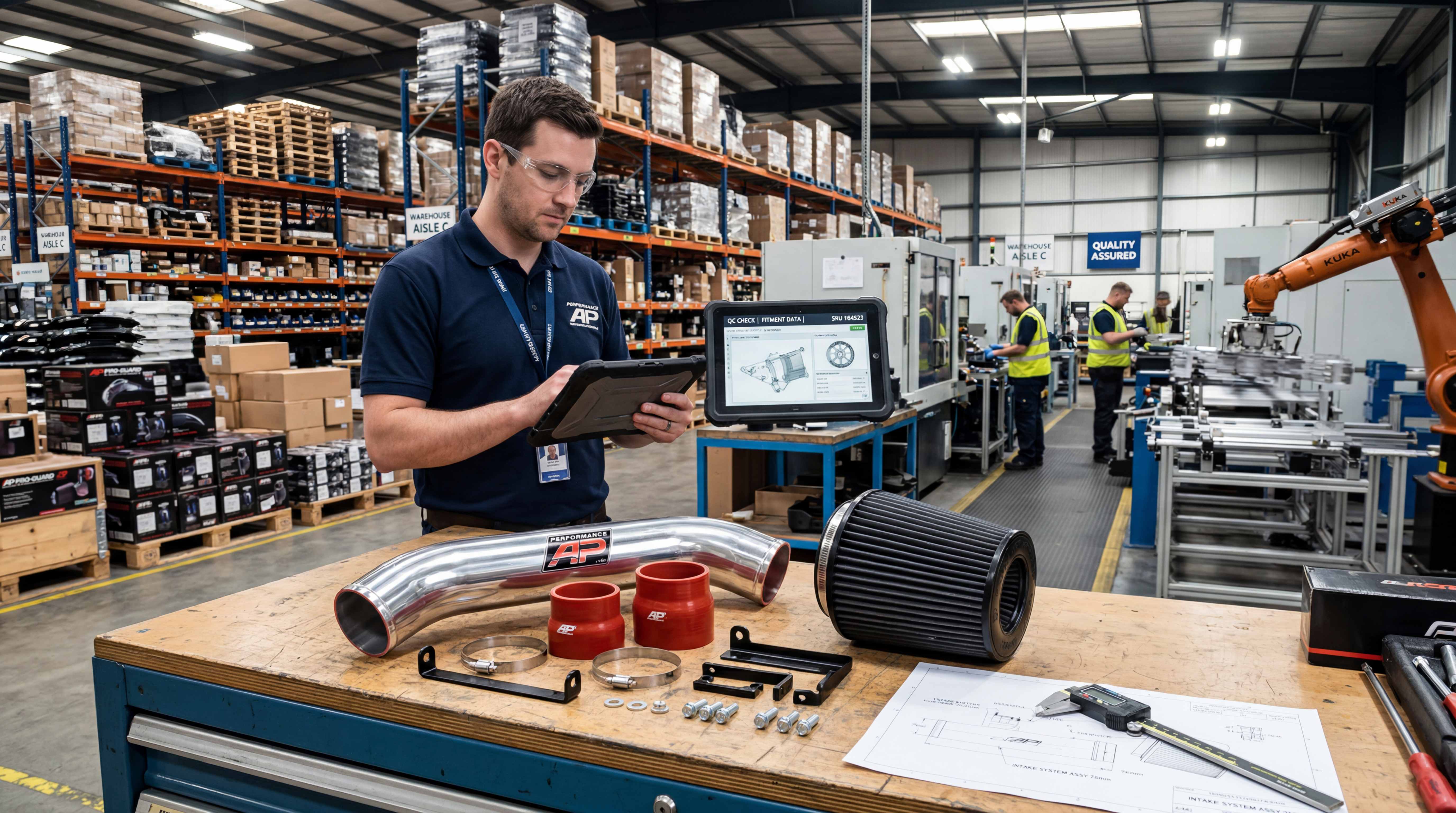
Inspection standards should be clear. B2B buyers may ask for dimensional drawings, sample approval, fitment verification, packaging standards and batch inspection. For vehicle-specific intake kits, test fitting is especially important. For universal metal intake tubing, dimensional accuracy and finish quality are key.
A strong supplier should understand that intake pipes are not generic tubes. They are visible, functional and installation-sensitive parts. Manufacturing discipline directly affects market reputation.
How Intake Pipe Design Affects Brand Positioning
In the aftermarket industry, intake pipe products exist at different levels. Low-cost products compete mainly on price and appearance. Mid-range products compete on fitment, finish and acceptable performance. Premium products compete on engineering, heat management, documented testing and brand trust.
The same intake pipe diameter can be used in very different product strategies. A basic aluminum tube with a cone filter may serve entry-level buyers. A carefully designed cold air intake system with a sealed airbox, proper MAF section and mandrel bends may serve performance-focused buyers. A custom intake pipe kit with multiple couplers, brackets and finish options may serve tuning shops and distributors.
For content strategy, this is important. A blog about intake pipe bend design should not only educate enthusiasts. It should also help B2B readers understand how product details create commercial value. Better bend quality, accurate sensor placement, clean welding and reliable coupler fitment all support a stronger brand position.
In a crowded market, many intake products look similar in pictures. The difference is often in details that buyers discover during installation or long-term use. A supplier that can explain and control these details has a stronger chance of winning professional customers.
Practical Design Checklist for Intake Pipes
A practical intake pipe design checklist should begin with application. What vehicle or engine is the pipe for? Is it naturally aspirated or turbocharged? Is the system stock, tuned or heavily modified? What is the expected airflow demand?
Next, the intake pipe diameter should be selected based on airflow requirements, throttle body or turbo inlet size, sensor needs and available packaging space. The pipe should not be oversized only for appearance.
The route should then be planned. The intake pipe bend layout should avoid unnecessary turns, sharp bends and heat sources. The pipe bend radius should be as smooth as the engine bay allows. If a tight bend is unavoidable, the manufacturer should use proper tooling and check internal deformation.
Connection points should be designed carefully. Couplers should match the pipe and connected components. Pipe ends should be formed to improve retention. Clamps should be selected according to pressure and application. Brackets should support the pipe without creating stress.
Sensor placement should be treated as a controlled design zone. The MAF sensor should be positioned in a stable airflow section with correct diameter and orientation. The pipe should not create turbulence immediately before the sensor.
Finally, the design should be reviewed for production. Can it be bent repeatedly? Can it be inspected easily? Can it be packaged safely? Can the finish remain consistent? Can installation be completed without forcing parts into place?
This checklist helps connect airflow design with manufacturing reality.
What Buyers Should Ask Before Choosing an Intake Pipe Supplier

Professional buyers should ask more than price and MOQ. Intake pipe suppliers should be evaluated by technical capability, production consistency and application understanding.
Important questions include: What tube materials and wall thicknesses are available? Can the supplier produce mandrel bent intake pipe sections? What bend radius options are possible? How is dimensional accuracy controlled? Are bead-rolled ends available? Can sensor bosses and brackets be welded accurately? What finishes are supported? Can the supplier provide drawings or sample inspection reports?
Buyers should also ask about fitment validation. For vehicle-specific parts, has the intake pipe been installed on the target vehicle? Is there enough clearance from heat sources and moving parts? Does the sensor position match the original control logic? Are couplers and clamps included?
Packaging is another practical issue. Polished or coated intake pipes can be scratched during shipping. Filters, clamps and silicone couplers need organized packaging. A well-packaged kit reduces customer complaints and improves brand presentation.
A reliable intake pipe supplier should understand both product and market. The product must perform, but it must also install easily, look consistent and support the buyer’s sales channel. This is where professional manufacturing becomes a competitive advantage.
Final Perspective: Good Intake Pipe Design Is Controlled Compromise
Intake pipe design is a controlled compromise between airflow, velocity, temperature, packaging, fitment, sensor stability and manufacturability. A larger diameter can help in some cases, but only when the engine needs it. A smooth bend can reduce loss, but it must fit the vehicle. A polished aluminum pipe can improve appearance, but it must be supported by proper routing and heat management.
The best intake pipe is not simply the biggest or brightest tube. It is the pipe that delivers stable airflow with minimal restriction, fits correctly, supports accurate sensor readings and can be manufactured consistently. In performance applications, this often means appropriate intake pipe diameter, smooth pipe bend radius, mandrel bending, reliable couplers and clean transitions.
For drivers, understanding these details helps avoid unrealistic expectations. For fabricators, it improves custom intake pipe results. For B2B buyers, it provides a better way to evaluate suppliers. For manufacturers, it highlights where real product value is created.
In the Intake category, pipe diameter and bend design are not small technical details. They are the foundation of professional air intake pipe design. When shape, size and manufacturing quality work together, an intake pipe becomes more than a connector. It becomes a controlled airflow component.
Focused FAQ
Why does intake pipe diameter matter?
Intake pipe diameter affects airflow capacity, air velocity and pressure loss. A pipe that is too small can restrict engine airflow at high demand. A pipe that is too large may reduce velocity or affect sensor stability. The right diameter depends on engine size, RPM range, turbo demand, throttle body size and overall system design.
Is a bigger intake pipe always better?
No. A bigger intake pipe is not always better. Oversized tubing can reduce air velocity, create packaging problems or disturb MAF sensor readings. The best intake tubing size is the one that matches the engine’s airflow demand and control requirements.
What is a mandrel bent intake pipe?
A mandrel bent intake pipe is formed using internal support during bending so the tube keeps a more consistent round shape through the bend. This helps reduce flattening, maintain internal diameter and support smoother airflow.
Why does pipe bend radius matter?
Pipe bend radius affects how smoothly air changes direction. A larger radius usually creates less disturbance, while a tight or crushed bend can create turbulence and pressure loss. Bend radius also affects manufacturing difficulty and dimensional consistency.
Is aluminum a good material for intake pipes?
Yes. Aluminum intake pipe is common in performance applications because it is lightweight, formable, weldable and available in many finishes. However, routing and heat management still matter because aluminum conducts heat more than some plastics or composites.
What is the difference between intake pipe and intake tubing?
The terms are often used similarly. Intake pipe usually refers to the formed component used in the air intake system, while intake tubing may refer to the raw or semi-finished tube used for fabrication. Both relate to the airflow path before the engine or turbocharger.
Can poor intake pipe design affect MAF sensor readings?
Yes. Poor intake pipe design can create turbulence, incorrect sensor housing diameter or unstable airflow near the MAF sensor. This may lead to rough idle, fuel trim issues, hesitation or check engine lights.
What should be checked in custom intake pipe fabrication?
Custom intake pipe fabrication should check diameter, bend quality, sensor placement, heat exposure, coupler fitment, clamp type, bracket support, service access and internal transition smoothness. A pipe that fits physically may still perform poorly if airflow and sensor behavior are ignored.
What makes a high-quality metal intake tubing product?
A high-quality metal intake tubing product should have consistent diameter, smooth bends, clean cuts, accurate welded fittings, reliable pipe ends, stable surface finish and repeatable production quality. For performance use, mandrel bending and proper coupler retention are especially valuable.
What should B2B buyers ask before sourcing intake pipes?
B2B buyers should ask about material, wall thickness, bend radius, mandrel bending capability, tolerance control, sensor boss accuracy, bead-rolled ends, surface finish options, packaging, fitment validation and batch inspection. These details determine whether the intake pipe is reliable in real use.
#IntakePipeDiameter #IntakePipeBend #MandrelBentIntakePipe #AluminumIntakePipe #IntakeTubingSize #AirIntakePipeDesign #PipeBendRadius #IntakeFabrication #CustomIntakePipe #MetalIntakeTubing #EngineAirflow #MetalPipesAndBending