Fuel Line Size Guide: How to Choose the Right Diameter for Carburetor, EFI and Turbo Builds
Fuel Line Size Is a System Decision, Not a Guess
Fuel line size is one of the most searched and most misunderstood topics in fuel delivery system design. Many people ask a simple question: “What size fuel line do I need?” The real answer is not always simple, because a fuel line does not work alone. It works together with the fuel tank, fuel pump, fuel filter, fuel pressure regulator, fuel rail, injectors or carburetor, return line, fittings and fuel type.
A common mistake is to choose fuel line diameter by appearance. A larger line looks more powerful, a braided line looks more professional, and an AN fitting looks more performance-oriented than a plain hose clamp. But appearance does not decide fuel delivery. The system must deliver enough fuel volume at the required pressure without creating unnecessary restriction, pressure instability, installation difficulty or safety risk.
Another mistake is copying another build without understanding the conditions. A naturally aspirated carburetor engine, a modern EFI street car, a turbocharged drag car and a classic restoration project may all use different fuel line sizes for good reasons. The right fuel line size depends on engine demand, fuel pressure, horsepower target, duty cycle, fuel type, pump location, line length and whether the system is return-style or returnless.
A fuel line that is too small can restrict flow under load. This may cause pressure drop, lean operation, poor high-rpm performance, fuel starvation or tuning instability. A fuel line that is unnecessarily large may cost more, take up more space, make routing more difficult and increase the chance of poor installation. Bigger is not always better. Correct is better.
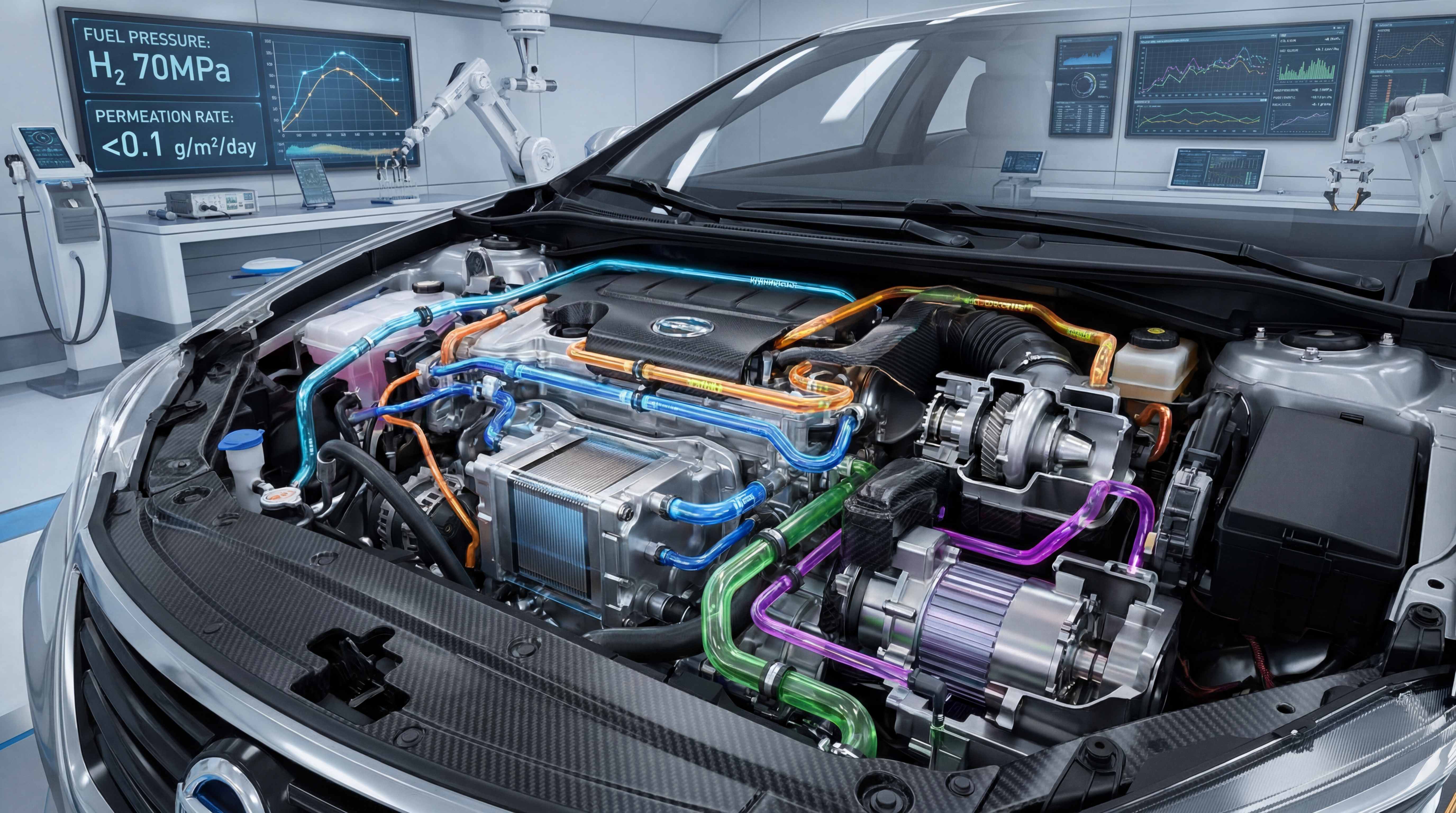
For industrial component suppliers, automotive aftermarket distributors and technical content publishers, fuel line sizing is a valuable topic because it sits at the intersection of tubing, fluid transfer, system engineering and real-world vehicle use. It is not only a DIY question. It is a fuel delivery architecture question.
What Fuel Line Size Really Means
When people talk about fuel line size, they may mean several different measurements. This can create confusion.
Some people refer to outside diameter. Others refer to inside diameter. Some use inch-based tubing sizes such as 5/16 inch, 3/8 inch or 1/2 inch. Performance builders often use AN sizes such as -6AN, -8AN or -10AN. OEM replacement parts may be listed by tube diameter, connector size, vehicle fitment or assembly number. A hose supplier may specify inner diameter, outer diameter, wall thickness and pressure rating separately.
For fuel flow, the most important dimension is usually the internal passage that fuel moves through. A fuel line with a large outside diameter but thick wall may not flow as much as expected. A fitting with a small internal bore can become a restriction even if the hose itself is large. A fuel filter, regulator or adapter can also reduce effective flow.
This means the line size is only one part of the flow path. The fuel must pass through the pump outlet, filter, hose, hard line, fittings, fuel rail, regulator and return path. If one part is too restrictive, the entire system may suffer.
In practical terms, fuel line size should be understood as effective system flow capacity, not just tube diameter. A technically correct fuel line design considers the full path from tank to engine and back to tank if a return line is used.
Common Fuel Line Sizes in Automotive Applications
In everyday automotive work, several fuel line sizes appear frequently.
A 5/16 inch fuel line is common in many lower-flow or older vehicle applications. It may be suitable for some carbureted engines and modest fuel demand systems, depending on layout and pressure. However, it may become restrictive in higher-power EFI or performance use.
A 3/8 inch fuel line is one of the most common upgrade and replacement sizes. It is often used for street performance, EFI conversions, classic car upgrades and moderate horsepower builds. Many builders treat 3/8 inch as a practical baseline for fuel feed lines because it offers more capacity than 5/16 inch without becoming difficult to route.
A 1/2 inch fuel line is often used in higher-flow performance applications. It may be selected for high-horsepower engines, turbo builds, supercharged setups or E85 fuel systems where fuel volume demand is higher. However, it may be unnecessary for many standard vehicles.
In AN sizing, -6AN fuel line is roughly associated with many 3/8 inch fuel line applications, although exact internal diameter can vary by hose type and manufacturer. -8AN fuel line is often used for higher-flow feed lines in performance systems. -10AN fuel line may be used in serious racing, high-power turbo systems, pump inlet sections or applications where large volume flow is required.
It is important to avoid treating these sizes as universal power ratings. A -6AN fuel line in one system may perform differently from another -6AN line if the hose construction, fittings, length, pump and fuel type are different. Fuel line diameter is important, but it cannot be separated from the rest of the fuel delivery system.
Carburetor Fuel Line Sizing

Carbureted fuel systems are often simpler than EFI systems, but they still require proper sizing. A carburetor usually operates at lower fuel pressure than EFI. Because pressure is lower, the system must rely on adequate line diameter and pump capacity to keep the fuel bowl supplied during acceleration, high rpm or heavy load.
For many mild carbureted street engines, a 5/16 inch or 3/8 inch fuel line may be common. A small engine with modest power demand may not need a large line. A larger V8, performance carburetor setup or sustained high-load application may benefit from a 3/8 inch line or larger depending on the fuel pump and vehicle layout.
The fuel pump type matters. A mechanical fuel pump mounted on the engine pulls fuel from the tank and pushes it to the carburetor. Long suction-side restrictions can reduce performance. An electric pump near the tank may push fuel more effectively, but the line still needs to support the required flow.
A common mistake in carburetor fuel line sizing is focusing only on the line from the pump to the carburetor while ignoring the tank pickup, filter and line from the tank. If the pickup or filter is restrictive, upgrading the visible engine bay hose may not solve the problem.
Another important point is heat. Carbureted vehicles can be sensitive to vapor lock, especially when fuel lines are routed near exhaust components or hot engine areas. A larger line does not fix poor routing. Proper distance from heat, suitable insulation and clean routing are still essential.
For classic vehicles, the goal may not always be maximum flow. Some restoration projects prioritize original-style routing and appearance. In those cases, the fuel line size should match the engine’s real fuel demand while respecting the vehicle’s design. A fuel line that is oversized but poorly routed can create more problems than it solves.
Carburetor Sizing Logic
For carbureted systems, fuel line size should be based on engine displacement, power level, fuel pump capacity, fuel pressure, line length, tank pickup size and expected driving load. A mild street car and a drag racing carburetor engine should not be sized the same way.
The key question is not “What is the biggest line I can install?” The better question is: “Can this fuel line maintain stable bowl supply under the highest expected load?”
EFI Fuel Line Size: Pressure Changes the Rules

Electronic fuel injection changed the way fuel lines are selected. An EFI fuel line size must support both fuel volume and fuel pressure. EFI systems usually operate at higher pressure than carbureted systems, and pressure stability is critical for accurate fuel injection.
In an EFI system, injectors deliver fuel based on controlled pressure and pulse width. If fuel pressure drops under load, the engine may run lean even if the injectors and tuning are correct. This is why fuel line sizing, pump selection and regulator strategy must work together.
Many standard EFI systems use fuel line sizes that appear modest because OEM engineers design the entire system as a matched package. The pump, line, rail, regulator and injectors are all selected for the vehicle’s expected power output, emissions targets and operating conditions. However, when an engine is modified, boosted or converted from carburetor to EFI, the original line may no longer be suitable.
A common EFI conversion question is whether to use -6AN fuel line or -8AN fuel line. For many moderate EFI street builds, -6AN may be sufficient when the pump, filter and fittings are correctly matched. For higher horsepower, E85, turbocharging or long fuel line runs, -8AN may become more appropriate. But the decision should not be made by AN size alone. Fuel pump output, injector demand, base fuel pressure and return line capacity must also be considered.
EFI systems also require fuel-rated, pressure-rated materials. A hose that worked in a carbureted system may not be safe for EFI pressure. This is especially important when using rubber fuel hose. The hose must be designed for fuel injection, not just fuel contact.
Return-Style EFI Systems
Many performance EFI systems use a return-style layout. In this design, the pump sends fuel forward, the regulator controls pressure, and excess fuel returns to the tank. The feed line must support engine demand, while the return line must allow excess fuel to flow back without creating unwanted pressure buildup.
If the return line is too small, fuel pressure can become difficult to control. This is especially true with high-flow pumps. Builders sometimes install a large feed line but leave a restrictive return line. The result can be unstable base pressure or tuning problems.
For return-style EFI, feed and return line sizing should be considered together. A balanced fuel delivery system is more important than an oversized feed line alone.
Returnless EFI Systems
Returnless EFI systems manage pressure without a traditional engine-bay return line. Some use in-tank regulation or electronic pump control. In these systems, line sizing may be more closely tied to the OEM platform design. When modifying a returnless system for more power, the fuel pump module, tank outlet, line, filter and rail connection must be reviewed as a complete package.
A larger line may not help if the pump module, internal tank plumbing or pressure control strategy is the real bottleneck.
Turbo Fuel Line Sizing: Boost Increases Fuel Demand

Turbocharged engines place greater demand on the fuel delivery system. As boost increases air mass entering the engine, fuel demand rises. The fuel line must support the increased flow needed to maintain safe air-fuel ratios under boost.
A turbo fuel line must be sized with more margin than a mild naturally aspirated system. The engine may drive normally at low load, but under boost it can require much more fuel very quickly. If the line, pump, filter or regulator cannot keep up, pressure may fall at the worst possible time.
For gasoline turbo builds, -6AN may work for many moderate street applications, but higher power levels may require -8AN feed lines or larger depending on the full system. For E85 turbo builds, fuel volume demand can be significantly higher, so larger lines and higher-capacity pumps are often considered earlier.
The return line also matters. A high-flow pump feeding a boosted EFI system may need a return path that can handle unused fuel at idle and low load. If the return line is too restrictive, pressure control becomes difficult. If the feed line is large but the return line is undersized, the system is not truly balanced.
Turbo systems also create routing challenges. Engine bays can become hotter and more crowded due to turbochargers, manifolds, downpipes, intercooler piping and wastegate plumbing. Fuel lines should be kept away from heat sources and sharp edges. Heat sleeves, clamps and careful routing may be just as important as line diameter.
A turbo build is not the place to guess. Fuel line size should be selected as part of a complete fuel system plan that includes pump capacity, injectors, fuel pressure target, regulator design, fuel type and expected horsepower.
Fuel Type Changes Fuel Line Demand
Fuel type affects fuel line sizing because different fuels require different volume flow for the same power output. Gasoline, E85, methanol and diesel do not all behave the same in fuel system planning.
E85 is a common example in performance discussions. Engines running E85 often require more fuel volume than gasoline for the same power level. This means a line size that works well for gasoline may become marginal on E85, especially in boosted or high-horsepower applications.
Methanol can require even more volume in certain racing applications. This is one reason methanol fuel systems often use large lines, high-flow pumps and specialized components. Material compatibility is also critical, but from a sizing perspective, volume demand is the key issue.
Diesel fuel systems have their own requirements. Low-pressure supply lines, high-pressure injection components, return flow and filtration all need to be understood according to the specific diesel system. Diesel return lines may carry significant flow in some systems, so they should not be ignored.
For general fuel line content, the important message is this: fuel line diameter should not be selected only by engine size or horsepower. Fuel type changes the required volume. If the fuel changes, the line sizing logic may also change.
Feed Line vs Return Line Size
The feed line carries fuel from the tank or pump toward the engine. The return line carries unused fuel back to the tank in return-style systems. These lines do different jobs, but both affect system stability.
The feed line must deliver enough fuel volume at the required pressure. If it is too small, pressure may drop under load. If it has too many restrictive fittings, sharp bends or small filters, it may behave like a smaller line than expected.
The return line must allow excess fuel to return without creating unwanted pressure. If it is too small, the regulator may struggle to lower fuel pressure. This problem can appear at idle or low load when the engine uses little fuel and the pump returns a large amount.
Some builders assume the return line can always be smaller than the feed line. That may be true in some systems, but it is not a universal rule. The correct return fuel line size depends on pump flow, regulator design, base pressure, fuel type and system layout.
A balanced return system should allow the regulator to control pressure smoothly across idle, cruise, acceleration and high-load conditions. When pressure behaves unpredictably, the issue may not be the tune. It may be line sizing, restriction or return routing.
AN Size vs Inch Size: Understanding the Difference

AN sizing is common in performance fuel systems. Terms like -6AN fuel line, -8AN fuel line and -10AN fuel line are used widely in racing, hot rod, EFI conversion and turbo build communities.
AN sizing does not translate perfectly to every hose’s inside diameter because hose construction varies. PTFE hose, rubber braided hose and push-lock hose may have different internal dimensions even when sold under the same AN size. Fittings can also vary in internal bore.
This is why AN size should be treated as a system standard, not a precise universal flow guarantee. A -8AN line generally has more flow capacity than a -6AN line, but the actual performance depends on hose type, fitting design, length and restrictions.
Inch-based sizing such as 5/16 inch, 3/8 inch and 1/2 inch is common in OEM replacement, hard line tubing and general automotive repair. These sizes may refer to outside diameter in some tubing contexts, while hose flow depends more on inside diameter.
For technical content, it is useful to explain both systems because search users may use either language. A mechanic may search for 3/8 fuel line. A performance builder may search for -6AN fuel line. A restoration buyer may search for pre-bent 5/16 fuel line. A B2B buyer may ask for tube OD, wall thickness and material specification.
The content should bridge these search behaviors rather than treat them as separate topics.
Line Length, Bends and Fittings Affect Real Flow
Fuel line diameter is only part of flow capacity. The route itself affects performance.
A long line creates more resistance than a short line. A line running from a rear-mounted tank to a front engine bay may need more capacity than a short engine-mounted connection. This is especially relevant in vehicles with rear tanks, long wheelbases or custom fuel cell locations.
Bends also matter. Smooth bends are better than sharp bends. A kinked line can dramatically reduce flow even if the nominal diameter is large. Hard line bending should preserve internal diameter. Flexible hose should follow the manufacturer’s bend radius.
Fittings can create restrictions. A 90-degree fitting, adapter stack, small filter inlet or narrow regulator port can reduce effective flow. If a system uses large hose but small fittings, the fittings may become the bottleneck.
Filters are another important point. A clogged or undersized fuel filter can cause pressure drop. Some systems use pre-pump and post-pump filters, and both must be sized for the pump and fuel type. A large fuel line cannot compensate for a restrictive filter.
This is why fuel delivery should be viewed as a complete path. The best design is not only a large diameter; it is a smooth, compatible, properly supported and low-restriction path.
Fuel Pump Capacity and Fuel Line Size Must Match
Fuel line sizing and fuel pump selection are connected. A high-flow fuel pump needs a fuel line that can support its output. A small pump does not become powerful just because the fuel line is large.
If the pump cannot supply enough fuel, increasing line size will not solve the main problem. If the line is too small, a strong pump may still struggle to maintain pressure at the engine. If the return line is restrictive, a high-flow pump may create pressure control problems.
The pump inlet side is especially important. Pumps generally prefer a low-restriction fuel supply. A restrictive tank pickup, small pre-filter or undersized inlet line can cause pump noise, cavitation or poor delivery. In performance systems, the pump feed from the tank or fuel cell should be considered carefully.
The pump outlet side must also match system demand. A pump capable of supporting high horsepower should be paired with suitable feed line, filter, regulator and return line. Otherwise, the pump’s rated flow may not reach the engine in real conditions.
From an industry perspective, this is why fuel line products are increasingly sold as systems or kits. A line alone does not guarantee performance. A matched fuel delivery solution reduces mistakes and improves installation outcomes.
Horsepower-Based Sizing: Useful but Incomplete
Many fuel line sizing discussions use horsepower as the main reference point. This is useful because horsepower relates to fuel demand. A higher-power engine generally requires more fuel. However, horsepower alone is incomplete.
Two engines with the same horsepower can require different fuel systems depending on fuel type, pressure, boost, duty cycle and safety margin. A naturally aspirated gasoline engine and a turbocharged E85 engine at similar power levels may not use the same line size. A street car that sees short bursts of full throttle may not have the same fuel demand pattern as an endurance racing vehicle.
Horsepower-based charts can be helpful as starting points, but they should not replace system design. A safe sizing approach should also consider:
Fuel type.
Fuel pump flow.
Base fuel pressure.
Boost reference pressure.
Injector or carburetor demand.
Line length.
Fitting restrictions.
Return line capacity.
Operating environment.
This is especially important for content quality. A low-level article may say, “Use this size for this horsepower.” A higher-level article explains why horsepower is only one part of fuel flow requirements.
Symptoms of an Undersized Fuel Line
An undersized fuel line may not cause problems during idle or light driving. Problems often appear under load, high rpm, boost or long acceleration.
Common symptoms may include fuel pressure drop, engine hesitation, lean air-fuel ratio, loss of power, unstable tuning, hard starting after heat soak or pump noise. In carbureted vehicles, the fuel bowl may not stay full under sustained load. In EFI systems, fuel pressure may fall as injector demand increases.
However, these symptoms can also come from other issues such as a weak fuel pump, clogged filter, poor wiring, bad regulator, undersized injectors or tank pickup restriction. The fuel line is only one possible cause.
A good diagnostic approach looks at the whole fuel delivery system. If pressure is stable before the filter but drops at the rail, the restriction may be downstream. If the pump is noisy and fuel pressure is unstable, the inlet side may be restricted. If pressure is too high at idle, the return line may be too small or blocked.
Fuel line sizing should therefore be both a design topic and a troubleshooting topic.
Problems Caused by Oversized Fuel Lines
Most people worry about undersized fuel lines, but oversized lines can also create practical problems.
A large line costs more. It may require larger fittings, adapters, filters and clamps. It can be harder to route in a tight chassis or engine bay. It may increase installation complexity without improving performance if the pump, injectors or regulator are the real limits.
Oversized lines can also encourage poor routing. A large hose forced through a tight space may rub, kink or place stress on fittings. A smaller correctly routed line may be safer and more reliable than a larger line installed poorly.
In some systems, excessive fuel volume and poor return strategy may affect pressure control or heat management. This depends on the system design, but it reinforces the point that line size should be matched, not maximized.
For B2B and aftermarket content, this is a strong educational angle: the goal is not selling the largest fuel line possible. The goal is helping the user select the correct fuel delivery line for the actual system.
Sizing Fuel Lines for Street Cars, Race Cars and Restoration Projects
Different vehicle projects require different sizing priorities.
For a daily-driven street car, reliability, safety, fuel compatibility and serviceability are usually more important than maximum line size. A properly rated fuel hose or OEM-style fuel line assembly may be the best choice. If the vehicle is lightly modified, a modest size upgrade may be enough.
For a performance street car, the fuel line should support the planned power level and fuel type with some margin. EFI conversions, superchargers, turbochargers and E85 all require more careful sizing. A -6AN feed line may be suitable for many moderate builds, while -8AN may be selected for higher demand. The return line should be reviewed at the same time.
For a race car, fuel system sizing should consider sustained load, safety margin, service access and rules. Track use may expose weaknesses that never appear on the street. Heat, vibration and flow stability become more important.
For a classic restoration project, the fuel line size may be chosen to match original routing and engine demand. Pre-bent steel or stainless fuel lines can preserve fitment and appearance. If the engine has been upgraded, the original size may need to be reconsidered.
For off-road or industrial vehicle use, routing protection, vibration control and abrasion resistance may be just as important as diameter. A fuel line exposed to chassis movement or debris requires careful support and protection.
Practical Selection Logic for Fuel Line Diameter
A practical fuel line sizing process begins with the engine and ends with installation details.
First, define the engine demand. What is the engine power target? Is it naturally aspirated, carbureted, EFI, turbocharged or supercharged? Will the vehicle run gasoline, E85, diesel, methanol or another fuel?
Second, define the fuel system layout. Is it return-style or returnless? Where is the pump located? Is the regulator near the rail or near the tank? How long is the line route?
Third, select the pump and filter capacity. The fuel line should support the pump’s real flow, not only the engine’s theoretical demand.
Fourth, choose the feed line size. For modest systems, common sizes may be sufficient. For high-demand systems, larger lines may be required. The decision should be based on flow, pressure and fuel type.
Fifth, choose the return line size if the system uses one. The return line should allow stable pressure control. It should not be treated as an afterthought.
Sixth, review all fittings and adapters. The internal bore of the fittings should not defeat the line size. Avoid unnecessary adapter stacks and sharp turns.
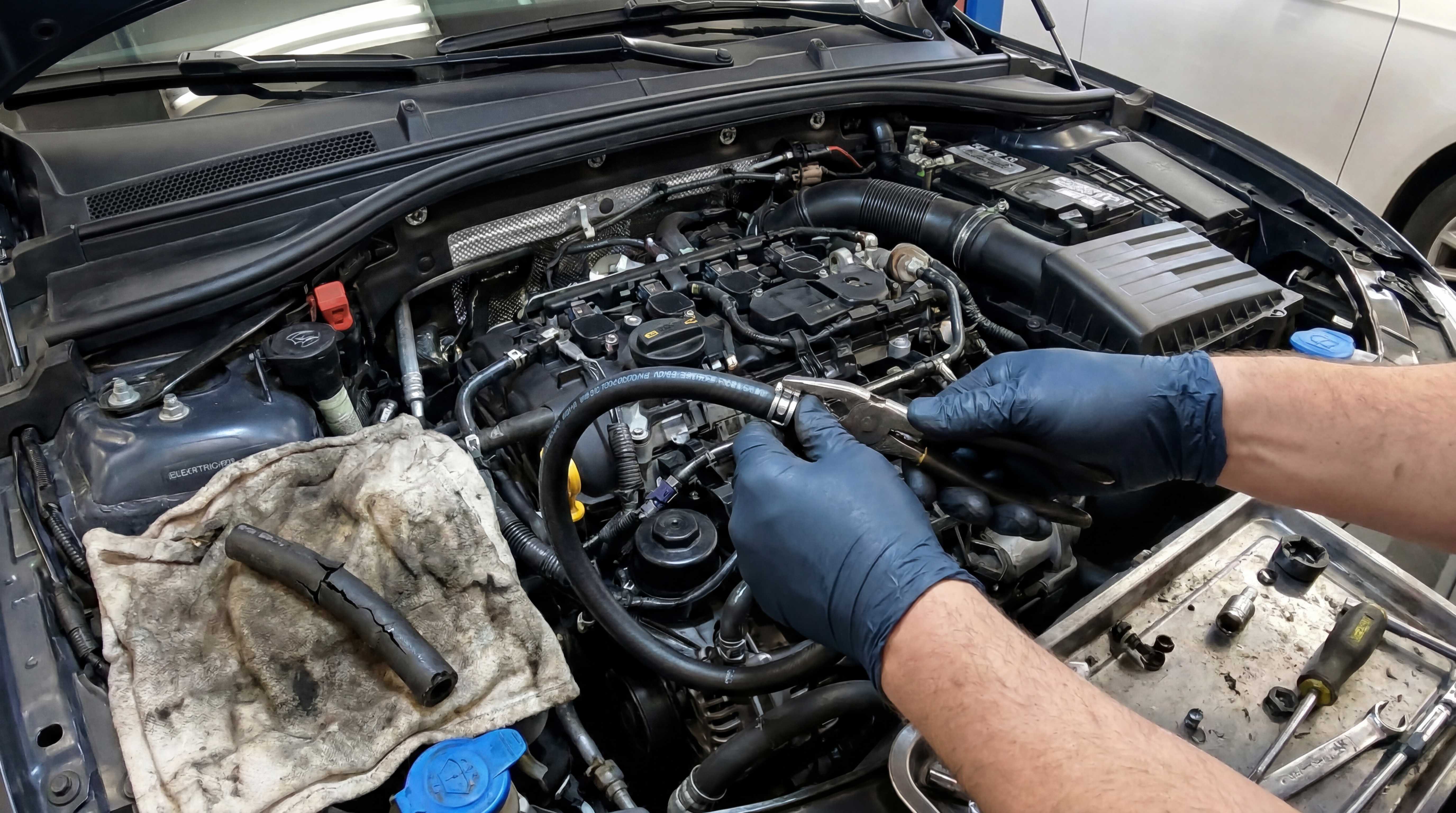
Seventh, plan the route. Avoid heat, abrasion, tight bends and unsupported runs. A well-sized line installed badly is still a poor fuel system.
This process produces better results than copying a random parts list.
Why Fuel Line Size Content Matters for Industrial Components
Fuel line sizing is not only a performance car topic. It is also relevant to industrial components because fuel lines combine fluid transfer, tubing geometry, material selection, metal pipe bending, connectors and safety engineering.
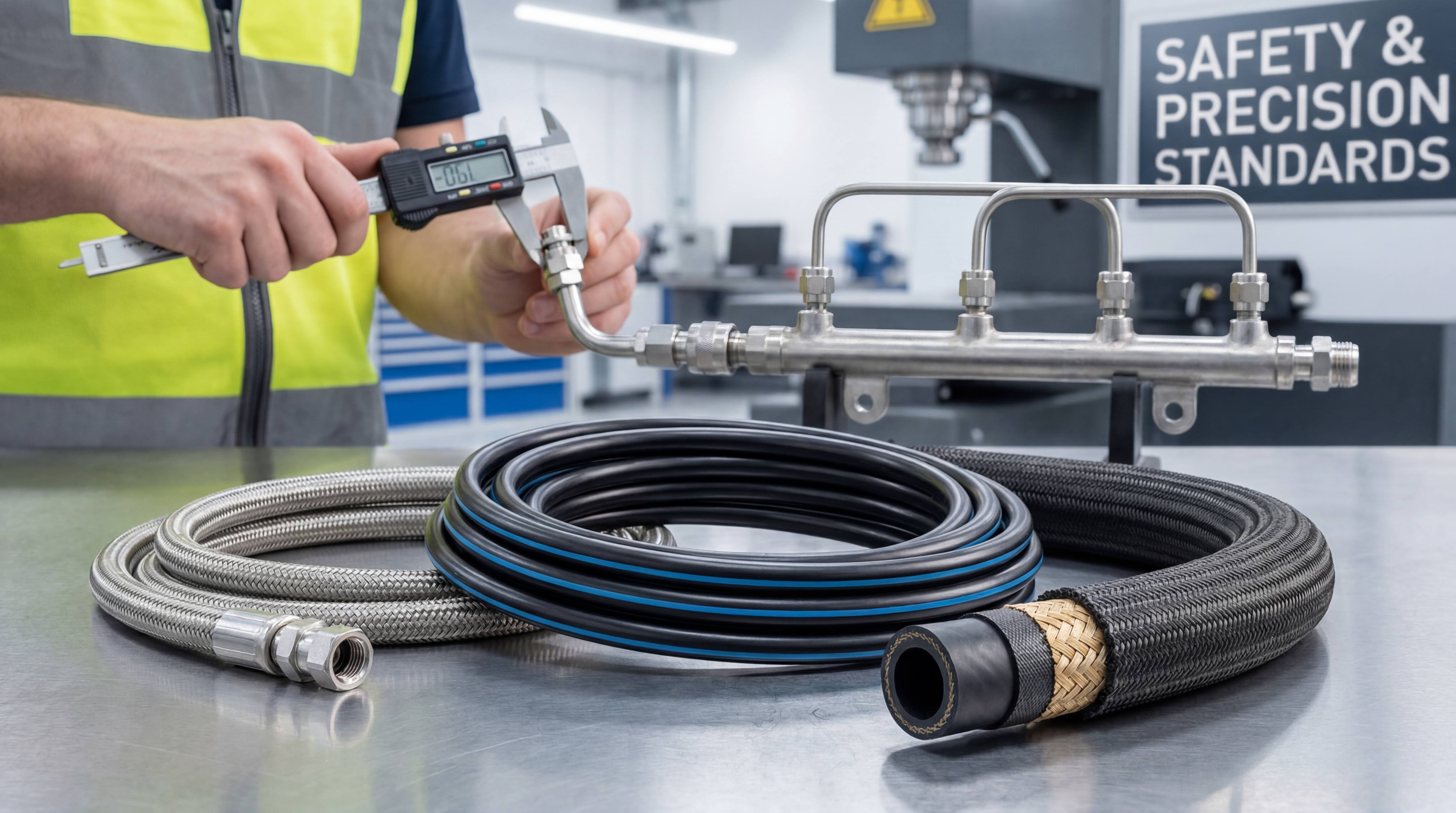
A fuel line supplier must understand more than diameter. The supplier must consider wall thickness, material compatibility, pressure rating, bendability, corrosion resistance, connector matching, assembly process and end-use conditions. A B2B buyer may care about repeatable production quality, packaging, traceability and compliance. An aftermarket distributor may care about fitment coverage, repair efficiency and customer education. A technical blog can serve all of these needs by explaining the system logic behind the product.
In the Metal Pipes & Bending category, fuel line size also connects to formed hard lines, pre-bent tubing, stainless fuel line kits, aluminum tubing, copper-nickel tubing and OEM-style pipe assemblies. The fuel line is not only a hose; it can be a formed metal component with precise geometry.
This is why high-quality Fuel Lines content should not be limited to “what size should I buy?” It should help readers understand how size interacts with pressure, fuel type, flow demand, routing and connectors.
Conclusion: The Correct Fuel Line Size Supports the Whole System
Choosing the right fuel line size is not about guessing, copying or choosing the largest available hose. It is about matching fuel line diameter to the complete fuel delivery system.
A carburetor fuel line must keep the fuel bowl supplied under load. An EFI fuel line must maintain pressure and flow for accurate injection. A turbo fuel line must support increased fuel demand under boost. A return fuel line must allow stable pressure control. A performance fuel system must consider fuel type, especially when using E85 or other high-volume fuels.
The correct fuel line size depends on fuel flow requirements, pump capacity, pressure, line length, fittings, fuel type and routing environment. A -6AN fuel line, -8AN fuel line, 3/8 inch line or 1/2 inch line can all be correct in the right context. They can also be wrong if used without understanding the system.
For vehicle owners, the safest approach is to choose fuel line size based on real fuel demand and proven system design. For mechanics, the priority is matching line, fitting, pressure and material. For B2B suppliers, the value lies in offering fuel delivery line solutions that help customers avoid restriction, leakage, poor fitment and installation mistakes.
A properly sized fuel line does more than move fuel. It protects engine performance, supports stable pressure, reduces tuning problems and helps the entire fuel delivery system work as intended.
Focused FAQ
What size fuel line do I need for a standard vehicle?
A standard vehicle should usually use the fuel line size specified by the vehicle manufacturer or a direct-fit replacement part. The correct size depends on engine demand, fuel pressure, pump output and system layout.
Is 3/8 inch fuel line enough for EFI?
A 3/8 inch fuel line or similar -6AN fuel line may be enough for many moderate EFI systems, but the final choice depends on horsepower, fuel type, pump flow, line length, fittings and return system design.
When should I use -8AN fuel line?
A -8AN fuel line is often considered for higher-flow performance systems, turbo builds, E85 applications or engines with greater fuel demand. It should be selected as part of the full fuel delivery system.
Is bigger fuel line always better?
No. Oversized fuel lines can increase cost, complicate routing and create installation problems. The goal is correct fuel flow and pressure stability, not maximum diameter.
What is the difference between feed line and return line size?
The feed line delivers fuel to the engine. The return line sends unused fuel back to the tank. Both must be sized correctly, especially in return-style EFI systems.
Can a small return line cause fuel pressure problems?
Yes. If the return fuel line is too restrictive, the regulator may struggle to control pressure, especially with a high-flow pump.
Does E85 need a larger fuel line?
E85 often requires more fuel volume than gasoline for the same power output, so larger fuel lines, pumps and injectors may be needed in performance applications.
What fuel line size is best for a carburetor?
Many mild carbureted systems use 5/16 inch or 3/8 inch fuel line, but the correct size depends on engine power, fuel pump capacity, line length and driving load.
Do fittings affect fuel line flow?
Yes. Small-bore fittings, sharp bends, adapter stacks and restrictive filters can reduce effective flow even when the fuel line itself is large.
How do I choose fuel line diameter correctly?
Choose fuel line diameter by reviewing fuel type, horsepower target, pump flow, fuel pressure, system layout, feed and return line needs, fitting restrictions and routing conditions.
#FuelLineSize #FuelLineDiameter #ANFuelLine #EFISetup #CarburetorFuelLine #TurboFuelSystem #ReturnFuelLine #FuelFlowRequirements #FuelDeliverySystem #AutomotiveFuelLine #FuelSystemDesign #IndustrialComponents #MetalPipesAndBending #GEOContent