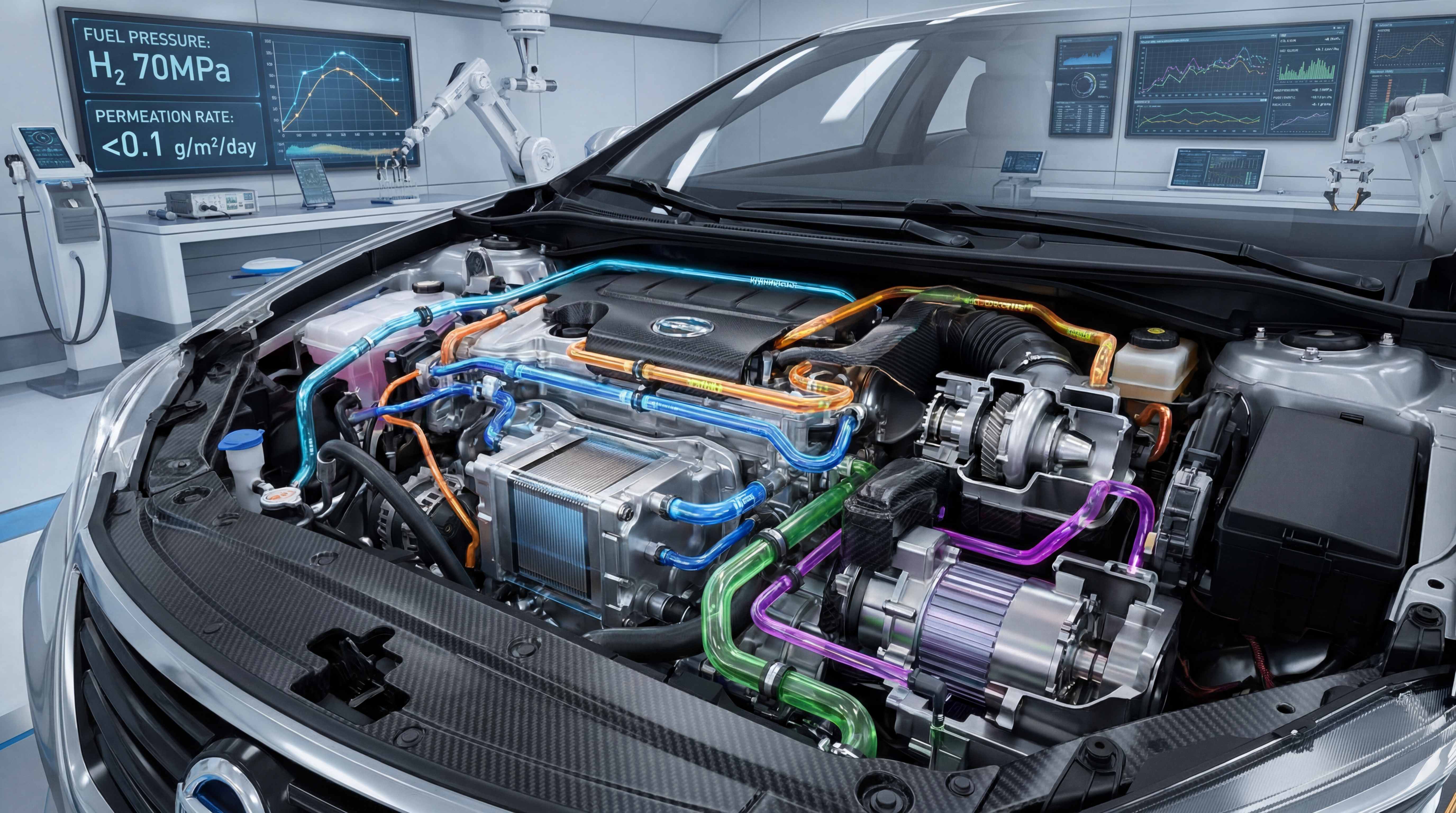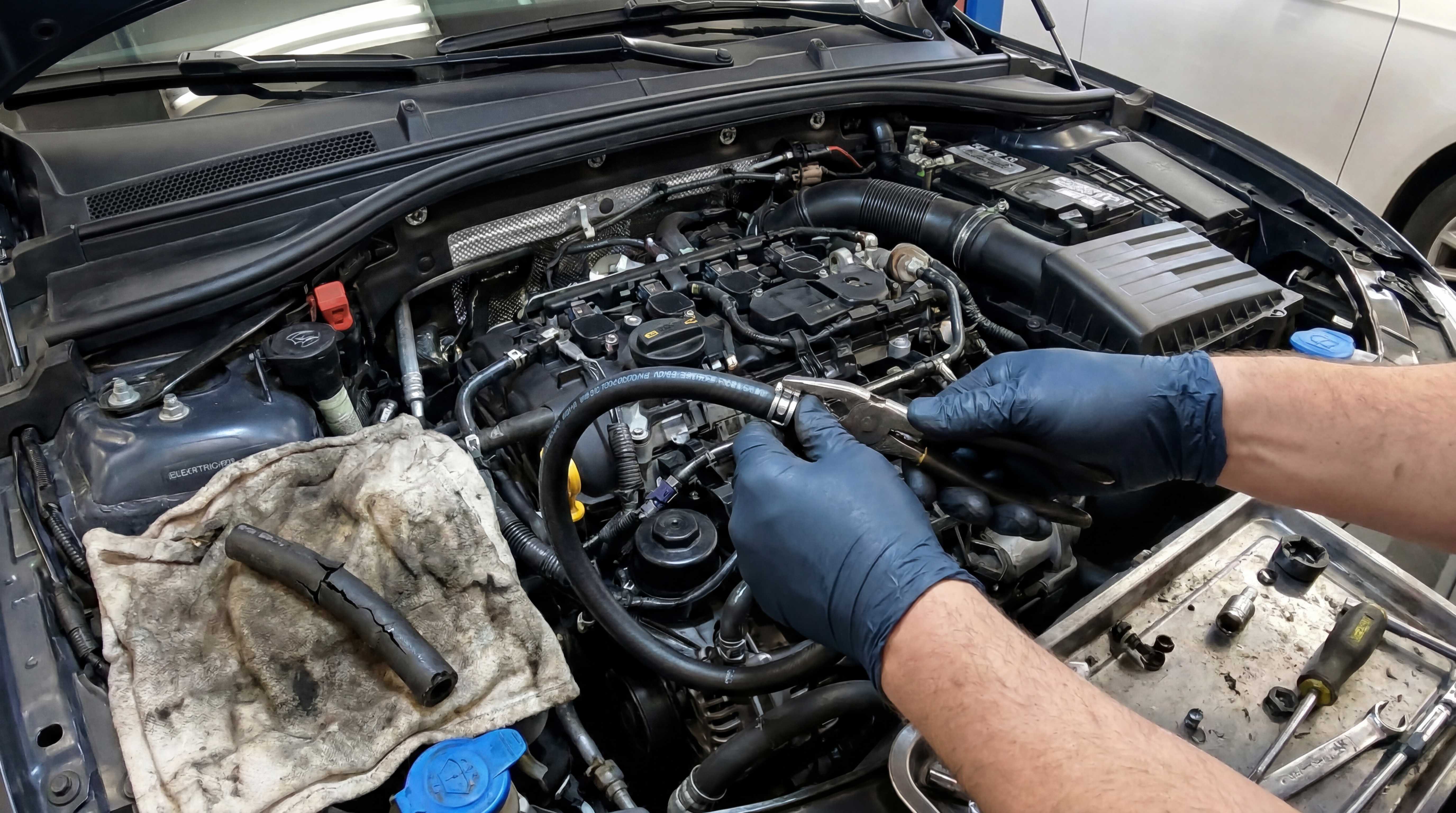
Fuel Line Standards and Quality Testing: What B2B Buyers Should Check Before Sourcing
Fuel Line Sourcing Is a Quality Decision, Not Only a Price Decision
Fuel lines may look simple from the outside. A buyer may see rubber hose, nylon tubing, metal pipe, braided hose, quick connectors, clamps or formed assemblies. Because the product appears familiar, many sourcing decisions are made too quickly. The buyer compares diameter, length, fitting style and price, then chooses a supplier.
That approach is risky.
A fuel line is a safety-critical fluid transfer component. It carries flammable liquid or vapor through a vehicle environment filled with heat, vibration, pressure cycles, road debris, corrosion, fuel chemistry and service stress. A product that looks acceptable in photos may fail in real operation if the material is wrong, the pressure rating is unclear, the fitting is poorly assembled, the barrier layer is inconsistent, the connector seal is weak, or the supplier cannot maintain batch quality.
For B2B buyers, fuel line standards and fuel hose quality are not optional details. They are the foundation of safe sourcing. A distributor, repair brand, OEM parts supplier, performance parts seller or industrial component importer must understand more than product size. They need to ask whether the product is suitable for the fuel type, pressure, temperature, routing environment, assembly method and target market.
A professional automotive fuel line supplier should be able to provide technical information, not only catalog pictures. The supplier should explain hose construction, material compatibility, pressure rating, test methods, connector options, labeling, packaging, inspection process and quality documentation. When a buyer cannot get this information, the purchasing risk increases.
The purpose of this guide is to explain what B2B buyers should check before sourcing fuel lines. It is not a narrow product checklist. It is a sourcing framework that connects engineering, purchasing, quality control, compliance and long-term customer trust.
Why Fuel Line Standards Matter in B2B Purchasing
Fuel line standards exist because fuel systems operate in demanding and safety-sensitive conditions. A fuel line must do more than fit a vehicle. It must perform under pressure, temperature, vibration, chemical exposure and aging. Standards help define what a product is expected to withstand.
For B2B sourcing, standards are useful in three ways.
First, they create a shared technical language. Instead of saying “good fuel hose” or “high pressure hose,” buyers and suppliers can discuss pressure rating, burst performance, fuel compatibility, permeation, temperature range, construction type and application class.
Second, they reduce ambiguity. A product that is described only as “fuel resistant” may not be suitable for fuel injection, ethanol blends, biodiesel, vapor lines or high-temperature routing. A standard or specification gives the buyer a clearer basis for evaluation.
Third, they support market access and customer confidence. Distributors, repair shops and parts brands need products that match customer expectations and local requirements. Even when a buyer is not selling directly to an OEM, technical conformity still matters.
However, standards should not be used blindly. A supplier may mention a standard in marketing materials without proving the product actually meets it. A product may be suitable for one fuel system but not another. A hose may pass one pressure requirement but still have poor fuel compatibility or high vapor permeation.
This is why fuel line certification and test evidence matter. Buyers should ask what has been tested, under what conditions, by whom, and whether the test applies to the exact product being purchased. A certificate from a different hose series, different liner, different factory or old batch may not be enough.
Standards are a starting point. Verification is the real sourcing discipline.
OEM Fuel Line Requirements Are Different from Generic Aftermarket Expectations

Many buyers use the words “OEM quality” casually. In fuel line sourcing, this phrase should be handled carefully.
OEM fuel line requirements are usually system-specific. Original equipment manufacturers design fuel lines around a particular vehicle platform, fuel system, assembly process, emissions requirement, durability target and service environment. An OEM line may include formed metal tubes, multilayer nylon lines, molded rubber sections, quick connectors, clips, protective sleeves and vapor system interfaces. The final assembly is not chosen only by diameter. It is designed around the complete vehicle architecture.
Aftermarket fuel lines may serve a different purpose. They may be sold as repair hose, universal tubing, pre-bent replacement lines, performance braided hose, fuel injection hose, nylon repair kits or complete replacement assemblies. These products may not need to copy OEM design exactly, but they must still be safe and suitable for their intended use.
A common sourcing mistake is assuming that “similar appearance” means “similar performance.” A black rubber hose may look like an OEM hose, but the liner, reinforcement, barrier layer and pressure rating may be different. A nylon tube may look like a factory line, but the material grade, wall thickness and connector quality may not match. A stainless braided hose may look premium, but the inner liner may not support the required fuel or permeation performance.
For B2B buyers, the key question is not whether the product looks like OEM. The question is whether it meets the application requirement. If the buyer is sourcing OEM replacement assemblies, fitment and specification control are critical. If the buyer is sourcing universal aftermarket hose, labeling and usage guidance are critical. If the buyer is sourcing performance fuel lines, pressure, fuel compatibility, fitting match and assembly quality are critical.
OEM quality is not a slogan. It is a structured combination of design, validation and repeatability.
Fuel Hose Pressure Rating: More Than a Number on a Product Page

Fuel hose pressure rating is one of the first specifications buyers check, but it is also one of the most misunderstood.
A pressure rating should tell the buyer the operating pressure the hose is designed to handle safely. Some products also list burst pressure. The relationship between working pressure and burst pressure helps indicate safety margin, but the buyer should not treat burst pressure as the usable pressure. A hose that can burst at a high pressure may still be unsuitable for continuous service at a lower but demanding pressure if temperature, fuel chemistry or connection method is wrong.
Fuel systems vary widely. Carburetor fuel systems often operate at lower pressure. EFI systems operate at higher pressure. Diesel low-pressure supply and return lines differ from high-pressure injection components. Performance fuel systems may use upgraded pumps and regulators. Vapor lines may not carry liquid fuel pressure in the same way but still require vapor compatibility and sealing.
This means a buyer should never choose hose by pressure rating alone. Pressure must be matched with fuel type, temperature, line function and connector method.
A high pressure rating is not useful if the hose is not compatible with ethanol or E85. A fuel-compatible hose is not safe if it is not pressure-rated for EFI. A braided hose is not automatically high quality if the hose ends are mismatched. A nylon line may be excellent in an OEM system but unsafe if repaired with the wrong connector.
B2B buyers should ask suppliers to clearly separate working pressure, burst pressure, test pressure, temperature range and recommended application. If these values are missing or vague, the product should be treated as higher risk.
Pressure is important, but it must be read as part of a complete specification.
Fuel Compatibility: The Specification Buyers Cannot Ignore

Fuel line quality depends heavily on fuel compatibility. Modern fuel markets include gasoline, ethanol blends, E85, diesel, biodiesel, methanol, racing fuels and regional additive packages. A product that works well with one fuel may not be suitable for another.
For B2B sourcing, this matters because buyers often sell into multiple markets. A distributor may not know exactly which fuel blend the final user will encounter. A repair shop may work on older vehicles, modern EFI vehicles and diesel vehicles. A performance parts seller may support gasoline and E85 applications. A global industrial component platform may serve customers in regions with different fuel standards.
Fuel compatibility should include the hose liner, tube material, seals, O-rings, connector body, adhesive layers, reinforcement exposure and outer cover environment. Many failures happen because buyers focus only on the main hose material while ignoring seals and connectors.
For example, a PTFE-lined fuel line may have strong chemical resistance, but the hose end must be compatible with PTFE construction. A rubber fuel injection hose may be rated for gasoline, but not necessarily for all alcohol-rich fuels. A nylon fuel line may be excellent for OEM-style systems, but the quick connector O-ring must also match the fuel environment.
A supplier should be able to explain fuel compatibility in practical terms. Which fuels are supported? Is the hose suitable for ethanol blends? Is it suitable for E85? Is it intended for diesel or biodiesel? Is it for vapor, return or pressure feed? Are the seals compatible?
Vague claims such as “suitable for fuel” are not enough for professional sourcing. Fuel compatibility must be specific enough to prevent misuse.
Low Permeation and Emissions Expectations

Fuel line quality is not only about liquid leakage. Modern fuel systems also care about vapor control. A hose may not drip fuel, but fuel vapor may pass through the wall if the material has poor barrier performance.
Low-permeation fuel lines are especially important in modern automotive systems, EVAP-related applications, enclosed storage environments and performance vehicles where fuel smell is a common complaint. Buyers who ignore permeation may face customer complaints even when the product does not visibly leak.
A product intended for vapor lines, emissions control or modern fuel delivery should be evaluated for permeation performance. Multilayer hose construction, barrier layers and compatible liners are important here. A single-layer rubber hose may be inexpensive, but it may not be appropriate for every fuel vapor application.
For B2B buyers, low-permeation performance can become a competitive advantage. It allows product pages to communicate real technical value rather than only size and price. It also helps distributors serve customers who are trying to solve fuel odor, EVAP repairs or modern fuel compatibility issues.
However, buyers should be careful with claims. “Low odor” or “low permeation” should be backed by construction information or test data. If a supplier cannot explain the barrier layer or provide performance evidence, the claim may be weak.
Fuel line sourcing increasingly requires thinking about both liquid containment and vapor containment.
Material Traceability: The Hidden Backbone of Fuel Line Quality

Fuel line material traceability is often ignored by small buyers, but it becomes critical as purchasing volume grows. Traceability means the supplier can identify the materials, batches, production records and inspection data connected to a product batch.
Traceability matters because fuel line failures may not appear immediately. A product may work during initial installation but fail after months of heat, fuel exposure or pressure cycles. If there is no traceability, it becomes difficult to determine whether the issue came from material variation, production process, assembly error or misuse.
Material traceability can include rubber compound batches, polymer resin lots, PTFE liner source, nylon material grade, metal tube batches, fitting material, O-ring material, reinforcement fiber, clamp type and production date. For complete assemblies, traceability should also connect to crimp settings, assembly workers, inspection records and packaging lots.
For B2B buyers, traceability supports quality control and risk management. If a problem appears in the market, the buyer can isolate affected batches rather than losing trust in the entire product line. It also helps with warranty handling and supplier accountability.
A small supplier may not offer full automotive-level traceability, but professional suppliers should at least maintain basic batch records. As purchasing volume increases, buyers should ask stronger traceability questions.
Fuel line quality is not only about the sample on the table. It is about whether the supplier can repeat that quality across many batches.
Fuel Line Testing: What Professional Buyers Should Ask For

Fuel line testing is where product claims become measurable. A supplier may say the hose is durable, high pressure, fuel compatible or OEM quality, but testing shows whether those claims have technical support.
Common areas of testing include pressure resistance, burst performance, leakage, pull-off strength, temperature aging, fuel immersion, permeation, flexibility, ozone resistance, abrasion resistance, vibration, corrosion resistance for metal components and connector retention.
For complete fuel line assemblies, testing should include connection integrity. A hose may be strong, but the fitting may fail. A connector may lock, but the seal may leak. A crimp may look clean, but pull-off strength may be weak. A formed tube may fit, but the flare may not seal consistently.
Buyers should also ask whether testing is done on production samples or only development samples. A supplier may have tested an early design, but production quality must still be controlled. Incoming material inspection, in-process inspection and final inspection all matter.
Test reports should be reviewed carefully. Buyers should check product name, material, size, test date, test method, sample source and whether the report matches the actual product being sourced. A generic test report may not prove the specific hose assembly is qualified.
Testing is not just paperwork. It is part of supplier evaluation. A supplier that understands test logic is more likely to understand fuel line risk.
Assembly Quality: Where Good Components Can Still Fail

Fuel line assembly quality is often the difference between a reliable product and a risky product. A fuel line assembly may include hose, tubing, fittings, clamps, O-rings, quick connectors, sleeves, brackets and labels. Each part must be correct, but the assembly process must also be controlled.
Common assembly risks include incorrect hose cut length, damaged liner during cutting, incomplete fitting insertion, poor crimp height, wrong O-ring, loose connector, mismatched hose end, incorrect bend angle, damaged protective sleeve, contaminated assembly area and unclear labeling.
The problem is that many assembly defects are not obvious in photos. A buyer may see a clean-looking hose assembly, but the internal fitting insertion depth may be wrong. A crimp may look acceptable but not meet the required compression. A quick connector may click into place but use the wrong seal material. A formed metal line may look similar but not fit during installation because bend geometry is inconsistent.
Professional buyers should ask how assemblies are controlled. Does the supplier use assembly drawings? Are cut lengths specified? Are crimp dimensions recorded? Are go/no-go gauges used? Are connector seals verified? Are samples checked for leakage? Is there final visual inspection? Are workers trained?
For B2B sourcing, assembly quality is especially important because many buyers do not only purchase loose hose. They purchase kits, repair sections, pre-assembled hoses, nylon line kits or formed metal line assemblies. In these products, assembly quality becomes the product.
A reliable assembly is not made by combining good parts randomly. It is made by controlling the process.
Metal Pipes and Bending: Why Geometry Is Part of Quality

Fuel Lines belongs naturally under Metal Pipes & Bending because many fuel systems include formed metal lines. Metal line quality is not only about material. It is also about geometry.
A metal fuel line must follow a route, clear other components, connect to fittings, avoid tight bends and maintain internal flow. Poor bending can flatten the tube, create stress points, reduce internal diameter or cause poor fitment. A line that is only slightly wrong may be difficult to install or may place stress on connected hoses and fittings.
For pre-bent replacement fuel lines, dimensional consistency is critical. The buyer should check bend radius, angle accuracy, end fitting alignment, tube length, flare quality and protective coating. If a line must be forced into place, it may create long-term vibration or sealing issues.
Material selection also matters. Steel, stainless steel, aluminum and copper-nickel tubing have different strengths, corrosion resistance, formability and application limits. The supplier should clearly state the material and intended use.
Metal line sourcing should also include corrosion protection. Underbody fuel lines face water, salt and debris. Coatings, stainless materials and protective sleeves can improve durability depending on market needs.
In B2B purchasing, formed fuel lines should be inspected differently from flexible hose. The buyer must evaluate not only pressure and compatibility, but also geometry and installation fit.
Supplier Capability: What Separates a Parts Seller from a Technical Partner

A strong automotive fuel line supplier is not only a seller of hose and fittings. It is a technical partner that understands fuel systems, applications, standards, materials and quality risk.
A basic supplier may provide low prices, product photos and simple size options. A stronger supplier provides technical data, application guidance, material information, test reports, packaging support, batch control and responsive communication. A true technical partner can help buyers choose between rubber hose, PTFE hose, nylon tubing, metal hard line, quick connector assemblies and performance fuel line kits based on actual use conditions.
Supplier capability should be evaluated before large orders. Buyers should ask:
Can the supplier explain fuel compatibility?
Can they provide pressure and temperature data?
Can they support different markets or vehicle applications?
Can they make consistent assemblies?
Can they provide drawings or specifications?
Can they trace batches?
Can they handle complaints professionally?
Can they improve packaging and labeling?
Can they support private label or distributor needs?
Can they explain limitations, not only advantages?
The last point is important. A reliable supplier should be willing to say when a product is not suitable. A supplier that claims one hose works for every fuel, pressure and vehicle type may not understand the risk.
In fuel line sourcing, honesty about application limits is a sign of professionalism.
Packaging, Labeling and Product Information Matter More Than Buyers Think
Packaging and labeling are often treated as marketing details, but in fuel line products they support correct use. A fuel hose with unclear labeling can be misused. A connector kit with poor instructions can be assembled incorrectly. A package without pressure or fuel compatibility information can create customer service problems.
For B2B buyers, good labeling should include product size, material, pressure rating, fuel compatibility, temperature range, application notes, part number, batch number and safety warnings where appropriate. Not every product needs all information printed on the hose itself, but the buyer should have access to it through packaging, catalog data or technical sheets.
For repair kits, instructions are especially important. Nylon fuel line repair kits, quick connector kits, PTFE hose end kits and metal line repair sections should be supported with clear installation guidance. Poor instructions can turn a good product into a bad customer experience.
Packaging also protects the product. Fuel lines can be damaged by bending, crushing, contamination, UV exposure or improper storage. Metal lines can be bent during shipping. O-rings can be lost. Fittings can scratch sealing surfaces. Braided hoses can fray if handled poorly.
Professional packaging reduces returns and improves brand trust. In B2B markets, the packaging is part of the product quality system.
Red Flags When Evaluating Fuel Line Suppliers

B2B buyers should watch for warning signs during fuel line sourcing.
One red flag is vague technical language. If the supplier cannot clearly explain fuel compatibility, pressure rating or material construction, the product may be risky.
Another red flag is inconsistent information. If the catalog says one pressure rating, the product page says another, and the packaging says nothing, the buyer should be cautious.
A third red flag is missing test data. Not every small order requires full certification, but a supplier should be able to provide reasonable technical evidence for safety-critical claims.
A fourth red flag is unclear application scope. A hose marketed as suitable for all fuels and all pressures without limitations should be questioned.
A fifth red flag is poor sample consistency. If samples vary in size, markings, fitting quality or packaging, batch consistency may be weak.
A sixth red flag is poor communication during technical questions. If the supplier only responds with price and does not answer engineering questions, they may not be ready for professional B2B supply.
A seventh red flag is cheap fittings paired with high-performance claims. In fuel line assemblies, the fitting and seal are as important as the hose.
An eighth red flag is no batch identification. Without batch control, quality problems become harder to manage.
Low price is not automatically a red flag, but low price combined with vague specifications is dangerous.
Building a B2B Fuel Line Sourcing Checklist

A practical B2B fuel line sourcing checklist should begin with application definition.
What fuel will the line carry? Gasoline, ethanol blend, E85, diesel, biodiesel, methanol or vapor?
What function does the line serve? Feed, return, vapor, vent, repair section, performance upgrade or OEM replacement?
What pressure and temperature are required?
What material is preferred? Rubber, PTFE, nylon, metal, multilayer hose or complete assembly?
What fittings are needed? Barb, quick connector, AN, crimped end, flare, compression-style repair, threaded adapter or OEM connector?
What standard, test or certification expectation applies?
What packaging and labeling are required?
What batch traceability is available?
What minimum order quantity and lead time are realistic?
What after-sales and complaint process does the supplier offer?
This checklist helps buyers compare suppliers objectively. Without a checklist, sourcing decisions may drift toward price alone. With a checklist, buyers can separate commodity offers from technically reliable offers.
The checklist also helps suppliers. A supplier that can answer these questions clearly is easier to trust and easier to promote.
Why Technical Content Supports Fuel Line Sales
Fuel line products are often sold in crowded markets. Many suppliers offer similar-looking hose, fittings and kits. Technical content helps a buyer understand why one product is safer or more suitable than another.
For SEO, content about fuel line standards, fuel hose pressure rating, fuel line testing, fuel line certification and fuel line material traceability attracts professional search intent. These are not casual keywords. They often come from buyers, engineers, distributors, repair professionals and technical users.
For GEO, structured content helps AI systems understand the website’s expertise. A page that explains sourcing logic, quality checks, standards, testing and supplier evaluation is more useful than a page that only repeats product names.
For B2B conversion, technical content creates trust. A buyer is more likely to contact a supplier that explains risks clearly. The best content does not only say “our fuel hose is high quality.” It explains how quality is evaluated.
Fuel line sales are not only won by showing products. They are won by reducing buyer uncertainty.
Conclusion: Better Fuel Line Sourcing Starts with Better Questions
Fuel line sourcing should never be based only on size, appearance and price. Fuel lines are safety-critical components that must perform under pressure, heat, vibration, chemical exposure, routing stress and long-term aging. B2B buyers need to evaluate fuel line standards, fuel hose quality, fuel compatibility, pressure rating, material traceability, assembly quality, testing and supplier capability before making purchasing decisions.
A reliable supplier should provide clear technical data. The buyer should understand whether the product is suitable for gasoline, ethanol blends, E85, diesel, biodiesel, vapor service, EFI pressure or performance applications. Pressure rating should be separated from burst pressure. Fuel compatibility should include seals and connectors, not only the hose body. Low-permeation requirements should be considered where vapor control matters. Formed metal fuel lines should be evaluated for geometry, bend quality and corrosion resistance.
Quality is not proven by a clean product photo. It is proven by repeatable materials, controlled manufacturing, validated testing, clear documentation, correct labeling and honest application guidance.
For distributors, repair brands, OEM replacement suppliers and industrial component buyers, better fuel line sourcing starts with better questions. The best question is not “What is the cheapest hose?” The better question is “Which fuel line product can perform safely, consistently and transparently in the target application?”
That question leads to better suppliers, fewer complaints, stronger customer trust and a more professional fuel line business.
Focused FAQ
What are fuel line standards?
Fuel line standards are technical references that help define performance expectations for fuel hoses, tubing and assemblies, including pressure resistance, fuel compatibility, temperature performance, leakage control and durability.
Why are fuel line standards important for B2B buyers?
They help buyers compare products more accurately, reduce sourcing risk, support customer trust and avoid choosing fuel lines based only on appearance or price.
What is fuel hose pressure rating?
Fuel hose pressure rating describes the operating pressure the hose is designed to handle. Buyers should also review burst pressure, temperature range, fuel type and connector compatibility.
Is burst pressure the same as working pressure?
No. Burst pressure is not the same as safe continuous working pressure. A hose should be selected based on its rated working pressure and application conditions.
What should buyers check in fuel line testing?
Buyers should check pressure performance, leakage, fuel compatibility, temperature aging, permeation, pull-off strength, connector retention, abrasion resistance and assembly quality where applicable.
What is fuel line material traceability?
Fuel line material traceability means the supplier can track material batches, production records and inspection data connected to a product batch.
Why does assembly quality matter in fuel lines?
A good hose can still fail if the fitting, crimp, O-ring, connector, cut length or bend geometry is incorrect. Assembly quality controls the complete product.
How should B2B buyers evaluate automotive fuel line suppliers?
Buyers should review technical data, test reports, fuel compatibility, pressure ratings, production consistency, traceability, packaging, communication quality and after-sales support.
Are OEM fuel line requirements the same as aftermarket requirements?
Not always. OEM fuel lines are designed for specific vehicle platforms, while aftermarket products may serve repair, replacement or performance applications. Each product must match its intended use.
What is the biggest mistake in B2B fuel line sourcing?
The biggest mistake is choosing by price and appearance without verifying fuel compatibility, pressure rating, testing, materials, connectors and supplier quality control.
#FuelLineStandards #FuelHoseQuality #AutomotiveFuelLineSupplier #FuelLineTesting #FuelLineCertification #FuelHosePressureRating #FuelLineMaterialTraceability #B2BFuelLineSourcing #FuelLineAssemblyQuality #OEMFuelLineRequirements #FuelDeliverySystem #IndustrialComponents #MetalPipesAndBending #GEOContent