SPC Wall Panels for Hotels, Apartments and Commercial Interiors
Commercial wall panels are judged by repeatability, not only by appearance
In residential renovation, a wall panel is often selected because a homeowner likes the pattern, wants a cleaner bathroom, or prefers a faster alternative to tiles. Commercial projects think differently. A hotel, apartment operator, developer, contractor, retail brand or office fit-out company does not evaluate a wall material only by how it looks in one room. The real question is whether the product can be repeated across many rooms, cleaned by different users, installed by different teams, supplied in stable batches and maintained over years of operation. This is where commercial SPC wall panels become an important category.
SPC wall panels are often introduced through bathroom renovation and shower wall applications, but their commercial value is broader. They can support hotel bathrooms, serviced apartments, rental units, student housing, office feature walls, retail interiors, showrooms, clinics, salons and other commercial spaces where wall surfaces must balance design, durability, installation speed and maintenance logic. A single wall panel may look attractive in a catalog, but a commercial wall system must survive procurement, transportation, storage, installation, handover, cleaning and future repair.
This is why SPC wall panels for hotels and other commercial interiors should not be positioned as decorative boards only. They should be evaluated as project materials. The buyer needs to ask: Can the supplier keep color consistent? Are trims and accessories available? Can the panels be packed for bulk delivery? Is the surface suitable for repeated cleaning? Can the installation method be taught to multiple crews? Are spare panels available later? Does the wall system reduce downtime compared with traditional materials? These questions are more important than a single product photo.
Previous articles on this site explained SPC wall panels as rigid waterproof wall systems, compared SPC wall panels vs tiles, covered SPC shower wall panels for wet rooms, and explained SPC wall panel installation. This article takes the next step: how SPC should be understood in hotels, apartments and commercial interiors where the buying decision is about repeatable project value.
Why hotels and apartments look at SPC differently from homeowners
A homeowner may renovate one bathroom and judge success by personal taste, comfort and budget. A hotel operator may renovate fifty, two hundred or one thousand bathrooms. An apartment owner may need to upgrade units between tenants. A developer may need a consistent wall finish across multiple buildings. The scale changes the decision.
In commercial environments, walls are part of an operating system. They affect cleaning labor, room downtime, replacement cost, guest perception, tenant satisfaction, maintenance calls and brand image. If a material looks good but is difficult to clean, the hotel suffers. If a wall is easy to install but color varies between shipments, the contractor suffers. If a panel line has no spare parts, the building owner suffers. If accessories are inconsistent, the installer suffers. These issues explain why contract wall panels must be evaluated more deeply than one-off decorative materials.
Commercial renovation values time
Time has direct financial meaning in hotels and apartments. A closed hotel room does not generate revenue. A vacant apartment cannot collect rent. A retail store under renovation may lose sales. A clinic or office fit-out may disrupt operations. Traditional wall materials such as ceramic tile, natural stone or custom millwork can be excellent, but they often require longer installation windows, more specialized labor and more site coordination.
SPC panels can reduce some of that burden when the wall condition and installation system are appropriate. Large panels cover more area quickly. Fewer grout lines can reduce finishing steps. Some renovation projects may avoid full demolition if the existing surface is stable and properly prepared. The dedicated guide on installing SPC wall panels over tiles explains when that shortcut can be safe and when old walls must still be repaired first.
Commercial users value maintenance more than first impression
A wall that looks impressive on opening day may become a burden if it stains easily, requires special cleaning, scratches quickly or creates frequent maintenance calls. This is why low maintenance wall panels are attractive in hotels, apartments and public-facing interiors. They can help operators control cleaning time and reduce visible deterioration when used in the correct wall zones.
Low maintenance does not mean no maintenance. SPC surfaces still require proper cleaning methods, sealant inspection in wet areas, edge protection and damage control. But compared with grout-heavy tile walls or delicate natural stone surfaces, SPC can provide a more practical wall finish in many commercial applications.
Hotel bathroom walls: where SPC can create the strongest commercial value

Among commercial applications, hotel bathrooms are one of the most important spaces for SPC. Bathrooms must look clean, modern and premium, but they also face water exposure, cleaning chemicals, repeated guest use and strict renovation schedules. This makes hotel bathroom wall panels a high-value application area.
Hotel bathrooms are not ordinary private bathrooms. They are used by different guests with different habits. They are cleaned frequently by housekeeping teams. They must remain visually consistent across many rooms. They also contribute strongly to the guest’s perception of room quality. A worn or stained bathroom can damage the entire hotel experience even if the bedroom looks good.
SPC helps reduce grout-line maintenance in hotel bathrooms
Traditional tile remains common in hotels, but grout lines can become a maintenance issue. They may discolor, collect soap residue or require more detailed cleaning. Large SPC panels can create fewer joints and a cleaner wall surface. This is valuable in hotels because cleaning time is repeated every day across many rooms.
The value is not only aesthetic. A wall that is faster to wipe and easier to inspect can reduce housekeeping pressure. If the shower wall has fewer grout lines, the room may maintain a cleaner appearance with less detailed scrubbing. For hotel operators, this is an operational advantage, not only a design preference.
SPC can support repeatable bathroom design standards
Hotels often need consistent design across rooms. Natural marble may offer uniqueness, but uniqueness can become a problem when replacement panels are needed later. Ceramic tiles can be consistent, but grout lines and tile layout still create labor demands. SPC can offer a more standardized wall system if the supplier controls pattern, batch color, trims and packaging.
For SPC wall panels for hotels, repeatability is a core selling point. The hotel can approve a marble-look, stone-look or concrete-look surface and roll it out across many rooms. The contractor can train crews on one installation system. The procurement team can order panels, trims and accessories in bulk. Maintenance teams can keep spare panels for future repair. This makes the product more than a decorative board.
SPC needs serious wet-area detailing in hotel showers
Hotels must not treat waterproof panels casually. A shower wall failure in one room may indicate risk across many rooms. If the same installation mistake is repeated, the cost can multiply quickly. For this reason, waterproof wall panels for commercial projects must be installed with strict attention to internal corners, bottom edges, pipe penetrations, shower trays, sealants and substrate condition.
The article on SPC shower wall panels for wet rooms and bathrooms explains why waterproof performance comes from the full wall system, not just the panel face. That lesson is even more important in hotels because installation errors may repeat across many rooms.
Apartment wall panels: why rental and multifamily projects need practical surfaces
Apartment wall panels are evaluated differently from single-family home finishes. Multifamily buildings, rental units, student apartments and serviced apartments need wall surfaces that can survive turnover, cleaning, tenant use and future repairs. In these settings, the wall material must support both appearance and operational control.
Rental bathrooms need faster turnover
When a tenant moves out, the property owner often has a limited window to clean, repair and re-lease the unit. Bathrooms are one of the most time-sensitive areas because they influence tenant perception and can involve plumbing, moisture and cleaning issues. SPC panels can help update bathroom walls more quickly when the substrate is suitable.
In an apartment bathroom, the owner may not need natural stone or complex tilework. The more important goal may be a clean, modern, durable and easy-to-maintain wall. SPC can deliver a stone-look or tile-look finish while reducing some grout maintenance and installation time.
Student housing and serviced apartments need durability plus simplicity
Student housing and serviced apartments face frequent users and uneven maintenance behavior. Wall surfaces may be cleaned by staff, tenants or outsourced teams. A finish that depends on delicate care may not perform well. SPC can be useful where the project needs a practical balance between visual quality and easy maintenance.
However, not every SPC panel is suitable for every apartment wall. Direct shower walls need wet-area systems. Feature walls need impact resistance and clean edges. Kitchen splashbacks need cleaning resistance. Around heavy fixtures, proper backing is still required. The panel is a finish layer, not a structural wall.
SPC can help standardize multifamily renovation
Multifamily owners often prefer standardized products. A standard finish reduces procurement complexity and makes future repair easier. Bulk SPC wall panels can support this approach if the supplier can maintain batch consistency, pack panels safely and provide matching accessories over time.
This is a key difference between a good product and a good commercial product. A good product looks nice. A good commercial product can be ordered again, repaired again, installed again and explained again.
Retail wall cladding: SPC as a clean brand surface

Retail interiors need walls that communicate brand identity quickly. A customer often judges a store, salon, showroom or clinic within seconds. Materials help shape that impression. Retail wall cladding must therefore balance design impact, installation speed, damage resistance and brand consistency.
Retail spaces need fast fit-out and easy refresh
Retail projects often operate under tight schedules. Store openings, seasonal redesigns and leasehold improvements require fast execution. SPC panels can help create stone-look or polished feature walls without the time and weight of natural stone slabs. This is useful for beauty salons, wellness spaces, boutiques, clinics, showrooms and small commercial interiors.
Unlike hotel bathrooms, retail walls may not always need wet-area sealing. Their main concerns may be visual quality, lighting reflection, edge finishing, impact resistance, cleaning and fire documentation where required. This means the same SPC material may be selected for different reasons depending on the commercial environment.
Brand consistency matters across chain stores
A single independent store can choose a one-off material. A chain brand needs consistency. The same wall finish may need to appear in many locations. If local contractors source random materials, the brand atmosphere may vary. SPC can help create a more repeatable surface when the supplier offers stable patterns, color control and accessories.
This logic is similar to the commercial thinking discussed in the article on PU stone panels for commercial projects. Chain stores need repeatable renovation more than one-off wall decoration. SPC follows the same business logic when used as a flat stone-look or marble-look commercial surface.
Retail walls must be planned for lighting
Retail lighting can expose surface problems. Glossy panels may reflect lights strongly. Dark stone-look panels may show fingerprints. Matte panels may look more premium under soft lighting but dull under harsh lighting. Before approving retail wall cladding, buyers should view full-size panels under the project’s actual lighting conditions whenever possible.
Office feature wall panels: where SPC fits and where WPC may be better
Offices use wall panels to create reception areas, meeting room backgrounds, corridor accents, brand walls and executive spaces. Office feature wall panels are not always moisture-driven. They are often selected for visual tone, brand identity, acoustic impression and visitor experience.
SPC can work well in offices when the design calls for marble-look, stone-look, concrete-look or clean modern panels. It may be used behind reception desks, in elevator lobbies, in washroom corridors, around pantry areas or as a premium meeting room backdrop. But SPC is not always the best material for every office feature wall.
SPC works well for stone-look office surfaces
If an office wants a clean stone-inspired reception wall without heavy slab installation, SPC can be useful. It provides a more controlled and lighter alternative to real stone in many interior applications. It can coordinate with glass, metal, lighting and minimalist furniture.
WPC may be better for warm wood-look office interiors
If the office wants warmth, vertical rhythm, fluted surfaces or wood-look slat design, WPC may be a better material. The article on WPC wall panels for commercial spaces explains why WPC is strong in hotels, retail and office interiors when the design needs wood texture and profile depth. SPC and WPC should not be forced into the same role.
Office projects need edge and impact planning
Reception walls and corridors may receive contact from people, furniture, cleaning equipment and deliveries. Edges and external corners should be protected. If SPC panels are used as office feature wall panels, trims and corner details should be specified clearly. A damaged corner can make a premium wall look cheap very quickly.
Contract wall panels: what project buyers should ask before approval
The phrase contract wall panels implies a different level of responsibility. A panel used in one home can be selected with personal preference. A panel used in a hotel, apartment block, chain store or office project must be documented, supplied, installed and maintained as part of a commercial contract.
What is the project wall zone?
Before approving SPC, the buyer should define each wall zone. Is it a direct shower wall, bathroom vanity wall, corridor, reception feature wall, retail display wall or apartment kitchen splashback? Each zone has different exposure and installation demands.
What is the required performance documentation?
Commercial projects may require fire documentation, VOC information, cleaning guidance, warranty terms, installation instructions, maintenance documents or compliance-related data. Requirements vary by market and project type. The supplier should be able to provide relevant documents instead of only product photos.
Can the supplier maintain batch consistency?
For bulk SPC wall panels, batch control is essential. Color, surface finish, gloss level, pattern repeat and panel dimensions should remain stable enough for project use. If a buyer must reorder later, the new panels should match reasonably well with the original installation.
Are accessories part of the supply package?
Commercial projects need trims, internal corners, external corners, end caps, joining profiles, sealants or adhesive guidance. If accessories are not included, contractors may improvise. Improvised accessories can create inconsistent appearance and performance risk.
How will damaged panels be replaced?
Commercial buildings must plan for damage. A hotel housekeeping cart, tenant impact, retail fixture change or office renovation may damage a wall. Project buyers should ask whether panels can be replaced locally, whether spare panels should be stored, and whether patterns will remain available.
Low maintenance does not mean maintenance-free

Low maintenance wall panels are attractive because commercial spaces must control cleaning time and visible wear. However, “low maintenance” should be explained carefully. No wall material is maintenance-free. SPC still needs cleaning, inspection and correct use.
Cleaning methods should match the surface finish
Glossy marble-look SPC may show water marks or fingerprints more easily than matte surfaces. Textured panels may require different cleaning methods than smooth panels. Harsh abrasives may damage surface coatings. The supplier should provide cleaning instructions that can be used by housekeeping, maintenance teams and facility managers.
Sealant lines need inspection in wet zones
In hotel bathrooms and apartment showers, the panel surface may be easy to clean, but sealant lines still need periodic inspection. Internal corners, tray transitions, pipe penetrations and bottom edges should be checked. A low-maintenance wall system still requires maintenance discipline.
Damage control should be part of the project plan
Commercial walls can be damaged by impact, misuse, fixture changes or cleaning equipment. A practical wall system should include spare panels, repair guidance and replacement procedures. If a product cannot be repaired or reordered, it may not be suitable for large commercial use.
Waterproof panels in commercial projects: where the risk multiplies
Waterproof wall panels for commercial projects are appealing because they can support bathrooms, showers, wet rooms, locker rooms, salons, clinics and other moisture-exposed spaces. But commercial scale also multiplies risk. If the same waterproofing mistake is repeated across many rooms, one detail can become a major defect.
The panel surface is not the whole waterproof system
A waterproof SPC panel does not automatically create a waterproof wall. The system also includes substrate condition, adhesive, trims, sealant, corners, pipe penetrations and bottom transitions. This principle matters in every bathroom, but it becomes critical in hotel and apartment projects because failures can repeat.
Installation training should happen before mass rollout
Before installing SPC across many rooms, project teams should complete sample rooms or mockups. These help test cutting, trims, sealing, cleaning, pattern alignment and installer workflow. A mockup can reveal problems before they become repeated across a whole building.
Inspection checklists should be standardized
Commercial projects should not depend only on installer memory. A checklist can confirm wall dryness, flatness, adhesive coverage, trim installation, sealant lines, pipe penetrations, curing time and final cleaning. This makes commercial SPC wall panels easier to control at scale.
Bulk sourcing: why commercial SPC buyers must think beyond panel price

Bulk SPC wall panels are often purchased by importers, distributors, contractors, developers and building material wholesalers. The temptation is to compare only price per square meter. That is not enough. Bulk sourcing must consider packaging, damage rate, batch consistency, stock planning, accessories, documentation and after-sales support.
Packaging affects real cost
Large panels can be damaged during shipping if packaging is weak. Scratched surfaces, broken corners, bent edges and crushed cartons create hidden costs. A low panel price may not be attractive if damage rates are high. Commercial buyers should inspect carton design, pallet method, corner protection, surface film and loading plan.
Accessory availability affects installation cost
If trims and joining profiles are missing, contractors must find alternatives. This increases labor time and creates inconsistent results. A supplier offering complete accessories may appear more expensive at first but may reduce project risk.
Documentation affects after-sales cost
Installation complaints often arise from unclear instructions. A distributor importing SPC without documentation may receive claims that could have been avoided with better guidance. Technical sheets, installation manuals, cleaning instructions and application boundaries are part of the product value.
This sourcing logic is similar to the thinking in PU wall panel sourcing for distributors. Wholesale wall panel success depends on SKU planning, packaging, samples, accessories, product data, installation support and after-sales systems. SPC bulk sourcing should be managed with the same discipline.
How distributors should build a commercial SPC wall panel program
Distributors should not treat commercial SPC as a random catalog of patterns. A strong product program should be organized around applications, quality levels and customer channels.
Create hotel bathroom series
A hotel bathroom series may focus on marble-look, soft stone, concrete grey and warm neutral designs. It should include panels, trims, internal corners, external corners, sealant guidance and cleaning documents. Samples should show full-size pattern scale, not only small swatches.
Create apartment renovation series
An apartment series may focus on practical colors, fast installation, lower maintenance and stable reordering. It should include options for bathroom walls, kitchen splashbacks and selected feature walls. Pricing should reflect total system cost, not only panel cost.
Create commercial feature wall series
A commercial feature wall series may include stone-look, marble-look and concrete-look panels for offices, retail stores, clinics and salons. It may prioritize surface finish, lighting behavior, edge trims and impact-prone areas more than shower sealing.
Create contractor training materials
Distributors should provide installation videos, sample boards, mockup details, adhesive guidance and checklist documents. Contractors are more likely to recommend a product when they understand how to install it consistently.
Common mistakes in commercial SPC wall panel projects
Mistake one: choosing by pattern before application
A beautiful panel may be wrong for the wall zone. Direct shower walls, dry feature walls and corridor walls need different performance details. Application must come before pattern selection.
Mistake two: ignoring batch consistency
Commercial projects may need future repairs. If patterns and colors shift between batches, replacement can become difficult. Batch control should be checked before bulk orders.
Mistake three: treating hotel bathrooms like private bathrooms
Hotel bathrooms face frequent use, daily cleaning and repeated room standards. Hotel bathroom wall panels must be specified with housekeeping, maintenance and spare parts in mind.
Mistake four: selling panels without accessories
A panel without trims, corners and installation guidance is incomplete. Commercial projects need complete systems to reduce site improvisation.
Mistake five: assuming low maintenance means no inspection
Even low maintenance wall panels need sealant checks, cleaning guidance and damage control. Facility teams should understand how to maintain the finished wall.
Mistake six: skipping mockups before bulk installation
Mockups reveal installation problems, pattern issues, lighting reflection and trim details before they are repeated across many rooms. Skipping mockups can turn small issues into large defects.
Decision guide: where SPC is strongest in commercial interiors
SPC is strongest when the project needs a wall surface that combines design impact, easier cleaning, faster installation and repeatable supply. It is especially relevant for bathrooms, wet rooms, apartment renovations and stone-look commercial feature walls.
SPC is a strong choice when:
- The project needs hotel bathroom wall panels with fewer grout lines and repeatable design.
- The building owner wants apartment wall panels for faster renovation and easier cleaning.
- The retail brand needs retail wall cladding with stone-look or marble-look consistency.
- The office project needs office feature wall panels with a clean modern surface.
- The contractor needs contract wall panels supported by documentation and accessories.
- The project requires waterproof wall panels for commercial projects in bathrooms or wet zones.
- The buyer needs bulk SPC wall panels with stable packaging and batch control.
SPC should be used carefully when:
- The substrate is damaged, damp, unstable or severely uneven.
- The wall is near high heat or open flame without product-specific approval.
- The project requires real natural stone authenticity.
- Heavy fixtures need structural support but backing is not planned.
- Accessories and installation guidance are not available.
- The supplier cannot support reorders or batch consistency.
Final perspective: SPC becomes commercial when it becomes repeatable
Commercial SPC wall panels are not valuable only because they look modern. Their real commercial value comes from repeatability. A wall panel becomes suitable for hotels, apartments and commercial interiors when it can be specified, purchased, shipped, installed, cleaned, repaired and reordered with confidence.
For hotels, SPC can help create cleaner and more consistent bathroom walls with fewer grout lines and more controlled renovation timelines. For apartments, it can support faster turnover and practical wall upgrades. For retail stores, it can create a branded stone-look surface without heavy slab installation. For offices, it can provide clean feature walls where stone-look design fits the project. For contractors, it can reduce some site complexity when the installation system is clear. For distributors, it can become a strong category when sold with trims, samples, documentation and after-sales support.
The key is not to oversell SPC as a universal answer. It is not the best material for every wall. It does not replace natural stone in every luxury project, WPC in every warm wood-look interior, or tile in every traditional bathroom. Its strength appears when the project needs a practical balance of design, moisture resistance, speed, maintenance and supply control.
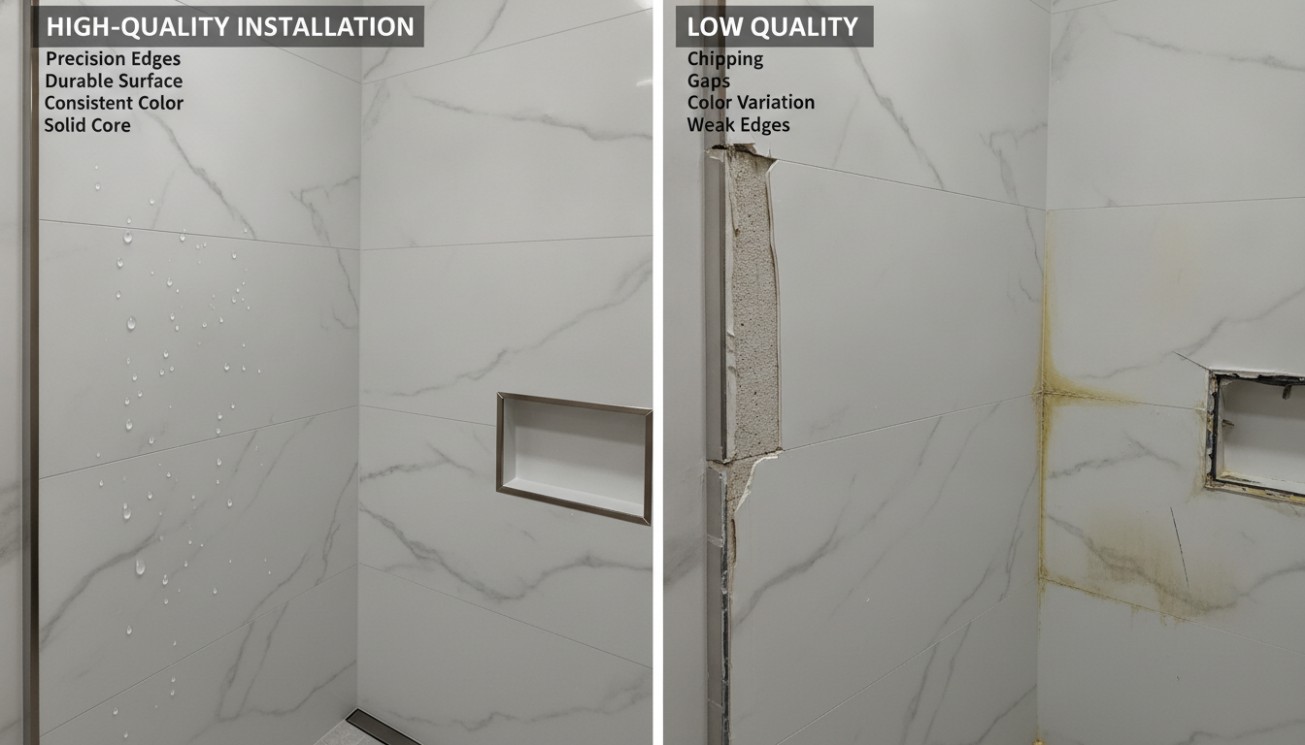
Commercial buyers should therefore evaluate SPC as a system. The panel surface, core stability, edge precision, trims, adhesive, sealing details, packaging, batch control, cleaning guidance and replacement plan all matter. The most successful projects will not be the ones that choose the most attractive catalog image. They will be the ones that choose a wall system that performs across many rooms and many years.
That is the difference between a decorative panel and a commercial wall material. SPC becomes a serious commercial solution when it supports not only the first installation, but the entire life cycle of the wall.
Focused FAQ
What are commercial SPC wall panels?
Commercial SPC wall panels are stone plastic composite wall panels used in hotels, apartments, retail spaces, offices and other commercial interiors. They are selected for design consistency, faster installation, easier cleaning, moisture resistance and repeatable project supply.
Are SPC panels suitable for hotel bathrooms?
Yes. Hotel bathroom wall panels made from SPC can be suitable when the product is designed for wet areas and installed with proper trims, sealants, substrate preparation and maintenance guidance.
Why are SPC wall panels used in apartments?
Apartment wall panels made from SPC can help rental owners and multifamily operators renovate bathrooms and selected interiors faster, reduce visible grout maintenance and create more modern wall surfaces.
Can SPC be used as retail wall cladding?
Yes. Retail wall cladding can use SPC when the design calls for marble-look, stone-look or clean modern wall surfaces. Buyers should check lighting behavior, edge trims, impact risk and fire documentation where required.
Are SPC panels good for office feature walls?
Office feature wall panels made from SPC can work well when the project needs stone-look or concrete-look surfaces. WPC may be better when the design needs wood warmth, fluted texture or slat wall rhythm.
What makes SPC suitable for contract wall panels?
Contract wall panels must support documentation, installation consistency, bulk supply, accessories, cleaning guidance and future repair. SPC becomes suitable when the supplier can support the full project system.
Are SPC panels low maintenance?
Low maintenance wall panels made from SPC can be easier to clean than grout-heavy wall systems, but they still need correct cleaning methods, sealant inspection in wet areas and damage control.
What should buyers check before using SPC wall panels for hotels?
Buyers should check wet-area suitability, panel size, surface durability, batch consistency, trims, sealants, installation documents, cleaning guidance, spare panel planning and packaging before using SPC wall panels for hotels.
Are SPC panels waterproof enough for commercial projects?
Waterproof wall panels for commercial projects must be evaluated as complete systems. The panel may resist water, but finished performance depends on substrate condition, adhesive, trims, sealants, corners, pipe penetrations and installation quality.
How should buyers source bulk SPC wall panels?
When sourcing bulk SPC wall panels, buyers should evaluate supplier consistency, packaging, color control, trim availability, installation guidance, MOQ, spare panels, after-sales support and total project cost rather than only panel price.
#CommercialSPCWallPanels #HotelBathroomWallPanels #ApartmentWallPanels #RetailWallCladding #OfficeFeatureWallPanels #ContractWallPanels #LowMaintenanceWallPanels #SPCWallPanelsForHotels #WaterproofWallPanels #BulkSPCWallPanels #CommercialInteriors #BuildingMaterials #FocusedFAQ