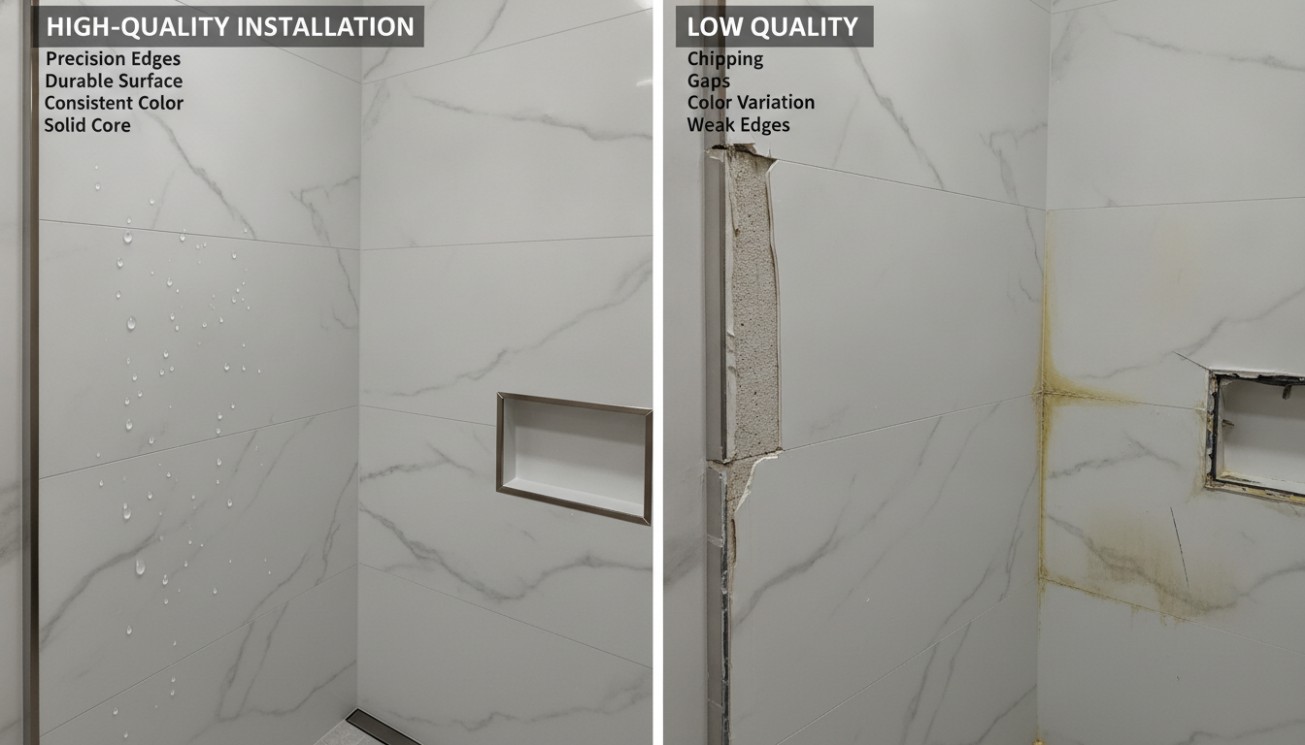
SPC Wall Panel Maintenance: How to Clean, Protect and Extend the Lifespan of Bathroom and Commercial Wall Panels
Low maintenance does not mean no maintenance
SPC wall panel maintenance is often misunderstood because SPC panels are frequently marketed as waterproof, easy to clean and low maintenance. These claims can be useful, but they can also create unrealistic expectations. A wall panel that is easier to clean than grout-heavy tile still needs regular care. A waterproof panel still needs sealed joints. A rigid core still needs a stable wall behind it. A glossy marble-look surface still needs the right cleaning method. A hotel bathroom wall still needs inspection after repeated guest use.
This is why the phrase low maintenance wall panels should be explained carefully. Low maintenance means the wall system can reduce some cleaning and repair pressure when it is installed correctly and used within its proper application range. It does not mean the wall can be ignored. In bathrooms, wet rooms, hotels, apartments, retail stores and commercial interiors, maintenance determines whether the wall continues to look clean after months and years of use.
SPC is especially attractive because it can create large decorative wall surfaces with fewer grout lines than traditional tile. This makes grout free wall maintenance easier in many bathrooms and shower areas. However, the wall still includes edges, trims, corners, bottom transitions, pipe penetrations and sealant lines. These details are where maintenance matters most. The panel face may stay clean, but a failed sealant line can create hidden moisture risk behind the wall.
Earlier articles on this site explained SPC wall panels as rigid waterproof wall systems, discussed SPC shower wall panels for wet rooms and bathrooms, and covered high quality SPC wall panels from a buyer checklist perspective. This article focuses on what happens after installation: cleaning, inspection, repair, lifespan planning and long-term wall performance.
Why SPC wall panel maintenance is different from tile maintenance

Traditional tile maintenance is often focused on grout, cracked tiles, mineral deposits, mold in joints and periodic deep cleaning. SPC maintenance has a different pattern. The large panel surface is usually easier to wipe, but the system still depends on surface coating, trim condition, edge sealing and the substrate behind the wall. A buyer who understands this difference can maintain SPC more realistically.
Tiles create many small maintenance points
A tiled bathroom wall may have hundreds of grout lines. Each line can collect soap residue, hard water stains, discoloration or mold if ventilation and cleaning are poor. A well-installed tile wall can last a long time, but grout maintenance is one of the main reasons buyers consider SPC panels in the first place.
With SPC, the wall usually has fewer joints. This is the main advantage for shower wall panel cleaning. A large panel surface can be wiped more quickly than a grid of small tiles. For homeowners, this means less scrubbing. For hotels and apartments, it can reduce cleaning time across many bathrooms. For landlords, it can help the bathroom look cleaner between tenant turnover.
SPC shifts attention from grout to edges and sealant
SPC reduces grout maintenance, but it does not remove every maintenance point. The new maintenance focus becomes trims, joints, sealant lines, pipe openings, internal corners, external corners and bottom edges. These areas should be inspected regularly, especially in shower walls and wet rooms.
This is why waterproof wall panel maintenance is not only about wiping the surface. It includes checking whether water can enter behind the panel. A small gap around a shower control or a damaged bottom seal can matter more than a large clean wall surface.
Surface coating decides cleaning behavior
Different SPC panels have different surface finishes. Some are glossy, some are matte, some are textured, some use stronger UV coatings, and some are more basic decorative surfaces. The article on SPC wall panel quality explains why surface coating and UV finish should be tested before purchasing. The same issue affects maintenance. A surface that looks premium but scratches easily may create long-term cleaning problems.
How to clean SPC wall panels correctly

The simplest rule for clean SPC wall panels is to use regular gentle cleaning rather than aggressive emergency cleaning. Most surface problems become harder to remove when soap residue, hard water and dirt are allowed to build up for a long time. Light routine cleaning protects the surface and reduces the need for harsh tools.
Use soft cloths and non-abrasive tools
SPC panels should generally be cleaned with soft cloths, microfiber cloths or non-abrasive sponges. Abrasive pads, steel wool, sharp scrapers and rough brushes can scratch the surface coating, especially on glossy marble-look panels. Once the surface is scratched, dirt and water marks may become more visible.
For SPC bathroom panel care, the goal is not to polish aggressively. The goal is to remove water marks, soap residue and light deposits without damaging the decorative finish. Gentle cleaning done regularly is better than harsh cleaning done after months of neglect.
Use mild cleaners first
Mild soap solution, neutral bathroom cleaner or supplier-approved cleaner should usually be the first choice. Strong acidic or alkaline cleaners should be used only if the supplier confirms they are safe for the panel surface. Some cleaners that are acceptable for ceramic tile may be too aggressive for decorative wall panel coatings.
This matters in hotels, serviced apartments and commercial bathrooms because housekeeping teams may use standardized cleaning chemicals. Before using SPC in a large project, the buyer should test the surface with the actual cleaning products that will be used on site.
Rinse and dry when possible
After cleaning, the surface should be rinsed or wiped with clean water if needed, then dried with a soft cloth. This is especially useful in hard-water areas. Water left to dry naturally can create mineral marks, especially on glossy panels. Drying also helps keep sealant lines and corners easier to inspect.
Avoid leaving chemical residue on the surface
Cleaning products should not remain on the panel surface longer than necessary. Residue can dull the finish, create streaks or interact with the coating over time. Facility teams should follow cleaning instructions and avoid mixing chemicals.
Bathroom and shower maintenance requires zone thinking
Not all bathroom walls face the same risk. A vanity wall, bathtub surround, dry bathroom wall and direct shower wall have different exposure levels. Good SPC bathroom panel care should treat these areas differently.
Direct shower walls need the most attention
Direct shower walls receive water, soap, shampoo, heat vapor and repeated wet-dry cycles. These walls should be wiped regularly, especially in hotels or shared bathrooms. The surface should be cleaned before soap residue becomes thick. Sealant lines should be inspected because they are exposed to frequent moisture.
Shower wall panel cleaning should also include checking glass edges, shower trays, niches, shelves and pipe openings. Water may collect in these areas. If moisture remains trapped, even a waterproof panel face cannot protect every hidden detail.
Vanity walls need splash and cosmetic care
Vanity walls are usually exposed to water splashes, toothpaste, soap, cosmetics and cleaning sprays. These substances should be wiped promptly, especially on glossy surfaces. Around mirrors, basins and faucet areas, cleaners should not be allowed to drip into unsealed edges.
Wet rooms need wider inspection areas
Wet rooms expose more wall area to moisture. Water may travel beyond the shower head zone. In these spaces, waterproof wall panel maintenance should cover bottom edges, floor transitions, internal corners and any wall-to-glass or wall-to-drain detail. A wet room wall system must be maintained as a system, not only as a panel surface.
Ventilation is part of maintenance
Even good wall panels cannot compensate for poor ventilation. Bathrooms need airflow to reduce condensation and help surfaces dry. If a room remains humid for long periods, sealants, corners and hidden wall areas face higher risk. Users should run fans, open windows where possible and avoid leaving wet towels pressed against wall panels.
Sealant inspection is the most important hidden maintenance task

Many users focus on cleaning the visible panel face and forget sealant. This is a mistake. Sealant lines often decide whether a bathroom wall remains safe over time. In SPC bathrooms and showers, sealant inspection is a key part of waterproof wall panel maintenance.
Inspect internal corners
Internal corners are high-risk areas because water can collect or run down them. If the sealant becomes cracked, loose, moldy or separated from the panel surface, water may enter behind the wall. A small opening can create hidden damage over time.
Inspect bottom edges
The bottom edge near the shower tray, bathtub, wet room floor or vanity counter should be checked regularly. This area may receive standing water, splashes and cleaning residue. If the bottom seal fails, water can travel behind the panel or into the substrate.
Inspect pipe penetrations
Shower mixers, faucet connections, pipe outlets and wall-mounted fixtures create holes through the panel. Decorative cover plates may hide these openings, but they do not always guarantee waterproofing. Maintenance teams should check whether fittings are loose, whether sealant is damaged and whether water marks appear around the area.
Inspect niches and shelves
Shower niches and shelves create extra edges and horizontal surfaces. They are useful, but they increase maintenance responsibility. Water can sit on horizontal areas and travel into corners if sealing is weak. Niches should be cleaned and dried more carefully than flat wall panels.
Replace failed sealant early
Failed sealant should be removed and replaced before water damage appears. Waiting until stains or odors develop may allow hidden moisture problems to spread. For hotels and apartments, sealant inspection should be part of periodic maintenance schedules, not only a reaction to complaints.
How to prevent scratches, stains and surface dullness
SPC panels are practical wall materials, but they are not immune to damage. Surface care affects SPC panel lifespan. The better the surface is protected, the longer the wall can maintain a clean appearance.
Avoid abrasive cleaning
Abrasive cleaning is one of the fastest ways to damage decorative panels. Rough pads may remove stains quickly, but they can also scratch the coating. Glossy panels can lose their shine. Matte panels can become uneven. Textured panels can trap residue if the surface is damaged.
Control hard water marks
Hard water can leave mineral deposits on shower walls. These deposits may become more difficult to remove if ignored. Wiping the surface after use, using a squeegee or drying key areas can reduce buildup. In hotels, housekeeping routines should include checking for mineral marks around shower zones.
Clean cosmetics and dyes quickly
Hair dye, strong cosmetics, colored soaps, chemical cleaners and certain personal care products may stain or mark wall surfaces if left too long. These should be removed quickly. Before using harsh removers, test in an inconspicuous area or follow supplier guidance.
Protect panels during later renovation
Many walls are damaged after installation during other work. Electricians, plumbers, cabinet installers or painters may scratch panels with tools. If later renovation is planned, SPC walls should be covered and protected. The panel may be durable in normal use but still vulnerable to construction abuse.
Repair SPC wall panels: what can be fixed and what usually requires replacement
Many buyers ask how to repair SPC wall panels. The answer depends on the type of damage, panel system, pattern, location and installation method. Some small issues can be corrected. Some damage requires panel replacement. A serious wall system should include repair thinking from the beginning.
Small surface marks
Light marks may sometimes be cleaned or reduced with supplier-approved methods. However, deep scratches in decorative film or UV coating may not disappear fully. Buyers should avoid aggressive polishing unless the supplier recommends it. A surface repair that works on one finish may damage another.
Edge chips
Small chips near trims may sometimes be hidden by trim replacement or careful touch-up. Exposed edge chips are more difficult. If the panel is in a visible area, replacement may be necessary. This is why edge protection and correct trim use are important during installation.
Damaged sealant
Sealant damage is usually repairable if caught early. The old sealant should be removed properly, the area cleaned and dried, and compatible sealant applied again. If water has already entered behind the panel, further investigation may be needed.
Panel cracks or major impact damage
Cracks, punctures or large impact damage usually require panel replacement. In commercial projects, spare panels should be stored for this reason. Hotels, apartments and public interiors should not assume that the same pattern will always be available years later unless spare stock is planned.
Hidden moisture problems
If staining, odor, swelling, loose panels or repeated sealant failure appears, the issue may not be surface damage. It may indicate hidden moisture behind the wall. In that case, the panel may need to be removed so the substrate can be inspected and repaired. Covering the symptom will not solve the problem.
SPC panel lifespan depends on product quality, installation and maintenance behavior

SPC panel lifespan is not determined only by a factory specification. It is shaped by product quality, wall zone, installation method, cleaning routine, ventilation, user behavior and repair planning. A panel in a dry office feature wall may age differently from a panel inside a busy hotel shower.
Product quality sets the starting point
A better panel has a more stable core, stronger surface finish, cleaner edges and better trim compatibility. These factors support longer service life. A poor panel may look acceptable at installation but show color shift, chipping, surface dullness or edge problems sooner.
This is why the buyer checklist for high quality SPC wall panels matters. Maintenance cannot fully compensate for weak core quality, poor surface coating or inconsistent production.
Installation quality protects the wall system
Proper installation affects lifespan directly. A panel installed over a damp wall, uneven substrate or wrong adhesive may fail even if the surface is cleaned perfectly. Poor sealing can allow water behind the wall. Missing trims can expose edges. Rushed curing can weaken the bond.
The installation guide on SPC wall panel installation explains why tools, adhesive, trims and waterproof sealing determine final performance. Long lifespan begins before the wall is used.
Use environment changes lifespan expectations
A private guest bathroom may be used lightly. A hotel bathroom may be used and cleaned daily. A student housing shower may face tougher behavior. A retail wall may receive impact from fixtures and customers. A spa or wellness center may have high humidity. Each environment creates different lifespan expectations.
Maintenance behavior extends or shortens lifespan
Regular gentle cleaning, ventilation, sealant inspection and early repair can extend the useful life of SPC wall systems. Neglect, harsh chemicals, abrasive cleaning, trapped moisture and delayed sealant replacement can shorten it.
Hotel bathroom wall maintenance requires standard procedures
Hotel bathroom wall maintenance is different from private home maintenance because many people use the space and many staff members clean it. Consistency matters. The hotel should not depend on individual judgment from each housekeeping worker.
Create a cleaning protocol
Hotels should specify approved cleaners, cloth types, cleaning frequency, drying method and chemicals to avoid. The protocol should be simple enough for staff training. If a cleaner is changed, the surface should be tested before full use.
Train housekeeping teams to spot wall risks
Housekeeping teams are often the first to notice problems. They may see loose sealant, water marks, panel scratches, damaged trims or mold in corners before maintenance teams do. Training them to report these issues early can prevent bigger failures.
Schedule periodic technical inspections
In addition to daily cleaning, hotels should schedule maintenance inspections. These should check corners, bottom edges, pipe penetrations, shower trays, niches, trims and panel surfaces. The goal is to repair small problems before they become room closures.
Store spare panels and trims
Hotels should keep spare panels and trims from the original batch where possible. This helps future repairs match the existing wall. Without spare stock, replacing one damaged panel may be difficult if the pattern changes or the supplier discontinues the design.
Apartment and rental property maintenance should focus on turnover
Rental units and apartments create a different maintenance pattern. The wall may be used heavily during tenancy, then inspected during turnover. SPC bathroom panel care in rental settings should focus on durability, tenant instructions and quick inspection.
Provide simple tenant guidance
Tenants may not know how to care for SPC panels. A simple instruction sheet can explain what cleaners to use, what tools to avoid, and why ventilation matters. The guidance should be short and practical.
Inspect during move-out
During tenant turnover, property managers should inspect wall surfaces, trims, sealant lines, shower edges and pipe penetrations. Any damage should be repaired before the next tenant moves in. This is easier than responding to a complaint later.
Use practical patterns for rental units
In rental properties, extremely glossy or very delicate-looking surfaces may show wear more clearly. Practical stone-look or matte finishes may be easier to maintain. The design should match the expected user behavior.
Plan replacement before installation
Rental properties should consider future repairs when selecting panels. Can one panel be replaced? Are trims removable? Is the pattern likely to remain available? Should spare panels be stored? These questions affect long-term maintenance cost.
Commercial feature walls need different maintenance priorities
Not all SPC walls are bathrooms. SPC can also be used in retail stores, clinics, salons, office receptions, wellness spaces and showroom feature walls. Maintenance priorities in these areas may be less about water and more about surface appearance, impact, lighting and brand consistency.
Lighting reveals surface defects
Strong commercial lighting can reveal scratches, gloss inconsistency, fingerprints and surface waves. Cleaning should avoid streaks. Staff should use soft cloths and approved products. For glossy surfaces, dry wiping after cleaning may be necessary to prevent marks.
Edges are vulnerable in public areas
Commercial feature walls may have exposed corners near walkways, counters, chairs or displays. External corners should be protected with trims. Damaged edges can make a premium wall look poor quickly. Regular inspection of high-traffic corners is important.
Brand walls need visual consistency
If the wall carries signage, lighting or brand graphics, damage becomes more visible. Replacement planning and spare panels are important. A mismatched repair panel may damage brand presentation.
How distributors should support maintenance after sale
For importers and distributors, after-sale support is part of product value. If customers do not know how to clean, repair or maintain the wall, complaints may increase even when the panel itself is good. A serious SPC product line should include maintenance documentation.
Provide cleaning instructions
Distributors should provide clear cleaning guidance for homeowners, contractors and commercial maintenance teams. This should include recommended cloth types, cleaner types, chemicals to avoid and drying suggestions.
Provide sealant inspection guidance
For bathroom and shower applications, distributors should explain how often sealant lines should be inspected and what failure signs look like. This helps users understand that waterproof wall panel maintenance includes more than surface cleaning.
Provide repair and replacement logic
Customers should know which issues can be cleaned, which can be repaired, and which require panel replacement. Distributors should also recommend spare panel storage for commercial projects.
Keep trims and accessories available
Maintenance often fails when replacement trims or matching panels are unavailable. A distributor who supports long-term accessories creates more confidence for contractors and commercial buyers.
Common maintenance mistakes that shorten SPC wall panel lifespan
Mistake one: using harsh cleaners without testing
Strong chemicals may damage surface coating or leave marks. Always begin with mild cleaning and follow supplier guidance.
Mistake two: scrubbing with abrasive tools
Abrasive pads can scratch surfaces and reduce gloss. Soft cloths and non-abrasive sponges are safer for routine cleaning.
Mistake three: ignoring failed sealant
Failed sealant can allow hidden moisture behind the wall. It should be repaired early, especially in showers and wet rooms.
Mistake four: treating waterproof panels as waterproof construction
A waterproof panel face does not protect every edge and penetration automatically. The wall system still needs inspection and care.
Mistake five: delaying small repairs
Small chips, loose trims or minor sealant gaps can become larger problems if ignored. Early repair protects the wall system.
Mistake six: cleaning only the panel face
Users often wipe the flat panel but ignore corners, trims and bottom edges. These areas need attention because they are more vulnerable.
Mistake seven: failing to store spare panels for commercial projects
Hotels, apartments and retail chains should keep spare panels and trims. Without spare stock, future repairs may become difficult or mismatched.
A practical maintenance checklist for SPC wall panels
Daily or regular cleaning checklist
- Wipe shower surfaces with a soft cloth or squeegee where possible.
- Remove soap residue and water marks before buildup becomes heavy.
- Use mild or supplier-approved cleaners.
- Avoid abrasive pads, harsh chemicals and sharp scrapers.
- Dry glossy surfaces to reduce streaks and mineral marks.
Monthly bathroom inspection checklist
- Check internal corners for cracked or loose sealant.
- Inspect bottom edges near shower trays, tubs and floors.
- Check pipe penetrations and cover plates for water marks.
- Inspect niches, shelves and horizontal surfaces.
- Look for loose trims, edge gaps or panel movement.
Commercial maintenance checklist
- Train cleaning teams on approved cleaning methods.
- Record panel damage and repair actions.
- Inspect high-traffic corners and exposed edges.
- Store spare panels, trims and accessory information.
- Review cleaning chemicals before changing suppliers.
Repair decision checklist
- Clean light marks before considering repair.
- Replace failed sealant immediately in wet zones.
- Use trims or supplier-approved methods for small edge issues.
- Replace cracked or punctured panels rather than hiding damage.
- Investigate hidden moisture if odor, staining or repeated failure appears.
Final perspective: SPC walls last longer when maintenance is designed into the system
SPC wall panel maintenance should not be treated as an afterthought. It is part of the wall system. The product may be waterproof, rigid and easy to clean, but its long-term performance depends on how it is used, cleaned, inspected and repaired. A good SPC wall does not remain good by chance. It remains good because the panel, trims, sealant, surface coating, cleaning method and maintenance routine work together.
For homeowners, the most important habits are gentle cleaning, ventilation and early sealant inspection. For hotels, the key is standard housekeeping procedures and spare panel planning. For apartments, the focus should be tenant guidance and turnover inspection. For retail and office interiors, the priority is surface protection, edge maintenance and lighting-aware cleaning. For distributors, the responsibility is to provide maintenance guidance, replacement logic and accessory support.
The true value of low maintenance wall panels is not that they never need care. Their value is that they can reduce daily cleaning pressure when compared with grout-heavy or delicate wall systems. They can make shower wall panel cleaning simpler. They can make grout free wall maintenance easier. They can support hotel bathroom wall maintenance when the system is standardized. They can extend SPC panel lifespan when cleaning and inspection are handled correctly.
The most professional way to use SPC is therefore to treat maintenance as part of product selection. Choose a surface that fits the cleaning environment. Choose trims that protect edges. Install sealant correctly. Store spare panels. Train users and maintenance teams. Repair small issues early. Avoid harsh cleaning tools. Inspect wet-area details regularly.
When these habits are in place, SPC panels can serve as practical, attractive and manageable wall systems for bathrooms, hotels, apartments and commercial interiors. When they are ignored, even a high-quality panel can lose its value through surface damage, failed sealant, hidden moisture or poorly planned repairs. The difference is not only the material. The difference is the life-cycle discipline behind the wall.
Focused FAQ
How do you maintain SPC wall panels?
SPC wall panel maintenance includes regular gentle cleaning, avoiding abrasive tools, inspecting sealant lines, checking trims and edges, drying wet areas when possible and repairing small issues before they become larger problems.
What is the best way to clean SPC wall panels?
To clean SPC wall panels, use a soft cloth or non-abrasive sponge with mild or supplier-approved cleaner. Avoid steel wool, harsh chemicals, sharp scrapers and abrasive pads that may damage the surface coating.
How should SPC bathroom panels be cared for?
SPC bathroom panel care should include wiping shower walls, removing soap residue, ventilating the bathroom, inspecting bottom edges and checking sealant around corners, pipes, trays and niches.
Do waterproof wall panels need maintenance?
Yes. Waterproof wall panel maintenance is still necessary because waterproof performance depends on edges, joints, trims, sealants, pipe penetrations and the wall behind the panel, not only the panel face.
How long do SPC wall panels last?
SPC panel lifespan depends on product quality, installation, wall zone, cleaning method, ventilation, user behavior and repair planning. Proper installation and maintenance can significantly improve long-term performance.
Can you repair SPC wall panels?
Some small marks, sealant failures or trim issues can be repaired, but deep scratches, cracks, punctures or major impact damage may require replacement. To repair SPC wall panels properly, follow supplier guidance and investigate hidden moisture if damage repeats.
How should shower wall panels be cleaned?
Shower wall panel cleaning should focus on gentle wiping, removing soap residue, drying water marks, avoiding abrasive cleaners and checking sealant lines around corners, shower trays, pipe openings and niches.
Are grout free wall panels maintenance-free?
No. Grout free wall maintenance is usually easier than grout-heavy tile maintenance, but panels still need surface cleaning, edge inspection, sealant checks and correct bathroom ventilation.
How should hotels maintain SPC bathroom walls?
Hotel bathroom wall maintenance should include approved cleaning protocols, housekeeping training, regular sealant inspections, spare panel storage, trim checks and early reporting of surface or edge damage.
Are SPC panels really low maintenance?
Low maintenance wall panels can reduce cleaning effort and grout-related problems, but they are not maintenance-free. Their long-term performance depends on correct cleaning, sealant inspection, ventilation, damage prevention and timely repair.
#SPCWallPanelMaintenance #CleanSPCWallPanels #SPCBathroomPanelCare #WaterproofWallPanelMaintenance #SPCPanelLifespan #RepairSPCWallPanels #ShowerWallPanelCleaning #GroutFreeWallMaintenance #HotelBathroomWallMaintenance #LowMaintenanceWallPanels #BathroomWallPanels #WallPanelSystems #FocusedFAQ