Electric vs Pneumatic Actuators: Which Is Better for Valve Automation?
The Better Actuator Depends on the System, Not the Product Name
When people compare an electric actuator and a pneumatic actuator, the discussion often becomes too simple. One side says electric actuators are easier to wire, cleaner and better for modern control systems. The other side says pneumatic actuators are faster, tougher and more proven in industrial plants. Both views can be correct, but only under the right conditions.
In valve automation, there is no universal answer to the question: Is an electric actuator better than a pneumatic actuator? The better question is: Which actuator is better for this valve, this process, this control system and this site environment?
A valve actuator is not chosen only by looking at the actuator body. It is chosen by looking at the whole automated valve system. The system includes the valve type, torque or thrust requirement, available power, compressed air supply, control signal, feedback requirement, cycle frequency, safety position, installation environment and long-term maintenance capability. A good actuator selection must consider all of these factors.
An electric valve actuator uses electrical power to move a valve. It can be simple on/off, 3-point, modulating, smart-controlled or connected to a PLC, HMI or building management system. A pneumatic valve actuator uses compressed air to generate movement. It is often fast, compact, robust and widely used in process plants with existing instrument air systems.
Both technologies are mature. Both can automate ball valves, butterfly valves and many other valve types. Both can provide reliable service when selected correctly. The problem is not that one is always better than the other. The problem is choosing the wrong actuator for the wrong reason.
Some buyers choose a pneumatic actuator simply because it has a lower unit price. Later, they realize the site needs air compressors, air dryers, tubing, solenoid valves, positioners and air maintenance. Some users choose an electric actuator because it seems easier to install. Later, they discover that the valve needs fast fail-safe closure or very high cycling frequency, where pneumatic actuation may have been more suitable.
This article compares electric vs pneumatic actuator solutions from a practical industrial viewpoint, not a marketing viewpoint.
Two Different Ways to Move a Valve

An electric actuator and a pneumatic actuator solve the same general problem in different ways. Both are designed to move a valve without manual operation. The difference is the energy source and the way that energy becomes mechanical movement.
An electric actuator uses electrical energy. Inside the actuator, a motor drives gears, a shaft or a mechanical transmission. The actuator receives an electrical command, moves the valve, stops at the correct position and may send feedback to a control system. It may be connected directly to a PLC, control panel, BMS or remote monitoring platform.
A pneumatic actuator uses compressed air. Air pressure enters the actuator chamber and pushes a piston, rack-and-pinion mechanism, Scotch yoke mechanism, diaphragm or spring-return assembly. That air movement creates rotary or linear motion to operate the valve. Pneumatic systems often use solenoid valves, air filters, regulators, positioners and tubing to control actuator movement.
This difference creates a chain reaction in system design.
An electric actuator needs electrical power and signal wiring. A pneumatic actuator needs compressed air infrastructure and control air devices. An electric actuator may integrate naturally into an electrical control cabinet. A pneumatic actuator may integrate naturally into a plant that already has instrument air everywhere. An electric actuator may provide easier position feedback and digital diagnostics. A pneumatic actuator may deliver fast movement and simple fail-safe spring return.
The actuator itself is only the visible part. The hidden infrastructure often determines the real cost and suitability.
How an Electric Valve Actuator Fits Valve Automation
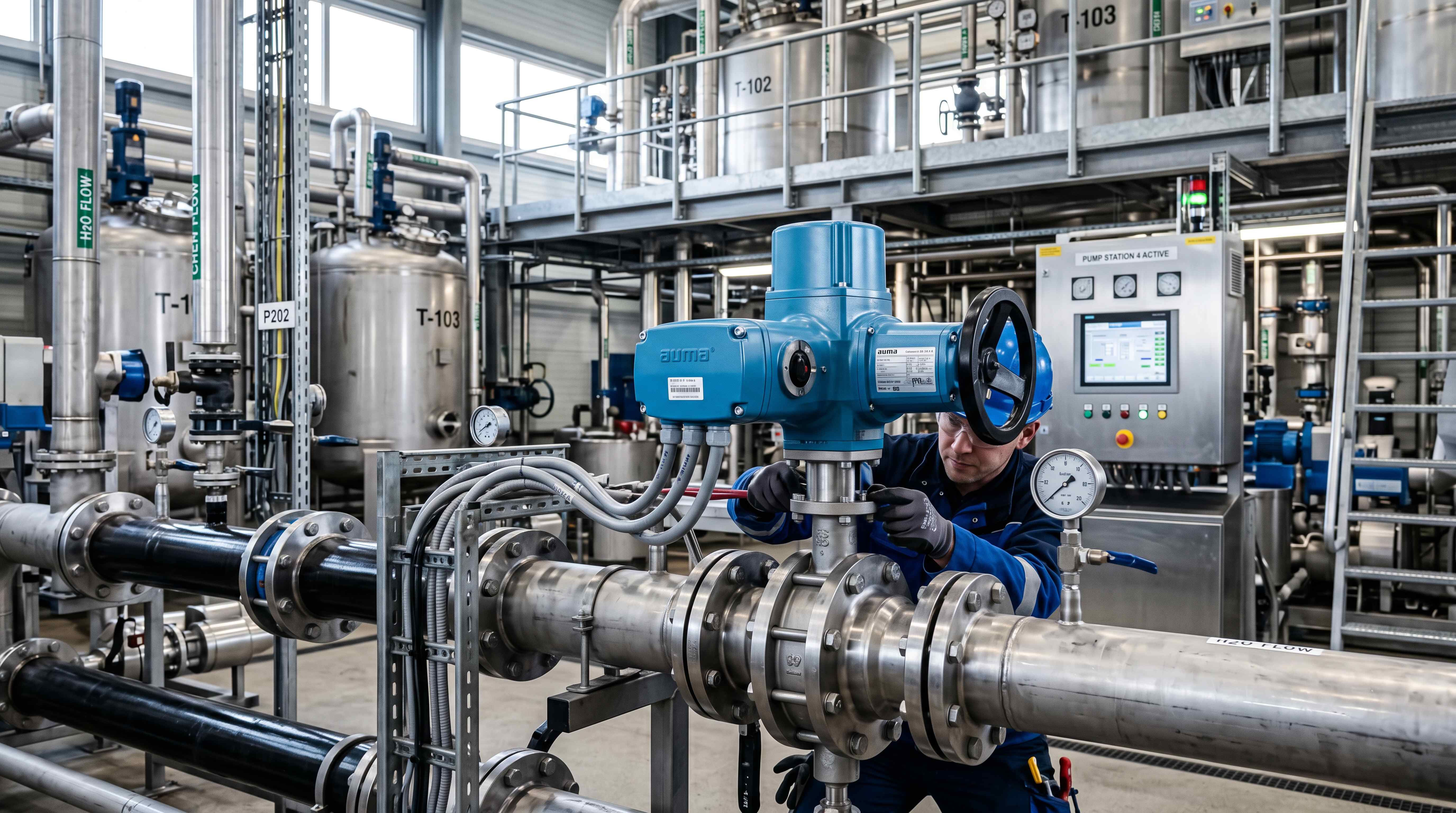
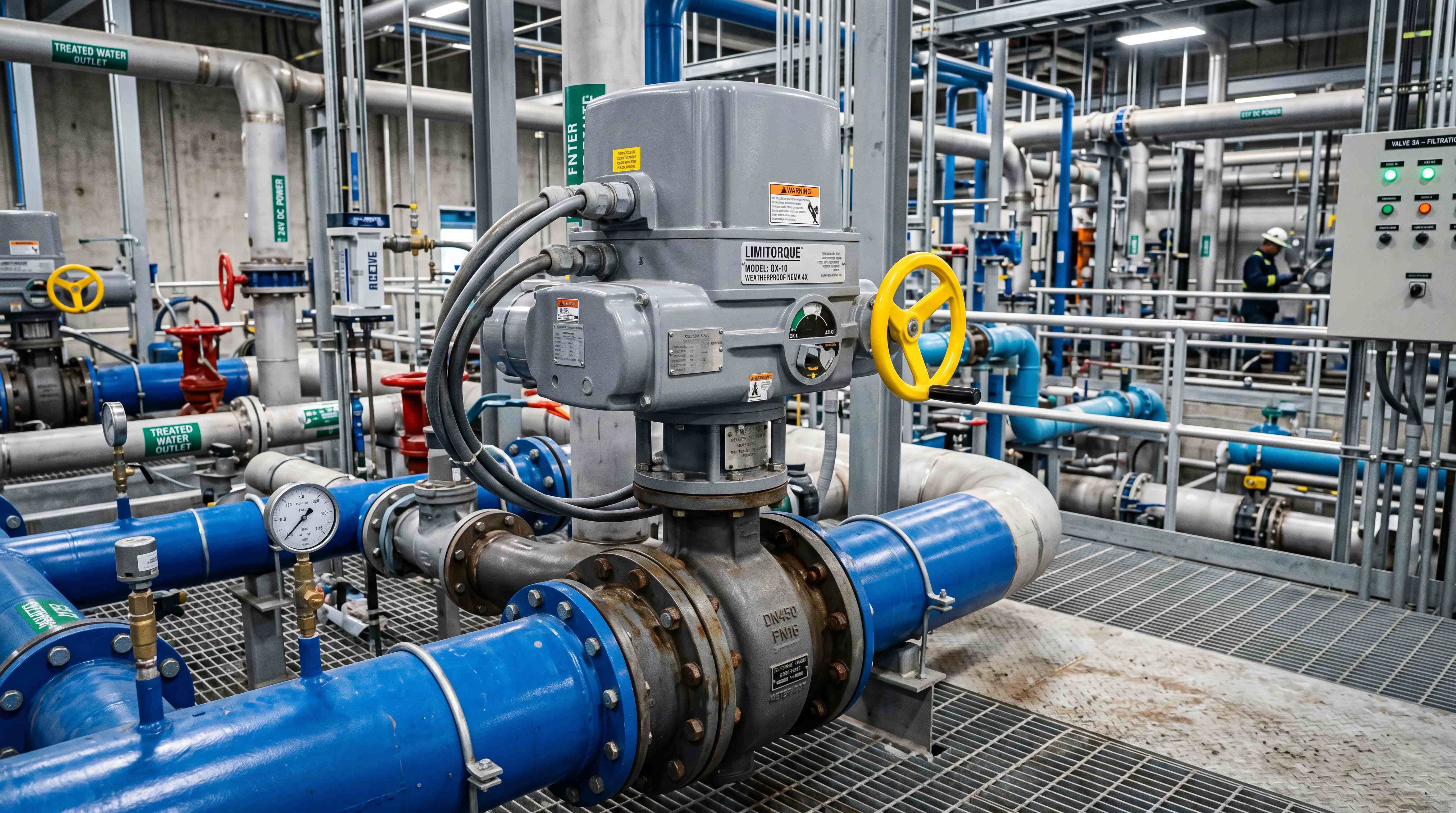
An electric valve actuator is often selected when a site prefers electrical control, does not have compressed air, needs remote operation, or wants position feedback and integration with a digital control system.
In a basic application, the electric actuator receives an open or close command. The internal motor rotates. Gears increase torque and reduce speed. Limit switches or electronic position sensors stop the actuator when the valve reaches the end position. This is common for electric ball valves and electric butterfly valves used in water systems, HVAC, industrial utilities and packaged equipment.
In a more advanced application, the electric actuator may receive a 4-20mA or 0-10V control signal and move the valve to an intermediate position. This is called modulating control. It is used when the valve regulates flow, pressure, temperature or level.
Smart electric actuators can provide position feedback, fault status, local/remote mode, torque alarms, operating history and communication through industrial networks. This makes them useful in modern automated valve system designs where visibility and diagnostics matter.
The biggest advantage of electric actuation is often system simplicity when compressed air is not already available. A remote water station, small process skid, HVAC plant room, irrigation system or utility pipeline may not justify installing an air compressor and tubing network. In these cases, electrical wiring may be easier and cleaner.
However, electric actuators have limits. They may be slower than pneumatic actuators. Their duty cycle must be considered. Motors can overheat if used too frequently. Some fail-safe functions require batteries, capacitors or special designs. In hazardous areas, certified explosion-proof electric actuators may be required and can increase cost.
Electric actuation is powerful, but it must be selected with realistic expectations.
How a Pneumatic Valve Actuator Fits Valve Automation
A pneumatic actuator is often selected in plants that already have compressed air infrastructure. It is widely used in chemical plants, refineries, food processing facilities, power plants, water treatment systems, pharmaceutical production, packaging lines and general process industries.
The basic principle is simple. Compressed air enters the actuator and creates mechanical movement. In a rack-and-pinion pneumatic actuator, air pressure moves pistons and rotates a shaft. In a Scotch yoke design, air pressure creates high torque through a yoke mechanism. In spring-return designs, compressed air moves the actuator in one direction, while a spring returns it when air pressure is lost.
A pneumatic valve actuator is popular because it can be fast, compact and mechanically simple. Pneumatic actuators can be well suited for frequent open/close operation, fast cycling and applications where spring-return fail-safe action is required.
Pneumatic actuation also has a long history in process control. Many plants already have instrument air, solenoid valves, air preparation units and maintenance teams familiar with pneumatic systems. In these facilities, using pneumatic actuators can be cost-effective and practical.
However, pneumatic systems are not “free” just because the actuator itself may be lower cost. Compressed air must be generated, dried, filtered, regulated and distributed. Air leaks waste energy. Tubing can be damaged. Solenoid valves can fail. Positioners need calibration. Moisture or contamination in the air can reduce reliability.
A pneumatic actuator can be an excellent choice when the site infrastructure supports it. It can become expensive or inconvenient when the site does not already have reliable air supply.
Cost Comparison: Unit Price vs System Cost
The most common mistake in valve actuator comparison is comparing only the actuator price.
A pneumatic actuator may have a lower unit price than an electric actuator in many on/off valve applications. This is especially true for simple quarter-turn ball valve or butterfly valve automation. But the actuator body is not the whole system.
A pneumatic actuator may require an air compressor, air receiver, dryer, filter regulator, solenoid valve, tubing, fittings, silencers, positioner, air maintenance and periodic leak checks. If the plant already has these systems, the additional cost may be small. If the plant does not, the total system cost can become much higher.
An electric actuator may have a higher unit price, but it may require only power wiring and control wiring. For small systems, remote sites, water stations, HVAC rooms or equipment skids, this can make electric actuation more economical at the system level.
This is why actuator selection should look at both initial cost and installed cost.
For one valve in a remote location, an electric actuator may be more practical. For hundreds of valves in a plant with existing instrument air, pneumatic actuators may be more cost-effective. For a packaged system exported to different countries, electric actuation may reduce customer installation complexity. For a high-cycle process plant, pneumatic actuation may reduce actuator cost and improve cycle performance.
Cost should also include maintenance. Air leaks, compressor energy, tubing damage and air quality problems are part of pneumatic system cost. Motor wear, electronic boards, gearbox life and duty cycle limits are part of electric actuator cost.
The lowest purchase price is not always the lowest ownership cost.
Speed and Response Time
Speed is one area where pneumatic actuators often have a strong advantage.
A pneumatic actuator can open or close a valve very quickly because compressed air can move the actuator rapidly. For applications requiring fast shutoff, quick cycling or emergency response, pneumatic actuation can be very effective. This is one reason pneumatic actuators are widely used in process industries.
An electric actuator is often slower because motor and gear systems are designed to provide controlled torque rather than extremely rapid movement. A quarter-turn electric actuator may take several seconds, tens of seconds or longer to travel from open to closed depending on size and design. Multi-turn electric actuators can take even longer.
But faster is not always better.
In water systems, closing a valve too quickly can cause water hammer. In some process lines, sudden valve movement can create pressure shock, flow instability or mechanical stress. In these cases, the slower movement of an electric actuator may actually be beneficial.
The correct question is not “which actuator is faster?” The correct question is “what valve speed does the process require?”
For emergency shutoff, high-speed pneumatic actuation may be preferred. For gradual flow change, pump protection or pipeline stability, controlled electric actuator movement may be better. For modulating control, response time must be matched to the process dynamics. A slow thermal process does not need the same actuator speed as a fast pressure control loop.
Speed is only valuable when it matches the process.
Control Accuracy and Positioning
When comparing electric vs pneumatic actuator options, control accuracy depends on the actuator type and accessories.
A basic on/off electric actuator is not designed for precise modulation. A basic pneumatic actuator with a solenoid valve is also not designed for precise modulation. Both can open and close valves reliably, but neither is automatically a control valve actuator.
For modulating applications, both electric and pneumatic systems can be designed for position control. An electric actuator may include an internal control board, position sensor and analog input such as 4-20mA or 0-10V. A pneumatic actuator may use a pneumatic or electro-pneumatic positioner to control air pressure and valve position.
Electric actuators often provide straightforward integration with electrical position feedback. The actuator can report actual position to a PLC or control system. Smart electric actuators may also provide diagnostics and digital communication.
Pneumatic actuators can also provide accurate control when combined with high-quality positioners and properly maintained air supply. In many process plants, pneumatic control valves remain a standard solution because they are proven, responsive and suitable for demanding control loops.
The difference is often in system complexity. A modulating electric actuator may contain much of the control logic inside the actuator. A pneumatic control system may rely on the actuator, positioner, air supply and control signal working together.
For simple positioning and remote monitoring, electric actuation may be easier. For high-performance process control in plants with instrument air, pneumatic actuation may still be preferred.
Energy and Infrastructure
Energy use is another area where the full system matters.
An electric actuator consumes power mainly during movement, although some models also use power for electronics, heaters or standby functions. If the valve operates only occasionally, energy consumption can be relatively low.
A pneumatic actuator consumes compressed air during operation. The actuator itself may not use electricity, but the compressed air system does. Compressors can be energy-intensive, and air leaks can waste significant energy over time. In many factories, compressed air is one of the most expensive utilities if not managed carefully.
If a plant already has an efficient and well-maintained compressed air system, pneumatic actuation can be practical. If compressed air must be added only for a small number of valves, electric actuation may be more efficient and simpler.
Infrastructure also affects installation flexibility.
Electric actuators need electrical cables. Pneumatic actuators need air lines and often signal wiring for solenoids or position feedback. In some layouts, running cable is easier. In others, air tubing is already available and convenient.
Remote stations are a special case. A remote water facility, pipeline station, small pump room or outdoor tank system may have electrical power but no compressed air. In those locations, an electric valve actuator can reduce infrastructure needs.
On the other hand, inside a large process plant with air headers everywhere, adding pneumatic actuators may be easy.
Infrastructure is one of the biggest reasons the same valve application may choose different actuator types in different facilities.
Maintenance Requirements
Electric and pneumatic actuators require different maintenance attention.
An electric actuator may require inspection of wiring, terminal connections, seals, limit settings, feedback signals, motor condition, gearbox condition, manual override operation and enclosure integrity. For smart units, maintenance may include checking parameters, diagnostics and communication status.
A pneumatic actuator may require inspection of air supply quality, tubing, fittings, seals, solenoid valves, positioners, filter regulators, air leaks and spring-return mechanisms. Air quality is especially important. Moisture, oil or particles in compressed air can damage pneumatic components or reduce performance.
Maintenance skill sets are also different. Electric actuators require electrical and controls knowledge. Pneumatic actuators require air system and instrumentation knowledge. In some plants, maintenance teams are more comfortable with one technology than the other.
A pneumatic actuator can be mechanically simple, but the air system around it can create maintenance work. An electric actuator can reduce air system maintenance, but electronics and wiring must be protected from moisture, heat and incorrect voltage.
The maintenance comparison should include site capability. A facility with strong instrument technicians and existing air systems may maintain pneumatic actuators efficiently. A facility with electrical automation teams and limited air infrastructure may prefer electric actuators.
Reliability depends not only on product design, but also on whether the site can maintain the chosen technology properly.
Safety and Fail-Safe Behavior
Safety behavior is one of the most important areas in actuator selection.
A pneumatic actuator can be designed with spring-return fail-safe action. For example, air pressure opens the valve, and a spring closes it when air is lost. Or air pressure closes the valve, and the spring opens it when air is lost. This makes pneumatic actuators very popular in applications requiring defined fail-open or fail-close behavior.
An electric actuator often stays in its last position when power is lost unless it includes a special fail-safe design. Fail-safe electric actuators may use spring return, battery backup, capacitor systems or other mechanisms. These options exist, but they may add cost, size, maintenance requirements or limitations.
The correct fail-safe position depends on the process. Some valves should close on failure to stop flow. Some should open to allow cooling, venting or drainage. Some should stay in place to avoid sudden process changes.
Safety also includes hazardous areas. Pneumatic actuators are often favored in some hazardous environments because the actuator itself does not contain an electric motor at the valve. However, solenoid valves, limit switches and positioners may still require proper certification. Electric actuators used in hazardous areas must have appropriate explosion-proof or hazardous-location certification.
The safety decision should not be based on general preference. It should be based on process hazard analysis, site classification, failure mode and required valve action.
If fail-safe action is critical and must be simple, pneumatic spring return may be attractive. If remote monitoring and controlled electrical integration are more important, an electric actuator with the right safety design may be suitable.
Environmental Conditions
The installation environment affects both actuator types.
Electric actuators must protect motors, gears, electronics and wiring from water, dust, corrosion, temperature extremes and vibration. Outdoor applications may require weatherproof enclosures, heaters, anti-condensation measures and corrosion-resistant materials. Washdown or chemical environments require careful enclosure and cable gland selection.
Pneumatic actuators may tolerate some harsh environments well, especially when they have simple mechanical construction. However, pneumatic systems can be affected by freezing, moisture in air lines, corrosion of fittings, damaged tubing and contaminated air.
In cold environments, compressed air moisture can freeze and block operation. In corrosive environments, actuator body material and coatings matter. In dusty environments, both actuator types need suitable protection. In marine or coastal environments, corrosion resistance becomes important for housings, fasteners and fittings.
For electric actuators, electrical enclosure rating and cable entry quality are critical. For pneumatic actuators, air supply quality and tubing durability are critical.
The site environment should be reviewed before choosing actuator type. A product that performs well indoors may fail quickly outdoors if protection is inadequate.
Duty Cycle and Cycling Frequency
Duty cycle describes how often an actuator can operate without overheating, wearing excessively or exceeding its design limits.
Pneumatic actuators are often well suited for frequent cycling because compressed air can move pistons quickly and repeatedly. This makes them common in high-cycle automation applications.
Electric actuators must be checked carefully for duty cycle. Some are designed for occasional operation. Others are designed for modulating or higher-frequency service. If an electric actuator is used beyond its duty rating, the motor may overheat and the gearbox or control board may experience stress.
This does not mean electric actuators cannot handle frequent operation. It means the correct model must be selected. A modulating electric actuator designed for process control is very different from a low-duty on/off actuator used for occasional isolation.
The application should define expected cycles per hour, cycles per day and whether the actuator will make small frequent adjustments. A valve that opens once per week is very different from a valve that modulates every minute.
If the actuator will cycle constantly, pneumatic actuation may be a strong candidate. If the valve moves occasionally or moderately, electric actuation may be completely suitable and easier to integrate.
Installation Complexity
Installation complexity depends heavily on site conditions.
An electric actuator requires mounting, power wiring, control wiring, feedback wiring and commissioning. If the control panel is nearby and the required voltage is available, installation can be straightforward. For a small automated valve system, electric actuation can be simpler than building air infrastructure.
A pneumatic actuator requires mounting, air tubing, solenoid valve installation, air preparation, control wiring for the solenoid, and possibly positioner setup. If air supply is already available near the valve, installation can be simple. If not, adding air lines can increase cost and complexity.
For packaged equipment manufacturers, electric actuators can simplify customer installation because they reduce the need for plant air. A skid can arrive with valves wired to a control panel and ready for electrical connection. This is useful for water treatment skids, dosing systems, filtration units and compact process modules.
For large process plants, pneumatic actuators may be easier because air headers and instrument technicians are already part of the standard infrastructure.
The easier option is not the same for every site. Installation should be evaluated based on what infrastructure already exists.
Application Scenarios Where Electric Actuators Are Often a Good Fit

Electric actuators are often a good fit in applications where electrical control is available and compressed air is limited or unnecessary.
Water treatment plants frequently use electric actuators for inlet valves, outlet valves, filter systems, pump stations and remote pipelines. These applications often need remote operation, status feedback and moderate cycle frequency.
HVAC and building automation systems commonly use electric actuators because they integrate well with building management systems. Chilled water valves, hot water valves and air handling systems often use electric control signals.
Remote stations and small utility systems often prefer electric actuators because installing and maintaining compressed air would be impractical.
Packaged equipment and skid-mounted systems may use electric actuators to simplify wiring and reduce customer installation requirements.
Applications requiring clear position feedback, remote monitoring or smart diagnostics may also favor electric actuation.
Electric actuators are especially attractive when the valve does not need extremely fast cycling and when system visibility is important.
Application Scenarios Where Pneumatic Actuators Are Often a Good Fit

Pneumatic actuators are often a good fit in plants with existing compressed air infrastructure and high numbers of automated valves.
Chemical plants, refineries and process facilities often use pneumatic actuators because instrument air is already available and maintenance teams are familiar with pneumatic systems.
High-cycle applications may favor pneumatic actuators because they can operate quickly and repeatedly when properly supplied with clean compressed air.
Emergency shutoff applications may use pneumatic spring-return actuators because they provide simple fail-open or fail-close behavior.
Large plants with many on/off valves may find pneumatic actuation cost-effective because air supply and maintenance systems are already in place.
Pneumatic actuators can also be suitable in certain hazardous environments when properly designed with certified accessories.
The key condition is that compressed air must be reliable. A pneumatic actuator is only as reliable as the air system feeding it.
Decision Matrix: Electric or Pneumatic?
For practical actuator selection, it helps to think in decision categories.
If compressed air is not available, electric actuation is usually easier.
If compressed air is already available and reliable, pneumatic actuation may be economical.
If the valve must move very fast, pneumatic actuation may be better.
If the valve needs simple electrical integration and feedback, electric actuation may be better.
If spring-return fail-safe action is required, pneumatic actuation is often simpler.
If remote monitoring and digital diagnostics are important, electric actuation may be attractive.
If the valve cycles very frequently, pneumatic actuation may be a strong option.
If the valve operates occasionally or moderately, electric actuation may be suitable.
If the installation is a compact skid or remote station, electric actuation may reduce infrastructure.
If the site is a large process plant with instrument air, pneumatic actuation may fit existing standards.
This decision matrix should not replace engineering review, but it helps clarify the main trade-offs.
Common Mistakes in Electric vs Pneumatic Actuator Selection
One common mistake is assuming pneumatic is always cheaper. The actuator unit may be cheaper, but the air system, tubing, solenoid valves and maintenance must be included.
Another mistake is assuming electric is always cleaner and easier. Electric actuators still require correct wiring, voltage, duty cycle, enclosure protection and control compatibility.
A third mistake is ignoring speed. Some electric actuators may be too slow for fast shutdown applications. Some pneumatic actuators may be too fast for pipelines vulnerable to water hammer unless controlled properly.
A fourth mistake is ignoring fail-safe requirements. If the valve must move to a safe position after power or air loss, the actuator design must support that behavior.
A fifth mistake is comparing a basic pneumatic actuator with a smart electric actuator as if they provide the same function. The comparison must include control accessories, feedback, diagnostics and system integration.
A sixth mistake is not considering maintenance capability. The best actuator on paper can perform poorly if the site cannot maintain its air supply, wiring, positioners or electronics.
A seventh mistake is using one standard for every application. A plant may use pneumatic actuators for high-cycle process valves and electric actuators for remote utility valves. Mixed actuator strategies are often practical.
When a Hybrid Strategy Makes Sense
Many facilities do not need to choose only one technology. A hybrid strategy can be more realistic.
A plant may use pneumatic actuators for fast emergency isolation valves and high-cycle process valves. The same plant may use electric actuators for remote water valves, utility lines, HVAC systems or valves requiring digital feedback. A machine builder may use electric actuators on compact skids but offer pneumatic options for customers with plant air.
This mixed approach recognizes that actuator selection is application-specific. It avoids forcing one technology into every situation.
For a large valve automation project, engineers can group valves by function. Critical fast-acting valves may use pneumatic spring return. Moderate-frequency utility valves may use electric actuators. Modulating control valves may be evaluated based on control accuracy, process dynamics and maintenance preferences. Remote valves may use electric actuators with feedback.
A hybrid strategy can reduce total cost while improving technical fit.
The Real Question: What Does the Valve Need to Prove?
In an automated valve system, the actuator must do more than move. It must prove that the valve moved correctly.
For an electric actuator, proof may come from limit switches, analog feedback, digital diagnostics or HMI status. For a pneumatic actuator, proof may come from limit switches, positioners, proximity sensors or control system feedback.
This proof matters because valve failure is not always visible. A valve may be commanded open but remain closed. A valve may move halfway and stop. A valve may lose air pressure. An electric actuator may trip on torque. A pneumatic actuator may have a solenoid failure. Without feedback, the control system may not know.
When comparing electric vs pneumatic actuator solutions, include the feedback strategy. The best actuator is not only the one that moves the valve. It is the one that allows the plant to trust the valve status.
This is especially important in modern industrial valve automation, where operators expect remote visibility, alarms and reliable process sequences.
The Best Choice Is the One That Reduces System Risk
An actuator is a small part of the plant, but the valve it controls may be critical. A wrong actuator decision can cause downtime, leakage, unsafe operation, control instability or maintenance problems.
Electric actuators reduce system risk when they simplify infrastructure, improve electrical integration, provide useful feedback and match the valve duty. Pneumatic actuators reduce system risk when they use existing reliable air supply, provide fast response, support high cycling and deliver simple fail-safe action.
The best choice is the one that reduces total system risk over time.
For some projects, that will be an electric actuator. For others, it will be a pneumatic actuator. For many plants, it will be both, applied intelligently in different areas.
The key is to compare the whole system, not just the actuator body.
Focused FAQ
What is the main difference between an electric actuator and a pneumatic actuator?
An electric actuator uses electrical power and a motor to move a valve. A pneumatic actuator uses compressed air to generate movement. The main difference is the energy source and the supporting infrastructure required for valve automation.
Which is better for valve automation, electric or pneumatic actuator?
Neither is always better. Electric actuators are often better when compressed air is not available, electrical integration is needed, or position feedback is important. Pneumatic actuators are often better for fast movement, high cycling and simple spring-return fail-safe action.
Is a pneumatic actuator cheaper than an electric actuator?
A pneumatic actuator may have a lower unit price, but the total system cost includes compressed air supply, tubing, solenoid valves, filters, regulators and maintenance. Electric actuators may cost more per unit but can reduce infrastructure needs in some applications.
When should I choose an electric valve actuator?
Choose an electric valve actuator when the site has electrical control available, compressed air is limited, remote operation is needed, feedback is important, or the valve operates at low to moderate frequency.
When should I choose a pneumatic valve actuator?
Choose a pneumatic valve actuator when the plant already has reliable instrument air, the valve needs fast movement, high cycle frequency is expected, or simple spring-return fail-safe behavior is required.
Which actuator is faster, electric or pneumatic?
Pneumatic actuators are often faster than electric actuators. However, faster movement is not always better. Some water and process systems need slower valve movement to avoid pressure shock or water hammer.
Can electric actuators provide fail-safe operation?
Yes, some electric actuators can provide fail-safe operation using spring return, battery backup, capacitor systems or other designs. However, these options may add cost and maintenance requirements.
Why are pneumatic actuators common in process plants?
Pneumatic actuators are common in process plants because many plants already have compressed air infrastructure. They are fast, proven, compact and suitable for many on/off and control valve applications.
Are electric actuators better for remote monitoring?
Electric actuators are often strong candidates for remote monitoring because they can provide electrical feedback, analog position signals, digital communication and smart diagnostics. Pneumatic systems can also provide feedback, but usually through additional switches or positioners.
How do I choose between electric and pneumatic actuators?
Start with the valve duty, available infrastructure, required speed, cycle frequency, fail-safe position, control signal, feedback need, environment and maintenance capability. The best actuator selection is based on the whole automated valve system, not only actuator price.
#ElectricVsPneumaticActuator
#ElectricActuator
#PneumaticActuator
#ValveAutomation
#ElectricValveActuator
#PneumaticValveActuator
#ActuatorSelection
#ValveActuatorComparison
#AutomatedValveSystem
#IndustrialValveActuator
#IndustrialAutomation
#ProcessAutomation
#FlowControl
#ValveControl
#FactoryAutomation