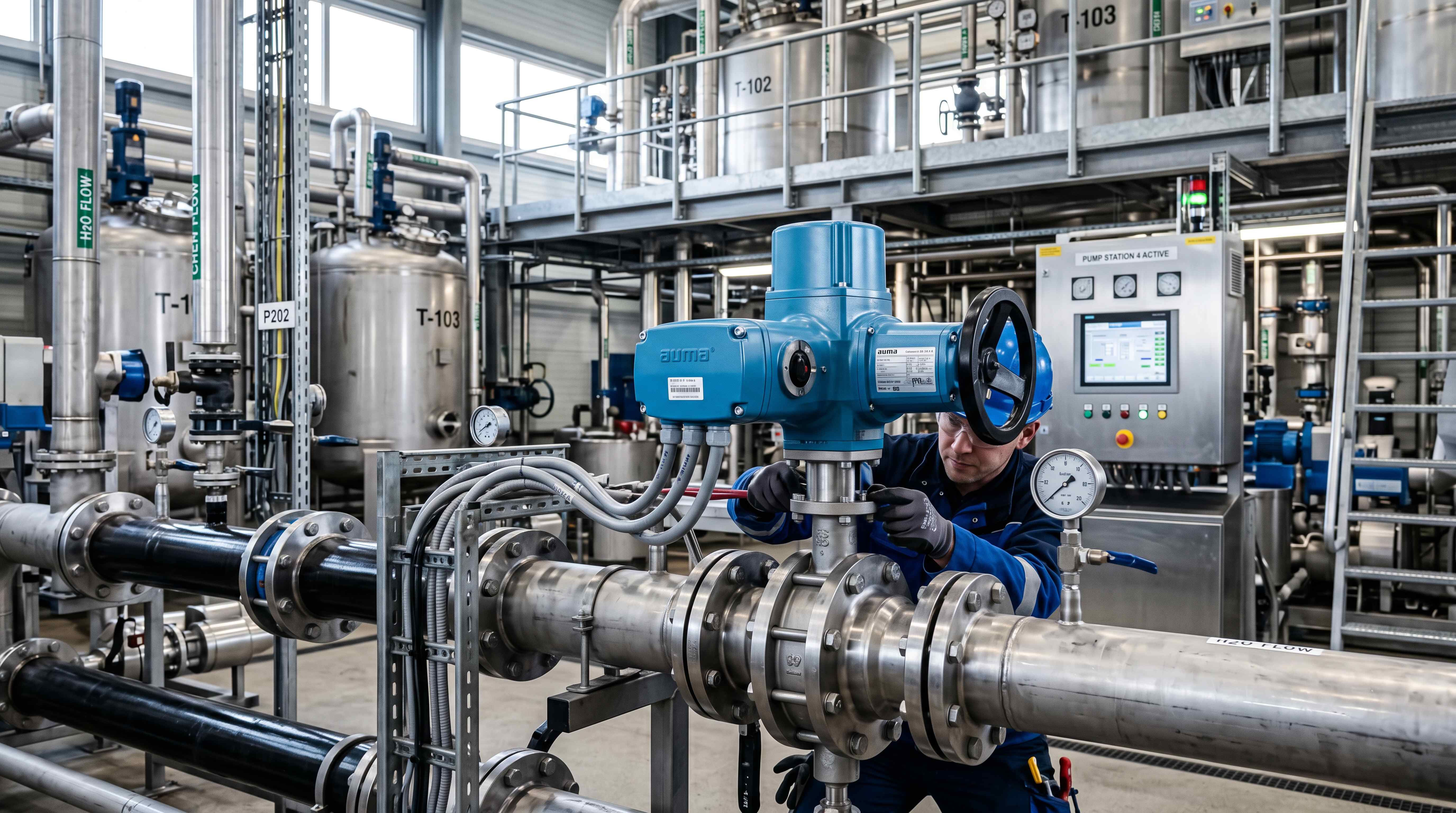
Electric Actuators in Water Treatment, HVAC, Oil & Gas and Chemical Plants
Electric Actuator Applications Are Defined by the Process, Not by the Actuator Alone
Electric actuators are often discussed as products: torque rating, voltage, control signal, enclosure, travel time, feedback, manual override and mounting standard. These details are important, but they do not explain why one actuator works well in a water treatment plant while another is better suited for an HVAC system, oil and gas site, chemical plant or packaged industrial skid.
In real industrial valve automation, the application defines the actuator. The same electric valve actuator may look similar from the outside, but the required performance can change completely depending on where it is installed. A valve in a clean indoor HVAC plant room does not face the same risks as a valve in a wastewater treatment basin. A chemical plant valve may need corrosion resistance and safety logic. An oil and gas valve may need hazardous area approval and remote diagnostics. A food processing valve may need washdown protection and hygienic operating reliability.
This is why electric actuator applications should not be treated as a generic list of industries. Each industry has its own operating logic, maintenance pressure, control requirement and failure consequence. A good automated valve system is not created by placing an actuator on top of a valve. It is created by matching the valve, actuator, signal, enclosure, feedback and maintenance method to the process.
For example, an electric actuator for water treatment often focuses on reliable open/close operation, outdoor protection, remote monitoring and moderate cycle frequency. An electric actuator for HVAC may focus more on proportional control, quiet operation, 0-10V signal compatibility and building management system integration. An electric actuator for oil and gas may require explosion-proof certification, robust enclosure design and fail-safe planning. An electric actuator for chemical plant applications may need corrosion resistance, precise control and protection against aggressive environments.
The value of electric actuators is not only that they move valves. Their real value is that they make valve operation controllable, visible and repeatable in many different industrial environments.
Why Electric Actuators Are Used Across Different Industries

Electric actuators are widely used because many modern facilities already depend on electrical control systems. PLCs, control panels, HMIs, SCADA platforms, building management systems and remote monitoring devices are common in industrial operations. Electric actuators fit naturally into this electrical control architecture.
Compared with manual valves, electric actuators reduce the need for operators to physically access valves. This is valuable when valves are located in remote stations, high platforms, underground pits, hazardous zones, hot areas, enclosed spaces or large pipeline networks. A valve that once required manual operation can become part of an automated valve system.
Compared with pneumatic actuators, electric actuators can reduce dependence on compressed air infrastructure. This is especially useful in sites where compressed air is not available, expensive to maintain or unnecessary for other equipment. Electric actuators only need suitable power and control wiring, although larger or smarter actuators may require more detailed electrical planning.
Electric actuators are also attractive when valve position feedback is important. In many systems, operators do not only want to send an open or close command. They want to know whether the valve actually reached the correct position. An electric valve actuator can provide open/closed feedback, analog position feedback or smart diagnostic information depending on its design.
This combination of electrical integration, remote operation, feedback and moderate maintenance needs makes electric actuators useful in many industries. But every industry still requires its own selection logic.
Electric Actuator for Water Treatment
Water treatment is one of the most important application areas for electric actuators. Water and wastewater systems contain many valves that must be opened, closed, throttled, isolated or sequenced. These valves may be installed in treatment plants, pumping stations, filtration systems, chemical dosing systems, reservoirs, distribution networks or remote control stations.
An electric actuator for water treatment is often selected because water facilities need reliable remote operation. Many valves are too large, too frequent or too inconvenient to operate manually. A control room operator may need to open an inlet valve, close a filter valve, start a backwash cycle or isolate a pump line without walking across the facility.
Water treatment plants often use electric actuators with butterfly valves and ball valves. An electric actuator for butterfly valve applications is common in larger water pipelines because butterfly valves are compact and practical for medium and large pipe diameters. An electric actuator for ball valve applications may be used on smaller lines, chemical dosing lines, bypass lines or equipment packages.
The control mode depends on the valve function. Many water valves only require on/off control. For example, an inlet valve may open during a filling process and close when a level target is reached. A filter valve may open and close as part of a backwash sequence. A pump isolation valve may open before pump startup and close during maintenance.
Other water applications may require modulating control. Flow balancing, pressure control, chemical dosing and filter regulation may require the actuator to hold intermediate positions. In these cases, a modulating electric actuator with feedback may be required.
Water treatment environments can be wet, humid and corrosive. Outdoor pump stations may face rain, temperature changes and condensation. Wastewater areas may expose actuators to corrosive gases and moisture. For this reason, enclosure protection, cable gland sealing, corrosion resistance and maintenance access are important.
A water treatment actuator should not only be selected by torque. It should be selected by valve type, pipeline size, operating frequency, remote feedback requirement, enclosure protection and site environment.
Electric Actuators in Wastewater and Pumping Stations
Wastewater and pumping station applications create a more demanding version of water treatment. The environment may include moisture, dirt, corrosive gases, flooding risk and difficult access. Valves may be installed in pits, galleries, outdoor basins or remote stations.
Electric actuators used in wastewater systems must be robust enough for this environment. A weatherproof electric valve actuator may be required, and in some cases corrosion-resistant materials or NEMA 4X-type protection may be important. Cable entries must be installed carefully because moisture ingress is one of the most common causes of actuator failure.
Wastewater valves may not operate every minute, but they must work when needed. This is an important point. Low-frequency valves can become stiff due to long periods of inactivity, sediment, corrosion or buildup. The actuator must have enough torque margin to handle real valve conditions, not only new-valve torque.
Remote feedback is also important. A wastewater control room may need to confirm whether a valve is open, closed or failed. If a valve does not reach position during a pumping sequence, the system may need to stop a pump, trigger an alarm or prevent overflow.
For wastewater, electric actuator maintenance should include periodic cycling, feedback testing, enclosure inspection and checking for corrosion or water ingress.
Electric Actuator for HVAC Systems

HVAC is another major field for electric actuator applications. In heating, ventilation and air conditioning systems, actuators are used to control chilled water valves, hot water valves, steam valves, air dampers and energy distribution loops.
An electric actuator for HVAC is often connected to a building management system. The actuator may receive an on/off, floating, 3-point or 0-10V control signal. Many HVAC applications require proportional control rather than simple open/close operation. For example, a chilled water valve may need to open gradually based on cooling demand. A hot water valve may adjust flow to maintain discharge air temperature. A damper may modulate airflow according to ventilation requirements.
HVAC electric actuators are often smaller than heavy industrial process actuators, but the control logic can be sophisticated. Energy efficiency depends on stable valve movement and accurate control. Poor actuator selection can lead to unstable temperature control, excessive pump energy, poor comfort or control loop hunting.
In HVAC systems, speed is not always the priority. Stable response, compatibility with the control system, quiet operation and reliable feedback may matter more. A valve that moves too aggressively can create unstable control. A valve that moves too slowly may reduce response. The actuator must match the building automation strategy.
Electric actuators are common in HVAC partly because buildings do not always have compressed air available for pneumatic controls. Electrical control is easier to integrate with modern BMS platforms. This makes electric actuation a natural choice for many commercial buildings, hospitals, data centers, airports, offices and industrial plant rooms.
Electric Actuator for Oil and Gas
Oil and gas applications often place stricter demands on electric actuators. Valves may be used in pipelines, remote well sites, metering stations, storage terminals, processing units or utility systems. The operating environment may include outdoor exposure, hazardous area classification, remote operation requirements and high reliability expectations.
An electric actuator for oil and gas may need explosion-proof or hazardous area certification. This is not optional if the installation area contains flammable gases or vapors. The actuator, cable glands, local controls, feedback devices and installation method must match the site classification.
Remote operation is also important. Oil and gas facilities may have valves located far from operators. Electric actuators can support remote control and status monitoring through PLC, RTU, SCADA or digital communication systems. This allows operators to monitor valve status without physically visiting each valve.
In oil and gas, valve failure can have serious consequences. A valve may isolate a pipeline, control flow to a process unit, manage pressure or protect equipment. This means torque selection, fail-safe strategy, manual override, feedback and diagnostics become important.
Some oil and gas applications may still prefer pneumatic or hydraulic actuators, especially where fast emergency shutdown or high torque is required. However, electric actuators are useful where electrical integration, remote monitoring, lower air infrastructure dependence and intelligent diagnostics are valued.
A strong electric actuator for oil and gas applications is usually not the simplest actuator. It may need robust enclosure protection, certified design, local/remote control, torque monitoring, position feedback and reliable manual operation.
Electric Actuator for Chemical Plant Applications

Chemical plants require careful actuator selection because the process environment can be aggressive. Valves may handle corrosive liquids, solvents, acids, alkalis, vapors, hot fluids or hazardous media. The actuator may not contact the process media directly, but it can still be exposed to chemical vapor, washdown, corrosion and hazardous area risks.
An electric actuator for chemical plant applications should be selected with the environment in mind. Housing material, coating, fasteners, cable glands and enclosure seals may affect long-term reliability. In corrosive areas, a standard actuator may deteriorate faster than expected. Once corrosion affects the enclosure or cable entry, moisture and chemical exposure can damage internal electronics.
Chemical processes may also require accurate control. A valve may regulate flow into a reactor, control cooling water, manage chemical dosing or isolate a process line. In these cases, actuator control mode matters. A basic on/off actuator may be enough for isolation, but a modulating electric actuator may be required for process control.
Safety behavior should be defined early. What should the valve do if power is lost? Should it fail closed, fail open or stay in last position? If the actuator controls a hazardous chemical line, this decision must be made according to process safety requirements.
Chemical plants often use a mix of actuator technologies. Pneumatic actuators may be common in hazardous or high-cycle areas, while electric actuators may be used where electrical integration, remote feedback or lower air infrastructure is preferred. The best solution depends on the valve duty and site standards.
Electric Actuators in Food and Beverage Processing
Food and beverage processing uses automated valves for water, steam, cleaning fluids, ingredients, compressed air, CIP systems and utility lines. Electric actuators can support reliable automation where valves need repeatable operation and integration with control systems.
In this industry, washdown and cleanliness are important. Actuators may be exposed to water spray, cleaning chemicals and humid environments. Enclosure protection and corrosion resistance matter. Smooth surfaces, sealed cable entries and stainless hardware may be considered depending on the area.
Some food and beverage valves require frequent cycling as part of batch processes, cleaning sequences or filling systems. Duty cycle should therefore be checked carefully. An actuator used only for occasional shutoff has different requirements from one used repeatedly in a production sequence.
Control feedback can also support traceability and process reliability. If a valve must open during a cleaning cycle, the control system may need confirmation. If a valve fails to reach position, the batch process may need to stop or alarm.
Electric actuators can be attractive for packaged food processing equipment because they simplify integration with electrical control panels. However, the actuator must still meet the cleaning environment and operating frequency.
Electric Actuators in General Industrial Utilities
Not every electric actuator application belongs to a large process plant. Many actuators are installed on general industrial utility systems: cooling water, compressed air isolation, lubrication systems, fuel lines, drainage, filtration skids, heat exchangers, machine cooling, dosing equipment and auxiliary pipelines.
These applications are often practical rather than extreme. The valve may need to open when a machine starts, close when a tank reaches level, isolate a line during maintenance or switch flow between two paths.
For general industrial utilities, the key is matching complexity to the task. A simple electric actuator for ball valve isolation may be enough for many utility lines. A modulating actuator may be unnecessary unless flow regulation is required. A smart actuator may be useful if the valve is remote or critical, but it may be over-specified for a simple local utility valve.
This is where cost-effective actuator selection matters. Over-specification increases cost without improving the system. Under-specification creates reliability problems. A good industrial valve automation design balances torque, control mode, feedback, environment and maintenance needs.
General utility applications are also common in factories that do not want to extend compressed air lines for every valve. Electric actuators allow these valves to be wired into a control panel or PLC system with relatively simple infrastructure.
Electric Actuators in Packaged Equipment and Skid Systems

Packaged systems and skids are a growing area for electric actuator applications. Water treatment skids, filtration skids, dosing systems, process modules, heating units, cooling systems and OEM equipment often use electric actuators because they can be pre-wired and tested before shipment.
For equipment manufacturers, electric actuators simplify assembly. The valve, actuator, wiring and control panel can be integrated in the factory. The customer receives a system that is closer to plug-and-play. This reduces dependence on site air supply and can make the product easier to install in different regions.
In skid systems, space is often limited. Compact electric valve actuators may be useful because they reduce tubing and air preparation components. Feedback wiring can be integrated into the control panel. The HMI can show valve status as part of the packaged system.
However, skid designers still need to consider service access. An actuator should not be mounted in a location where the terminal cover cannot be opened, the manual override cannot be reached or the position indicator cannot be seen. Cable routing, maintenance clearance and valve replacement should be considered during design.
Electric actuators can improve the marketability of packaged equipment because they create a more complete automated valve system. But they must be selected for the actual valve duty, not only for compact size.
Application Conditions That Change Actuator Selection
Across all industries, several application conditions have a major impact on electric actuator selection.
The first is valve type. Ball valves, butterfly valves, gate valves and globe valves require different actuator motion and torque behavior. An electric actuator for butterfly valve applications may need different torque and mounting considerations than an electric actuator for ball valve systems.
The second is control purpose. A valve used for isolation may need only open/close operation. A valve used for flow control may require modulating control, position feedback and stable response.
The third is operating frequency. A valve that cycles once per week has different actuator duty requirements from a valve that modulates every few seconds.
The fourth is environment. Indoor clean rooms, outdoor pump stations, chemical washdown areas, coastal sites and hazardous areas require different enclosure and material strategies.
The fifth is feedback requirement. Some systems only need local indication. Others require PLC feedback, analog position output or smart diagnostics.
The sixth is failure consequence. If a valve failure only causes inconvenience, the actuator selection may be simpler. If it can stop production, create safety risk or cause overflow, the actuator must be selected more carefully.
Application context changes everything. This is why industrial valve automation should always begin with process questions.
Why One Industry May Use Different Actuator Types
Even within the same industry, not all valves should use the same actuator type. A water treatment plant may use electric actuators for filter valves, pneumatic actuators for high-cycle chemical valves, and manual valves for rarely used maintenance isolation. A chemical plant may use explosion-proof electric actuators in one area and pneumatic actuators in another. An HVAC system may use small 0-10V electric actuators for control valves and larger electric actuators for main isolation valves.
This mixed strategy is normal. A facility does not need one actuator technology everywhere. It needs the right actuator for each valve function.
This is important for B2B buyers because they may ask for one actuator series across many applications. Standardization can reduce spare parts and training requirements, but it should not override application fit. If one valve requires modulating control and another requires only open/close isolation, they may need different actuator configurations. If one valve is indoors and another is outdoors, enclosure requirements may differ.
The best actuator strategy combines reasonable standardization with application-specific selection.
How Electric Actuator Applications Affect SEO and Buying Intent
From a content and SEO perspective, application-based electric actuator topics are valuable because many buyers search by use case rather than by product category. A buyer may search “electric actuator for water treatment” because they are working on a plant project. An HVAC engineer may search “electric actuator for HVAC valve” because they need BMS compatibility. A process engineer may search “electric actuator for chemical plant” because corrosion or hazardous area concerns are involved.
Application articles also support deeper buyer education. They help readers understand not only what an electric actuator is, but why its requirements change across industries. This creates stronger topical authority than writing only generic product descriptions.
For a blog category focused on industrial valve automation, application content should connect back to selection, control, wiring, troubleshooting and standards. A water treatment article can link to actuator selection and IP rating. An HVAC article can link to 0-10V control. A chemical plant article can link to NEMA 4X and explosion-proof standards. An oil and gas article can link to fail-safe and hazardous area actuator content.
This creates a stronger content cluster around electric actuator applications and industrial valve automation.
Choosing Electric Actuators by Application: A Practical View

A practical application-based selection method can begin with a few questions.
What process does the valve control?
Is the valve used for isolation, regulation, sequencing or safety?
What valve type is installed?
How often will the valve move?
Does the valve need to stop at intermediate positions?
Is position feedback required?
Is the actuator indoors, outdoors, wet, corrosive or hazardous?
Is compressed air available, or is electrical control preferred?
What happens if the valve fails to move?
Can maintenance teams access and service the actuator?
For water treatment, prioritize reliability, enclosure protection, feedback and remote operation.
For HVAC, prioritize control signal compatibility, proportional control, quiet response and BMS integration.
For oil and gas, prioritize certification, ruggedness, remote diagnostics and safety logic.
For chemical plants, prioritize corrosion protection, control accuracy, fail-safe planning and hazardous area suitability.
For food processing, prioritize washdown resistance, duty cycle and process sequence feedback.
For packaged systems, prioritize compact integration, wiring simplicity and service access.
This practical view helps prevent generic selection and improves long-term performance.
Electric Actuators Help Turn Valves Into System Assets
A manual valve is a mechanical component. An electric actuator can turn that valve into a controlled system asset.
In water treatment, it allows valves to respond to level, flow and pump sequences. In HVAC, it allows valves to follow temperature and energy demand. In oil and gas, it allows remote control and status monitoring. In chemical processing, it supports safer and more repeatable process control. In food and beverage, it helps automate production and cleaning sequences. In packaged equipment, it allows OEMs to deliver more complete automated systems.
This is the larger value of electric actuator applications. The actuator is not only a motor on a valve. It is a connection point between process hardware and automation intelligence.
The best electric actuator choice is therefore not universal. It is application-specific. It must be selected according to the industry, environment, control strategy and valve duty.
When selected correctly, electric actuators can reduce manual work, improve process visibility, support remote operation, strengthen automation logic and make industrial valve systems more reliable.
Focused FAQ
What are common electric actuator applications?
Common electric actuator applications include water treatment, HVAC systems, oil and gas facilities, chemical plants, food processing, industrial utilities, packaged equipment and general industrial valve automation.
Why are electric actuators used in water treatment?
Electric actuators are used in water treatment because they support remote valve operation, open/close sequencing, feedback to control systems and automation of pumps, filters, dosing systems and distribution pipelines.
What type of electric actuator is used for water treatment valves?
Water treatment systems often use quarter-turn electric actuators for ball valves and butterfly valves. Larger pipelines commonly use electric actuators for butterfly valve automation, while smaller lines may use electric actuators for ball valve control.
Why are electric actuators common in HVAC systems?
Electric actuators are common in HVAC because they integrate easily with building management systems. They can control chilled water valves, hot water valves, dampers and temperature control loops using signals such as 0-10V or floating control.
Are electric actuators suitable for oil and gas applications?
Yes, electric actuators can be suitable for oil and gas applications when selected with the correct enclosure, certification, torque, feedback and safety requirements. Hazardous areas may require explosion-proof or certified actuator designs.
What should be considered for electric actuators in chemical plants?
Chemical plant applications should consider corrosion resistance, hazardous area classification, fail-safe behavior, control accuracy, enclosure protection and compatibility with aggressive process environments.
Can electric actuators be used in food and beverage processing?
Yes, electric actuators can be used in food and beverage processing for water, steam, cleaning, ingredient and utility lines. Washdown protection, corrosion resistance and duty cycle should be checked carefully.
What is the difference between electric actuator for ball valve and butterfly valve applications?
An electric actuator for ball valve applications usually controls a 90-degree ball rotation, often on smaller or medium lines. An electric actuator for butterfly valve applications also uses quarter-turn movement but is often used on larger pipelines and may require careful torque and flow-force evaluation.
Do all electric actuator applications need modulating control?
No. Many applications only need on/off control. Modulating electric actuators are needed when the valve must regulate flow, pressure, temperature or level at intermediate positions.
How do I choose an electric actuator by application?
Start with the valve function, valve type, torque requirement, control mode, feedback need, operating frequency, environment and failure consequence. The best actuator depends on the full application, not only the actuator model.
#ElectricActuatorApplications
#ElectricActuatorForWaterTreatment
#ElectricActuatorForHVAC
#ElectricActuatorForOilAndGas
#ElectricActuatorForChemicalPlant
#IndustrialValveAutomation
#ElectricValveActuator
#AutomatedValveSystem
#ElectricActuatorForButterflyValve
#ElectricActuatorForBallValve
#ValveAutomation
#ProcessAutomation
#FlowControl
#IndustrialAutomation
#SmartValveControl