What Is an Electric Actuator and How Does It Work in Valve Automation?
Why Electric Actuators Matter in Modern Valve Automation
In industrial flow control, a valve is rarely valuable by itself. A valve can open, close, throttle, divert, isolate or regulate a pipeline, but it needs a reliable method of movement. In a small manual system, that movement may come from a handwheel or lever. In an automated plant, remote station, water treatment line, HVAC system, chemical process, or energy facility, manual operation is usually too slow, too inconsistent, or too dependent on human presence. This is where the electric actuator becomes important.
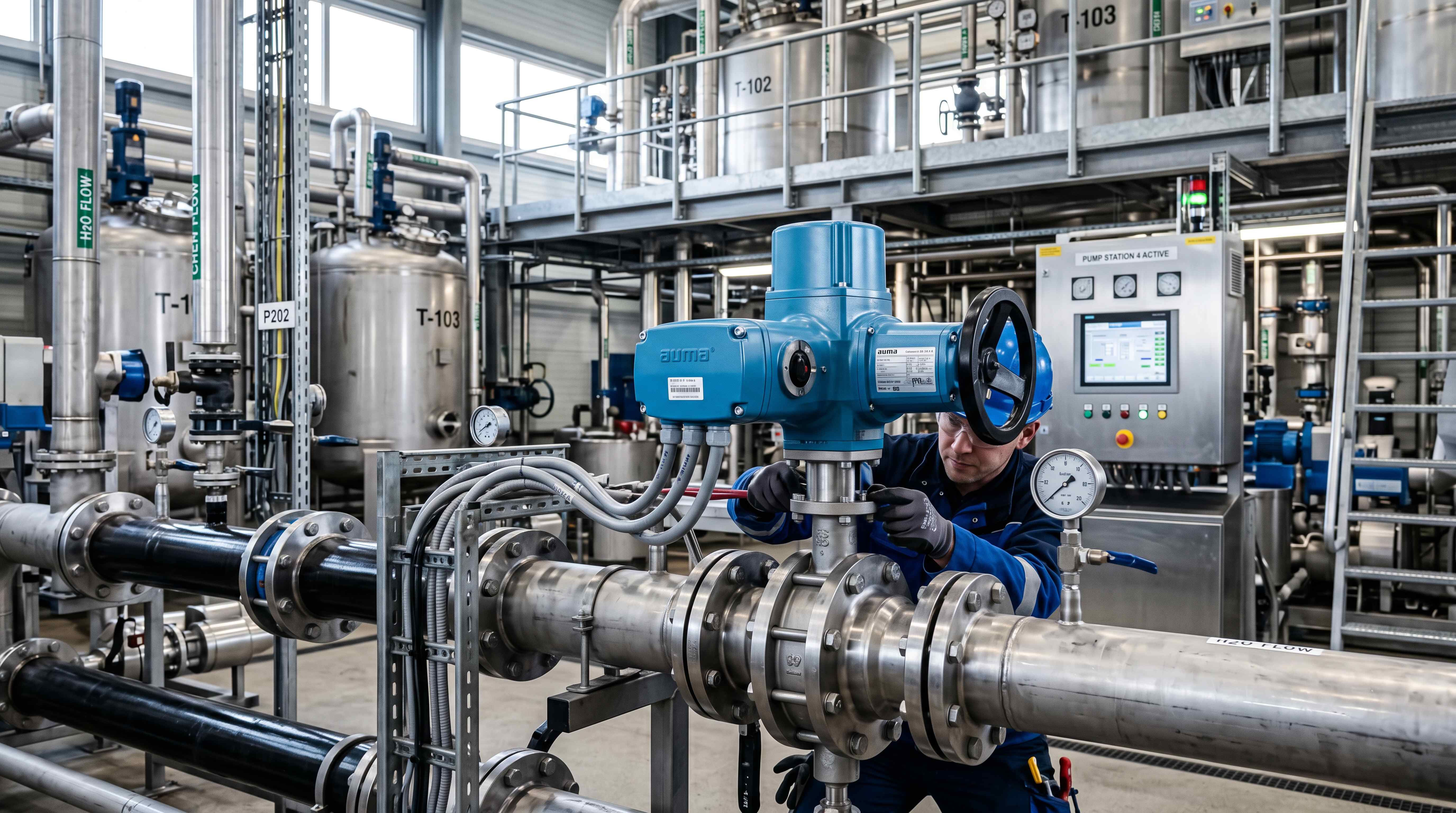
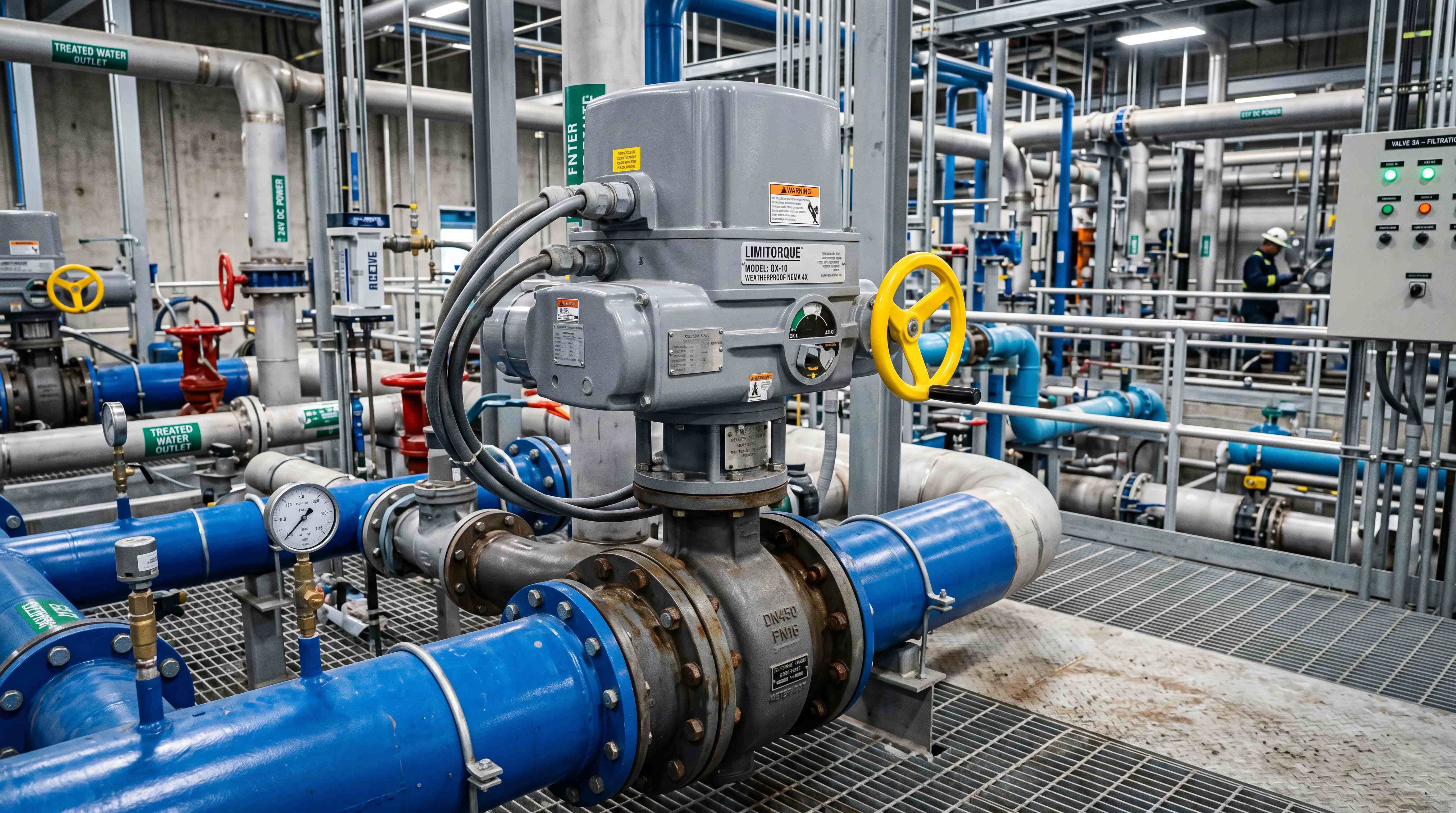
An electric actuator is a device that uses electrical power to move a mechanical component. In valve automation, it is used to drive a valve from one position to another. That movement may be a simple open or close action, a quarter-turn rotation, a multi-turn movement, or a precise modulating action based on a control signal. When an electric actuator is mounted on a valve, the valve can become part of an automated valve system instead of remaining a manually operated component.
The role of an electric valve actuator is not just to “turn a valve.” Its real value is to connect mechanical flow control with an electrical control system. A plant operator, PLC, DCS, building management system, remote terminal unit, or local controller sends a signal. The actuator receives that signal, drives the valve, stops at the required position, and may send feedback to confirm its status. This connection between signal, movement, position and feedback is the foundation of valve automation.
In many industrial applications, electric actuators are used because they are easier to integrate into electrical control systems than pneumatic or hydraulic alternatives. They do not require compressed air lines, air preparation units, air dryers, tubing, or constant pneumatic supply. For many sites, especially remote stations or smaller automated systems, this makes electric actuation attractive. It reduces dependency on air infrastructure and allows the valve to be controlled through wiring, relays, analog signals, fieldbus communication or smart control modules.
However, the decision to use an electric actuator should not be based only on convenience. It depends on valve type, torque requirement, power supply, operating frequency, control mode, environmental conditions, safety requirements and feedback needs. A well-selected industrial valve actuator can improve reliability, reduce manual operation, support remote control and make process automation more predictable. A poorly selected actuator can cause slow response, valve damage, overheating, control errors or premature failure.
That is why understanding the electric actuator is an important first step for anyone working with valve automation.
What Is an Electric Actuator?
An electric actuator is a device that converts electrical energy into controlled mechanical motion. In valve applications, this motion is used to open, close, or position a valve. The actuator usually contains a motor, gear train, housing, control circuit, limit switches, torque protection, output drive and sometimes position feedback or communication modules.
When installed on a valve, the electric actuator becomes the driving unit. For a ball valve or butterfly valve, it may rotate the valve stem 90 degrees. For a gate valve or globe valve, it may rotate multiple turns to raise or lower the valve stem. For a control valve, damper or process valve, it may move the valve to an intermediate position according to a 4-20mA, 0-10V, Modbus or other control command.
The phrase “electric actuator” is broad. It can refer to linear actuators, rotary actuators, valve actuators, damper actuators, robotic actuators or motion-control devices. In the valve automation industry, the more specific term is usually electric valve actuator or motorized valve actuator. These terms refer to actuator units designed to drive industrial valves.
A basic electric actuator for valves may perform only open and close movement. A more advanced modulating electric actuator can move the valve to different positions for flow regulation. A smart electric actuator may include digital communication, internal diagnostics, position logging, torque monitoring and remote configuration. The actuator can therefore be simple or highly intelligent depending on the system requirements.
The key point is that an electric actuator is not only a motor. A motor alone rotates when power is applied. An actuator must convert that motor rotation into controlled valve movement. It must stop at the correct position, protect the valve from overload, respond to control commands and often provide feedback. This is why the internal design and control logic of an electric valve actuator are so important.
How an Electric Actuator Works
The working principle of an electric actuator can be understood as a chain of command, power conversion and mechanical output.
First, the actuator receives power. This power may be AC or DC, depending on the actuator design and application. Common voltages include 12V DC, 24V DC, 24V AC, 110V AC, 120V AC, 220V AC or other industrial power supplies. Small motorized valve actuator units may use low-voltage DC power, while larger industrial electric actuators may use higher-voltage AC power.
Second, the actuator receives a control input. In a simple on/off actuator, this input may be a basic open or close signal. In a 3-point actuator, the controller may send open, close and stop commands. In a modulating electric actuator, the controller may send an analog signal such as 4-20mA or 0-10V to represent the desired valve position. In smart actuators, communication may occur through digital protocols.
Third, the internal motor begins to rotate. The motor speed and torque are modified by gears. The gear train reduces speed and increases output torque so the actuator can move the valve stem. Valves often require much higher torque than a small motor can provide directly, especially at the initial breakaway point when the valve starts moving from a closed or seated position.
Fourth, the actuator output drive transfers motion to the valve stem. For a quarter turn actuator, the output typically rotates 90 degrees. For a multi-turn actuator, the output may rotate many times to open or close the valve. The mechanical interface between actuator and valve is critical because poor alignment or incorrect mounting can cause stress, uneven wear or failed operation.
Fifth, the actuator stops when it reaches the target position. This may happen through limit switches, position sensors, torque switches, electronic position control, encoder feedback or internal control logic. In basic actuators, open and closed positions are often controlled by limit switches. In more advanced units, position feedback allows the actuator to compare actual position with target position.
Finally, the actuator may send a feedback signal. This feedback may indicate fully open, fully closed, fault, torque trip, local mode, remote mode, or actual valve position. In an automated valve system, feedback is essential because the control system should not only command movement; it should also know whether the movement was completed successfully.
This process may seem simple, but it involves several engineering layers: electrical input, motor control, gear reduction, torque management, position sensing, mechanical coupling and control feedback. That is why the electric actuator is a key bridge between mechanical valve hardware and modern industrial automation.
Main Components Inside an Electric Valve Actuator

To understand electric actuator performance, it is useful to look at the main components inside the actuator.
Motor
The motor is the power source of the actuator. It converts electrical energy into rotational movement. Different actuator designs may use AC motors, DC motors, brushless motors or stepper-style motor systems. The motor selection affects speed, torque, duty cycle, control precision and service life.
A small motorized valve actuator may use a compact DC motor for low-torque ball valve applications. A larger industrial valve actuator may use a more robust motor designed for high torque and heavy-duty service. The motor must be matched with the valve load and operating frequency.
Gearbox
The gearbox is used to reduce motor speed and increase output torque. Valves usually do not need extremely fast movement. They need controlled movement and enough torque to overcome seat friction, media pressure and stem resistance. A gearbox makes this possible.
Gear design also affects actuator self-locking behavior, efficiency, noise, backlash and manual override performance. In some applications, the actuator must hold its position when power is removed. Gearbox design can influence whether the valve remains stable in its last position.
Limit Switches
Limit switches are used to stop the actuator at the fully open or fully closed position. Without proper limit control, the actuator might overrun, stress the valve seat, damage the stem or continue drawing power unnecessarily.
Limit switch adjustment is one of the most common installation and maintenance topics in valve actuator control. If the limit switch is set incorrectly, the valve may not fully open, may not fully close, or may appear to be in position while the actual valve position is wrong.
Torque Protection
Torque protection prevents damage when the valve becomes jammed, blocked, over-pressurized or mechanically overloaded. Instead of forcing the valve until something breaks, the actuator can detect excessive torque and stop operation.
This feature is especially important in industrial valve actuator applications where valve size, media pressure and process conditions can create high mechanical loads. Torque protection helps protect both actuator and valve.
Control Board
The control board receives commands and manages actuator movement. In basic units, it may handle open and close logic. In advanced actuators, it may process analog signals, digital communication, position control, fault monitoring and feedback outputs.
For a modulating electric actuator, the control board is particularly important. It compares the input command with the actual position and drives the motor until the valve reaches the desired position.
Position Feedback Device
Position feedback tells the control system where the valve actually is. Feedback may come from auxiliary switches, potentiometers, encoders or electronic sensors. In an automated valve system, this feedback allows operators and controllers to confirm valve status.
Without feedback, the system may only know that it sent an open command. With feedback, it can know whether the valve reached the open position.
Manual Override
A manual override allows operators to move the valve manually during commissioning, power failure, maintenance or emergency situations. Depending on actuator type, this may be a handwheel, lever, hex drive or declutching mechanism.
Manual override is especially valuable in industrial sites where process operation cannot stop simply because a signal or power supply is interrupted.
Housing and Sealing
The actuator housing protects internal components from dust, water, corrosion, impact and environmental exposure. Outdoor, washdown, marine, chemical and hazardous environments require careful attention to enclosure protection.
A valve actuator used indoors in a clean utility room has different housing requirements from one used outdoors in a water treatment plant or in a chemical processing area.
Electric Actuator Movement Types in Valve Automation

Electric actuators used for valve automation are commonly grouped by movement type.
Quarter-Turn Electric Actuators
A quarter turn actuator rotates approximately 90 degrees. It is commonly used with ball valves, butterfly valves and plug valves. These valves move from open to closed through a quarter-turn movement, making them well suited to rotary electric actuation.
Quarter-turn actuators are widely used in water systems, HVAC pipelines, general industrial utilities, chemical transfer lines and many automated isolation applications. They may be simple on/off units or modulating actuators depending on whether the valve is used for isolation or flow control.
The keyword quarter turn actuator is important in this category because many buyers search by movement style rather than by full technical product name.
Multi-Turn Electric Actuators
A multi-turn actuator rotates several turns to move a valve. It is often used with gate valves, globe valves and some sluice valves. These valves require multiple rotations of the stem to travel between open and closed positions.
Multi-turn electric actuators are more common in larger industrial, municipal, power, water and infrastructure applications. They often need higher torque, more robust construction and more advanced control options.
Linear Electric Actuators
A linear actuator creates straight-line movement. In valve automation, linear movement may be used for certain control valves, dampers or special process equipment. Some rotary actuators can also be combined with linkages or mechanisms to produce linear motion.
Linear actuator selection depends on stroke length, thrust, speed, mounting style and control precision.
Modulating Electric Actuators
A modulating electric actuator is designed to position the valve at different degrees of opening. Instead of only moving fully open or fully closed, it can hold intermediate positions such as 25%, 50% or 75% open.
This is important when the valve is used to regulate flow, pressure, temperature or level. A modulating electric actuator normally requires position feedback and a control signal such as 4-20mA or 0-10V.
On/Off Control vs Modulating Control
One of the most important concepts in valve automation is the difference between on/off control and modulating control.
An on/off electric actuator moves the valve between two positions: open and closed. This is suitable for isolation, shutoff, diverting or simple flow permission. For example, a water line may need to be opened when a tank requires filling and closed when the level is reached.
A modulating electric actuator moves the valve to variable positions. This is suitable for flow regulation, temperature control, pressure control or process balancing. For example, a heating system may need a valve to open gradually based on temperature demand. A process line may need flow adjusted based on sensor feedback.
There is also a middle category often described as 3-point or floating control. In this mode, the controller can command the actuator to open, close or stop. The actuator can stop at intermediate positions, but the system may not have the same continuous analog positioning logic as a full modulating actuator.
Choosing between on/off, 3-point and modulating control is not only a product decision. It is a control strategy decision. The correct choice depends on what the valve must accomplish in the process.
If the valve only isolates a pipeline, on/off control may be enough. If the valve must regulate a process variable, modulating control may be required. If the system needs simple intermediate positioning without high precision, 3-point control may be acceptable.
Where Electric Actuators Are Used
Electric actuators are used across many industries because valves exist wherever fluids, gases, steam or process media must be controlled.
Water and Wastewater Treatment
Water treatment plants use electric actuators for inlet valves, outlet valves, filter systems, chemical dosing lines, pump stations and distribution networks. Electric valve actuator systems are useful because many water facilities need remote operation, status feedback and reliable open/close control.
In remote pumping stations, electric actuation can be easier than maintaining compressed air systems. Operators can monitor valve status from a control room or SCADA system.
HVAC and Building Automation
In HVAC systems, electric actuators are used with valves that control chilled water, hot water, air handling systems and building energy flow. These applications often connect to a building management system. Control may be on/off, floating or modulating.
The ability to integrate electric actuators into BMS control makes them common in commercial buildings, hospitals, airports, data centers and industrial facilities.
Oil and Gas
Oil and gas applications may use electric actuators for pipeline isolation, remote well sites, metering stations and process skids. The requirements can be demanding because of outdoor exposure, remote locations, safety concerns and hazardous area classifications.
In these applications, actuator selection must consider enclosure protection, explosion-proof requirements, torque, feedback, manual override and remote diagnostics.
Chemical Processing
Chemical plants often require valve automation for corrosive media, batch control, process isolation and safety interlocks. Electric actuators can provide accurate control and clear feedback, but material compatibility, sealing and environmental protection must be carefully evaluated.
Food and Beverage Processing
Food and beverage facilities use automated valves for water, steam, cleaning fluids, ingredients and process lines. Electric actuators may be used where clean electrical integration, repeatable movement and controlled operation are required.
General Industrial Equipment
Electric actuators also appear in skid-mounted systems, filtration units, cooling systems, lubrication systems, machine tools, packaging systems and factory utilities. In these applications, compact size, simple wiring and reliable movement are often more important than complex features.
Why Industries Choose Electric Actuators
The rise of electric actuators in valve automation is not accidental. Several practical reasons explain why many industries choose them.
Easier Electrical Integration
Modern factories and process systems already use electrical controls. PLCs, sensors, relays, HMIs and communication networks are part of the automation infrastructure. An electric actuator fits naturally into this environment.
Instead of building a compressed air system for valve actuation, engineers can often integrate the actuator through power and control wiring.
Remote Operation
Many valves are difficult, unsafe or inefficient to operate manually. They may be installed on high platforms, underground lines, outdoor stations, remote tanks or hazardous process areas. Electric actuation allows operators to control these valves from a control room or remote interface.
Clear Status Feedback
Valve position matters. In many processes, it is not enough to assume that a valve has opened or closed. The control system needs confirmation. Electric actuator feedback can provide open, closed, fault or position signals.
This feedback improves automation reliability and helps operators identify problems early.
Reduced Dependence on Compressed Air
Pneumatic actuators are powerful and widely used, but they require compressed air. Air systems require compressors, dryers, regulators, filters, tubing and maintenance. Air leaks can waste energy and reduce system efficiency.
For facilities without compressed air infrastructure, electric actuators may offer a simpler solution.
Good Fit for Low to Moderate Frequency Operation
Many valves do not cycle every few seconds. They may open or close several times per hour, day or week. Electric actuators are often well suited to these applications, provided duty cycle and torque are selected correctly.
Better Digital and Smart Control Options
Smart electric actuators can support position feedback, fieldbus communication, local display, remote settings, fault diagnostics and condition monitoring. This makes them valuable in modern industrial automation systems that require data visibility.
Electric Actuator vs Manual Valve Operation
Manual valves are simple and low cost, but they depend on human operation. This creates several limitations.
First, manual operation is slow. An operator must reach the valve, identify the correct valve, turn the handwheel or lever, and confirm the position. In a large plant, this can take significant time.
Second, manual operation can be inconsistent. Different operators may open or close valves at different speeds or may leave valves partially open by mistake.
Third, manual operation can be unsafe. Some valves are located in hazardous areas, high places, confined spaces or extreme environments.
Fourth, manual operation cannot easily support automatic process control. If a tank level sensor, pressure transmitter or PLC needs to control a valve, manual operation is not enough.
An electric actuator helps solve these problems. It allows the valve to become part of an automated valve system. The valve can respond to signals, follow control logic, provide feedback and operate without direct human contact.
Manual valves are still useful in many simple systems, but as process complexity increases, electric actuation becomes more valuable.
Electric Actuator vs Pneumatic Actuator
Electric and pneumatic actuators are both common in valve automation, but they are suited to different conditions.
A pneumatic actuator uses compressed air to generate movement. It is often fast, robust and suitable for high-cycle applications. It can be a good choice in plants that already have reliable compressed air systems.
An electric actuator uses electrical power. It may be easier to install where compressed air is unavailable. It can provide straightforward electrical integration, precise positioning, feedback and smart communication options.
The choice should not be reduced to “electric is better” or “pneumatic is better.” The better choice depends on the site.
If the facility already has instrument air, requires fast stroking speed and has many valves in the same area, pneumatic actuation may be efficient. If the site is remote, lacks air infrastructure, requires position feedback, or needs integration with electrical control systems, electric actuation may be more practical.
Electric actuators are especially attractive in water treatment, HVAC, remote stations, utility systems and applications where operating frequency is moderate and control visibility is important.
Key Factors When Selecting an Electric Actuator

Selecting an electric actuator for valves requires more than matching the valve size. A small valve may require high torque if the pressure is high or the media is sticky. A large valve may operate smoothly if the pressure is low and the valve design is efficient.
Valve Type
The actuator must match the valve movement. Ball and butterfly valves often require quarter-turn actuators. Gate and globe valves often require multi-turn actuators. Control valves may require linear or modulating actuators.
Torque Requirement
Torque is one of the most important selection factors. The actuator must provide enough torque to move the valve under real operating conditions. Engineers should consider breakaway torque, running torque, seating torque and safety margin.
Power Supply
The available voltage at the site must match the actuator. Low-voltage DC actuators are common in small systems, while industrial plants may use AC power. Incorrect voltage selection can damage the actuator or prevent proper operation.
Control Signal
The control signal must match the control system. An on/off actuator may use simple open and close commands. A modulating electric actuator may require 4-20mA or 0-10V input. A smart actuator may use a communication protocol.
Feedback Requirement
Some systems only need to send commands. Others need feedback to confirm valve position. If the control system requires status indication, the actuator should include auxiliary switches, analog feedback or digital feedback.
Duty Cycle
Duty cycle describes how often the actuator can operate within a period of time without overheating. An actuator designed for occasional open/close movement may not be suitable for continuous modulation.
Cycle Time
Cycle time is the time required for the valve to move from one position to another. Some processes need fast response. Others require slow movement to prevent water hammer, pressure shock or process instability.
Environment
Outdoor use, washdown areas, chemical exposure, dust, humidity, freezing temperatures and hazardous locations all influence actuator selection. Housing protection and certification must match the environment.
Manual Override
Manual operation may be required for commissioning, maintenance or emergency use. Manual override is not just a convenience; in many industrial applications, it is part of operational resilience.
Common Misunderstandings About Electric Actuators
Many actuator problems begin with incorrect assumptions during selection or installation.
One common misunderstanding is that valve size alone determines actuator size. In reality, torque demand depends on valve design, pressure, media, seal friction, temperature and aging. Two valves with the same nominal size may require different actuator torque.
Another misunderstanding is that any electric actuator can be used for modulating control. Many on/off actuators are not designed for continuous positioning. Using an on/off actuator as if it were a modulating unit can cause overheating, poor control and early failure.
A third misunderstanding is that open/close feedback equals true position feedback. Limit switches can confirm end positions, but they do not always provide continuous valve position. For true modulating control, more detailed position feedback may be needed.
A fourth misunderstanding is that all electric actuators are suitable for outdoor use. Environmental protection varies widely. An actuator used outdoors may need better sealing, corrosion resistance, UV resistance, drainage design and temperature protection.
A fifth misunderstanding is that electric actuators require no maintenance. They may require less infrastructure than pneumatic systems, but they still need inspection, proper wiring, mounting checks, limit switch verification and operational testing.
Understanding these points helps buyers avoid costly mistakes.
How Electric Actuators Support Automated Valve Systems

An automated valve system combines valve, actuator, control device, signal wiring, power supply, feedback and sometimes communication. The actuator sits in the center of this system because it physically moves the valve and electrically connects to the controller.
In a simple automated system, a level switch may send a signal to open or close a motorized valve actuator. In a more advanced system, a PLC may monitor flow, pressure or temperature and control a modulating electric actuator to maintain a target process value. In a smart system, the actuator may communicate status, faults and position data to a SCADA or asset management platform.
This system-level view is important. A valve actuator should not be selected as an isolated component. It must work with the valve, process conditions, controller, wiring, maintenance team and operating philosophy.
For example, a water treatment plant may value reliability, outdoor protection and remote status indication. An HVAC system may value quiet operation, BMS compatibility and proportional control. A chemical plant may prioritize corrosion resistance, safety, fail-safe behavior and hazardous area compliance. A machine builder may prioritize compact size, cost, simple wiring and repeatable movement.
The right electric actuator is therefore the one that fits the full system.
The Future of Electric Valve Actuation

Electric actuator technology is moving beyond basic open and close operation. As plants become more digital, actuators are becoming smarter, more connected and more diagnostic.
Future-ready electric actuators may provide more detailed position feedback, torque data, operating history, fault codes, remote configuration and communication with industrial networks. This allows maintenance teams to identify valve problems before failure occurs.
For example, if an actuator requires increasing torque over time, it may indicate valve wear, buildup, corrosion or mechanical resistance. If cycle time changes, it may indicate power, motor or gearbox issues. If the actuator repeatedly fails to reach position, it may indicate process or wiring problems.
This shift is important because valves are often critical but overlooked assets. A failed valve can stop production, create safety risk, waste energy or damage equipment. Smart electric actuator systems make valve operation more visible.
In the future, electric actuators will likely play a larger role in predictive maintenance, remote operation, energy management and plant-wide automation. They will not replace every pneumatic or hydraulic actuator, but they will continue to grow in applications where electrical integration, data feedback and remote control are valuable.
Focused FAQ
What is an electric actuator used for in valve automation?
An electric actuator is used to move a valve automatically using electrical power and control signals. It can open, close or position the valve without manual operation. In valve automation, it allows valves to connect with PLCs, control panels, building management systems, SCADA systems or remote controllers.
Is an electric actuator the same as an electric valve?
No. An electric actuator is the driving device. An electric valve usually refers to a complete assembly that includes both the valve and the actuator. For example, an electric ball valve includes a ball valve body and a motorized valve actuator mounted on top.
What is the difference between an on/off electric actuator and a modulating electric actuator?
An on/off electric actuator moves the valve only between fully open and fully closed positions. A modulating electric actuator can move the valve to intermediate positions based on a control signal such as 4-20mA or 0-10V. Modulating actuators are used when flow, pressure or temperature needs to be regulated.
What valves are commonly used with electric actuators?
Electric actuators are commonly used with ball valves, butterfly valves, plug valves, gate valves, globe valves and dampers. Ball valves and butterfly valves often use quarter-turn actuators, while gate valves and globe valves often require multi-turn actuators.
Why choose an electric actuator instead of a pneumatic actuator?
An electric actuator may be preferred when compressed air is unavailable, when electrical integration is easier, when position feedback is needed, or when remote control is important. Pneumatic actuators may still be better for very fast operation, high-cycle service or facilities with existing instrument air systems.
Can an electric actuator be controlled by a PLC?
Yes. Many electric actuators can be controlled by a PLC using digital outputs, relay control, analog signals or communication protocols. The correct wiring and control method depend on whether the actuator is on/off, 3-point, modulating or smart-controlled.
What does position feedback mean in an electric actuator?
Position feedback tells the control system the actual position of the valve. It may show fully open, fully closed or a percentage position. Feedback improves system reliability because the controller can confirm whether the valve responded correctly.
What happens if an electric actuator is undersized?
If an electric actuator is undersized, it may fail to open or close the valve, trip on torque, overheat or damage internal components. Undersizing can also prevent the valve from sealing properly. Torque selection should include safety margin and real operating conditions.
Are electric actuators suitable for outdoor use?
Some electric actuators are suitable for outdoor use, but not all. Outdoor applications require proper enclosure protection, sealing, corrosion resistance and temperature suitability. Buyers should check the actuator’s protection rating and environmental specifications.
What is the most important factor when choosing an electric actuator?
The most important factor is system fit. The actuator must match the valve type, torque requirement, control signal, duty cycle, environment, feedback need and safety requirement. A good electric actuator for valves is not simply the strongest or most expensive option; it is the one that fits the real application.
#ElectricActuator
#ElectricValveActuator
#ValveAutomation
#IndustrialValveActuator
#MotorizedValveActuator
#AutomatedValveSystem
#QuarterTurnActuator
#ModulatingElectricActuator
#ValveControl
#IndustrialAutomation
#FlowControl
#ProcessAutomation
#IndustrialComponents
#SmartValveAutomation
#FactoryAutomation