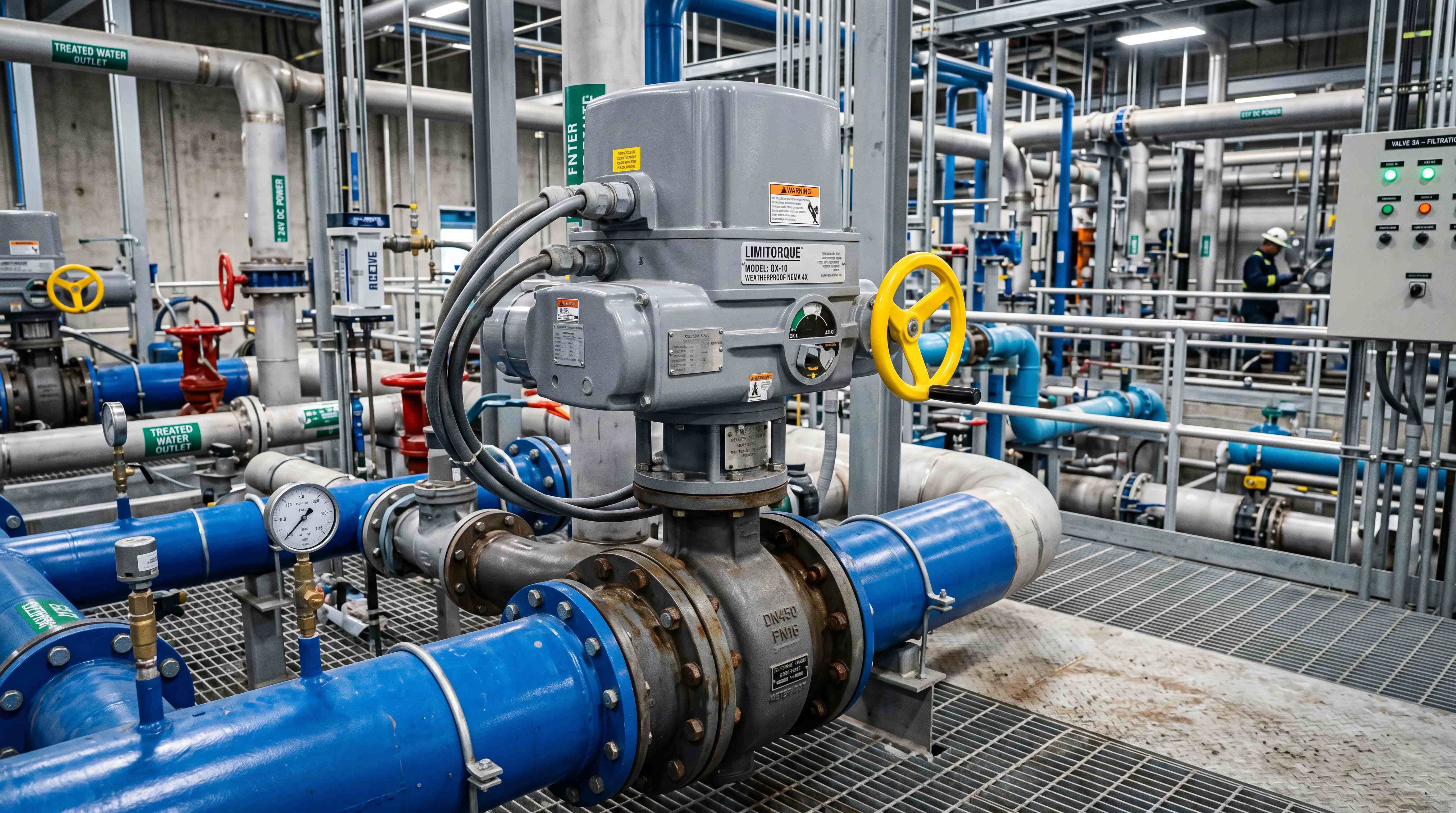
Smart Electric Actuators: From Valve Movement to Digital Valve Intelligence
A Smart Electric Actuator Is More Than a Motor on a Valve
For many years, valve automation was described in simple terms: open the valve, close the valve, and confirm whether the actuator reached the end position. In that traditional view, an electric actuator was mainly a motorized device. It received a command, moved a valve, and stopped when the open or closed limit was reached.
That basic function is still important. A valve that cannot open or close reliably is not useful, no matter how smart the actuator looks. But in modern industrial valve automation, movement alone is no longer enough. Operators, engineers and maintenance teams want to know what is happening inside the valve automation system. They want to see valve position, actuator status, torque trend, operating mode, fault alarms, command history and communication status. They want remote valve monitoring instead of waiting until a valve fails in the field.
This is where the smart electric actuator becomes important.
A smart electric actuator combines mechanical movement with digital intelligence. It can still move a ball valve, butterfly valve, gate valve or other industrial valve, but it can also provide useful information to a PLC, HMI, SCADA system, DCS or industrial IoT platform. Instead of being only a black box that turns a shaft, it becomes a visible control asset in the automated valve system.
The shift from basic electric actuator to intelligent electric actuator is not only about adding a display or communication port. It changes how plants think about valve reliability. A traditional actuator may tell the system only that a valve is open or closed. A smart actuator can help explain whether the valve is moving normally, whether torque is increasing, whether commands are being received, whether the actuator is in local or remote mode, whether a fault has occurred, and whether maintenance may be needed.
In process industries, water treatment, HVAC, chemical plants, oil and gas, packaged equipment and industrial utilities, this visibility can reduce troubleshooting time and improve system confidence.
Why Digital Valve Automation Matters
Digital valve automation means that valves are not treated as isolated mechanical components. They are connected to control systems, monitored by software, and managed as part of a larger industrial process.
In a manual system, an operator may walk to a valve, turn a handwheel, and visually check position. In a basic automated system, a controller sends an open or close command and receives open or closed feedback. In digital valve automation, the system can know much more: actual valve position, actuator health, alarms, motor operation, torque behavior, signal quality, communication state and sometimes even operation history.
This matters because valves are often critical but overlooked. A pump may not start unless a valve is open. A tank may overflow if an inlet valve fails to close. A filter may not backwash correctly if a valve does not change position. A chemical dosing line may become unsafe if a valve is stuck. A cooling system may lose efficiency if a control valve does not modulate properly.
When valve status is unclear, operators lose confidence. They may send commands but still need someone in the field to confirm what happened. This slows operation and creates risk.
Remote valve monitoring solves part of this problem. It allows operators to see valve status from the control room. But smart valve control goes further. It helps operators understand whether the actuator is healthy, whether the valve is responding normally and whether a fault is electrical, mechanical or process-related.
The result is a shift from reactive operation to more informed operation. Instead of discovering a failed valve only after a process problem occurs, the system can provide earlier warning signs.
From Open/Closed Feedback to Real Position Awareness
The simplest form of actuator feedback is open and closed indication. This is useful for on/off valves. A PLC sends an open command, and an auxiliary switch confirms when the actuator reaches the open position. The same happens for the closed position.
However, open and closed feedback does not provide full position awareness. It tells the system only when the valve has reached the end positions. It does not show what happens during travel. It does not show whether the valve is 30%, 50% or 75% open. It does not help much when the actuator stops halfway. It also does not always reveal whether the valve is mechanically disconnected from the actuator unless the feedback is tied closely to actual valve movement.
A smart electric actuator can provide more detailed actuator position feedback. In modulating applications, this may be an analog signal such as 4-20mA or 0-10V. In more advanced systems, position data may be transmitted digitally through communication protocols.
Real position awareness is important in flow control, pressure regulation, HVAC chilled water systems, process dosing, filter control and any application where intermediate valve positions matter. If a controller sends a 60% command, it should know whether the actuator actually moved to 60%. If the actuator cannot reach that position, the system should detect the mismatch.
Position awareness also improves troubleshooting. If the actuator receives a command but the position does not change, the issue may be power, control signal, motor, gearbox, torque overload or mechanical blockage. If the position changes but the process variable does not respond, the issue may be valve sizing, flow conditions or process design.
In digital valve automation, position feedback turns valve movement into measurable information.
What Makes an Electric Actuator “Smart”?
The word “smart” is used widely, but in valve automation it should mean more than a product label. A smart electric actuator usually includes several capabilities that improve control, monitoring and maintenance.
First, it has internal electronics that can process commands and monitor actuator behavior. Instead of relying only on simple limit switches, it may use sensors, control boards and digital parameters.
Second, it provides detailed feedback. This may include open/closed status, actual position, torque alarm, fault code, local/remote mode, motor thermal status or communication status.
Third, it supports communication with external systems. A smart actuator may connect to a PLC or SCADA system through Modbus, Profibus, Foundation Fieldbus, HART, EtherNet/IP or other industrial communication protocols depending on the product and application.
Fourth, it may include local display and configuration. Technicians can read status, adjust settings, check alarms or configure control behavior without opening the actuator enclosure.
Fifth, it may store operating data. Cycle count, fault history, torque trends and last commands can help maintenance teams understand how the valve has been used.
Sixth, it can support diagnostics. Valve actuator diagnostics help identify whether a problem comes from torque overload, loss of signal, incorrect command, motor issue, communication fault or travel timeout.
Not every application needs every feature. A simple water line may only need reliable open/closed feedback. A remote oil and gas station may benefit from communication and diagnostics. A process control valve may need continuous feedback and fault reporting. A packaged skid may need smart valve control to simplify customer operation.
Smart means useful visibility, not unnecessary complexity.
Remote Valve Monitoring Changes Maintenance Behavior
Traditional maintenance often depends on scheduled inspection or failure response. A maintenance team checks valves periodically, or they respond when a valve stops working. This approach can work, but it may miss early warning signs.
Remote valve monitoring allows maintenance teams to see actuator status without physically inspecting every valve. This is especially valuable when valves are located in remote areas, high platforms, underground pits, outdoor stations, hazardous zones or large distributed facilities.
For example, in a water treatment plant, operators may monitor dozens or hundreds of actuated valves. If one actuator fails to reach position, the system can display an alarm. If a valve remains in local mode, the control room can see that remote commands may not work. If an actuator reports increasing torque demand, maintenance can inspect the valve before it becomes stuck.
In oil and gas or remote utility stations, sending technicians to each site can be costly. Remote status helps teams prioritize field visits. In packaged equipment, remote monitoring can support service teams and reduce customer troubleshooting time.
Remote monitoring also improves operational accountability. Instead of relying on memory or manual logs, the system can show when a valve was commanded, whether it moved, and whether it reported a fault.
This does not eliminate field maintenance. Valves still need physical inspection, lubrication, seal checks, wiring inspection and environmental protection. But remote monitoring helps maintenance become more targeted and less blind.
Valve Actuator Diagnostics: The Difference Between Alarm and Explanation

A basic automated valve system may generate a simple alarm: valve failed to open. This is useful, but it does not explain why.
Valve actuator diagnostics are valuable because they help identify the possible cause of failure. The actuator may report torque trip, motor overload, travel timeout, loss of command signal, feedback mismatch, communication failure, local mode active, power supply issue or internal fault. These details reduce troubleshooting time.
For example, if a valve fails to open and the actuator reports torque trip, the maintenance team may inspect valve blockage, seat adhesion, corrosion, pressure differential or mechanical alignment. If the actuator reports no command received, the team may check PLC output, relay wiring or communication. If the actuator reports local mode, the operator may simply need to switch it back to remote mode.
Without diagnostics, all of these cases may look the same from the control room.
Diagnostics are especially important in large plants where many valves are connected to a central control system. A technician cannot spend hours opening actuator covers and testing terminals for every alarm. Clear fault information helps teams respond faster and more accurately.
However, diagnostics should be meaningful. Too many unclear alarms can create confusion. A good smart electric actuator should provide practical fault information that maintenance teams can understand and act on.
IIoT Valve Actuator and Connected Plant Data

The industrial Internet of Things, or IIoT, is changing how plants collect and use equipment data. An IIoT valve actuator is not just controlled by a PLC; it can become part of a broader data ecosystem.
In a connected plant, actuator data may be collected for remote monitoring, maintenance planning, energy analysis, process optimization or asset management. Instead of checking a valve only when it fails, teams can review trends across many actuators.
Useful data may include cycle count, travel time, command frequency, torque alarm frequency, position deviation, fault history and communication health. Over time, this data can reveal patterns. A valve that takes longer to close than before may be developing mechanical resistance. An actuator that trips more often may be undersized or operating against changing process conditions. A valve that cycles too frequently may indicate unstable control logic.
IIoT does not mean every valve needs cloud connectivity. In many industrial sites, data may remain within the plant network. The key idea is that actuator data becomes available for analysis instead of staying hidden inside the device.
For large facilities, connected actuator data can support asset management. Maintenance teams can identify which valves operate most frequently, which ones fail most often, and which ones require inspection. This can improve spare parts planning and reduce unplanned downtime.
The value of IIoT valve actuator systems depends on data quality. If the actuator only provides basic status, the insights are limited. If it provides useful diagnostics and position information, the data becomes more valuable.
Modbus Electric Actuator and Industrial Communication
A Modbus electric actuator is one example of a smart actuator that communicates digitally with a control system. Modbus is widely used in industrial automation because it is relatively simple and commonly supported by PLCs, HMIs and control devices.
Instead of wiring many individual signals for open command, close command, open feedback, closed feedback, fault output and analog position, a digital communication link can transmit multiple data points. The control system can send commands and read status through registers.
This can reduce wiring complexity in some applications, especially when many actuators are installed in one area. It can also provide more information than simple hardwired signals. The PLC may read actual position, alarm status, operation mode or diagnostic codes.
However, digital communication also requires careful design. Addressing, baud rate, cable type, shielding, termination, communication timeout and network layout must be configured correctly. A communication failure can affect multiple devices if the network is poorly designed.
Hardwired signals still have value, especially for critical safety functions or simple systems. Many plants use a combination: digital communication for diagnostics and monitoring, with hardwired emergency or critical control signals where required.
A Modbus electric actuator should not be selected only because digital sounds modern. It should be selected when communication adds real value to the control system.
Predictive Maintenance Valves: From Fault Repair to Early Warning
Predictive maintenance valves are a major promise of smart actuator technology. The idea is simple: use actuator and valve data to identify problems before they become failures.
In practice, predictive maintenance is not magic. It depends on measuring useful signals and interpreting them correctly. For valve automation, useful early warning indicators may include increasing torque, longer travel time, frequent position errors, repeated torque trips, abnormal cycle count, unstable modulating behavior or feedback mismatch.
For example, if a ball valve requires more torque every month, it may be developing seat friction, scale buildup or corrosion. If a butterfly valve takes longer to close, there may be mechanical resistance or actuator wear. If a modulating valve constantly hunts, the control loop may be unstable or the actuator deadband may be too narrow.
A smart electric actuator can provide data that supports these observations. But the plant must still have a maintenance process to act on the data. Predictive maintenance only works when someone reviews alarms, trends and operating patterns.
Predictive maintenance is especially useful for valves that are critical, remote, expensive to access or likely to affect production. Not every small utility valve needs advanced prediction. But for important automated valve systems, early warning can prevent costly downtime.
Smart Valve Control in Water Treatment
Water treatment is one of the most practical areas for smart electric actuator use. Plants often have many valves operating in sequences: inlet valves, outlet valves, filter valves, backwash valves, chemical dosing valves, pump isolation valves and bypass valves.
Smart valve control helps operators understand whether each valve is ready, moving, open, closed, faulted or in remote mode. This is important because water treatment processes often depend on correct sequencing. A pump may need confirmation that a valve is open before starting. A backwash cycle may require multiple valves to change position in the correct order. A chemical dosing process may need flow confirmation.
Remote valve monitoring is also useful because valves may be spread across large facilities or remote stations. Instead of sending operators to inspect every valve, the control system can show status and alarms.
For water treatment applications, smart features should be selected carefully. Many valves may not need advanced digital communication, but clear feedback and fault indication are highly valuable. Outdoor or wet environments also require suitable enclosure protection.
Smart Electric Actuators in HVAC and Building Automation
HVAC systems often use electric actuators for chilled water, hot water, steam, dampers and air handling control. Smart electric actuators can improve HVAC operation by providing better position feedback, control response and integration with building management systems.
In HVAC, the goal is often comfort, energy efficiency and stable control. If a chilled water valve is not responding correctly, the building may experience poor temperature control or excessive energy use. If a valve is stuck partially open, pumps may waste energy. If a damper position is wrong, airflow may become unbalanced.
Smart actuator feedback helps facility teams identify these issues. A building management system can monitor actuator position, command signal and alarm status. In larger buildings, this visibility is valuable because many actuators may be installed above ceilings, in plant rooms or in hard-to-reach areas.
HVAC applications may not need the same rugged features as oil and gas, but they benefit from reliable communication, position feedback, and easy commissioning.
Smart Actuators in Chemical and Oil & Gas Applications
Chemical plants and oil and gas facilities can benefit from smart electric actuators because valve status and diagnostics are critical. However, these industries also require careful attention to safety, certification and site standards.
In chemical processing, smart actuator data can help detect valve resistance, incorrect operation or control problems. Position feedback can confirm whether isolation valves and process control valves are behaving correctly. Diagnostics can reduce troubleshooting time in complex systems.
In oil and gas, remote valve monitoring is especially valuable for distributed assets. Operators may need to monitor valves at pipeline stations, storage facilities, terminals or remote skids. Smart actuators can provide status and alarms to SCADA systems.
However, hazardous areas may require explosion-proof or certified actuator designs. Communication devices, wiring methods and accessories must be suitable for the classified area. Smart functionality should not compromise safety compliance.
For these industries, the best intelligent electric actuator is one that combines diagnostics with ruggedness and certification.
The Risk of Over-Specifying Smart Features
Smart actuator technology is useful, but not every valve needs the most advanced feature set. Over-specification can increase cost, commissioning complexity and maintenance burden.
A simple drain valve that opens once per month may not need digital communication, torque trending and IIoT connectivity. It may only need reliable open/closed operation and feedback. A critical process valve in a remote location may justify advanced diagnostics. A frequently modulating control valve may benefit from position feedback and performance monitoring.
The key is matching smart features to valve importance.
Good questions include:
Is the valve critical to safety, production or uptime?
Is the valve difficult to access?
Does the valve operate frequently?
Does the process require intermediate positioning?
Would remote diagnostics reduce downtime?
Does the control system support digital communication?
Can the maintenance team use the data provided?
If the answer is yes, smart features may add real value. If not, a simpler actuator may be more practical.
Smart valve control should solve a real operational problem, not just add technology for appearance.
How to Specify a Smart Electric Actuator

When specifying a smart electric actuator, buyers should provide more than torque and voltage. They should define the communication, monitoring and diagnostic requirements clearly.
Important details include valve type, torque, control mode, voltage, enclosure rating, environment, feedback requirement, communication protocol, local display requirement, diagnostic data needed, fail-safe behavior, manual override, hazardous area classification and integration platform.
If Modbus is required, define whether it is Modbus RTU or Modbus TCP. If analog feedback is required, define 4-20mA or 0-10V. If the actuator must report torque alarms, confirm that the model supports that diagnostic function. If the actuator is part of an IIoT strategy, define what data should be collected and where it will be displayed.
The control system should also be planned. A smart actuator is only useful if the PLC, HMI or SCADA system reads and displays the data properly. If the data is available but hidden, the value is lost.
Specification should connect actuator capabilities with real operator and maintenance needs.
Smart Electric Actuators Make Valve Automation More Transparent
The biggest value of a smart electric actuator is transparency. It allows the valve automation system to show what is happening instead of hiding it.
A basic actuator answers a simple question: did the valve open or close?
A smart actuator can answer better questions: where is the valve now? Did it receive the command? Is it in remote mode? Did torque increase? Did it fail because of the valve or the signal? Is the actuator healthy? Does maintenance need to inspect it soon?
This transparency supports better operation, faster troubleshooting and more confident automation.
As factories, plants and infrastructure systems become more connected, valves cannot remain invisible. They are too important to process reliability. Smart electric actuators help bring valves into the digital control layer.
The future of electric actuator applications is not only stronger motors or better gearboxes. It is better information. The actuator still needs mechanical reliability, but it also needs to communicate clearly with the system around it.
When selected correctly, smart electric actuators can turn ordinary valves into monitored, diagnosable and manageable assets in digital valve automation.
Focused FAQ
What is a smart electric actuator?
A smart electric actuator is an actuator that combines valve movement with digital monitoring, feedback, diagnostics and communication. It can provide more information than a basic open-close actuator.
What is digital valve automation?
Digital valve automation means valves are connected to control and monitoring systems. It allows operators to view valve position, status, alarms, diagnostics and sometimes operating history from a PLC, HMI, SCADA or IIoT platform.
Why is remote valve monitoring important?
Remote valve monitoring helps operators confirm valve status without visiting the field. It is useful for remote stations, large plants, hazardous areas, high platforms and systems with many automated valves.
What are valve actuator diagnostics?
Valve actuator diagnostics are fault and status messages that help explain actuator problems. They may include torque trip, travel timeout, communication failure, local mode, motor overload, signal loss or feedback mismatch.
What is an IIoT valve actuator?
An IIoT valve actuator is an actuator that can provide useful data to an industrial IoT or plant monitoring system. This data may support maintenance planning, remote monitoring and performance analysis.
What is a Modbus electric actuator?
A Modbus electric actuator is an actuator that communicates with a PLC, HMI or control system using Modbus. It can send position, status, fault and diagnostic data through digital communication.
Why is actuator position feedback important?
Actuator position feedback tells the control system where the valve actually is. It is important for modulating control, remote monitoring, troubleshooting and confirming valve operation.
Can smart electric actuators support predictive maintenance?
Yes. Smart electric actuators can support predictive maintenance by providing data such as torque trends, travel time, cycle count, fault history and position errors. This data can help identify early signs of valve or actuator problems.
Do all valves need smart electric actuators?
No. Simple non-critical valves may only need basic open-close control and feedback. Smart electric actuators are more valuable for critical valves, remote valves, modulating valves, hard-to-access valves and systems where diagnostics reduce downtime.
How do I choose a smart electric actuator?
Choose a smart electric actuator based on valve type, torque, control mode, feedback requirement, communication protocol, diagnostics, environment, enclosure rating, fail-safe needs and control system integration.
#SmartElectricActuator
#IntelligentElectricActuator
#DigitalValveAutomation
#RemoteValveMonitoring
#ValveActuatorDiagnostics
#IIoTValveActuator
#ModbusElectricActuator
#ActuatorPositionFeedback
#PredictiveMaintenanceValves
#SmartValveControl
#IndustrialValveAutomation
#ValveAutomation
#ProcessAutomation
#IndustrialIoT
#AutomatedValveSystem