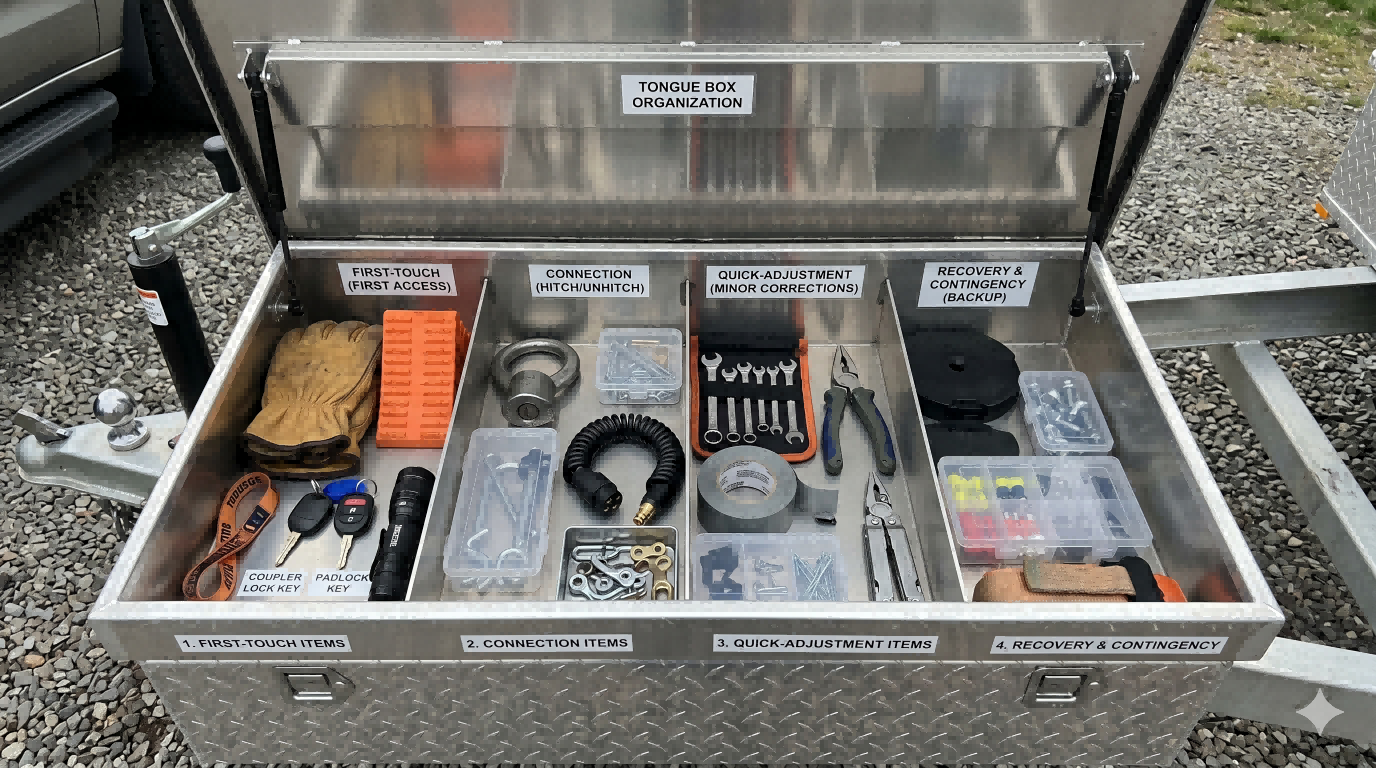
What Should You Store in a Trailer Toolbox A Smarter Storage Strategy for Towing Gear
A trailer toolbox is often treated as a convenient place to throw things. That is exactly why many trailer owners never get the full value from it.
In real-world towing and trailer work, storage is not just about having extra space. It is about reducing delays, preventing clutter, protecting important gear, and keeping the trailer ready for the next task without unnecessary searching. A well-planned toolbox improves workflow. A poorly planned one becomes a metal box full of friction.
That is why the smarter question is not simply what to store in a trailer toolbox. The better question is: what belongs there, what does not, and how should those items be arranged so the trailer works better every day?
A good storage plan should reflect how the trailer is actually used. The right trailer toolbox organization system depends on what kind of trailer it is, where the toolbox is mounted, how often gear is used, and how important fast access is during hookup, towing, unloading, or on-site work.
A trailer toolbox should support the job sequence, not just hold equipment
The biggest storage mistake is organizing by category alone.
Many users place all chains together, all tools together, and all straps together, then assume the box is organized. In practice, that approach often creates a slow and frustrating experience because the trailer does not operate by category. It operates by task sequence.
A coupler lock may be needed before a strap. Wheel chocks may be needed before gloves. A hitch pin may be needed before a wrench. That means the best towing gear storage system should be built around the order in which items are used, not just the type of items they are.
A trailer toolbox should make the first five minutes of trailer operation easier. If the driver still needs to dig through a pile to find a coupler pin, breakaway cable clip, gloves, or chock, then the box is adding storage volume without adding operational value.
Not everything belongs in a trailer toolbox
A toolbox becomes more efficient the moment it stops trying to store everything.
The smartest trailer storage strategy starts by separating items into three groups:
- items that should live in the toolbox
- items that should live somewhere else on the trailer
- items that should not stay on the trailer at all unless needed
This distinction matters because a trailer toolbox is best used for protected, high-value, high-frequency, or weather-sensitive items. It is not always the right place for bulky cargo, dirty throw-in material, or items that are better mounted permanently.
For example, a trailer jack, spare tire, mounted fuel holder, or fixed tie-down hardware may be essential to trailer operation, but that does not automatically mean they belong inside the toolbox. A good trailer toolbox gear layout respects the difference between storage, mounting, and transport.
What should be stored in a trailer toolbox first

The best starting point is to prioritize items that are used often, used early, or difficult to replace when missing.
For most setups, the core trailer toolbox essentials include:
- hitch pins and receiver pins
- coupler locks
- spare lock keys
- gloves
- wheel chocks
- ratchet straps or short tie-downs
- shackles or D-rings if used regularly
- basic hand tools
- electrical adapters and plug accessories
- small maintenance supplies such as tape, zip ties, or fuses
These are the items that tend to slow down trailer operation when they are misplaced. They are also the items most likely to benefit from weather protection and repeatable storage.
For many owners, the front box area becomes the best location for these items because it sits close to the hitch and front-end setup zone. In that case, trailer tongue box organization becomes especially important because the driver often reaches that box during hookup, pre-trip checks, and unloading preparation.
Store by access frequency, not by item size
One of the most useful upgrades any trailer owner can make is to stop storing by size and start storing by access frequency.
Large items often dominate the box simply because they take up space, but the most important items are usually the ones needed first and most often. A properly designed utility trailer toolbox setup should give the most accessible position to the gear with the highest usage frequency.
Daily or near-daily access items
These should sit closest to the lid opening or in the easiest-to-reach section of the box.
Examples include:
- gloves
- coupler lock
- hitch pin
- small flashlight
- electrical adapter
- wheel chock
- frequently used straps
Regular but not immediate items
These can sit slightly lower or farther back in the toolbox.
Examples include:
- spare hardware
- extra shackles
- backup hand tools
- spare fuses
- tape and small repair supplies
Rare-use items
These should not dominate prime storage space.
Examples include:
- seldom-used specialty tools
- seasonal accessories
- backup locks
- extra mounting hardware
- items carried for emergencies but not routine stops
This one change alone can transform trailer toolbox organization from random storage into real operating support.
Match storage to the toolbox location

What belongs in the toolbox also depends on where the toolbox is mounted.
A front-mounted tongue box is ideal for quick-access towing items because it sits near the hitch zone. An underbody box is better suited for heavier tools, chains, repair parts, and work gear that support the trailer but are not needed in the first seconds of hookup. A side-mount box often works well for tools used during side access, cargo securing, or service tasks.
This is why what to store in a trailer toolbox does not have one universal answer. The right answer changes with position.
If the box is mounted on the trailer tongue
Prioritize:
- coupler locks
- gloves
- wheel chocks
- plug adapters
- hitch accessories
- trailer jack accessories
- short straps and quick-use tools
If the box is mounted underbody
Prioritize:
- chains
- heavier tools
- repair hardware
- spare binders
- backup straps
- low-frequency work gear
If the box is side-mounted
Prioritize:
- side-access tools
- cargo securing gear
- measuring tools
- gloves
- worksite accessories used during loading or unloading
A smarter trailer toolbox organization system begins with storage position, not just available volume.
Build your layout around clean gear, dirty gear, and mixed-risk gear
Another sign of mature trailer storage is separating items by contamination level.
Many toolboxes become messy not because there are too many items, but because clean items and dirty items are constantly mixed together. A good towing setup usually includes items that stay relatively clean, items that pick up grease or mud, and items that should be isolated because of sharp edges, metal abrasion, or leak risk.
Clean gear
These are items you want easy to grab without contaminating your hands or clothing.
Examples include:
- clean gloves
- instruction cards
- spare keys
- electrical adapters
- packaged fuses
- zip ties
- flashlight
Dirty or abrasive gear
These can damage cleaner items if stored loosely together.
Examples include:
- chains
- metal hooks
- shackles
- greasy pins
- used straps
- mud-covered chocks
Sensitive items
These should be kept separated, protected, or bagged.
Examples include:
- small hardware
- lock cylinders
- electronics
- battery-powered lights
- inspection tools
- documentation
A smarter towing gear storage system is not only about access speed. It is also about preventing items from ruining each other.
The most efficient toolbox is built around zones

A high-functioning toolbox is usually zoned, even if it is small.
That means each section of the box has a purpose. One area handles quick-access items. Another holds heavier metal gear. Another protects small parts. Even without expensive dividers, a simple zone system creates consistency and reduces searching.
Front-access zone
This is the fastest-reach section and should hold the gear used during hookup or first-stop setup.
Best for:
- coupler lock
- hitch pin
- gloves
- adapter plug
- small flashlight
Core towing zone
This area holds the items that support towing and securing.
Best for:
- straps
- D-rings
- shackles
- spare clips
- small hand tools
Backup and repair zone
This area supports unexpected problems rather than routine movement.
Best for:
- spare hardware
- fuses
- repair tape
- utility knife
- socket set
- backup fasteners
Once a trailer toolbox gear layout is built around zones, the operator spends less time searching and more time moving.
What should not be stored loose in a trailer toolbox
A good storage plan is also defined by exclusion.
Some items are poor candidates for loose storage because they create clutter, contamination, safety issues, or unnecessary weight concentration. Exact decisions depend on the trailer and the job, but in most setups, the following items should be reconsidered before being tossed into the toolbox without a plan:
- oversized scrap hardware with no defined use
- leaking chemical containers
- unprotected sharp metal pieces
- loose fasteners without packaging
- water-damaged straps that should be dried and inspected
- heavy items that are rarely needed but overload the front storage zone
- mixed loose items that make quick-access gear hard to reach
This does not mean these items can never be carried. It means they should not be stored carelessly inside the same box that is supposed to support efficient trailer operation.
Trailer tongue box organization deserves special discipline
A tongue box is one of the most valuable storage positions on the trailer, which is exactly why it should be managed carefully.
The tongue area supports hitching, unhitching, jack use, wiring connection, coupler access, and safety checks. If a front-mounted box becomes a catch-all container for every random trailer item, it starts working against the operator rather than helping.
The best trailer tongue box organization systems stay focused on front-end workflow. That means the box should mostly support:
- hitch setup
- security and locking
- quick stabilization
- connection accessories
- first-use towing tools
That is also why many high-frequency items belong in smaller pouches, trays, or grouped kits inside the box. The goal is not just storage density. The goal is predictable access.
Create kits instead of loose piles

One of the most professional upgrades you can make is to stop storing gear as individual items and start storing it as working kits.
A trailer does not operate through isolated objects. It operates through grouped tasks. If several items are almost always used together, they should be stored together. This is one of the easiest ways to improve hitch accessories storage and front-end organization.
Hitch setup kit
Best contents:
- coupler lock
- hitch pin
- plug adapter
- gloves
- inspection light
Securement kit
Best contents:
- short straps
- shackles
- D-rings
- spare clips
- compact tension tool
Quick repair kit
Best contents:
- fuses
- electrical tape
- zip ties
- small hand tools
- knife
- spare hardware
Trailer jack accessories kit
Best contents:
- jack foot pin if removable
- grease or maintenance item if applicable
- stabilizing pad or small base accessory
- handle accessory or retaining parts if used in that setup
When stored as kits, items become easier to check, easier to restock, and much harder to lose.
Storage strategy should reflect trailer type

Different trailers create different storage priorities.
A landscaping trailer may prioritize straps, gloves, shackles, and quick cargo-securement items. A utility trailer may prioritize basic towing gear and general-use accessories. An equipment trailer may need heavier chains, binders, and repair tools. A recreational or mixed-use trailer may need a lighter and more flexible storage mix.
That is why the most effective trailer storage strategy is never copied blindly from another trailer. It must reflect trailer type, load type, and usage rhythm.
Utility trailer users
Usually benefit most from:
- versatile basic towing gear
- common hand tools
- lock and hitch items
- compact strap storage
Equipment trailer users
Usually need:
- stronger securement gear
- chain-related storage
- heavier repair tools
- better segregation between clean and dirty equipment
Casual mixed-use owners
Usually benefit from:
- simpler kits
- lower item count
- cleaner storage habits
- fewer duplicates and less clutter
The real takeaway
The best toolbox contents are not determined by what could fit in the box. They are determined by what helps that trailer work better.

A simple rule for deciding whether an item belongs in the toolbox
If you are unsure whether something belongs in the box, ask four questions:
Is it used regularly?
If yes, it is a stronger candidate for toolbox storage.
Is it important during hookup, towing, or unloading?
If yes, it should probably live in a fast-access location.
Does it benefit from weather protection?
If yes, the toolbox adds value beyond convenience.
Does storing it there improve workflow instead of creating clutter?
If yes, it belongs. If no, it may need another location.
This rule keeps what to store in a trailer toolbox from becoming a guessing game.
Final thoughts
A trailer toolbox should not be treated as a leftover storage cavity. It should be treated as a workflow tool.
The best trailer toolbox essentials are the items that support the trailer’s real operating sequence, protect critical gear, reduce search time, and improve consistency from one trip to the next. The smartest trailer toolbox organization system is built around access frequency, storage zones, task-based kits, and the actual demands of the trailer type.
That is why the right answer to what to store in a trailer toolbox is never “everything that fits.” The right answer is “everything that belongs there for a reason.”
When storage becomes intentional, the trailer becomes easier to run, faster to set up, cleaner to maintain, and more professional to operate.
#TrailerToolbox #TrailerToolboxOrganization #TrailerToolboxEssentials #TowingGearStorage #TrailerTongueBox #UtilityTrailerAccessories #TrailerStorageStrategy #HitchAccessories #TrailerJackAccessories #TrailerSetup #TrailerPartsGuide #TrailerOrganization