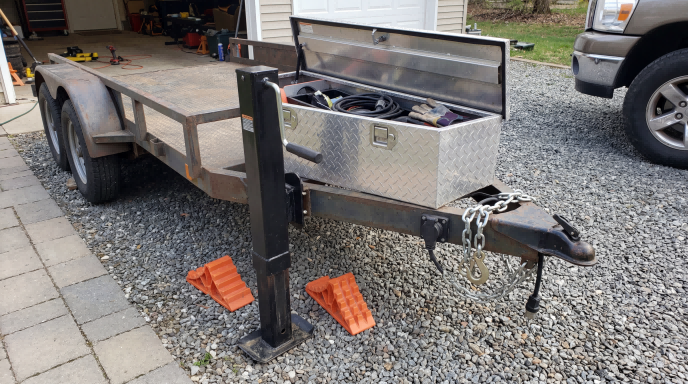
The Best Items to Keep Near Your Trailer Jack: Building a Front-End Recovery and Setup Kit
A trailer jack is one of the most visible components on the front of a trailer, but it rarely works alone.
In real use, the jack is part of a larger action sequence. When a trailer is hitched, unhitched, stabilized, parked, repositioned, inspected, or recovered from an awkward situation, the operator usually needs more than lift. They need supporting gear. They need quick access. They need the right items within arm’s reach, not buried in the truck bed, not mixed into a rear box, and not forgotten under other equipment.
That is why the smartest front-end storage strategy is not to place random accessories near the jack. It is to build a deliberate trailer setup kit and, when appropriate, a small trailer front-end recovery kit that supports the actual work sequence at the tongue.
This distinction matters because the front of a trailer is not just a mounting zone. It is a control zone. It handles contact, support, security, adjustment, and first-response problem solving. The best items to keep there are the ones that reduce delay, improve safety, and make the trailer easier to manage when conditions are less than ideal.
The trailer jack area should support tasks, not just parts
Many trailer owners think in terms of accessories. A jack, a coupler lock, a wheel chock, a plug adapter, a set of gloves. That way of thinking is understandable, but it is incomplete.
The trailer’s front zone does not operate by product category. It operates by task. During hitching, the user may need to raise or lower the tongue, guide the coupler, secure the latch, connect wiring, check chain position, place a wheel chock, and lock the trailer. During unhitching, the sequence changes slightly, but the same principle remains: several small items need to work together in the same physical space.
That is why the best items to keep near your trailer jack are not simply the most common accessories. They are the items most closely tied to front-end tasks.
A well-planned front kit reduces searching, reduces walking back and forth, and reduces the chance that one missing item will interrupt the entire operation.
There is a difference between a setup kit and a recovery kit
This is where many storage systems become smarter.
A trailer setup kit is designed for routine use. It supports the normal sequence of hitching, unhitching, stabilizing, securing, and checking the trailer. These are the items used frequently and predictably.
A trailer front-end recovery kit is different. It supports the front-end problems that interrupt normal use. That may include an uneven surface, a stuck coupler condition, a missing pin, a failed adapter, a wheel-stabilization problem, or a quick roadside adjustment.
The mistake many owners make is mixing both functions into one loose pile. Once that happens, the items used every day get buried under the items used occasionally, and the items meant for emergencies are no longer easy to find when they are actually needed.
A more mature front-end trailer storage strategy keeps these two roles clear:
- routine setup items should be the fastest to access
- recovery and contingency items should still be near the front, but not competing with first-use gear
That separation improves speed without sacrificing preparedness.
What belongs in a basic trailer setup kit
A good trailer setup kit should support the first several minutes of trailer interaction. That means it should include the items most likely to be needed during normal connection and disconnection.
For many trailer owners, the essential front-end kit includes:
- gloves
- wheel chocks for trailer use
- coupler lock
- hitch pin or coupler-related retaining hardware
- plug adapter or electrical connection accessory
- flashlight or inspection light
- small hand tools for fast adjustment
- a few commonly needed spare clips or pins
These items do not all serve the same purpose, but they serve the same sequence. They are part of what makes the front of the trailer work predictably.
This is why trailer jack accessories should not be viewed too narrowly. The true support system for the jack includes more than parts attached to the jack itself. It includes the items that make front-end lifting, positioning, securing, and checking smoother.
The highest-priority item is usually wheel control
Many people think the jack is the first front-end priority. In practice, wheel control is often just as important.
Before or during unhitching, a trailer may need to be stabilized against rolling. Before making a height adjustment, the operator may need to make sure the trailer is not free to move unexpectedly. That is why wheel chocks for trailer use deserve a permanent place near the jack area.
Chocks are not glamorous, but they are one of the most important front-end safety items in the entire towing system. When they are stored far from the front or buried under unrelated gear, operators are more likely to delay using them or skip them entirely in routine conditions. That is when convenience begins to undermine safety.
If the front-end kit is being designed correctly, wheel chocks should be treated as a primary item, not an afterthought.
Coupler and lock items should be grouped, not scattered
Few things slow down trailer use more than searching for one small but essential lock component.
A coupler lock storage plan should be deliberate. That means the lock, the correct key, and any related small hardware should live together in a predictable front-end location. The same logic applies to hitch pins, retaining clips, and other connection-related small parts.
When these items are stored loosely across multiple compartments, they disappear at the exact moment they matter most. That is why grouping connection items into a dedicated section of the trailer tongue box organization system is such an effective improvement.
This is also where small containers, trays, or pouches become valuable. The front zone should not rely on memory alone. It should rely on repeatable placement.
Gloves, lights, and small tools are front-end efficiency multipliers
Not every front-end item is critical because of safety. Some are critical because they reduce friction.
Gloves protect grip and speed. A flashlight improves visibility during early-morning, late-evening, or shaded hookup conditions. A small wrench, pliers, or multi-tool can solve minor problems without forcing the operator to leave the front of the trailer and search for a larger tool kit.
These are classic trailer hitch essentials because they support the operator’s ability to respond immediately to what the front of the trailer is doing. The most effective trailer jack accessories strategy includes not only direct hardware but also the small-use items that keep the process moving.
This is one of the clearest differences between a casual trailer setup and a professional one. Professional front-end storage assumes that small interruptions will happen and prepares for them in the same zone where they are most likely to occur.
Recovery items should stay near the front, but they should not dominate it
The front of the trailer is not only a setup zone. It is also the place where minor recovery adjustments often begin.
That does not mean the front box should be overloaded with every emergency tool the owner owns. It does mean that certain compact, high-value contingency items deserve a place in the trailer front-end recovery kit.
Depending on trailer type and use, this may include:
- a jack pad or base support
- a compact leveling aid
- a backup pin or clip
- spare electrical connection parts
- a small recovery strap for limited front-end repositioning use
- a compact air or pressure-check tool if tire-related checks are part of normal field operations
- a few essential spare fasteners
These items should not crowd out the daily kit. They should sit behind it, below it, or in a separate sub-zone. The goal is readiness, not front-end clutter.
Organize the front box by use order, not by product type

A common mistake in trailer tongue box organization is to separate everything by category and ignore the order of use.
A better approach is to organize by sequence.
First-touch items
These are the items most likely to be used immediately when arriving at the trailer:
- gloves
- wheel chock
- coupler lock key
- flashlight
Connection items
These are used during the hitching or unhitching sequence:
- coupler lock
- hitch pin
- plug adapter
- chain-related small hardware
Quick-adjustment items
These support minor front-end corrections:
- compact wrench
- pliers
- spare clip
- tape
- multi-tool
Recovery and contingency items
These are kept near the front but do not need prime position:
- jack pad
- spare fasteners
- backup electrical parts
- small recovery or stabilization aids
This method creates a more useful front-end trailer storage system than simply grouping all tools together and all hardware together.
The right kit depends on trailer type

The idea of a front-end kit is universal, but the contents should reflect the trailer’s actual job.
Utility trailers
These usually benefit from a lighter and simpler kit:
- gloves
- wheel chocks
- coupler lock
- plug adapter
- basic hand tool
- one or two spare connection parts
Equipment trailers
These may require a heavier-duty front-end approach:
- stronger wheel chocks
- more robust pins and clips
- chain-related hardware
- compact adjustment tools
- a jack base or support pad
- limited contingency gear for uneven sites
RV and recreational trailers
These often need a cleaner and more comfort-oriented setup:
- wheel chocks
- leveling accessories
- lock and key storage
- glove pair
- adapter
- basic inspection light
Contractor and work trailers
These usually benefit from a more active trailer front-end recovery kit because the trailer may be repositioned more often and operated in changing field conditions:
- gloves
- chocks
- lock set
- quick tools
- a few recovery-oriented spares
- electrical and connection support items
The trailer type changes the details, but the principle remains the same: the front-end kit should match the front-end tasks.
A front-end kit should support both routine and bad conditions
A kit that works only in ideal driveway conditions is not a complete kit.
The true test of the best items to keep near your trailer jack is whether they still make sense when the trailer is parked on gravel, mud, uneven ground, in poor light, in bad weather, or during a rushed workday. This is where a lot of elegant but unrealistic storage ideas fail.
A useful front kit should remain functional when:
- the operator is wearing gloves
- the trailer is slightly off-level
- visibility is limited
- the ground is unstable
- the needed item must be found quickly
- the operator does not want to walk back to the vehicle multiple times
This is why simplicity matters. The best setup is not the one with the most gear. It is the one where the right gear can still be reached under imperfect conditions.
The front zone should not become a dumping ground for heavy gear
A front-end kit becomes less effective the moment it loses discipline.
Because the tongue box is convenient, owners often begin placing unrelated items there: extra chains, leftover hardware, spare straps, large tools, and random field equipment. Over time, the box stops functioning as a trailer setup kit and starts functioning as a general dump bin.
That creates three common problems:
- daily essentials become harder to reach
- the front zone carries more weight than necessary
- small front-end items are lost among heavier, lower-priority gear
A good kit is defined as much by exclusion as inclusion. The front box should contain the items that belong near the jack and hitch area, not every item the trailer happens to carry.
Better front-end kits are usually modular

One of the best ways to improve organization is to make the kit modular.
That means dividing the front box into small working groups rather than one undifferentiated pile. This can be done with trays, pouches, organizers, or just clearly defined storage zones.
Daily-use module
Best for:
- gloves
- lock
- key set
- flashlight
- chock-related items
Connection module
Best for:
- hitch pin
- adapter
- spare clip
- small coupler-related hardware
Contingency module
Best for:
- jack pad
- spare fasteners
- small emergency repair items
- recovery-oriented accessories
A modular layout improves both speed and restocking. It also makes the system more repeatable for other operators.
What does not belong near the trailer jack
This question matters just as much as what does belong there.
Items that are rarely used, overly heavy, dirty without reason, or unrelated to front-end workflow should not take up prime front-zone space. That often includes:
- oversized repair tools
- bulky spare parts
- unrelated cargo hardware
- long-term storage items
- loose miscellaneous metal pieces
- anything that makes daily access slower
A good trailer setup kit is not a small version of a full shop. It is a tightly selected operating kit.
The best front-end kits make the trailer easier to repeat
The strongest sign that a front-end kit is working well is not that it looks organized once. It is that it stays useful over time.
If the operator can approach the trailer and quickly find the same essential items every time, the system is working. If hitching, unhitching, stabilization, and quick front-end correction happen with less searching and less walking, the system is working. If the trailer feels easier to manage in both normal and imperfect conditions, the system is working.
That is what separates a collection of accessories from a real trailer front-end recovery kit. One is storage. The other is workflow support.
Final thoughts
The best items to keep near your trailer jack are not simply the items that fit in the nearest box. They are the items that support the front-end sequence of stabilizing, connecting, securing, checking, and responding when things do not go perfectly.
A smart trailer setup kit should include the essentials used in routine operation. A well-designed trailer front-end recovery kit should support quick correction and limited contingency response without turning the front box into clutter. Good trailer tongue box organization makes both possible by giving high-frequency and high-value front-end items a predictable home.
That is why the area near the trailer jack deserves more intentional planning than it usually receives. It is not just a place for a jack. It is the control point for the trailer’s first and most repeated actions. When the right gear lives there, the whole trailer becomes easier to use.
#TrailerJackAccessories #TrailerSetupKit #TrailerFrontEndRecoveryKit #TrailerTongueBox #TrailerTongueBoxOrganization #TrailerHitchEssentials #WheelChocks #CouplerLock #TrailerEmergencyGear #FrontEndTrailerStorage #TowingWorkflow #TrailerPartsGuide