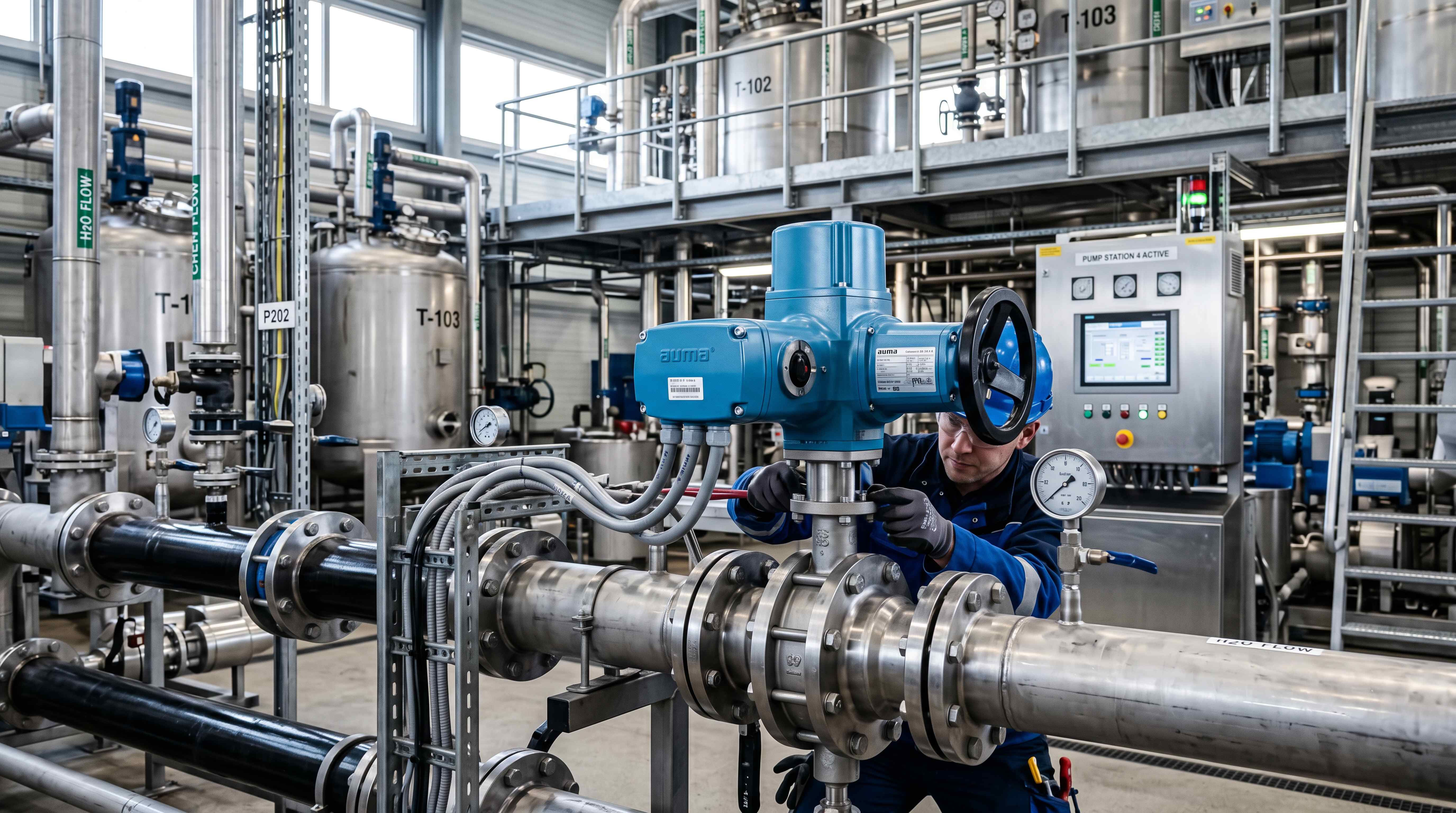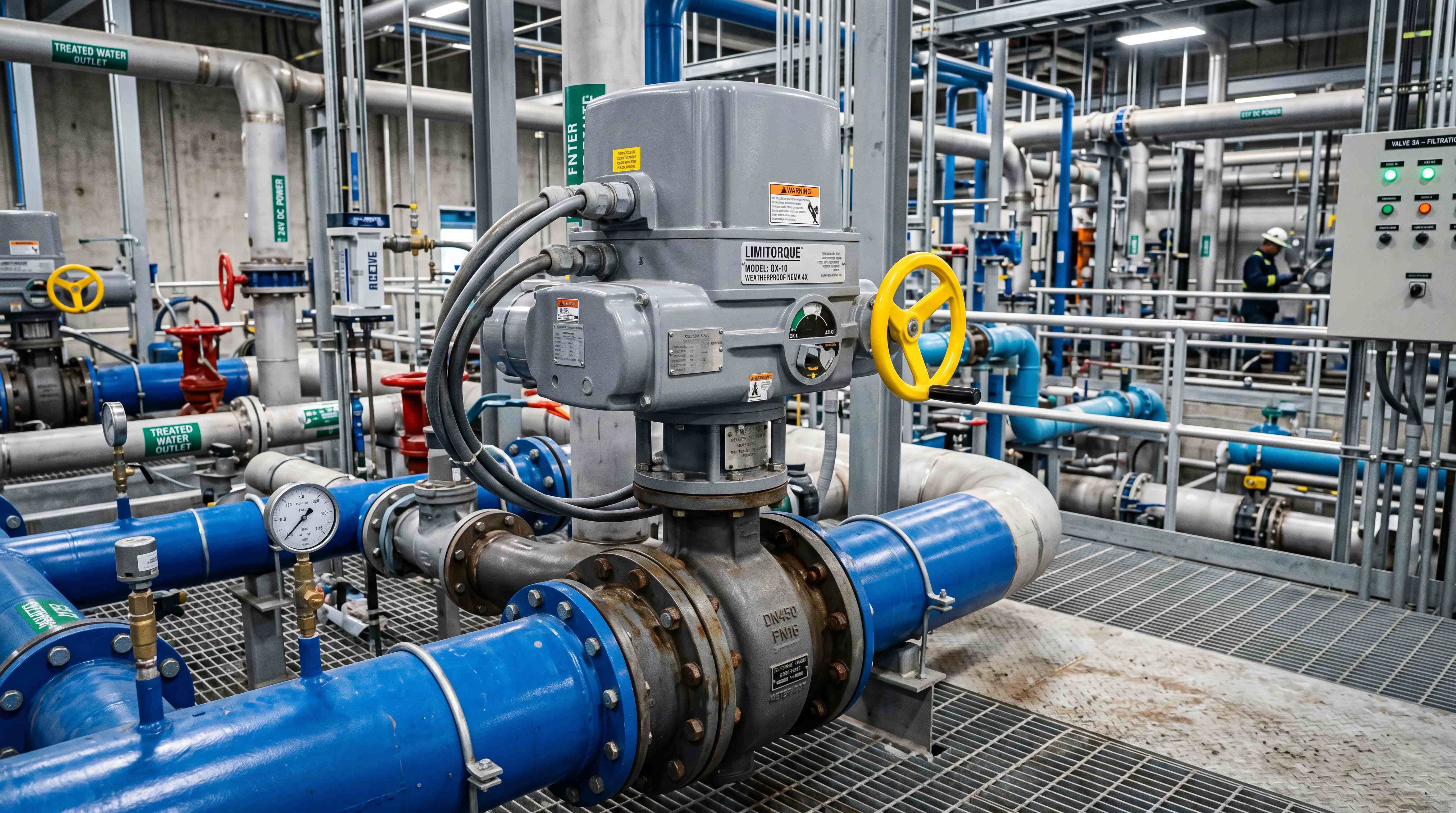
Quarter-Turn vs Multi-Turn Electric Actuators: Which One Fits Your Valve?
The First Actuator Decision Is Not Brand, Voltage or Price
When engineers, buyers or maintenance teams start looking for an electric actuator, they often begin with questions such as: Which brand is reliable? What voltage should we choose? How much torque do we need? Should we use on/off or modulating control? These are all important questions, but they are not the first question.
The first question should be simpler and more mechanical: How does the valve need to move?
In valve automation, an actuator is not selected in isolation. It is selected to move a specific valve under specific process conditions. A valve may need a 90-degree rotation. It may need several full rotations of a stem. It may need linear travel. It may need frequent positioning. It may need tight shutoff after high breakaway torque. Before discussing smart control, feedback signals, enclosure ratings or communication protocols, the movement type must be correct.
This is why understanding the difference between a quarter turn electric actuator and a multi turn electric actuator is so important.
A quarter-turn electric actuator is designed for valves that move through a short rotary travel, usually 90 degrees. It is commonly used with ball valves, butterfly valves and plug valves. A multi-turn electric actuator is designed for valves that need many rotations to open or close, such as gate valves, globe valves and some sluice valves. Both belong to the wider family of electric valve actuator types, but they solve different mechanical problems.
Choosing the wrong actuator type is not a small mistake. It can lead to poor valve operation, damaged stems, incomplete opening, incomplete closing, wrong position feedback, excessive mechanical stress or actuator failure. In industrial valve automation, the actuator must match the valve’s motion before it can match the control system.
That is the purpose of this guide: to explain how quarter-turn and multi-turn electric actuators work, where each type is used, and how to avoid common selection mistakes.
Valve Motion Defines the Actuator

Every automated valve system begins with a mechanical relationship. The actuator produces motion. The valve accepts that motion. If the motion does not match, the system cannot work correctly.
Some valves are designed to open or close with a short rotation. A ball valve, for example, usually uses a drilled ball inside the valve body. When the bore of the ball aligns with the pipeline, flow passes through. When the ball rotates 90 degrees, the bore turns away from the flow path and blocks the line. The valve does not need ten turns. It only needs a quarter turn.
A butterfly valve follows a similar principle. A disc rotates inside the valve body. At one position, the disc allows flow. After a 90-degree rotation, the disc blocks or restricts the flow. This makes an electric actuator for butterfly valve applications very different from an actuator used for a gate valve.
A gate valve works differently. It usually raises or lowers a gate or wedge. This requires multiple turns of the stem. A globe valve also needs controlled stem travel to move a plug or disc toward or away from the seat. These valves are not operated by a simple 90-degree rotation. They require a multi turn electric actuator or a linear actuation arrangement depending on the design.
This movement difference may seem basic, but it is one of the most important rules in valve actuator selection. The actuator must follow the valve’s native mechanical movement. If the valve is quarter-turn, use a quarter-turn actuator. If the valve is multi-turn, use a multi-turn actuator. If the valve requires linear stroke, evaluate a linear actuator or a compatible multi-turn-to-linear mechanism.
The actuator is the muscle of the valve system, but motion compatibility is the skeleton. Without it, even the best motor, control board and feedback module cannot deliver reliable valve automation.
What Is a Quarter-Turn Electric Actuator?
A quarter turn electric actuator is a rotary electric actuator designed to rotate an output shaft through approximately 90 degrees. This 90-degree movement is enough to move many rotary valves from fully open to fully closed.
The term “quarter-turn” comes from the fact that 90 degrees is one quarter of a full 360-degree rotation. In practice, many actuators include adjustable end stops or limit settings, so the actual travel may be slightly adjusted during commissioning. However, the basic motion remains a short rotary stroke.
A quarter-turn actuator usually contains an electric motor, gear reduction system, output drive, limit switches, control circuit, manual override and enclosure. In industrial applications, it may also include torque protection, position feedback, local control switches, modulating control modules or communication interfaces.
The main purpose of the gearbox is to convert motor speed into usable output torque. A motor rotates quickly, but a valve needs controlled movement with enough torque to overcome seat friction, fluid pressure and mechanical resistance. The gear train reduces speed and increases torque at the actuator output.
When the actuator receives an open command, the motor drives the gears and rotates the output shaft toward the open position. When it reaches the preset end position, a limit switch or position sensor stops the motor. When the actuator receives a close command, the movement reverses until the closed position is reached.
In on/off service, the actuator moves between two positions. In modulating service, the quarter-turn actuator can position the valve at intermediate angles. This is useful when a ball valve, butterfly valve or damper is used for flow regulation rather than simple shutoff.
The most common applications for a quarter turn electric actuator include electric ball valves, electric butterfly valves, plug valves, dampers, air control devices and some process isolation systems.
Electric Actuator for Ball Valve Applications

A ball valve is one of the most common valves used with a quarter-turn actuator. An electric actuator for ball valve automation is widely used in water treatment, irrigation, HVAC, chemical handling, compressed air systems, skid-mounted equipment and general industrial utilities.
The basic reason is simple: a ball valve only needs a 90-degree rotation to move from open to closed. This makes it naturally compatible with a quarter-turn actuator.
However, not every ball valve has the same actuator requirement. A small low-pressure water valve may require relatively low torque. A large ball valve used in chemical processing, steam service or high-pressure pipelines may require much higher torque. The actuator must be selected based on the valve’s breakaway torque, not only the valve size.
Breakaway torque is the torque needed to start moving the valve from its seated position. In many valves, this initial torque is higher than the torque required to continue movement. If the actuator is undersized, the valve may not start moving even if the actuator appears to have enough running torque.
Ball valves can also be used in different control modes. For simple isolation, an on/off quarter-turn actuator may be enough. For flow adjustment, a modulating electric actuator may be required. But engineers should be careful: not all ball valves are ideal for fine throttling. Some ball valves work well for basic flow adjustment, while others may not provide stable control across the full opening range.
For electric ball valve applications, actuator selection should consider valve size, pressure, seat material, fluid type, operating temperature, required shutoff, cycle frequency, voltage and control signal. A compact actuator may be suitable for small utility systems, while an industrial actuator may be needed for demanding process applications.
Electric Actuator for Butterfly Valve Applications

A butterfly valve is another major application for quarter-turn electric actuators. An electric actuator for butterfly valve automation is common in water distribution, wastewater treatment, HVAC systems, cooling water loops, power plants and large-diameter pipelines.
Butterfly valves are often selected because they are compact, relatively lightweight and suitable for larger pipe sizes. Compared with some other valve types, they can provide efficient flow control with less installation space. A quarter-turn actuator is usually mounted directly or through a mounting bracket and coupling.
The actuator must rotate the disc between open and closed positions. In many cases, butterfly valves are used for isolation. In other cases, they are used for throttling or balancing. When used for modulation, the actuator must provide accurate positioning and stable response.
A key consideration for butterfly valves is torque behavior. Depending on valve design and flow conditions, hydrodynamic forces can affect the disc during operation. Larger butterfly valves may require careful torque calculation, especially when differential pressure is high. If the actuator torque is too low, the valve may fail to open or close reliably. If the actuator is oversized without proper torque protection, it may apply excessive force to the valve.
Butterfly valves also require attention to seating. Some resilient seated butterfly valves require enough torque to compress the seat properly in the closed position. Metal seated butterfly valves may have different torque characteristics. The actuator must be matched to the valve manufacturer’s torque data, service conditions and required safety factor.
In industrial valve automation, butterfly valves are often part of larger systems. A single plant may have many automated butterfly valves connected to a PLC or SCADA system. This makes feedback, local manual override and consistent actuator behavior important for maintenance and operations.
What Is a Multi-Turn Electric Actuator?
A multi turn electric actuator is designed to rotate its output multiple times to operate a valve. Unlike a quarter-turn actuator, it does not stop after 90 degrees. It may complete several turns, dozens of turns or more, depending on the valve design and required stem travel.
Multi-turn actuators are commonly used with gate valves, globe valves, sluice gates and some large industrial valves that require threaded stem movement. The actuator output turns the valve stem or a gearbox. This rotation raises, lowers or positions the internal closure element of the valve.
In many multi-turn applications, the actuator must handle high torque and precise end-of-travel control. A gate valve may need significant torque to unseat from the closed position. A globe valve may need controlled movement to regulate flow. A large waterworks valve may need slow and steady operation to prevent pressure shock.
A multi-turn actuator usually includes a motor, gear train, output drive, limit switches, torque switches, manual handwheel and control electronics. In more advanced designs, it may include digital position sensing, local display, communication interface and diagnostics.
The main difference is that the actuator’s control logic must account for many rotations and end positions. The actuator may count turns, monitor position or use limit mechanisms to stop at the correct point. Torque protection is especially important because multi-turn valves can be damaged if the actuator continues driving after the valve has reached its seat.
Multi-turn actuators are often used in heavier infrastructure and process applications than compact quarter-turn actuators. They are common in water treatment plants, municipal systems, power generation, oil and gas, marine systems and industrial pipelines.
Electric Actuator for Gate Valve Applications
A gate valve is a classic example of a multi-turn valve. An electric actuator for gate valve automation must rotate the valve stem multiple times to raise or lower the gate.
Gate valves are usually used for isolation rather than throttling. They are designed to be fully open or fully closed. When fully open, they create a relatively unobstructed flow path. When fully closed, the gate blocks the flow.
Because gate valves require multiple stem rotations, they are not suitable for quarter-turn actuators unless a special mechanism is involved. The correct choice is usually a multi-turn electric actuator.
Gate valve automation is common in water supply systems, wastewater plants, industrial utilities, power plants and large pipeline networks. Many gate valves are installed in locations where manual operation would be slow, difficult or unsafe. Electric actuation allows remote opening and closing, status feedback and integration with supervisory control systems.
Torque selection is critical for gate valves. The actuator must provide enough torque to unseat the valve, move it through its stroke and seat it properly. The required torque may change over time due to corrosion, sediment, scale, aging seals or lack of operation. This is one reason why maintenance teams sometimes discover that an actuator that once worked well can later struggle to move the valve.
Gate valves also require correct end-of-travel settings. If the actuator stops too early, the valve may not fully close. If it drives too far, it may stress the stem or seat. Torque and limit settings must be commissioned carefully.
Electric Actuator for Globe Valve Applications
A globe valve is often used for throttling, regulating or controlling flow. An electric actuator for globe valve applications must usually support controlled stem movement. Depending on the valve and actuator arrangement, this may involve a multi-turn actuator, a linear actuator or a specific control valve actuator.
Unlike a ball valve or butterfly valve, a globe valve does not use a simple 90-degree rotary movement. It controls flow by moving a plug or disc relative to a seat. This movement can provide more controlled flow regulation than many basic rotary valves.
In industrial automation, globe valves may be used in steam systems, process control loops, cooling systems, chemical dosing, pressure control and temperature regulation. These applications often require more precise positioning than simple isolation valves.
When an electric actuator is used with a globe valve, several factors become important. The actuator must provide suitable thrust or torque. It must match the valve stroke. It must deliver stable positioning if the valve is used for modulation. It must also provide feedback so the control system knows the actual valve position.
For globe valve control, the actuator’s response and positioning accuracy matter. A low-cost on/off actuator may not be suitable if the process needs continuous regulation. A modulating actuator with proper feedback is often required.
This is why the keyword electric actuator for globe valve should not be treated the same way as electric actuator for ball valve. The mechanical movement, control purpose and performance expectations are different.
Quarter-Turn vs Multi-Turn: Core Differences
The simplest difference is movement. A quarter-turn actuator rotates about 90 degrees. A multi-turn actuator rotates multiple times.
But in real industrial valve automation, the difference goes deeper than that.
A quarter-turn actuator is usually used with rotary valves such as ball valves, butterfly valves and plug valves. It is often compact and relatively fast. It may be used for open/close control or modulating control. It is common in utility systems, HVAC, water treatment, chemical lines and machine-mounted valve automation.
A multi-turn actuator is usually used with valves that require threaded stem movement, such as gate valves and globe valves. It is often larger, slower and designed for higher torque or more controlled travel. It is common in water infrastructure, heavy industry, energy systems and process plants.
Quarter-turn actuators typically focus on short rotary travel and accurate end positions. Multi-turn actuators focus on controlled rotation over a longer travel range, correct seating and protection against excessive torque.
The control system may also treat them differently. With a quarter-turn valve, open and closed positions are often easy to visualize. With a multi-turn valve, the actuator may need more detailed position tracking because the valve travels through many turns.
Maintenance concerns are also different. A quarter-turn actuator may have issues with alignment, coupling, end-stop settings or valve seat torque. A multi-turn actuator may have issues with stem lubrication, torque switch setting, travel limit setting or mechanical resistance over time.
Both actuator types are important. The right question is not which one is better. The right question is which one matches the valve and the process.
A Practical Valve-to-Actuator Matching Guide
For many users, the easiest way to understand actuator selection is to start with the valve type.
If the valve is a ball valve, the first option is usually a quarter turn electric actuator. The actuator rotates the ball 90 degrees. This is suitable for on/off service and some controlled flow applications, depending on valve design.
If the valve is a butterfly valve, the first option is also usually a quarter-turn actuator. The actuator rotates the disc. This is common for larger pipelines and HVAC or water systems.
If the valve is a plug valve, a quarter-turn actuator is commonly used because the plug usually rotates through a short travel.
If the valve is a gate valve, a multi-turn electric actuator is usually required. The actuator rotates the stem many times to raise or lower the gate.
If the valve is a globe valve, the selection depends on the design. Many globe valve applications require multi-turn or linear actuation because the plug must move along a controlled stroke. For precise control loops, a dedicated control valve actuator may be needed.
If the valve is a damper or louver, a rotary electric actuator may be used, but the torque, stroke angle and linkage arrangement must be checked carefully.
This matching guide is a starting point, not a final selection. Valve size, torque, pressure, temperature, media, duty cycle and control requirements must still be evaluated.
Why the Wrong Actuator Type Causes Real Problems
Selecting the wrong actuator type is not only a design error. It can create real problems in the field.
If a quarter-turn actuator is applied to a valve that requires multiple turns, the valve will not complete its travel. The actuator may reach its end stop while the valve remains partly open or partly closed. This can lead to leakage, process instability or false status indication.
If a multi-turn actuator is applied incorrectly to a quarter-turn valve without proper gear adaptation, it may over-rotate the valve or apply excessive force. This can damage the valve stem, seat or coupling.
If an actuator is selected only by pipe size, it may be underpowered. A DN100 valve in low-pressure water service and a DN100 valve in high-pressure chemical service may have very different torque needs. Valve actuator selection must consider actual operating conditions.
If an actuator is selected without considering control purpose, the valve may move but not control properly. For example, an on/off actuator may be fine for isolation but unsuitable for a process that needs continuous flow regulation. A modulating electric actuator may be required.
If feedback is ignored, the control system may not know whether the valve actually reached position. In safety-related or process-critical systems, command without confirmation is not enough.
These problems often appear during commissioning. The actuator arrives, the valve is installed, wiring is completed, and then the team discovers that the movement is wrong, the torque is insufficient, or the control logic does not match the process. Avoiding these mistakes begins with understanding the difference between quarter-turn and multi-turn motion.
Torque Behavior Is Different for Different Valve Types
Torque is not just a number in a product catalog. It is a dynamic requirement that changes according to valve type and operating condition.
A ball valve often has high breakaway torque. The actuator must overcome seat friction at the beginning of movement. Once the ball starts rotating, the torque may decrease. Near the closed position, seating torque may rise again.
A butterfly valve may experience torque from seat friction and fluid forces acting on the disc. In larger sizes or higher flow conditions, dynamic torque can become significant. The actuator must handle not only static movement but also process forces.
A gate valve may require torque to unseat, move through the stem travel and reseat. If the stem is dry, corroded or loaded by pressure, torque can increase. Multi-turn actuators often rely on torque switches to prevent damage at the end of travel.
A globe valve used for modulation requires stable movement and positioning. The actuator must not only have enough power; it must also support controlled response. Overshoot, backlash or poor feedback can affect process control.
This is why industrial valve automation should not use a one-size-fits-all approach. The actuator must be selected according to the valve’s torque curve and duty expectations.
Control Mode Also Affects the Choice
Quarter-turn and multi-turn actuators can both be used in different control modes, but the application logic may vary.
For simple isolation, on/off control is often enough. The actuator receives an open command or a close command. This is common for many electric ball valve and electric butterfly valve systems.
For basic intermediate positioning, 3-point or floating control may be used. The controller sends open, close or stop commands. This can be useful in HVAC or simple flow control systems.
For accurate regulation, modulating control is usually required. The actuator receives a proportional signal such as 4-20mA or 0-10V and moves the valve to a corresponding position. This is common in process control applications.
A quarter-turn actuator used for modulation may control a butterfly valve in a cooling water line. A multi-turn or linear actuator used for modulation may control a globe valve in a steam or chemical process. The control mode must match the valve’s flow characteristics and the process requirement.
It is also important to consider duty cycle. A valve that modulates frequently places more demand on the actuator than a valve that opens once per day. An actuator designed for occasional operation may overheat or wear quickly if used in continuous modulating service.
Application Scenarios for Quarter-Turn Electric Actuators
Quarter-turn electric actuators are widely used where valves need fast, compact and repeatable rotary movement.
In water treatment, they are used on ball valves and butterfly valves for filter systems, chemical dosing lines, pump isolation and distribution pipelines. Remote operation and clear open/closed feedback are valuable in these systems.
In HVAC, quarter-turn actuators are common on butterfly valves and ball valves used in chilled water, hot water and building automation systems. They can connect to building management systems and support on/off, floating or modulating control.
In chemical handling, electric ball valves may be used for controlled transfer, isolation and batch processes. Material compatibility and enclosure protection are especially important.
In skid-mounted equipment, compact electric actuators are used because they reduce the need for pneumatic tubing and simplify electrical integration. This is common in filtration skids, dosing systems, water treatment packages and industrial utility modules.
In general manufacturing, quarter-turn actuators are used where a PLC needs to control fluid paths, cooling lines, compressed air lines or process utilities.
The main advantages are compact size, simple rotary movement, easy valve matching and broad availability.
Application Scenarios for Multi-Turn Electric Actuators
Multi-turn electric actuators are often used in heavier or larger valve applications.
In municipal water systems, they automate gate valves, sluice valves and large isolation valves. These valves may be installed in remote pumping stations, treatment plants or distribution networks.
In power plants, multi-turn actuators may be used on gate valves, globe valves and other critical process valves. Reliability, torque protection and feedback are important because valve failure can affect plant operation.
In oil and gas applications, multi-turn actuators may be used for pipeline valves, station valves and process isolation. Harsh environments, hazardous area requirements and remote diagnostics may influence selection.
In industrial plants, multi-turn actuators may automate valves that are too large, too slow or too difficult to operate manually. Manual operation of a large gate valve can require significant time and physical effort. Electric actuation allows remote and repeatable operation.
In marine and infrastructure systems, multi-turn actuators may be used where robust operation and reliable seating are required.
The main advantages are suitability for stem-driven valves, high torque capability and compatibility with large industrial valve systems.
Selection Checklist Before Choosing an Actuator Type
Before selecting between a quarter-turn electric actuator and a multi-turn electric actuator, review the following points.
First, identify the valve type. Is it a ball valve, butterfly valve, plug valve, gate valve, globe valve or another design?
Second, confirm the required movement. Does the valve need 90-degree rotation, multiple turns or linear stroke?
Third, check the valve torque or thrust data. Do not rely only on pipe size. Use manufacturer torque values and consider actual pressure, temperature and media.
Fourth, define the control purpose. Is the valve used for isolation, flow regulation, pressure control, temperature control or safety interlock?
Fifth, choose the control mode. On/off, 3-point and modulating control require different actuator features.
Sixth, confirm feedback needs. Does the control system need only open/closed signals, or does it need continuous position feedback?
Seventh, evaluate duty cycle. A frequently modulating valve needs a different actuator from a valve that opens only occasionally.
Eighth, check the environment. Outdoor areas, washdown zones, chemical exposure, dust and hazardous locations may require special enclosures or certifications.
Ninth, consider manual override. Maintenance teams often need a way to operate the valve during power failure or commissioning.
Tenth, verify mounting compatibility. The actuator output, coupling, bracket and valve stem must fit correctly. For many rotary valves, standardized mounting interfaces can simplify installation, but dimensions must still be checked.
This checklist helps prevent the common mistake of treating the actuator as a generic accessory. It is not. It is part of the valve’s mechanical and control architecture.
What Buyers Should Ask Suppliers
When sourcing electric actuators, buyers should avoid vague inquiries such as “Please quote an actuator for a 4-inch valve.” That information is not enough for serious selection.
A better inquiry should include valve type, valve size, pressure rating, media, operating temperature, torque requirement, voltage, control signal, feedback requirement, duty cycle, enclosure requirement and mounting standard.
For a ball valve, the buyer should ask whether the actuator is suitable for the valve’s breakaway torque and whether the valve will be used for on/off or modulating service.
For a butterfly valve, the buyer should ask about seating torque, dynamic torque and whether the actuator is suitable for the expected differential pressure.
For a gate valve, the buyer should ask about number of turns, stem type, torque setting, limit setting and manual override.
For a globe valve, the buyer should ask whether the actuator supports the required stroke, control accuracy and feedback.
Good suppliers should ask questions before recommending a model. If a supplier recommends an actuator based only on price and pipe size, the selection may be risky. In professional valve actuator selection, the quality of the questions often reveals the quality of the solution.
How This Topic Fits a Larger Electric Actuator Content Strategy
The difference between quarter-turn and multi-turn electric actuators is not only a technical detail. It is a foundation for understanding the entire electric actuator category.
Once readers understand motion type, they can better understand actuator sizing, control signals, feedback, installation, troubleshooting and application selection. Without this foundation, later topics such as modulating control, torque protection or smart diagnostics may feel disconnected.
For a blog category focused on Electric Actuator, this topic should appear early in the content structure. It helps users move from general awareness to practical selection. It also connects many long-tail searches, including electric actuator for ball valve, electric actuator for butterfly valve, electric actuator for gate valve and electric actuator for globe valve.
This type of article is especially useful for B2B SEO because it matches real buying behavior. Many users do not begin by searching for a complete product model. They begin with a valve type and a problem: how to automate it, what actuator fits it, and what mistakes to avoid.
By explaining actuator movement clearly, the article supports both search visibility and buyer education.
Focused FAQ
What is the main difference between a quarter-turn electric actuator and a multi-turn electric actuator?
A quarter-turn electric actuator rotates about 90 degrees and is commonly used with ball valves, butterfly valves and plug valves. A multi-turn electric actuator rotates multiple times and is commonly used with gate valves, globe valves and other stem-driven valves. The main difference is the type and amount of motion required by the valve.
Which actuator is used for a ball valve?
A ball valve usually uses a quarter turn electric actuator because the valve opens and closes through a 90-degree rotation. The actuator torque should be selected based on the ball valve’s breakaway torque, pressure conditions, seat material and service environment.
Which actuator is used for a butterfly valve?
A butterfly valve usually uses a quarter-turn electric actuator. The actuator rotates the disc between open and closed positions. For larger butterfly valves, torque calculation should include seat friction, differential pressure and flow forces.
Which actuator is used for a gate valve?
A gate valve usually requires a multi turn electric actuator because the valve stem must rotate multiple times to raise or lower the gate. A quarter-turn actuator is not suitable for a standard gate valve unless a special mechanism is used.
Which actuator is used for a globe valve?
A globe valve often requires a multi-turn or linear actuation solution because the plug or disc must move along a controlled stroke. If the globe valve is used for regulation, the actuator may need modulating control and position feedback.
Can a quarter-turn actuator be used for modulating control?
Yes, some quarter-turn electric actuators can be designed for modulating control. They can position a ball valve, butterfly valve or damper at intermediate angles. However, the actuator and valve must both be suitable for the desired control accuracy and duty cycle.
Is a multi-turn actuator always stronger than a quarter-turn actuator?
Not necessarily. Strength depends on actuator design, torque rating and application. A multi-turn actuator is designed for different motion, not automatically higher performance. The correct actuator is the one that matches the valve movement and torque requirement.
What happens if the wrong actuator type is selected?
The valve may not fully open or close, the actuator may overload, the valve stem may be damaged, or the control system may receive incorrect status feedback. Wrong actuator selection can cause commissioning delays, leakage, process instability and maintenance problems.
Is valve size enough to select an electric actuator?
No. Valve size is only one factor. Valve actuator selection should also consider valve type, torque requirement, pressure, media, temperature, duty cycle, control signal, feedback requirement, enclosure rating and mounting compatibility.
How do I know whether I need a quarter-turn or multi-turn actuator?
Start with the valve movement. If the valve opens and closes with a 90-degree rotation, choose a quarter-turn actuator. If the valve requires many stem rotations to open or close, choose a multi-turn actuator. If the valve requires straight-line movement, evaluate a linear or control valve actuator solution.
#QuarterTurnElectricActuator
#MultiTurnElectricActuator
#ElectricActuator
#ElectricValveActuator
#ValveAutomation
#IndustrialValveAutomation
#BallValveActuator
#ButterflyValveActuator
#GateValveActuator
#GlobeValveActuator
#RotaryElectricActuator
#ValveActuatorSelection
#AutomatedValveSystem
#FlowControl
#ProcessAutomation