Ball Valve Materials for Water, Chemicals and Industrial Fluids: Brass, Stainless Steel, PVC and More
Why Ball Valve Material Selection Is More Than a Purchasing Detail
A ball valve may look like a simple mechanical component, but its material determines whether the valve can survive the real working conditions of a fluid system. In many projects, buyers focus on valve size, connection type, pressure rating and actuator type first. These factors are important, but they do not answer the most basic question: can the valve body, ball, stem, seats and seals safely handle the media?
This is why ball valve material selection should begin with the fluid, not the catalog page.
A brass ball valve, stainless steel ball valve, PVC ball valve and chemical resistant ball valve may all perform the same basic function: opening and closing a flow path. But they are not interchangeable. A valve that works well for clean water may fail quickly in a corrosive chemical line. A valve that performs well in compressed air may not be suitable for high-temperature process fluid. A plastic valve that resists certain chemicals may not tolerate high pressure or mechanical stress. A metal valve with a strong body may still fail if the seat material is incompatible with the media.
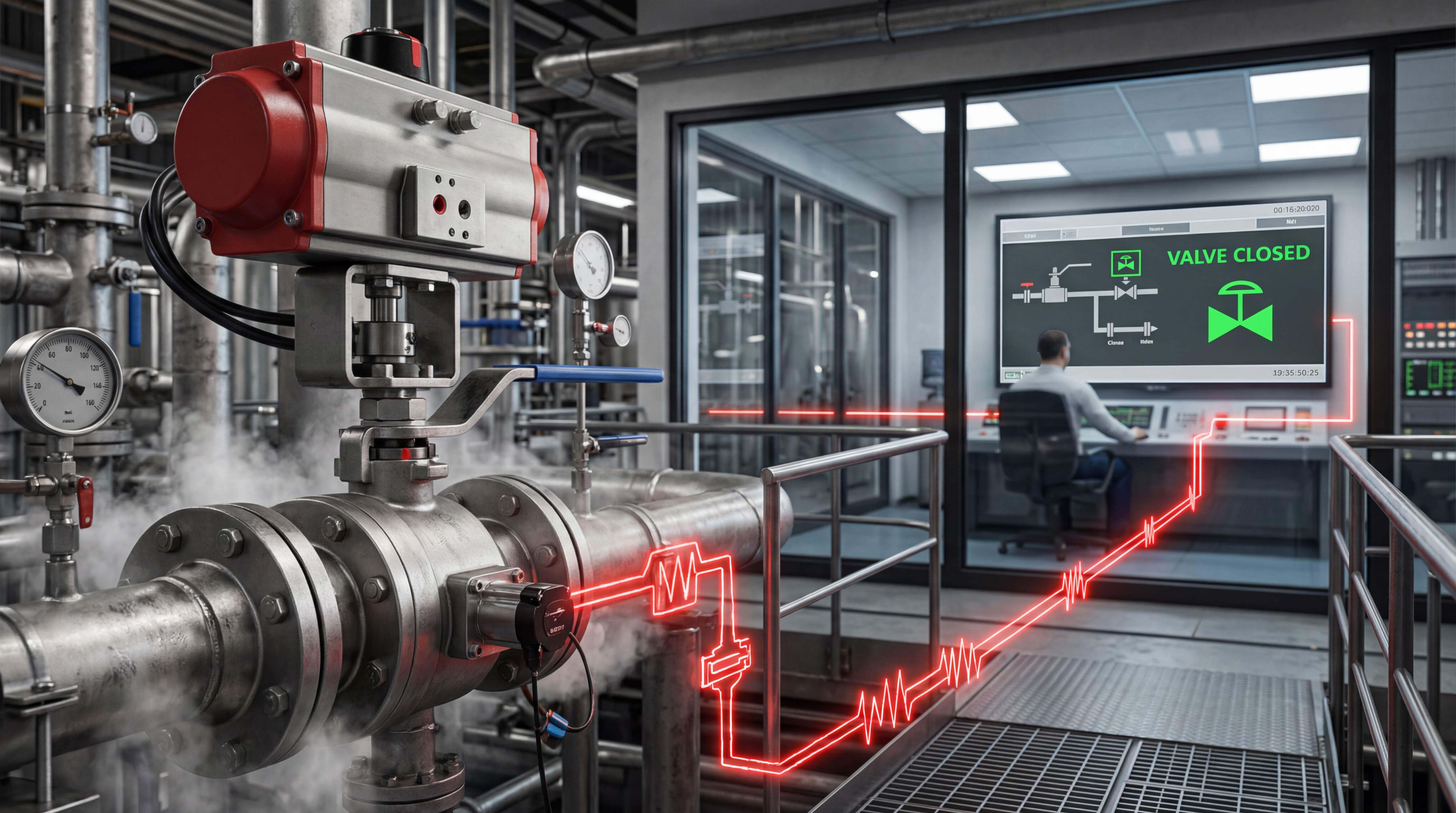
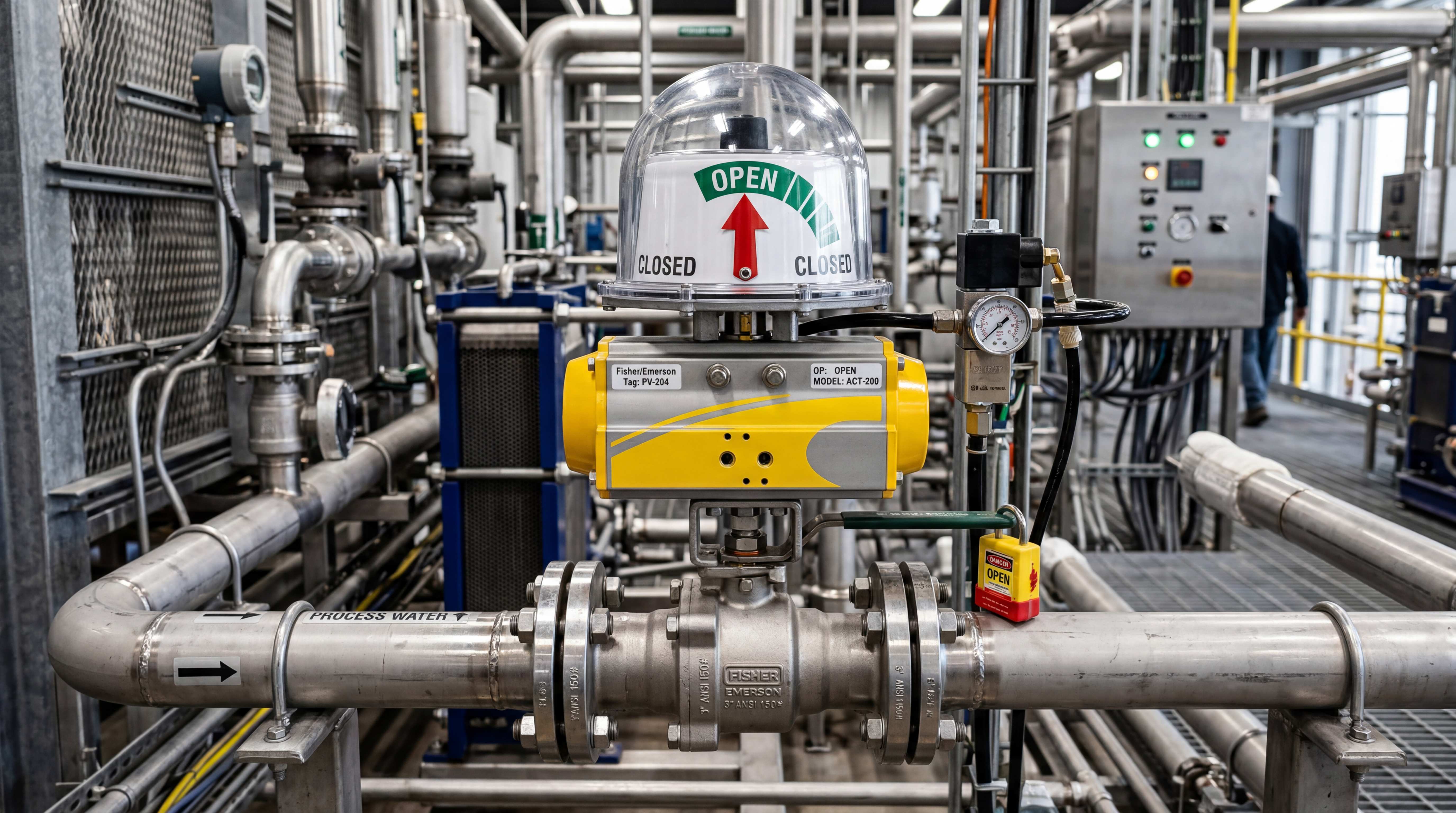
In valve automation, material selection becomes even more important. Once a valve is connected to an actuator, it becomes part of a controlled process. If the valve sticks, corrodes, leaks or swells internally, the actuator may still move, but the system may not control flow correctly. An automated chemical valve installed in the wrong material can create downtime, leakage, contamination, safety risk and expensive maintenance.
The best valve is not the strongest-looking valve. It is the valve whose material system fits the actual media, operating temperature, pressure, cleaning process, installation environment and automation requirements.
Start with the Media, Not the Valve Body
Every ball valve material decision should begin with the media. The media is the liquid, gas or mixture passing through the valve. It may be water, air, oil, steam, solvent, acid, alkali, wastewater, slurry, food-grade liquid, cleaning solution or chemical additive.
Different media create different risks. Clean water may mainly require corrosion resistance and pressure reliability. Wastewater may contain solids, biological matter or aggressive compounds. Chemicals may attack metals, plastics or elastomers. Oils may affect certain seal materials. Hot fluids may reduce the strength or life of plastic components. Slurries may cause abrasion. Compressed gas may require tight sealing and pressure stability.
A common mistake is choosing the body material first and assuming the rest of the valve will follow. For example, a stainless steel ball valve body may resist corrosion, but if the seat or O-ring material is not compatible with the chemical, the valve may still leak. A PVC ball valve may resist many water treatment chemicals, but if temperature or pressure exceeds its limits, the body may deform or fail.
For serious industrial fluid valve selection, the valve should be considered as a complete material system. The body, ball, stem, seats, seals, packing and actuator interface all matter. Media compatibility must be checked for every wetted component, not only the outside body.
The right starting point is not “Do we need brass or stainless steel?” The better starting point is: “What exactly is flowing through the valve, and what will it do to the materials over time?”
Brass Ball Valve: Practical for Water, Air and General Service

A brass ball valve is one of the most common choices for general water, air and utility applications. Brass is relatively easy to machine, cost-effective and suitable for many low-to-medium pressure systems. It is widely used in plumbing, HVAC, irrigation, compressed air, light industrial equipment and general shut-off service.
For clean water systems, a brass ball valve can be a practical and economical option. It is often used in building services, small process lines, pump connections, heating systems and maintenance isolation points. In many non-corrosive applications, brass provides enough durability without the higher cost of stainless steel.
Brass also works well in many air applications. Compressed air lines often use brass valves because the media is relatively clean and non-corrosive if the air system is properly dried and filtered. Small motorized ball valves for water or air may also use brass bodies because they provide a good balance between cost, strength and machinability.
However, brass is not suitable for every fluid. Some chemicals can attack brass. Ammonia and certain aggressive water conditions may cause dezincification or corrosion. Some industrial fluids may contain compounds that gradually weaken brass or contaminate the process. In applications involving drinking water, lead-free requirements may also apply depending on market and regulation.
A brass ball valve should be selected when the media is compatible, the pressure and temperature are within limits, and the environment does not require stronger corrosion resistance. It is not the universal low-cost answer for every industrial fluid.
Stainless Steel Ball Valve: Stronger Resistance for Demanding Fluids

A stainless steel ball valve is commonly used when the application requires higher corrosion resistance, better temperature capability, stronger mechanical durability or cleaner process compatibility. Stainless steel is widely used in chemical processing, food and beverage, pharmaceutical systems, water treatment, marine environments, oil and gas, and industrial process lines.
The most common stainless steels used in valves include 304 and 316. 304 stainless steel is suitable for many general industrial and water applications. 316 stainless steel offers better corrosion resistance in many chemical and chloride-containing environments due to its molybdenum content. However, even 316 stainless steel is not immune to all corrosion. Strong acids, chlorides, high temperatures and certain chemical combinations can still cause corrosion or pitting.
A stainless steel ball valve is often chosen for chemical service because it can resist many media better than brass or carbon steel. It is also suitable where cleanliness and contamination control matter. In food and beverage systems, stainless steel is often preferred because it supports hygienic requirements and cleaning procedures.
In automation, stainless steel valves are frequently paired with electric or pneumatic actuators for industrial process control. An automated chemical valve with a stainless steel body may be used for dosing, transfer, flushing, isolation or process routing. But the material selection still cannot stop at the body. The seats, seals and stem packing must also match the chemical.
Stainless steel is more expensive than brass or plastic, but in demanding applications, it can reduce long-term risk. The cost of a failed valve in a chemical line, production process or sanitary system is usually much higher than the price difference between valve materials.
PVC Ball Valve: Lightweight and Useful for Water Treatment

A PVC ball valve is often used in water treatment, irrigation, aquaculture, swimming pool systems, chemical dosing and low-pressure corrosive fluid applications. PVC is lightweight, economical and resistant to many water treatment chemicals. It does not rust, and it is easy to install in plastic piping systems.
For a water treatment ball valve, PVC can be a strong option when the system handles treated water, wastewater, certain acids, alkalis or dosing chemicals within the material’s compatibility range. PVC valves are common in filtration systems, reverse osmosis pre-treatment, chemical injection lines, dosing skids and non-metallic process piping.
PVC is especially attractive where metal corrosion is a concern. In some environments, a metal valve may corrode externally or internally, while a properly selected PVC valve may last longer. Plastic valves also reduce weight, which is useful in compact skids and modular water treatment equipment.
However, PVC has important limits. It is not suitable for high temperature service. Its pressure rating decreases as temperature increases. It may become brittle in some conditions, especially under impact, UV exposure or low temperature. It may also be unsuitable for certain solvents or aggressive chemicals that can soften or degrade the plastic.
When a PVC ball valve is automated, the actuator adds mechanical load to the valve body. The mounting design must be stable, and the valve should not be stressed by misaligned piping. Plastic valve bodies can be damaged if installation forces are not controlled.
PVC should be selected when chemical compatibility, temperature, pressure and mechanical installation conditions are all appropriate. It is not simply a cheaper version of metal; it is a different material with different strengths and limits.
CPVC, PP and PVDF: When PVC Is Not Enough

PVC is common, but it is not the only plastic material used for ball valves. CPVC, PP and PVDF are also important in industrial fluid systems.
CPVC, or chlorinated polyvinyl chloride, generally provides better temperature resistance than PVC. It is often used in hot water and some chemical applications where PVC is not sufficient. CPVC can be useful in certain water treatment and industrial fluid systems, but compatibility must still be checked carefully.
PP, or polypropylene, is used in chemical handling, water treatment and corrosive fluid applications. It has good resistance to many acids and alkalis and is lightweight. However, PP also has temperature, pressure and mechanical limitations.
PVDF, or polyvinylidene fluoride, is a higher-performance plastic used in more demanding chemical applications. It offers strong chemical resistance and better temperature capability than many common plastics. PVDF ball valves may be used in semiconductor, chemical dosing, high-purity water and aggressive chemical systems. The cost is higher, but the performance may justify it in critical applications.
These materials are important because not every chemical resistant ball valve should be stainless steel. In some corrosive applications, plastic may outperform metal. In other cases, stainless steel may be mechanically stronger and more suitable. The choice depends on media chemistry, temperature, pressure, purity requirements and installation design.
For international B2B buyers, this is where supplier expertise becomes valuable. A good valve supplier should not only list materials but also help the customer understand which material is realistic for the actual process.
Carbon Steel Ball Valve: Strong but Not Always Corrosion Resistant

Carbon steel ball valves are used in many industrial systems where mechanical strength, pressure capability and cost are important. They are common in oil, gas, steam, utility, power, petrochemical and general industrial pipelines.
Carbon steel is strong and suitable for many high-pressure applications. It may be more economical than stainless steel in large sizes. For certain oils, gases and non-corrosive media, carbon steel can be a practical valve body material.
However, carbon steel is vulnerable to corrosion when exposed to water, oxygen, acids, salts or aggressive environments. Internal corrosion can damage sealing surfaces, increase operating torque and eventually cause leakage. External corrosion can weaken the body, bolts and connections. In humid or outdoor environments, coatings and maintenance become important.
In automated systems, corrosion can create additional problems. A corroded carbon steel valve may require higher torque to operate. If the actuator was sized for a clean new valve, it may fail to operate the valve after corrosion or deposits develop. This is why material selection and actuator sizing should be considered together.
Carbon steel ball valves are not wrong. They are widely used and valuable. But they must be matched with the media and environment. If corrosion risk is high, stainless steel, lined valves or plastic materials may be better choices.
Seat Material Ball Valve: Why Soft Parts Decide Sealing Performance

The seat material ball valve selection is often more important than buyers realize. The seat is the sealing surface that contacts the ball. It determines shut-off performance, operating torque, temperature resistance, chemical compatibility and wear behavior.
PTFE is one of the most common ball valve seat materials. It offers low friction and broad chemical resistance. This makes it suitable for many water, chemical and general industrial applications. However, PTFE has pressure and temperature limits and may deform under certain conditions.
Reinforced PTFE can provide better mechanical strength and wear resistance. Other seat materials may be used for higher temperatures, abrasive media or special chemical conditions. Elastomers such as EPDM, FKM or NBR may appear in seals or O-rings, depending on valve design.
A stainless steel body with the wrong seat material can fail. A PVC body with incompatible O-rings can leak. A brass valve with unsuitable packing can create maintenance problems. This is why material selection must include all wetted and sealing materials.
Seat material also affects actuator torque. Some seats create more friction than others. High pressure can push the ball harder into the seat, increasing required torque. Over time, swelling, wear, deposits or chemical attack can further increase torque.
For automated valves, this matters because the actuator must overcome the real torque of the valve. If the seat material changes performance after exposure to the media, the actuator may become undersized. A reliable automated chemical valve requires both compatible sealing materials and correct actuator sizing.
Corrosion Resistant Valve Selection
A corrosion resistant valve is not defined by one material name. It is defined by whether the complete valve assembly can resist the actual corrosion mechanisms in the application.
Corrosion can appear in many forms. General corrosion gradually removes material. Pitting corrosion creates localized damage. Crevice corrosion occurs in tight spaces. Galvanic corrosion may occur when dissimilar metals are connected in an electrolyte. Stress corrosion cracking can occur under certain chemical and stress conditions. Chemical swelling or softening can affect plastics and elastomers.
This means corrosion resistance must be evaluated in context. Stainless steel may resist many chemicals, but it can suffer in chloride environments. Brass may be fine in clean water but unsuitable for ammonia or aggressive water. PVC may resist many chemicals but fail under solvent exposure or high temperature. PVDF may handle aggressive chemicals but may be over-specified for simple water service.
External corrosion is also important. An actuator installed above a valve may be exposed to chemical vapors, washdown water, salt air or outdoor weather. A corrosion resistant valve body is not enough if the actuator housing, bracket, fasteners, limit switch box or cable glands corrode.
For automated systems, corrosion resistance should be considered at three levels: wetted parts, external environment and actuator accessories. A truly reliable valve assembly must survive both the fluid inside the pipe and the environment around the installation.
Water Treatment Ball Valve Selection
A water treatment ball valve may handle clean water, raw water, softened water, wastewater, brine, chlorine solution, acid, caustic, antiscalant, coagulant or other treatment chemicals. Because water treatment systems often combine multiple fluids, one valve material cannot cover every point in the system.
For general clean water, brass, stainless steel or PVC may be suitable depending on pressure, temperature and system requirements. For corrosive dosing chemicals, PVC, CPVC, PP, PVDF or stainless steel may be considered based on compatibility. For high-purity water, material leaching and contamination may be important. For wastewater, solids and biological content may increase abrasion or clogging risk.
Automated valves are common in water treatment. They control filter backwash, chemical dosing, tank filling, drain cycles, bypass lines, membrane cleaning and process sequencing. A motorized or pneumatic water treatment ball valve must therefore be selected for both media compatibility and repeated operation.
One common issue in water treatment systems is chemical concentration. A valve that handles diluted chemical may not be suitable for concentrated chemical. Another issue is cleaning. If cleaning-in-place chemicals pass through the valve, the valve must tolerate those temporary fluids as well as normal process water.
Temperature also matters. Some treatment systems use warm water or cleaning cycles that increase temperature. Plastic valves may lose pressure rating at elevated temperature. This should be checked before final selection.
The best water treatment valve selection method is to map each line by media, concentration, pressure, temperature and function. Then choose materials line by line rather than applying one material standard to the whole skid.
Chemical Resistant Ball Valve Selection
A chemical resistant ball valve must be selected with caution because chemical compatibility depends on concentration, temperature, pressure, exposure time and material grade. A material that resists a chemical at room temperature may not resist it at higher temperature. A valve that works with a diluted acid may fail in concentrated acid. A seal material that works for water may swell in solvent.
Chemical processing applications often use stainless steel, PTFE-lined valves, PVC, CPVC, PP or PVDF depending on the media. The correct choice requires checking the body, ball, stem, seats and seals. For aggressive chemicals, the compatibility of every wetted part should be verified.
In automated chemical valve applications, the actuator environment also matters. Chemical vapors may attack painted housings, aluminum actuator bodies, cable entries or feedback devices. Pneumatic actuator air ports and solenoid valves may need protection. Electric actuators may need special enclosures.
Chemical applications also require attention to leakage consequences. A small leak in water service may be a maintenance issue. A small leak in acid, solvent or toxic chemical service may be a safety and environmental issue. Therefore, valve quality, sealing design and maintenance access become critical.
A strong chemical valve selection process should include the chemical name, concentration, temperature, pressure, operating cycle, cleaning fluid, installation environment and failure consequence. Without this information, material selection is guesswork.
Food, Beverage and Sanitary Fluid Applications
Food and beverage systems create a different material selection challenge. The issue is not only corrosion resistance, but also hygiene, cleanability and contamination control.
Stainless steel is widely used in food and beverage applications because it is durable, corrosion resistant and suitable for hygienic environments. However, not every stainless steel ball valve is sanitary. Sanitary applications may require specific surface finish, cavity-free design, cleanable seals, tri-clamp connections or compliance with hygiene standards.
A standard industrial ball valve can trap product in the body cavity. In some food or beverage processes, this may create contamination risk. Special sanitary ball valves or alternative valve types may be required.
Seat and seal materials must also be food-compatible where required. Cleaning chemicals, steam cleaning or hot water cleaning may expose the valve to conditions different from normal production. The valve must tolerate both the product and the cleaning process.
Automation adds another layer. An actuator mounted in a washdown area must be protected against water ingress and cleaning chemicals. Cable glands, brackets and fasteners must also be suitable for the environment.
For food and beverage fluid control, material selection is part of a broader sanitary design decision. A stainless steel body is only the beginning.
Oil, Gas and Fuel Applications
Oil, gas and fuel applications often require metal ball valves with appropriate pressure ratings, sealing materials and safety considerations. Carbon steel, stainless steel and brass may all appear depending on the specific media and system design.
For fuels and hydrocarbons, seal compatibility is critical. Some elastomers swell or degrade in oils, fuels or solvents. Seat materials must be selected for chemical compatibility and temperature range. Leakage requirements can be strict because flammable fluids create safety risks.
In gas service, tight shut-off and pressure rating are important. Some gas applications may require certified valves or special approvals. Static electricity, fire safety, fugitive emissions and environmental regulations may also affect selection.
Automated ball valves in oil and gas or fuel systems may need fail-safe actuation, explosion-proof electric actuators, pneumatic spring return actuators or emergency shutdown integration. The material choice must work together with the safety function.
A valve that is mechanically strong but has the wrong seal material can be dangerous. A valve with a correct body material but unsuitable actuator certification may not be acceptable. These applications require engineering review rather than generic product substitution.
Temperature and Pressure Limits
Material selection cannot be separated from temperature and pressure. Every valve material has a working range.
Metals generally tolerate higher temperatures and pressures than plastics, but their seals and seats may still limit the valve. A stainless steel body does not mean unlimited temperature capability if the valve uses PTFE seats or elastomer seals. Plastic valves such as PVC or PP may be suitable at moderate conditions but lose pressure capacity as temperature rises.
Pressure also affects torque and sealing. Higher pressure can increase the force on the ball and seats, making the valve harder to operate. For automated valves, this directly affects actuator sizing. A valve that turns easily at low pressure may require much higher torque at full pressure.
Temperature can also change media behavior. A liquid may become more viscous at low temperature, increasing operating resistance. A chemical may become more aggressive at high temperature. A seal may harden, soften or swell.
For this reason, ball valve material selection should always include normal operating temperature, maximum temperature, normal pressure and maximum pressure. Short-term cleaning or upset conditions should also be considered.
Automation Environment: The Valve Body Is Not the Whole Assembly
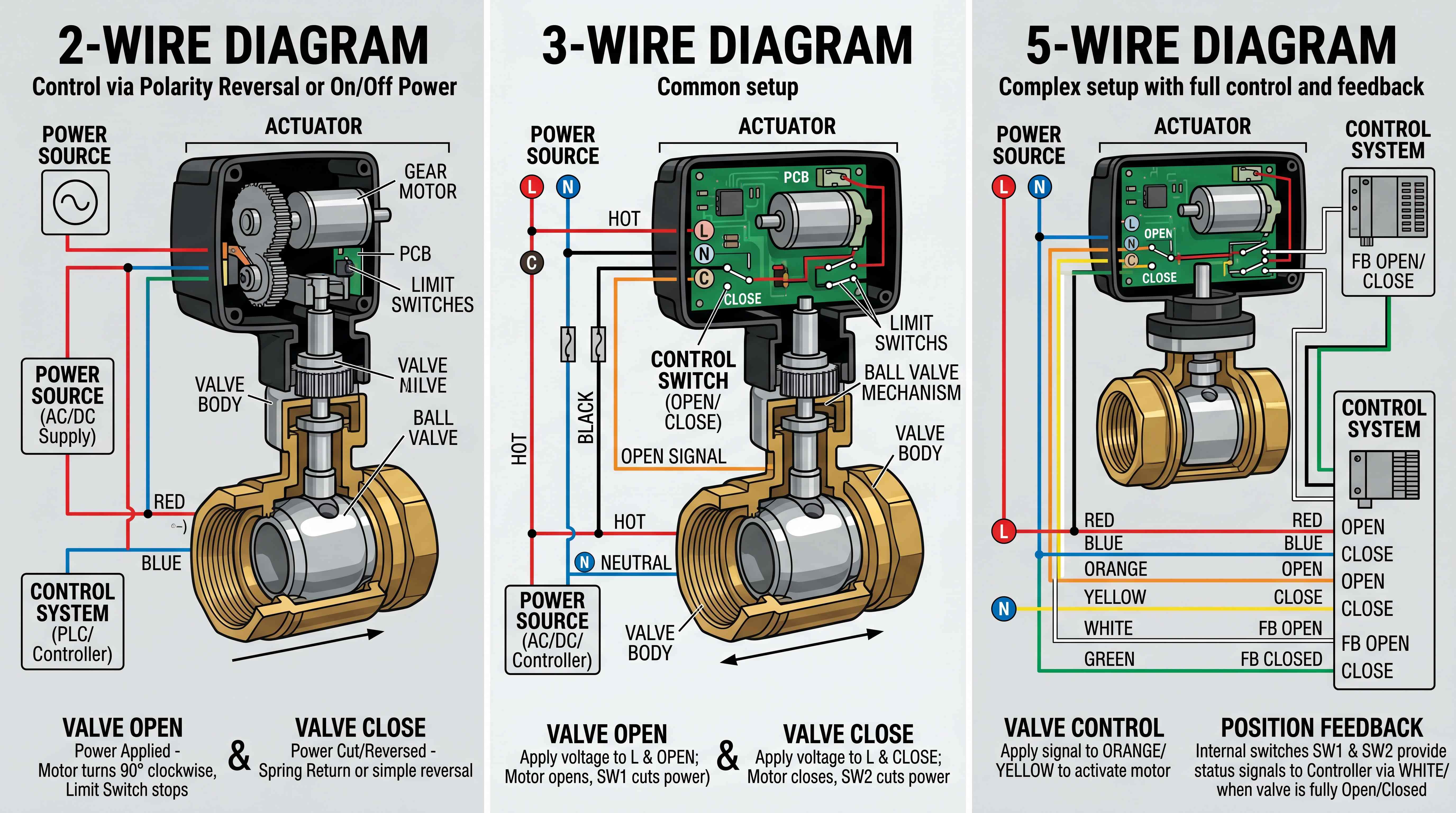
When a ball valve is automated, the body material is only one part of the complete assembly. The actuator, mounting bracket, coupling, fasteners, limit switch box, solenoid valve, positioner and cables may also be exposed to the environment.
In clean indoor environments, a standard actuator may be enough. In outdoor environments, enclosure rating, UV exposure, rain, condensation and temperature changes matter. In washdown areas, water ingress and cleaning chemicals matter. In chemical plants, corrosion-resistant actuator housings and accessories may be required. In hazardous areas, certified actuator and control devices may be necessary.
A corrosion resistant valve body paired with a weak actuator assembly can still fail. For example, a PVDF valve in a chemical dosing line may resist the media, but if the actuator bracket corrodes from chemical vapor, the assembly becomes unreliable. A stainless steel valve in a washdown area may survive, but water inside the electric actuator can stop operation.
This is especially important for automated chemical valve projects. The valve assembly should be specified as a complete package, not only as a valve body plus actuator. Material compatibility, enclosure protection and control accessories must be reviewed together.
Common Material Selection Mistakes
One common mistake is choosing stainless steel for every difficult application. Stainless steel is strong and versatile, but it is not compatible with all chemicals. In some highly corrosive services, plastic or lined valves may perform better.
Another mistake is choosing PVC because the fluid is “water-based.” Many water treatment fluids contain chlorine, acid, alkali, salt or cleaning chemicals. Compatibility should be checked for the actual fluid, not the general category.
A third mistake is ignoring seal materials. The valve body may be compatible, but seats, O-rings or packing may fail. This is a frequent cause of leakage.
A fourth mistake is using the same valve material throughout an entire system. A water treatment skid may have clean water, chemical dosing, wastewater and cleaning lines. Each line may need a different material.
A fifth mistake is ignoring temperature. A plastic valve may be compatible with a chemical at room temperature but unsuitable at elevated temperature.
A sixth mistake is forgetting the actuator environment. The valve may resist the media inside the pipe, while the actuator fails from corrosion, moisture or washdown exposure.
A seventh mistake is selecting based only on price. Low-cost valves may be acceptable in simple services, but in chemical, sanitary or automated systems, failure cost can exceed purchase savings quickly.
Good material selection reduces risk before installation. Poor material selection turns the valve into a future maintenance problem.
A Practical Material Selection Method
Start by identifying the media precisely. Do not write only “chemical” or “water.” Record the chemical name, concentration, impurities and cleaning fluids. For mixed fluids, identify the most aggressive component.
Then define temperature and pressure. Include normal and maximum values. If the system has cleaning cycles, shutdown conditions or seasonal changes, include those too.
Next, choose candidate body materials. For general water and air, brass may be practical. For corrosion resistance and higher industrial durability, stainless steel may be suitable. For many water treatment and chemical services, PVC, CPVC, PP or PVDF may be considered.
After that, check all wetted materials. Review the ball, stem, seats, seals and packing. A seal material ball valve decision should be based on compatibility and operating conditions, not default configuration.
Then consider mechanical requirements. Does the valve need full port, reduced port or V-port design? Is it manual or automated? What torque will the actuator need?
Next, evaluate the external environment. Indoor, outdoor, washdown, corrosive vapor, hazardous area and high humidity all affect actuator and accessory selection.
Then review maintenance and failure consequences. If a leak is low-risk, a standard solution may be acceptable. If a leak creates safety, contamination or environmental risk, higher-grade materials and better sealing may be required.
Finally, confirm documentation. For industrial projects, material certificates, pressure ratings, compatibility data, approvals and actuator specifications may be needed.
This method turns ball valve material selection from guesswork into a structured engineering decision.
Final Thoughts
Ball valve material selection is one of the most important decisions in fluid control. A valve can have the correct size, actuator, connection and pressure class but still fail if the material does not match the media.
A brass ball valve is practical for many water, air and general service applications. A stainless steel ball valve is stronger for demanding industrial fluids, corrosion resistance and cleaner process environments. A PVC ball valve is valuable in water treatment and many low-pressure chemical applications. CPVC, PP and PVDF expand the choices for more specific chemical and temperature conditions. Carbon steel remains important for strong industrial service where corrosion is controlled.
But the valve body is only one part of the decision. Seats, seals, stem packing, actuator materials and environmental protection all matter. In automated systems, material problems can become control problems. Corrosion, swelling, deposits or seat damage can increase torque, cause leakage or prevent reliable operation.
The best material choice is not the most expensive material. It is the material system that fits the media, temperature, pressure, environment and automation strategy with the lowest long-term risk.
For engineers, buyers and system integrators, the most practical rule is simple: choose the valve from the fluid outward. Start with the media, then select the body, seats, seals, actuator and accessories as one complete assembly. That is how a ball valve becomes not just a component, but a reliable industrial fluid control solution.
Focused FAQ
What is the best material for a ball valve?
There is no single best material for every ball valve. The best material depends on the media, pressure, temperature, corrosion risk, cleaning process and installation environment. Brass, stainless steel, PVC, CPVC, PP and PVDF all fit different applications.
When should I use a brass ball valve?
Use a brass ball valve for many general water, air, HVAC, irrigation and light industrial applications where the media is compatible and corrosion risk is low. It is practical and economical, but not suitable for many aggressive chemicals.
When should I use a stainless steel ball valve?
Use a stainless steel ball valve when the system needs better corrosion resistance, higher durability, cleaner process compatibility or stronger performance in demanding industrial fluids. It is common in chemical processing, food and beverage, water treatment and process automation.
When should I use a PVC ball valve?
Use a PVC ball valve in water treatment, irrigation and low-pressure chemical applications where the media is compatible with PVC. It is lightweight and corrosion resistant, but temperature and pressure limits must be checked carefully.
What is a chemical resistant ball valve?
A chemical resistant ball valve is a valve whose body, ball, stem, seats and seals are compatible with the chemical being handled. Materials may include stainless steel, PVC, CPVC, PP, PVDF or lined construction depending on the chemical.
Why is seal material important in ball valve selection?
Seal material affects leakage, chemical compatibility, temperature resistance and operating torque. A valve body may be compatible with the media, but the valve can still fail if the seats, O-rings or packing are not suitable.
Is stainless steel always better than PVC for chemicals?
No. Stainless steel is strong and corrosion resistant in many services, but some chemicals may attack stainless steel. PVC, CPVC, PP or PVDF may be better for certain corrosive fluids. The correct choice depends on chemical compatibility.
What material is best for a water treatment ball valve?
Water treatment ball valves may use brass, stainless steel, PVC, CPVC, PP or PVDF depending on the line. Clean water, wastewater, brine, chlorine, acid and dosing chemicals may each require different materials.
How does material selection affect automated valves?
Material problems can increase valve torque, cause sticking, create leakage or damage seats. In automated valves, this can overload the actuator or prevent correct flow control. Body, seats, seals and actuator environment must be selected together.
What information is needed before choosing a ball valve material?
You should know the media, chemical concentration, temperature, pressure, flow function, cleaning fluids, installation environment, automation method, leakage risk and maintenance expectations before making a ball valve material selection.
#StainlessSteelBallValve #BrassBallValve #PVCBallValve #ChemicalResistantBallValve #WaterTreatmentBallValve #IndustrialFluidValve #BallValveMaterialSelection #SealMaterialBallValve #CorrosionResistantValve #AutomatedChemicalValve #BallValveAutomation #ValveAutomation #IndustrialComponents #FluidControl #ProcessAutomation