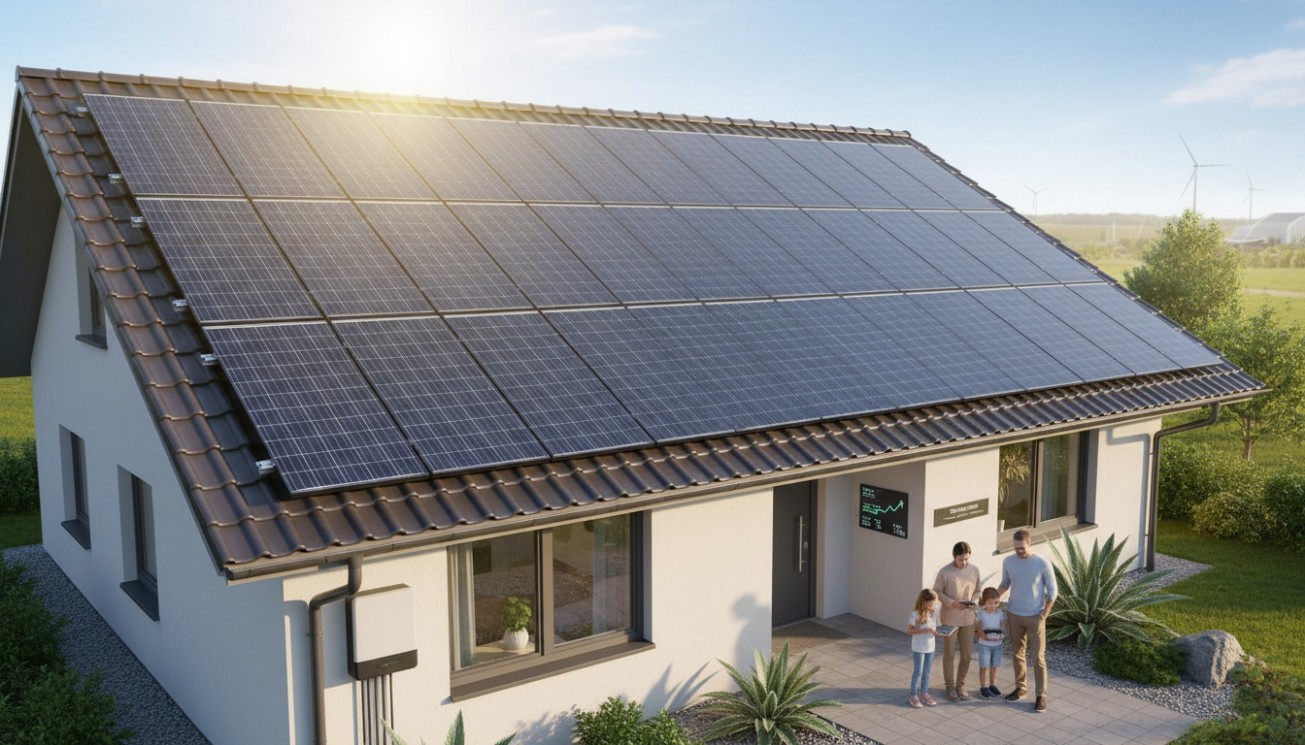
Are Residential PV Modules Safe for Homes? Fire, Heat, Hail and Reliability
Safety Is Not a Single Feature of a Solar Panel
When homeowners ask whether residential PV modules are safe, they often expect a simple answer. They want to know whether solar panels can cause fires, damage roofs, overheat in summer, break under hail, leak water into the home, or create electrical danger. These are reasonable questions because PV modules are installed on the most visible and protective part of a house: the roof.
However, residential solar safety cannot be answered by looking at the module alone. A solar panel is only one component in a rooftop energy system. Safety depends on module quality, mounting design, roof condition, electrical wiring, connectors, inverter selection, rapid shutdown or isolation requirements, fire access pathways, weather exposure, installer workmanship, inspection, monitoring, and maintenance.
This means the real question is not “Are solar panels safe?” The better question is “Has the complete residential PV system been designed, installed, inspected, and maintained safely?” A certified module installed poorly can still create problems. A strong inverter paired with bad connectors can still create risk. A durable panel on a weak roof can still lead to long-term trouble. A well-installed system that is never monitored may allow small issues to remain hidden.
The safety conversation should therefore move from fear to system quality. Residential solar is not inherently unsafe, but it must be treated as a serious electrical and building-integrated system. It belongs on a private home for decades. It faces heat, rain, wind, hail, snow, UV exposure, humidity, animals, dust, and human maintenance mistakes. A safe system is not created by one premium component. It is created by the alignment of product, design, installation, and lifecycle care.
For homeowners, this article explains what to check. For installers, it shows how safety should be communicated. For distributors and B2B buyers, it explains why residential PV reliability must become part of product selection, not an after-sales topic.
The Residential Safety Map: Five Layers of Risk Control

A useful way to understand residential PV safety is to divide the system into five safety layers.
The first layer is product safety. This includes the PV module, inverter, connectors, cables, junction box, frame, glass, encapsulant, backsheet or rear glass, and certified electrical performance. This layer is where solar module safety certification matters.
The second layer is roof safety. This includes roof age, roof material, structural load, waterproofing, mounting attachment, wind uplift, snow load, roof access, and flashing quality. This layer determines whether the system belongs on the roof in the first place.
The third layer is electrical safety. This includes string design, voltage and current limits, connector compatibility, grounding, wire routing, overcurrent protection, shutdown behavior, labeling, and utility connection. This layer is strongly related to solar panel fire risk.
The fourth layer is environmental safety. This includes heat, hail, wind, moisture, salt, snow, dust, UV exposure, and temperature cycling. This layer defines solar panel weather resistance.
The fifth layer is operational safety. This includes inspection, monitoring, cleaning, repair, documentation, homeowner education, installer support, and emergency response awareness. This layer is where home solar inspection and rooftop PV maintenance protect long-term performance.
These layers work together. A system can be weak if any layer is ignored. A strong residential solar project should not simply say “the panels are certified.” It should explain how the entire system controls risk from the roof to the grid connection.
Fire Risk: Usually a System Issue, Not a Panel Myth

Fire is the most sensitive topic in residential solar. Homeowners may see news stories or social media posts and worry that panels make homes dangerous. A mature industry view is more specific: solar panel fire risk is usually connected to system design, component compatibility, installation quality, electrical faults, poor connections, damaged wiring, water intrusion, or inadequate maintenance.
A PV module generates DC electricity when exposed to sunlight. That electricity must travel through connectors, cables, inverters, protection devices, and household electrical systems. If connections are loose, incompatible, poorly crimped, exposed to water, damaged by rodents, stressed by movement, or overheated, risk increases. The module itself is not the only concern. The connection points and installation details are often more important.
This is why connector discipline matters. Mixing connector brands or using poorly matched connectors can create hidden electrical resistance. Resistance can generate heat. Heat can accelerate degradation. Over time, a small installation shortcut can become a safety problem. A professional installer should use compatible components, follow manufacturer instructions, and avoid field improvisation.
Cable routing also matters. Wires should not rub against sharp roof edges, sit in standing water, hang loosely, or be exposed to excessive mechanical stress. They should be protected from UV exposure where required, secured correctly, and routed in a way that allows inspection. A clean cable route may not look exciting, but it is one of the most important signs of a professional installation.
Fire Safety Is Designed Before Installation
Fire safety should begin before panels are mounted. The design should consider roof access, array layout, emergency pathways, disconnect locations, labeling, electrical protection, and inverter behavior. In many markets, fire codes and electrical codes define specific requirements. Even where local rules differ, the principle is the same: solar systems must be understandable and manageable for installers, inspectors, homeowners, and emergency responders.
A good residential solar proposal should not only show panel count. It should also show how safety access, electrical routing, shutdown strategy, and labeling are handled.
Heat: Panels Are Built for Sun, but Heat Still Matters
Solar panels are designed to operate outdoors under sunlight. They are expected to become hot. Heat itself does not mean the system is unsafe. However, solar panel overheating can become a concern when product quality, installation design, ventilation, electrical mismatch, or faults are not properly managed.
PV modules generally produce less power as temperature rises. That is a performance issue. But abnormal heating can also indicate deeper problems. Hot spots may occur when part of a module is shaded, damaged, cracked, mismatched, or electrically stressed. A hot spot is not the same as normal warm operation. It is a localized heat issue that can reduce performance and, in severe cases, create safety concerns.
Roof ventilation also affects heat behavior. Panels mounted too close to the roof may have less airflow. In hot climates, roof surface temperature can be high, and modules may operate under more thermal stress. Proper mounting height, airflow, and material selection help the system perform more reliably.
The home itself is also part of the heat conversation. Some homeowners worry that panels make the roof hotter. In some cases, panels can shade the roof surface and reduce direct solar heat on the roof material. But the detailed effect depends on roof type, air gap, local climate, and installation method. The safety point is simpler: the array should be mounted according to product and racking requirements so that heat can dissipate appropriately.
Heat Safety Depends on Both Product and Layout
A good module should have reliable encapsulation, junction box quality, cell interconnection, bypass diode behavior, and thermal durability. A good layout should reduce repeated shading patterns, avoid poor wiring practice, and allow airflow. Heat risk is not controlled by one specification. It is controlled by the whole installation.
Hail and Impact: What “Hail Resistant” Really Means

Hail is another common concern for homeowners. A roof is expected to protect the house from storms, and a solar array becomes part of that exposed surface. Buyers often ask whether hail resistant solar panels can survive severe weather.
Solar modules are typically tested for mechanical impact under certification standards, but no product should be described as indestructible. Hail size, wind speed, impact angle, module tilt, glass thickness, frame strength, mounting support, and storm intensity all influence the result. A panel may pass standard hail tests and still be damaged by unusually severe hail events. This is why safety language should be honest.
The purpose of hail resistance is to reduce risk under expected conditions, not to guarantee survival under every extreme event. A high-quality module with strong tempered glass, good frame design, reliable lamination, and proper mounting can improve resilience. But module selection should also consider regional weather history. A homeowner in a hail-prone region should ask more detailed questions than a homeowner in a mild climate.
After a hailstorm, visual inspection is important. Some damage is obvious, such as broken glass. Other damage may be less visible, such as cell cracks or microcracks. A system may continue producing electricity after impact but at reduced performance or with increased long-term risk. This is why monitoring and professional inspection can be valuable after severe weather.
Hail Resistance Is a Risk Reduction Strategy
The best way to explain hail safety is to avoid extremes. Do not say panels are fragile. Do not say they are unbreakable. Say that solar panel weather resistance depends on certified testing, glass quality, frame strength, mounting support, storm intensity, and post-storm inspection.
Wind, Snow, and Mechanical Load

Residential PV modules must remain secure under wind and, in some climates, snow. Wind uplift can stress mounting systems and roof attachments. Snow load can add weight to modules, rails, and roof structures. These risks are mechanical, but they can become safety problems if ignored.
A module’s mechanical load rating should match local conditions. The mounting system should be designed for the roof type and local wind or snow requirements. Attachment points should connect properly to structural elements where required. Flashing and waterproofing must be done correctly to avoid leaks.
For solar roof safety, the roof must be evaluated before installation. An old roof, weak decking, damaged structure, or unsuitable roof material can undermine the whole project. Solar panels may last for decades, so installing them on a roof that may fail in a few years can create avoidable cost and risk.
Snow also creates practical issues. Snow sliding from panels may affect walkways, driveways, or lower roof sections. Snow accumulation can temporarily reduce production. In heavy snow regions, module orientation, mounting height, roof strength, and snow retention strategy should be considered.
The Roof Is Part of the Safety System
A residential PV system is not floating above the house. It is physically attached to the building. If the roof is not ready, the system is not ready. A good installer should be willing to tell a homeowner that roof repair or replacement should happen before solar installation.
Water Intrusion and Roof Leak Risk
Many homeowners worry that solar installation will cause roof leaks. This concern is understandable because rooftop solar usually requires attachments, penetrations, clamps, or mounting interfaces. The risk is not the presence of solar itself. The risk comes from poor mounting design, wrong hardware, weak flashing, bad sealant practice, or installation on an unsuitable roof.
Properly installed solar mounting systems are designed to protect the roof. For asphalt shingles, flashing must be placed correctly. For tile roofs, tiles must be handled carefully and mounting hardware must match the roof type. For metal roofs, clamps may avoid penetrations depending on roof profile. For flat roofs, ballast or membrane-compatible mounting must be evaluated carefully.
Water risk is also connected to long-term movement. Roofs expand, contract, flex, and age. Mounting hardware must remain secure over time. Sealants alone should not be treated as permanent protection if the system requires mechanical flashing. A professional installation should use proven methods rather than temporary fixes.
Leak Prevention Starts with Roof Assessment
Before installation, home solar inspection should include roof age, material, damage, previous repairs, attic signs of leakage, drainage patterns, and structural condition. If the roof is close to replacement age, installing solar may create future removal and reinstallation costs. A safe project considers the roof lifecycle and the PV system lifecycle together.
Certification: Important, but Not the End of Due Diligence

Certification is an essential part of PV module safety. Solar module safety certification helps demonstrate that a product has been tested against recognized safety requirements. Certification can address electrical shock protection, fire behavior, mechanical load, environmental stress, construction quality, and other safety aspects depending on the standard and market.
However, certification is not a complete guarantee of system safety. It does not replace correct design, compatible components, professional installation, local code compliance, or maintenance. A certified module can still be used incorrectly. A certified connector can still be poorly installed. A certified system component can still fail if exposed to conditions outside its intended use.
For B2B buyers, certification should be the starting point, not the finish line. Buyers should also review datasheets, installation manuals, warranty terms, bill of materials consistency, factory quality control, packaging, transportation protection, and supplier claim handling. For residential markets, documentation must be clear enough for installers and inspectors to use easily.
Certification Helps Reduce Product Risk
A module without proper certification may create market access problems, insurance concerns, code compliance issues, and safety uncertainty. A certified module still needs proper use, but uncertified or poorly documented products are a major red flag.
Installation Quality Is Often the Hidden Safety Factor
Many residential solar safety issues are not caused by the idea of solar energy. They are caused by field execution. Installation quality determines whether the product’s safety features are actually realized on the roof.
A good installation has clear layout, secure mounting, compatible connectors, protected wiring, correct inverter integration, clean labeling, proper grounding, safe roof access, documented commissioning, and owner education. A poor installation may hide risk behind a neat-looking array.
Installers should not be selected only by price. A lower bid may be attractive, but if it is achieved by rushing installation, using weak components, ignoring roof condition, or providing poor documentation, the homeowner may face long-term risk. Residential solar safety is partly a workmanship issue.
For distributors and suppliers, installer training matters. A strong product line can lose reputation if installed incorrectly. Manufacturers should provide installation manuals, approved component lists, handling guidance, packaging instructions, and technical support. B2B success in residential PV depends on the product being easy to install correctly, not only easy to sell.
Good Workmanship Is Visible in the Details
Signs of professional workmanship include straight arrays, properly secured wiring, appropriate spacing, clean penetrations, clear labeling, correct equipment placement, documented commissioning, and monitoring setup. Homeowners may not understand every technical detail, but they can ask for documentation and inspection results.
Monitoring Turns Safety into an Ongoing Practice
Solar safety does not end on installation day. A system should be monitored and periodically reviewed. Monitoring helps identify production drops, inverter faults, communication failures, unusual behavior, and possible equipment issues. It is not only a performance tool. It can support residential PV reliability.
A homeowner does not need to become a solar technician, but they should know how to check whether the system is operating normally. They should understand the monitoring app or portal, know who to contact if production drops, and keep system documents available.
Production changes can have simple explanations such as cloudy weather, seasonal sun angle, dust, or snow. But sudden or persistent drops may indicate shading changes, inverter problems, wiring faults, module damage, or communication issues. Monitoring makes it easier to notice problems before they become larger.
Data Helps Separate Normal Variation from Real Problems
Solar output changes daily and seasonally. A good monitoring system helps the homeowner compare expected and actual performance. If output looks abnormal compared with similar conditions, professional review may be needed.
Maintenance: Low Maintenance Does Not Mean No Maintenance

Residential solar systems are often described as low maintenance. That is usually true, but low maintenance does not mean no maintenance. Rooftop PV maintenance should include visual checks, monitoring review, occasional cleaning where needed, vegetation management, post-storm inspection, inverter checks, and professional service if alerts appear.
Dust, pollen, leaves, bird droppings, snow, and nearby construction can reduce output. In many climates, rain helps clean panels, but not always. In dry or dusty areas, cleaning may be useful. However, homeowners should not climb onto roofs casually. Cleaning must be done safely, and in many cases professional service is better.
Vegetation is another long-term issue. A tree that does not shade the array today may shade it in five years. Shading can reduce production and may contribute to mismatch or hot spot concerns depending on system design. Regular observation helps protect performance and safety.
After severe weather, inspection is important. Hail, high wind, falling branches, roof work, or nearby construction can damage modules, wiring, or mounting. If visible damage exists, the system should be evaluated by a qualified professional.
Maintenance Protects Both Safety and ROI
A safe system is also a more reliable financial asset. Small problems can reduce production. Larger problems can create safety risk. Maintenance protects homeowner confidence, system output, and long-term value.
Weather Resistance Depends on Climate Matching
A module that performs well in one region may face different stress in another. Solar panel weather resistance should be evaluated based on local climate. Desert heat, coastal salt, high humidity, heavy snow, strong wind, hail, freeze-thaw cycles, dust, and pollution each create different durability challenges.
In hot climates, temperature coefficient, thermal durability, ventilation, and component quality matter. In coastal climates, corrosion resistance and material selection become more important. In humid regions, moisture protection and insulation reliability matter. In snow regions, mechanical load and mounting strength are critical. In hail-prone regions, glass and frame resilience deserve attention.
This is why product selection should not be generic. Residential solar is local. A supplier selling into multiple markets should understand climate-specific requirements. A homeowner should ask whether the proposed module and mounting system are appropriate for local weather.
Weather Resistance Is Not Only a Datasheet Item
Datasheets provide important ratings, but real weather resistance also depends on installation quality, roof exposure, maintenance, and system design. The module rating is the foundation, not the entire answer.
What Homeowners Should Ask Before Installation

Homeowners can improve safety by asking practical questions before signing a contract.
Is the roof suitable for solar?
How old is the roof, and will it need replacement soon?
What module certification applies?
What inverter and shutdown equipment will be used?
Are connectors and cables compatible?
How will wires be routed and protected?
How will roof penetrations be flashed or sealed?
What fire access and labeling rules apply?
What happens during a grid outage?
Who performs inspection and commissioning?
How will monitoring be set up?
What maintenance is recommended?
What should the homeowner do after hail, storms, or visible damage?
These questions do not require the homeowner to become an engineer. They help the homeowner identify whether the installer has a mature safety process.
What Installers Should Explain More Clearly
Installers should explain safety without creating unnecessary fear. A good sales process should not avoid safety questions. It should answer them clearly.
The installer should explain that solar roof safety begins with roof assessment. They should explain module certification, mounting method, electrical design, inverter behavior, labeling, and inspection. They should clarify what is included in the installation and what is the homeowner’s responsibility after commissioning.
Installers should also explain the difference between normal operation and warning signs. Warm panels are normal. Broken glass is not. Seasonal production changes are normal. Sudden unexplained production loss should be checked. Light dust may be normal. Heavy soiling, bird nesting, loose wiring, or visible damage should be addressed.
This kind of education improves customer trust and reduces after-sales confusion. It also positions the installer as a long-term energy partner instead of a one-time equipment seller.
What B2B Buyers Should Look for in Safe Residential PV Modules
For distributors, wholesalers, and procurement teams, safety and reliability should be part of supplier qualification. The lowest module price may not be the lowest business risk.
A strong residential module supplier should provide recognized certification, clear datasheets, installation manuals, mechanical load ratings, fire classification information where applicable, connector specifications, packaging standards, warranty terms, flash test data, and technical support. The supplier should also demonstrate consistency in materials and production quality.
B2B buyers should also consider field handling. Residential installers may carry modules across driveways, ladders, scaffolds, and steep roofs. Packaging should protect modules during local distribution. Module size and weight should be suitable for residential crews. Frames should be robust enough for handling and mounting. Documentation should be easy for installers to access.
For hail resistant solar panels, buyers should ask about impact testing, glass type, frame strength, and regional suitability. For hot climates, they should review temperature performance and long-term material durability. For humid or coastal markets, they should evaluate corrosion and moisture resistance.
Safety-focused procurement reduces warranty disputes, protects installer reputation, and strengthens long-term channel trust.
A Practical Residential PV Safety Checklist
A practical safety checklist can be divided into before installation, during installation, and after installation.
Before installation, check roof condition, roof age, shading, local code requirements, module certification, inverter compatibility, mounting method, installer qualification, and proposal documentation.
During installation, check mounting quality, flashing, wire routing, connector compatibility, equipment placement, labeling, grounding, inverter setup, and clean workmanship.
After installation, check commissioning records, inspection approval, monitoring access, warranty documents, emergency information, maintenance guidance, and service contact.
Over time, check production monitoring, visible damage, vegetation growth, soiling, storm impact, inverter alerts, and roof changes.
This checklist is not meant to replace professional inspection. It is meant to help homeowners and buyers understand what a safe residential solar project includes.
Focused FAQ
Are residential solar panels safe for homes?
Yes, residential solar panels can be safe when the modules are certified, the roof is suitable, the electrical system is designed correctly, the installation is professional, and the system is inspected and maintained. Residential solar safety depends on the full system, not only the panel.
What causes solar panel fire risk?
Solar panel fire risk is usually linked to electrical faults, poor connections, damaged cables, incompatible connectors, water intrusion, poor installation, or inadequate system design. Proper components, installation, inspection, and labeling reduce risk.
Are hail resistant solar panels unbreakable?
No. Hail resistant solar panels are designed and tested to reduce impact risk under defined conditions, but extreme hail can still cause damage. Hail resistance should be understood as risk reduction, not a guarantee against every storm.
Can solar panels overheat on a roof?
Solar panels normally become warm in sunlight. Solar panel overheating becomes a concern when there are abnormal hot spots, poor ventilation, shading-related stress, electrical faults, or product damage.
What does residential PV reliability mean?
Residential PV reliability means the solar system can operate safely and consistently over many years under real home conditions, including weather exposure, roof movement, electrical stress, and maintenance needs.
What is solar roof safety?
Solar roof safety means the roof is structurally suitable, waterproofed correctly, accessible for service, compliant with local fire or building rules, and able to support the PV system over time.
Why is home solar inspection important?
Home solar inspection helps confirm that the system was installed according to design, code, safety requirements, and manufacturer instructions. It can also identify issues after storms, roof work, or performance changes.
What is solar module safety certification?
Solar module safety certification indicates that the module has been tested against recognized safety requirements for electrical, mechanical, fire, and environmental performance. Certification is important, but correct installation is still required.
How often is rooftop PV maintenance needed?
Rooftop PV maintenance depends on climate, roof conditions, soiling, vegetation, weather events, and system monitoring. Homeowners should review production regularly and arrange professional inspection when problems or damage appear.
What affects solar panel weather resistance?
Solar panel weather resistance depends on module materials, glass strength, frame design, certification, installation quality, mounting support, climate conditions, and maintenance after severe weather.
Conclusion
Residential PV modules can be safe, reliable, and valuable for homes, but safety should never be reduced to a simple product claim. A rooftop solar system is a long-term electrical and building-mounted asset. It must be designed, installed, inspected, and maintained with the same seriousness as any other critical home energy system.
The most important lesson is that safety is layered. Product certification matters, but it is not enough by itself. Roof condition matters. Mounting quality matters. Connector compatibility matters. Wire routing matters. Fire access and labeling matter. Weather resistance matters. Monitoring and maintenance matter. When these layers work together, residential solar becomes a controlled and mature energy solution.
For homeowners, the right approach is to ask better questions before installation and stay informed after commissioning. For installers, the opportunity is to explain safety clearly and build trust through professional workmanship. For distributors and suppliers, the responsibility is to provide certified, well-documented, climate-appropriate products that support reliable field installation.
Fire, heat, hail, wind, water, and long-term degradation are not reasons to avoid solar. They are reasons to select and manage solar professionally. The safest residential PV systems are not built by choosing one “safe panel.” They are built by matching certified modules, proper design, skilled installation, roof readiness, inspection, monitoring, and long-term care.
That is the real meaning of residential solar safety: not fear, not marketing, but disciplined system quality over the full life of the home solar asset.
#ResidentialSolarSafety #SolarPanelFireRisk #HailResistantSolarPanels #SolarPanelOverheating #ResidentialPVReliability #SolarRoofSafety #HomeSolarInspection #SolarModuleSafetyCertification #RooftopPVMaintenance #SolarPanelWeatherResistance