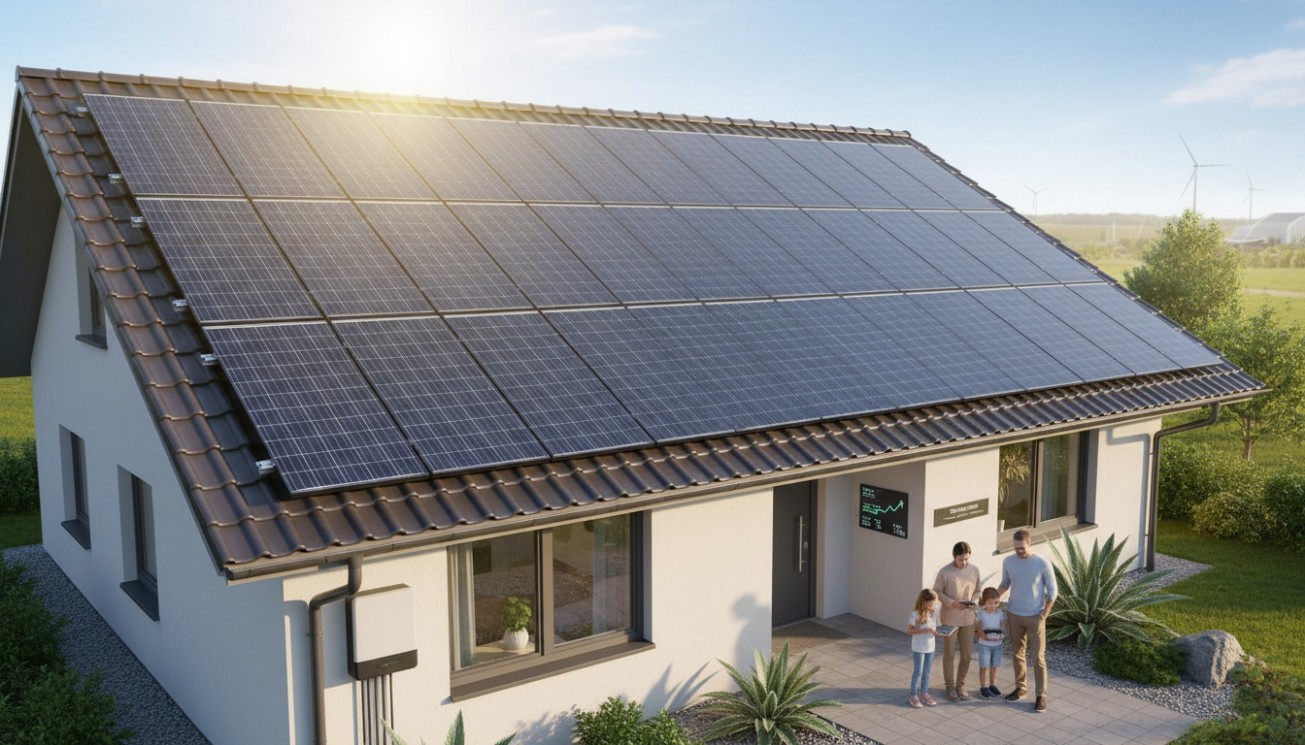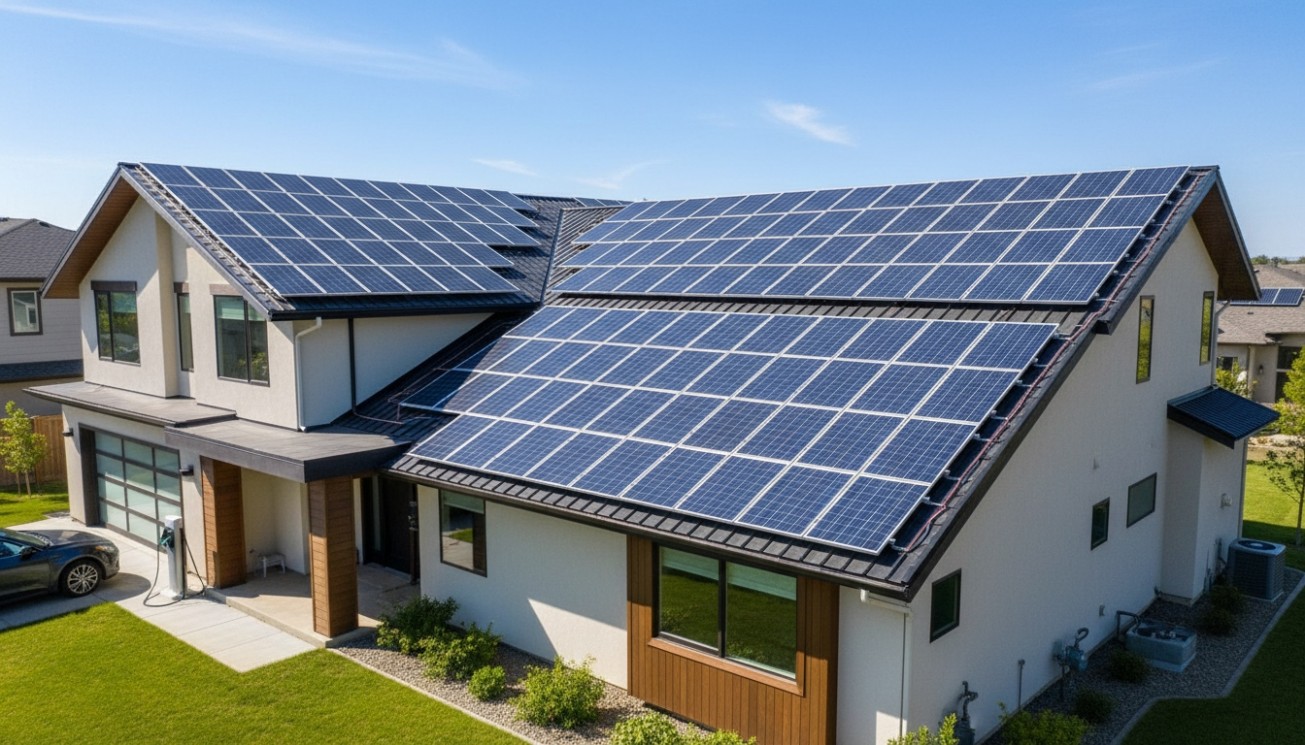
Black Solar Panels and Roof Aesthetics in Residential PV Design
Residential Solar Is Installed on a Home, Not Only on a Roof
In utility-scale solar, the visual appearance of a PV module is usually not the first concern. Developers care about energy yield, land use, mounting structure, cost per watt, bankability, degradation, logistics, and long-term project performance. In commercial rooftop solar, appearance may matter in some cases, but the system is often hidden from street view or judged mainly as an energy asset.
Residential solar is different. A residential PV system is installed on a private home. It becomes part of the building’s visible identity. It is seen by the homeowner, neighbors, visitors, future buyers, community associations, and sometimes local authorities. This changes the meaning of module selection. The homeowner is not only buying electricity production. The homeowner is also accepting a long-term design change to the house.
This is why black solar panels and clean roof layouts have become important in the residential market. Their value is not only technical. Their value is psychological, architectural, and commercial. A homeowner may understand the savings logic of solar but still hesitate if the system looks messy. A technically strong system can lose appeal if the roof becomes visually fragmented. A slightly more expensive module can be easier to accept if it creates a cleaner appearance and fits the building better.
For installers, this means aesthetics should not be treated as decoration after engineering is finished. Solar panel aesthetics should be considered early in the design process, together with roof area, shading, module size, mounting method, cable routing, and inverter architecture. In many residential projects, the final decision is not made only on payback. It is made when the homeowner feels the system belongs on the house.
For suppliers and B2B buyers, this creates a clear message: residential PV is not only a performance category. It is also a design-sensitive category. Products that support better residential solar appearance can help installers sell more confidently, reduce objections, improve project photos, and create stronger long-term customer satisfaction.
Why Appearance Matters More in Residential PV Than Many Suppliers Realize
Some technical buyers underestimate appearance because they assume solar is mainly a financial product. If the system saves money and produces electricity, they believe homeowners should accept it. That view misses how people make decisions about their homes.
A home is emotional property. It represents comfort, identity, family, lifestyle, privacy, investment, and neighborhood belonging. Any visible change to the exterior can trigger questions: Will this make the home look worse? Will it reduce curb appeal? Will neighbors complain? Will it look outdated in ten years? Will it affect resale? Will it fit the roof color, architecture, and façade?
This is why roof aesthetics solar panels are a real buying concern. The homeowner may not say “I need an all-black module with low visual contrast.” Instead, they may say, “I do not want the roof to look strange,” or “I want the panels to look clean,” or “Can the system be less noticeable?” These are design questions, even if the buyer uses everyday language.
Appearance also affects trust. A neat, symmetrical, low-contrast solar array can make the whole installation feel more professional. A poorly arranged layout with mismatched colors, visible cables, irregular gaps, and panels placed around every obstacle can make the system feel improvised. Even if both systems produce similar energy, the homeowner’s perception may be very different.
In residential sales, perception matters. A beautiful installation becomes a referral asset. A homeowner may show it proudly to neighbors. A clean roof photo helps installers market future projects. A visually awkward installation may still function, but it is less likely to create emotional confidence.
What Makes a Solar Panel Look “Residential”

A PV module looks residential when it fits the scale, color, rhythm, and visual language of the home. This is not only about choosing black modules. It is about the full visual composition.
The first factor is color. All black solar panels usually have black cells, black frames, and often a black backsheet. They reduce contrast compared with silver-framed panels or modules with visible white grid patterns. On dark roofs, this creates a more integrated appearance.
The second factor is frame design. A black frame can make the array edge less visually disruptive. Silver frames may look more industrial, especially on dark asphalt shingles, slate-style roofs, or modern standing seam metal roofs.
The third factor is cell pattern. Some panels show strong grid lines. Others have a more uniform appearance. Depending on the home style, a low-contrast cell pattern may feel more premium.
The fourth factor is module proportion. A module that fits roof planes cleanly can create a controlled design. Oversized modules that create awkward gaps may weaken the appearance. Smaller modules may sometimes allow a better layout on complex roofs, even if the wattage per module is lower.
The fifth factor is array geometry. A clean rectangle usually looks better than scattered panels across many small roof sections. Symmetry, alignment, edge consistency, and spacing can influence acceptance.
The sixth factor is visible hardware. Rails, clamps, conduits, junction boxes, and exposed cables can affect the final look. A good residential solar design should reduce unnecessary visual clutter without compromising safety or serviceability.
The best residential solar appearance comes from the combination of module design and layout discipline. A black module alone cannot fix a poor layout. A good layout can help even standard modules look more acceptable. The strongest result comes when both product and design work together.
Black Panels Are a Design Tool, Not Just a Premium Label

Many suppliers use black PV modules as a premium product category. That positioning can be useful, but it should not become shallow marketing. A black panel is valuable because it solves a residential design problem: it reduces visual friction.
Visual friction happens when a solar system looks like an external object placed on top of the house rather than a planned part of the building. Bright frames, mismatched colors, irregular layouts, and exposed cable routes increase visual friction. Black modules reduce some of that friction, especially on dark roofs.
However, black does not automatically mean better in every case. On some light-colored roofs, black modules may create strong contrast. On certain architectural styles, contrast may look intentional and modern. On others, it may look heavy. On red tile roofs or historic properties, black modules may not blend in naturally. In those cases, roof-integrated solar, building-integrated PV, or alternative design approaches may be more appropriate.
This is why aesthetic solar panels should be selected based on the building, not only the product catalog. The question is not “Are black panels better?” The better question is “Do black panels help this specific home look more coherent?”
A good installer should show visual options. The homeowner should see how the array may look on the roof, which roof planes will be used, whether cables will be visible, and whether module color matches the home. Simple visual previews can reduce uncertainty and help the customer make a confident decision.
Curb Appeal Is Part of Residential Solar Value

The phrase solar panel curb appeal may sound less technical than efficiency or payback, but it is highly relevant to residential adoption. Curb appeal affects how a home looks from the street. For many homeowners, that is part of property value and personal pride.
A solar system that improves or preserves curb appeal can reduce buyer hesitation. A system that harms curb appeal can become a barrier even when the financial case is strong. This is especially true in neighborhoods where homes are visually consistent, where property values are high, or where homeowner associations influence exterior changes.
Curb appeal does not mean hiding solar at all costs. Many homeowners are proud to show that their home produces clean energy. The goal is not invisibility. The goal is intentionality. A well-designed solar array can look modern, disciplined, and integrated. A poorly designed array can look like a patchwork installation.
This distinction is important for the industry. If solar is presented only as equipment, homeowners may judge it as a necessary compromise. If solar is presented as part of modern home design, homeowners may see it as an upgrade.
For modern home solar panels, the design language should align with contemporary architecture. Clean black modules, simple roof lines, low-profile mounting, orderly layout, and integrated energy devices can create a premium image. This matters because residential solar is increasingly connected with electric vehicles, heat pumps, home batteries, smart controls, and energy-efficient living. The solar array is becoming part of a broader modern home identity.
The Layout Is Often More Important Than the Module Color

Black modules can improve appearance, but layout is often the stronger visual factor. A roof with a clean rectangular array may look better with standard modules than a roof covered with scattered black modules placed in every available gap.
Residential roofs are complicated. Dormers, chimneys, skylights, vents, ridges, valleys, roof edges, and shade patterns interrupt the surface. Installers may be tempted to use every possible area to maximize system size. But from an aesthetic perspective, not every usable area should be used.
A visually mature residential solar design balances production and roof composition. It asks whether a panel cluster looks intentional. It considers whether the array follows roof lines. It avoids creating awkward single-panel islands unless there is a strong reason. It considers whether the front-facing roof should be used differently from the rear-facing roof. It understands that the most visible roof plane may carry more design weight than a hidden roof plane.
Sometimes, a homeowner may accept slightly lower production in exchange for a cleaner appearance. Sometimes, the best energy-producing roof plane is also the most visible, so the design must be especially careful. Sometimes, a rear roof plane can carry more panels while the front roof remains visually clean. There is no universal answer. The right layout depends on energy goals, roof geometry, visibility, and customer priorities.
The Problem with Scattered Panels
Scattered panels can make a system look improvised. They also create more complex wiring, more roof penetrations, more micro-layout decisions, and sometimes more maintenance complexity. If scattered placement is necessary due to roof constraints, it should be explained clearly. But if it is only used to increase system size slightly, the visual trade-off may not be worth it.
The Value of Clean Roof Geometry
A clean array follows the roof’s natural geometry. It respects edges, aligns with roof planes, and avoids unnecessary interruptions. This creates a sense that the system was designed with the home, not forced onto it.
All-Black Modules and Performance Trade-Offs
Some buyers ask whether all black solar panels perform differently from standard modules. The answer depends on product design. Black backsheets and black surfaces can sometimes operate slightly hotter than lighter alternatives, and module temperature can affect output. However, performance differences vary by product, climate, mounting, airflow, and cell technology.
The important point is not to create a false choice between appearance and performance. A premium black module should still be evaluated by efficiency, temperature coefficient, degradation, warranty, mechanical strength, certification, and compatibility. A beautiful module that performs poorly is not a good residential product. A high-performing module that looks unattractive may be harder to sell in design-sensitive markets.
For homeowners, the right question is whether the black module supports both appearance and long-term value. For installers, the right explanation should include design benefit and technical suitability. For B2B buyers, the right sourcing approach should compare black module performance against local climate, roof types, pricing, and customer expectations.
In many residential markets, the visual advantage of black modules can justify a price premium when the home is highly visible or design-sensitive. In price-sensitive markets or hidden roof applications, standard modules may be more practical. The industry should avoid one-size-fits-all claims.
Roof Color and Home Style Should Guide Module Choice
A solar array does not exist alone. It sits on a roof with a specific color, texture, slope, material, and architectural style. The same module may look premium on one home and visually heavy on another.
On dark asphalt shingles, black solar panels often blend well. On black or dark gray metal roofs, all-black arrays can look clean and modern. On light gray roofs, black panels create contrast but may still look organized if the layout is simple. On red clay tile roofs, black modules may appear more noticeable. On historic homes, visible PV arrays may require more sensitive design or regulatory approval.
The roof material also affects how the mounting hardware appears. Raised rails on tile roofs may be more visible. Standing seam metal roofs may allow clamp systems that look cleaner. Flat roofs may hide panels from street view if parapets or roof angle reduce visibility. Steep roofs may make the array more prominent.
This is why roof aesthetics solar panels require site-specific thinking. The module color should not be chosen in isolation. The installer should consider roof color, wall color, window frames, gutters, landscape, street view, and surrounding architecture.
Dark Roofs Usually Benefit Most from Black Modules
Black modules can visually merge with dark roof surfaces. This is one reason they are popular in residential installations. The array becomes less like a separate object and more like a planned roof feature.
Light Roofs Need Stronger Layout Discipline
On light roofs, black modules are more visible. A clean, symmetrical layout becomes especially important. If the layout is scattered, the contrast becomes more obvious.
Homeowner Associations and Neighborhood Expectations
In some markets, homeowner associations, neighborhood boards, or local planning bodies influence residential solar design. Rules vary widely, but appearance can become part of the approval process. Some communities may limit visible equipment, require certain placement, or ask for visual consistency.
This does not mean solar should be blocked by aesthetics. In many regions, policies support solar access and limit unreasonable restrictions. However, homeowners still care about avoiding conflict with neighbors or associations. A visually clean system can make approval smoother.
For installers, this means proposal materials should include clear roof layouts, module appearance, equipment placement, and possibly visual renderings. If aesthetic solar panels are used, their role should be explained. The installer can show that the system has been designed to reduce visual impact while meeting energy goals.
For suppliers, this creates another reason to provide strong product visuals. Residential product pages should not only show cell efficiency and wattage. They should show roof applications, black frame options, all-black versions, module dimensions, and installation examples. A homeowner may be more influenced by a project photo than by a technical chart.
Cable Management Is Part of Aesthetic Quality
A clean array can be weakened by poor cable routing. Exposed conduits, loose wiring, visible junction boxes, and awkward equipment placement can make a residential solar system look unfinished. Cable management is both a safety issue and an appearance issue.
Good cable routing should protect wires from weather, UV exposure, abrasion, and mechanical damage. At the same time, it should avoid unnecessary visual clutter. The best installations make electrical pathways orderly and serviceable. The homeowner should not see random cables across the roof unless there is a clear technical reason.
In some homes, conduit routes are highly visible on exterior walls. Their placement should be planned carefully. A conduit that runs across a front façade may reduce the appearance of an otherwise clean solar array. A better route may require more planning but improve customer satisfaction.
This is why solar panel aesthetics must include more than module color. The final visible system includes rails, clamps, wiring, conduits, inverters, batteries, meters, disconnects, and labels. Each visible element affects the homeowner’s perception.
Batteries, EV Chargers and the New Home Energy Look
Residential solar is increasingly connected to home batteries, EV chargers, heat pumps, and smart energy controls. This changes aesthetics from roof-only design to whole-home energy design.
A home with solar panels, battery storage, and an EV charger can look like a modern energy home. But it can also look cluttered if devices are placed without design thinking. Wall-mounted batteries, inverters, conduits, and chargers should be arranged neatly. Equipment zones should be accessible, code-compliant, and visually controlled.
For modern home solar panels, the roof array should connect visually and functionally with the rest of the energy system. A clean black array on the roof, a tidy battery installation, and a well-placed EV charger can create a strong premium impression. This matters for homeowners who see solar as part of a lifestyle upgrade rather than only a bill-saving tool.
B2B suppliers should notice this trend. Solar modules are no longer judged only as standalone products. They are part of a home energy ecosystem. A panel that looks good on the roof can strengthen the perceived value of the entire system.
Aesthetic Design Can Improve Sales Conversion
Many residential solar sales fail not because the financial model is weak, but because the homeowner is uncertain. Appearance is one of the uncertainties. A homeowner may like the savings estimate but still hesitate because they cannot imagine the final roof.
Installers can reduce this uncertainty with better visual communication. They can show layout diagrams, example installations, front-view and rear-view options, black versus standard module comparisons, and equipment placement plans. They can explain why some roof areas are avoided for appearance or safety. They can ask the homeowner whether maximum production or visual balance matters more.
This turns residential solar appearance into a consultative selling point. The installer is no longer just offering panels. They are helping the homeowner make a design decision.
A supplier that supports this process can become more valuable to installers. Product images, module renderings, roof application photos, installation examples, and clear color options help installers sell. For a residential module line, visual assets are not secondary marketing materials. They are part of the sales toolkit.
When Black Panels Are Worth the Premium
Black panels may be worth the premium when the roof is highly visible, the home has a modern or premium design, the homeowner is concerned about curb appeal, the community has appearance expectations, or the array is located on the front-facing roof plane.
They may also be worth it when project photos and referrals matter to the installer. A clean black installation can become a marketing asset. It can help attract neighbors who want solar but worry about appearance.
However, black panels may not be worth the premium in every project. If the array is hidden on a rear roof, if the homeowner is highly cost-sensitive, if the roof color does not match, or if the price difference weakens the financial case, standard modules may be the better choice.
The most professional approach is to present options. Show the homeowner the cost difference, visual difference, expected performance, and long-term value. Let the customer choose based on priorities.
What Installers Should Ask Before Finalizing the Design
Before finalizing a residential solar layout, installers should ask design-sensitive questions.
How visible is the roof from the street?
Does the homeowner care more about maximum output or clean appearance?
Is the front roof plane more important visually than the rear roof plane?
Does the roof color match black modules?
Are there homeowner association or neighborhood appearance requirements?
Will the array look better as one clean block or multiple smaller sections?
Can visible conduit be reduced or routed more cleanly?
Where will inverters, batteries, and disconnects be placed?
Does the homeowner want a premium black module option?
Can the system be photographed as a strong reference project?
These questions help turn visual concerns into structured design decisions. They also reduce last-minute objections.
What B2B Buyers Should Look for in Residential Aesthetic Modules
For distributors and procurement teams, black PV modules should be evaluated beyond color. A residential aesthetic module should combine appearance with technical reliability.
Buyers should review module efficiency, dimensions, weight, frame quality, glass type, backsheet or rear-side design, temperature behavior, mechanical load, certification, warranty, packaging, and compatibility with common residential mounting systems. They should also check whether the black appearance is consistent across batches. Color inconsistency can be a problem in visible residential arrays.
Packaging is important because aesthetic modules must arrive without scratches, frame damage, glass marks, or visible defects. Residential customers may reject panels with cosmetic issues that a utility project might tolerate more easily. Distribution handling therefore matters.
B2B buyers should also ask whether the supplier provides marketing assets. Residential installers need photos, datasheets, application images, comparison materials, and clear product positioning. A supplier that helps installers explain aesthetics can create more value than one that only quotes price per watt.
A Practical Framework for Residential Solar Appearance
A strong framework for residential solar appearance includes five questions.
First, does the module color fit the roof? All black solar panels are often best for dark roofs, but not every home needs the same visual strategy.
Second, does the layout follow the roof geometry? A clean block usually looks better than scattered panels.
Third, are visible system components controlled? Rails, conduits, inverters, batteries, and disconnects should be planned as part of the design.
Fourth, does the appearance match the homeowner’s priorities? Some homeowners want maximum production. Others want visual balance. The design should reflect the customer’s decision.
Fifth, does the system support long-term property confidence? The array should look intentional, durable, and professional.
This framework helps avoid two mistakes. The first mistake is ignoring aesthetics completely. The second mistake is treating aesthetics as only black module color. Real residential design requires product, layout, installation, and homeowner expectation to work together.
Focused FAQ
What are black solar panels?
Black solar panels are PV modules designed with darker visual elements, often including black cells and black frames. Some versions also use black backsheets to create a more uniform appearance on residential roofs.
Are all black solar panels better for homes?
All black solar panels can look cleaner on many residential roofs, especially dark roofs. However, the best choice depends on roof color, home style, module performance, price, and layout quality.
Why do solar panel aesthetics matter?
Solar panel aesthetics matter because residential PV systems are visible parts of the home. A clean design can improve homeowner acceptance, curb appeal, neighborhood approval, and long-term satisfaction.
What is residential solar design?
Residential solar design is the process of planning PV module placement, system layout, equipment location, cable routing, safety access, and visual integration for a home solar project.
How do roof aesthetics solar panels affect customer decisions?
Roof aesthetics solar panels influence whether homeowners feel comfortable installing solar. A visually clean system can reduce hesitation, while a messy layout can create objections even when the financial case is strong.
What are black PV modules?
Black PV modules are solar modules designed with black visual components for better residential appearance. They are often used when homeowners want a lower-contrast roof installation.
Are aesthetic solar panels only about appearance?
Aesthetic solar panels are mainly selected for appearance, but they still need strong efficiency, reliability, certification, warranty, and installation compatibility. Appearance should not replace technical quality.
What are modern home solar panels?
Modern home solar panels are residential PV modules and systems designed to fit current home energy trends, including clean roof appearance, black module options, battery readiness, EV charging, and smart energy integration.
Can solar panel curb appeal affect property value?
Solar panel curb appeal can influence how homeowners, neighbors, and potential buyers perceive a solar-equipped home. A clean, intentional system is more likely to support property confidence than a visually chaotic installation.
What improves residential solar appearance the most?
Residential solar appearance is improved by matching module color to roof style, using clean array geometry, reducing visible wiring, selecting suitable module dimensions, and planning equipment placement carefully.
Conclusion
Black solar panels and residential roof aesthetics are not minor details in home solar design. They are part of the real adoption process. A homeowner does not experience a PV system as a datasheet. The homeowner experiences it as a visible addition to a private home, a property investment, and a long-term lifestyle decision.
The value of black solar panels comes from reducing visual friction. They can help PV arrays blend with dark roofs, support modern architecture, improve curb appeal, and make solar feel more like a planned home upgrade. But black modules are not a universal solution. They work best when combined with clean layout, proper roof selection, careful cable management, suitable mounting, and realistic performance evaluation.
For homeowners, the right question is not simply whether black panels look better. The better question is whether the complete solar design fits the home, the roof, the neighborhood, and the energy goal. For installers, aesthetics should be discussed early, not after the engineering is finished. For distributors and B2B buyers, residential module sourcing should include appearance consistency, packaging quality, marketing support, and installer usability.
Residential solar is becoming more mature. The market is moving beyond basic questions of wattage and payback. Homeowners now ask whether solar fits their lifestyle, their roof, their home value, and their sense of design. In that environment, solar panel aesthetics is not superficial. It is one of the bridges between technical feasibility and customer acceptance.
A strong residential PV project should look intentional, perform reliably, and support long-term homeowner confidence. When black modules, clean geometry, and professional installation come together, rooftop solar becomes more than equipment. It becomes part of the modern home.
#BlackSolarPanels #AllBlackSolarPanels #SolarPanelAesthetics #ResidentialSolarDesign #RoofAestheticsSolarPanels #BlackPVModules #AestheticSolarPanels #ModernHomeSolarPanels #SolarPanelCurbAppeal #ResidentialSolarAppearance