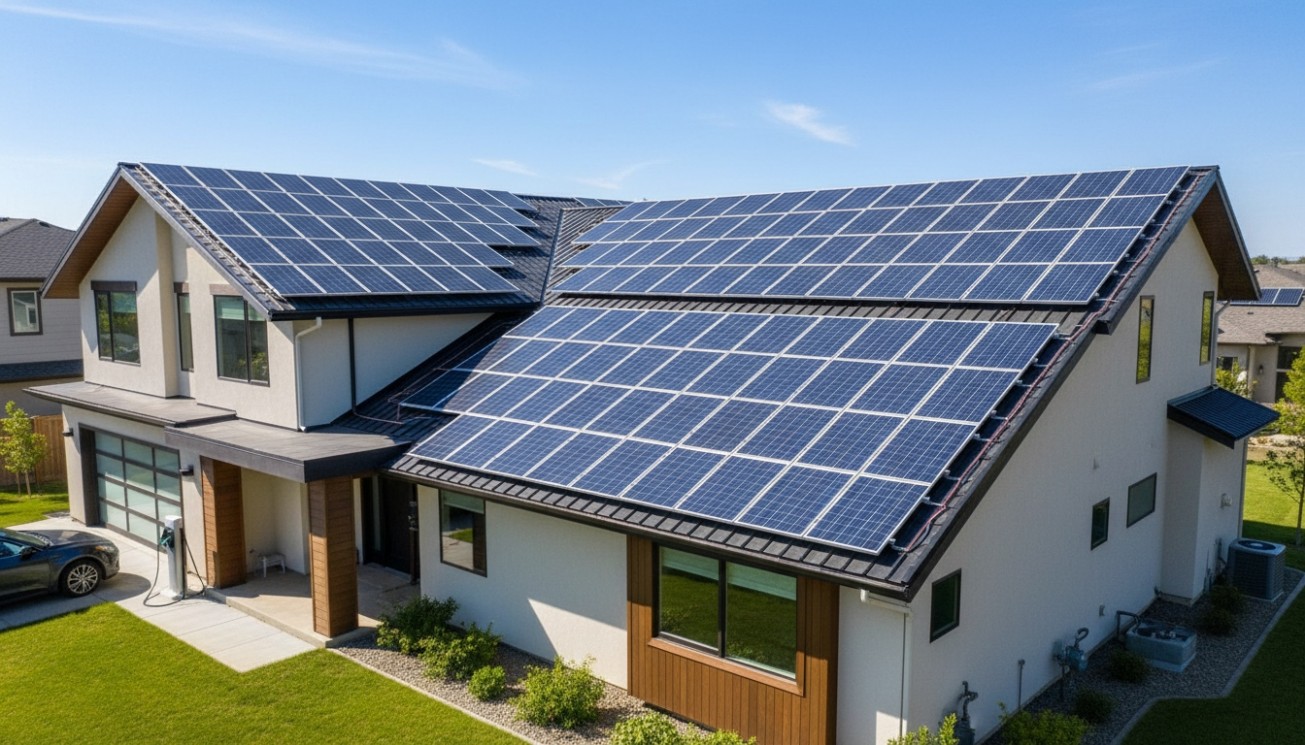
How Long Do Residential Solar Panels Last? Degradation, Warranty and Maintenance
Solar Panel Lifespan Is Not Only a Number of Years
Many homeowners ask a direct question before installing solar: how long do solar panels last? The common answer is often simple: many systems are expected to operate for decades. That answer is useful, but it is not complete enough for a serious residential solar decision.
The real solar panel lifespan of a home solar system is not only the number of years a module remains physically installed on the roof. It is the period during which the system continues to produce useful electricity safely, predictably, and economically. A panel may still generate power after its warranty period, but at a lower output. Another panel may be within warranty but underperform because of shading, poor installation, soiling, inverter issues, or lack of monitoring. A third system may have reliable modules but need inverter replacement, roof work, or electrical upgrades before its full value is realized.
This means residential PV lifespan should be understood as a lifecycle topic. It includes module durability, output degradation, warranty coverage, installation quality, climate exposure, maintenance habits, monitoring discipline, roof condition, and the homeowner’s long-term energy goals.
For homeowners, this is important because rooftop solar is not a short-term appliance. It becomes part of the home’s energy infrastructure. For installers, it means the sales conversation should move beyond “25-year warranty” and explain how long-term output is protected. For distributors and B2B buyers, it means module selection should include service life, warranty clarity, packaging quality, field reliability, and after-sales support.
A mature residential solar market does not judge a module only by initial wattage. It judges whether the system can remain a reliable home energy asset over time. That is the real meaning of solar panel service life.
Lifespan, Warranty and Degradation Are Related but Not the Same
One of the most common misunderstandings in residential solar is treating lifespan, warranty, and degradation as if they mean the same thing. They do not.
Solar panel lifespan refers to how long the module or system can remain useful. This may be longer than the written warranty if the system continues to produce electricity at acceptable levels.
Residential solar warranty refers to the formal promise made by the manufacturer, installer, or equipment provider. It may cover product defects, output retention, workmanship, inverter performance, roof penetrations, or system service depending on the contract.
Solar panel degradation refers to the gradual reduction in power output over time. Even a healthy module normally produces slightly less electricity as it ages. Degradation does not mean immediate failure. It is part of long-term performance modeling.
These three ideas must be separated. A system can be out of warranty but still useful. A system can be within warranty but not necessarily producing as much savings as expected. A system can degrade normally and still be a good investment. A system can degrade abnormally and require investigation.
For homeowners, the key is to understand what is guaranteed, what is expected, and what must be monitored. For installers, the key is to explain these concepts clearly before installation. For B2B suppliers, the key is to provide documentation that makes warranty and degradation expectations transparent.
The Difference Between Product Warranty and Power Warranty

Residential solar buyers often hear that panels come with long warranties. But there are different types of warranty, and they protect different things.
A product warranty usually covers defects in materials or workmanship. If the module has a manufacturing defect, frame issue, junction box problem, glass issue, or other covered product failure, the product warranty may apply. The exact scope depends on the manufacturer’s terms.
A solar panel power warranty is different. It relates to the expected power output over time. The manufacturer may state that the panel should retain a certain percentage of its original output after a certain number of years, based on defined conditions and warranty terms.
These warranties should not be confused. A module may be structurally intact but produce less power than expected. That may relate to power warranty. A module may have a physical defect but not yet show major output loss. That may relate to product warranty. A homeowner needs to know both.
There is also installer workmanship warranty. This may cover installation-related issues such as mounting, wiring, roof penetrations, or system workmanship. It is separate from the module manufacturer warranty. In residential solar, workmanship warranty can be just as important as module warranty because poor installation can reduce system life.
Warranty Length Does Not Automatically Equal System Quality
A long warranty is helpful, but it is not the whole story. Buyers should also ask whether the warranty process is practical. Who handles the claim? What evidence is required? Is labor included? Is shipping included? Is replacement guaranteed or prorated? What happens if the manufacturer changes product lines? Is the installer still in business?
A warranty is only valuable if it can be used. This is why residential solar warranty should be evaluated together with supplier stability, installer quality, documentation, and service access.
Why Degradation Happens

Solar panel degradation is the gradual decline in module power output. It can happen for many reasons. Some degradation is normal and expected. Some is accelerated by product defects, harsh environments, installation problems, or system stress.
PV modules face sunlight, ultraviolet exposure, heat, cold, humidity, wind, rain, snow, dust, salt, pollution, and mechanical load. Over years, materials age. Encapsulants may discolor. Interconnections may experience stress. Cells may develop microcracks. Backsheets may weaken. Moisture may affect insulation if materials or sealing are poor. Hot spots, shading, and electrical mismatch can accelerate local damage.
This does not mean solar modules are fragile. Good modules are designed for long outdoor service. But they are still engineered products operating in real environments. Their performance changes over time.
The solar module degradation rate is therefore an important concept. It helps estimate how much energy the system may produce after 10, 20, or 30 years. A lower degradation rate can improve lifetime energy yield. However, buyers should not compare degradation numbers without context. Field performance depends on climate, installation quality, monitoring, and maintenance.
Normal Degradation vs. Abnormal Degradation
Normal degradation is gradual and predictable. Abnormal degradation appears as sudden production loss, faster-than-expected decline, repeated inverter alerts, visible module damage, hot spots, water intrusion, or performance mismatch between panels.
Homeowners do not need to diagnose every technical issue themselves. But they should use monitoring to notice when output changes unexpectedly. Installers and service providers can then investigate whether the issue is weather, shading, dirt, inverter behavior, wiring, or module degradation.
Residential PV Performance Depends on the Whole System
A common mistake is to judge long-term value only by the module. The module matters, but residential PV performance depends on the whole system.
The PV module converts sunlight into DC electricity. The inverter converts that electricity into usable AC power. The mounting system holds the array securely. Wiring and connectors move energy safely. Monitoring records output. The roof supports the system physically. The homeowner’s energy use determines how much production becomes valuable savings.
If the inverter fails, the panels may still be fine, but the system may stop producing usable electricity. If trees grow and shade the roof, module output may decline even if the modules are healthy. If the roof needs replacement, the panels may need temporary removal. If monitoring is ignored, a system fault may continue unnoticed for months.
This is why home solar maintenance should include more than cleaning panels. It should include system monitoring, visual inspection, vegetation management, inverter review, roof awareness, and documentation.
Modules Can Last Longer Than Other System Components
In many residential systems, modules are expected to be among the longest-lasting components. Inverters, batteries, communications equipment, and monitoring hardware may have shorter replacement cycles. This should be part of lifecycle planning.
A homeowner should not assume that “solar panels last decades” means every part of the system will operate without replacement for decades. Long-term value comes from maintaining the whole energy system, not only the module surface.
The Roof Lifecycle Must Match the Solar Lifecycle

A residential solar array is installed on a roof, and the roof has its own service life. This is one of the most important practical issues in long-term solar planning.
If a roof is near the end of its life, installing solar immediately may create future cost. The array may need to be removed and reinstalled when the roof is replaced. That process costs money, takes time, and creates risk of damage. A system with excellent modules can still become inconvenient if the roof was not ready.
This is why roof assessment should happen before installation. The homeowner should evaluate roof age, material, leaks, previous repairs, storm damage, attic condition, structural strength, and expected remaining roof life. If the roof is likely to need replacement soon, it may be better to replace it before solar installation.
For solar panel service life, roof readiness is part of system readiness. A panel may be designed for long-term operation, but the home must physically support that operation.
A Good Solar Decision Looks Beyond the First Installation Day
The first installation day is not the finish line. It is the start of decades of operation. The best residential solar projects align roof life, module life, inverter life, battery life if included, and homeowner plans. If these timelines are ignored, long-term value can be reduced.
Climate and Environment Change Lifespan Expectations
A module installed in a mild climate may age differently from one installed in a hot desert, humid coastal area, snowy region, or hail-prone market. Environmental stress affects residential PV performance over time.
Heat can increase thermal stress and reduce output during operation. Humidity can challenge material sealing and insulation if product quality is weak. Salt mist can affect metal parts in coastal regions. Snow and ice create mechanical load and freeze-thaw cycles. Hail and wind can damage glass, frames, or mounting systems. Dust and pollution can reduce production if panels are not cleaned naturally by rain.
This is why module selection should match the local environment. A residential module should not be chosen only by price and wattage. Buyers should consider mechanical load rating, temperature coefficient, material durability, corrosion resistance where relevant, certification, and warranty terms.
Degradation Is Local
The solar module degradation rate is not only a factory number. It is influenced by where and how the module is used. A supplier serving multiple markets should understand regional risk. A homeowner in a coastal market, hot climate, or hail-prone region should ask whether the proposed module and mounting system are suitable for that environment.
Maintenance Protects Lifespan, but It Must Be Realistic
Residential solar is often described as low maintenance. That is generally true compared with many home systems, but low maintenance does not mean no maintenance. Home solar maintenance protects long-term output and helps identify problems before they become expensive.
A practical maintenance strategy should include monitoring review, visual checks from the ground, cleaning when necessary, vegetation trimming, inverter status checks, post-storm inspection, and professional service when abnormal performance appears.
In many climates, rain helps remove light dust. But rain may not remove bird droppings, heavy pollen, sticky dirt, leaves, or dust buildup in dry areas. In snowy climates, production may fall temporarily when panels are covered. In leafy neighborhoods, debris can collect near lower edges. In areas with birds or pests, nesting and droppings may become issues.
Homeowners should be careful with cleaning. Climbing onto a roof is dangerous. Using harsh chemicals, abrasive tools, or high-pressure washing can damage modules or void warranties. Many homeowners should rely on professional cleaning or inspection when roof access is required.
Maintenance Should Focus on Output, Safety and Serviceability
The goal is not to make panels look perfect every week. The goal is to keep the system safe, productive, and serviceable. If output is normal and panels are only lightly dusty, cleaning may not be urgent. If output drops, soiling is heavy, or visible damage appears, maintenance becomes more important.
A Residential Solar Maintenance Checklist
A strong residential solar maintenance checklist should be simple enough for homeowners but detailed enough to protect long-term value.
Every month or two, homeowners can review monitoring data. They should check whether the system is producing energy and whether output looks reasonable compared with weather and season.
Several times per year, homeowners can visually inspect the system from the ground. They can look for obvious broken glass, loose objects, heavy debris, animal activity, unusual shading, or damaged visible conduit.
After severe weather, homeowners should check for visible damage. Hail, wind, falling branches, roof work, or construction nearby can affect modules or wiring. If there is any concern, a professional should inspect the system.
Once per year, homeowners can review electricity bills and compare expected savings with actual performance. A large unexplained change may indicate system issues, changes in energy use, or utility tariff changes.
Every few years, a professional inspection may be useful, especially in harsh climates or for older systems. The service provider can check inverter operation, electrical connections, mounting condition, roof attachments, visible cable condition, monitoring communication, and signs of module damage.
Keep Records
Homeowners should keep system documents, warranties, permits, inspection records, monitoring login information, maintenance history, and installer contact information. Good records make warranty claims, service visits, home resale, and future upgrades easier.
Monitoring Is the Lifespan Dashboard

Monitoring is one of the most useful tools for protecting residential PV performance. Without monitoring, a homeowner may not notice system problems quickly. A system can underproduce for months if nobody checks it.
Monitoring shows production trends. It can reveal inverter faults, communication failures, shading changes, unexpected output drops, or system downtime. It also helps separate normal seasonal variation from real problems.
Solar output changes with weather and season. A cloudy week does not mean the system is failing. Lower winter production may be normal in many regions. But a sudden drop on clear days, repeated alerts, or one section of the array producing less than expected may require investigation.
For installers, monitoring is an after-sales relationship tool. It allows faster support and better customer education. For homeowners, it turns solar from an invisible roof asset into a measurable energy system.
Monitoring Does Not Replace Inspection
Monitoring is powerful, but it cannot see everything. It may not identify all physical damage, roof issues, cable wear, or mounting problems. Monitoring and inspection work together.
Inverter Replacement Is Part of Long-Term Planning
Many homeowners focus on module lifespan and forget the inverter. But the inverter is critical. If it fails, the system may stop converting solar electricity into usable home power.
Inverters often have different warranty periods from modules. Microinverters, string inverters, hybrid inverters, and battery inverters may have different service expectations. Some systems may require inverter replacement during the module life. This cost should be included in long-term planning.
A homeowner comparing solar quotes should ask about inverter warranty, replacement cost, monitoring, service process, and compatibility with future batteries or EV loads. A strong module warranty does not protect the system if inverter planning is weak.
For solar panel replacement decisions, inverter status also matters. An older system with working modules but an aging inverter may be upgraded by replacing the inverter. A system with outdated modules, a failing inverter, and roof replacement needs may require a larger repowering decision.
Lifespan Is a System Budget
The long-term solar budget should include possible inverter replacement, monitoring service, roof-related work, maintenance, and eventual panel removal or recycling. A realistic homeowner understands that solar is low maintenance, not zero-cost forever.
When Lower Output Does Not Mean Panel Failure

A drop in output does not automatically mean the panels are failing. Many factors can reduce production.
Weather is the most obvious factor. Cloud cover, rain, snow, smoke, haze, and seasonal sun angle all affect output. Shading is another major factor. Trees grow. Neighboring buildings may change. New roof equipment may cast shadows. Dirt and debris can reduce light reaching the cells. Inverter issues can reduce conversion. Monitoring communication faults can make production appear missing even when the system is operating.
This is why diagnosing solar panel degradation requires context. A homeowner should not assume every decline is module aging. A professional service provider may compare monitoring data, weather patterns, inverter status, string output, shading conditions, and visual inspection results.
Good Diagnosis Prevents Unnecessary Replacement
Replacing panels too early can waste money and materials. Ignoring real failure can reduce savings and safety. A good diagnostic process helps decide whether the system needs cleaning, trimming, repair, inverter service, module replacement, or no action.
Repair, Replace or Repower: Three Different Decisions
When a residential solar system ages, homeowners may face three different decisions: repair, replace, or repower.
Repair means fixing a specific issue while keeping most of the system. This may include replacing a failed inverter, repairing monitoring communication, replacing a damaged module, correcting wiring, or fixing mounting components.
Replace means removing and replacing failed or damaged parts. Solar panel replacement may be appropriate if individual modules are broken, severely degraded, unavailable under warranty, or incompatible with the rest of the system.
Repower means upgrading a larger portion of the system to improve output, safety, compatibility, or long-term value. Repowering may include new modules, new inverter architecture, storage integration, EV-ready electrical upgrades, monitoring improvements, or redesigned layout.
A homeowner should not jump directly from underperformance to full replacement. The right decision depends on system age, roof condition, remaining warranty, equipment availability, current performance, future energy needs, and cost of repair versus upgrade.
Older Systems May Still Be Valuable
An older solar system that produces less than a new system may still provide useful electricity. If it is safe and reliable, continued operation may be better than early replacement. The decision should be based on value, not only new product excitement.
Warranty Claims Require Evidence
If a homeowner believes the system is underperforming, warranty support usually requires evidence. This may include production data, installation records, photographs, inspection reports, electrical test results, serial numbers, warranty documents, and proof of purchase.
This is why documentation matters. A homeowner who cannot identify module serial numbers or installer records may find warranty claims more difficult. A distributor with poor documentation may create service problems for installers. A supplier with unclear claim processes may weaken market trust.
A strong residential solar warranty process should be clear. The buyer should know what is covered, what is excluded, who handles the claim, how performance is tested, whether labor is covered, and how replacements are supplied.
Warranty Exclusions Matter
Warranties often exclude damage from improper installation, unauthorized modification, extreme events, neglect, incorrect cleaning, or use outside specified conditions. Homeowners should understand these exclusions before problems occur.
The Maintenance Role of Installers and Service Providers
Residential solar is sometimes sold as a “set it and forget it” product. That message can reduce perceived complexity, but it can also create unrealistic expectations. A better message is “set it up correctly, monitor it, and service it when needed.”
Installers should explain home solar maintenance at the time of installation. They should show the homeowner how to use monitoring, what normal production variation looks like, when to call for service, and what not to do. They should provide documents and service contacts.
Service providers can also offer periodic inspection packages. These may be useful for older systems, homes in harsh climates, or homeowners who want peace of mind. The service should focus on safety, output, roof condition, wiring, inverter status, and visible module condition.
For B2B buyers, after-sales capability is part of product value. Modules with strong warranties but weak service channels can create frustration. Suppliers should support distributors with warranty documents, replacement policies, technical data, and training materials.
How Homeowners Should Evaluate Long-Term Value
A homeowner evaluating long-term solar value should look beyond the first-year savings estimate. They should ask how much useful energy the system can produce over its lifetime, how output may decline, what maintenance is needed, what equipment may need replacement, and how future household loads may change.
Electric vehicles, heat pumps, home batteries, and smart appliances may increase electricity demand. An older system that was sized for past consumption may not cover future needs. This does not mean the original system failed. It means the household energy profile changed.
A solar system can also be expanded if roof space, inverter capacity, utility rules, and electrical infrastructure allow it. But expansion may be easier if the original system was designed with future flexibility. This connects lifespan planning with system design.
Lifetime Value Is More Than Payback
Payback tells when the system recovers its cost. Lifetime value tells how much benefit continues after payback. A system with good solar panel service life can generate value long after the initial investment is recovered.
What B2B Buyers Should Look for in Long-Life Residential Modules

For distributors, wholesalers, and installation companies, long-term reliability should be part of procurement. A residential module is not only a product shipped once. It becomes part of many homeowner relationships.
B2B buyers should evaluate module construction, certification, degradation warranty, product warranty, supplier stability, warranty claim process, packaging quality, batch consistency, technical documents, and field support. They should also consider whether module dimensions and weight are suitable for residential installation.
A low-cost module with weak documentation can create after-sales risk. A premium module with unclear warranty process can also create problems. The best residential module supplier supports both installation and long-term service.
For solar panel power warranty, buyers should compare not only the headline number but also the warranty structure. Is it linear? What is the first-year allowance? What is the annual degradation allowance? How is power tested? What remedies are offered? Are labor and logistics included? These details affect real warranty value.
A Practical Residential Solar Lifecycle Framework
A useful lifecycle framework for residential solar has five stages.
The first stage is pre-installation. This includes roof assessment, module selection, warranty review, system design, installer qualification, and documentation.
The second stage is commissioning. This includes inspection, monitoring activation, homeowner education, warranty registration, and baseline production expectations.
The third stage is normal operation. This includes monitoring, bill review, light maintenance, vegetation control, and seasonal understanding.
The fourth stage is midlife service. This may include inverter replacement, wiring inspection, mounting review, monitoring upgrades, or minor repairs.
The fifth stage is late-life decision-making. This includes continued operation, repair, module replacement, repowering, roof replacement coordination, or end-of-life recycling.
This framework helps homeowners and industry professionals avoid the mistake of thinking only about the first installation year. A residential PV system should be planned as a decades-long asset.
Focused FAQ
How long is solar panel lifespan for residential systems?
Solar panel lifespan for residential systems is commonly discussed in decades, but useful life depends on product quality, installation, climate, degradation, maintenance, inverter condition, roof condition, and homeowner expectations.
What does residential solar warranty cover?
Residential solar warranty may include product warranty, power warranty, installer workmanship warranty, inverter warranty, and sometimes roof penetration coverage. Each warranty type covers different risks.
What is solar panel degradation?
Solar panel degradation is the gradual reduction in module power output over time. Some degradation is normal, but unusually fast output loss may require inspection.
Why is home solar maintenance important?
Home solar maintenance protects long-term output, safety, and system value. It includes monitoring, visual checks, cleaning when needed, vegetation management, post-storm inspection, and professional service when problems appear.
What affects residential PV performance over time?
Residential PV performance is affected by module quality, degradation, shading, roof orientation, weather, inverter operation, soiling, wiring, monitoring, maintenance, and household energy behavior.
What is solar panel service life?
Solar panel service life means the period during which a panel or system remains useful, safe, and economically valuable. It may extend beyond the formal warranty period if performance remains acceptable.
What is a solar panel power warranty?
A solar panel power warranty covers expected output retention over time. It is different from a product warranty, which covers defects in materials or workmanship.
Why does solar module degradation rate matter?
Solar module degradation rate affects lifetime energy production. Lower degradation can improve long-term output, but real field performance also depends on climate, installation, monitoring, and maintenance.
What should be included in a residential solar maintenance checklist?
A residential solar maintenance checklist should include monitoring review, visual inspection, soiling checks, vegetation control, inverter status, post-storm checks, document storage, and professional inspection when needed.
When is solar panel replacement necessary?
Solar panel replacement may be necessary when modules are broken, severely degraded, unsafe, incompatible with system upgrades, or no longer economical to keep. Many issues should be diagnosed before replacement is chosen.
Conclusion
Residential solar panels are long-life energy assets, but their value is not defined only by a warranty headline. A mature view of solar lifespan includes product durability, output degradation, warranty structure, installation quality, monitoring, maintenance, roof condition, inverter service, climate exposure, and future homeowner needs.
The key lesson is that solar panel lifespan is a system-level topic. Modules may operate for many years, but the full home solar system needs care. Inverters may require replacement. Trees may grow. Roofs may age. Electricity use may change. Monitoring may reveal issues. Weather events may require inspection. Good long-term performance comes from planning for these realities.
For homeowners, the best approach is to understand the difference between product warranty, power warranty, and real service life. They should monitor the system, keep documents, maintain the roof, and call professionals when output changes unexpectedly. For installers, the opportunity is to educate customers about lifecycle value rather than selling only first-year savings. For distributors and suppliers, the responsibility is to provide reliable modules, clear warranty processes, strong documentation, and products suitable for real residential conditions.
A solar system that lasts well is not the result of luck. It is the result of good product selection, careful installation, realistic warranty understanding, proper monitoring, and disciplined maintenance. When these elements come together, residential PV can continue producing useful energy long after the homeowner stops thinking of it as a new purchase.
That is the real meaning of residential solar longevity: not simply how long panels stay on the roof, but how long the entire system continues to deliver safe, useful, measurable, and trusted home energy value.
#SolarPanelLifespan #ResidentialSolarWarranty #SolarPanelDegradation #HomeSolarMaintenance #ResidentialPVPerformance #SolarPanelServiceLife #SolarPanelPowerWarranty #SolarModuleDegradationRate #ResidentialSolarMaintenanceChecklist #SolarPanelReplacement