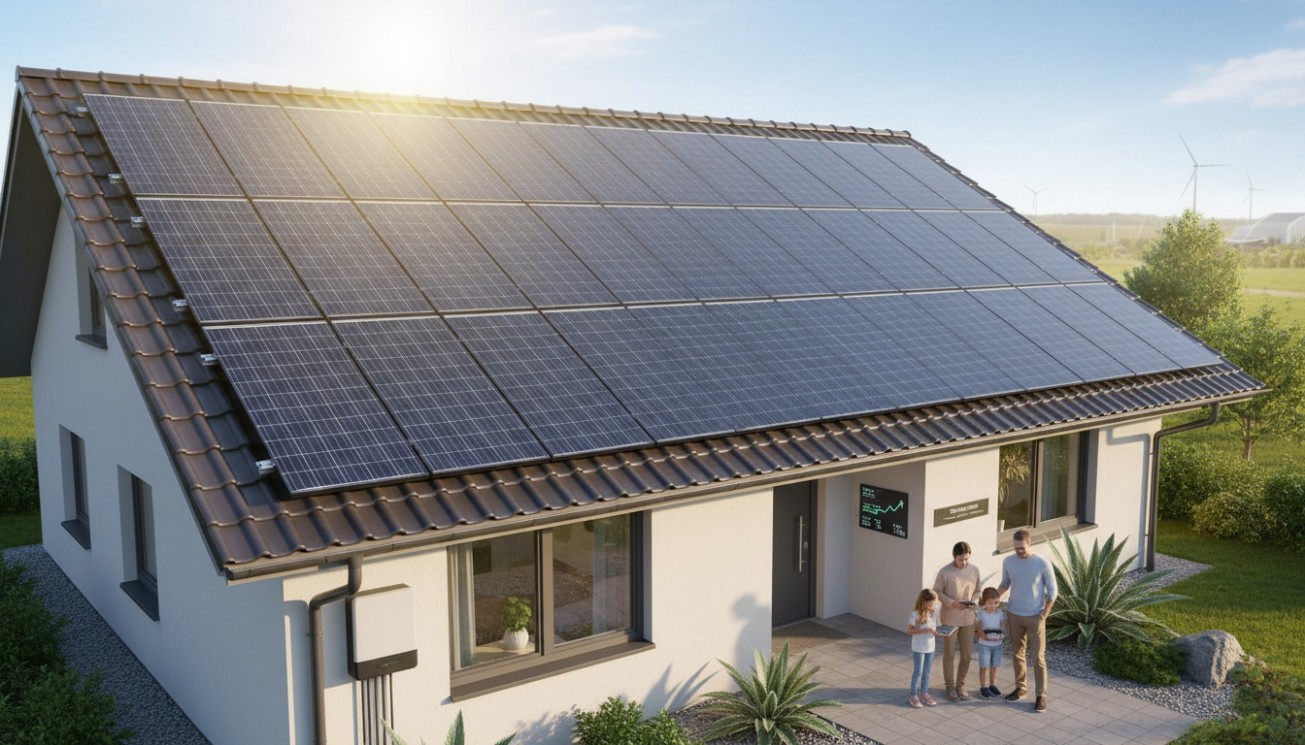
How to Compare Residential Solar Quotes Beyond Price per Watt
A Residential Solar Quote Is Not Just a Price
A homeowner usually receives a solar quote as a number: total system price, system size, estimated savings, and maybe a payback period. At first glance, comparing offers looks simple. One installer may offer a lower price. Another may offer higher-efficiency modules. A third may include a battery. A fourth may show a shorter payback period. The natural reaction is to compare cost per watt and choose the lowest number.
That approach can be dangerous.
A residential solar quote is not only a price. It is a design promise. It tells the homeowner what the installer believes the roof can support, what equipment will be used, how the system will be connected, how much electricity it may produce, what assumptions support the savings estimate, what warranties apply, who is responsible for installation quality, and what happens if the system underperforms.
This is why a serious home solar quote comparison must go beyond price per watt. Two quotes with the same system size can represent very different projects. One may be based on a careful roof assessment, conservative production modeling, strong equipment, clear warranties, and professional service. Another may use optimistic assumptions, vague equipment descriptions, weak documentation, and little after-sales support.
The homeowner does not buy panels alone. The homeowner buys a complete residential energy project. That project includes modules, inverter architecture, mounting, wiring, monitoring, permits, installation workmanship, inspection, utility interconnection, warranty handling, and long-term service. If any part is weak, the final value can be weaker than the price suggests.
For installers, the quote is also a trust document. It should show competence, not only competitiveness. For distributors and B2B buyers, a quote reveals whether a product line is easy to explain, install, support, and defend over time. The best residential solar proposal is not the one that looks cheapest on day one. It is the one that remains understandable and reliable after installation.
Why Price Per Watt Can Mislead Homeowners

Price per watt is useful, but incomplete. It helps compare the basic cost of different system sizes, but it does not explain quality, design, service, or risk. A low price per watt can be attractive, but it may hide missing items, weaker equipment, unrealistic production assumptions, or limited support.
A proper home solar quote comparison should ask what is included in the price. Does the price include permits, utility interconnection, monitoring, mounting hardware, electrical upgrades, roof work, battery-ready design, system commissioning, warranty registration, and after-sales service? Does it include taxes or fees? Does it include removal and reinstallation if roof work is needed later? Does it include consumption monitoring, or only production monitoring?
A lower price can be reasonable if the installer has efficient operations and the system design is simple. But a lower price can also mean the installer is excluding important work. A quote that looks cheaper may become more expensive after change orders, electrical upgrades, roof corrections, or added equipment.
A higher price is not automatically better either. Some quotes are expensive because they include premium equipment, stronger warranties, better design, or more service. Others are expensive because of high sales cost or unclear margins. The buyer must understand what creates the price difference.
Price Per Watt Does Not Measure Design Quality
A quote with a clean roof layout, correct inverter matching, better monitoring, safer wiring, and clear documentation may have a higher price per watt but stronger long-term value. A quote with scattered panels, weak assumptions, and poor documentation may look cheaper but create risk.
Price Per Watt Does Not Measure Installer Accountability
A system is only as strong as the company responsible for designing, installing, and supporting it. This is why solar installer selection is part of the financial decision, not a separate issue.
The First Comparison: Roof Reality and System Design

The first thing to compare is not equipment. It is whether each quote understands the roof.
A strong residential solar quote should explain which roof planes are used, why those roof planes are selected, how shading is handled, what obstacles exist, how many modules fit cleanly, where equipment will be placed, and whether the roof condition is suitable. If the quote shows only system size and price, the homeowner is missing the design logic.
A professional proposal should include a roof layout. It should show module placement, roof orientation, visible obstacles, setbacks, and major design constraints. If the roof has multiple planes, the proposal should explain how each plane contributes to production. If shading exists, the proposal should explain how it affects output and whether optimizers, microinverters, or layout changes are used.
The design should also match the homeowner’s priorities. Some homeowners want maximum annual production. Some want the cleanest appearance. Some want storage readiness. Some want EV charging support. Some want the lowest upfront cost. A proposal that ignores the homeowner’s priorities is not fully designed.
A Good Proposal Explains Why Some Roof Areas Are Not Used
Many homeowners wonder why installers do not cover every available space. A professional solar proposal checklist should explain excluded areas. Some roof zones may be shaded, unsafe, visually awkward, too small, difficult to wire, or restricted by access requirements. Not using a roof area can be a sign of good design, not laziness.
The Best Quote Starts with Site Logic
The quote should make the homeowner feel that the installer studied the home, not only sold a standard package. This is the foundation of a strong residential solar buyer guide.
The Second Comparison: Equipment Package, Not Only Panel Brand

Homeowners often focus on the solar panel brand. That matters, but it is only one part of the solar equipment package. A residential solar system includes PV modules, inverters, mounting structures, cables, connectors, monitoring devices, shutdown equipment, electrical protection, and sometimes batteries or EV charging readiness.
A strong quote should identify the equipment clearly. It should not use vague language such as “premium panels” or “Tier 1 modules” without model numbers. The homeowner should know the module brand, model, power rating, efficiency, warranty, degradation promise, and physical dimensions. The inverter should also be clearly identified. The mounting system, monitoring system, and battery components should be listed if applicable.
The equipment must work together. A high-quality module paired with a poorly matched inverter can weaken system value. A good inverter paired with poor cable management can create risk. A premium battery paired with unclear backup design can disappoint the homeowner. The system should be evaluated as a package.
For B2B readers, this is where residential PV supplier positioning matters. A supplier should not only sell modules. It should support a package logic that installers can explain. Clear datasheets, compatibility guidance, packaging, warranty documents, and application examples help installers create stronger proposals.
Module Quality Is Important, but System Matching Is More Important
The best panel is not always the highest-wattage module. It is the module that fits the roof, matches the inverter, supports the warranty promise, and helps the installer deliver the project safely and efficiently.
Monitoring Should Not Be Treated as a Bonus
Monitoring allows homeowners and installers to see whether the system is performing. A quote should explain whether monitoring is included, what data is available, and who checks it after installation.
The Third Comparison: Installer Quality and Workmanship

The installer is part of the product. Even the best modules can underperform if the installation is poor. This is why solar installer selection is one of the most important parts of residential solar buying.
A strong solar installation company should be able to explain roof assessment, electrical design, permitting, utility approval, installation schedule, inspection, monitoring activation, warranty registration, and service process. It should have experience with the homeowner’s roof type and local utility requirements. It should also be willing to answer technical questions clearly.
Homeowners should ask who will actually install the system. Some companies sell projects and subcontract installation. Subcontracting is not automatically bad, but responsibility must be clear. Who handles workmanship issues? Who responds if roof leaks appear? Who fixes monitoring problems? Who manages warranty claims? Who is responsible if the system fails inspection?
Workmanship matters in ways that are not always visible. Roof flashing, wire routing, connector matching, equipment placement, grounding, labeling, and commissioning all affect long-term reliability. A cheap quote from a weak installer can become expensive over time.
Installer Reputation Should Be Checked Carefully
Reviews are useful, but they should be read with judgment. A company may have strong sales reviews but weak long-term service. Homeowners should look for comments about installation quality, communication, warranty response, and problem resolution.
The Best Installer Explains Trade-Offs
A professional installer does not simply say yes to every customer request. They explain why some design choices are better, why some roof areas should be avoided, and how the system should be sized.
The Fourth Comparison: Savings Assumptions

Many solar quotes include estimated savings. These numbers can be helpful, but they are only as good as the assumptions behind them. A proposal should show how production and savings are calculated.
A professional residential solar quote should explain expected annual production, electricity rate assumptions, export credit assumptions, self-consumption assumptions, incentive assumptions, degradation assumptions, and financing assumptions. If a battery is included, the quote should separate solar-only savings from solar-plus-storage benefits.
A common problem is optimistic modeling. A proposal may assume high electricity rate increases, perfect production, full incentive use, strong export value, and no unexpected costs. This can make payback look better than reality. Another proposal may be more conservative and look less attractive, but it may be more trustworthy.
This is why home solar quote comparison should include scenario thinking. What happens if electricity rates rise slowly? What happens if export credits change? What happens if the homeowner uses more energy at night? What happens if the roof has more shade than expected? What happens if the homeowner adds an EV?
Savings Should Be Shown as a Range
A single savings number can be misleading. A range based on conservative and optimistic assumptions is more useful. It helps homeowners understand uncertainty.
The Quote Should Separate Production from Value
A system may produce a certain amount of electricity, but the financial value depends on when that electricity is used, how utility rates work, and whether energy is exported or consumed directly.
The Fifth Comparison: Financing and Contract Terms

The home solar contract can affect long-term value as much as the equipment. A cash purchase, loan, lease, and power purchase agreement create different ownership and savings outcomes.
A cash purchase is usually the easiest to understand. The homeowner owns the system and receives most of the value directly. A loan reduces upfront cost but adds interest, fees, and repayment obligations. A lease or PPA may reduce upfront cost, but the homeowner may not own the system and may have long-term contract obligations.
The quote should clearly explain payment structure, total cost, interest rate, loan term, dealer fees, escalation clauses, ownership, maintenance responsibility, warranty handling, transfer terms if the home is sold, and cancellation rights. If these details are unclear, the homeowner should not rely only on the monthly payment.
A low monthly payment can look attractive, but it may hide a longer term, higher total cost, or lower lifetime savings. A strong residential solar buyer guide should encourage homeowners to compare total lifetime economics, not only first-month cash flow.
Monthly Savings Are Not the Same as ROI
A homeowner may save money each month compared with utility bills, but that does not automatically mean the system has the best long-term return. The financing structure must be evaluated.
Contract Language Should Be Clear Before Signing
The homeowner should know what happens if equipment is delayed, incentives change, inspection fails, utility approval takes longer, or the homeowner cancels.
The Sixth Comparison: Warranty Chain and Responsibility

Residential solar warranties can be confusing because multiple parties are involved. The module manufacturer may offer product and power warranties. The inverter manufacturer may offer a separate warranty. The battery manufacturer may offer another warranty. The installer may offer workmanship coverage. The financing provider may have separate contract terms.
A good residential solar quote should explain the warranty chain. It should not simply say “25-year warranty” without details. What exactly is covered? Who provides the warranty? Who files claims? Is labor included? Is shipping included? Are roof penetrations covered? What happens if the installer closes? What happens if the manufacturer changes product lines?
The homeowner should also understand what is not covered. Damage from improper use, unauthorized modification, severe weather, roof movement, animal damage, or poor maintenance may be excluded. A warranty is not the same as a complete service guarantee.
For B2B buyers, warranty clarity is a supplier strength. A residential PV supplier with clear warranty terms and practical claim handling gives installers more confidence. A supplier with vague warranty language can create after-sales conflict.
A Long Warranty Is Only Valuable with a Real Service Path
A warranty should be usable. If the homeowner does not know who to call or what evidence is required, the warranty may be difficult to enforce.
The Seventh Comparison: Documentation and Transparency

Good solar project documentation is a sign of professionalism. Residential solar may look simple from the outside, but the project should leave behind clear records.
Important documents include the final proposal, equipment list, module datasheets, inverter datasheets, system layout, electrical diagram, permit documents, inspection approval, utility interconnection approval, warranty documents, monitoring login, commissioning report, payment records, and service contact information.
Documentation matters for maintenance, warranty claims, future upgrades, insurance, home resale, and troubleshooting. A homeowner who sells the home later should be able to show what was installed and how it performed. An installer who provides clear documents creates long-term confidence.
A weak quote may not include documentation details. It may say that everything will be handled, but not explain what the homeowner will receive. That is a red flag. Professional solar companies understand that documentation is part of the product.
Documentation Protects the Homeowner After Installation
After the system is installed, the salesperson may no longer be involved. The documents become the homeowner’s evidence. They help future service teams understand the system.
Documentation Helps B2B Channels Reduce Disputes
For distributors and suppliers, consistent documentation reduces confusion between installers, homeowners, and manufacturers.
The Eighth Comparison: Change Orders and Hidden Costs
Many residential solar projects change after the first quote. A site survey may reveal roof issues, electrical panel limitations, shading problems, utility requirements, or structural concerns. Some changes are legitimate. But the quote should explain how changes are handled.
A professional home solar contract should define what is included, what may trigger additional cost, how change orders are approved, and whether the homeowner can cancel if the final cost changes significantly.
Common hidden costs include main panel upgrades, roof repair, trenching, structural engineering, special mounting, utility fees, battery backup panels, monitoring upgrades, consumption meters, conduit rerouting, and permit-related revisions.
A low initial quote that later grows through change orders can be worse than a higher but complete quote. This is why home solar quote comparison should include project scope.
A Detailed Site Survey Reduces Surprises
The more complete the site survey, the fewer surprises appear later. Remote design is useful, but complex roofs and electrical systems often require deeper review.
Transparent Change Rules Build Trust
A company that explains possible changes upfront is usually more trustworthy than one that hides uncertainty.
The Ninth Comparison: Battery and Future-Ready Options

Not every homeowner needs a battery today, but many want future flexibility. A quote should explain whether the system is battery-ready, EV-ready, or expandable.
A solar equipment package may include only panels and inverter today, but future needs may include home battery storage, EV charging, heat pumps, smart panels, or energy management. If future upgrades are likely, the design should avoid unnecessary barriers.
This does not mean homeowners should buy everything immediately. It means the quote should explain future pathways. Can a battery be added later? What inverter architecture is used? Is the electrical panel ready for EV charging? Is there roof space for expansion? Will utility rules allow future changes? Will monitoring support additional devices?
A cheap quote that blocks future flexibility may not be the best value. A slightly more expensive design that supports future upgrades may be more practical for electrifying homes.
Future-Ready Should Be Specific
Some quotes use “battery-ready” as a marketing phrase. The homeowner should ask what it actually means. Does it require another inverter? Additional wiring? A backup panel? New permits? More cost?
The Tenth Comparison: Local Experience

Residential solar is local. Utility rules, inspection requirements, roof types, weather conditions, incentives, and neighborhood expectations vary. A strong solar installation company should understand the local market.
Local experience matters for permitting speed, utility interconnection, roof material handling, code compliance, incentive paperwork, and realistic production estimates. An installer who works regularly in the area may understand common delays and requirements better than a company entering the market aggressively.
This does not mean a larger national company is always worse or a local company is always better. The question is whether the company has local execution capacity and accountability.
Ask About Similar Projects
Homeowners should ask whether the installer has completed similar projects nearby: similar roof type, similar utility, similar system size, similar battery configuration, or similar permitting process.
Local Knowledge Reduces Execution Risk
A quote should reflect real local conditions, not a generic national template.
Red Flags in Residential Solar Quotes

Some warning signs should make homeowners pause.
The first red flag is vague equipment. If the quote does not list exact module and inverter models, comparison is difficult.
The second red flag is unrealistic savings. If the proposal promises bill elimination without explaining fixed charges, export rules, or usage assumptions, it may be overstated.
The third red flag is pressure selling. A homeowner should not be pushed to sign before understanding the system, contract, and assumptions.
The fourth red flag is missing roof assessment. A proposal that ignores roof condition can create future cost.
The fifth red flag is unclear warranty responsibility. If nobody can explain who handles problems, the risk is higher.
The sixth red flag is hidden financing terms. Low monthly payment without total cost transparency is risky.
The seventh red flag is no documentation promise. A professional project should provide clear solar project documentation.
The eighth red flag is no service plan. Solar is long-term. The homeowner should know how support works after installation.
What a Strong Residential Solar Proposal Should Include

A strong solar proposal checklist should include:
System size and expected production.
Roof layout with module placement.
Exact module, inverter, mounting and monitoring equipment.
Battery or EV-ready explanation if relevant.
Shading and roof condition assumptions.
Electricity rate and savings assumptions.
Incentive assumptions and eligibility notes.
Total installed cost and payment structure.
Financing terms if applicable.
Warranty details for modules, inverter, battery and workmanship.
Permitting and utility interconnection responsibilities.
Installation timeline and inspection process.
Change order policy.
Monitoring setup and service contact.
Final documentation package.
This list may seem long, but residential solar is a long-term home energy project. A buyer should expect clarity.
How B2B Buyers Should Use Quote Logic
For B2B buyers, distributors, and suppliers, quote comparison reveals market readiness. If installers struggle to explain a product, the product may not be channel-friendly. If documentation is weak, after-sales disputes may increase. If module dimensions create difficult residential layouts, sales may slow. If warranty terms are unclear, installers may avoid the brand.
A strong residential PV supplier supports quote quality. It provides clear datasheets, installation manuals, warranty terms, compatible system guidance, packaging information, certification documents, product images, and claim procedures. It helps installers create better proposals.
Residential PV competition is not only about price. It is about how easily the product can become a trusted home energy solution. Suppliers that support installers in proposal clarity can win stronger long-term channel relationships.
Focused FAQ
What is a residential solar quote?
A residential solar quote is a proposal for a home solar project. It should include system size, equipment, roof layout, estimated production, cost, incentives, warranties, installation scope, and service responsibilities.
How should homeowners do a home solar quote comparison?
A home solar quote comparison should compare roof design, equipment package, installer quality, savings assumptions, warranties, financing terms, documentation, and support, not only price per watt.
Why is solar installer selection important?
Solar installer selection is important because workmanship affects roof safety, electrical reliability, monitoring, warranty support, and long-term system performance.
What should a solar proposal checklist include?
A solar proposal checklist should include equipment models, roof layout, production estimate, savings assumptions, total cost, incentives, warranties, financing terms, permits, interconnection, change order rules, and documentation.
What is a residential solar buyer guide?
A residential solar buyer guide helps homeowners evaluate solar proposals by explaining system design, equipment quality, installer responsibility, contract terms, and long-term value.
What is included in a solar equipment package?
A solar equipment package may include PV modules, inverter, mounting hardware, cables, connectors, monitoring, safety equipment, batteries, and EV-ready components.
Why does residential PV supplier quality matter?
A residential PV supplier affects module reliability, warranty clarity, documentation, packaging, installer confidence, and long-term service support.
What should be checked in a home solar contract?
A home solar contract should clearly explain total cost, ownership, payment terms, financing, warranties, cancellation rights, change orders, installation scope, and service responsibilities.
How do I choose a solar installation company?
A solar installation company should be evaluated by local experience, workmanship, licensing, reviews, proposal clarity, warranty support, service process, and ability to explain design trade-offs.
Why is solar project documentation important?
Solar project documentation helps with warranty claims, maintenance, troubleshooting, home resale, future upgrades, and long-term system management.
Conclusion
Comparing residential solar quotes is not a simple exercise in choosing the lowest price per watt. A quote is a complete project promise. It reflects roof understanding, system design, equipment matching, installation quality, savings assumptions, warranty responsibility, contract terms, and long-term support.
The strongest residential solar quote is transparent. It shows what will be installed, why the design fits the home, how production is estimated, what assumptions support savings, who is responsible for each part of the project, and what the homeowner receives after installation. It helps the buyer understand value, not only price.
For homeowners, the most important lesson is to slow down and compare the full proposal. A cheaper quote may be excellent if it is complete, realistic, and professionally supported. A more expensive quote may be worth it if it includes better design, stronger equipment, and clearer service. But no quote should be accepted blindly.
For installers, the quote is an opportunity to build trust. A detailed proposal shows expertise and reduces misunderstandings. For B2B buyers and suppliers, quote quality is a channel advantage. Products that are easy to document, explain, install, and support help installers win better customers.
Residential solar is a long-term decision. The homeowner is not only buying panels for a roof. They are choosing a company, a system architecture, a financial model, a warranty chain, and a service relationship. When quotes are compared at that level, the best choice becomes clearer.
#ResidentialSolarQuote #HomeSolarQuoteComparison #SolarInstallerSelection #SolarProposalChecklist #ResidentialSolarBuyerGuide #SolarEquipmentPackage #ResidentialPVSupplier #HomeSolarContract #SolarInstallationCompany #SolarProjectDocumentation