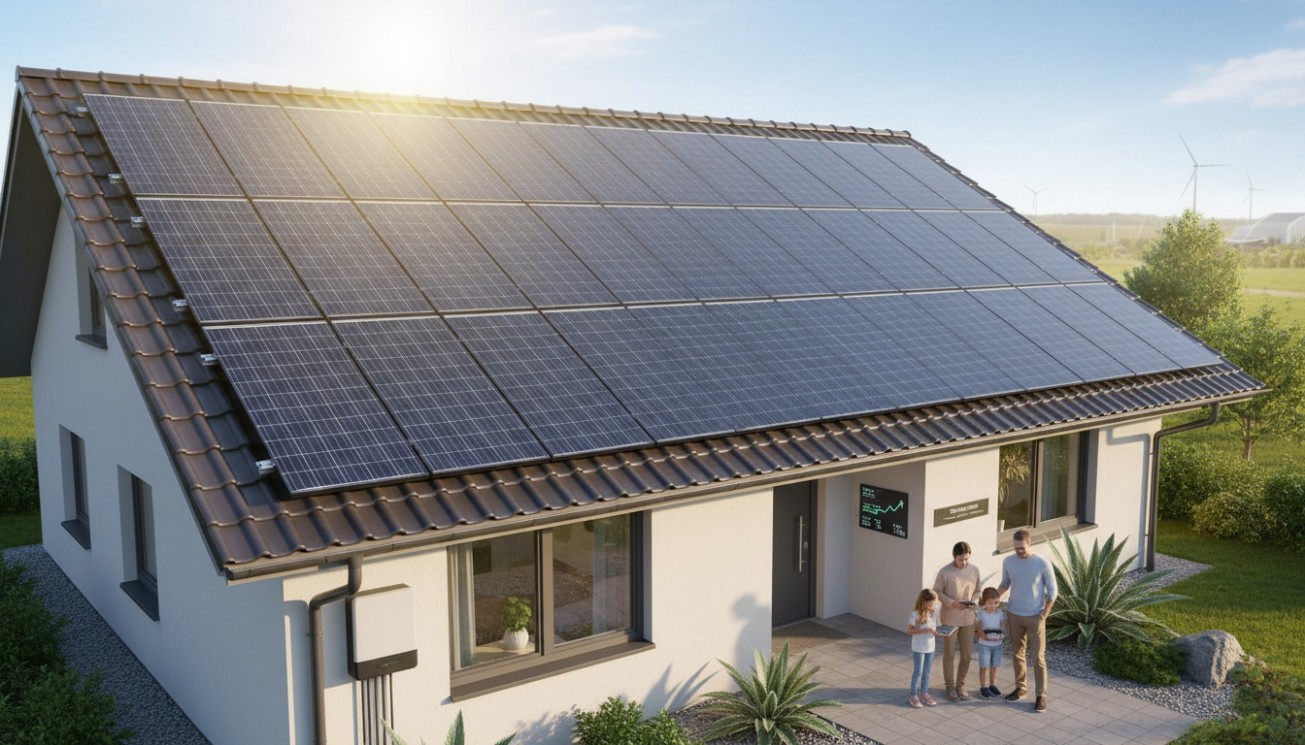
Balcony Solar and Plug-In PV A New Residential Solar Segment
Balcony Solar Is Not Just a Smaller Rooftop System
For many years, residential solar was mainly associated with homeowners who had private rooftops. The standard image was clear: a detached house, a sunny roof, a professional installer, a grid-tied inverter, and a long-term investment designed to reduce electricity bills. That model is still important, but it does not represent every residential user.
Many people live in apartments. Many rent their homes. Many own homes without suitable roofs. Some have roofs blocked by shade, chimneys, structural limits, or community restrictions. Some households want to try solar before committing to a full system. Others want a lower-cost energy solution that can reduce part of their daily electricity use without a large construction project.
This is where balcony solar panels and plug-in solar PV enter the residential market. They are not simply tiny versions of rooftop solar systems. They represent a different access model. Instead of requiring full roof ownership, complex installation, and large system capacity, balcony and plug-in systems focus on flexibility, lower entry cost, self-consumption, and modular deployment.
A traditional rooftop system asks, “How much solar can this roof support?” A balcony system asks, “How much useful solar energy can this household access with limited space and simpler installation?” That difference matters. The technical scale is smaller, but the market meaning is large. Balcony solar expands the residential PV audience from roof owners to apartment residents, renters, small-space users, and early-stage solar adopters.
For this reason, residential plug-in solar should be treated as a new residential segment, not just an accessory product. It changes who can participate in solar energy, how systems are purchased, how safety is regulated, how electricity is consumed, and how suppliers communicate value.
Why This Segment Is Emerging Now
Balcony and plug-in solar are gaining attention because several market forces are moving at the same time. Electricity prices have made households more sensitive to energy costs. More people are interested in reducing dependence on the grid. Residential solar has become familiar, but full rooftop systems remain expensive or unavailable for many users. At the same time, compact PV modules, microinverters, mounting hardware, smart plugs, and small storage systems have become easier to package into consumer-friendly kits.
This creates a new product space between traditional solar and small consumer electronics. Plug-in solar panels are larger and more energy-relevant than portable chargers, but smaller and less permanent than full rooftop systems. They may not cover a full household’s annual electricity demand, but they can reduce daytime consumption, support small loads, and create energy awareness.
The social driver is also important. Renters and apartment residents often feel excluded from solar adoption. They may pay electricity bills but have no control over the roof. They may want clean energy but cannot approve a full building installation. Renter solar panels and apartment-friendly plug-in systems respond to this gap. They do not solve every energy problem, but they make solar participation more accessible.
The industry driver is equally strong. For manufacturers, distributors, and online retailers, balcony solar creates a new category of residential PV demand. It can be sold through different channels than traditional rooftop solar. It can serve homeowners, tenants, small property owners, energy-conscious consumers, and urban residents. It also creates opportunities for bundled products such as panels, microinverters, brackets, meters, monitoring apps, and compact batteries.
The Core Difference: Self-Consumption Comes First

Traditional rooftop solar can be designed around annual production, net metering, export credits, and full bill offset. Balcony and plug-in solar usually work differently. Their value is mainly based on self-consumption.
A small balcony system produces electricity during daylight hours. The electricity is most valuable when it is used directly by the home. It may help power refrigerators, routers, laptops, standby loads, ventilation equipment, small appliances, or daytime background consumption. If the home is empty and consumption is low, the value may be weaker unless the system includes storage or the local rules support export compensation.
This is why apartment solar panels should not be sold with the same promise as full rooftop systems. A balcony system is usually not designed to eliminate the entire electricity bill. It is designed to reduce part of the bill, improve self-consumption, and give users a practical entry point into solar energy.
A professional explanation should avoid exaggeration. If a small system is promoted as a complete home energy solution, users may be disappointed. If it is explained as a flexible self-consumption tool, the value becomes clearer. The system is not small because it is weak. It is small because it is designed for a specific residential use case.
Background Loads Make Balcony Solar More Practical
Many homes have continuous or semi-continuous loads. Refrigerators cycle throughout the day. Routers, standby electronics, ventilation systems, chargers, small pumps, and home office equipment may consume power during sunlight hours. A properly sized balcony power plant can offset some of these daytime loads.
The better the match between solar production and household demand, the stronger the value. This is the same principle as larger residential solar, but it becomes more sensitive in small systems because there is less capacity and less room for design error.
Oversizing Can Reduce Practical Value
A user may think that more panels always mean more savings. In plug-in solar, that may not be true. If the system produces more than the household can use during the day and export rules are weak, excess production may have little value. This makes right-sizing more important than maximum sizing.
Balcony Solar Changes the User Profile of Residential PV
Traditional residential PV often targets homeowners with sufficient income, suitable roofs, and long-term property control. Balcony solar reaches different groups.
The first group is renters. They may want solar but cannot install permanent rooftop systems. Renter solar panels are attractive because they can be lower cost, less permanent, and sometimes removable when the tenant moves.
The second group is apartment owners. They may own the apartment but not the full building roof. Portable solar panels for apartments or balcony-mounted systems can offer a limited but personal solar option.
The third group is small-home residents. Some small houses have limited or unsuitable roof space, but a balcony, terrace, garden, wall, or railing may provide a possible mounting location.
The fourth group is solar beginners. Some users are not ready for a full rooftop investment. A small plug-in system allows them to experience solar generation, monitoring, and energy behavior before making a larger decision.
The fifth group is urban energy users. Dense cities often have many people with high electricity rates but limited roof access. Balcony and plug-in PV can serve as a distributed urban energy product, even if each system is small.
This broader user profile is the main reason the segment deserves attention. Residential plug-in solar is not competing only with rooftop solar. In many cases, it serves people who were never eligible for rooftop solar in the first place.
Product Architecture: What a Plug-In Solar System Usually Includes

A basic plug-in solar system usually includes PV modules, mounting hardware, a microinverter or small inverter, cables, safety connectors, and sometimes a monitoring device. Some systems may include a battery or smart energy controller. The exact configuration depends on local rules, power limits, installation environment, and product design.
A microinverter solar kit is common because small systems often need module-level conversion from DC electricity to AC electricity. The microinverter can be mounted close to the panel and connected to the household electrical system according to permitted local methods. In some markets, the system may connect through a dedicated plug or circuit. In other markets, professional installation or special connection equipment may be required.
The PV module itself may be rigid, lightweight, framed, frameless, or semi-flexible depending on the application. A balcony railing may require different mounting than a terrace, flat wall, garden stand, or façade. Wind load, water resistance, cable routing, and safe attachment are all important.
This is why plug-in solar PV should not be treated as a casual gadget. Even when the product is simplified for consumers, it still involves electricity, outdoor exposure, mounting safety, and regulatory compliance. Good product design must make installation easier while still respecting electrical and mechanical safety.
The Module Must Fit the Space
A rooftop system can sometimes use large modules because installers have roof access and mounting rails. A balcony or apartment system has tighter constraints. Module weight, size, frame strength, mounting points, and handling convenience become critical.
The Inverter Must Fit the Rules
The inverter or microinverter must match local voltage, frequency, grid safety requirements, export limits, and connection standards. This is one of the most important differences between a serious microinverter solar kit and an unsafe low-quality product.
The Mounting System Must Be Reliable
Balconies face wind, rain, vibration, and long-term outdoor exposure. A poor mounting design can create serious risk. Mechanical safety is part of product value, not an afterthought.
Safety Is the Segment’s Defining Challenge
The biggest barrier for plug-in solar is not whether the technology can work. It is whether the system can be deployed safely at scale. Electrical safety, fire safety, backfeed protection, circuit limits, plug standards, grounding, waterproofing, cable management, and mechanical attachment must all be addressed.
A full rooftop system is usually designed and installed by professionals under permit and inspection. A plug-in system may be installed by consumers or semi-professional installers depending on local rules. This makes product clarity and safety design extremely important.
A safe plug-in solar panels package should provide clear instructions, certified components, compatible connectors, suitable protection devices, proper labeling, and realistic limits. It should explain where the system can be installed, what type of outlet or connection is allowed, what power limit applies, and when professional help is required.
Balcony mounting also needs attention. A panel attached to a railing must resist wind loads and vibration. It should not create falling-object risk. Cables should not hang loosely or create water-entry problems. If the system is installed in a shared building, it must not endanger neighbors or common property.
For B2B suppliers, safety is the difference between a short-term product trend and a sustainable market. If low-quality products create accidents or regulatory backlash, the whole category can suffer. High-quality suppliers should treat safety documentation, certification, mounting design, and user education as core product features.
Regulation Determines How Fast the Market Can Grow

Balcony solar depends heavily on local regulation. In some markets, small plug-in systems are clearly allowed under defined power limits and registration processes. In others, rules are uncertain, restrictive, or different by utility area. Some regions allow plug-in systems only with approved equipment. Others require electrician installation. Some limit system capacity. Some require smart meters or anti-export functions.
This regulatory variation creates both opportunity and complexity. A product that is suitable for one market may not be legally acceptable in another. A supplier cannot simply sell the same balcony solar panels package globally without checking local standards.
For content strategy, this is an important point. Balcony solar articles should not make universal claims such as “just plug it in anywhere.” That may be misleading. A professional article should explain that users must check local rules, electrical codes, landlord requirements, building restrictions, and utility connection policies.
The Market Needs Standardization
If governments, utilities, and industry bodies create clear small-system rules, plug-in solar can scale more safely. Standardized power limits, certified inverter lists, registration processes, installation guidance, and consumer education can reduce uncertainty.
Unclear Rules Increase Buyer Risk
When rules are unclear, users may buy products that cannot be legally connected. Retailers and suppliers should avoid selling based only on convenience. Compliance should be part of the product message.
Balcony Solar Is a Residential Access Product
The strongest industry insight is that balcony solar is not mainly a high-output product. It is an access product. It gives more people access to solar participation.
A full rooftop system may be more powerful, more permanent, and more financially impactful for suitable homeowners. But many households cannot access that model. Apartment solar panels and portable solar panels for apartments create an alternative pathway. They lower the barrier to entry, even if they do not replace a full rooftop array.
This access value matters for the energy transition. If solar adoption is limited only to property owners with good roofs, a large share of urban residents remains outside the market. Balcony solar helps close part of that gap. It also increases public familiarity with distributed energy, monitoring, self-consumption, and household energy behavior.
From a business perspective, access products can build future customers. A renter using a small plug-in system today may become a homeowner who installs a full rooftop system later. A user who learns how solar output changes during the day may become more willing to invest in batteries, smart meters, or energy management. Balcony solar can act as a first step into the broader residential energy ecosystem.
The Economics Are Different from Rooftop Solar

A rooftop system is often evaluated by total installed cost, annual production, incentives, net metering, financing, and long-term payback. Balcony solar economics are more compact and more behavior-dependent.
A small small residential solar system may have lower upfront cost, but it also produces less energy. Its payback depends heavily on whether the home can use the electricity directly. If daytime self-consumption is strong and electricity prices are high, the value can be meaningful. If the system exports excess energy at low value or produces when the home has little demand, savings may be modest.
Battery integration can improve self-consumption, but it also adds cost. A small battery may store daytime generation for evening use. However, the added cost must be compared with the value of shifted energy. In some cases, the battery improves user experience more than financial payback.
This is why plug-in solar should be explained in realistic terms. It can reduce bills, but usually not eliminate them. It can provide solar access, but usually not full home independence. It can help users understand energy consumption, but it may not create the same ROI profile as a well-designed rooftop system.
The Best Economic Case Has Three Conditions
The first condition is high electricity value. The higher the electricity price that solar offsets, the stronger the savings.
The second condition is good daytime self-consumption. The system should generate when the home uses electricity.
The third condition is safe and simple installation. If installation becomes too expensive or complex, the low-entry-cost advantage weakens.
Storage Can Make Plug-In PV More Useful, but Also More Complex
Some balcony solar systems now include small batteries or connect with compact storage units. This can make the system more useful because solar energy can be stored and used later. It also supports users who are away during the day and consume more electricity in the evening.
However, adding storage changes the product category. A simple plug-in PV kit becomes a small energy management system. Battery safety, charging logic, discharge timing, inverter compatibility, temperature limits, indoor or outdoor placement, warranty, and monitoring all become important.
A balcony power plant with storage may improve self-consumption, but it may also cost much more. The user should understand whether the battery is mainly for savings, convenience, backup, or energy control. A small balcony battery is usually not the same as a full-home backup battery. It may support selected loads or time-shift energy, but it should not be oversold as whole-house resilience.
For suppliers, storage creates both opportunity and risk. A well-designed plug-in PV plus battery product can be attractive to renters and apartment users. But poor integration can create safety problems, user confusion, and warranty disputes.
Installation Scenarios Are More Diverse Than Rooftop Solar
A rooftop solar system usually has one main installation scenario: panels mounted on the roof. Balcony solar has many possible scenarios.
One user may mount panels on a balcony railing. Another may place them on a terrace. Another may use a garden stand. Another may mount modules on a wall. Another may use a flat roof in a small building. Another may use a temporary frame that can be moved when changing residence.
This diversity makes residential plug-in solar flexible, but it also makes standardization harder. Each scenario has different sunlight, shade, wind exposure, cable routing, visibility, and safety needs.
A balcony railing may have strong shade from upper floors. A terrace may have better sun but more wind exposure. A garden system may be easy to access but vulnerable to theft, animals, or landscaping. A wall-mounted system may be visually clean but less productive depending on orientation and tilt.
Good product education should help users choose the right installation scenario. It should explain that placement affects output. A panel behind glass may perform differently from a panel outdoors. A vertical panel on a balcony may produce less annual energy than an optimally tilted panel, but it may still be useful if it fits the available space safely.
Product Design Should Prioritize Simplicity Without Hiding Complexity
The appeal of plug-in solar is simplicity. But good simplicity is not the same as ignoring technical reality. A strong product should make the user experience easier while keeping safety, compliance, and performance transparent.
For portable solar panels for apartments, the product should be easy to understand. Users should know what is included, how much power it can produce, where it can be placed, how it connects, what local checks are required, and what savings are realistic. The packaging should not rely only on attractive lifestyle images. It should provide clear technical information.
For microinverter solar kit suppliers, simplicity means pre-matched components, certified inverter equipment, clear wiring, safe connectors, and user-friendly monitoring. It also means warning users against unsafe modifications. A good kit reduces the chance of wrong component matching.
For content platforms, this is a key editorial angle. Balcony solar is exciting, but it should not be romanticized. The best content helps users understand both the opportunity and the responsibility.
B2B Opportunities in the Balcony Solar Segment
For manufacturers and distributors, balcony solar opens a different sales structure from conventional residential PV. It can be sold through online retail, home energy platforms, electrical distributors, solar installers, property technology channels, and consumer energy brands.
The product bundle is important. A supplier may not sell only a panel. It may sell a kit that includes module, microinverter, bracket, cable, meter, monitoring, safety documentation, and optional storage. The value is in the integrated package.
This creates opportunities for PV module suppliers that understand small-system applications. Module size, weight, frame design, black appearance, mounting holes, packaging, and connector compatibility matter. A large utility-scale module may not be suitable for a balcony. A smaller, lighter, easier-to-handle residential module may perform better in this segment.
For B2B buyers, the question is not only “What is the module price?” The question is “Can this product become a safe, compliant, repeatable consumer energy package?” That requires coordination between module design, inverter certification, mounting safety, instruction quality, packaging, logistics, and after-sales support.
What Buyers Should Check Before Choosing Plug-In Solar
A user considering plug-in solar PV should first check whether it is allowed in their location. Local rules matter. The user should verify utility requirements, building rules, landlord approval, electrical standards, power limits, and whether professional installation is needed.
The second check is sunlight. A balcony that receives little direct sunlight may not produce enough electricity to justify the system. The user should consider orientation, shading from nearby buildings, trees, upper floors, railings, and seasonal sun angles.
The third check is load matching. The home should have enough daytime electricity demand to use the generated power. If not, storage or a smaller system may be more suitable.
The fourth check is safety. The system should use certified components, proper mounting, weather-resistant cables, clear instructions, and compliant connection methods.
The fifth check is realistic savings. The user should understand that a small system reduces part of the bill. It is not usually a full home solar replacement.
The sixth check is portability. Renters should consider whether the system can be removed without damaging property and whether it can be reused in another location.
When Balcony Solar Makes Sense

Balcony solar makes sense when the user does not have access to a private roof but has a sunny balcony, terrace, wall, or small outdoor space. It also makes sense when the user wants a low-entry solar option, has high electricity prices, uses electricity during the day, and can install the system safely under local rules.
It can be especially suitable for apartment dwellers, renters, students, small households, urban residents, and homeowners who are not ready for a full rooftop system. It can also work as an educational product for people who want to understand solar before making a bigger investment.
A small residential solar system can also make sense for specific loads. For example, it may help offset daytime background consumption or support an energy-conscious household with predictable daily use. The key is matching expectations with system capability.
When Balcony Solar May Not Be the Right Choice
Balcony solar may not be suitable if the installation location is heavily shaded, unsafe, legally restricted, or mechanically weak. It may also be a poor fit if the user expects full bill elimination, whole-home backup, or the same output as rooftop solar.
It may not make sense if the system cost is high, electricity prices are low, daytime consumption is minimal, or export value is unavailable. A user who moves frequently may also need to consider whether the system is portable enough and whether it can be used in future housing.
Safety restrictions should be taken seriously. If the building does not allow external balcony equipment, if the railing cannot support the system, or if electrical rules require professional installation, the user should not ignore those requirements.
The best message is balanced: balcony solar panels can be valuable, but only when the site, rules, product, and expectations fit.
How This Segment May Evolve

The balcony and plug-in PV segment is likely to become more professional. Early products often focused on simplicity and low cost. Future products may focus more on certified safety, smart controls, integrated storage, better mounting, app-based monitoring, dynamic tariff optimization, and modular expansion.
As more users adopt small systems, utilities and regulators may create clearer rules. Manufacturers may design modules specifically for balcony dimensions and urban installation. Energy platforms may combine plug-in PV with smart meters, small batteries, and demand response. Apartment buildings may eventually support shared systems or standardized balcony kits.
This evolution will push the category from DIY experimentation toward regulated consumer energy infrastructure. That transition is important. If the industry wants residential plug-in solar to become mainstream, it must prove that the systems are safe, useful, compliant, and easy to understand.
Focused FAQ
What are balcony solar panels?
Balcony solar panels are compact PV modules installed on balconies, terraces, railings, walls, or small outdoor spaces to generate electricity for residential self-consumption.
What is plug-in solar PV?
Plug-in solar PV refers to a small solar system designed to connect to a home electrical system through an approved plug-in or simplified connection method, depending on local regulations.
Are apartment solar panels the same as rooftop solar panels?
Apartment solar panels are usually smaller and more flexible than full rooftop systems. They are designed for limited space, self-consumption, and users who may not control a private roof.
Are plug-in solar panels safe?
Plug-in solar panels can be safe when they use certified components, approved inverters, proper mounting, compliant connection methods, and clear installation instructions. Users must follow local electrical rules.
What is a balcony power plant?
A balcony power plant is a small balcony-mounted solar generation system that usually includes PV modules, a microinverter, mounting hardware, cables, and sometimes monitoring or battery storage.
Can renters use solar panels?
Renter solar panels can be useful when the system is removable, allowed by the landlord or building rules, and compliant with local electrical requirements.
Is a small residential solar system enough to power a home?
A small residential solar system usually offsets part of household electricity use. It is not normally designed to power an entire home like a full rooftop system.
What are portable solar panels for apartments?
Portable solar panels for apartments are compact or removable solar products that can be used in apartments, balconies, terraces, or small outdoor areas where permanent rooftop solar is not possible.
What is included in a microinverter solar kit?
A microinverter solar kit usually includes one or more PV modules, a microinverter, cables, mounting equipment, and sometimes monitoring tools or safety accessories.
Who should consider residential plug-in solar?
Residential plug-in solar is suitable for renters, apartment owners, small-home residents, and users without suitable rooftops who want a lower-entry way to generate and use solar electricity.
Conclusion
Balcony solar and plug-in PV are changing the meaning of residential solar. They do not replace full rooftop systems, and they should not be marketed as if they can. Their importance is different. They expand access to solar energy for people who may not own a roof, may not control a building, or may not be ready for a full residential installation.
The value of balcony solar panels comes from flexibility, accessibility, and self-consumption. The value of plug-in solar PV comes from lowering the entry barrier while still giving households a real connection to solar generation. For renters, apartment residents, small homes, and urban users, this can be a meaningful step toward energy participation.
However, the segment must be developed responsibly. Electrical safety, mounting safety, regulation, product certification, installation clarity, and realistic savings expectations are essential. A small solar system is still an electrical power system. It should not be treated as a casual gadget.
For suppliers, the opportunity is to create reliable, compliant, well-documented product kits that match real apartment and balcony conditions. For distributors, the opportunity is to build a new residential channel around flexible solar access. For users, the opportunity is to reduce part of their electricity consumption, learn how solar works, and participate in distributed energy without waiting for a full rooftop project.
The future of residential solar will not belong only to large rooftop arrays. It will also include small systems, plug-in systems, balcony systems, shared systems, and smart storage-enabled products. In that future, residential plug-in solar will not be important because it produces the most power. It will be important because it allows more people to participate.