Solar Panel Murals How Custom Colored BIPV Is Turning Facades Into Energy Art
Solar Facades Are Moving From Hidden Equipment to Public Expression
For many years, solar design followed a simple visual rule: place the panels where they generate power and keep them out of the way if appearance becomes a problem. On industrial roofs, warehouses, parking structures, farms and utility sites, this logic worked well. The solar system was mainly an energy asset. Its public image did not matter as much as its output, cost and reliability.
The rise of custom colored BIPV changes that logic. When photovoltaic products become part of a facade, they are no longer hidden technical equipment. They become part of the building’s public face. A solar surface can be seen by pedestrians, tenants, visitors, city officials, investors and neighboring buildings. It can influence how people understand the building and how they judge its environmental ambition.
This is where the idea of the solar panel mural becomes important. A solar mural is not simply a decorative wall that happens to include photovoltaic panels. It is a new type of architectural surface where energy generation, public art, urban identity and building envelope design come together. It asks a different question from standard solar: can a building generate electricity and tell a visual story at the same time?
The answer is increasingly yes, but only when the project is handled with discipline. A successful photovoltaic mural is not a poster pasted onto a wall. It is not a painted facade pretending to be green. It is a coordinated system of active and passive panels, color logic, electrical layout, facade engineering, artwork translation, maintenance planning and energy modeling.
This is why building energy art is a more serious topic than it may first appear. It is not about making solar panels look fun. It is about expanding the role of the building envelope. The facade can protect, shade, insulate, identify, communicate and generate power. In that sense, an artistic solar facade is not the opposite of engineering. It is engineering given an architectural and cultural language.
What Makes a Solar Panel Mural Different From a Painted Facade?

A standard mural is usually applied to a wall as paint, film, ceramic print, graphic panel or cladding finish. Its main function is visual. It can represent local culture, brand identity, public art, urban regeneration, community memory or building signage. It may be powerful, but it is usually passive.
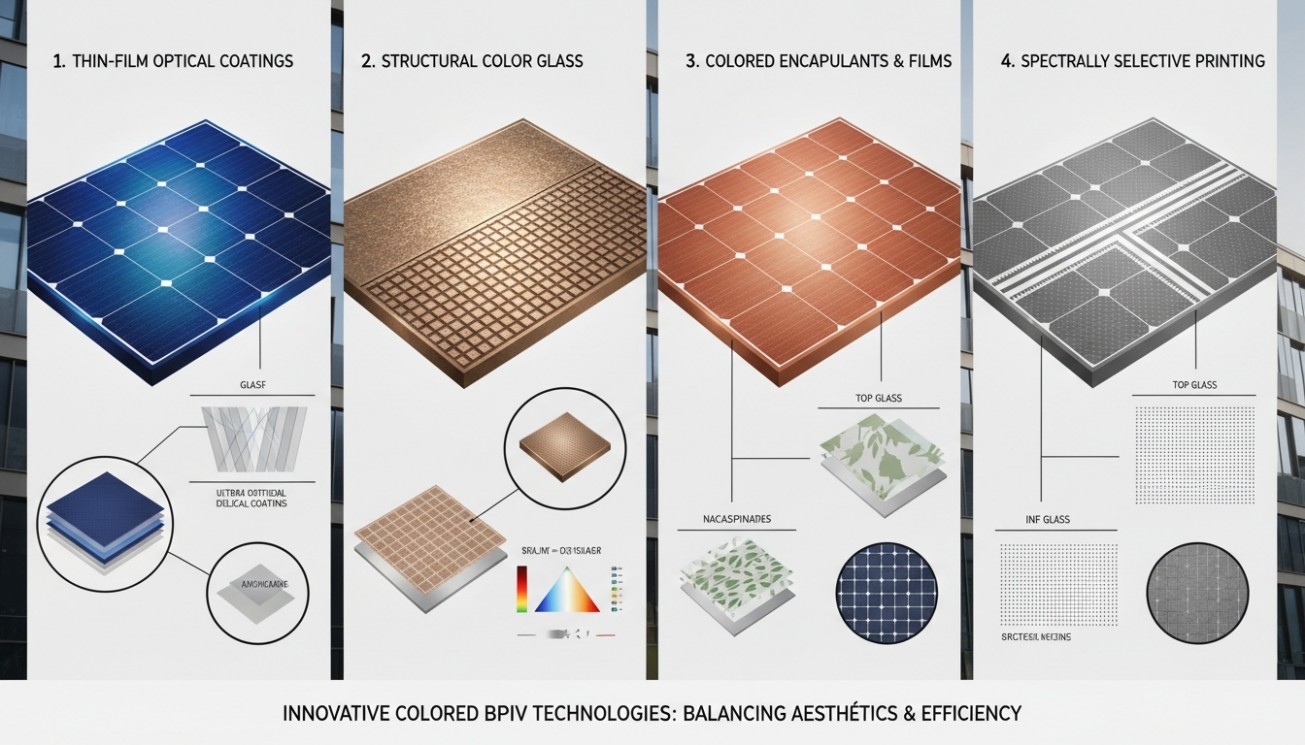
A solar panel mural is different because the surface has an energy function. It is not only an image. It is a working part of the building’s renewable energy system. The mural may be built from custom solar panels, colored photovoltaic glass, patterned BIPV modules, active photovoltaic cladding and visually coordinated passive panels. Some panels may generate electricity. Others may complete the image without generating power. Together, they create a readable facade.
This dual function creates design tension. A visual artist may want unlimited color, fine detail, smooth gradients and complete freedom. A photovoltaic designer must think about module size, cell layout, wiring, output loss, shading, color technology and replacement strategy. A facade engineer must think about wind load, fire safety, drainage, structural support, panel joints and access. A developer must think about cost, public value, brand impact and long-term operation.
The success of a photovoltaic mural depends on how well these disciplines work together. If the project is driven only by art, the energy system may suffer. If it is driven only by energy, the mural may look weak. If it is driven only by marketing, the facade may become superficial. The best projects turn the technical constraints into part of the design method.
A traditional mural covers a wall. A solar mural transforms the wall into an active surface. That difference is why this topic belongs in the future of solar facade design.
Why Custom Colored BIPV Creates a New Type of Urban Landmark

Cities are filled with buildings that look passive. They have glass, stone, metal, concrete, brick, ceramic, aluminum and composite panels. These materials shape the city visually, but they usually do not produce energy. The building consumes power inside while the exterior remains largely inactive.
Custom colored BIPV changes that relationship. A facade can become both a public image and an energy system. When designed at scale, it can turn a building into an urban landmark without relying only on height, expensive materials or dramatic form.
A colored solar facade can be quiet and contextual, or it can be bold and recognizable. It can use local colors, cultural patterns, abstract graphics, corporate identity, educational themes or environmental imagery. It can become a way for public buildings, universities, residential towers, transport hubs, cultural centers and commercial projects to communicate sustainability in a visible way.
This matters because sustainability is often invisible. High-performance insulation, efficient HVAC systems, smart controls and renewable contracts may reduce carbon impact, but the public rarely sees them. A solar artwork facade makes the energy transition visible. It allows people to understand that the building is not only consuming energy. It is participating in generation.
Visibility can also create accountability. A building with a public solar facade is making a claim. It tells the city that sustainability is part of its identity. That claim should be supported by real output, credible engineering and transparent communication. If the facade is only symbolic, the project risks being dismissed as greenwashing. If the facade genuinely generates power and improves the building, the visual message becomes stronger.
This is the deeper value of building energy art. It turns renewable energy from a hidden technical upgrade into an architectural statement that can be seen, discussed and remembered.
From Solar Product to Visual Story: The Role of Narrative

A strong solar panel mural usually needs a story. Without narrative, a colored facade may look like a random pattern. With narrative, the surface can connect to place, culture, building use or community identity.
For a public school, the mural may express science, learning, climate awareness or local ecology. For a university, it may show research, innovation or campus identity. For a residential tower, it may connect to community history, neighborhood transformation or shared sustainability goals. For a corporate headquarters, it may communicate brand values and technological ambition. For a cultural building, it may become part of the artistic program. For a transport hub, it may represent movement, connection and public infrastructure.
The narrative should not be added after the facade is designed. It should guide the solar facade design from the beginning. The project team should decide whether the mural is meant to be readable from street level, from a distance, from above or through digital communication. A large facade image may look different from different viewing angles. A pattern that appears clear in a rendering may become fragmented when divided by windows, mullions, vents and active panel zones.
This is why narrative must be translated into facade logic. The artwork may need to become more abstract. Colors may need to be simplified. Fine details may need to become larger fields. Active panels may need to be placed where energy yield is strongest, while passive panels complete the visual composition. Window openings may become part of the design rather than interruptions.
A mature artistic solar facade does not force a flat image onto a complex building. It develops a visual story that can survive the realities of the facade.
Custom Solar Panels Are Not Unlimited Design Freedom
The phrase custom solar panels can create unrealistic expectations. Some buyers may imagine that any color, image, pattern, size and finish can be produced without performance, cost or durability consequences. In reality, customization is powerful but limited.
Every color choice affects light behavior. Some colors may reduce output more than others. Light colors, saturated colors and complex graphic effects may require greater performance trade-offs. Some technologies may provide better color control but higher cost. Some finishes may be more durable than others. Some custom patterns may complicate manufacturing, replacement and batch consistency.
Module size also matters. A mural is built from repeated panels. The artwork must align with panel dimensions, facade joints and electrical groups. If the panel grid is ignored, the image may become distorted or difficult to build. If the artwork requires many unique panels, manufacturing and replacement become more complex. If the mural uses too many small design variations, future maintenance may become expensive.
This does not mean custom BIPV should avoid creativity. It means creativity must be system-aware. The best custom colored BIPV projects use controlled design rules: a limited but expressive palette, repeatable panel types, clear active and passive panel mapping, color families that support energy performance, and a replacement strategy that protects the mural over time.
A photovoltaic mural is not a one-time graphic. It is a long-life building system. The design must survive weather, maintenance, replacement, public scrutiny and changing ownership. That requires more discipline than ordinary wall art.
Active and Passive Panels Must Work as One Image
One of the most important design questions in any solar panel mural is how active and passive panels work together. Not every facade area is suitable for photovoltaic generation. Some zones may be shaded. Some may be occupied by windows. Some may face poor orientation. Some may be too small or irregular. Some may be reserved for ventilation, access or fire safety. If the mural only uses active panels, the artwork may become fragmented. If passive panels are not coordinated, the facade may reveal awkward gaps.
A good solution is to design active and passive zones as one visual system. Active BIPV wall panels generate electricity where conditions are suitable. Passive panels match or complement the color and finish where energy generation is not practical. Together they complete the facade image.
This approach requires careful documentation. The building owner must know which panels generate electricity and which do not. Maintenance teams must be able to identify active circuits. Replacement panels must match both electrical and visual requirements. The artwork must be mapped to the facade in a way that future teams can understand.
The active-passive strategy also affects public communication. A building should not imply that every visible panel produces energy if some panels are passive. The better story is more honest: the facade uses a coordinated system of energy-generating and visually matched elements to create a complete architectural surface. That explanation is credible and professional.
In solar facade design, visual unity and technical truth should support each other.
The Technical Challenge: Turning Artwork Into a Photovoltaic System
A solar artwork facade must pass through a translation process. The original artwork may begin as a digital image, pattern, cultural motif, brand graphic, abstract composition or urban concept. It then has to be converted into a buildable photovoltaic facade.
The first step is facade mapping. The team identifies windows, structural grids, panel sizes, active zones, passive zones, maintenance zones, shading areas and view corridors. The artwork must fit this map.
The second step is color rationalization. A digital image may contain thousands of colors. A BIPV facade may need a limited palette. The team reduces the artwork into manufacturable colors that still communicate the intended image.
The third step is energy zoning. The best solar areas may not align perfectly with the most important parts of the artwork. The team must decide where energy output matters most and where visual continuity matters most.
The fourth step is panelization. The mural is broken into modules. Each panel receives a position, color, finish, electrical role and installation sequence. This is where custom solar panels become construction elements rather than abstract design pieces.
The fifth step is performance modeling. The team estimates yield, output variation, color-related loss, shading impact and system configuration.
The sixth step is mockup review. A small digital rendering is not enough. Physical samples and facade-scale mockups are needed to test color, reflection, pattern readability, joints, cell visibility and viewing distance.
The seventh step is lifecycle planning. The team must consider replacement, cleaning, monitoring, weathering and documentation.
This process shows why custom colored BIPV belongs to serious architecture and engineering. It may produce a visually exciting result, but the process behind it must be rigorous.
When a Photovoltaic Mural Makes Sense
A photovoltaic mural is not right for every building. It makes the most sense when the facade has high visibility and when the building owner benefits from a strong public sustainability message.
It can work well for public housing renovation, schools, universities, libraries, museums, cultural centers, government buildings, corporate headquarters, innovation districts, hotels, transit hubs and community centers. These buildings often need more than energy savings. They need to communicate values.
It can also work in retrofit projects where an aging facade needs replacement. Instead of installing passive cladding, the owner can use BIPV wall panels and custom colored surfaces to create a new identity. This is especially powerful when the building has been visually neglected. A solar mural can turn a tired exterior into a public symbol of renewal.
For real estate owners, a colored solar facade can support leasing and branding. Tenants increasingly care about sustainability, but they also care about the quality of the place. A building that visibly invests in energy and design can stand out in a competitive market.
For cities, solar murals can help make renewable energy less abstract. Instead of seeing solar only on distant farms or hidden rooftops, people see it on the street. This can strengthen public awareness and make climate infrastructure part of daily urban life.
However, a solar mural should not be chosen only because it attracts attention. It should be chosen because attention serves a project goal: education, identity, retrofit value, cultural storytelling, public engagement or brand credibility.
When a Solar Mural May Be the Wrong Choice
A strong solar facade design also requires knowing when not to use a mural. Some buildings need quiet integration rather than visual expression. A hospital, courthouse, heritage street, luxury residential building or conservative corporate office may require a more restrained BIPV facade. In those cases, a bold solar panel mural may create unnecessary conflict.
A mural may also be unsuitable if the facade is too shaded, too fragmented or too technically constrained. If only small scattered areas can generate power, the mural may be difficult to justify. If the building has many irregular windows, balconies, vents and service zones, the artwork may become visually broken. If local approvals are strict, a bold mural may delay the project.
Cost can also be a limitation. Custom panels, special colors, mockups, artwork translation and replacement planning can increase project complexity. If the owner’s goal is only low-cost energy generation, conventional rooftop PV or simple BIPV cladding may be more appropriate.
Maintenance is another issue. A mural has visual continuity. If one panel is replaced with a mismatched color, the defect may be obvious. If the artwork uses many unique panels, replacement inventory and documentation become critical. A building owner must be prepared for that responsibility.
For these reasons, building energy art should be used selectively. The goal is not to turn every building into a solar artwork. The goal is to identify buildings where art, energy and public value strengthen each other.
Solar Artwork Facades and Public Trust

A solar artwork facade can attract attention, but attention also creates scrutiny. People may ask whether the panels really generate electricity. They may ask how much energy the facade produces, whether the artwork reduces efficiency, whether the project is financially reasonable, and whether the building is using sustainability as a marketing tool.
This scrutiny is healthy. It pushes the industry toward more honest communication.
A credible photovoltaic mural should make its energy role clear without exaggeration. It should explain which parts are active, what the system is designed to achieve, and how the facade contributes to the building’s energy strategy. If the project is part of a retrofit, it should explain how the facade replacement, energy upgrade and artwork connect. If the mural includes cultural themes, it should explain how those themes were selected and whether community consultation was involved.
Public trust also depends on performance transparency. A lobby display, website dashboard, plaque or educational installation can show energy generation in real time or over time. This is especially useful for schools, universities, civic buildings and community projects. It turns the solar panel mural into a learning tool.
The public does not need every technical detail, but it should not be misled. The strongest projects are those where visual ambition and measurable performance support the same story.
The Role of Cultural Identity in Building Energy Art
One reason building energy art is powerful is that it can connect renewable energy to local identity. Energy infrastructure is often generic. A solar farm in one region may look similar to a solar farm in another. A BIPV mural, however, can respond to place.
It can reference local landscapes, indigenous patterns, industrial history, community stories, ecological systems, migration, education, public service or future development. It can make a building feel rooted rather than generic.
This is especially important for retrofit projects. Many older buildings have histories that are not visible in their current exterior. A custom colored BIPV mural can give the building a renewed identity while acknowledging its context. It can turn decarbonization into a cultural project rather than only a technical upgrade.
However, cultural identity must be handled carefully. A mural should not use community symbols superficially. If the artwork references specific cultures, histories or local groups, the process should involve appropriate consultation and respect. The facade will be public for many years. It should not reduce culture to decoration.
When done well, an artistic solar facade can become a bridge between past and future. It can say that sustainability is not a generic global requirement. It is something that can be expressed through local stories and shared public meaning.
How Developers Should Evaluate the Business Case
A solar panel mural has a different business case from ordinary solar. The energy value is important, but it is not the only value.
The first layer is electricity generation. The facade produces renewable power and may reduce operating costs or support on-site energy goals.
The second layer is facade value. If the mural is part of a recladding or renovation project, the cost should be compared with passive facade replacement, not only with rooftop PV.
The third layer is brand value. A colored solar facade can create visibility, press attention, tenant interest and market differentiation. For certain building types, this may be significant.
The fourth layer is ESG value. A public-facing solar facade can make sustainability commitments visible and tangible. This can support reporting, stakeholder communication and investor narratives.
The fifth layer is community value. Schools, civic buildings and public housing projects may use the facade to create pride, education and public engagement.
The sixth layer is long-term identity. A building with a memorable photovoltaic mural may become easier to recognize and communicate.
However, these values must be weighed against complexity. Customization can increase design time, procurement coordination, manufacturing planning, approval risk and maintenance requirements. The business case should include both direct and indirect value.
A mature developer does not ask only, “What is the payback?” The developer asks, “What role does this facade play in the building’s next twenty or thirty years?”
Design Rules for Better Solar Panel Murals

A good solar panel mural needs design rules. Without rules, the facade can become visually chaotic or technically inefficient.
The first rule is to respect the panel grid. The artwork should be designed with module dimensions in mind. If the image ignores panel joints, the final facade may look broken.
The second rule is to limit color complexity. A controlled palette often works better than too many colors. It improves manufacturing, performance prediction and replacement planning.
The third rule is to use scale intelligently. Large color fields are often more readable from the street than small details. Fine lines may disappear at facade scale.
The fourth rule is to coordinate active and passive panels. The mural should remain visually coherent even where photovoltaic generation is not possible.
The fifth rule is to plan for replacement. Unique panels should be documented carefully. If a panel is damaged, the building owner should know how to reproduce it.
The sixth rule is to test with mockups. Renderings are not enough. Real panels under outdoor light reveal color, reflection, cell visibility and material quality.
The seventh rule is to align the mural with building purpose. A bold facade should have a reason. The strongest solar artwork facade projects connect design to building use, community or brand.
The eighth rule is to be honest about performance. A mural should be beautiful, but it should also be credible as an energy system.
Procurement Questions for Custom Colored BIPV Projects
Buyers considering custom colored BIPV should ask specific questions before committing.
Can the supplier produce the required colors with stable outdoor durability?
How does each color affect output per square meter?
Can active and passive panels be visually matched?
What is the maximum and minimum panel size?
Can the artwork be translated into repeatable panel types?
How will the panel map be documented?
What happens if a panel must be replaced after five or ten years?
Can the supplier provide physical samples and facade mockups?
How are cables, junction boxes and inverters coordinated with the facade?
What fire, wind, weather and building envelope requirements apply?
Can the supplier support the architect, facade contractor and electrical designer?
Can the final system provide monitoring data for public communication?
These questions help separate real solar facade design capability from simple color customization. A supplier that only offers attractive renderings may not be enough. A photovoltaic mural requires technical, visual and construction support.
Focused FAQ
What is a solar panel mural?
A solar panel mural is a building facade or wall system that uses photovoltaic panels, colored BIPV modules or visually coordinated active and passive panels to create an artwork-like surface while generating electricity.
How is custom colored BIPV different from ordinary colored panels?
Custom colored BIPV is designed for a specific building, artwork, brand concept, cultural story or facade composition. Ordinary colored panels may offer standard color options, while custom BIPV requires project-specific design coordination.
Can a photovoltaic mural really generate power?
Yes. A photovoltaic mural can generate electricity if it includes active photovoltaic panels. However, not every visible panel may be active. Some projects use passive panels to complete the image and active panels in suitable solar zones.
Does a solar artwork facade reduce efficiency?
A solar artwork facade may involve performance trade-offs because color, pattern and visual effects can influence light reaching the solar cells. The project should evaluate output per square meter, annual yield and the broader value of the facade.
Where are BIPV wall panels useful?
BIPV wall panels are useful on visible facades, retrofit projects, public buildings, schools, cultural centers, commercial properties and urban buildings where the wall surface can combine energy generation with architectural expression.
Are custom solar panels expensive?
Custom solar panels can cost more than standard modules because they may require special colors, patterns, engineering, mockups and documentation. Their value should be evaluated through energy output, facade replacement, brand value, public visibility and long-term building identity.
What makes an artistic solar facade successful?
An artistic solar facade is successful when it combines clear visual intent, credible energy generation, durable materials, coordinated active and passive panels, good facade engineering, maintenance planning and honest public communication.
Is building energy art only for landmark buildings?
No. Building energy art can be used on schools, public housing, community centers, commercial buildings and retrofit projects. It works best when the building has a public role or a strong reason to communicate sustainability visually.
Conclusion
The idea of the solar panel mural shows how far BIPV has moved beyond conventional solar installation. A facade can now be more than an exterior wall and more than a place to attach equipment. It can become an energy-generating artwork, a public landmark, a cultural surface and a long-term building asset.
This does not mean every building should become a mural. Many buildings need quiet integration, simple solar cladding or conventional rooftop PV. But where public visibility, cultural identity, brand value or retrofit transformation matters, custom colored BIPV can create a unique category of solar architecture.
The best photovoltaic mural projects are not driven by appearance alone. They combine artwork with engineering, color with performance, active panels with passive panels, and public storytelling with measurable energy generation. They respect the building’s facade system while expanding what that facade can do.
For architects, solar artwork facade design opens a new creative field. For developers, it creates a way to turn sustainability into visible asset value. For cities, it makes renewable energy part of the public environment. For communities, it can transform a building from a passive object into a shared symbol of change.
The future of solar facade design will not be limited to hiding panels or maximizing roof output. It will include facades that speak, teach, generate and inspire. In that future, building energy art, BIPV wall panels, custom solar panels and colored solar facade systems will help buildings become not only more efficient, but more meaningful.