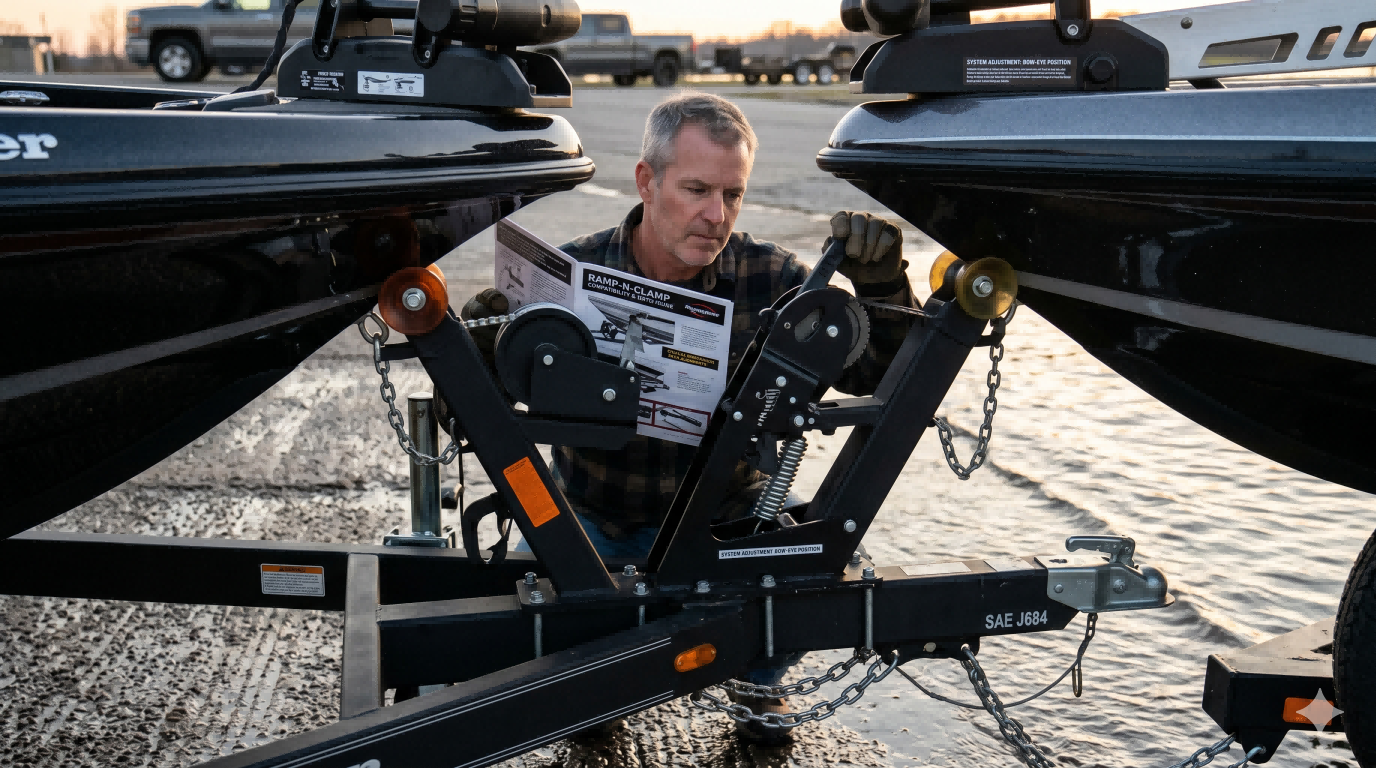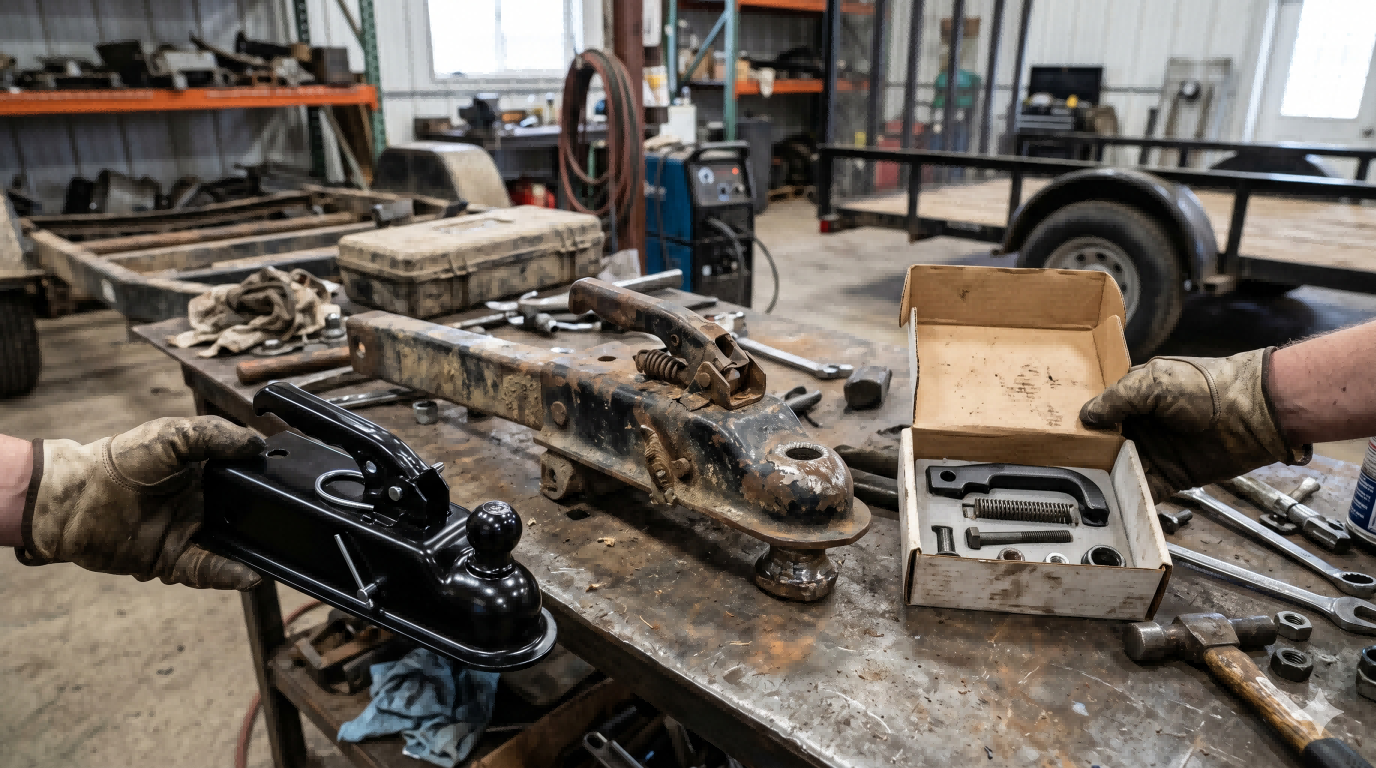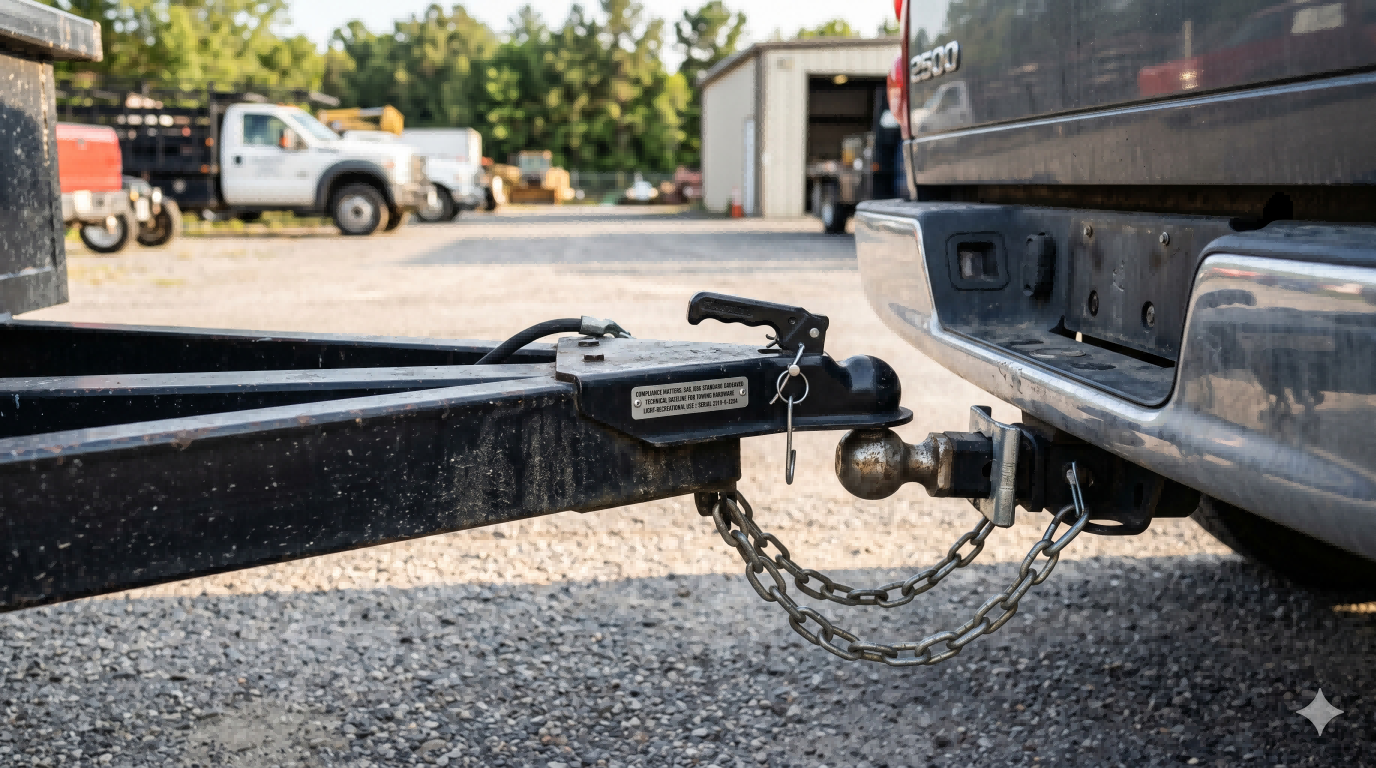
Ramp-N-Clamp Explained: How Boat Trailer Clamp Systems Change Loading and Launching
For many trailer owners, loading and launching a boat is not just a towing task. It is a ramp task, a timing task, a control task, and in many cases a stress-management task. That is why the boat trailer clamp category deserves to be understood on its own terms. It does not solve the same problem as a standard anti-rattle hitch clamp, and it should not be judged by the same logic. A boat trailer clamp system is really about one thing: changing what happens at the ramp when the boat meets the trailer.
This is where systems commonly described as an automatic boat latch or advanced boat trailer loading system have become more interesting in the market. They are not simply accessories added for appearance or convenience language. At their best, they change the sequence of retrieval and launching in a way that reduces uncertainty, improves repeatability, and makes the whole trailer experience feel more controlled.

That is why this category matters. Boat towing does not end when the driver reaches the water. In many ways, the most operationally difficult part begins there.
Why Boat Loading and Launching Feel More Difficult Than Ordinary Towing
A lot of towing hardware is judged by what it does on the road. Boat trailer hardware must also be judged by what it does at the ramp. That distinction is critical.
A normal trailer connection problem might show up as noise, looseness, or poor fit. A boat trailer problem often shows up differently:
The boat does not align cleanly on retrieval
A driver may get the trailer position mostly right, but the boat still lands slightly off, stops short, or requires repeated repositioning.
The launch process depends too much on manual timing
Many ramp routines still depend on stopping at the right point, releasing at the right point, and physically managing the sequence carefully under time pressure.
Single-operator retrieval feels inconsistent
One of the biggest real-world issues in this category is that loading works differently when one person is doing everything alone. The margin for frustration becomes much smaller.
Ramp conditions change everything
Slope, current, wind, water depth, trailer setup, bunk condition, and vehicle position all affect the experience. This is why boat trailer launching system decisions must be more operational than theoretical.
In other words, boat trailer hardware is judged not only by holding power, but by workflow quality.
What a Boat Trailer Clamp System Actually Is
A boat trailer clamp system is designed to create a more controlled connection event between the boat and the trailer during loading or launching. Instead of relying only on traditional manual sequence and winch timing, the system introduces a more structured capture-and-release logic.
In practical terms, it is part of a broader trailer retrieval system. Its job is not to replace the trailer. Its job is to improve the behavior of the boat-to-trailer relationship at the most operationally sensitive moment.
It is different from a road-only towing accessory
This category is not primarily about reducing receiver play or hitch noise. It is about how the bow, latch point, or capture mechanism interacts during retrieval and release.
It is workflow hardware
That is the most useful way to understand it. A boat trailer latch system changes what the operator must do, when they must do it, and how much manual correction is needed.
It is often chosen for repeatability
Owners are usually not buying this kind of system just because they want something different. They buy it because they want more consistent launch and loading behavior.
This is why the category should be explained in operational language, not just product language.
How an Automatic Boat Latch Changes the Retrieval Process
The biggest change created by an automatic boat latch usually appears during boat retrieval. This is where the category earns most of its value.
In a more traditional setup, the boat approaches the trailer, aligns onto bunks or guides, advances toward the bow stop, and then depends heavily on manual winch engagement and operator sequence. That process can work very well, but it can also become awkward when conditions are imperfect.
An automatic capture-style system changes that experience.
It reduces the feeling of “guessing the last step”
Instead of treating the final moment of loading as a manual precision task, the system helps turn it into a more repeatable mechanical event.
It can support single-operator loading better
This is one of the biggest reasons the category matters. A self-loading boat trailer latch is especially valuable when one person is retrieving without a second operator to guide, balance, or manually assist.
It improves the sense of completion
One of the most stressful moments at a boat ramp is not knowing whether the boat is truly captured correctly yet. A well-designed boat trailer clamp system helps reduce that uncertainty.
It can improve boat loading efficiency
Efficiency does not only mean saving time. It also means reducing retries, reducing awkward adjustment, and reducing the number of manual correction steps at the ramp.
This is where the category becomes more than a convenience product. It becomes an operational confidence product.
How It Also Changes Launching Logic
Many buyers first think about this category only in retrieval terms, but a complete boat trailer launching system also changes how release is managed.
Launching a boat is not always complicated in ideal conditions. But when ramp traffic is heavy, conditions are slippery, or the operator is working alone, even simple release routines benefit from greater clarity.
It can make release timing more deliberate
A more structured latch system gives operators a clearer moment of controlled release rather than a loosely managed sequence.
It can reduce awkward manual transitions
One hidden source of ramp frustration is the number of small manual transitions required in conventional routines. Good release logic reduces those friction points.
It supports more repeatable routine building
The best trailer systems are not just safe once. They help the operator perform the same safe routine trip after trip. That is one reason the boat trailer latch system category has gained interest among serious users.
It can reduce stress under public ramp pressure
This is a real-world factor many product pages understate. Boat launching often happens in visible, time-sensitive environments with other users waiting. Hardware that reduces uncertainty has real value in that setting.
Why This Category Matters Most for Single-Operator Users

A major reason the boat trailer loading system category continues to matter is that it aligns strongly with solo-use reality.
Not every boat owner loads with a team. Not every launch site is calm, open, or forgiving. Not every routine includes ideal dock access or assistance. That means the operator often has to manage:
- trailer position
- boat alignment
- vehicle movement
- latch or winch sequence
- balance and timing
- launch or retrieval confirmation
That is a lot of cognitive load for one person.
Better systems reduce cognitive overload
A boat trailer clamp does not eliminate responsibility, but it can reduce the number of exact manual timing decisions required.
Better systems reduce repeat corrections
Every extra ramp correction adds time, frustration, and opportunity for misalignment.
Better systems create more predictable habits
A predictable workflow is one of the most underrated forms of safety. When the operator knows what the system will do, they are more likely to operate calmly and correctly.
This is why solo users often appreciate this category faster than occasional group users do.
What This Category Improves Beyond Convenience
The weakest way to describe a boat trailer clamp system is to call it “more convenient.” Convenience is part of the value, but it is not the full value.
It improves workflow control
This is perhaps the most important benefit. The system creates a more controlled interaction between boat and trailer during critical moments.
It improves confidence at the ramp
Confidence matters because hesitation leads to awkward moves, repeated attempts, and rushed corrections.
It improves consistency
A trailer retrieval system that behaves the same way repeatedly is easier to trust than one that depends heavily on perfect manual timing.
It can reduce physical strain
Less repeated pulling, re-centering, or repositioning can matter a lot, especially for owners who launch frequently.
It can improve perception of trailer quality
In mature marine towing markets, buyers increasingly judge trailer systems by how professionally they operate, not just by whether they eventually work.
That shift is important. It means the market is moving from pure function toward refined function.
What a Boat Trailer Clamp Cannot Fix
This point is critical, especially if you want the blog to have industry credibility.
A boat trailer clamp is not a universal cure for every boat trailer problem.
It cannot correct poor trailer geometry by itself
If the trailer setup is wrong for the hull, a latch system will not solve the underlying mismatch.
It cannot replace correct trailer adjustment
Bunk setup, guide placement, tongue balance, and winch positioning still matter.
It cannot eliminate every ramp variable
Wind, current, slope, depth, and operator technique still affect the result.
It should not be mistaken for a substitute for inspection
Even advanced latching systems still require users to confirm proper engagement and operate responsibly.
This is where many comparisons go wrong. The product should be judged as a workflow improvement tool, not a magic compensation tool for an otherwise poor trailer setup.
When a Boat Trailer Clamp System Makes the Most Sense
Not every owner needs this category equally. But there are clear situations where it makes especially strong sense.
Frequent boaters
Users who load and launch regularly feel the value of workflow improvements much faster than casual owners.
Solo operators
This is one of the clearest use cases in the market.
Users who launch in variable conditions
The more inconsistent the environment, the more valuable repeatable capture-and-release logic becomes.
Owners upgrading from basic trailer routines
Many buyers enter this category after years of “it works, but it is never smooth.” That is an important signal. The category often appeals most to users who are not looking for novelty, but for better execution.
Buyers who value operational refinement
The towing world is maturing. In more mature segments, people increasingly pay for smoother process, not just basic capability.
What Buyers Should Evaluate Before Choosing One
A serious buyer should not choose a boat trailer latch system based only on the promise of easier loading. The smarter evaluation process is broader.
Check compatibility with the boat and trailer setup
This should always come first. A system only adds value when it fits the real hull and trailer relationship.
Check how the capture logic works in practice
The key question is not whether the system sounds advanced. The key question is whether it makes the loading sequence more repeatable in real use.
Check release behavior, not just capture behavior
A complete boat trailer launching system should also make sense during launch, not only retrieval.
Check the amount of operator training required
The best systems do not remove responsibility, but they should reduce confusion rather than add it.
Check long-term ownership logic
Any system living in a marine environment must be judged for practical durability, inspection ease, and everyday service confidence.
Why This Category Represents a Bigger Market Shift
The rise of the automatic boat latch category reflects a larger trend in towing and trailer equipment: buyers increasingly want systems that reduce process variability.
That trend is visible in many categories:
- automatic or self-aligning hardware
- easier verification mechanisms
- faster routine-use systems
- products that support solo use better
- products that reduce operator guesswork
The marine trailer market is especially sensitive to this shift because the operating environment is unpredictable. That makes workflow improvement more valuable than many casual observers realize.
In other words, a boat trailer clamp is not just a niche marine gadget. It is part of a broader move toward more operator-friendly towing systems.
The Difference Between “It Works” and “It Works Well”
One of the most important industry insights in this topic is the difference between basic function and high-quality function.
A traditional setup may absolutely work. Many of them do. But the real question is whether it works well under:
- solo retrieval
- uneven ramp traffic
- imperfect alignment
- repeated launch cycles
- everyday user stress
- real-world time pressure
A modern boat trailer loading system is valuable because it addresses that gap.
It is not just asking, “Can the boat get onto the trailer?”
It is asking, “Can that happen with more control, less guesswork, and better repeatability?”
That is a much more sophisticated product question. And it is exactly why this category deserves serious attention.
A Better Buying Mindset
The wrong buying mindset is:
“Do I need another boat trailer accessory?”
The better buying mindset is:
“Would a better capture-and-release workflow materially improve how I load and launch my boat?”
That reframes the whole decision.
It shifts the buyer away from feature shopping and toward operational evaluation.
It highlights solo use, ramp conditions, retrieval consistency, and process quality.
And it makes the boat trailer clamp category much easier to judge intelligently.
Final Thoughts
So what does a boat trailer clamp system really change?
It changes the moment that matters most at the ramp: the transition between boat motion and trailer control.
A good automatic boat latch can make retrieval feel less improvised, launching feel more deliberate, and everyday ramp use feel more repeatable. It can improve boat loading efficiency, reduce solo-use frustration, and help the operator build a more confident routine.
But the deeper lesson is this: the category is most valuable when it is understood correctly.
It is not a cosmetic upgrade.
It is not a substitute for proper trailer setup.
And it is not just a “nice to have” for buyers who launch and retrieve under real-world conditions.
It is a workflow tool. And in the marine towing world, better workflow often becomes better safety, better confidence, and better ownership experience.
#BoatTrailerClamp #AutomaticBoatLatch #BoatTrailerLoadingSystem #BoatTrailerLaunchingSystem #TrailerRetrieval #BoatTrailer #TrailerRamp #BoatLoading #TrailerParts #MarineTowing