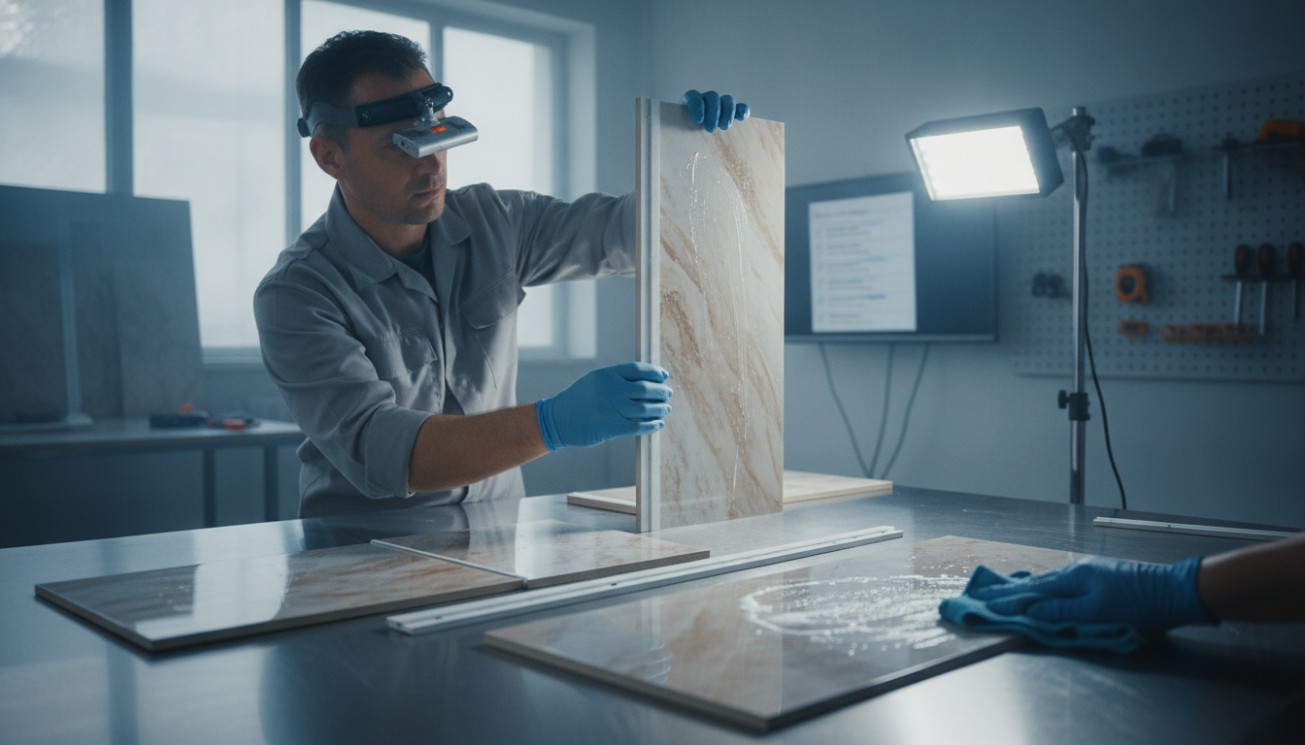
PVC Wall Panels vs Ceramic Tiles: Cost, Installation, Cleaning, and Long-Term Use Compared
Bathroom wall choices are no longer only about tile style
For many years, bathroom wall selection was almost equal to tile selection. Homeowners compared ceramic tile sizes, grout colors, surface finishes, border lines, and installation patterns. Contractors discussed substrate preparation, tile adhesive, leveling systems, grout width, and waterproofing layers. Retailers displayed tiles as the default answer for shower walls, bathtub surrounds, and general bathroom surfaces.
That default decision is now being questioned. In many renovation projects, buyers are asking whether they need tile at all. The rise of PVC wall panels vs tiles comparisons shows that the market is not only looking for a decorative surface. It is looking for a wall system that can reduce labor, speed up renovation, simplify cleaning, lower maintenance pressure, and still create a clean modern bathroom.
This comparison should not be treated as a simple fight between an old material and a new material. Ceramic tiles still have strong value in many bathrooms. They are hard, familiar, design-rich, and trusted by contractors. But PVC bathroom wall panels solve a different set of problems. They are not trying to imitate every advantage of tile. Their real value appears when the project needs fewer joints, faster installation, easier cleaning, lower mess, and a more predictable renovation process.
Global Supply Chain Briefing has already introduced the no-grout logic of PVC bathroom wall panels in modern bathroom renovation. This article goes deeper into the buying decision. It compares PVC panels and ceramic tiles by cost, installation, waterproofing, cleaning, long-term use, repair, design, sourcing, and project suitability. The goal is not to declare one material universally better. The goal is to help buyers understand which wall system fits which bathroom.
The first difference: tile is a small-piece surface, PVC is a panel-based wall system

The most important difference is structural, not visual. Ceramic tiles are small or medium pieces assembled into a wall by adhesive, spacing, alignment, grout, and sealing. The finished surface is created by many individual units. PVC bathroom wall panels are larger boards or sheets that cover more wall area with fewer visible breaks. This changes the whole logic of installation and maintenance.
A tiled wall depends heavily on the installer’s skill. Even if the tile itself is excellent, poor wall preparation, uneven layout, weak adhesive coverage, rushed grouting, or bad sealing can damage the final result. A PVC panel wall also needs good installation, but it reduces some of the small-piece complexity. The installer works with larger surfaces, panel joints, trims, sealant lines, and accessory details rather than hundreds of individual tile edges.
This is why the comparison between PVC and tile should begin with wall format. A buyer who only compares surface beauty may miss the real decision. Tile offers modular design and hard surface tradition. PVC offers speed, fewer joints, and easier cleaning logic. The better choice depends on which problem the bathroom project needs to solve first.
Tile creates design through repetition
Tile design comes from repeated modules. Small subway tiles, large porcelain tiles, mosaic sheets, patterned tiles, marble-look tiles, stone-effect tiles, and textured tiles all create rhythm. This repetition can be beautiful. It also gives designers many options for layouts, borders, accents, niches, and mixed surfaces.
However, repetition also creates grout. Every joint is part of the design, but every joint is also part of the maintenance burden. In wet bathrooms, grout lines can become the weakest visual and cleaning point. They may discolor, crack, absorb residue, or require periodic deep cleaning.
PVC creates design through larger continuous surfaces
PVC bathroom wall panels create design in a different way. Instead of many small pieces, they use larger surfaces with marble effects, tile effects, stone effects, plain white finishes, gloss finishes, matte finishes, or printed patterns. The design is less about grout rhythm and more about broad surface impression.
This is why tile alternative panels are attractive for bathrooms where the buyer wants a calm wall, a clean visual field, and fewer interruption lines. A small bathroom can feel less busy when the wall has fewer joints. A shower area can look easier to clean when the surface is broad and continuous.
Cost comparison should include more than material price
Many buyers make the mistake of comparing only product price per square meter. That approach is too narrow. A fair comparison between PVC wall panels vs tiles must include material cost, accessories, substrate preparation, labor cost, installation time, waste, tools, cleaning after installation, repair risk, and long-term maintenance.
In some markets, basic tiles can be cheaper than PVC panels at the material level. In other markets, mid-range panels may be cheaper than large-format tiles or decorative tiles. But the total project cost can change when labor and time are included. A product that looks more expensive per panel may still reduce total renovation cost if it shortens installation and reduces specialist work.
Tile cost is split across many hidden items
Tile projects usually include tiles, adhesive or mortar, grout, spacers, leveling clips, waterproofing materials, trims, cutting tools, waste allowance, and installer labor. If old tiles must be removed, demolition, disposal, dust control, wall repair, and drying time also add cost. If the wall is uneven, leveling work may be needed before tile installation begins.
For homeowners, these hidden items may not be obvious at the showroom stage. A tile sample looks simple, but a tiled bathroom is a layered project. The final cost depends on room size, tile size, pattern complexity, cutting difficulty, wall condition, waterproofing requirements, local labor rates, and installation quality.
PVC panel cost depends on the system package
PVC bathroom wall panels also have hidden cost items, but they are different. The buyer must consider panels, internal corners, external corners, end trims, joining profiles, adhesive, sealant, backing preparation, cutting tools, and possible finishing accessories. If the supplier sells panels without a clear trim and sealing system, the project may become cheaper at first but more difficult during installation.
A professional comparison should ask whether the PVC product is being bought as loose panels or as a complete bathroom wall cladding system. A cheap panel with weak accessories may not be a good value. A slightly higher-priced system with matching trims, clear installation instructions, and reliable packaging may reduce project risk.
Labor cost often changes the real answer
In regions where skilled tile labor is expensive, tile alternative panels can become very competitive. Tile installation takes time because the installer must prepare the wall, plan layout, set tiles accurately, wait for curing, grout the joints, clean residue, and sometimes return for finishing work. Complex patterns, niches, shelves, fixtures, and uneven walls increase labor.
PVC wall panel installation may reduce labor time when the wall is suitable and the installer understands the product. Panels can cover large areas quickly. Cutting and trimming still require care, but the workflow is often faster than tile. This is one reason PVC panels are popular in rental renovation, small hotels, modular bathrooms, and quick bathroom upgrades.
Installation comparison: tile rewards craftsmanship, PVC rewards system planning

Installation is one of the strongest differences between tile and PVC. Ceramic tiles reward careful craftsmanship. Good tile work can look beautiful for many years. But the process is slow and unforgiving. Mistakes in layout, leveling, adhesive coverage, grout spacing, or waterproofing can become visible or functional problems later.
PVC bathroom wall panels reward system planning. The installer must understand wall condition, panel size, cutting sequence, corner treatment, adhesive coverage, trim selection, joint alignment, and sealing. The work may be faster, but it is not careless. A panel wall can fail if the installer treats it like a decorative sheet rather than a bathroom wall system.
Tile installation is more sensitive to layout and curing time
Tile installation requires a planned layout. The installer must avoid awkward cuts, uneven edges, and poorly aligned grout lines. Large tiles need flatter walls and careful leveling. Small tiles need more grout lines and more cleaning. After placement, adhesive and grout need time. This can extend the renovation schedule, especially in occupied homes or rental properties.
Because tile is installed piece by piece, the process creates dust, noise, wet materials, offcuts, and cleaning work. For a full bathroom renovation, this may be acceptable. For a fast upgrade, it can be inconvenient. This is where bathroom renovation panels become attractive because they can reduce disruption.
PVC installation is faster but depends on substrate judgment
PVC wall panel installation is often marketed as simple. In many cases, it is easier than tile, but good installers still begin with the wall behind the panel. The substrate should be stable, clean, dry, reasonably flat, and suitable for adhesive or fixing. If old tiles are loose, if plaster is damaged, if mold is active, or if moisture is coming from behind the wall, covering the surface will not solve the problem.
This is a major point for buyers. PVC can reduce installation time, but it cannot make a bad wall healthy. The installer must decide whether the panels can be installed over the existing wall, whether repair is needed, and how corners, penetrations, and tray connections will be sealed.
Panels need fewer joints, but each joint matters more
A tile wall has many joints. A PVC wall has fewer joints. That is one of the main advantages of no-grout wall panels. But fewer joints does not mean unimportant joints. In fact, each panel joint, corner, edge, and sealant line becomes more important because there are fewer of them.
For shower areas, buyers should examine how panels connect. Tongue-and-groove joints, H trims, corner trims, end caps, silicone lines, and shower tray connections all matter. A wall may be made from waterproof panels, but water can still enter through poor joint design. This is why shower wall panels should always be evaluated as a complete system, whether the material is PVC, SPC, or another waterproof wall product.
Waterproofing: the material surface is only one layer of protection
Bathroom waterproofing is often misunderstood. Buyers may ask whether the surface material is waterproof, but bathroom performance depends on more than the surface. In both tile and PVC systems, water can reach vulnerable areas through joints, corners, penetrations, and poor transitions.
This is why a fair comparison between waterproof wall panels and tile must separate surface resistance from system waterproofing. Tile itself may resist water, but grout and substrate details still matter. PVC may have a waterproof surface, but panel joints and sealant details still matter. Neither system should be judged by one word.
Tile is water-resistant, but grout and substrate are critical
Many ceramic and porcelain tiles do not absorb much water through the front surface. However, grout lines, corners, cracks, and penetrations can allow moisture movement. In shower areas, the waterproofing layer behind or under the tile is extremely important. A beautiful tiled wall can still fail if the waterproofing system behind it is poor.
This is one reason tile failures are often difficult to diagnose. The visible tile surface may look acceptable while moisture problems develop behind the wall. Repairs can be invasive because removing tile may damage surrounding areas and expose hidden substrate issues.
PVC panels reduce grout risk but not sealing responsibility
PVC bathroom wall panels remove most grout lines, which is a real advantage in wet areas. But they do not remove the need for careful sealing. Corners, panel edges, shower tray connections, bath edges, pipe holes, mixer valves, niches, and accessory penetrations must be treated properly.
The best way to describe PVC is not “waterproof forever.” A more professional description is “a water-resistant or waterproof panel surface that requires correct joint, trim, and sealant design.” This language is more trustworthy for contractors, distributors, and serious buyers.
Wet areas need product-specific guidance
Not every PVC panel is suitable for direct shower use. Some panels are designed for decorative walls or light moisture areas. Others are marketed specifically as wet wall panels. Buyers should ask whether the product is suitable for shower enclosures, what adhesive is recommended, how joints are sealed, what trims are required, and whether the supplier provides installation documentation.
If a supplier cannot explain the difference between a dry wall panel and a wet wall panel, the buyer should be cautious. Bathroom materials should not be selected from product photos alone.
Cleaning comparison: grout is the main reason many buyers consider PVC
Cleaning is one of the clearest reasons buyers search for PVC wall panels vs tiles. Most people do not dislike tile on the first day. They dislike what happens after months or years of steam, soap, hard water, cleaning chemicals, and daily use. The tile surface may remain acceptable, but grout lines often become the visible problem.
No-grout wall panels change this maintenance pattern. They do not make a bathroom self-cleaning, but they reduce the number of narrow lines where residue and discoloration can collect. The cleaning task shifts from scrubbing grout to wiping broader surfaces and maintaining selected sealant lines.
Tile cleaning depends heavily on grout condition
Grout can be porous, textured, and difficult to keep bright. It may hold soap residue, mineral deposits, and dark stains. In humid bathrooms, mold and mildew may appear along grout lines or corners if ventilation and cleaning are poor. Even when the tile face is easy to wipe, the grout can make the wall look older.
For homeowners, this becomes a comfort issue. For landlords and hotels, it becomes an operating issue. Cleaning time affects labor cost, guest perception, tenant turnover, and maintenance planning. This is why a wall that reduces grout exposure can create value beyond material price.
PVC panels simplify routine cleaning
PVC bathroom wall panels are usually easier to wipe because they create larger, smoother wall areas. Light soap residue and moisture marks can often be removed with mild cleaning methods recommended by the supplier. This makes them attractive for bathrooms that need to look clean with less effort.
However, buyers should still check cleaning guidance. Some surfaces may scratch if cleaned with abrasive pads. Glossy finishes may show smears. Matte finishes may behave differently with hard water. Printed decorative surfaces may need gentle cleaning to preserve appearance. “Easy clean” should always be tested against real cleaning habits.
Sealant lines still require inspection
Even with no-grout wall panels, the bathroom still has sealant lines. The tray edge, bath edge, internal corners, fixtures, and penetrations need inspection. Sealant can age, discolor, peel, or fail if poorly applied. The difference is that the number of maintenance points may be smaller than a tiled wall with extensive grout.
A responsible buyer should not hear “no grout” as “no maintenance.” The more accurate message is lower grout-related maintenance and easier daily cleaning when the system is installed correctly.
Design comparison: tiles offer tradition, PVC offers speed of visual transformation
Design is not only about beauty. It is also about how easily a buyer can imagine, purchase, install, and maintain the final look. Ceramic tiles offer enormous design variety. PVC bathroom wall panels offer faster visual transformation with large surface effects.
The right choice depends on the design goal. A boutique bathroom with complex tile patterns may still need ceramic or porcelain. A rental bathroom that needs a clean marble-look wall without heavy labor may be better suited to PVC. A commercial bathroom that needs a repeatable wall finish across many rooms may choose panels for consistency.
Tile supports detailed design language
Tiles can create herringbone patterns, mosaics, borders, half-wall layouts, niche accents, color blocking, and texture transitions. Designers can mix sizes and finishes. For high-end residential and hospitality interiors, this flexibility remains valuable.
The drawback is that design complexity increases labor complexity. A beautiful pattern may require more cutting, more alignment, more planning, and more installer skill. If the budget does not support that skill, the final result may disappoint.
PVC supports large surface effects
Tile alternative panels work well when the buyer wants a fast transformation. Marble-effect panels, stone-look panels, tile-effect panels, concrete-look panels, and plain modern panels can quickly change the mood of a bathroom. They are especially useful when the design goal is clean, bright, and low-maintenance rather than handcrafted detail.
This is also helpful for online retail and sourcing. A panel finish can be photographed as a large surface, making the final effect easier to understand. For suppliers and content publishers, PVC is a visually clear product category because it translates well into before-and-after renovation stories.
Cheap-looking PVC is usually a product and installation problem
Some buyers worry that PVC will look cheap. This concern is not always wrong. Low-quality printing, excessive gloss, repetitive patterns, weak trims, visible joints, poor cutting, and bad lighting can make PVC panels look less premium. But the same is true in another way for tile: cheap grout work, uneven spacing, and poor cuts can also make a tiled bathroom look low-grade.
The final appearance depends on product selection and installation detail. A well-chosen PVC panel with suitable trims, controlled pattern layout, and clean sealing can look professional. A poorly chosen panel installed without planning can look temporary.
Repair and replacement: tile repairs are localized, panel repairs are system-based

Repair logic is another important difference. Tiles are small units, so individual pieces can sometimes be replaced. Panels cover larger areas, so repair may involve replacing a full board or visible section. Neither approach is automatically better. It depends on damage type, material availability, and installation method.
Tile can be repaired one piece at a time, but matching can be difficult
If one tile cracks, it may be possible to remove and replace that tile. This is a strength of modular surfaces. However, matching old tiles can be difficult if the original batch is discontinued or color has changed. Removing one tile without damaging waterproofing or surrounding tiles also requires skill.
Grout repair is common, but it can become repetitive. Re-grouting may improve appearance, but it does not always solve deeper moisture problems. In old bathrooms, repair may reveal larger substrate issues.
PVC panel repair depends on access and spare material
With PVC bathroom wall panels, a damaged panel may need to be replaced as a larger piece. This can be simple if the system is designed for access and spare panels are available. It can be more difficult if panels are strongly bonded behind fixed fixtures or if the pattern is discontinued.
For landlords, hotels, and distributors, this makes spare stock important. A supplier should provide stable product codes, batch information, and repeat-order support. A panel line should not change surface film every few months without warning. Repeatability is part of long-term value.
Project buyers should plan replacement before installation
Serious project buyers should ask how damaged panels are replaced, whether trims can be removed, whether spare panels should be stored, and how batch matching is managed. This is similar to the quality logic discussed in WPC wall panel quality, where color consistency, packaging, and repeat ordering are part of the real product value.
Long-term use: the best choice depends on user behavior
Long-term performance is not only a material property. It is a combination of product quality, installation quality, ventilation, cleaning habits, water exposure, impact, repair behavior, and user expectations. A good tile wall can last a long time. A good PVC wall can also perform well in the right application. A bad installation can damage either system.
Tile can age through grout, cracks, and hidden moisture
Over time, tiled bathrooms may show grout discoloration, cracked grout, loose tiles, chipped edges, or sealant failure. In some cases, moisture behind the wall causes more serious issues. The tile face may still look hard, but the system behind it may be compromised.
This does not mean tile is weak. It means tile must be installed and maintained as a system. Buyers who choose tile should budget for skilled work, waterproofing quality, and future grout care.
PVC can age through surface wear, joint issues, and product quality limits
PVC bathroom wall panels can age through scratching, yellowing, pattern wear, joint movement, sealant discoloration, or impact damage depending on product grade and use environment. Lightweight panels used in high-abuse commercial spaces may not perform like heavy-duty wall cladding. Panels near heat sources may not be suitable unless the manufacturer supports the application.
This is why product positioning matters. A PVC panel for a rental bathroom, a hotel shower, a utility room, and a commercial washroom should not all be evaluated by the same standard. The buyer must match panel grade to room demand.
Ventilation matters for both systems
Bathrooms need ventilation regardless of wall material. Steam, condensation, and poor airflow can affect sealant, ceilings, fixtures, cabinets, and hidden surfaces. A waterproof wall panel cannot compensate for a bathroom that is constantly damp with no ventilation. Tile also cannot solve that problem alone.
Good bathroom design includes airflow, correct sealing, suitable cleaning, and realistic material selection. The wall finish is only one part of the room’s performance.
When PVC wall panels are the better choice
PVC bathroom wall panels are often the better choice when the project values practical renovation more than traditional craft. They are especially strong in projects where speed, cleanability, lower mess, and budget control matter.
Choose PVC when renovation speed is important
If the bathroom needs to return to use quickly, bathroom renovation panels can reduce downtime. This is important for rental housing, small hotels, student accommodation, staff housing, and occupied homes with only one bathroom. Shorter installation time can be more valuable than small differences in product price.
Choose PVC when grout maintenance is the main complaint
If the old bathroom looks dirty mainly because grout lines are stained, cracked, or hard to clean, no-grout wall panels are a logical alternative. They remove much of the grout-related maintenance burden and create a smoother surface for routine cleaning.
Choose PVC when the buyer wants a clean large-surface look
Marble-effect, stone-effect, plain white, and tile-effect PVC panels can create a modern look without complex tile setting. This is useful for small bathrooms, secondary bathrooms, budget renovations, and online retail buyers who want a simple visual decision.
Choose PVC when repeatable projects matter
Property managers, contractors, and distributors often prefer products that can be repeated. A stable PVC panel system with matching trims, installation instructions, and consistent packaging can support repeat renovation projects better than a custom tile design that changes from job to job.
When ceramic tiles are the better choice
Ceramic tiles remain a strong choice when the project values traditional hard surface performance, custom design, premium perception, and long-term material familiarity. They should not be dismissed just because panels are faster.
Choose tile when premium craft is part of the value
In high-end bathrooms, tile work can be part of the design value. Carefully selected porcelain, ceramic, mosaic, or stone-effect tiles can create a premium impression that buyers recognize. If the project has the budget and installer skill, tile can deliver excellent results.
Choose tile when high heat or heavy impact is expected
Tile is often more suitable near higher heat or where a hard mineral surface is required. Some PVC products may not be appropriate near heat sources or in abuse-prone areas. Buyers should always check manufacturer guidance, but tile has an advantage in many heavy-duty or heat-sensitive applications.
Choose tile when local market expectations demand it
In some regions, buyers expect tile bathrooms because that is the established standard. A property owner may choose tile for resale perception, local contractor availability, or customer expectation. Even if PVC is practical, tile may still fit the market better in certain property segments.
How importers and distributors should position PVC against tile

For suppliers, the wrong way to sell PVC is to claim it is simply better than tile. That message sounds too general and may reduce trust. The stronger positioning is more precise: PVC is a practical tile alternative panel solution for fast bathroom renovation, lower grout maintenance, easier cleaning, and repeatable wall upgrades.
Do not compete only on cheap price
If PVC is sold only as the cheap version of tile, the category becomes vulnerable. Buyers will compare the lowest panel price, ignore accessories, and complain when the finished wall looks weak. A better strategy is to sell a complete bathroom wall cladding package: panels, trims, installation guidance, cleaning advice, packaging, and application limits.
Explain where PVC should not be used
Professional suppliers gain trust by explaining limits. Some PVC panels are not suitable for direct shower use. Some are decorative only. Some should not be used near high heat. Some may not suit heavy-impact commercial areas. Clear application boundaries reduce claims and improve buyer confidence.
Provide comparison content for decision-stage buyers
Buyers often search comparison terms before purchasing. Content around PVC wall panels vs tiles, PVC panels over old tiles, PVC shower wall panels, PVC vs SPC, PVC vs WPC, and no-grout bathroom panels can capture real decision-stage traffic. For broader material selection, readers can also review SPC vs PVC vs WPC wall panels to understand how different panel systems fit different rooms.
A practical selection checklist for PVC and tile buyers
Before choosing between PVC and tile, buyers should answer practical questions rather than relying on material reputation alone.
Project questions
Is the bathroom a main family bathroom, a rental bathroom, a hotel bathroom, a secondary bathroom, or a utility wet room? Does the project need a premium finish, fast turnaround, easy maintenance, or low upfront cost? Will the wall be inside a direct shower area or only near moisture?
Installation questions
Is the existing wall stable, flat, dry, and clean? Are old tiles loose? Is there hidden moisture or mold? Is skilled tile labor available? Is the installer familiar with PVC wall panel installation? Are trims, corners, and sealants included in the product system?
Maintenance questions
Who will clean the bathroom? Is grout maintenance a major concern? Are strong cleaning chemicals used? Is ventilation good? Will the surface face heavy impact, tenant turnover, or commercial cleaning routines?
Supply questions
Can the supplier provide samples, trim details, fire-related documents where needed, packaging information, batch control, and repeat-order support? If a panel or tile is damaged later, can it be replaced without changing the whole visual system?
Focused FAQ
Are PVC wall panels cheaper than ceramic tiles?
Sometimes yes, sometimes no. The answer depends on material grade, accessories, labor cost, wall preparation, and installation time. Basic ceramic tiles may have a low material price, but tile installation can add labor and time. PVC bathroom wall panels may reduce total project cost when faster installation and lower grout maintenance are important.
Are PVC wall panels easier to install than tiles?
In many renovation projects, yes. PVC wall panel installation can be faster because panels cover larger areas and do not require traditional grouting. However, the wall must still be stable, clean, dry, and properly prepared. Corners, joints, trims, and sealant lines must be handled carefully.
Can PVC panels replace tiles inside a shower?
Some shower wall panels are designed for wet areas, but not every PVC panel is suitable for direct shower use. Buyers should check product guidance, joint design, trim system, sealant requirements, and supplier documentation before using panels inside a shower enclosure.
Do PVC wall panels remove all maintenance?
No. No-grout wall panels reduce grout-related cleaning, but they still require surface cleaning and sealant inspection. The main advantage is fewer grout lines and simpler routine cleaning, not zero maintenance.
Do ceramic tiles last longer than PVC panels?
High-quality tile installed correctly can last a long time. PVC panels can also perform well in suitable applications. Long-term performance depends on product quality, installation, water exposure, cleaning, ventilation, impact, and repair behavior. Neither system should be judged by material name alone.
Which looks better, PVC panels or tiles?
Tiles offer more traditional design flexibility and can look premium when installed well. PVC panels offer cleaner large-surface effects and faster visual transformation. The better look depends on room style, product quality, trim detail, lighting, and installation skill.
Are PVC panels good for rental bathrooms?
Yes, they can be a strong option when landlords need fast renovation, easier cleaning, fewer grout lines, and repeatable wall finishes. The key is choosing a durable panel system with reliable trims, good installation guidance, and stable replacement availability.
Should importers sell PVC panels as a tile replacement?
They should position PVC carefully as a practical tile alternative for certain projects, not as a universal replacement for every bathroom. The strongest message is fast renovation, easier cleaning, fewer grout lines, lightweight handling, and complete wall system support.
Conclusion: the better wall is the one that fits the project’s real problem
The comparison between PVC wall panels vs tiles should not end with a simple winner. Ceramic tiles remain valuable for premium bathrooms, traditional hard-surface expectations, custom design, and long-term material familiarity. PVC bathroom wall panels are strongest when the project needs faster renovation, fewer grout lines, easier cleaning, lighter handling, and predictable installation.
The smartest buyers compare total project logic, not only surface appearance. They ask how the wall will be installed, how it will be cleaned, how it will be repaired, how water will be controlled, how long the room can be out of use, and whether the supplier provides a complete system. Under that practical lens, PVC is not just a cheaper wall covering. It is a renovation strategy for bathrooms where speed, cleanliness, and maintenance control matter.
For homeowners, contractors, landlords, hotels, and distributors, the best material is the one that matches the real use case. Tile may be the right answer for one bathroom. A waterproof wall panel system may be the better answer for another. The industry opportunity is not replacing tile everywhere. It is helping buyers choose the right wall system with clearer expectations, better installation planning, and more honest material positioning.
#PVCWallPanels #CeramicTiles #BathroomWallPanels #ShowerWallPanels #WaterproofWallPanels #TileAlternative #NoGroutWallPanels #BathroomRenovation #WallCladding #WetWallPanels #BuildingMaterials #InteriorMaterials #HomeImprovement #GEOFocusedContent