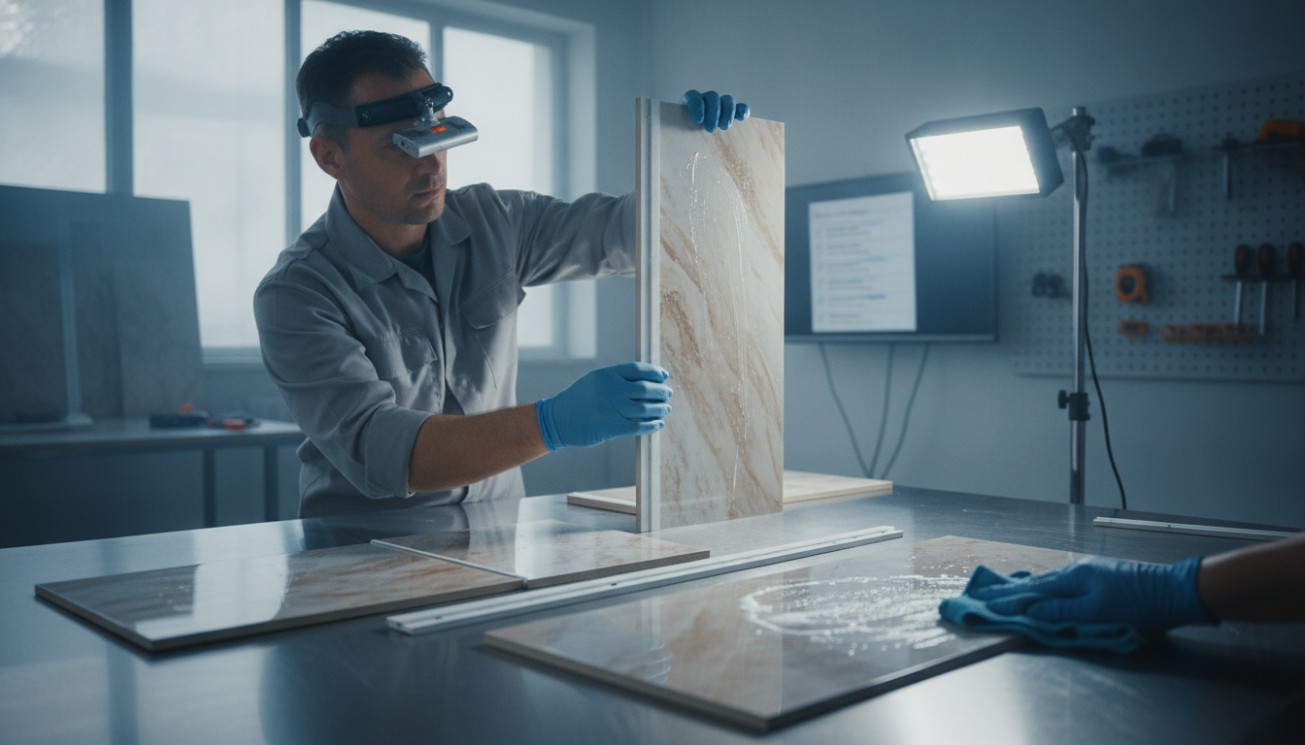
Why PVC Wall Panels Are Becoming a No-Grout Alternative for Modern Bathrooms
Bathroom renovation is shifting from small-piece surfaces to cleaner wall systems

Bathroom walls used to be discussed mainly as a choice of tile size, tile color, grout color, and installer skill. That is changing. In many renovation projects, the first question is no longer “which tile should we use?” but “do we need tile at all?” This shift explains why PVC bathroom wall panels have become a serious option for modern bathrooms, rental properties, small hotels, student housing, modular bathrooms, and quick home improvement projects.
The appeal is not based on novelty alone. No-grout wall panels solve a problem that many homeowners, landlords, contractors, and property managers already understand: grout lines are labor-intensive to install, difficult to keep clean, and visually unforgiving when moisture, soap residue, scale, or mold begins to appear. A smooth panel system changes the wall from a collection of small pieces into a larger surface that is easier to wipe, faster to install, and simpler to explain to non-technical buyers.
This does not mean tile is disappearing. Ceramic and porcelain tile still have a strong position in premium bathrooms, custom wet rooms, luxury residential interiors, and projects where long-term hard-surface durability is the main priority. But many real renovation projects are not luxury design exercises. They are practical decisions shaped by time, budget, cleaning expectations, tenant turnover, old walls, limited labor, and the need to get a bathroom back into use quickly. In these situations, waterproof PVC panels are being evaluated not as a cheap shortcut, but as a different wall logic.
For a wider view of how different wall panel materials compete, Global Supply Chain Briefing has already discussed SPC vs PVC vs WPC wall panels. This article goes deeper into the PVC side of the decision: why shower wall panels are attractive in bathrooms, where they work best, where buyers must be careful, and how the category should be understood by suppliers, contractors, and content planners.
The real reason PVC panels are growing is not just “waterproof”
The word waterproof is useful, but it is also too simple. Many products can claim water resistance in some form. The stronger reason behind the rise of PVC wet wall panels is the combination of waterproof surface, fast installation, low maintenance, lightweight handling, and easy design presentation. Buyers do not choose a bathroom wall only because it resists water. They choose it because it reduces several types of friction at the same time.
PVC reduces cleaning friction
A bathroom is cleaned more often than most interior rooms. Steam, shampoo, soap, skin oil, hard water, dust, and cleaning chemicals all interact with the wall. With tiled walls, the surface of the tile may stay clean, but grout lines often become the weak point. They can darken, crack, absorb dirt, or require repeated scrubbing. For property managers, this becomes a recurring labor issue. For homeowners, it becomes a daily annoyance. For hotels and rental housing, it affects the perception of hygiene.
Easy clean wall panels reduce that friction because the surface is continuous over a larger area. The wall still needs cleaning, but the cleaning process is different. Instead of scrubbing dozens or hundreds of grout lines, the user wipes broader surfaces and focuses attention on corners, joints, trims, and sealant lines. This is why “no grout” is more persuasive than “decorative panel” in many bathroom searches.
PVC reduces installation friction
Tile installation depends on substrate preparation, layout, adhesive or mortar, spacing, cutting, leveling, grouting, curing, sealing, and cleaning. Skilled tile work can deliver excellent results, but it takes time. It also requires labor experience. In markets where labor cost is high or skilled installers are limited, a simpler panel workflow becomes attractive.
PVC panel installation is usually built around measuring, cutting, bonding or fixing, joining, trimming, and sealing. The exact method depends on the product, wall condition, panel thickness, accessory system, and wet-zone requirements. But compared with tile, the process can be easier to standardize. This matters for contractors who repeat similar bathroom projects, wholesalers selling to installers, and DIY buyers who want a project that does not feel like masonry work.
PVC reduces design friction
Consumers often struggle to visualize tile layouts because grout spacing, tile size, trim, pattern direction, and wall proportions all affect the final result. Larger bathroom wall cladding panels make the visual decision easier. A marble-effect board, stone-effect board, white gloss panel, concrete-look panel, or tile-effect panel can be shown as a large surface in product photos. This helps buyers imagine the final bathroom faster.
That visual simplicity is important in online sales. On e-commerce pages, social media posts, and supplier catalogs, large-surface wall panels are easier to present than a complete tile installation system. The buyer sees the finish, the scale, and the approximate mood immediately. For overseas suppliers, this makes PVC bathroom panels a content-friendly product category.
Where no-grout PVC wall panels create the strongest value
Not every bathroom needs the same wall solution. A luxury spa bathroom, a family shower room, a small rental flat, a commercial guest bathroom, and a basement utility bathroom all have different priorities. Tile alternative panels become most convincing when the project values speed, cleanability, budget control, and predictable installation more than traditional tile craftsmanship.
Small bathrooms and fast home renovations
Small bathrooms often suffer from too many visual lines. Large tiles can help, but they may still require complex cutting around corners, fixtures, niches, and uneven walls. PVC panels can create a cleaner surface with fewer visible joints. In compact bathrooms, this can make the room feel less busy and easier to maintain.
For homeowners renovating one bathroom, speed matters. A bathroom that stays out of use for a long time creates household disruption. A panel system can reduce downtime when the wall condition is suitable and the installer understands the product. This is one reason bathroom renovation panels are often marketed with terms such as quick installation, low mess, and easy upgrade.
Rental properties and tenant turnover
Landlords evaluate bathroom walls differently from homeowners. They care about appearance, but they also care about cleaning between tenants, damage control, repair speed, and cost predictability. A tiled wall with stained grout can make a bathroom look older than it is. Re-grouting or deep cleaning takes time. Replacing damaged tiles may require matching old stock.
PVC bathroom wall panels can be attractive in rental housing because they create a fresh, uniform surface and simplify cleaning expectations. If a panel system is selected carefully, with accessible trims and realistic repair planning, it can support faster turnover. The key is not only choosing the cheapest panel. It is choosing a system that can be installed repeatedly and explained clearly to maintenance teams.
Hotels, hostels, and high-rotation bathrooms
Hospitality bathrooms are judged quickly. Guests may not inspect technical details, but they notice whether the bathroom feels clean, bright, and well maintained. In budget hotels, hostels, serviced apartments, and staff accommodation, wall materials must balance appearance with cleaning speed. A surface that looks good on opening day but becomes difficult to maintain is not a good operational choice.
Grout-free PVC wall cladding can help create a cleaner impression when the design is controlled. Light stone effects, soft marble patterns, satin white finishes, and neutral panels can work well because they reduce visual clutter. However, hospitality buyers should avoid assuming that any PVC panel is suitable for heavy-use wet rooms. They must check impact resistance, joint design, fire rating, cleaning guidance, and long-term replacement availability.
Utility bathrooms, basements, and secondary wet areas
Not every bathroom is a design showcase. Laundry bathrooms, basement bathrooms, pool changing rooms, garage washrooms, and utility spaces often need walls that are practical, washable, and moisture-tolerant. In these rooms, waterproof PVC panels may be selected for function before decoration.
This is where PVC competes not only with tile but also with paint, drywall, FRP, plywood, and basic plastic sheets. The buyer wants a surface that looks finished, resists moisture, and does not require delicate maintenance. In these secondary spaces, PVC’s lightweight handling and easy cleaning can become more important than premium design language.
PVC panels are not just a product; they are a wall system

One of the biggest mistakes in this category is evaluating only the front face of the panel. Buyers look at marble pattern, gloss level, panel size, or price per square meter and forget the system around the panel. In bathrooms, the visible board is only one part of the final wall. The complete system includes substrate condition, adhesive or fixing method, tongue-and-groove joint, edge trims, internal corners, external corners, top and bottom termination, sealant, pipe penetrations, shower tray connection, and maintenance access.
This system view is also important in other panel categories. For example, the site’s guide to SPC shower wall panels explains why wet-room wall performance should be judged as a complete waterproof wall system rather than a decorative board. The same principle applies to PVC. A panel may be waterproof, but a failed joint can still allow water to reach the wall behind it.
Joints decide wet-zone reliability
In a dry decorative wall, a small joint issue may be mostly visual. In a shower zone, it can become a moisture problem. PVC panel systems often use tongue-and-groove edges, H trims, corner trims, end caps, silicone sealant, or manufacturer-specific profiles. These details are not accessories in the decorative sense. They are risk-control components.
Buyers should ask how the panels join, how corners are sealed, how the panel meets the shower tray or bathtub, and how cut edges are protected. They should also ask whether the installation method changes between dry bathroom walls and direct shower walls. A supplier that cannot explain joint treatment clearly may not be ready for serious wet-zone projects.
Substrate condition cannot be ignored
Many PVC panels are marketed as easy to install over existing surfaces. This is useful, but it should not be treated as a universal promise. Old tiles, painted plaster, cement board, drywall, and uneven renovation walls behave differently. A panel installed over a loose, damp, dusty, or unstable substrate may fail even if the panel itself is good.
Before installation, the wall should be inspected for movement, moisture, mold, damaged plaster, loose tiles, hollow sound, unevenness, and contamination. If the wall behind the panel is already failing, covering it may hide the problem temporarily rather than solve it. Professional PVC panel installation should begin with wall judgment, not with adhesive.
Sealant is a maintenance item, not a magic solution
Silicone and sealant are critical in wet areas, but they are not permanent magic. They must be applied correctly, maintained, cleaned, and eventually replaced when aging occurs. In a no-grout bathroom, the wall may have fewer grout lines, but it still has sealing points around trays, tubs, corners, fixtures, niches, and penetrations.
This is why the best content for PVC wall panels should be honest. A no-grout wall panel does not mean a no-maintenance bathroom. It means maintenance shifts away from grout lines and toward larger surfaces and selected sealing details. This distinction builds trust and reduces unrealistic expectations.
How PVC compares with tile in real bathroom decisions
The strongest question in the category is not “Are PVC panels better than tiles?” A better question is “Which wall system is better for this bathroom, this user, this budget, this installation team, and this maintenance expectation?” Tile and PVC solve different problems.
Tile still wins where permanence and hard-surface value dominate
Tile remains strong in premium bathrooms, design-led interiors, high-heat zones, heavy-impact areas, and projects where local building practice strongly favors ceramic or porcelain systems. It can offer excellent durability, high design flexibility, and strong perceived value. Many buyers also trust tile because it is familiar.
However, tile’s strength depends on skilled installation. Poor substrate preparation, weak waterproofing, bad grout work, uneven spacing, rushed curing, or careless sealing can turn a traditional system into a failure. Tile is not automatically safe just because it is traditional.
PVC wins where speed, cleaning, and renovation practicality dominate
PVC bathroom wall panels are strongest when the project needs a clean bathroom surface with fewer joints, less mess, faster completion, and simpler cleaning. They are especially attractive when the existing bathroom is outdated but structurally manageable, when the buyer wants a practical upgrade rather than a full luxury rebuild, or when the project must be repeated across multiple rooms.
For landlords, modular bathroom suppliers, small contractors, and renovation-focused retailers, this repeatability matters. A product that can be demonstrated, stocked, cut, installed, and maintained with fewer specialist steps has commercial value. This is why PVC should be described as a renovation system, not only as a decorative sheet.
SPC, PVC, and WPC should not be mixed casually
Because wall panel categories overlap, many buyers confuse PVC, SPC, and WPC. PVC is usually associated with lightweight waterproof bathroom cladding, wet wall panels, hollow or cellular plastic boards, and decorative 3D panels. SPC is often positioned as a more rigid stone-plastic composite option for waterproof interiors. WPC is more commonly used for wood-look decorative walls, fluted panels, and some semi-outdoor or interior cladding systems.
That is why internal material comparison content is important. Readers comparing PVC wet wall panels with rigid stone-plastic systems may also benefit from the guide on SPC wall panels vs tiles. Buyers evaluating wood-look feature walls should also review WPC wall panel quality checks, because WPC quality depends on core material, surface film, density, color stability, and profile consistency in a different way.
What buyers should check before choosing PVC bathroom wall panels
A mature buyer should not choose PVC panels only by the product photo. The photo shows the front surface. It does not show wall thickness, connection design, edge behavior, accessory quality, packaging, installation tolerance, fire performance, or batch consistency. This is especially important for importers, distributors, contractors, and project buyers who need repeatable quality.
Panel structure and thickness
PVC bathroom panels may be hollow, cellular, solid-core, laminated, printed, or coated depending on manufacturer and market positioning. Thickness alone does not prove quality, but it affects stiffness, cutting behavior, joint strength, perceived value, and installation feel. A very thin panel may be easy to handle but may show wall unevenness or feel less rigid. A thicker panel may feel stronger but may require better trim compatibility and more careful cutting.
Buyers should request cross-section photos, sample cuts, and installation drawings. If the product is promoted for shower areas, the supplier should explain whether the structure is suitable for direct wet-zone use and how the edges are sealed.
Surface finish and cleaning behavior
Glossy surfaces can make a bathroom look bright and clean, but they may show scratches, adhesive smears, or uneven reflections. Matte surfaces can look more premium, but they may hold marks differently depending on the coating. Marble-effect and tile-effect surfaces can hide minor marks, but low-quality printing may look repetitive or artificial across a full wall.
For easy clean wall panels, cleaning behavior is part of product quality. Buyers should ask what cleaners are allowed, whether abrasive pads are discouraged, how the surface handles soap residue, and whether the finish is suitable for commercial cleaning routines. A wall that is easy to clean in a marketing phrase must also be easy to clean in real life.
Trims, corners, and accessories
A common weakness in wall panel sourcing is accessory neglect. A supplier may show attractive panels but provide weak trims, limited colors, poor corner pieces, or unclear sealing guidance. In the finished bathroom, these accessories become highly visible. They decide whether the wall looks integrated or improvised.
For serious projects, buyers should review internal corners, external corners, end caps, base trims, ceiling trims, joining profiles, sealant recommendations, and color matching. A strong bathroom wall cladding product line is not only panels. It is a coordinated package.
Fire rating and regulatory fit
PVC is a plastic material, so fire-related language must be handled responsibly. Some panels may be manufactured with fire-retardant properties or tested to specific standards. Others may be purely decorative and not appropriate for certain commercial or high-risk applications. “Fire resistant,” “fire rated,” and “fireproof” should not be treated as interchangeable claims.
Project buyers should request test reports where relevant, check local code requirements, and avoid using bathroom panels near heat sources unless the manufacturer supports that application. In commercial buildings, hotels, public facilities, and multi-unit housing, documentation matters as much as appearance.
Packaging and batch control
For importers and distributors, packaging is not a small detail. Long panels can be scratched, bent, dented, or color-mismatched during shipping and storage. Batch differences can become obvious when panels from two production runs are installed on the same wall. Accessories can arrive in different shades. Carton weakness can create claims before the product is even installed.
This is where PVC content should connect with sourcing logic. A buyer planning a product line should think beyond the sample. They should ask how cartons are packed, how corners are protected, how batches are labeled, how replacement panels are matched, and how installation instructions are provided. The same business discipline appears in other categories, such as the guide on sourcing WPC wall panels from China, where samples, packaging, OEM profiles, and project orders are part of the real buying process.
Design trends: why marble, stone, and tile-effect PVC panels are popular

The rise of PVC bathroom wall panels is not only technical. It is also visual. Many buyers want the look of large stone slabs, marble bathrooms, hotel-style shower walls, or clean tile surfaces without the cost, weight, labor, or grout maintenance of traditional systems.
Marble effect panels make premium bathrooms easier to imagine
Marble-effect PVC panels are popular because they translate a luxury design language into a more accessible format. A buyer may not be able to afford natural stone slabs or large-format porcelain installation, but they can understand the visual idea immediately: bright walls, soft veining, fewer joints, and a cleaner shower area.
Suppliers should be careful not to overclaim. PVC marble panels are not natural marble. Their value is not geological authenticity. Their value is creating a marble-inspired bathroom surface in a lightweight, practical, renovation-friendly format. The more honest positioning is “marble look with easier installation,” not “identical to real stone.”
Tile-effect panels speak to conservative buyers
Some buyers like the function of panels but still want a familiar tile appearance. Tile-effect PVC panels serve this audience. They preserve the visual rhythm of tiles while reducing actual grout work. This can be useful in markets where fully smooth wall panels feel too unfamiliar, or where the buyer wants a classic bathroom look without the same maintenance burden.
Plain white panels remain important for practical spaces
Design content often focuses on marble and 3D effects, but plain white PVC panels should not be underestimated. In utility bathrooms, commercial washrooms, laundry rooms, clinics, food-preparation support spaces, and secondary wet areas, a bright white washable surface may be more valuable than decorative realism.
This also creates a bridge toward B2B content. Hygienic wall cladding, commercial kitchen panels, and washable utility walls are not always about trend. They are about operational cleaning, visibility, and maintenance logic.
Where PVC panels should be used carefully

A strong article should explain not only where a material works, but where it may be misunderstood. This is especially important for PVC because low-quality marketing can make the category sound universal. No wall panel material is universal.
Direct high-heat areas
PVC panels should not be casually used near high-heat sources. Bathrooms usually do not create the same heat risks as fireplaces or cooking zones, but commercial kitchens, sauna areas, boiler rooms, and heat-adjacent walls require more careful judgment. Buyers should follow manufacturer guidance and local regulations.
Abuse-prone commercial walls
Some PVC panels are excellent for washable wall surfaces, but not every lightweight panel is suitable for heavy impact. Public corridors, schools, hospitals, back-of-house service routes, gyms, and industrial washdown rooms may need thicker, more impact-resistant systems. The buyer should match panel grade to traffic and cleaning intensity.
Uneven or damp walls
Panels can improve the surface appearance of an old bathroom, but they should not be used to hide active moisture problems, leaking walls, rotten substrates, or unstable tile. If the wall behind the panel is failing, the new surface may only delay the problem. A responsible installer should identify the cause before covering the wall.
Projects where premium material value matters more than speed
In high-end custom bathrooms, some owners may prefer natural stone, porcelain slab, or carefully installed tile because material authenticity and resale perception matter. PVC can still serve parts of the market, but it should not be positioned as the best answer for every premium project. The category wins when its practical advantages match the project priorities.
What suppliers and content publishers should learn from the PVC trend
For content planning, the biggest mistake is writing only “advantages of PVC wall panels.” That topic is too broad. Buyers search by situation. They ask whether panels can replace tiles, whether they can be installed over old tiles, whether they work in showers, whether they are easy to clean, whether they look cheap, whether they can be used in rental housing, and whether they are safe.
This means a strong PVC content library should be built around decision moments. The first layer should cover no-grout wall panels, bathroom renovation, shower walls, PVC vs tiles, and waterproof wall systems. The second layer should cover installation over old tiles, trims, sealant, cutting, accessories, and common mistakes. The third layer should cover marble effect, tile effect, plain white hygienic walls, commercial uses, fire rating, sustainability, and sourcing quality.
On Global Supply Chain Briefing, this first PVC article should work as the category entrance. It should not repeat the SPC articles too closely. Instead, it should explain why PVC has a unique role: lightweight, fast, grout-free, bathroom-friendly, and easy to present to both DIY and project buyers. Later articles can then go deeper into installation, shower panels, marble-effect panels, commercial kitchens, garage walls, and sustainability.
Focused FAQ
Are PVC wall panels completely waterproof?
The panel surface is typically water-resistant or waterproof depending on the product, but the finished wall depends on the complete system. Joints, corners, trims, sealant, cut-outs, and the wall behind the panel all matter. A good PVC wet wall panel installation should be judged as a system, not only as a board.
Are PVC wall panels better than tiles for bathrooms?
They are better for some projects, not all projects. PVC is often better when speed, easy cleaning, fewer grout lines, and renovation practicality are the main priorities. Tile may still be better when hard-surface durability, premium material value, or traditional design expectations dominate.
Can PVC bathroom panels be installed over old tiles?
Sometimes yes, but only if the existing tiles are stable, clean, flat, dry, and well bonded. Loose tiles, moisture problems, mold, hollow areas, and uneven walls should be repaired before installation. Covering a failing wall can create hidden problems later.
Do no-grout PVC panels need maintenance?
Yes. They reduce grout maintenance, but they do not remove all maintenance. The panel surface should be cleaned properly, and sealant lines around corners, trays, tubs, fixtures, and penetrations should be inspected over time.
Do PVC panels look cheap?
Low-quality panels can look cheap, especially if the print is repetitive, the gloss is too plastic, the joints are poorly handled, or the trims do not match. Better panels, careful layout, controlled lighting, and good accessories can create a clean, modern bathroom finish.
What is the best use for PVC bathroom wall panels?
The best use is usually practical bathroom renovation where the buyer wants a waterproof, easy-clean, fast-install surface with fewer grout lines. Small bathrooms, rental properties, secondary bathrooms, hotel bathrooms, and utility wet areas are strong use cases.
How are PVC panels different from SPC wall panels?
PVC panels are often lighter and widely used for bathroom cladding, wet walls, and decorative surfaces. SPC panels are usually more rigid and may be positioned as a stone-plastic composite wall system. The right choice depends on room type, installation method, design expectation, budget, and supplier support.
What should importers check before buying PVC wall panels?
Importers should check panel structure, thickness, surface finish, trim system, installation instructions, fire rating documents, packaging, batch control, accessory supply, and sample consistency. A good product line must be repeatable, not only attractive in one sample photo.
Conclusion: PVC wall panels are strongest when the project values clean renovation logic
PVC bathroom wall panels are becoming popular because they fit the practical reality of modern renovation. They reduce grout-related cleaning concerns, simplify installation in many projects, support quick visual upgrades, and help buyers create waterproof-looking bathroom surfaces without treating every job like a traditional tile project.
The category should not be oversold. PVC is not the answer for every bathroom, every commercial wall, or every premium design brief. Its performance depends on product quality, installation details, wall condition, trims, sealing, fire requirements, and maintenance behavior. But when the project priorities are clear—fast renovation, clean appearance, lower maintenance, lightweight handling, and accessible design—no-grout wall panels can offer a very strong alternative.
For buyers, the smartest question is not whether PVC is “better” than tile. The smarter question is whether a waterproof PVC panel system fits the room, the budget, the installer, the cleaning routine, and the expected life of the project. When those factors align, PVC wall panels are not just a decorative surface. They are a practical renovation strategy for modern bathrooms.
#PVCWallPanels #BathroomWallPanels #NoGroutWallPanels #WaterproofWallPanels #ShowerWallPanels #BathroomRenovation #WallCladding #TileAlternative #WetWallPanels #InteriorWallPanels #BuildingMaterials #HomeImprovement #GEOFocusedContent