Pressurized vs Non-Pressurized Solar Water Heaters: The Real Difference Beyond Water Pressure
The Market Often Compares Price First, But the Real Difference Starts with System Logic
When buyers compare a pressurized solar water heater with a non-pressurized solar water heater, they often begin with the most visible differences: price, tank shape, or whether the system looks more “advanced.” That is usually the wrong starting point. The real difference is not cosmetic, and it is not limited to water pressure alone. The deeper difference lies in how the entire solar hot water system fits into the building’s plumbing conditions, comfort expectations, and long-term usage pattern.
This is why a serious solar water heater comparison should never stop at “high pressure is better” or “non-pressure is cheaper.” Those statements are too shallow to help a homeowner, project buyer, or distributor make a correct decision. In real projects, the right system is the one that matches the structure of the building, the way hot water is consumed, and the performance standard expected by the end user.
In other words, the difference between a pressurized solar water heater and a gravity fed solar water heater is not simply a product-tier gap. It is a difference in application logic.
Two Systems, Two Different Ways of Thinking About Hot Water

A non-pressurized solar water heater is usually best understood as a simpler hot water solution built around gravity-fed delivery or lower-pressure conditions. It is often more suitable where water demand is basic, the building is relatively simple, and the user does not require modern high-pressure outlet performance at multiple points simultaneously.
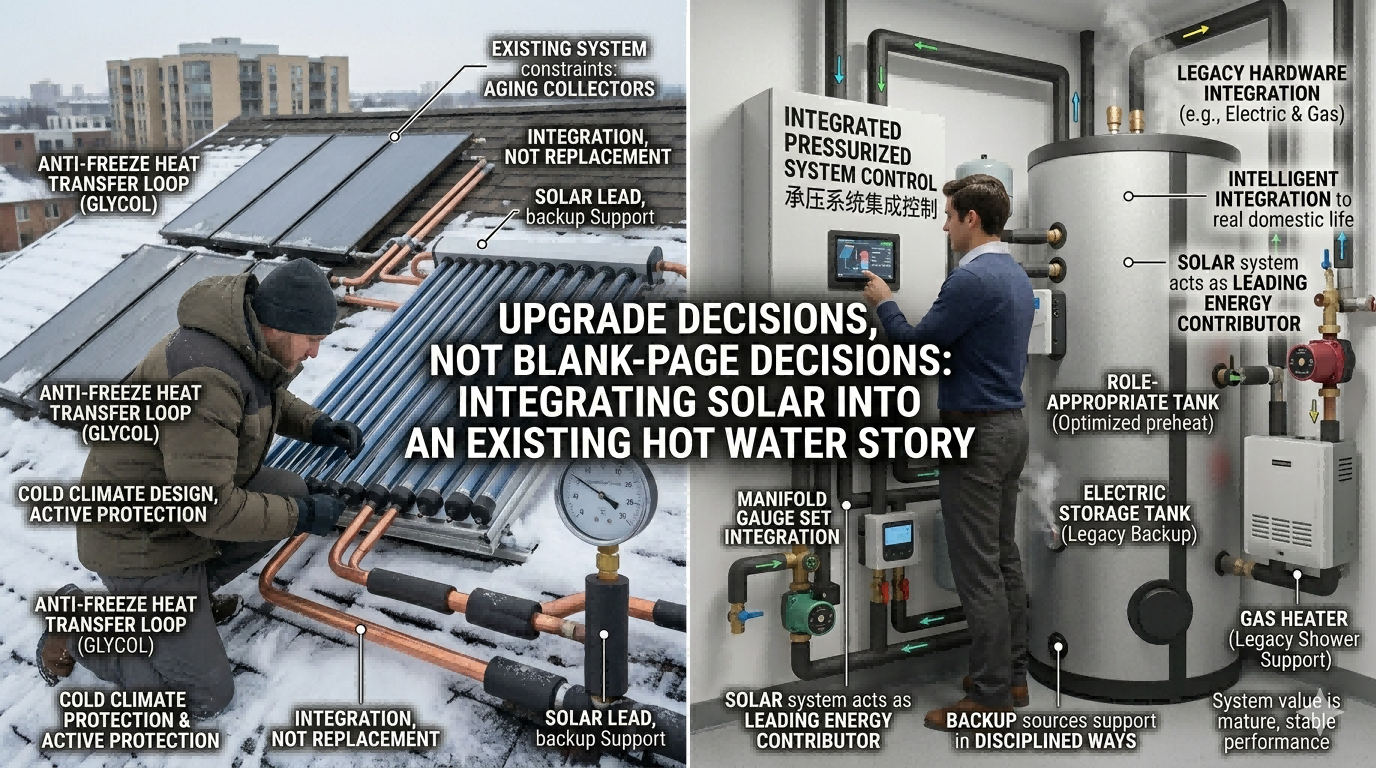
A pressurized solar water heater, by contrast, is designed for conditions where the hot water system has to behave like an integrated part of a modern plumbing network. It is more aligned with homes or projects that require stable delivery, stronger outlet performance, and better compatibility with municipal supply or a solar water heater with booster pump environment.
That is why the difference between these two systems is not just about whether the shower feels stronger. It is about whether the hot water solution matches the hydraulic reality of the building.
If You Only Look at Water Pressure, You Will Miss the Bigger Decision

The phrase pressurized vs non-pressurized solar water heater sounds like a straightforward technical comparison, but it actually touches six different decision layers.
Water delivery experience
This is the most obvious difference. A high pressure solar water heater is usually intended to provide a more stable and stronger hot water delivery experience, especially where multiple outlets may be used at once. A non-pressurized solar water heater is more often associated with simpler delivery conditions and a lower requirement for simultaneous high-comfort performance.
Building compatibility
A solar water heater for high-rise building applications typically demands a different system logic from a solar water heater for low-rise house use case. Building height, plumbing routing, and demand distribution all influence whether a pressure-bearing solution is more appropriate.
Plumbing integration
A pressurized system is generally a better fit when the hot water network needs to work with modern indoor plumbing expectations. A gravity-fed or lower-pressure option may still serve well in simpler environments, but it is not the ideal match for every project.
User comfort expectations
This is where many system choices succeed or fail. In some markets, users accept a functional hot water supply even if outlet performance is not strong. In others, hot water comfort is expected to feel stable, immediate, and consistent. That difference changes what the best solar water heater for home really means.
Installation and engineering logic
Some buyers assume pressurized systems are only about premium positioning. In fact, system selection should start with installation logic. Roof conditions, water supply style, usage points, and auxiliary components all matter before final product selection.
Long-term operating fit
The better system is not the one with the better headline. It is the one that will continue to match the real-life use pattern of the home or project for years.
A Non-Pressurized Solar Water Heater Is Not “Low-End” by Definition
One of the most common market mistakes is treating the non-pressurized solar water heater as a weak or outdated solution. That is not accurate. In the right environment, a non-pressurized system can still be practical, cost-effective, and efficient.
For example, if the building is low-rise, the plumbing structure is uncomplicated, the hot water demand is moderate, and the end user does not expect pressure-intensive shower performance across several outlets, a gravity fed solar water heater may still be a rational solution. It can meet hot water needs without overengineering the system.
The problem begins when people choose a non-pressurized system for a project that actually behaves like a pressure-dependent one. In that case, the issue is not product quality. The issue is system mismatch.
A Pressurized Solar Water Heater Is About Compatibility, Not Just Premium Positioning
On the other side, a pressurized solar water heater should not be reduced to the idea of a “higher-end version” of a normal system. That description sounds easy, but it misses the category’s real value.
A pressurized system is often the right answer when the building has more demanding water delivery conditions. This includes homes using a booster pump, buildings with more than one bathroom, residences with modern shower expectations, and projects where stable outlet performance matters more than bare minimum hot water availability.
That is why a solar water heater for multiple bathrooms is very often discussed through the lens of pressure compatibility rather than only tank size. A home may have enough stored hot water on paper, but still fail in daily use if the delivery system cannot support simultaneous demand in a stable way.
This is where the high pressure solar water heater category proves its practical value. It is not about appearing more advanced. It is about functioning correctly in a more demanding real-world environment.
The Most Important Comparison Is Not Tank vs Tank, But Project vs Project

Many product pages push buyers to compare liters, dimensions, or collector counts. Those specifications matter, but they do not answer the most important question: what kind of project is this system being installed into?
Project Type 1: Simple residential use
If the project is a straightforward household with limited simultaneous demand and a simpler plumbing expectation, a non-pressurized solar water heater may be sufficient. In this case, the system may deliver solid value with lower complexity.
Project Type 2: Comfort-oriented urban home
If the home is expected to deliver consistent shower performance and modern hot water comfort, a pressurized solar water heater becomes much more relevant. Here, comfort is part of system performance, not an optional bonus.
Project Type 3: Multi-storey building
For a solar water heater for high-rise building, the stakes are higher. Water delivery is affected by building height, routing, and demand distribution. A pressurized design is usually more compatible with those conditions than a gravity-dependent one.
Project Type 4: Booster pump system
Once a house or building relies on boosted water supply, the hot water system is operating in a more pressure-dependent environment. A solar water heater with booster pump requires a system structure that can handle that relationship reliably.
Project Type 5: Multiple outlet demand
A solar water heater for multiple bathrooms is not just a larger tank problem. It is a delivery-performance problem. When more than one shower, tap, or hot water point may operate close together, pressure compatibility becomes central to user satisfaction.
Where Buyers Make the Wrong Decision
The first mistake is buying by price alone. A cheaper system can become the more expensive choice if it does not suit the building and has to be adapted, repaired, or replaced earlier than expected.
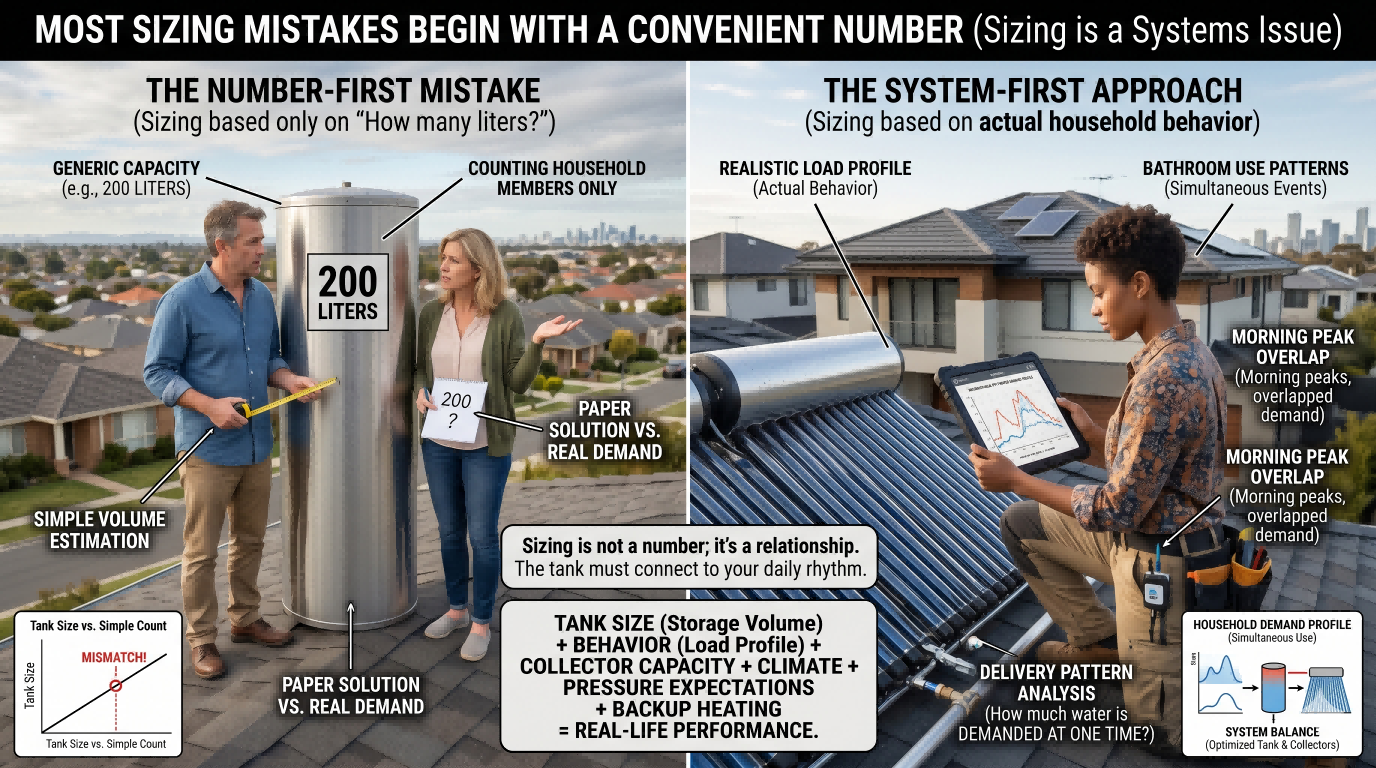
The second mistake is buying by capacity alone. A 200-liter or 300-liter system may sound impressive, but capacity without matching delivery logic does not guarantee a good user experience.
The third mistake is assuming that every home needs a pressurized system. That is also false. Over-specifying a project can reduce cost efficiency and complicate a solution that could have remained simple.
The fourth mistake is assuming that every simple-looking project can use a non-pressurized system. Once the plumbing, user expectation, or building form becomes more complex, the system choice must change with it.
The fifth mistake is making a solar water heater comparison based only on hardware and not on use pattern. The better comparison is always: how will this system behave in this specific building, for these specific users, every single day?
How to Choose Between Pressurized and Non-Pressurized Systems More Professionally
A more professional decision method starts with asking better questions.
What is the actual water supply condition?
If the home uses stable municipal pressure or a booster pump, a pressurized solar water heater should usually be evaluated first.
How many bathrooms and hot water points are involved?
If the answer is more than one, or if simultaneous use is common, the value of a solar water heater for multiple bathrooms becomes much more tied to pressure delivery than to volume alone.
What kind of comfort does the end user expect?
If the user only needs access to hot water, that is one standard. If the user expects a modern, stable shower experience, that is another. The definition of the best solar water heater for home changes accordingly.
Is the building low-rise or high-rise?
A solar water heater for low-rise house may not face the same delivery conditions as a solar water heater for high-rise building. System architecture should reflect that difference.
Is simplicity more valuable than performance, or is performance non-negotiable?
This is often the real commercial question. Some projects prioritize affordability and simplicity. Others treat outlet stability and comfort as essential. Those projects should not be forced into the same product logic.
The Better Question Is Not “Which One Is Better?” but “Which One Fits Better?”
This is the conclusion many buyers need but rarely hear clearly. In the debate around pressurized vs non-pressurized solar water heater, there is no universal winner. The stronger system is not always the better system. The cheaper system is not always the wiser one.
A non-pressurized solution can be an intelligent choice where project conditions are simple and practical performance is sufficient. A pressurized solar water heater becomes the better choice when the building demands stronger delivery compatibility, higher comfort expectations, or greater system integration.
That is why the real decision is not about product status. It is about fit.
Final Thought
The market often treats the difference between a pressurized solar water heater and a non-pressurized solar water heater as a simple pressure issue. In reality, it is a project-definition issue. The right choice depends on the type of building, the plumbing structure, the number of outlets, the user’s comfort expectations, and whether the system must work within a modern pressure-dependent environment.
A strong solar hot water system is not defined by whether it looks more advanced on the roof. It is defined by whether it delivers the right performance in the right setting. That is the real difference beyond water pressure, and that is the standard that should guide any serious solar water heater comparison.
#NonPressurizedSolarWaterHeater
#SolarWaterHeaterComparison
#SolarHotWaterSystem
#SolarThermal
#HighPressureSolarWaterHeater
#GravityFedSolarWaterHeater
#DomesticHotWater
#RenewableEnergy
#SolarWaterHeating
#BoosterPumpCompatible
#MultiBathroomHotWater
#HighRiseBuildingSolutions
#HomeEnergyEfficiency