Can a Pressurized Solar Water Heater Work in Cold Climates Freeze Protection, Closed-Loop Design, and Winter Performance Explained
The Cold-Climate Question Is Usually Asked Too Simply
When buyers first ask whether a pressurized solar water heater can work in freezing weather, the question often sounds binary. Either solar hot water works in winter, or it does not. Either cold climates are suitable, or they are not. This framing is understandable, but it is not useful. In real projects, cold-climate success is not a yes-or-no issue. It is a systems issue. A solar hot water installation in a warm region and a solar water heater for cold climate application may use the same general category of product, but they do not live under the same rules.
The mistake many people make is judging winter performance from summer logic. They imagine strong sunshine, easy heat collection, forgiving pipe conditions, and steady storage behavior, then assume that a pressurized system only needs minor adjustment to survive cold weather. That approach leads to disappointment. A cold-climate project asks harder questions. What protects the fluid path from freezing? How is heat transferred if the collector loop is exposed to severe low temperatures? What happens at night, during snow events, or during long periods of weak solar input? How much of the owner’s winter hot water expectation should be carried by the solar side, and how much by backup support? These are not minor details. They define whether winter performance feels professional or fragile.
That is why a serious pressurized solar hot water system in a cold region must be designed around climate discipline, not climate optimism. Good winter projects do not merely tolerate cold weather. They are built for it. They assume that low ambient temperature, shorter solar windows, possible snow accumulation, higher heat loss potential, and strong seasonal variation will all influence the behavior of the system. Once that mindset changes, the question becomes much more productive. Instead of asking, “Can solar hot water work here?” the better question becomes, “What kind of solar hot water architecture makes cold-weather operation stable, safe, and worthwhile?”
The answer almost never lies in a single product feature. It lies in the relationship between collector loop design, freeze prevention strategy, heat exchange logic, storage sizing, control behavior, and backup integration. In other words, winter success is engineered. It is not advertised into existence.
Cold Climate Does Not Defeat Solar Hot Water—Weak System Logic Does
There is a persistent myth in the market that cold weather itself makes solar hot water impractical. This belief sounds reasonable at first because people associate solar with warmth. But solar thermal systems do not depend on warm air; they depend on solar radiation and system design. Cold ambient conditions do not automatically destroy the value of a pressurized solar water heater. What they do is punish weak design more quickly.
A badly conceived warm-climate system may still appear acceptable because environmental conditions are forgiving. A poorly insulated pipe route might lose less noticeable energy. A simplistic control strategy might get away with late circulation. A marginal freeze strategy may never be tested at all. But in a solar water heater for cold climate project, the environment exposes every lazy assumption. Low temperature, wind, long cold nights, and stronger seasonal mismatch reveal whether the system was truly engineered or merely assembled.
This is why cold-climate solar thermal should be understood as an engineering filter. It separates casual system thinking from disciplined system thinking. The projects that succeed are usually not the projects with the loudest efficiency claims. They are the ones that answer the climate problem structurally. They know how the collector loop is protected. They know how heat moves from an exposed roof to a pressurized domestic environment. They know that storage, backup, and circulation control must carry more of the system’s reputation in winter than in mild weather.
In that sense, winter solar water heating is not a special trick. It is the result of respecting climate reality. A project that uses correct hydraulic separation, reliable freeze protection, well-insulated routing, and sensible backup support can perform with far greater confidence than a project that assumes solar collection alone will carry the user experience. The cold did not defeat the system. The lack of system logic did.
This distinction matters for content strategy as well. Many weak articles talk about cold climate only in terms of fear or survival. A stronger industry article should talk about architecture: why certain designs keep working, why others struggle, and why winter performance is usually a function of protection strategy rather than brand storytelling.
The Real Winter Challenge Is Not Low Temperature Alone

People often reduce winter design to one dramatic issue: freezing. Freezing is crucial, but it is not the only challenge. A cold-climate pressurized solar water heater faces several overlapping pressures at once, and strong design means understanding all of them together.
Freeze risk in exposed collector circuits
The first and most obvious issue is that the roof-level collector loop is exposed. If fluid in the collector side freezes, the system can suffer burst tubing, damaged manifolds, cracked components, or long-term reliability loss. This is exactly why a real freeze protection solar water heater strategy has to exist before product positioning even begins.
Higher heat loss across the system
Even if freezing is prevented, winter increases the risk of energy loss. Pipe runs, roof penetrations, external valves, and poorly insulated mechanical zones all become more consequential. A project that looks reasonable on paper can underperform in practice simply because its thermal discipline is too weak.
Shorter effective solar windows
Cold regions often pair low temperature with seasonal variation in daylight and useful solar hours. The system may still collect valuable energy, but the timing of that energy becomes more important. The design has to decide how to store it and how to prioritize it.
More obvious dependence on backup
In warm seasons, weak backup integration may go unnoticed because solar collection carries more of the experience. In winter, the relationship between solar gain and backup heating becomes central. If that relationship is clumsy, the whole system feels less intelligent.
Greater sensitivity to installation quality
A mediocre installation in a mild region may remain tolerated. In a cold region, mediocre details become visible faster. That is why solar hot water performance in winter is often more a measure of design execution than of raw collector potential.
Once these factors are understood together, the conversation becomes much more professional. Cold climate is not one obstacle. It is a system condition that demands better coordination among protection, transfer, storage, and control.
Open Loop Thinking Breaks Down Quickly in Freezing Conditions
One of the most important strategic shifts in cold-region solar thermal is moving away from simplistic loop thinking. In warm climates, some projects may get away with very direct system concepts. In colder climates, those same ideas become much riskier. This is where the closed loop solar water heater becomes especially important.
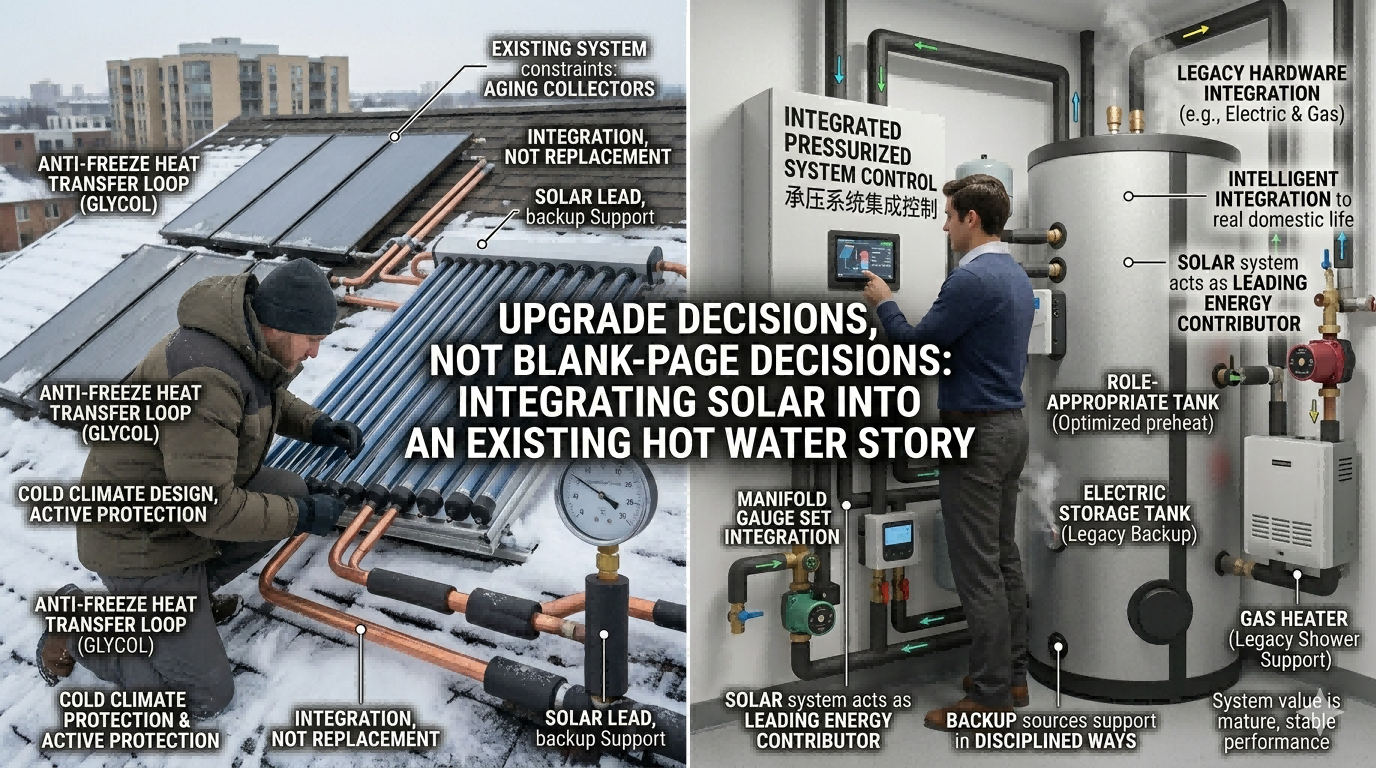
A closed loop solar water heater separates the collector-side heat transfer fluid from the pressurized domestic water supply. Instead of exposing household water directly to freezing rooftop conditions, the system circulates a protected thermal fluid through the collector circuit and then transfers that heat through a heat exchanger into the domestic hot water side. This architecture is not just a technical preference. It is the reason many cold-region projects remain both safer and more stable.
The problem with open-loop thinking in freezing conditions is not only the risk of burst pipes. It is the lack of control. Once exposed water is directly responsible for both collection and domestic delivery, the freeze risk becomes inseparable from the domestic system’s integrity. A design like that places too much of the building’s hot water confidence at the mercy of outdoor conditions.
A closed loop solar water heater solves this by creating functional separation. The collector circuit can be designed around climate defense, while the domestic side can be designed around pressure, hygiene, and household comfort. That division of responsibilities is one of the strongest design choices in serious cold-climate work.
This is also why many effective cold-region systems are described as an indirect solar water heater. The word “indirect” matters because it signals a more mature strategy. Heat is still solar-derived, but it is transferred into the domestic hot water side rather than collected directly inside it. For winter applications, that distinction often determines whether the system feels like a durable building service or a seasonal experiment.
Freeze Protection Is a System Strategy, Not a Single Device
A lot of weak marketing content makes freeze protection sound like a checkbox feature. Add one “anti-freeze” label, and suddenly the system is ready for winter. That is not how real engineering works. A freeze protection solar water heater is not defined by one part. It is defined by an operating philosophy.
A proper cold-climate design asks several layers of questions:
- What fluid is moving through the exposed collector loop?
- How low can ambient temperature realistically fall?
- How is the heat transfer side isolated from the potable domestic side?
- What happens during extended cold periods with no useful solar input?
- What happens during power interruption or pump failure?
- How are external components insulated and routed?
- How is the system protected during partial occupancy or long absence?
That is why the most credible cold-region systems are usually described in terms of architecture: closed loop solar water heater, indirect solar water heater, properly sized expansion space, insulated routing, and sensible control. A real anti freeze solar water heater is not simply one that contains a special fluid. It is one that treats freezing as a design condition from the beginning.
This is an important commercial point too. Buyers often think of winter protection as something added onto a standard system. In practice, winter reliability is strongest when it is built into the logic of the system rather than appended as a reassurance later.
Glycol Is Not a Marketing Add-On. It Is Part of Climate Architecture
In many cold-climate systems, the phrase glycol solar hot water system appears so often that some buyers stop thinking about what it actually means. They treat glycol as a magic ingredient rather than as part of a larger system strategy. That is a mistake. Glycol matters, but only inside a correctly designed architecture.
A glycol solar hot water system typically uses a heat-transfer fluid mixture in the collector loop to reduce freeze risk in exposed piping and collectors. This is one of the most established and sensible approaches in cold-weather solar thermal. But the real value of glycol is not simply that it “stops freezing.” Its value is that it allows the collector loop to remain functionally separate, climate-aware, and compatible with an indirect solar water heater design.
That said, glycol does not eliminate the need for good engineering. Poorly insulated pipework, bad sensor placement, wrong expansion sizing, careless service practice, or neglected fluid condition can still weaken performance. A glycol solar hot water system is therefore not a shortcut. It is part of a responsible system architecture that still requires good installation and maintenance discipline.
This is where many cold-climate mistakes come from. People hear “glycol” and assume the winter problem is solved permanently. In reality, glycol supports the freeze-protection strategy; it does not replace the need for correct heat exchange design, expansion control, loop insulation, and periodic system attention. A serious anti freeze solar water heater is never just a bottle of fluid. It is an engineered loop with a thermal job, a protection job, and a service life.
Indirect Design Protects More Than the Collector Loop
The value of an indirect solar water heater goes beyond freeze protection. It also improves control over how heat is transferred into the domestic side. In cold climates, that matters because winter performance is not only about survival. It is about usable hot water quality. The user does not judge the system by how elegantly the roof loop resists freezing. The user judges it by whether the shower feels normal, the household energy bill improves, and the system seems calm through the season.
Indirect architecture helps because it separates climatic stress from domestic comfort logic. The collector loop can be optimized for winter exposure and freeze risk, while the domestic side can be optimized for pressure, hygiene, and stable household delivery. This separation often produces a better overall pressurized solar hot water system because each side is allowed to do its job properly.
It also helps with control intelligence. A good indirect solar water heater can use heat exchange and storage behavior more deliberately, allowing designers to think about collector-side collection, tank-side storage, and backup-side support as coordinated but distinct functions. That level of coordination becomes especially valuable in winter, when the system has less solar margin and therefore needs more strategic control.
Winter Success Depends on Storage and Backup More Than Summer Marketing Admits
One of the biggest misunderstandings in the market is the belief that winter solar hot water success is mainly determined by the collector. Collector choice matters, but in a cold-climate pressurized solar water heater, the owner’s actual satisfaction often depends even more on storage logic and backup integration.
Why? Because winter is a season of tighter margins. Solar collection is still valuable, but it may not always be abundant at the exact hour of demand. That means the system needs to capture available heat, store it intelligently, and hand off smoothly to a backup source when needed. If that handoff is awkward, users perceive the whole installation as weak even if the collector side performed reasonably well.
This is why solar hot water performance in winter should be judged through a full building lens. Does the tank store heat in a way that supports real morning usage? Does the backup source engage too early, stealing solar opportunity, or too late, hurting comfort? Is the system trying to cover too much with solar alone and therefore creating disappointment? Or is it designed realistically, with solar as an intelligent contributor and backup as an integrated partner?
In many successful cold-region projects, the answer is not “solar does everything.” The answer is “solar does the right share of the work, and the rest of the system is honest about it.” That honesty is one of the marks of professional design.
Storage matters because winter gains are valuable
In warm weather, surplus solar heat may feel easy to create. In winter, every useful gain is more precious. That means storage design matters more because the system has to preserve the value of collected heat rather than casually waste it.
Backup matters because comfort standards do not drop in winter
Users do not lower their expectations just because it is cold outside. A solar water heater for cold climate must therefore be evaluated by whether it preserves domestic comfort while still making meaningful solar contribution. Backup is part of that outcome, not an admission of failure.
Collector Choice in Cold Climates Should Be Evaluated Through System Behavior
Cold-climate articles often become collector debates too quickly. Should you use evacuated tube? Should you use flat plate? Those questions matter, but they should not be isolated from the rest of the winter system.
A collector that performs strongly in low ambient temperatures may indeed be attractive for winter solar water heating, but it still has to work inside a coherent design. How does it interact with storage? How does it behave during partial snow or intermittent sun? How does the control logic respond? Does the collector-side choice create a useful daily pattern, or just a more dramatic one?
This is why a cold-climate pressurized solar water heater should not choose collectors in a vacuum. The better collector is the one that fits the system’s full winter personality—its storage strategy, climate exposure, backup logic, maintenance reality, and building demand profile. Winter success is not created by one rooftop component becoming the hero. It is created when all parts of the system support one another under tighter seasonal constraints.
Common Cold-Climate Mistakes That Make Good Equipment Look Weak

One reason people underestimate solar hot water in winter is that poorly designed projects give the technology a worse reputation than it deserves. Good components can still produce mediocre winter ownership if the system logic is weak. Several mistakes show up repeatedly.
Treating freeze protection as a label rather than a design requirement
A system marketed as an anti freeze solar water heater still needs correct hydraulic separation, insulation, control, and service logic. Labels do not protect pipes; architecture does.
Using collector ambition to hide storage weakness
A project may look impressive on the roof but still disappoint in winter if the stored heat is poorly matched to actual household demand.
Ignoring heat loss on the route from roof to storage
In a closed loop solar water heater, exposed or weakly protected routes can quietly erode winter performance. Heat lost before reaching useful storage is heat the owner never experiences.
Expecting solar to replace backup rather than cooperate with it
Cold climates reward hybrid honesty. A strong pressurized solar hot water system in winter usually works best when solar and backup are designed as partners.
Neglecting maintenance discipline
A glycol solar hot water system still needs attention. Fluid condition, pressure behavior, expansion performance, insulation quality, and control calibration all shape winter reliability.
Designing for “can survive” instead of “can feel normal”
This may be the most important mistake of all. A project that merely survives winter is not yet a strong project. A strong solar water heater for cold climate should make winter hot water feel ordinary, not stressful.
What a Good Cold-Climate Pressurized System Actually Looks Like

A healthy cold-region installation does not announce its cleverness every day. It simply behaves well. The collector loop remains protected. The domestic side remains pressurized and comfortable. The system collects what it reasonably can, transfers it efficiently, stores it without unnecessary loss, and hands off to backup in a way that feels smooth to the user.
From an engineering perspective, a good winter-ready pressurized solar water heater usually has several recognizable traits:
- a real closed loop solar water heater architecture rather than exposed domestic-water collection
- an indirect solar water heater design that separates climate stress from household delivery
- a credible glycol solar hot water system or equivalent freeze-management strategy suited to the region
- well-insulated, climate-aware routing between roof and storage
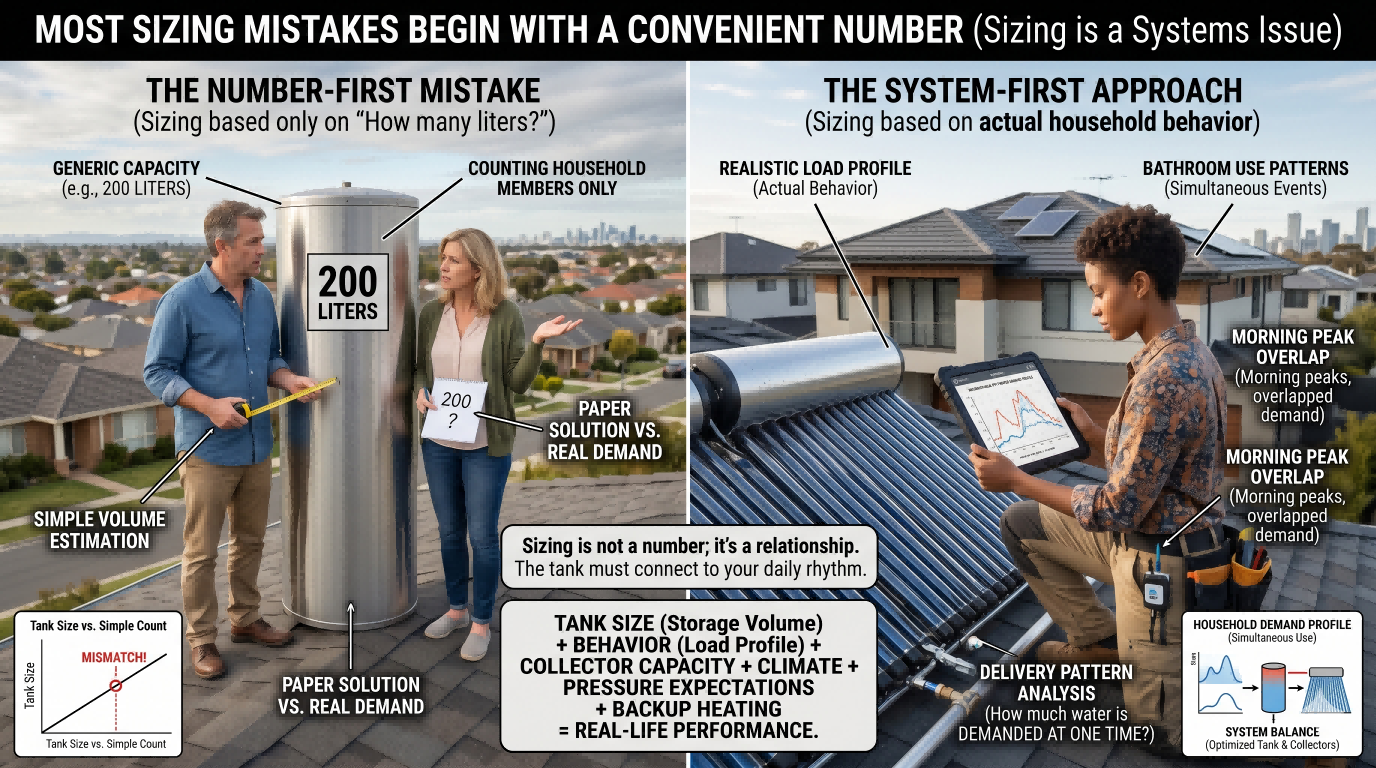
- storage sized for real household use rather than generic sales assumptions
- backup integrated intelligently rather than bolted on as an afterthought
- control logic that protects the system without wasting solar opportunity
- service access that makes winter maintenance and inspection realistic
When these conditions are present, solar hot water performance in winter becomes far less mysterious. The system may not carry every bit of the load at all times, but it will feel rational, useful, and professionally controlled. That is exactly what most serious buyers should want.
The Better Question Is Not “Will It Work in Winter?” but “How Should It Work in Winter?”
This is where the whole conversation becomes more mature. Too many buyers frame cold climate as a test of survival: will the system freeze or not? Will the collectors still warm up or not? Will the roof equipment endure the season or not? These questions are understandable, but they set the bar too low.
A better industry question is functional: how should a pressurized solar water heater work in winter so that the owner feels both protected and rewarded? Should it provide a meaningful preheat effect that reduces backup energy? Should it store enough energy to support morning shower demand more confidently? Should it preserve high domestic pressure and familiar comfort while reducing conventional fuel dependence? Should it stay quiet and stable even when weather shifts quickly?
These are better questions because they move the conversation beyond survival and into performance design. A solar water heater for cold climate should not be sold as a heroic exception to the weather. It should be sold as a disciplined system adapted to the weather.
Final Thought
A pressurized solar water heater can absolutely work in cold climates, but winter success is never created by optimism alone. It is created when the system is designed for freeze risk, heat loss, seasonal storage behavior, and realistic backup integration. That is why a serious freeze protection solar water heater strategy must be architectural, not superficial. A real closed loop solar water heater and a well-executed indirect solar water heater design create the separation and control that winter projects need. A disciplined glycol solar hot water system supports that climate architecture, but it still depends on insulation, controls, maintenance, and system balance.
In the end, solar hot water performance in winter is not a mystery and not a matter of brand slogans. It is the result of how honestly the project answers cold-weather reality. A strong anti freeze solar water heater is not simply one that does not burst. It is one that keeps the roof loop protected, the domestic side comfortable, and the overall pressurized solar hot water system calm under real winter conditions. That is the standard that defines quality in cold-climate solar thermal design.
#SolarWaterHeaterForColdClimate
#FreezeProtectionSolarWaterHeater
#ClosedLoopSolarWaterHeater
#GlycolSolarHotWaterSystem
#PressurizedSolarHotWaterSystem
#WinterSolarWaterHeating
#IndirectSolarWaterHeater
#AntiFreezeSolarWaterHeater
#SolarHotWaterPerformanceInWinter
#SolarThermal
#ColdClimateHotWater
#RenewableEnergy
#DomesticHotWaterEngineering