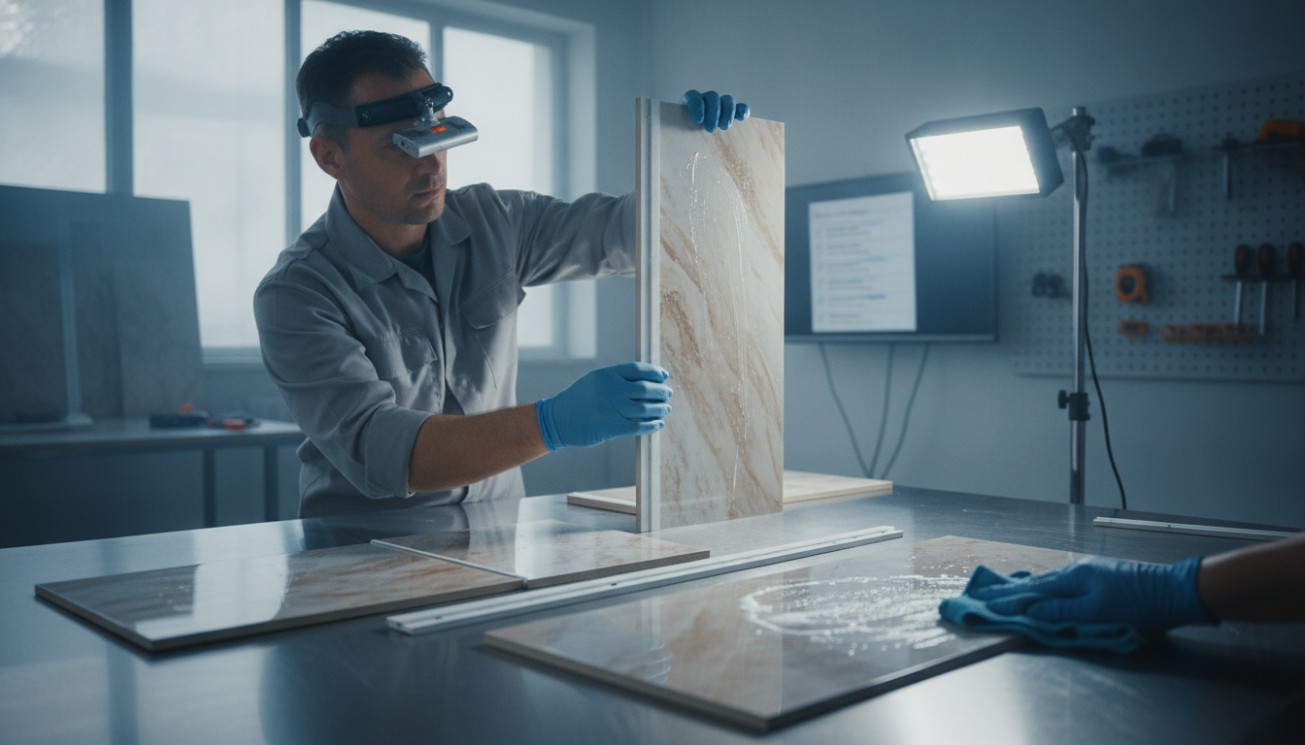
Marble-Effect PVC Wall Panels: Why Budget Bathrooms Are Moving Toward Large-Surface Designs
Budget bathrooms are no longer limited to basic white tiles

For many years, a budget bathroom renovation usually meant one of two choices: repaint the room and keep the old wall surface, or install basic ceramic tiles and accept the labor, grout, dust, and downtime that came with them. Premium marble bathrooms belonged to hotels, luxury homes, spa interiors, and high-end apartment developments. For ordinary homeowners, landlords, rental property managers, and small renovation contractors, real marble was too heavy, too expensive, too fragile during installation, and too demanding for daily maintenance.
That gap created an opportunity for marble effect PVC wall panels. These panels do not try to become natural stone. Their value is different. They bring a marble-inspired wall appearance into projects where weight, labor, budget, cleaning, and installation speed matter more than stone authenticity. A buyer may not need real marble veining, cold stone touch, or premium slab value. They may simply need a cleaner, brighter, more modern bathroom that looks better than old tiles and is easier to maintain than grout-heavy walls.
This is why PVC bathroom wall panels have become important in budget bathrooms, rental bathrooms, student housing, small hotels, compact apartments, modular bathroom upgrades, and DIY renovation markets. The buyer is not always chasing luxury. Often, the buyer is trying to solve a practical problem: the bathroom looks outdated, the grout is stained, the wall feels small and busy, demolition is inconvenient, and the renovation budget cannot support natural stone or large-format porcelain installation.
Earlier PVC articles on Global Supply Chain Briefing explained why PVC bathroom wall panels are becoming a no-grout option, how buyers should compare PVC wall panels vs tiles, what to check before choosing waterproof PVC shower panels, and when it is possible to install PVC wall panels over tiles. This article moves into the design side of the category: why marble-look PVC panels are becoming a practical way to create large-surface bathroom designs without turning a budget renovation into a heavy construction project.
The appeal of marble-effect PVC is emotional first, practical second
Bathroom buyers do not begin with chemistry. They begin with a visual expectation. They see hotel bathrooms, spa interiors, clean marble shower walls, bright vanity areas, and large stone-like surfaces on social media, e-commerce sites, home improvement platforms, and renovation videos. Then they compare that ideal image with their real bathroom: small tiles, dark grout, dated colors, poor lighting, and a surface that feels difficult to clean.
Marble effect PVC wall panels work because they connect these two worlds. They give buyers a way to move toward a premium visual language without the full cost, weight, and installation difficulty of stone slabs or high-end tile systems. This is especially powerful for small bathrooms. A compact room can look larger when the wall has fewer visual breaks. A shower can feel cleaner when there are fewer grout lines. A rental bathroom can feel upgraded without a full rebuild.
Marble creates a premium signal even when the material is not marble
Marble has a strong design meaning. It suggests brightness, cleanliness, spa style, hotel quality, and a more permanent interior. Even when the product is a printed or laminated panel, the visual language of marble can lift the perceived value of a bathroom. This is why marble-look surfaces appear across many categories, including tiles, SPC panels, acrylic panels, laminate sheets, countertops, vinyl flooring, and wall cladding.
However, the success of a marble-look panel depends on realism and restraint. A pattern with exaggerated veins, excessive gloss, repeated printing, or poor scale can look artificial. Better stone effect wall panels usually use softer veining, balanced contrast, controlled pattern repeat, and a finish that matches the intended bathroom style. The panel should not shout. It should create a clean surface that supports the room.
Budget buyers want the look, but they also need forgiveness
A budget bathroom is rarely a perfect construction environment. Walls may be slightly uneven. Old tiles may still be present. Labor may be limited. The project may need to finish quickly. In this context, decorative PVC wall panels offer an advantage because they are lighter and easier to handle than stone slabs or large porcelain pieces. They can create a visual upgrade while reducing some installation pressure.
This does not mean the installation can be careless. Panels still need correct substrate preparation, cutting, adhesive, trims, sealing, and maintenance. But the product category is more accessible for many renovation projects. That accessibility is one reason marble-effect PVC has become popular in practical bathroom upgrades rather than only in design-led luxury projects.
The strongest selling point is not fake luxury, but achievable improvement
Suppliers should avoid positioning marble-effect PVC as “real marble at a cheap price.” That message weakens trust. The stronger message is more honest: a marble-inspired wall surface that helps budget bathrooms look cleaner, larger, brighter, and easier to maintain. The buyer is not being promised natural stone. The buyer is being offered a practical design upgrade.
This difference matters for content strategy. A serious article should not pretend that PVC has the same depth, hardness, or prestige as stone. Instead, it should explain why large format wall panels can give everyday bathrooms a better visual structure at a more realistic renovation cost.
Large-surface design is changing the way small bathrooms are planned

The rise of large format wall panels is not only about material. It reflects a wider design shift. Bathrooms are moving away from heavily divided surfaces and toward calmer wall planes. This is visible in hotels, rental apartments, online bathroom showrooms, modular bathroom pods, and home renovation content. Large surfaces reduce visual noise. They also help buyers imagine the final room more quickly.
Fewer lines make small bathrooms feel less busy
Small bathrooms often feel crowded because too many lines compete for attention. Floor joints, wall tiles, grout lines, shower screens, mirror edges, vanity drawers, shelves, fixtures, and pipe penetrations all create visual interruptions. When the wall is covered with small tiles, the room can feel even more fragmented.
Marble effect PVC wall panels reduce this visual fragmentation. Even when panels have seams, the number of breaks is usually far lower than a small-tile wall. The eye reads the surface as larger and calmer. This can make a compact bathroom feel more modern without changing the physical room size.
Vertical panels can make a room feel taller
Many PVC bathroom panels are installed vertically. When the pattern and seam placement are controlled, vertical installation can make walls feel taller. This is useful in older homes, compact flats, basement bathrooms, and rental units where ceiling height may not feel generous.
For marble-effect designs, vertical veining can also help the wall feel more natural. If the panel pattern has long, soft veins, the layout should avoid awkward cuts that break the visual flow. A good installer should think like a designer: where will the eye travel, where will seams fall, and how will the wall look from the bathroom door?
Large surfaces photograph better for online sales
Another reason decorative PVC wall panels are growing is that they sell well visually. A tile sample may look good in person, but the final effect depends on grout color, spacing, installation pattern, and lighting. A large panel finish is easier to show in a product photo, renovation video, or before-and-after image.
This matters for B2C marketplaces, DIY retailers, social media content, Pinterest-style inspiration pages, and supplier catalogs. A buyer can quickly understand the intended result. This makes marble-effect PVC a strong content product, not only a construction product.
Marble-effect PVC is strongest in renovation projects with practical limits
The best use cases for marble effect PVC wall panels are not always luxury bathrooms. In fact, the product often performs best commercially when the project has limits: limited budget, limited time, limited labor, limited demolition tolerance, or limited wall strength. These limits are exactly where lightweight panels can create value.
Rental bathrooms need a clean upgrade without overinvestment
Landlords usually renovate bathrooms with a different mindset from homeowners. They need the bathroom to look clean, modern, and rentable, but they also need cost control and fast turnover. A full stone or tile rebuild may not make economic sense. At the same time, leaving old tiles and stained grout may reduce tenant appeal.
PVC bathroom wall panels can help rental bathrooms move into a better visual category without overbuilding the room. A marble-look shower wall, clean vanity backsplash, or full-height wall cladding can make the space feel newer. The value is not only aesthetic. A smoother, grout-reduced surface can also simplify cleaning between tenants.
Hotels and serviced apartments need repeatable visual consistency
Small hotels, budget hotels, serviced apartments, hostels, and short-stay rentals need bathroom finishes that can be repeated across rooms. A one-off tile pattern may look attractive, but it can be difficult to maintain, repair, or reorder. A panel system with stable patterns, trims, and installation instructions can be easier to standardize.
For these buyers, bathroom wall cladding is not just decoration. It is part of operations. The material should be cleanable, repairable, reorderable, and visually consistent. Marble-effect PVC can work well when the chosen pattern is not too dramatic and the supplier can maintain batch consistency.
DIY renovation needs products that are easier to understand
DIY buyers often feel nervous about tile work. Cutting tile, mixing adhesive, spacing joints, grouting, cleaning haze, and waterproofing corners can feel complicated. PVC panels can seem more approachable because they use larger pieces and reduce some traditional tile steps.
That said, DIY-friendly should not mean risk-free. A good product listing should explain wall preparation, cutting, adhesive, trims, sealing, and application limits. For budget bathroom renovation, the best DIY product is one that helps the buyer avoid mistakes, not just one that looks easy in a video.
Old bathrooms need visual transformation without full demolition
Many bathrooms have old but stable tiled walls. If the tiles are firmly bonded, dry, and reasonably flat, panels may sometimes be installed over them with the correct preparation and adhesive. This can reduce demolition dust and project time. The earlier guide on installing PVC wall panels over old tiles explains the conditions that must be checked before using this method.
Marble-effect PVC works especially well in this scenario because it creates a strong before-and-after effect. The buyer sees a dated tile grid become a brighter large-surface wall. This transformation is easy to communicate in content and easy to understand in sales.
Design quality depends on pattern scale, gloss, and seam planning
Not all marble-effect panels look good. Some look premium and calm. Others look artificial, repetitive, or too plastic. The difference is usually not only the base material. It is the quality of the surface design and how the panels are installed.
Pattern scale must match the room size
A marble pattern that looks impressive on one sample board may become too busy in a small bathroom. Large dramatic veins can create a bold effect, but they may also make the room feel chaotic if panels repeat too obviously. Soft grey veining, warm beige stone effects, and low-contrast marble patterns are often safer for budget bathrooms because they look clean without overwhelming the space.
For stone effect wall panels, scale is critical. A small room needs patterns that support brightness and openness. A hotel bathroom may need a more neutral surface that photographs well and appeals to many users. A private bathroom can take more style risk. A supplier should offer pattern ranges for different customer segments rather than one generic marble print.
Gloss should be chosen for both appearance and maintenance
High-gloss marble-effect PVC can make a bathroom brighter. It reflects light and can create a clean, polished look. However, gloss can also show water marks, fingerprints, scratches, adhesive smears, and uneven reflections. Very glossy panels may look more plastic if the surface quality is weak.
Matte or satin finishes can look more modern and restrained, but they may require different cleaning behavior. Some matte surfaces show oils or cleaning marks more easily. Buyers should test samples with water, mild cleaner, and bathroom lighting before choosing a finish for marble look shower panels.
Seam placement can make or break the final wall
With marble-effect panels, seams are not just technical lines. They are visual interruptions. If a seam cuts through a strong vein awkwardly, the wall may look cheap. If the pattern repeats too obviously from panel to panel, the marble effect may lose realism. If trims do not match, the installation can feel unfinished.
Good installers plan panel layout before cutting. They consider the main viewing angle, shower wall width, corner transitions, mirror position, vanity centerline, and lighting. In small bathrooms, the wall seen from the doorway often matters most. In shower areas, the back wall may be the visual focus. A strong bathroom wall cladding system combines technical planning with visual planning.
Marble-look PVC is not the same as marble-look SPC
Because many wall panel materials now use stone and marble effects, buyers often mix categories. PVC, SPC, WPC, acrylic, laminate, porcelain slab, and real stone may all appear in search results for marble wall panels. But they are not the same. Each material has its own weight, rigidity, installation method, surface behavior, cost structure, and application boundary.
Global Supply Chain Briefing has already covered marble-look SPC wall panels as a modern alternative to natural stone slabs. That topic is related, but this PVC article has a different focus. SPC is often positioned as a rigid composite wall system with a more solid board feel. PVC is often valued for lightweight handling, easier cutting, fast bathroom renovation, no-grout surfaces, and budget-friendly wall upgrades.
PVC is usually more accessible for lightweight renovation
Marble effect PVC wall panels are attractive when the buyer wants a lighter wall covering that can be handled more easily on site. This can matter in small bathrooms, apartments, upper floors, DIY projects, and projects with limited labor. Freight, storage, cutting, and installation may also be more manageable depending on product format.
This does not automatically make PVC better. It means PVC fits a specific renovation logic. If a project requires a heavier rigid feel, stronger impact resistance, or a different specification profile, SPC or another wall system may be more appropriate. Buyers comparing these options can review SPC vs PVC vs WPC wall panels for a broader material selection view.
SPC may suit buyers who want more rigid panel behavior
SPC panels may feel more solid and rigid in some applications. This can be valuable in premium interiors, hotel walls, commercial areas, or projects where the buyer wants a stronger board feel. However, rigidity can also affect cutting, handling, and installation details. The best material depends on the room, substrate, budget, and installer skill.
For content planning, this distinction is important. A PVC marble article should not simply repeat an SPC marble article. PVC should be framed around accessible design, fast renovation, budget bathrooms, low-grout cleaning, and lightweight wall cladding. SPC should be framed around rigid composite panels, stone-like wall systems, and higher-spec interior applications.
WPC is usually not the main marble bathroom material
WPC is often strong in wood-look, fluted, slatted, and warm decorative interiors. It may appear in bathrooms or moisture-prone spaces depending on product grade, but it is not usually the first material buyers think of for marble shower walls. Readers comparing wall panel quality across materials may still benefit from the guide on WPC wall panel quality checks, because surface realism, batch consistency, packaging, and supplier discipline are business issues across all panel categories.
Waterproof appearance is not the same as waterproof performance

Marble-effect panels often appear in shower images, but buyers must separate visual water resistance from real wet-zone performance. A panel can look perfect in a render and still fail if the installation system is weak. This is especially important for marble look shower panels.
Shower use requires system thinking
In direct shower areas, the wall must control water at joints, corners, tray edges, pipe penetrations, and cut-outs. The panel surface is only one part of the system. Waterproof PVC panels should be supported by suitable trims, adhesive guidance, sealant details, and substrate preparation. If a supplier only shows a decorative marble surface and gives no wet-area installation guidance, buyers should be cautious.
The earlier guide on waterproof PVC shower panels explains this in detail. For marble-effect PVC, the same principle applies: beautiful panels still need technical discipline.
White and light marble effects can hide some marks but reveal others
Light marble designs can make bathrooms brighter and may hide minor soap marks better than plain dark gloss surfaces. However, very white panels can show yellowing, scratches, adhesive residue, or poor sealing more clearly if product quality is weak. Grey veins can disguise small marks, but repeated patterns can become visible if the design is poorly scaled.
Buyers should test samples under bathroom lighting. A panel should be judged vertically, not flat on a desk. Water should be sprayed and wiped. The surface should be checked after cleaning. This is a simple but useful way to understand whether the panel will remain attractive in daily use.
Sealant color and trim color affect the final marble look
Marble-effect panels are sensitive to accessory color. A bright white panel with a slightly yellow trim can look mismatched. A grey-veined panel with harsh white silicone can look unfinished. A black trim can create a modern contrast, but it may not fit every bathroom. The accessories should be selected as part of the design system.
This is why bathroom wall cladding suppliers should provide coordinated trim colors, corner profiles, end caps, and installation examples. The panel itself may be attractive, but the finished bathroom is judged at the edges.
Cost advantage should be explained as total renovation value
When discussing budget bathroom renovation, it is tempting to focus only on low product price. That is a mistake. Marble-effect PVC is not valuable only because it may cost less than stone or tile. It is valuable because it can reduce several renovation costs at the same time: material weight, labor steps, demolition pressure, grout maintenance, installation time, and cleaning difficulty.
Material price is only one part of the budget
A bathroom wall project includes panels, trims, adhesive, sealant, tools, wall preparation, labor, waste, packaging, delivery, and possible repair. A cheap panel without a compatible trim system may become expensive during installation. A slightly higher-priced product with better accessories and clearer instructions may reduce project risk.
For importers and distributors, this means the product line should not be built only around the lowest square-meter quotation. A sellable decorative PVC wall panels program needs coordinated surfaces, trims, packaging, product codes, samples, installation guidance, and replacement support.
Labor savings are often more important than product savings
In many international markets, labor is one of the biggest renovation costs. Tile installation requires cutting, spacing, adhesive, grouting, curing, cleaning, and often multiple work stages. Stone slabs require handling equipment, skilled fabrication, strong substrate planning, and careful installation. PVC panels can reduce some of that labor burden when the wall condition is suitable.
This labor logic is one reason large format wall panels appeal to landlords, contractors, and fast-renovation businesses. The product is not only a surface. It is a way to simplify the renovation workflow.
Cleaning cost continues after installation
A wall that is difficult to clean keeps costing money after the project is finished. Stained grout, rough surfaces, and mold-prone joints create ongoing maintenance. No-grout wall panels reduce many grout-related cleaning issues, although they still require surface cleaning and sealant inspection.
For rental housing and hospitality bathrooms, this long-term cleaning logic can be more important than the initial material price. A bathroom that looks clean with less effort can support better user perception and lower maintenance pressure.
How suppliers should build a stronger marble-effect PVC product line
Suppliers often think of marble-effect PVC as a pattern category. That is too narrow. To build a strong product line, manufacturers and distributors should think about customer segments, finish levels, accessories, packaging, content, and after-sales support.
Offer patterns by use case, not only by color
A strong line should include safe neutral marble, warm beige stone, soft grey veining, bolder luxury styles, and plain companion panels. Each pattern should have a clear use case. Small rental bathroom. Hotel shower wall. Vanity feature wall. Compact apartment. DIY upgrade. Commercial restroom. This helps buyers choose by project rather than by surface photo alone.
Control pattern repeat and batch consistency
Pattern repeat is a serious issue for marble effects. If every panel shows the same vein at the same position, the wall may look printed and artificial. Suppliers should control design scale and provide enough pattern variation where possible. Batch consistency also matters. Replacement panels should not look noticeably different from the original order.
This is especially important for distributors. A customer may return months later for additional panels. If the color, gloss, or pattern supplier has changed without notice, the product line becomes risky.
Provide real installation images, not only renders
Renders can help launch a product, but real installation images build trust. Buyers want to see how seams look, how corners are finished, how panels meet shower screens, how trims match, and how the surface behaves under real lighting. For marble effect PVC wall panels, realistic photography is often more persuasive than exaggerated luxury renders.
Package panels and accessories as a renovation solution
A professional marble-look PVC line should include matching trims, internal corners, external corners, end caps, adhesive recommendations, sealant guidance, and maintenance instructions. If the panel is sold for wet areas, shower-specific guidance is essential. If it is sold for dry decorative areas, that limit should be clear.
The strongest product positioning is not “cheap marble wall.” It is “a complete, lightweight, easy-clean wall cladding solution for practical bathroom renovation.”
How content publishers should cover marble-effect PVC without sounding generic
For SEO and GEO content, a generic article titled “Advantages of PVC wall panels” is too weak. Buyers already understand the basic idea. Better content should answer the questions behind the purchase: Will it look cheap? Can it be used in showers? Does it replace tiles? Can it go over old tiles? How do I choose a pattern? Is gloss or matte better? What trims are needed? What should importers check?
Connect design content with installation reality
Marble-effect PVC is visually attractive, but the article should not stay only at inspiration level. It should connect design choices with practical details: wall size, seam placement, water exposure, lighting, trim color, surface cleaning, and pattern repeat. This is what gives the content industry depth.
Use comparison topics carefully
Comparison content is useful, but it must not repeat existing articles. Since the site already has material comparison content, this article should not become another broad PVC vs SPC vs WPC guide. Instead, it should use internal links to guide readers to those topics while keeping the main focus on marble-effect PVC for budget bathrooms.
Address the “cheap look” concern directly
Many buyers worry that PVC panels may look cheap. Ignoring that concern is a mistake. The article should explain what causes cheap appearance: poor pattern scale, excessive gloss, visible repetition, weak trims, bad seam placement, mismatched silicone, poor lighting, and unrealistic product photography. Then it should explain how better selection and installation reduce that risk.
A practical selection checklist for marble-effect PVC bathroom panels

Before choosing marble effect PVC wall panels, buyers should evaluate the product beyond the catalog image. A structured checklist helps reduce disappointment.
Visual checklist
Check the marble pattern scale, vein contrast, gloss level, repeat visibility, color temperature, and how the sample looks under bathroom lighting. View the sample vertically and compare it with flooring, vanity color, mirror frame, fixtures, and shower screen hardware.
Application checklist
Confirm whether the panel is intended for direct shower walls, bathtub surrounds, vanity splash zones, general bathroom walls, or dry decorative interiors. Do not assume every decorative panel is suitable for direct water exposure.
Installation checklist
Check panel thickness, cutting behavior, adhesive guidance, trim system, corner treatment, joint method, sealant color, and pipe penetration details. For shower use, tray and bathtub connections should be planned before installation.
Maintenance checklist
Ask how the surface should be cleaned, whether abrasive cleaners are allowed, whether limescale removers are suitable, how sealant should be maintained, and how replacement panels can be ordered later.
Business checklist
For importers and distributors, check packaging, batch labels, pattern consistency, MOQ, accessory availability, sample boards, product photography, installation documents, and repeat-order stability. A product that looks good once must also be sellable repeatedly.
Focused FAQ
Are marble-effect PVC wall panels real marble?
No. Marble effect PVC wall panels are not natural marble. They are PVC-based panels with marble-inspired surface designs. Their value is not stone authenticity. Their value is lightweight handling, faster renovation, easier cleaning, and a premium-looking surface at a more accessible cost.
Are marble-effect PVC panels good for bathroom renovation?
Yes, PVC bathroom wall panels can be a strong option for bathroom renovation when the product is suitable for the intended water exposure and installed correctly. They are especially useful for practical upgrades, rental bathrooms, small bathrooms, and projects that need fewer grout lines.
Can marble-look PVC panels be used in showers?
Some marble look shower panels are designed for wet areas, but not every decorative PVC panel should be used inside a shower. Buyers must check wet-area suitability, joint design, trims, adhesive guidance, sealant details, and substrate condition before direct shower use.
Do marble-effect PVC panels look cheap?
They can look cheap if the pattern repeats obviously, the gloss is too plastic, trims do not match, seams are poorly placed, or installation is careless. Better stone effect wall panels use controlled pattern scale, suitable finish, clean trims, and careful layout planning.
Are PVC marble panels cheaper than real stone?
Usually, yes. They are also lighter and easier to handle than stone slabs. However, buyers should compare total renovation value, not only panel price. Accessories, adhesive, trims, labor, packaging, installation time, and maintenance all affect the final cost.
Are marble-effect PVC panels better than tiles?
They are better for some projects, especially where fast installation, no-grout cleaning, lightweight handling, and visual transformation matter. Tiles may still be better for premium hard-surface bathrooms, high-impact areas, or projects where traditional tile value is preferred.
Can marble-effect PVC panels be installed over old tiles?
Sometimes yes, if the old tiles are stable, dry, clean, flat enough, and firmly bonded. Tile-over installation should not be used to hide damp walls, loose tiles, mold, severe unevenness, or failed substrates.
What should importers check before sourcing marble-effect PVC panels?
Importers should check pattern realism, repeat control, thickness, core structure, surface bonding, trim compatibility, packaging, batch consistency, wet-area documentation, cleaning guidance, sample quality, and supplier repeat-order discipline.
Conclusion: marble-effect PVC is about accessible design, not fake stone
Marble effect PVC wall panels are growing because they fit the practical reality of modern bathroom renovation. Many buyers want a cleaner, brighter, more premium-looking bathroom, but they cannot justify the cost, weight, labor, or disruption of natural stone or complex tile work. PVC panels offer a different path: large-surface visual impact, fewer grout lines, lighter handling, and faster installation when the project conditions are suitable.
The category should be positioned honestly. Marble-effect PVC is not real marble, and it should not be sold as if it were. It is a practical bathroom wall cladding solution for buyers who want marble-inspired design without turning a budget bathroom into a luxury construction project. Its success depends on pattern quality, gloss level, seam planning, trims, wet-area suitability, cleaning behavior, and supplier support.
For homeowners, landlords, hotels, contractors, importers, and distributors, the strongest question is not whether PVC can imitate marble perfectly. The stronger question is whether decorative PVC wall panels can create the right level of visual upgrade, installation speed, maintenance simplicity, and cost control for the project. When that answer is yes, marble-look PVC becomes more than a surface trend. It becomes a practical design strategy for budget bathrooms moving toward cleaner large-surface interiors.
#MarbleEffectPVCWallPanels #PVCBathroomWallPanels #StoneEffectWallPanels #LargeFormatWallPanels #BudgetBathroomRenovation #WaterproofPVCPanels #MarbleLookShowerPanels #NoGroutWallPanels #DecorativePVCWallPanels #BathroomWallCladding #WallPanels #BathroomRenovation #BuildingMaterials #GEOFocusedContent