Safety Is a System: How to Design Heavy-Payload AMR Operation Around People, Loads and Real Factory Traffic
Heavy-Payload AMR Safety Is Not Just a Sensor Problem
When factories and warehouses first evaluate heavy-payload AMRs, safety is often discussed through visible hardware. Buyers ask whether the robot has a safety scanner, emergency stop button, warning light, bumper, obstacle detection sensor or sound alarm. These components are important, but they do not define the full safety level of a heavy-load mobile robot system. Heavy-payload AMR safety is not just a sensor problem. It is a system design problem.
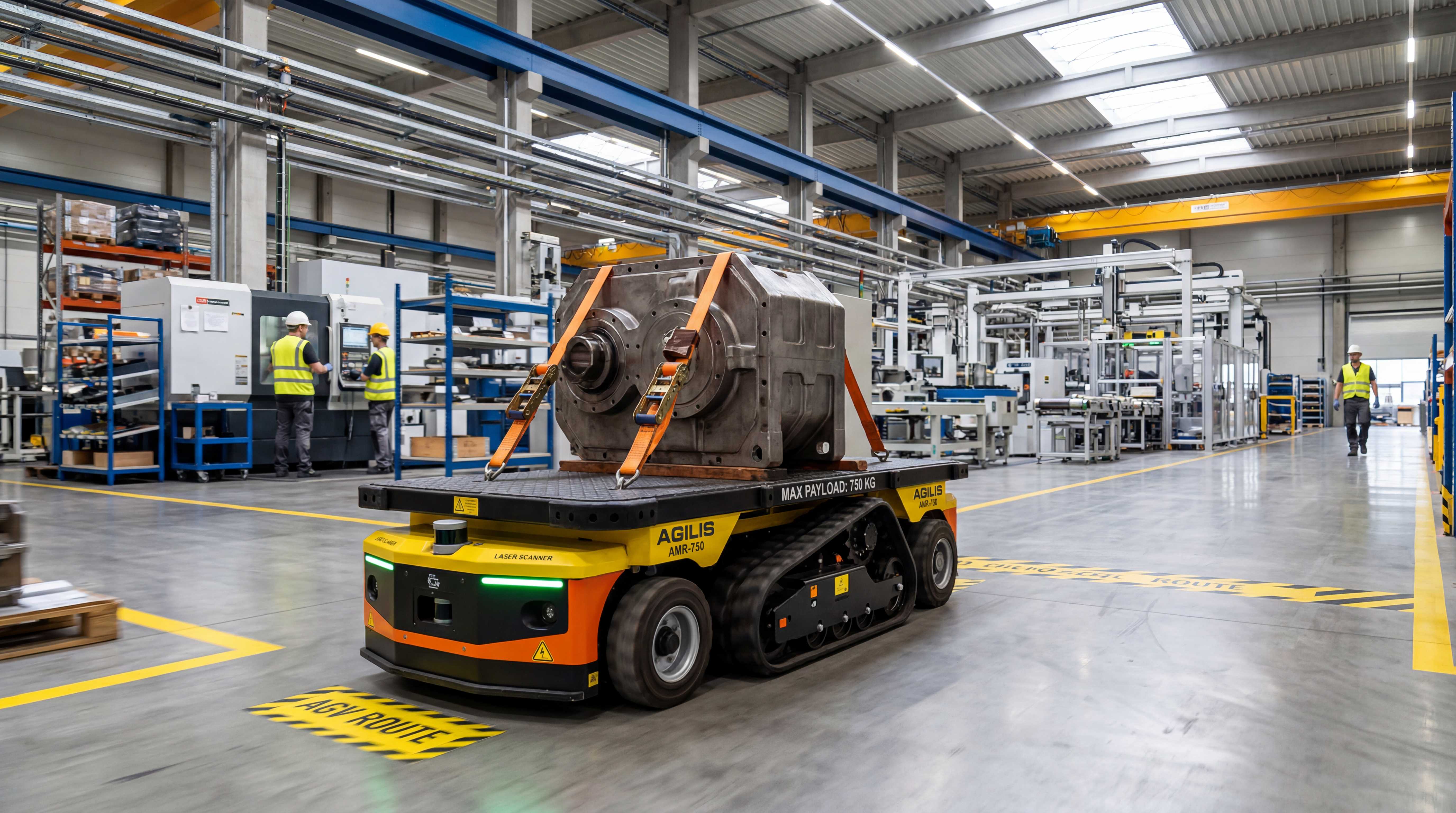
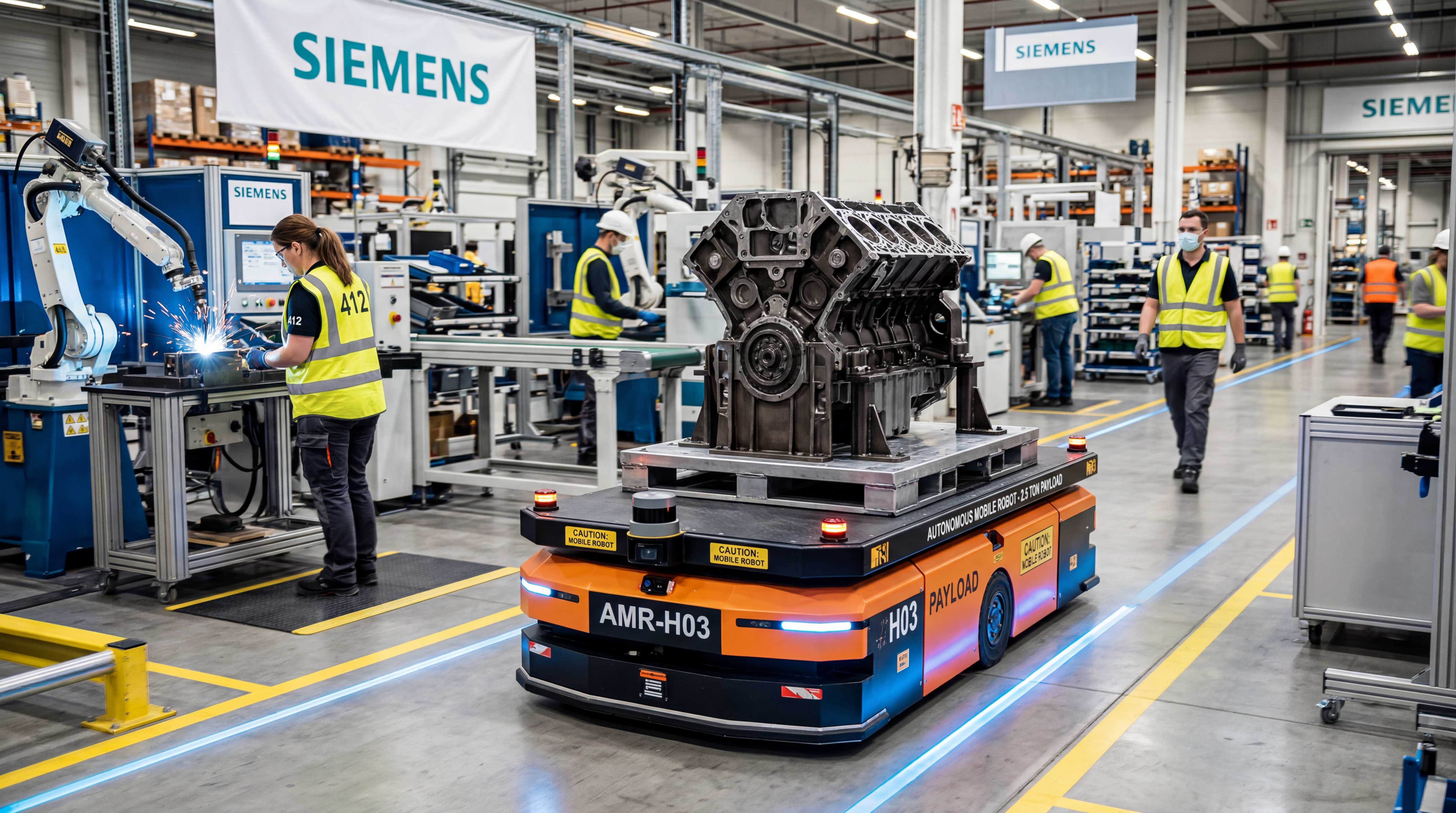
A heavy-payload AMR may carry pallets, racks, engine blocks, battery modules, molds, metal parts, fixtures or work-in-process materials. These loads are not only heavy. They may be wide, tall, unstable, fragile, high value or difficult to stop quickly. Once the robot begins moving, the safety risk is shaped by the robot, the load, the floor, the route, the speed, the braking distance, the workers nearby and the surrounding equipment. A safety scanner can detect objects, but it cannot solve every risk created by poor route design, unstable loading or unclear human-robot interaction rules.
This is why autonomous mobile robot safety must be designed around the complete operating environment. The same robot may be safe in a wide, clean, controlled aisle but risky in a crowded warehouse where pallets block routes and workers cross unexpectedly. The same safety field design may work when the robot is empty but become insufficient when the robot carries an overhanging load. The same speed setting may be acceptable in an isolated route but too high near pedestrian crossings or forklift traffic.
For industrial buyers, the correct question is not only “Does the AMR have safety sensors?” The better question is “Has the whole operation been designed for safe heavy-load movement?” This includes AMR risk assessment, protective field configuration, speed zone planning, load stability control, emergency stop AMR logic, traffic separation, worker training, maintenance routines and exception handling.
A safe heavy-payload AMR project does not happen automatically after purchasing the robot. It is created through planning, testing, validation and daily management. The strongest safety strategy treats the robot as one part of a larger material flow system where people, machines, loads and software must work together.
Start with AMR Risk Assessment Before Choosing the Route
A professional heavy-payload AMR safety plan should begin with AMR risk assessment. This means identifying where risks may appear before the robot is deployed. The assessment should not be limited to the robot body. It should include the full robot-load-process environment.
The first part of risk assessment is understanding the load. What is the maximum weight? Is the load low and compact or tall and unstable? Does it overhang the chassis? Can it shift during acceleration, braking or turning? Is it fragile or dangerous if dropped? Does it require securing, clamping or special fixtures? Heavy-load AGV safety depends heavily on the physical behavior of the load, not only the control system of the vehicle.
The second part is understanding the route. Where will the robot travel? Will it share space with workers, forklifts, manual carts, pallet trucks or other robots? Are there blind corners, narrow aisles, doors, elevators, ramps, intersections or docking points? Are there areas where workers regularly step into the route? Are pallets or carts often left in the aisle? A safe route is not simply the shortest route. It is the route with controlled risk.
The third part is understanding interaction points. Most incidents or disruptions are more likely to happen at crossings, pickup points, drop-off points, charging stations, production cells, staging zones and maintenance areas. These places require special attention because the robot is interacting with people, loads, equipment or workflow changes. A heavy-payload AMR may move safely in open travel but become risky during docking if the station is crowded or poorly marked.
The fourth part is defining abnormal situations. What happens if a worker steps into the safety field? What happens if a pallet is placed incorrectly? What happens if the robot loses localization confidence? What happens if a forklift blocks the route? What happens if the emergency stop is pressed? What happens if the robot stops with a heavy load in the middle of a busy aisle? Risk assessment should define these scenarios before commissioning.
A good AMR risk assessment makes the project more realistic. It prevents buyers from assuming that sensors alone will solve operational problems. It also helps vendors, integrators and facility teams agree on responsibilities before the robot enters daily production.
Safety Field Design Must Follow the Real Moving Envelope

Safety field design is one of the most important technical layers in autonomous mobile robot safety. A safety field defines the protective detection area around the robot. When a person or obstacle enters the field, the robot may slow down, stop or trigger a safety response. For light AMRs, this may seem straightforward. For heavy-payload AMRs, it becomes more complex.
The first reason is braking distance. A heavy load creates higher inertia. The robot needs more time and distance to stop safely. If the protective field is too short for the loaded speed, the robot may detect an obstacle but not have enough stopping distance. This is why AMR speed zones and safety fields must be designed together. Higher speed requires more protective distance. Heavier loads usually require more conservative safety planning.
The second reason is load overhang. The safety field should not only consider the chassis footprint. It must consider the real moving envelope of the robot and load. If a pallet extends beyond the body, the swept area during turning may be larger than the scanner location suggests. If a rack is tall or wide, it may create risks at shoulder height or near fixed structures. A safe field design should account for the full robot-load combination.
The third reason is movement direction. Some heavy-payload chassis can move forward, reverse, rotate or move sideways depending on drive type. The safety field must match the actual direction of travel. A robot that moves sideways needs lateral protection. A robot that rotates with an overhanging load needs protection around the swept path. A robot that backs into a docking station needs rear protection and clear station logic.
The fourth reason is operating zone. The same robot does not need the same behavior everywhere. In a wide isolated lane, it may move at a higher speed with a longer protective field. Near a pedestrian crossing, it may need to slow down. Near a docking point, it may move slowly and precisely. Near a production workstation, it may need more conservative interaction rules. Safety field design should be zone-based, not one-size-fits-all.
Buyers should ask vendors how the AMR safety scanner is configured for loaded conditions, turning behavior, route zones and docking modes. A scanner is only useful when the protective fields are engineered for the real task.
Speed Zones Are a Practical Tool for Heavy-Load Safety

AMR speed zones are one of the most practical tools for balancing safety and productivity. A heavy-payload AMR does not need to move at the same speed everywhere. In fact, it should not. Different areas of the facility have different risk levels, traffic patterns and space constraints.
Open travel lanes may allow moderate speed if the floor is clean, the route is clear and pedestrian access is controlled. Intersections may require reduced speed because people, forklifts or other robots may cross. Narrow aisles may require slower speed because clearance is limited. Docking zones may require very slow movement because positioning accuracy and load transfer are more important than travel speed. Charging areas and maintenance zones may require special low-speed or restricted behavior.
The loaded condition should also affect speed. A robot carrying a compact, low and stable load may move differently from the same robot carrying a tall rack or overhanging pallet. If the load has a high center of gravity, turning speed should be controlled carefully. If the load is fragile, acceleration and deceleration should be smoother. If the route includes ramps or floor transitions, speed may need additional limits.
Speed zones also improve worker confidence. People can learn that robots move slowly in shared areas and faster only in controlled lanes. This predictability is important for human robot interaction warehouse environments. When workers understand the robot’s behavior, they are less likely to feel surprised or unsafe.
However, speed zones must be designed with throughput in mind. If every area is set too slow, the robot may become inefficient and fail to meet production needs. If too many areas are set too fast, safety risk increases. The goal is not maximum speed or minimum speed. The goal is appropriate speed for each zone, load and interaction condition.
Load Stability Is Part of Safety, Not Only Performance

Load stability is often discussed as a performance issue, but it is also a safety issue. A heavy-payload AMR that carries an unstable load can create risk even if the robot itself is functioning correctly. The safety system cannot be separated from the physical behavior of the load.
A stable load should remain secure during normal movement, turning, braking and controlled stops. If the load can slide, tilt, bounce or shift, the project needs better carrier design, fixture design, speed control or handling rules. A load that appears stable while stationary may behave differently when the robot accelerates or turns. Testing should include real motion, not just static placement.
Pallet quality is an important factor. Damaged pallets, uneven surfaces, broken boards, poor wrapping and unbalanced stacking can reduce safety. Human forklift drivers may compensate for inconsistent pallets, but autonomous systems need more predictable load conditions. If autonomous pallet transport is planned, pallet standards should be defined and enforced.
Custom fixtures may be necessary for heavy industrial parts. Engines, molds, battery trays, castings and frames may need locating pins, support blocks, clamps or anti-slip surfaces. These fixtures do more than improve transport quality. They help prevent load movement during robot operation. For high-value or irregular loads, a custom fixture may be a safety requirement, not an optional accessory.
Load height and center of gravity should also guide safety settings. A tall load may require lower speed and larger turning radius. An offset load may require special placement rules. A load that overhangs the chassis may require a larger safety envelope. Heavy-payload AMR safety must always consider the load profile.
Emergency Stop AMR Logic Should Be Clear to Everyone
Emergency stop AMR design is a visible part of robot safety. Most industrial mobile robots include emergency stop devices that allow people to stop the robot quickly. However, the presence of an emergency stop button is not enough. Workers must understand when to use it, what happens after it is pressed and how the system should recover.
In heavy-payload applications, an emergency stop may stop a robot carrying a large load in the middle of a route. This can create a secondary situation. The load may block traffic, affect production, require manual recovery or create a hazard if it stops at an intersection. For this reason, emergency behavior should be part of the operational plan, not only a hardware feature.
The emergency stop response should be predictable. Does the robot stop immediately? Does it apply controlled braking? Does the load remain stable during the stop? Does the system report its status to the fleet manager? Does it require manual reset? Who is allowed to reset it? How does the facility prevent unauthorized restart? These questions should be answered before operation begins.
Workers should also be trained on the difference between normal obstacle stops and emergency stops. If a person walks into the safety field, the robot may slow or stop automatically. That is not the same as pressing emergency stop. If workers use emergency stop for every minor inconvenience, uptime suffers. If workers hesitate to use it when needed, safety suffers. Clear rules are essential.
Recovery procedures should be simple and safe. A stopped heavy-payload AMR should not become a mystery on the floor. Operators should know whom to call, how to mark the area, how to inspect the load and how to resume or remove the robot. Emergency stop logic is only effective when the human procedure is as clear as the machine response.
Human-Robot Interaction Requires Predictable Behavior
Human robot interaction warehouse design is not only about avoiding collisions. It is about making robot behavior understandable to people. Workers need to know where robots travel, how they move, what lights and sounds mean, when they will stop, when they will restart and where it is safe to stand or cross.
Predictable routes help. Even if the robot uses flexible navigation, facilities should define preferred lanes, crossings and waiting points. People should not have to guess whether a heavy-payload AMR may suddenly choose a route through their work area. Clear robot lanes, floor markings, signage and traffic rules help workers build trust.
Clear signaling also helps. Lights, displays, sounds and projected zones can communicate robot status. A worker should be able to understand whether the robot is moving, waiting, blocked, charging, docking or requesting help. The more intuitive the communication, the less workers need to rely on training alone.
The robot’s motion style also affects interaction. Smooth acceleration, controlled deceleration and consistent stopping behavior make people more comfortable. A robot that frequently hesitates, makes sudden corrections or starts unexpectedly can create anxiety. For heavy loads, worker confidence is especially important because the physical presence of the robot is more significant.
Managers should also define interaction rules. Can workers walk in front of the robot? Should they wait at marked crossings? Can they manually move a blocked pallet? Who can intervene if the robot stops? Can forklift drivers enter robot lanes? These rules should be practical and visible. Autonomous mobile robot safety depends on human behavior as much as machine capability.
Mixed Traffic with Forklifts Needs Special Control

Many heavy-payload AMRs operate in facilities that still use forklifts. This creates mixed traffic. Forklifts are fast, flexible and driven by people. AMRs are predictable but slower and governed by digital rules. Without clear planning, the two systems can interfere with each other.
The first question is separation. Can robot routes be separated from forklift routes? Complete separation is ideal but not always possible. If separation is not possible, crossings should be controlled. The facility should define who has priority, where forklifts may cross robot lanes and how robot speed changes in shared zones.
The second question is visibility. Forklift drivers must know where AMRs operate. Signage, floor markings, lights and training should make robot zones obvious. If a forklift driver does not expect a robot at an intersection, the safety risk increases. Heavy-load AGV safety should include forklift driver awareness, not only AMR sensor settings.
The third question is route blocking. Forklifts often place pallets temporarily in aisles or staging areas. This can block AMR routes and create frequent stops. If robots stop too often, productivity drops and workers may begin to ignore system rules. Good material discipline is part of safety and efficiency.
The fourth question is exception handling. If a forklift needs to enter a robot area for a special task, how is that managed? Is the robot route paused? Is there a manual override? Does the fleet system know the area is blocked? Mixed traffic requires operational rules that both robot operators and forklift drivers understand.
A heavy-payload AMR can reduce repetitive forklift traffic, but it does not automatically remove forklift risk. The safest approach is to redesign traffic flow so that routine robot movement and flexible forklift tasks support each other instead of competing in the same space.
Docking, Charging and Maintenance Areas Need Their Own Safety Logic
Many safety discussions focus on travel routes, but docking, charging and maintenance areas are equally important. These are places where robots slow down, align, transfer loads, connect to equipment or receive human attention. Because the robot is interacting with the environment, risk changes.
Docking areas should be designed to keep people out of dangerous positions. If a heavy-payload AMR is aligning with a conveyor, rack, pallet station or machine, workers should not stand between the robot and the station. Physical guards, floor markings, warning lights or access rules may be needed depending on the application. Docking should be slow, controlled and visible.
Charging areas also need planning. A robot may move to an automatic charging station when battery is low. If the charging area is near pedestrian traffic or storage zones, the approach path should be controlled. Workers should know not to block charging bays. Electrical safety, access control and charging status communication should be part of the plan.
Maintenance areas require even clearer procedures. A heavy-payload AMR may need wheel inspection, sensor cleaning, battery service, lift module maintenance or software checks. Maintenance should happen in a designated area where the robot can be isolated safely. Technicians should have lockout or safe-service procedures according to the facility’s rules and applicable AGV safety standards.
A common mistake is treating docking, charging and maintenance as secondary details. In daily operation, these areas may become frequent interaction points. If they are poorly designed, they can create more safety issues than the main travel route. A complete safety plan gives these zones specific rules.
Software and Fleet Management Also Affect Safety
Heavy-payload AMR safety is not only mechanical or sensor-based. Software plays a major role. Fleet management systems, traffic control rules, task priority logic, route permissions and status monitoring all influence safe operation.
When multiple robots operate together, the fleet system should prevent route conflicts, deadlocks and unsafe congestion. Heavy-payload robots may need more space than small AMRs, so traffic rules should account for turning radius, braking distance and load footprint. A route that works for one robot may become risky when several robots queue in the same area.
Task priority can also affect safety. If urgent tasks cause robots to reroute frequently or enter crowded areas at the wrong time, risk increases. The system should balance productivity with controlled movement. A safe fleet strategy may include waiting points, restricted zones, route reservations and speed adjustments.
Monitoring is another safety layer. Operators should know where robots are, what tasks they are performing and whether any robot is blocked, stopped, faulted or low on battery. Clear visibility helps teams respond quickly. Without monitoring, a stopped robot with a heavy load may be discovered only when it creates a bottleneck.
Software also supports continuous improvement. Data about stops, blocked routes, near-miss areas, emergency stops and manual interventions can reveal hidden safety problems. A heavy-payload AMR system should not be considered finished after launch. It should be reviewed and adjusted based on real operation.
Training Turns Technical Safety into Operational Safety
Even the best safety design can fail if workers do not understand it. Training is the bridge between technical safety and operational safety. Everyone who works near the robot should know the basic behavior, warning signals, routes, crossing rules and emergency procedures.
Operators should know how to request tasks, interpret robot status, respond to faults and avoid unsafe manual intervention. Forklift drivers should know where robot routes are active and how to interact at crossings. Maintenance teams should know how to inspect sensors, wheels, batteries, brakes, lift modules and emergency stop devices. Supervisors should know how to review route changes and approve new operating zones.
Training should be practical, not only theoretical. Workers should see the robot move, stop, dock, signal and recover from common situations. They should understand what happens if they enter the safety field. They should know when to call support and when not to interfere. The goal is to make robot behavior predictable and worker response consistent.
Training should also be repeated. New employees, temporary workers, contractors and visitors may not understand autonomous mobile robot safety. If they enter AMR areas without guidance, risk increases. Facilities should use signs, floor markings and access rules to support training.
A heavy-payload AMR safety program should therefore include people from operations, maintenance, safety, logistics and production. Safety cannot belong only to the robot supplier. It must become part of the facility’s daily operating culture.
A Practical Safety Checklist for Heavy-Payload AMR Projects
Check the Load
Define the maximum weight, load dimensions, center of gravity, overhang, stability, securing method, pallet condition and fixture requirement. A heavy-payload AMR safety plan must start with the real load, not only the rated payload capacity.
Check the Route
Review aisle width, intersections, pedestrian crossings, forklift zones, blind corners, doors, ramps, elevators, staging areas and docking points. The safest route is usually not just the shortest route. It is the route with manageable and visible risk.
Check the Safety Fields
Confirm that the AMR safety scanner fields match loaded speed, braking distance, direction of travel, load overhang and turning behavior. Safety field design should be tested with the final robot configuration.
Check the Speed Zones
Define speed zones for open lanes, shared areas, crossings, narrow aisles, docking stations, charging areas and maintenance zones. AMR speed zones should balance productivity with safe heavy-load movement.
Check the Human Interaction Rules
Define how workers cross robot routes, how forklift drivers interact with AMRs, who can reset emergency stops, who can change routes and how blocked robots are handled. Human robot interaction warehouse rules should be visible and practical.
Check the Recovery Plan
Plan what happens when the robot stops, loses localization, detects an obstacle, fails to dock, carries a misaligned load or enters emergency stop. Safe recovery is part of safe deployment.
Focused FAQ
What makes heavy-payload AMR safety different from standard AMR safety?
Heavy-payload AMR safety is more complex because heavy loads create higher inertia, longer braking distance, larger safety fields and greater consequences if the load shifts or the robot stops unexpectedly. The safety plan must consider the robot, load, route, workers, forklifts, docking points and operating rules together.
Is an AMR safety scanner enough to make the robot safe?
No. An AMR safety scanner is important, but it is only one layer of safety. Heavy-payload AMR safety also requires risk assessment, correct field configuration, speed zones, load stability, traffic rules, worker training, emergency stop procedures and maintenance discipline.
Why are AMR speed zones important?
AMR speed zones allow the robot to move at different speeds in different areas. A robot may travel faster in open controlled lanes but slow down near pedestrians, intersections, docking stations, narrow aisles or forklift zones. This helps balance productivity and safety.
How should facilities manage emergency stop AMR procedures?
Facilities should define when emergency stop should be used, what happens after it is pressed, who can reset it, how the load is inspected and how the robot returns to operation. Emergency stop procedures should be trained clearly so workers do not misuse or ignore them.
How does load stability affect AMR safety?
Load stability affects whether the material can remain secure during acceleration, braking, turning and docking. Unstable loads may shift, tilt or fall even if the robot is operating correctly. Heavy loads may require better pallet standards, fixtures, clamps, speed limits or route controls.
What should buyers check about AGV safety standards?
Buyers should confirm that the robot supplier, integrator and facility safety team understand the applicable AGV safety standards and local requirements for their region and application. They should also verify risk assessment, safety validation, documentation, training and maintenance responsibilities before production use.
Conclusion: Safe Heavy-Payload Automation Requires System Thinking
Heavy-payload AMR safety cannot be reduced to a checklist of sensors. Sensors matter, but they work only inside a larger safety system. A safe heavy-load automation project begins with AMR risk assessment and continues through route design, safety field design, speed zone planning, load stability control, emergency stop logic, traffic management, worker training and long-term monitoring.
The heavier the load, the more important it becomes to think beyond the robot body. Buyers should evaluate the full moving envelope, braking distance, center of gravity, pallet quality, docking interaction, mixed traffic and human behavior. A heavy-payload AMR should not simply be allowed to move through an existing facility without process redesign. The facility must be prepared for autonomous material flow.
The best safety strategy is practical and visible. Workers should understand robot behavior. Routes should be clear. Speed zones should match risk levels. Safety fields should match loaded movement. Emergency procedures should be easy to follow. Software should monitor the fleet and reveal recurring issues. Maintenance should keep sensors, wheels, brakes and load interfaces reliable.
When safety is treated as a system, heavy-payload AMRs can reduce repetitive forklift traffic, support predictable material movement and improve industrial logistics without creating unnecessary risk. For factories and warehouses, safe automation is not only about preventing incidents. It is about building a material handling system that people can trust every day.
#AutonomousMobileRobotSafety
#AMRSafetyScanner
#AMRRiskAssessment
#AGVSafetyStandards
#HeavyLoadAGVSafety
#AMRSpeedZones
#EmergencyStopAMR
#HumanRobotInteractionWarehouse
#SafetyFieldDesign