Solar Facade Retrofit: Using Colored BIPV to Upgrade Existing Buildings
Existing Buildings Are the Real Test for Urban Solar Growth
Many discussions about solar architecture begin with new buildings. A new project can plan its roof angle, facade grid, electrical rooms, cable routes, structural loading and sustainability targets before construction begins. In that environment, BIPV can be designed from the first concept sketch. The process is still complex, but at least the building has not yet fixed its shape.
Existing buildings are different.
A city is mostly made of buildings that already stand. Their facades are already facing streets, their structures are already defined, their roof areas may already be crowded, and their owners may already be dealing with aging cladding, outdated appearance, rising energy costs and stricter sustainability expectations. If the energy transition depends only on new buildings, progress will be slow. Most urban carbon and energy challenges are already locked into the existing building stock.
This is why solar facade retrofit is becoming a strategic topic. It asks whether existing facades can do more than protect the building and define its appearance. It asks whether old, passive exterior surfaces can become energy-producing assets. It also asks whether solar can be introduced without making a finished building look like it has been covered with technical equipment.
For many existing buildings, the roof is not enough. The roof may be too small, too shaded, structurally limited, occupied by HVAC systems, or reserved for maintenance access. High-rise buildings are especially challenging because their roof area is small compared with their total floor area. Their facades, however, can be large. If even part of that vertical surface can generate electricity, the building’s energy strategy changes.
This is where colored BIPV retrofit becomes different from ordinary solar installation. It does not simply add modules to an old surface. It uses photovoltaic materials as part of a facade renewal strategy. The building may need new cladding anyway. It may need a stronger sustainability story. It may need a better exterior identity. It may need energy upgrades to remain competitive. In that context, existing building BIPV is not an optional decoration. It can become part of the building’s next lifecycle.
A Retrofit Facade Is Not an Empty Surface
The first mistake in many solar retrofit conversations is treating the facade as blank space. From a distance, a wall may look like a large available area. In reality, a facade is a complicated system.
It contains windows, spandrels, columns, floor edges, anchors, insulation, fire barriers, waterproofing layers, ventilation cavities, shading elements, maintenance access points, air intakes, signage, balconies, expansion joints and structural limits. It also has a public image. The facade is not only a surface. It is a system of performance, safety, identity and value.
That is why building facade solar panels cannot be specified like ground-mounted modules. A facade retrofit must begin with diagnosis. The project team needs to understand what the existing facade is made of, how it is fixed, whether it is failing, how much load it can accept, whether water has entered the envelope, what fire regulations apply, and how accessible the surface is for installation and future maintenance.
A strong solar facade renovation does not ask only, “How many panels can fit?” It asks a deeper set of questions. Which parts of the facade are suitable for active photovoltaic panels? Which parts should remain passive? Which orientation has the best solar exposure? Which areas are too shaded? Which surfaces are visible from the street? Which materials need replacement? Which parts of the facade define the building’s identity? Which upgrades are already planned?
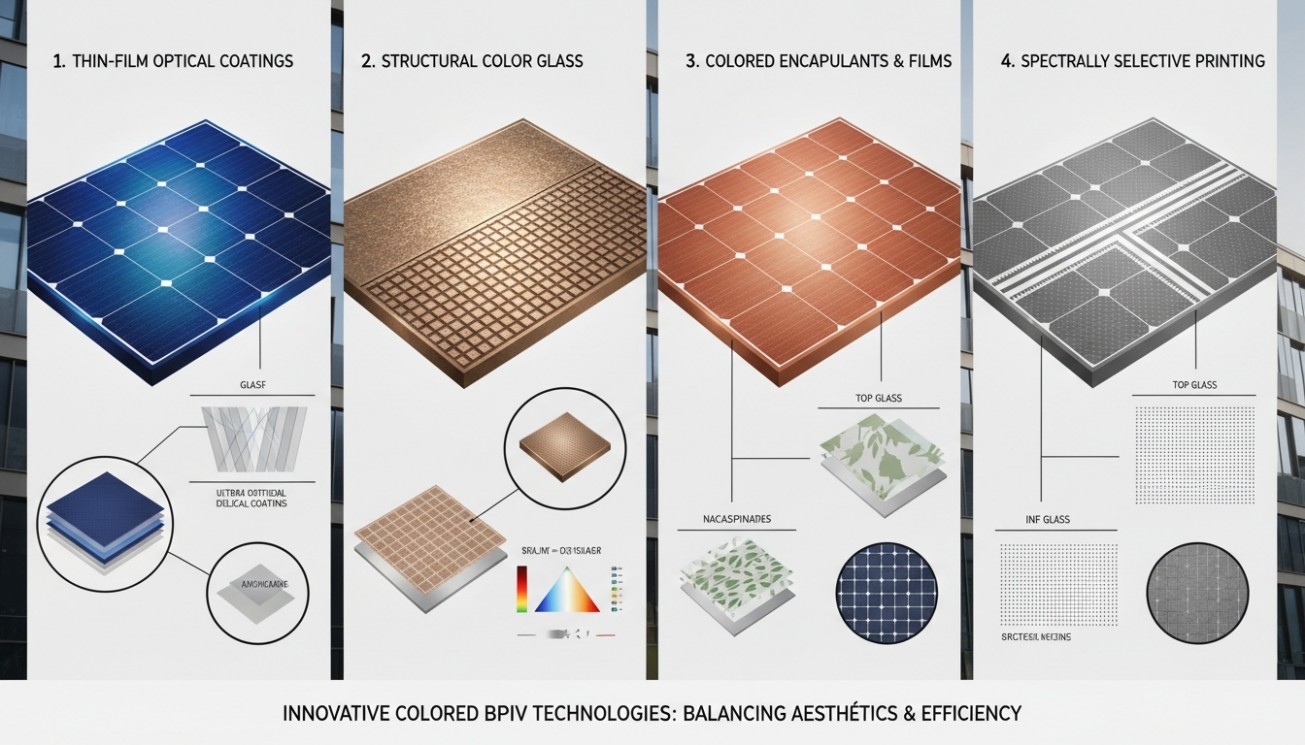
These questions turn solar from a product purchase into a building strategy. They also explain why color matters. Standard dark modules may produce more energy per square meter, but they may not be acceptable on a visible urban facade. Colored solar cladding gives the project team a wider range of design choices, making it easier to combine energy generation with architectural renewal.
Why Facade Retrofit Is Different From Rooftop Solar
Rooftop solar is usually evaluated through roof area, orientation, shading, structure, inverter design and grid connection. These factors still matter in facade projects, but photovoltaic facade renovation adds several layers of complexity.
A vertical facade receives sunlight differently from a roof. In many climates, vertical surfaces may receive less annual irradiation than optimally tilted rooftops, but they can still provide useful energy, especially on large commercial buildings. East and west facades may produce power at different times of day. South-facing facades may perform better in winter in the northern hemisphere because the sun is lower. Urban canyons, neighboring towers, trees and street geometry all affect output.
A facade also faces stronger visual pressure. A rooftop system may be barely visible. A facade system is part of the street. This means the product must satisfy architects, tenants, owners, local authorities and the public. A technically efficient but visually awkward system may reduce property value instead of improving it.
Another difference is material substitution. Rooftop solar usually sits above a finished roof. In a BIPV cladding retrofit, photovoltaic panels may replace or cover existing facade materials. This creates a different economic logic. The project is not only paying for solar power. It may also be paying for new exterior cladding, weather protection, updated appearance and asset repositioning.
This is why retrofit should not be judged only by cost per watt. If the building already needs recladding, part of the BIPV investment belongs to the facade budget. If the building gains a stronger ESG identity, part of the value belongs to branding and asset strategy. If the system uses a vertical surface that would otherwise remain passive, the energy value should be seen as an added function.
A mature solar facade retrofit compares several alternatives: passive recladding, conventional rooftop PV, standard facade PV, colored BIPV cladding, and combined building envelope upgrades. The best answer depends on the building, not on a universal product rule.
Colored BIPV Retrofit Works Best When the Building Already Needs Change
Not every building should receive colored BIPV retrofit. The strongest cases usually appear when the building already has a reason to change.
One reason is facade aging. Many older commercial buildings have outdated cladding, poor waterproofing, staining, corrosion, thermal bridges, failing sealants or obsolete exterior materials. If the facade must be repaired or replaced, the owner has an opportunity to evaluate colored solar cladding as an active alternative to passive panels.
Another reason is energy performance. Buildings may face new energy codes, carbon reporting requirements, green leasing expectations, or internal ESG goals. A facade retrofit can combine envelope improvement with renewable energy generation, especially if insulation, shading and photovoltaic cladding are planned together.
A third reason is market repositioning. An old office building may need to compete with newer, greener properties. A visible active solar facade can signal modernization and sustainability. This is especially valuable for headquarters, technology campuses, public institutions, universities, hotels and commercial assets that depend on brand perception.
A fourth reason is limited roof space. High-density buildings may not have enough roof area to support meaningful PV capacity. In these cases, building facade solar panels can expand the usable solar surface.
A fifth reason is urban identity. Some buildings have large blank facades that contribute little to the street. A well-designed solar facade renovation can improve appearance while adding energy function.
The best retrofit projects do not begin with a supplier asking to sell panels. They begin with a building owner asking how to extend the building’s useful life.
From Passive Cladding to Energy-Producing Skin

The idea of BIPV cladding retrofit becomes clearer when compared with conventional recladding. A passive cladding panel protects the building, updates appearance and may improve weather resistance. It does not generate electricity. A BIPV cladding panel can do those same things while producing power.
This does not mean photovoltaic cladding is automatically better. It must still meet fire safety, structural, weatherproofing, maintenance and cost requirements. But it changes the value of the facade. The exterior is no longer only a cost item. It becomes part of the building’s energy infrastructure.
An active solar facade can also change how the building is perceived. Instead of hiding sustainability on the roof, the building expresses it through its public surface. This can be useful for companies, universities, city governments and property owners who want their sustainability investments to be visible.
However, visibility must be handled carefully. A facade should not become a billboard for technology unless that is the intended design. Colored solar cladding allows the solar surface to be quiet, warm, bold, neutral, patterned or context-sensitive. A dark grey BIPV facade may suit a corporate office. A terracotta or bronze tone may fit an urban renovation. A blue-green facade may suit a technology building. A custom pattern may support public identity.
The most successful photovoltaic facade renovation projects do not treat the solar panels as separate objects. They make the photovoltaic layer part of the architectural composition. The modules align with the facade grid. Active and passive panels are visually coordinated. Cable routes are hidden. Replacement access is planned. The final surface looks like a new building skin, not a technical patch.
The Retrofit Audit: What Must Be Studied Before Design

A professional solar facade retrofit should begin with an audit. This audit should combine building envelope analysis, solar analysis, visual analysis and operational planning.
The first part is physical condition. What is the existing facade system? Is it curtain wall, rainscreen cladding, masonry, metal panels, glass, concrete, ceramic, composite board or stone? Is it structurally sound? Are there water leaks, thermal problems, loose panels or fire safety concerns? If the facade already has defects, BIPV should not be placed on top of unresolved problems.
The second part is solar potential. Which orientations receive useful sunlight? How much shading comes from neighboring buildings, balconies, trees or overhangs? Which zones have the best annual yield? Which zones are too fragmented? For existing building BIPV, the installable area is often much smaller than the theoretical facade area. Windows, vents, access zones and shadows reduce practical potential.
The third part is architectural value. Which facade surfaces are most visible? Which areas define the building’s identity? Which materials should remain? Which zones can accept a new appearance? A retrofit on a rear elevation may allow stronger technical expression, while a front elevation may need more refined colored BIPV retrofit.
The fourth part is electrical feasibility. Where can cables run? Where can inverters be placed? How will active facade zones be grouped? Can the system be isolated safely? Can maintenance teams access electrical components?
The fifth part is construction phasing. Can the building remain occupied during work? Will tenants be affected? Does the facade need scaffolding, swing stages or mast climbers? Can panels be replaced floor by floor?
This audit prevents unrealistic design. It turns retrofit from a rendering exercise into a buildable project.
Color Is a Retrofit Tool, Not a Surface Decoration
In a retrofit project, color has a different role than in new construction. A new building can choose its identity from the beginning. An existing building already has a history, context and public image. The retrofit color must either respect that identity, improve it or deliberately transform it.
This is why colored solar cladding is so important. If a building has a beige stone facade, a deep black photovoltaic skin may feel too aggressive. If a building has a tired grey metal exterior, a new bronze or blue-grey solar facade may modernize it. If a building sits in a brick neighborhood, terracotta or warm brown tones may help the retrofit feel contextual. If the owner wants a bold sustainability statement, custom colors may be appropriate.
Color also helps active and passive facade zones work together. Not every panel can generate electricity. Some areas may be shaded, too small, or occupied by windows and service openings. A project may use active BIPV panels in suitable zones and passive matching panels elsewhere. This approach maintains visual continuity while placing PV function where it performs best.
For solar facade renovation, this is often more important than maximizing every square meter. A facade that looks coherent can protect the building’s value. A facade that looks patched together may reduce confidence, even if the electrical system works.
The selection of color should therefore be linked to urban context, building type, tenant profile and performance modeling. It should not be left to the final procurement stage. In a strong BIPV cladding retrofit, color belongs in the earliest design discussions.
Hidden Engineering Makes the Facade Look Simple
Good retrofit facades often look simple after completion. That simplicity is the result of hidden engineering.
Behind building facade solar panels, the project must solve structure, fire safety, moisture control, thermal movement, cable routing, grounding, monitoring and replacement access. If any of these are poorly handled, the facade may become unsafe, difficult to maintain or visually messy.
Structure is critical. Existing buildings were not always designed for new exterior loads. The added system may include rails, brackets, panels, cables, air gaps and support frames. Wind load must be transferred safely. The attachment method must respect the existing wall and structural frame.
Fire safety must be considered early. Facade fire requirements vary by location and building type. BIPV cladding introduces electrical components and may change cavity behavior. The project team must understand local regulations, material classifications, fire breaks and emergency access.
Moisture control matters because the facade is the building’s weather shield. A photovoltaic facade renovation should not create hidden water paths, condensation traps or drainage problems. The BIPV layer must work with waterproofing and ventilation strategies.
Cable routing determines whether the facade looks professional. Visible cables, inconsistent junction boxes or exposed conduits can ruin the architectural result. A clean active solar facade requires careful coordination between electrical design and facade detailing.
Replacement planning is often underestimated. If one panel fails or is damaged, can it be removed without dismantling a large area? Can the replacement match the color? Can electrical connections be accessed safely? These questions should be answered before installation, not after a problem appears.
Energy Facade Retrofit Should Include the Building Envelope
The phrase energy facade retrofit should not mean only adding PV to the wall. A facade influences heating, cooling, daylight, shading, ventilation, air leakage and comfort. If a building is being upgraded, the project should consider the whole envelope.
For example, a building with poor insulation may benefit from a ventilated BIPV rainscreen system combined with new insulation. A glass-heavy facade may benefit from photovoltaic shading elements that reduce heat gain. A south-facing facade may support active panels, while other elevations may focus on thermal upgrades. A canopy or entrance roof may generate power while improving user comfort.
This broader view changes the project economics. If the retrofit reduces cooling loads, improves occupant comfort and generates electricity, the value is stronger than PV output alone. If the facade is only used for panels but the building envelope remains inefficient, part of the opportunity is lost.
Solar facade retrofit should therefore be part of a building performance strategy. The PV system is important, but it is not isolated. It interacts with insulation, glazing, airtightness, shading, HVAC demand and operational schedules.
This is especially relevant for older commercial buildings. Many of them need both visual modernization and energy improvement. A coordinated energy facade retrofit can address both needs. It can also support certification, green leasing and long-term asset resilience.
The Business Case Is Not Only Electricity Payback

A standard solar project often focuses on electricity payback. How much energy will the system produce? How much money will it save? How long is the payback period? These questions still matter for existing building BIPV, but they are incomplete.
In a BIPV cladding retrofit, the business case may include avoided cost of passive recladding. If the building would otherwise pay for new facade panels, part of the BIPV cost overlaps with a necessary renovation budget.
It may include asset value. A modern solar facade can reposition an outdated building and make it more attractive to tenants, investors or public users.
It may include ESG reporting. A visible renewable energy facade can support corporate sustainability claims more effectively than hidden rooftop equipment.
It may include regulatory preparedness. Buildings in many markets are facing stricter energy and carbon expectations. A retrofit can reduce future compliance risk.
It may include brand value. A public-facing active solar facade can communicate innovation and responsibility.
It may include resilience. On-site generation may support future electrification strategies when paired with storage, demand management or building energy systems.
This does not mean every colored BIPV retrofit is financially justified. Some projects will be too shaded, too complex or too expensive. But the business case should be evaluated against the correct alternative. If the alternative is passive facade replacement, the comparison is different from comparing colored BIPV only with low-cost rooftop modules.
Tenant and Public Perception Matter

Existing buildings are occupied, visited and recognized. A retrofit changes how people experience them. This makes tenant and public perception important.
A poorly designed solar facade renovation can make a building look experimental in a negative way. It may appear unfinished, overly technical or disconnected from its surroundings. A well-designed retrofit can make the building look renewed, responsible and future-ready.
Tenants may value lower energy costs, improved comfort and sustainability credentials. But they also care about appearance, daylight, access during construction and building reputation. If the retrofit disrupts operations too much, the project may create resistance. If it improves the building’s identity, it can become a leasing advantage.
Public perception also matters in urban areas. A facade is part of the street. Colored solar cladding can help the building contribute positively to the neighborhood instead of looking like infrastructure placed on a wall. In some cases, a solar facade can become a civic statement. In others, it should remain quiet and contextual.
The right communication strategy helps. The owner should explain why the retrofit is happening, what energy contribution is expected, how the design fits the building, and how construction impacts will be managed. This is especially important for public buildings, schools, cultural institutions and city-owned properties.
When Solar Facade Retrofit Is Not the Right Choice
A serious discussion of solar facade retrofit must include limits. Not every existing building is a good candidate.
Some facades are too shaded. Dense urban canyons can reduce yield significantly. Some buildings have too many windows or fragmented surfaces. Some have structural limitations that make additional facade loads difficult. Some have fire or code constraints that make BIPV cladding impractical. Some have historic or architectural value that should not be altered. Some are near the end of their lifecycle and may not justify investment.
In these cases, other strategies may be better. Rooftop PV, off-site renewable procurement, energy efficiency upgrades, heat pump systems, improved controls, passive recladding, window replacement or nearby solar canopies may deliver better value.
The maturity of the BIPV industry depends on honest suitability assessment. A supplier should not claim every facade can become solar. A professional approach identifies where photovoltaic facade renovation creates real value and where it does not.
The best projects are selective. They activate the right surfaces, leave unsuitable surfaces alone and integrate PV into a broader building strategy.
A Practical Roadmap for Colored BIPV Retrofit Projects

A practical colored BIPV retrofit roadmap can follow eight stages.
Building Diagnosis
Assess facade condition, structure, materials, thermal performance, waterproofing, fire issues and maintenance needs. Understand why the building needs renovation.
Solar Potential Mapping
Study orientation, shading, street context, neighboring buildings, seasonal sun, usable panel zones and expected yield. Separate theoretical facade area from practical installable area.
Architectural Strategy
Decide whether the retrofit should blend in, modernize, rebrand or become a visible sustainability feature. This determines the role of colored solar cladding.
Active and Passive Panel Planning
Define which panels will generate electricity and which will serve as matching passive facade materials. This is essential for a coherent BIPV cladding retrofit.
Engineering Coordination
Plan structure, mounting, fire safety, cable routing, ventilation, waterproofing, inverter zones, monitoring and maintenance access.
Financial Evaluation
Compare the BIPV option with passive recladding, rooftop PV, energy efficiency upgrades and mixed strategies. Include facade budget, energy value, asset value and ESG value.
Mockup and Approval
Review physical samples, color, reflectivity, panel joints, cable concealment and facade-scale appearance. Confirm with owners, architects, tenants and authorities.
Construction and Lifecycle Management
Plan installation phasing, tenant communication, commissioning, monitoring, cleaning, replacement and long-term documentation.
This roadmap makes existing building BIPV more realistic. It turns the concept of an active facade into a manageable project process.
What Buyers Should Ask Before Choosing a Supplier
A buyer considering solar facade retrofit should ask suppliers more than product price and wattage.
Can the supplier provide project references for retrofit buildings?
Can the system work as building facade solar panels or only as mounted modules?
Can active and passive panels be color-matched?
What colors are available for colored BIPV retrofit?
How does each color affect output per square meter?
What mounting systems are compatible with existing facades?
How are fire safety and ventilation addressed?
Can cables and junction boxes be hidden or coordinated with the facade system?
Can the supplier support drawings, mockups and facade engineering discussions?
How are replacement panels handled in the future?
Does the supplier understand construction phasing for occupied buildings?
These questions reveal whether the supplier is prepared for photovoltaic facade renovation or only standard PV sales. Retrofit projects need more coordination than simple module delivery. The supplier must understand building systems, not only solar products.
Focused FAQ
What is solar facade retrofit?
Solar facade retrofit is the process of upgrading an existing building facade with photovoltaic materials so the exterior surface can generate electricity while improving or replacing part of the building envelope.
How is colored BIPV retrofit different from normal solar installation?
Colored BIPV retrofit integrates colored photovoltaic materials into the building facade, often as cladding or architectural panels. Normal solar installation usually places standard modules on a roof or support frame without replacing facade materials.
What is BIPV cladding retrofit?
BIPV cladding retrofit uses photovoltaic cladding panels to replace or upgrade existing exterior materials. The panels serve as both facade elements and solar energy generators.
Are building facade solar panels suitable for old commercial buildings?
Building facade solar panels can be suitable for old commercial buildings if the facade has enough solar exposure, structural capacity, safe installation conditions, and architectural value for renovation. A detailed audit is necessary before design.
Why use colored solar cladding instead of black modules?
Colored solar cladding helps solar facades fit the building’s appearance, surrounding context and owner expectations. It can reduce visual resistance and make BIPV more acceptable on visible urban buildings.
Does photovoltaic facade renovation produce enough energy?
Photovoltaic facade renovation may produce less energy per square meter than optimally tilted rooftop solar, but it can activate large vertical surfaces that would otherwise produce no electricity. The value depends on orientation, shading, facade area and project goals.
What is an active solar facade?
An active solar facade is a building exterior that performs normal facade functions while also generating electricity through integrated photovoltaic materials.
What should buyers check before starting an energy facade retrofit?
Buyers should check facade condition, structure, shading, fire safety, waterproofing, color strategy, active-passive panel matching, cable routing, maintenance access, installation phasing and long-term replacement planning.
Conclusion
Existing buildings are one of the most important opportunities for the next stage of urban solar development. New buildings can be designed for BIPV from the beginning, but cities are already filled with older offices, schools, hotels, public buildings, residential towers and commercial assets that need renewal. Their facades are often passive, aging and underused.
Solar facade retrofit changes that. It allows exterior surfaces to become part of the energy system. When combined with colored BIPV retrofit, it also gives architects and owners the ability to upgrade buildings without sacrificing visual quality. A facade can become modern, contextual, branded, subtle or expressive while generating electricity.
The key is to treat the project as building renovation, not only solar installation. BIPV cladding retrofit, solar facade renovation, colored solar cladding and photovoltaic facade renovation all require coordination among owners, architects, facade engineers, electrical designers, suppliers and contractors. The product must fit the building, and the building must justify the product.
A successful active solar facade is not simply a wall covered with panels. It is a carefully designed building skin that manages appearance, energy, safety, weather, maintenance and long-term value. It turns a passive exterior into a productive asset.
For existing buildings facing energy pressure, outdated facades and new sustainability expectations, existing building BIPV offers a powerful idea: the next solar opportunity may not be above the building. It may already be on the building’s face.