
How Can Warehouse Robots Improve Inventory Accuracy?
Start With the Error You Need to Prevent
Warehouse robots can improve inventory accuracy by observing storage locations more frequently, identifying discrepancies earlier and directing people toward the records that need attention. The benefit depends on what the robot can reliably observe and how the warehouse resolves its findings. A readable pallet label, a verified item quantity and an approved inventory adjustment are different results.
For a buyer, the starting point is a recurring operational problem: a picker arrives at an apparently stocked location and finds nothing, a pallet has moved without a matching transaction, or a partial case contains fewer units than the system expects. Each problem needs different evidence. Buying more frequent images will help some of them directly and leave others dependent on a physical count.
This makes inventory visibility a useful next step in warehouse automation, especially where checking every high rack position manually consumes substantial effort. It also creates a purchasing trap: a compelling dashboard can make every displayed location look equally certain. A sound proposal shows where the evidence is strong, where it is incomplete and which team turns an observation into a corrected business record.
What the Recent Announcements Actually Demonstrate
On October 21, 2026, Dexory announced expanded Storage Health capabilities using NVIDIA Cosmos. The company said robot-captured warehouse imagery could support identification of open boxes, goods pulled forward and misaligned pallets, with additional analysis for results that existing models considered uncertain. The announcement did not publish a numerical improvement in inventory accuracy or establish that photographs verify every item inside a container.
Separately, in an October 13 announcement from ODW Logistics, the customer reported identifying 90% of inventory discrepancies before they affected order fulfillment. ODW also described plans to extend Dexory to four additional sites by the end of 2026. That 90% figure concerns when discrepancies were detected; it is not an inventory accuracy percentage or evidence that all planned sites were already operating. The announcement presents a customer-reported result rather than independent audit evidence.
Together, these announcements strengthen the case for investigating earlier observation and exception handling. They leave the buyer responsible for a more specific question: which errors in this warehouse can the proposed system detect, how quickly can staff resolve them, and what evidence will establish an improvement? The practical evaluation below addresses that question without assuming that one customer's reported results will transfer to another operation.
Separate Storage Visibility From Quantity Verification
An inventory robot may provide several kinds of evidence during the same aisle visit. It might read a visible identifier, observe whether a position is occupied, associate a load with a rack location or flag an unusual storage condition. Ask the supplier to name each supported observation separately, including the confidence threshold and the circumstances in which it returns an unknown result.

The following comparison is an editorial buying aid. It describes questions to validate against the proposed configuration, rather than capabilities guaranteed for every robot.
| Observation or result | What it can establish when validated | What still needs separate evidence |
|---|---|---|
| Readable load identifier at a mapped position | The observed identifier was associated with that location at the capture time | The contents, quantity and condition inside the load |
| Occupied or apparently empty rack position | A supported view of the position's occupancy | Whether hidden stock, an obstruction or incomplete visibility affected the result |
| Storage-condition alert | A visible condition deserves review under a defined detection rule | The cause, severity and appropriate corrective action |
| Counted individual units | A quantity for the specifically validated package and viewing arrangement | Accuracy for different packaging, mixed contents or hidden units |
| Approved inventory adjustment | An authorized business record has changed with a recorded reason | Supporting count evidence and the controls that authorized the change |
A sealed pallet with a readable identifier is often a location-verification problem. A half-used carton is a quantity problem. Both belong in warehouse inventory management, but they should not share an acceptance statement that merely says the robot checked the stock.
Also distinguish a storage alert from an inventory discrepancy. A protruding carton can require attention while the recorded SKU and quantity remain correct. Conversely, a visually orderly pallet can contain the wrong quantity. Route these findings to the appropriate workflow so a busy condition-alert queue does not conceal errors that will affect the next order.
Build a Count Plan Around What the Robot Can See
Divide the proposed operating area by evidence type before choosing a scan frequency. Full pallets, mixed pallets, partially picked cartons, small-parts bins and returns cages expose different information. For each group, record which identifiers are visible, which quantities can be verified, and what manual work remains after the robot completes its route.
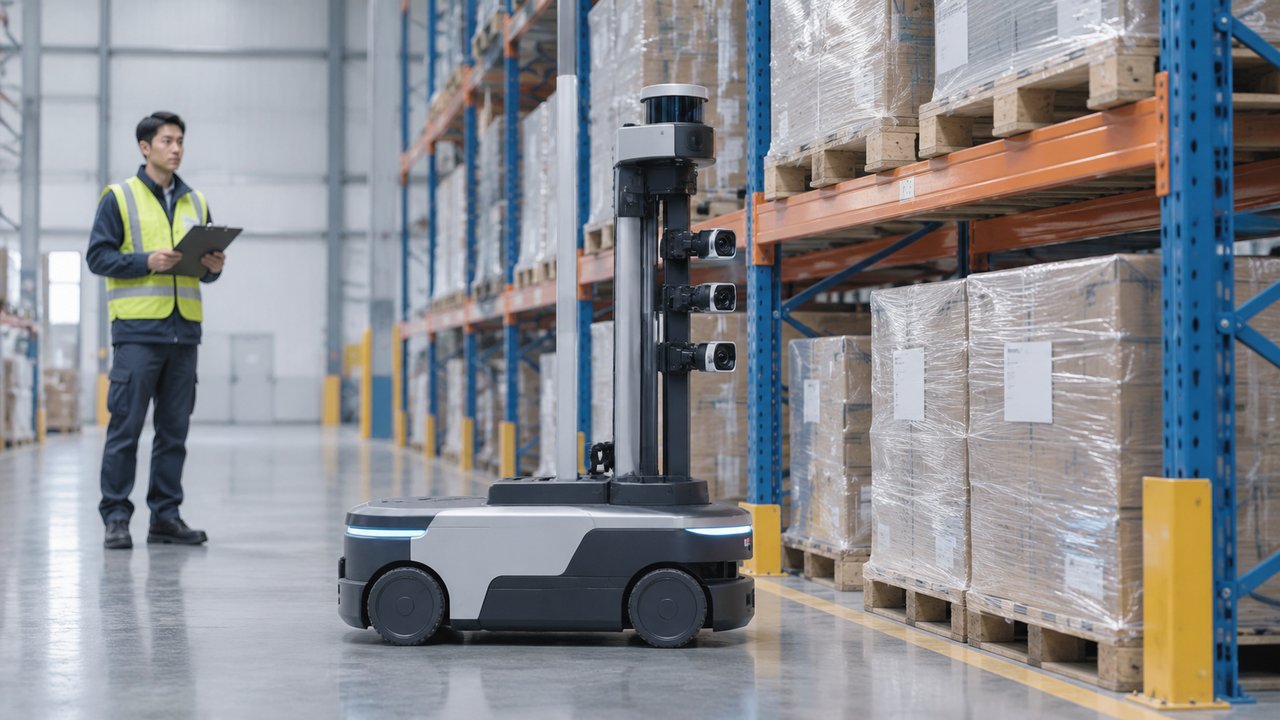
Include inconvenient locations in the trial: upper levels, reflective wrap, damaged labels, deeply stored loads and positions temporarily obscured by replenishment. Do not quietly remove these from the reported denominator. A position the robot cannot inspect remains part of the warehouse's inventory responsibility even when it is outside the camera's successful read count.
Unknown results need an explicit disposition. Options include another pass after the obstruction clears, an employee checking the label, a physical count or a justified exclusion with an alternative inspection method. An unreadable identifier should never become an empty position simply because the software lacks a usable observation.
Prioritize observation intervals according to the consequences of a stale record. A rapidly changing pick face and a reserve pallet position that rarely moves may justify different schedules. The relevant interval is the time between usable observations of the same location, including charging, blocked aisles and unsuccessful reads. A route completion time alone does not describe that interval.
Our AMR site survey guide covers the physical operating environment. For an inventory deployment, add a visibility survey: label orientation, readable height range, sight lines and changing obstructions. The agreed scope should identify the positions the system will inspect and the continuing method for everything else.
Reconcile Movement Timing Before Calling a Count Wrong
A physical observation and a system record can disagree even when the warehouse is processing a legitimate movement. A pallet may have left its source while its destination confirmation is still pending. Inventory reconciliation therefore needs the observation time, the relevant business-state time and the movement history that connects them.

Consider a pallet observed at position B while the latest available export still lists position A. The first response should be to check whether a valid transfer explains the difference. Automatically changing the record to B could conflict with an active task, obscure a delayed confirmation or approve a movement that was never authorized.
The review screen should preserve the captured location, identifier, image or other supporting evidence, capture time and comparison record. Staff also need a clear indication of whether the reference data is current enough for the decision. A mismatch against yesterday's export deserves a different interpretation from a mismatch against a synchronized operational record.
Define ownership for three outcomes: a real stock error, a timing difference and an unresolved observation. The first may require a controlled adjustment; the second may close after the legitimate transaction completes; the third needs further evidence. Record why the case closed so recurring label or transaction problems can be addressed at their source.
For automated inventory management, the useful automation may be collecting and organizing this evidence while a person retains adjustment authority. Any proposal that also updates records needs a separately validated approval policy and audit trail. Our warehouse control system and SAP EWM guide examines responsibility for business confirmations; the inventory-specific concern here is whether an observation is valid evidence for changing a stock record.
Use an Inventory Accuracy Formula With a Clear Denominator
An inventory accuracy formula is useful only after the counted unit and the matching rule are defined. A site might measure exact agreement for SKU-location quantities, pallet identities at assigned positions or financial inventory value. Those measures answer different questions and should remain separately labeled when evaluating a robot.

For example, define an exact-record match rate as records independently verified to match the agreed physical state divided by all records independently checked, multiplied by 100. State whether a match requires the correct identifier, location, quantity, lot or some combination. If a tolerance is permitted, publish it beside the result instead of silently treating a near match as exact.
Consider an original hypothetical validation of 1,000 pallet-position records. Here the rule checks the expected pallet identity or expected vacancy at a position; it does not verify quantities inside pallets. Movements are controlled or reconciled to a common comparison time. The robot produces usable observations for 900 positions, of which 870 agree with the expected state and 30 disagree. An independent physical check confirms those observations and finds that, among the 100 unobserved positions, 80 match and 20 disagree.
| Measure in this example | Calculation | Interpretation |
|---|---|---|
| Robot observation coverage | 900 / 1,000 = 90.0% | Share of in-scope positions with a usable robot observation |
| Match rate among robot-observed positions | 870 / 900 = 96.7% | Agreement within the successfully observed subset |
| Robot-observed matches as a share of the full scope | 870 / 1,000 = 87.0% | Scope supported by matching robot observations; not the final accuracy rate |
| Independently established full-scope match rate | (870 + 80) / 1,000 = 95.0% | Position-record accuracy after the previously unknown positions are checked |
| Discrepancies across the full checked scope | 30 + 20 = 50 positions | Errors confirmed in both observed and previously unobserved groups |
The 96.7% observed match rate would overstate the full-scope result if presented as whole-warehouse accuracy. The unknown group was less accurate in this example. A complete audit made that visible; a production dashboard cannot assume the same answer without checking.
Keep detection quality separate, too. Test alerts against independent verification and record false alerts, confirmed errors and missed errors. A high proportion of confirmed alerts says little about errors the system never flags. Sampling unflagged positions helps expose that gap, while documenting how the sample was selected prevents easy locations from dominating the result.
For readers asking how to improve inventory accuracy, the priority is a repeatable comparison before and after the change. Keep the record definition, scope, timing rule and verification method consistent. Otherwise a cleaner percentage may reflect a changed measurement rather than fewer stock errors.
Price the Human Work That Follows a Robot Alert
A robot can shorten observation work while increasing the number of cases waiting for review. Include the staff time needed to investigate alerts, handle unreadable positions, perform remaining quantity counts, authorize adjustments and maintain labels. These activities determine whether more frequent visibility produces a more reliable operation.
Measure the existing workload over representative shifts before estimating savings. Separate scheduled counting, searching for missing stock, emergency recounts and transaction corrections. Some hours may disappear; others may move to a different team. A supervisor answering robot-generated exceptions is still performing inventory work even when the old cycle-counting task has been removed from the schedule.
During the pilot, time a sample of each exception type from assignment to resolution. Include walking, waiting for safe access and obtaining evidence. Also measure the unresolved queue at shift end. A service that generates findings faster than the team can clear them may improve visibility without improving the records used to release tomorrow's orders.
Commercial comparisons should cover the robot or subscription, software, integration, site preparation, ongoing support and the residual manual process. Compare the same scope and observation frequency. If one offer excludes difficult racks, its lower price needs to be assessed alongside the continuing cost of checking them.
Attach operational value to outcomes the site can measure: fewer searches at pick time, shorter discrepancy-resolution time or less repeat counting for a verified reason. Avoid assigning every prevented shipment problem a monetary saving unless the baseline and attribution method support it. The strongest business case explains which work changes and what evidence will demonstrate that change.
Buy Evidence of a Better Inventory Process
Structure the purchase around a representative inventory process with agreed evidence, rather than a successful scan of a convenient aisle. Select a trial area that includes normal packaging variation, movement patterns and difficult positions. Document what is in scope before the supplier optimizes the route or tunes the detection rules.

Use known, controlled examples to test specific failure modes, then validate performance on ordinary operations. A supplier should not pass solely because the team arranged obvious errors in clean locations. Equally, unresolved operating conditions should be recorded rather than concealed in a single average score.
The acceptance record should report coverage by location class, valid observation intervals, confirmed and false alerts, unresolved cases and staff time. Where quantities are claimed, require independent quantity verification for the relevant packaging and stock conditions. Where only location identity is supported, say so directly in the purchase scope.
Agree what happens after acceptance when packaging, labels or rack layouts change. Recheck the affected observations and update the count plan. Keep an accessible method for reviewing historical evidence and exporting unresolved cases. This protects continuity when a camera configuration, software release or service arrangement changes.
A worthwhile deployment leaves the warehouse with fewer unexplained differences and a faster, controlled path to resolving the remaining ones. The buying decision should establish that improvement for the site's actual inventory responsibilities, including the positions and quantities that still require people.
Focused FAQ
Can a warehouse robot replace all manual cycle counting?
Only where its validated evidence covers the required count. Reading pallet identifiers may replace some location checks while partial cases, hidden contents and unreadable positions still need people. Define the remaining manual scope before removing existing counting work.
Does a readable pallet barcode prove the quantity is correct?
No. It identifies what the visible label represents. Quantity verification requires evidence appropriate to the load and packaging. A sealed pallet's recorded quantity may depend on receiving or packing controls that a passing camera does not independently verify.
Should an unreadable location be recorded as empty?
No. Preserve it as unknown or unverified and assign a follow-up method. An empty-position result needs a validated view sufficient to support that conclusion. Keeping unknowns visible also prevents scan coverage from being confused with inventory accuracy.
How often should an inventory robot scan the warehouse?
Choose intervals according to location changes and the consequences of stale information. Measure the time between usable observations, including failed reads and route interruptions. The same frequency need not apply to fast-moving pick faces and stable reserve storage.
Can robot findings automatically update the WMS?
That requires a separately defined and validated adjustment workflow. The system must distinguish actual errors from legitimate movements and incomplete observations. Agree authorization, evidence retention and reversal procedures before allowing findings to change business records.
Which result should decide whether the pilot succeeded?
Use the agreed combination of coverage, independently verified agreement, detection quality, resolution time and residual labor. A high observed match percentage alone can hide difficult locations, missed errors or an expanding exception queue.
Evidence note: The news context comes from the linked Dexory and ODW announcements. Their claims describe particular products and customer experience, not universal performance guarantees. The comparison framework, validation measures and purchasing guidance are editorial analysis. The 1,000-position example is hypothetical and illustrates denominator effects rather than supplier performance.


