RJXA's Christmas approaches, it's time to refresh your fashion collections! Explore our high-quality lace, perfect for festive attire. Inquire now to enjoy holiday specials!

Member Center
Exit
Data is empty
0
qr Code Url

Scan the QR code to visit the mobile website

  • Home
  • Industrial
  • Renewable
  • Building & Home
  • Water Treatment
  • Automation
  • Kitchen
Home -News -Robotics & Automation -
AMR/AGV Mobile Base
-
Overhead factory view showing AMR traffic resource requests, granted routes and a recovery zone.
2026-09-11

Why AMR Fleets Become Slower as More Robots Are Added and How to Prevent It

An engineering guide to controlling intersections, narrow corridors, shared stations and queues in multi-robot fleets. It explains resource reservations, deadlock and livelock, failure recovery, traffic KPIs and the peak-condition tests buyers should require before accepting fleet performance.
Learn more
Technician records an AMR route segment, floor grade and red finding during a factory site survey
2026-09-10

What Should an AMR Site Survey Measure Before a Robot Is Selected

A field-ready guide to measuring the floors, aisle geometry, station interfaces, charging access, wireless conditions and mixed traffic that determine whether an AMR deployment is physically and digitally ready—and what must be corrected before robot selection.
Learn more
AMR fleet sizing comparison between an overcrowded factory fleet and an optimized robot count
2026-09-09

How Many AMRs Does a Factory Really Need A Practical Fleet Capacity Model

A practical engineering guide to calculating AMR fleet size from peak mission demand, complete cycle time, charging losses, downtime, target utilization and reserve capacity—then validating the estimate against stations, routes and failure scenarios.
Learn more
AMR docking sequence showing station approach, terminal alignment and mechanical engagement at a charging station
2026-08-18

AMR Docking Reliability Engineering How to Prove Autonomous Charging Works in Production

A production-grade AMR must do more than reach a charger. This engineering guide explains how to validate docking repeatability, alignment tolerance, electrical charging confirmation, retry behavior, station reliability, fleet-level charging impact and lifecycle drift using measurable evidence rather than demonstration success.
Learn more
AMR fleet in an industrial production area with go-live readiness and production reliability verified dashboard
2026-08-18

AMR Go-Live Readiness How to Prove a Mobile Robot System Is Ready for Production

A practical engineering framework for deciding whether an AMR or AGV system is truly ready for production. It converts site, safety, network, integration, capacity, operations and recovery dependencies into measurable readiness gates, challenge tests and buyer-verifiable evidence.
Learn more
Split factory scene comparing an AMR asset failure with a service failure that stops production
2026-08-18

AMR Failure Recovery: How to Preserve Material State and Restore Production

A deep engineering guide to AMR failure recovery: how to preserve mission and load state, separate asset repair from service restoration, design degraded modes, calculate recovery KPIs, and audit vendors using standards-based recovery evidence.
Learn more
Comparison of stable AMR operation and degraded fleet performance caused by operational drift after go-live
2026-08-17

Why AMR Systems Drift After Go-Live Control Every Change Before It Changes Production

An accepted AMR system can become unreliable after normal factory changes. This guide shows how to control map edits, software updates, traffic rules, payload changes, Wi-Fi changes, fleet expansion and station modifications through baselines, impact review, revalidation, rollback and lifecycle governance.
Learn more
AMR fleet analytics converting complex robot operating data into mission delay capacity loss throughput and root cause insights
2026-08-17

Why High AMR Utilization Can Be Bad Build KPIs Around Material Flow, Not Robot Motion

Robot utilization alone can make an AMR fleet look efficient while production still waits for material. This guide explains how to structure AMR operational data, distinguish productive time from hidden losses, build a KPI tree, analyze mission cycle time, interventions, congestion, downtime and throughput, and connect fleet analytics to material-flow value.
Learn more
AMR completing a production mission while engineers review system readiness during acceptance testing
2026-08-14

A Successful AMR Demo Is Not Acceptance How to Prove the System Is Ready for Production

An AMR can complete a demo and still fail under real production conditions. This guide shows how buyers and integrators can define FAT, SAT, operational acceptance, measurable KPIs, docking tests, degraded-mode scenarios, evidence requirements, and handover criteria before signing off a mobile robot system.
Learn more
AMR fleet charging system coordinating autonomous charging and operational availability in a smart factory
2026-08-13

Why AMR Battery Runtime Is the Wrong Metric Design for Fleet Availability Instead

Battery runtime alone cannot predict whether an AMR or AGV fleet will support production. This guide explains mission energy demand, charging windows, charger congestion, battery health, fleet reserves, scheduling logic, and the KPIs needed to design energy availability instead of simply buying more battery capacity.
Learn more
Industrial AMR using reliable wireless communication across warehouse access points during autonomous operations
2026-08-12

When AMR Failures Are Really Wi-Fi Problems Designing Wireless Networks for Mobile Robots

Many AMR and AGV problems blamed on navigation or fleet software actually begin in the wireless network. This guide explains roaming, RF coverage, interference, latency, packet loss, antenna placement, route-based surveys, failure behavior, and production validation for reliable mobile robot connectivity.
Learn more
Industrial AMR protected by cybersecurity controls inside a connected automated manufacturing environment
2026-08-10

Why AMR/AGV Cybersecurity Must Be Designed as Part of the OT Architecture

AMRs are not isolated machines. They are connected OT endpoints linked to fleet managers, Wi-Fi, PLCs, WMS/MES, cloud services, and remote support. This guide explains how factories can reduce cyber risk without treating mobile robots like ordinary IT devices.
Learn more
Multi-vendor AMR fleet operating through a VDA 5050 communication interface in an industrial warehouse
2026-08-10

Why Multi-Vendor AMR/AGV Interoperability Is More Than VDA 5050 Compliance

Multi-vendor mobile robot projects fail when teams confuse protocol compatibility with operational interoperability. This guide explains how VDA 5050, ISO 21423, fleet-control boundaries, maps, actions, traffic rules, error semantics, and acceptance testing should be evaluated before combining AMR and AGV platforms from different suppliers.
Learn more
Factory team reviewing hidden delays, wait times, and replenishment performance while AMR mobile bases support internal material response
2026-04-27

The Real Value of an AMR/AGV Mobile Base Is Not Labor Replacement, but Faster Material Response on the Factory Floor

Many manufacturers invest in mobile automation expecting labor savings first. But the deeper value of an AMR/AGV Mobile Base often comes from material response time, line-side replenishment automation, and more stable internal flow. This article explains why factories that improve response speed, reduce waiting, and tighten point-of-use delivery usually gain more lasting value than factories focused only on headcount substitution.
Learn more
High-payload mobile base carrying a tall heavy structure with monitored operational stability in an industrial transport application
2026-04-27

A Heavy-Duty Mobile Base Is Not Just a Bigger Robot: What Really Determines Success in High-Payload Factory Transport

A heavy-duty AMR chassis or high-payload mobile base does not succeed simply because it can carry more weight on a specification sheet. Real success depends on dynamic load stability, load center control, floor bearing verification, braking behavior, structural rigidity, and the ability to move heavy loads repeatedly inside live industrial environments.
Learn more
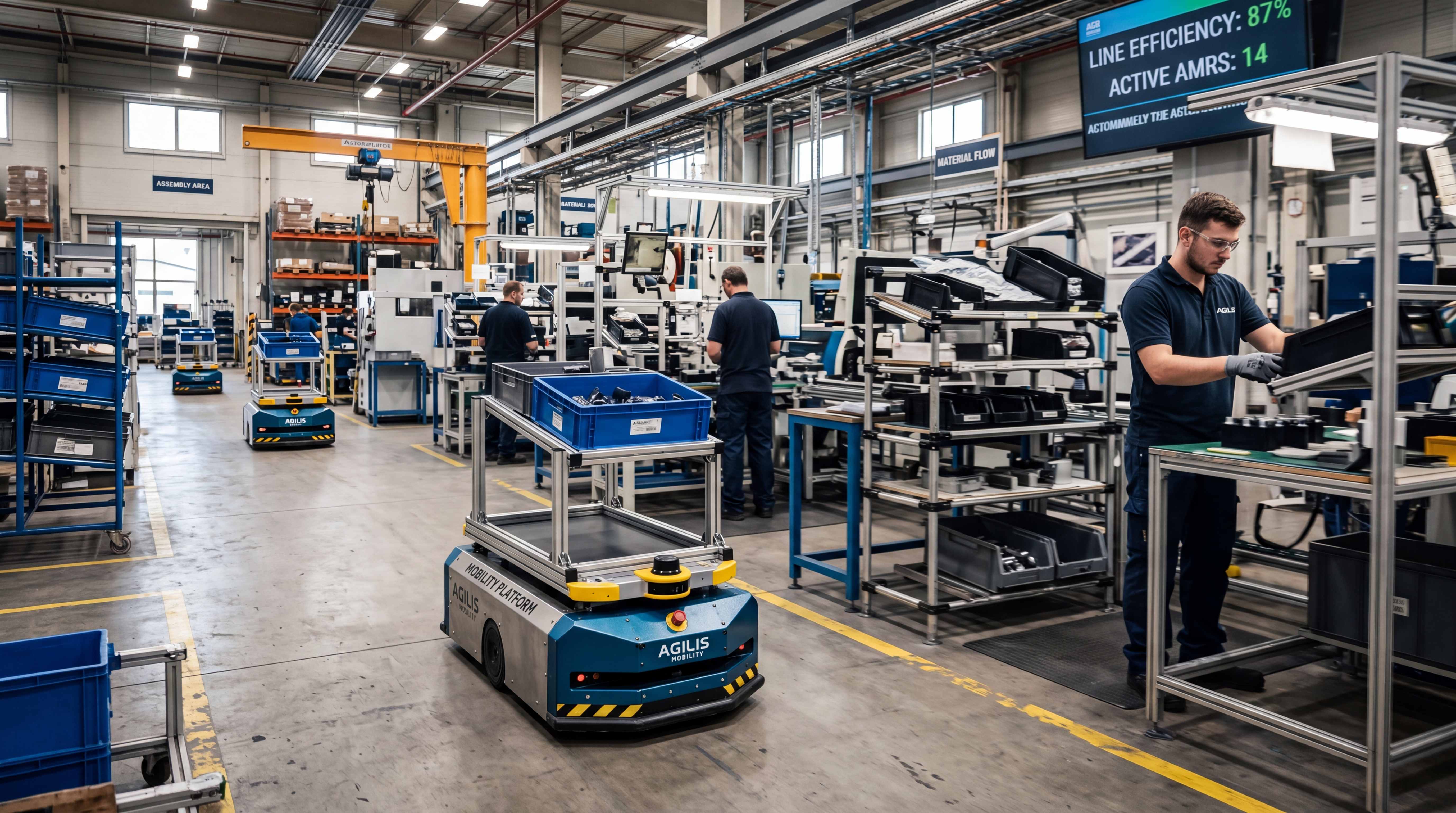
Factory mobility platform deployed in a live production area as the first step in mobile-first automation
2026-04-27

Why More Factories Are Starting Automation With a Mobile Base Platform Instead of Waiting for a Perfect Full-System Transformation

Many factories no longer begin automation with a complete one-time redesign. Instead, they start with a factory mobility platform that can support staged deployment, flexible workflows, and future expansion. This article explains why a mobile-first automation strategy is becoming a more practical path for brownfield automation upgrade, reconfigurable factory flow, and scalable internal transformation.
Learn more
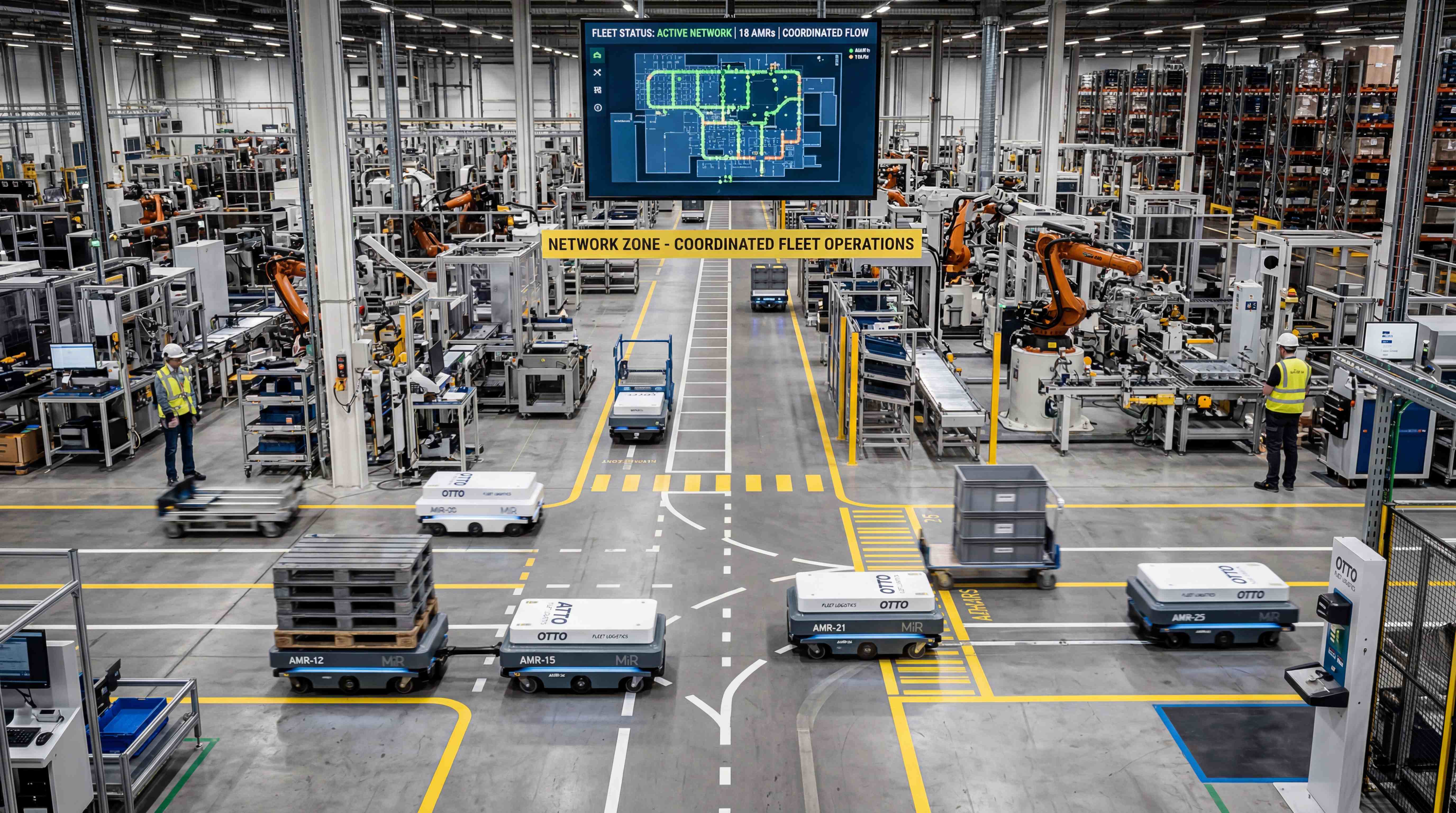
Coordinated multi-robot fleet operations managing route sharing, traffic flow, and production movement in a large smart factory
2026-04-27

Why the Hardest Part of Scaling an AMR/AGV Mobile Base System Is Not the Robot, but the Fleet Logic Behind It

A single AMR/AGV Mobile Base can look successful in a pilot, but large-scale value only appears when multiple vehicles share routes, charging resources, stations, and task priorities without creating congestion or confusion. This article explains why the real challenge in scaling mobile automation lies in fleet logic, dispatching, traffic control, recovery rules, and operational orchestration rather than in the robot hardware alone.

Learn more
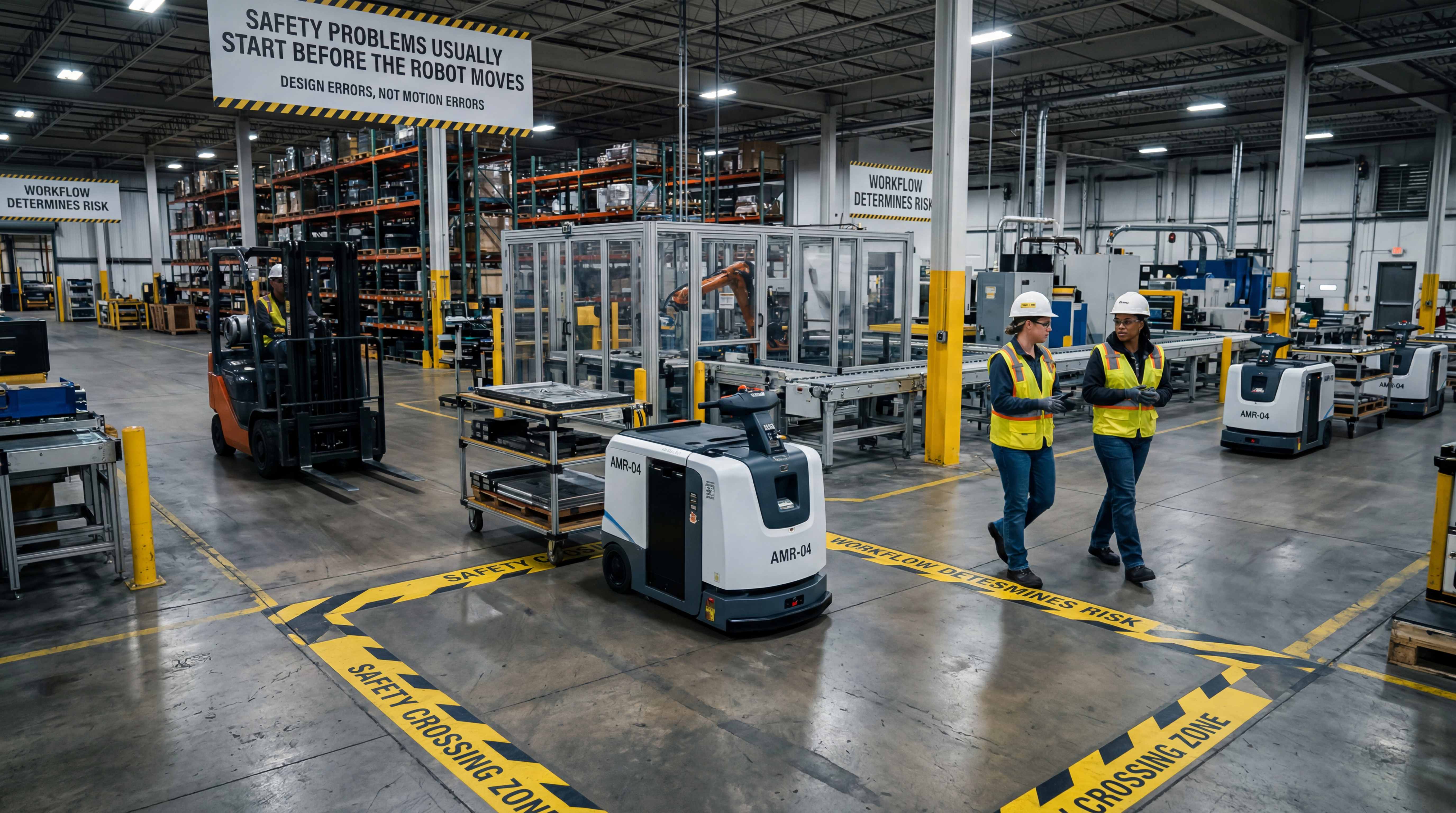
AMR safety crossing zone designed to manage human-robot and forklift interaction in a factory environment
2026-04-27

When an AMR/AGV Mobile Base Shares the Aisle With People, Safety Stops Being a Feature and Becomes a System

A mobile robot does not become safe simply because it can slow down or detect obstacles. In real factories, the safety of an AMR/AGV Mobile Base depends on route design, interaction rules, station behavior, traffic culture, speed logic, and system-level control. This article explains why effective safety in mixed industrial environments is built through operational architecture rather than sensor claims alone.
Learn more
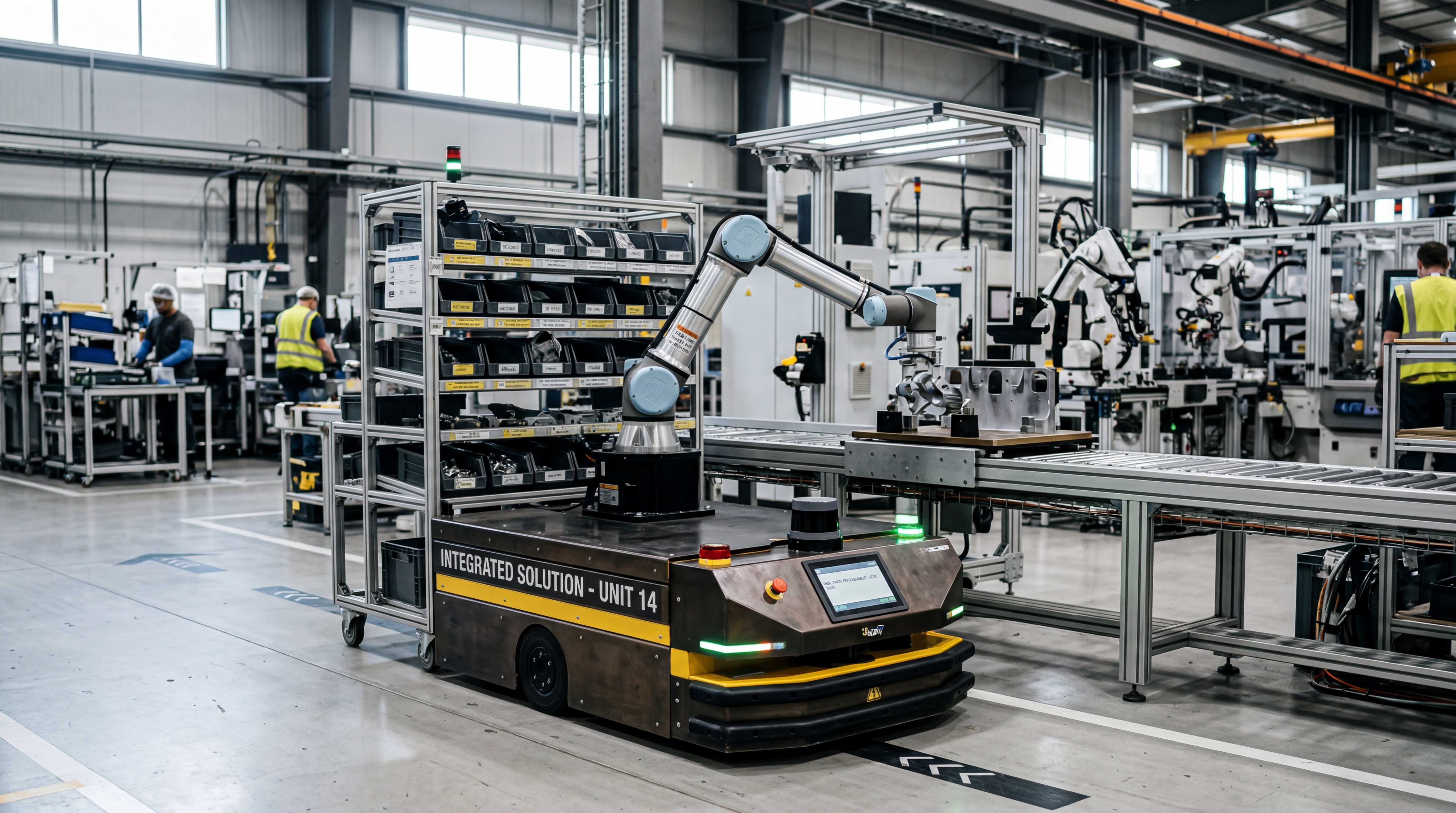
AMR mobile base integrated with a robotic arm, parts rack, and conveyor as a complete working unit in factory intralogistics
2026-04-27

An AMR/AGV Mobile Base Is Not the Final Product: Real Value Begins When It Becomes a Complete Working Unit

An AMR mobile base or AGV mobile base does not create business value simply by moving from point A to point B. Real value emerges when the base is combined with the right top module, transfer interface, docking logic, and workflow design to form a complete working unit inside factory intralogistics and material handling automation.
Learn more
AMR mobile base undergoing an operational feasibility test at a dock station in a real warehouse deployment environment
2026-04-27

Buying an AMRAGV Mobile Base Is Only the Beginning Delivery Feasibility Is What Decides Project Success

A mobile robot project does not succeed because the AMR mobile base or AGV mobile base looks capable in a demo. It succeeds because the full delivery path—site conditions, docking logic, integration, safety rules, traffic behavior, commissioning, and expansion readiness—has been defined realistically. This article explains why delivery feasibility is the real dividing line between a promising pilot and a dependable automation system.
Learn more
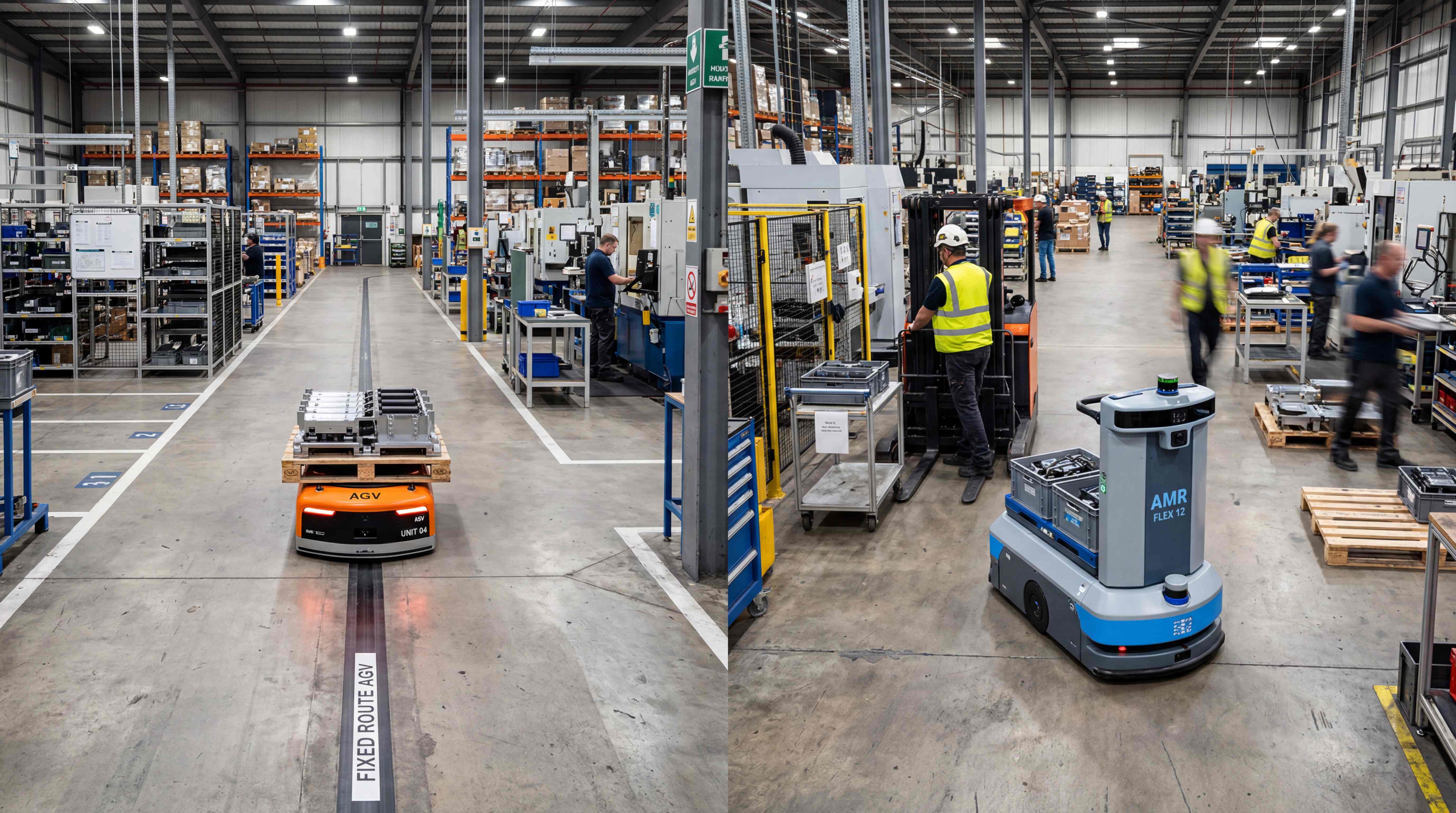
AGV fixed-route navigation and AMR flexible navigation compared side by side in the same factory environment
2026-04-27

There Is No Universally Best Navigation for an AMR/AGV Mobile Base—Only the Best Fit for the Site

Choosing navigation for an AMR mobile base or AGV mobile base is not about chasing the most advanced technology label. It is about matching route stability, traffic conditions, docking precision, environmental complexity, and future change. This article explains why the best mobile robot navigation strategy is always the one that fits the operating reality of the site.
Learn more
AGV and AMR mobile bases handling the same payload in different workflow conditions inside a factory
2026-04-24

How to Choose the Right AMR/AGV Mobile Base: Why Payload Alone Is Not a Real Selection Method

Choosing an AMR mobile base or AGV mobile base based only on payload is one of the most common mistakes in automation planning. This article explains how task profile, route variability, docking logic, floor conditions, safety, integration, and fleet scalability define the right mobile base far more accurately than a single load number.
Learn more
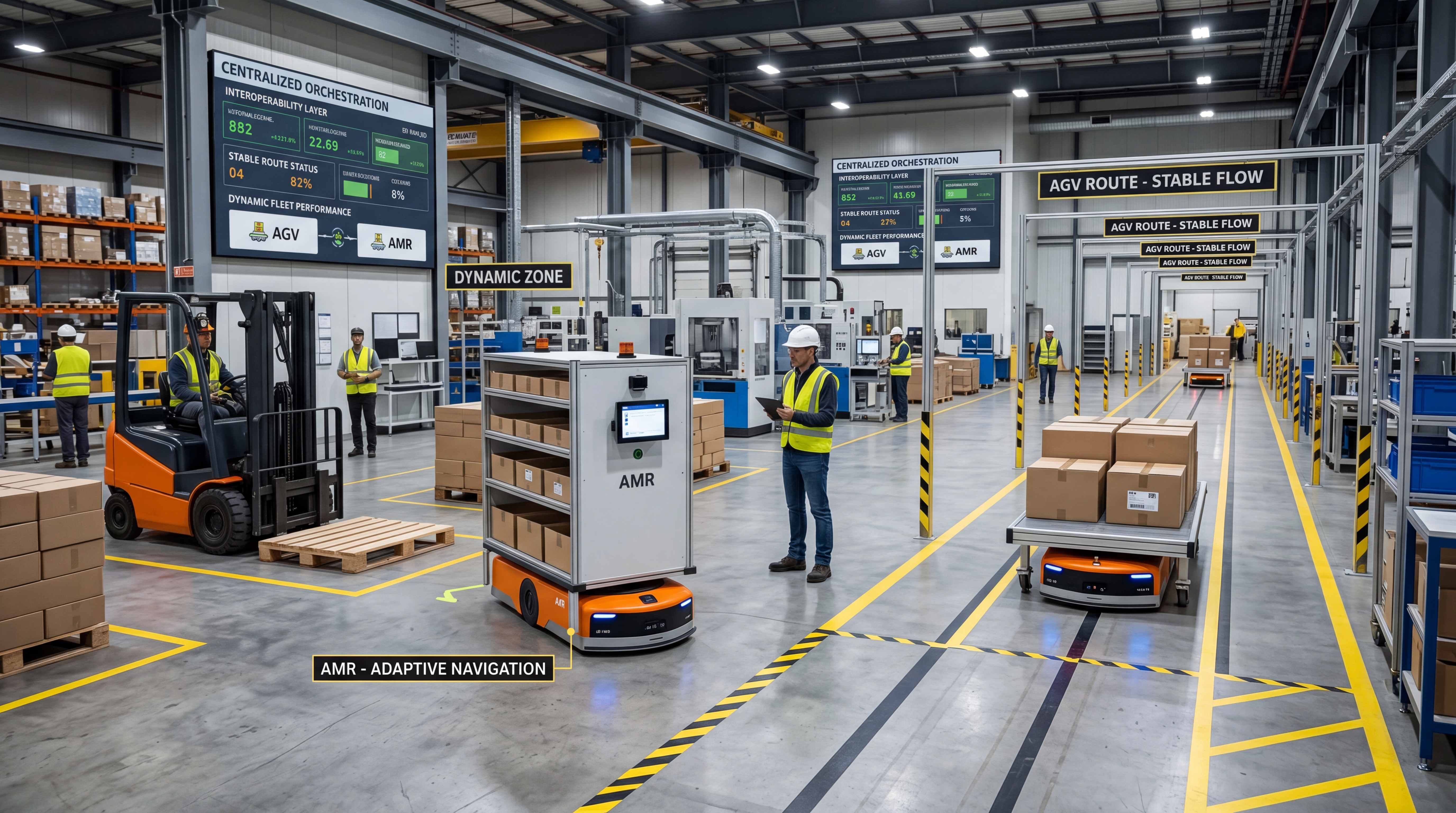
AMR and AGV mobile base systems operating together in a modern factory intralogistics environment
2026-04-24

AMR Mobile Base vs AGV Mobile Base: The Real Difference Is Not Navigation Alone

This article explains why the real difference between an AMR mobile base and an AGV mobile base goes far beyond navigation. From process design and infrastructure dependence to scalability, safety, system integration, and long-term factory intralogistics strategy, it offers a decision-level view for manufacturers, integrators, and automation buyers.
Learn more
  • 1
    Sitemap

    Industrial Components

    Kitchen Appliances

    Renewable Energy

    Building & Home Improvement

    Chemicals & Water Treatment

    Robotics & Automation

    Email:robertkileyman@gmail.com

    (508676)
    0
    Service

    Email
    comment