Strap vs. Steel Cable vs. Synthetic Rope: Choosing the Right Pulling Medium for Trailer Winch Applications
Choosing the right trailer winch line selection is one of the most underestimated decisions in trailer system design. Many buyers spend time comparing winch capacity, motor type, gear ratio, and remote features, but treat the pulling medium as an afterthought. In real trailer use, that is a mistake.
A winch does not work through the motor alone. It works through the material that actually connects the winch drum to the load. That is why the choice between strap vs steel cable vs synthetic rope is not a cosmetic preference. It is a working decision that affects safety, maintenance, control, environmental durability, and operator confidence.
For a boat trailer winch strap, the buyer must think differently from a car hauler operator choosing a steel cable winch line or a utility trailer owner considering synthetic rope trailer winch options. These materials may all move loads, but they do not behave the same way under bending, moisture, corrosion, abrasion, storage, or failure.

The most professional way to compare them is not to ask which material is best in general. It is to ask which pulling medium best matches the trailer, the load behavior, the working environment, and the maintenance habits of the user.
The Pulling Medium Is Part of the System, Not an Accessory

One of the most common buying mistakes is to treat the winch line as a replaceable extra rather than a structural part of the loading system.
In real operation, the winch line determines how smoothly the pull begins, how the load behaves under tension, how safely the system can be handled, how easily wear can be inspected, and how reliably the winch performs over time. A poorly matched line material can make a well-designed winch system feel less safe, less efficient, and less dependable.
That is why a serious best winch line for trailer decision should consider more than catalog convenience. The buyer should evaluate how the line will be used, how it will age, what kind of contact surfaces it will encounter, and how disciplined the operator will be about inspection and replacement.
This is especially important in trailer use because the environment is rarely controlled. Ramps are wet. Decks are abrasive. Loads shift. Hooks drag. Operators work fast. A line material that performs well in one environment may create unnecessary problems in another.
Why “Stronger” Is Not Always “Better”
Many buyers begin with a simple assumption: choose the strongest material available. That sounds logical, but it often leads to the wrong result.
The right trailer winch rope options decision is not only about raw strength. It is about usable strength, predictable behavior, handling safety, drum compatibility, corrosion exposure, and maintenance reality. A material can be technically strong and still be a poor match for the application.
For example, a steel cable winch line may offer a familiar heavy-duty image, but that does not automatically make it the best answer for a marine trailer where corrosion and user handling matter every week. A synthetic rope trailer winch may feel modern and safer to handle, but it may not be the best solution when abrasion, contamination, and neglect are likely. A winch strap may be excellent for certain boat trailer tasks, yet unsuitable for applications involving narrow pull paths, extreme edge contact, or different drum conditions.
That is why material choice should begin with operating logic, not with marketing associations.
Winch Strap: Simple, Wide-Contact, and Common in Marine Trailer Use

A winch strap remains one of the most practical solutions in many trailer applications, especially in lighter-duty and marine-oriented systems.
The main reason is not just simplicity. A strap provides a broad contact surface, straightforward handling, and a user-friendly interaction style. For many recreational or small-to-mid-size boat trailer systems, a boat trailer winch strap feels intuitive, easy to inspect visually, and less intimidating for casual users than a steel cable.
A strap is often well suited to applications where the pull path is predictable, the load is guided consistently, and the operator values quick visual confirmation of wear or twisting. It is also attractive where a softer connection medium is preferred in normal loading workflows.
Where a Winch Strap Makes Sense
A manual trailer winch strap or light-duty powered setup is often a good fit for:
- small to mid-size boat trailers
- guided marine loading
- users who prefer easy visual inspection
- lighter-duty repetitive retrieval
- applications where simple handling matters
Where a Strap Becomes Less Ideal
A strap becomes less ideal when:
- the pull path is narrow or highly abrasive
- the load creates sharp contact points
- the system sees unpredictable dragging
- contamination and edge damage are common
- the application demands a more compact, round line behavior
A strap is not a universal solution. It works best when the trailer system already supports a controlled, repeatable loading path.
Steel Cable Winch Line: Durable Image, High Familiarity, and Specific Trade-Offs
A steel cable winch line still holds a strong position in many buyers’ minds because it is associated with toughness, traditional heavy-duty use, and mechanical certainty. In some trailer environments, that perception is grounded in real advantages.
Steel cable handles certain types of abrasion and rugged use better than softer materials. It may remain the preferred option where the user expects rough treatment, limited concern for hand feel, and a more industrial operating culture. In some car hauler winch and recovery-oriented environments, it still appears familiar and acceptable to operators who have long worked with cable-based systems.
However, the right analysis should go deeper than durability image.
Where Steel Cable Performs Well
A steel cable winch line can make sense when:
- the operating culture already understands cable inspection
- the application is more industrial than recreational
- the line may encounter rugged surfaces
- the buyer values traditional heavy-duty familiarity
- compact drum behavior is desirable
What Buyers Often Underestimate
Steel cable also carries important trade-offs:
- corrosion risk in wet or marine environments
- more demanding hand safety
- possible kinking behavior
- harder handling for casual users
- wear that may be less forgiving once damage progresses
For many buyers, the question is not whether steel cable is strong. It is whether its risk and maintenance profile actually matches the application and the people using the trailer.
Synthetic Rope: Easier Handling, Lower Weight, and a Different Maintenance Discipline
A synthetic rope trailer winch setup is increasingly attractive because it offers a very different user experience from steel cable.
It is typically easier to handle, lighter in feel, and often perceived as safer in day-to-day operation. For many operators, especially those who prioritize ergonomics and controlled handling, synthetic rope can improve confidence and reduce resistance to regular inspection.
This is one reason why synthetic rope appeals strongly in modern trailer systems, particularly where user experience matters and the operator interacts closely with the winch line during frequent loading.
Where Synthetic Rope Makes Sense
A synthetic rope trailer winch often suits:
- operators who prioritize handling ease
- applications where line weight matters
- users who want a more modern tactile experience
- environments where corrosion from steel is a concern
- workflows that reward frequent inspection and proper care
Where Buyers Need More Discipline
Synthetic rope is not maintenance-free. It requires a different inspection mindset. Buyers must pay close attention to abrasion, contamination, embedded debris, and wear from repeated contact with harsh edges or dirty surfaces.
That means synthetic rope is often best when the user is willing to treat it as a performance component rather than as a forgettable attachment.
Boat Trailer Applications Usually Require Marine-Specific Logic

When choosing a boat trailer winch strap, steel cable winch line, or synthetic alternative, marine conditions change the decision framework significantly.
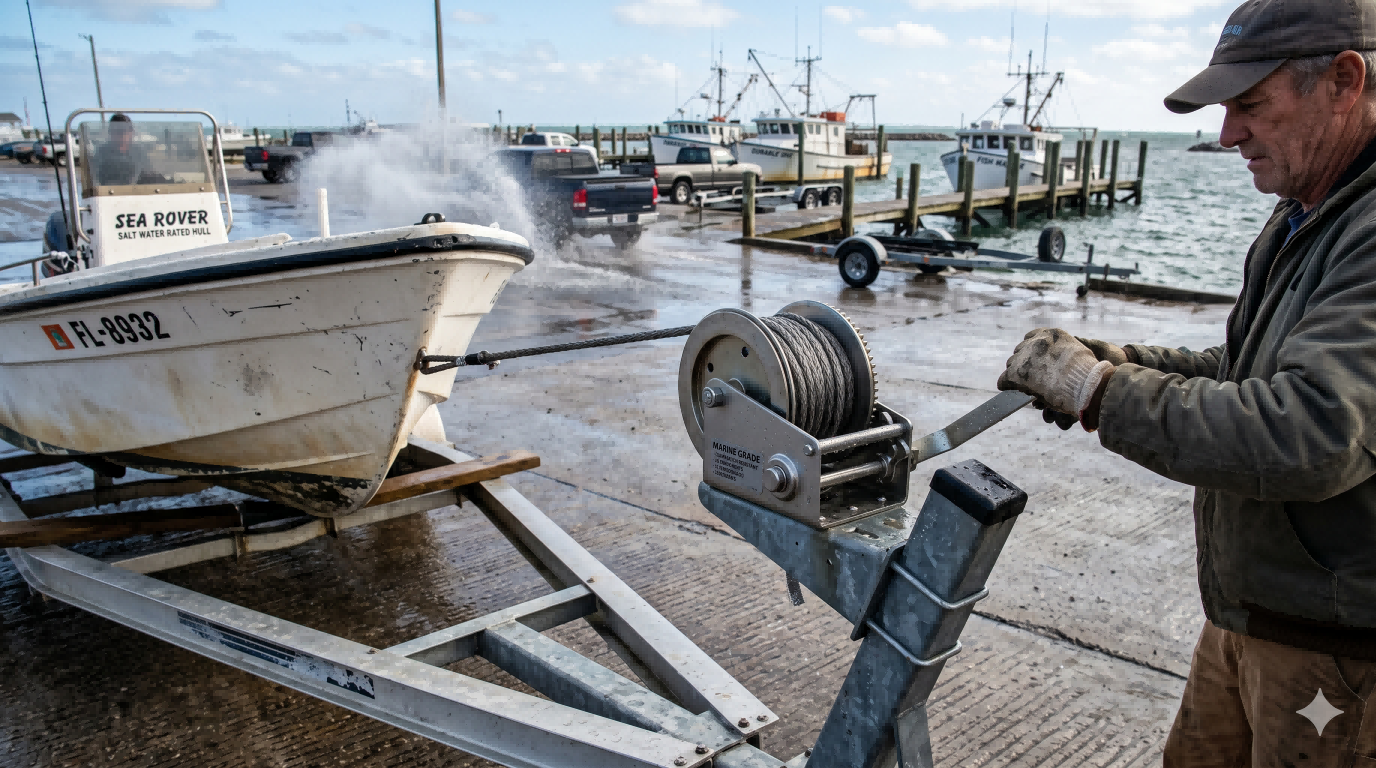
A boat trailer is exposed to wet launches, repeated immersion, variable ramp conditions, and frequent contamination from sand, salt, and water. In this environment, corrosion behavior, inspection visibility, and user handling become more important than generalized material claims.
For many marine users, a boat trailer winch strap remains highly practical because it aligns with predictable pull paths and routine recreational retrieval. It is easy to understand, easy to inspect visually, and comfortable for many casual users.
A steel cable winch line may still be used in certain marine systems, but the buyer must take corrosion exposure seriously. A material that looks robust on day one can create maintenance burden quickly if the environment is repeatedly wet and poorly managed.
A synthetic rope trailer winch may appeal where better handling and reduced corrosion concerns are prioritized, but it must be supported by disciplined inspection and cleaner operating habits.
The Better Marine Question
Instead of asking which material is strongest, marine buyers should ask:
- Which material handles repeated wet exposure better in my maintenance reality?
- Which one is easiest for my operators to inspect correctly?
- Which one fits the winch drum and pull path on this trailer?
- Which one supports safe, consistent handling at the ramp?
That is how a marine buyer chooses with system awareness rather than with assumptions.
Car Haulers Need to Think About Drag, Recovery Uncertainty, and Abrasion Exposure

A car hauler winch application often creates a very different material decision.
Unlike many boat trailer systems, vehicle loading can involve dead vehicles, non-running vehicles, uneven ramps, compromised tires, imperfect alignment, and less predictable pull behavior. These conditions change how the winch line is stressed during loading.
A steel cable winch line often remains attractive in this environment because buyers associate it with rugged recovery logic. In some cases, that is a rational choice. But the full decision should also consider operator skill, inspection discipline, edge exposure, and whether the trailer is used occasionally or as part of repeated transport work.
A synthetic rope trailer winch may offer better handling and faster operator comfort, but it must be protected from avoidable abrasion and contamination if it is expected to remain reliable.
A winch strap is generally less common as the primary choice in more demanding car hauler scenarios because the application often introduces more unpredictable contact and narrower load-path dynamics than many strap-friendly marine systems.
What Car Hauler Buyers Should Focus On
For vehicle trailer use, buyers should evaluate:
- whether the vehicle rolls freely
- how rough the deck and pull path are
- how often the line contacts abrasive surfaces
- whether multiple operators use the trailer
- whether safety and handling speed matter more than traditional familiarity
In other words, the line material should match the recovery style, not just the winch model.
Utility Trailers Require Flexibility More Than Category Loyalty
A utility trailer rarely lives in a single neat application category. One week it may move equipment. Another week it may pull a cage, palletized load, machine, or awkward cargo. That is why trailer winch line selection for utility use should focus on flexibility rather than on category loyalty.
A utility owner choosing between strap vs steel cable vs synthetic rope should think about which material best survives mixed-use uncertainty. That means evaluating not only strength, but also how easily the line can be checked, how forgiving it is under practical field handling, and how well it supports a trailer that may be used by different people across changing tasks.
Utility Trailer Material Priorities
For utility use, the best trailer winch rope options decision often depends on:
- how unpredictable the loads are
- how rough the environment is
- how often the line drags across edges or debris
- whether the user prefers inspection simplicity or handling ease
- how disciplined maintenance will really be in everyday use
This is why utility buyers should avoid copying marine or recovery assumptions without checking how the trailer is actually used.
Safety Is About Failure Behavior, Not Just Daily Convenience
Many material comparisons stay too shallow because they focus only on how the line feels during normal use. A more advanced best winch line for trailer discussion also considers what happens when the system is damaged, neglected, or loaded imperfectly.
A professional buyer should think about:
- how easy damage is to notice
- how the line behaves when wear develops
- how comfortable users feel handling it
- how likely the line is to be misused
- how inspection habits match the actual workforce
This is important because trailer systems are often used in real-world conditions by people with varying levels of attention and experience. The safest material is not always the one with the best brochure language. It is often the one that best matches the operator behavior, the maintenance routine, and the application risk profile.
Inspection Reality Should Drive Material Choice
One of the smartest ways to choose between strap vs steel cable vs synthetic rope is to look honestly at how the trailer will be maintained.
Some users inspect equipment carefully after every use. Others do not. Some environments are clean. Others are wet, dirty, or abrasive. Some owners replace worn components early. Others wait too long. Material choice should reflect this reality.
A boat trailer winch strap is often attractive because visible wear patterns can be easy for casual users to understand. A steel cable winch line may remain viable where the team already understands wire rope inspection culture. A synthetic rope trailer winch may perform very well when the user is disciplined enough to protect and inspect it properly.
The key is to choose for real maintenance behavior, not ideal maintenance behavior.
Drum Compatibility and Line Behavior Matter More Than Many Buyers Expect
The pulling medium does not operate in isolation. It works with the drum, the hook, the fairlead path, the pull angle, and the way the trailer is loaded.
A line that stores and unwraps cleanly on one system may behave differently on another. A broad winch strap may be easy to handle but require the system to support proper wrapping and alignment. A steel cable winch line may feel compact and familiar, but its behavior under repeated bending and handling should still be respected. A synthetic rope trailer winch may offer excellent handling but depends on a cleaner interaction environment.
That is why the right material decision should always be made in relation to the whole winching setup, not just in relation to the line alone.
Total Ownership Logic Is More Useful Than Material Preference
A professional buyer does not choose only for purchase price or material trend. The better approach is to compare long-term ownership logic.
When a Winch Strap Often Wins
A winch strap often wins when the buyer values:
- simple handling
- easy visual inspection
- predictable marine loading
- lower user intimidation
- practical everyday operation
When Steel Cable Often Wins
A steel cable winch line often wins when the buyer values:
- traditional rugged familiarity
- industrial-style use
- tolerance for a more demanding handling culture
- compact heavy-duty identity
- operators already trained around cable inspection
When Synthetic Rope Often Wins
A synthetic rope trailer winch often wins when the buyer values:
- easier line handling
- lower line weight
- reduced corrosion concerns
- better day-to-day operator comfort
- willingness to maintain the line properly
This is why the best answer is usually not “material A is better than material B.” The best answer is “this material produces the best ownership outcome for this trailer system.”
How Professional Buyers Should Make the Final Choice
The most reliable trailer winch line selection process usually follows this order.
Define the Trailer Application
Identify whether the system is primarily a boat trailer, car hauler, utility trailer, or mixed-use platform.
Understand the Pull Path
Look at alignment, abrasion points, edge contact, contamination exposure, and how predictable the load movement really is.
Review User Behavior
Ask who will handle the line, how often they inspect it, and whether the trailer is used casually or professionally.
Match Material to Maintenance Reality
Choose the pulling medium that fits actual inspection discipline, not the ideal version of it.
Choose for System Performance
Select the line that works best with the drum, the environment, the operator, and the workflow.
That is how serious buyers move beyond material marketing and toward application logic.
Final Thoughts
The choice between strap vs steel cable vs synthetic rope should never be reduced to trend, familiarity, or simple strength claims. The right line material depends on where the trailer works, how the load behaves, how disciplined the inspection process is, and what kind of operator experience the buyer wants to support.
A boat trailer winch strap may be the smartest choice in a guided marine loading system. A steel cable winch line may still make sense in certain rugged vehicle-loading environments. A synthetic rope trailer winch may offer a better balance of handling and modern usability where maintenance habits support it.
The real goal is not to choose the most popular material. It is to choose the material that makes the whole winching system safer, more predictable, and more suitable for the way the trailer is actually used.
That is where better performance begins.
#Trailer Winch #Winch Strap #Steel Cable Winch #Synthetic Rope Winch #Boat Trailer Winch #Car Hauler Winch #Utility Trailer Winch #Trailer Loading Systems #Towing Safety #Trailer Winch Line Selection