What Is a Split Solar Water Heater and When Is It the Better Choice?
A Different Way to Think About Solar Hot Water
In many markets, people still imagine a solar water heater as one large unit sitting on the roof: a storage tank connected directly to solar tubes or panels. That design is familiar, simple, and widely used. But it is not the only way to build a practical solar water heating system.
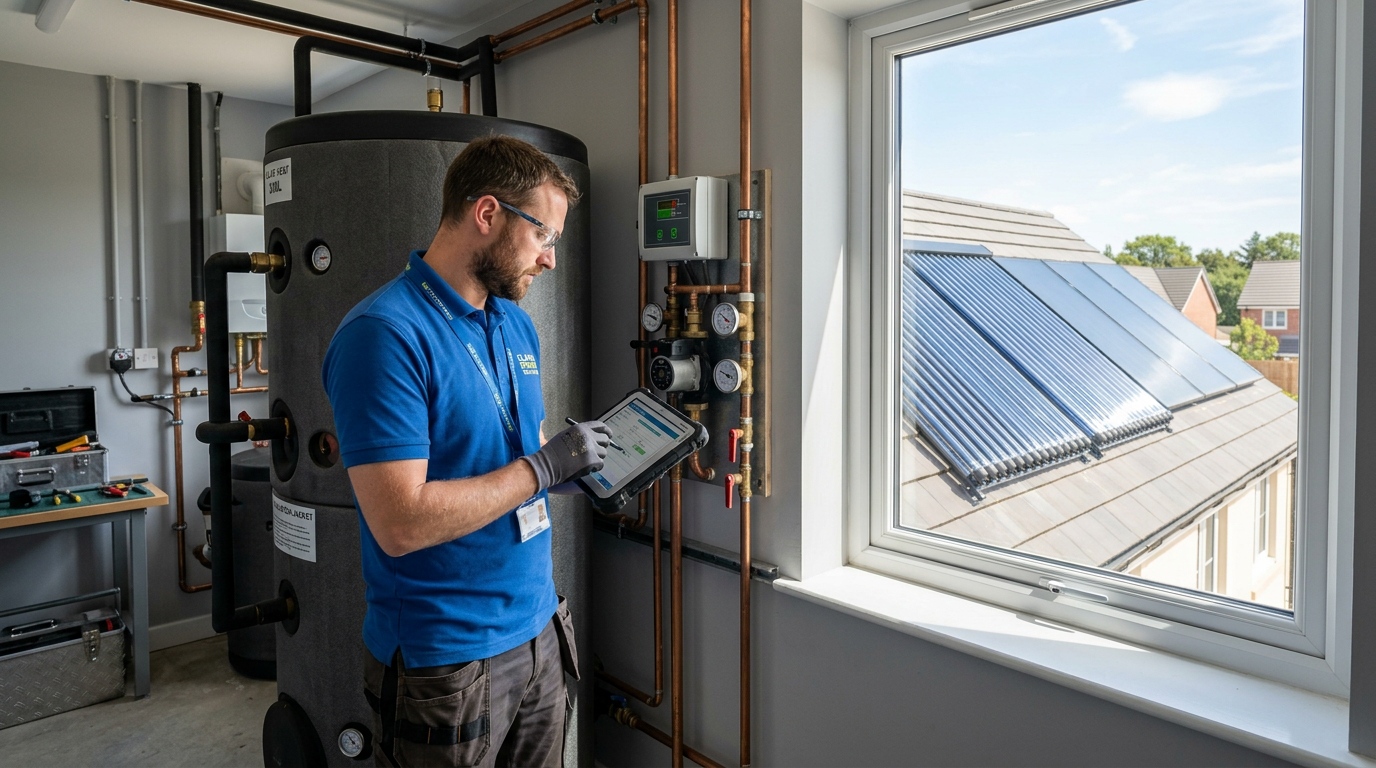
A split solar water heater follows a different logic. Instead of placing both the collector and the storage tank on the roof, it separates the two major parts of the system. The collector stays on the roof or another sun-facing surface, while the solar hot water tank can be installed at ground level, inside a utility room, on a balcony, in a basement, or in another protected location.
This difference may sound small, but it changes the entire application value of the system.
A split solar hot water system is not only a product layout. It is a more flexible system architecture. It gives homeowners, installers, property developers, and distributors more options when roof space, building appearance, water pressure, tank weight, freezing risk, or maintenance access becomes important.
That is why the split type solar water heater is often seen in modern residential buildings, villas, small commercial projects, and markets where customers expect a cleaner roof appearance and more stable hot water performance.
What Is a Split Solar Water Heater?

A split solar water heater is a solar hot water system in which the solar collector and the water storage tank are installed separately. The collector absorbs solar energy, while the storage tank holds the heated water for household or project use.
In a typical system, the collector is mounted on the roof because that is where sunlight is strongest. The tank, however, does not need to stay on the roof. It can be installed in a more convenient, safer, or more protected location.
A basic split solar hot water system usually includes several major parts:
The solar collector absorbs heat from sunlight. It can be a flat plate collector or an evacuated tube collector.
The solar hot water tank stores heated water and may include an internal heat exchanger, electric backup heater, or additional coil depending on the system design.
A circulation pump moves water or heat transfer fluid between the collector and the tank.
A controller monitors temperature differences and decides when the pump should start or stop.
Pipelines connect the collector and tank.
Sensors measure collector temperature and tank temperature.
Valves, insulation, expansion components, and safety devices help the system operate reliably.
This structure makes the split solar water heater very different from a simple rooftop integrated unit. The system depends more on design quality, control logic, installation accuracy, and component matching. But in return, it can provide much better flexibility for buildings and markets where a basic rooftop unit is not ideal.
Why the Split Design Matters

The main reason the split design matters is simple: not every roof is suitable for carrying a large water tank.
A traditional rooftop solar water heater places the tank and collector together. This may work well for many low-rise buildings. However, when the tank becomes larger, the roof load increases. In some homes, villas, hotels, or older buildings, the roof may not be designed for that extra weight. In other cases, the building owner may not want a large tank visible from outside.
A roof collector ground tank layout solves this problem. The roof only needs to support the collector. The heavier tank can be placed on the ground or inside the building. This reduces structural pressure on the roof and gives designers more freedom.
For modern homes, this can also improve appearance. Some owners do not want a bulky tank on a visible roof surface. With a split solar hot water system, the collector can be arranged more neatly, while the tank is hidden in a service area.
For installers, the split layout also makes maintenance easier. A tank on the roof can be difficult to inspect, repair, or replace. A tank in a utility room is much easier to access. This matters especially in markets where after-sales service cost is high.
For B2B buyers, distributors, and project contractors, this flexibility can become a strong selling point. The product is not just another residential solar water heater. It becomes a system solution that can adapt to different roof structures, building styles, and installation conditions.
How a Split Solar Hot Water System Works
A split solar hot water system works by collecting heat from the sun and transferring that heat to water stored in the tank. The basic process is easy to understand, but the actual system requires good coordination between the collector, pump, controller, tank, and piping.
When sunlight reaches the collector, the collector temperature rises. A sensor on or near the collector measures this temperature. Another sensor measures the temperature inside the solar hot water tank.
When the controller detects that the collector is hotter than the tank by a certain temperature difference, it starts the circulation pump. The pump moves water or heat transfer fluid through the system. Heat from the collector is transferred to the tank.
When the temperature difference becomes too small, the controller stops the pump. This prevents the system from wasting energy by circulating fluid when there is not enough useful heat available.
This is why many split systems are also described as an active solar water heater. Unlike passive systems that rely mainly on natural circulation, an active system uses a pump and controller to manage heat transfer.
In some markets, this type of system is also called a forced circulation solar water heater. The term highlights the same idea: circulation is driven by a pump rather than by gravity or thermosiphon movement.
This active circulation design allows the tank to be installed below the collector, beside the house, or inside the building. The system does not depend only on hot water naturally rising to the tank. That is the technical reason why the split layout is possible.
Split Solar Water Heater vs Traditional Rooftop Integrated System
A traditional integrated solar water heater is often valued for simplicity. The collector and tank are connected together on the roof. The installation can be fast, the product cost can be lower, and the system may work well in warm climates with suitable roof conditions.
However, the integrated design also has limitations.
First, the tank adds weight to the roof. For larger capacities, this becomes a serious consideration.
Second, the tank is exposed to outdoor weather. Strong sun, wind, rain, snow, and temperature changes may affect long-term durability.
Third, maintenance access can be difficult. If the tank, valve, or connection needs service, technicians may need to work on the roof.
Fourth, the appearance is not always suitable for modern homes, villas, hotels, or premium residential projects.
A split solar water heater addresses these issues by separating the collector and tank. The roof installation becomes lighter and cleaner. The tank can be protected indoors or near the ground. Maintenance becomes easier. The system can also be designed for higher pressure, larger capacity, or more complex hot water demand.
That does not mean split systems are always better. They are usually more complex. They require a pump, controller, sensors, wiring, and careful pipe insulation. Installation quality matters more. The initial cost may also be higher.
The real question is not whether a split type solar water heater is always superior. The better question is: when does the split structure create more value than a simple integrated system?
When Is a Split Solar Water Heater the Better Choice?

A split solar water heater is usually the better choice when the building, climate, water pressure, appearance requirement, or service requirement makes a basic rooftop unit less suitable.
It is especially suitable for homes where roof load is a concern. If the building owner does not want a heavy tank on the roof, the split layout is safer and more practical.
It is also suitable for villas and modern houses where appearance matters. A visible rooftop tank may not match the architectural style. A collector-only roof layout looks cleaner and more professional.
It is useful for high-pressure hot water applications. Many split systems are designed with pressurized tanks, allowing better shower comfort and stronger water delivery.
It is suitable for homes that need larger storage capacity. A larger solar hot water tank is easier to place on the ground or indoors than on the roof.
It is a good option for colder climates when designed as an indirect or closed-loop system. In these markets, freeze protection is important. A well-designed split solar hot water system can use heat transfer fluid and a heat exchanger to reduce freezing risk.
It is also suitable for project buyers who need repeatable system design across multiple houses, villas, apartments, or small commercial buildings. The same system architecture can be adjusted by changing tank size, collector area, pump configuration, and controller settings.
For distributors, this creates a stronger product story. Instead of selling one fixed rooftop unit, they can offer a flexible solar thermal hot water solution for different customer segments.
Where Split Systems Create the Most Value

The value of a split solar water heater becomes clearer when we look at actual application scenarios.
For villas, the system can provide enough hot water while keeping the roof clean and elegant. The tank can be hidden in a garage, equipment room, or outdoor service area.
For modern residential homes, the system can support pressurized hot water and connect with backup heating. This is important for customers who expect stable comfort, not only basic hot water.
For small hotels, guesthouses, and resorts, a split solar hot water system can be designed with larger tanks and multiple collectors. The system can reduce energy costs while still allowing backup heating during cloudy weather or high-demand periods.
For apartment buildings or residential developments, split systems can be used as part of a centralized or semi-centralized hot water solution. They are easier to integrate into building design than bulky rooftop tank systems.
For cold-climate markets, split systems allow more advanced freeze protection strategies. This is one of the reasons why terms such as active solar water heater, indirect solar water heater, closed-loop system, and forced circulation solar water heater often appear together in international content.
For B2B export businesses, these scenarios are important because they show that Split is not a low-end replacement for integrated solar water heaters. It is a higher-flexibility system category that can serve more demanding customers.
Key Components Buyers Should Understand

A professional buyer should not evaluate a split solar water heater only by tank capacity and collector type. The system depends on the quality and matching of several components.
The collector is the first major component. Flat plate collectors are often valued for their clean appearance, durability, and strong integration with building roofs. Evacuated tube collectors can perform well in colder conditions and may offer strong thermal efficiency in certain environments.
The solar hot water tank is equally important. Buyers should check tank material, insulation thickness, pressure rating, heat exchanger structure, backup heating option, coil design, and anti-corrosion protection.
The pump station affects circulation stability. A low-quality pump can reduce system performance or create maintenance problems. For a forced circulation solar water heater, the pump is not a small accessory. It is part of the system’s operating core.
The controller determines when the system collects heat and when it stops. Good control logic improves efficiency and protects the system from unnecessary operation.
The sensors must be accurate and properly installed. Incorrect sensor placement can make the controller start or stop the pump at the wrong time.
The piping system must be well insulated. Poor pipe insulation can waste collected heat before it reaches the tank.
Safety components also matter. Valves, expansion tanks, pressure relief devices, air vents, and temperature protection all affect long-term reliability.
This is why a split solar hot water system should be sold and selected as a complete system, not as a random combination of parts.
Common Misunderstandings About Split Solar Water Heaters
One common misunderstanding is that a split system is simply an integrated system with the tank moved away from the roof. In reality, the system design changes significantly once the tank and collector are separated.
Another misunderstanding is that the pump only moves water and does not affect performance. In fact, pump flow, controller setting, pipe length, and heat exchanger efficiency all affect how much heat can be transferred to the tank.
Some buyers also assume that all split systems are suitable for cold climates. This is not always true. A split solar water heater must be designed properly for freezing conditions. The wrong system design can still freeze, lose efficiency, or require frequent maintenance.
Another mistake is choosing only by price. A cheaper system may look attractive on paper, but if it uses weak insulation, poor controller logic, low-quality sensors, or an undersized pump, the after-sales cost can become much higher.
Some customers also believe that solar hot water means no backup heating is needed. In real use, most systems still need electric, gas, or boiler backup for cloudy days, winter periods, or peak hot water demand.
A professional solar water heating system should be designed around real usage, not ideal sunlight conditions.
How Split Solar Water Heaters Fit Modern Energy Strategy
The role of a split solar water heater is not only to provide hot water. It also supports a broader energy-saving strategy.
Water heating is one of the regular energy demands in homes and buildings. Every day, people use hot water for showers, cleaning, laundry, kitchens, and commercial services. If part of that heating demand can be covered by solar energy, the building can reduce dependence on electricity, gas, or other fuels.
A solar thermal hot water system directly converts sunlight into heat. This is different from photovoltaic panels that generate electricity first and then use electricity to heat water. For many hot water applications, direct solar thermal collection can be a very practical solution.
The split design makes this solution easier to apply in modern buildings. Because the tank can be placed away from the roof, designers have more freedom. Because the system uses pump circulation, it can adapt to different layouts. Because the tank can be connected with backup heating, it can provide more reliable comfort.
For markets where customers care about energy bills, building appearance, and long-term comfort, the split solar hot water system can be positioned as a premium and practical renewable energy solution.
What Importers and Distributors Should Pay Attention To

For importers, wholesalers, and distributors, the split type solar water heater requires a different sales approach from basic rooftop units.
First, the target customer must be clear. Is the product for warm-climate homes, cold-climate homes, villas, apartments, hotels, or project contractors? Different markets need different system configurations.
Second, the product information must be complete. Buyers need to understand collector type, tank capacity, pressure rating, heat exchanger design, pump specification, controller function, pipe connection, backup heating option, and packaging details.
Third, installation support is critical. A split solar water heater is more dependent on correct installation than a simple rooftop unit. Distributors should provide installation manuals, diagrams, troubleshooting guides, and training materials.
Fourth, spare parts should be considered early. Pumps, controllers, sensors, valves, and seals may need replacement during the product life cycle. A supplier who can provide spare parts and technical support will be more valuable to the market.
Fifth, the marketing content should not only say “high efficiency” or “energy saving.” Those claims are too general. The stronger message is about flexible installation, safer roof loading, better appearance, easier maintenance, pressurized hot water, and system adaptability.
This is where industry-level content can help. A distributor who educates the market properly can build more trust than a seller who only lists prices and tank sizes.
How to Explain Split Systems to End Customers
End customers usually do not care about technical terms at first. They care about comfort, safety, appearance, cost, and reliability.
A simple explanation can be this: a split solar water heater keeps the solar collector on the roof but moves the heavy water tank to a more convenient place. The system uses a pump and controller to transfer solar heat from the roof collector to the storage tank.
This explanation helps customers understand the value quickly.
For a homeowner, the benefits may include a cleaner roof, easier maintenance, better water pressure, and less roof load.
For a villa owner, the benefits may include appearance, comfort, and higher system capacity.
For a hotel or guesthouse owner, the benefits may include energy savings, larger hot water storage, and better system management.
For a contractor, the benefits may include flexible design and easier integration with building services.
The key is to avoid presenting the product as complicated. A split solar hot water system may be technically more advanced, but the customer-facing message should remain practical: better layout, better comfort, better serviceability, and better adaptation to modern buildings.
Focused FAQ
What is the main difference between a split solar water heater and a traditional rooftop solar water heater?
The main difference is the installation layout. A split solar water heater separates the collector and the tank. The collector is usually installed on the roof, while the solar hot water tank can be installed on the ground, indoors, or in a service area. A traditional rooftop system usually places the collector and tank together on the roof.
Is a split solar water heater an active solar water heater?
In most cases, yes. A split solar hot water system usually works as an active solar water heater because it uses a circulation pump, controller, and sensors to move heat from the collector to the tank.
Why is a split solar water heater good for modern homes?
A split solar water heater is good for modern homes because it reduces roof load, keeps the roof appearance cleaner, allows more flexible tank placement, and can support pressurized hot water. It is often a better match for villas, modern houses, and buildings with higher comfort requirements.
What does roof collector ground tank mean?
Roof collector ground tank describes the typical split layout. The solar collector is installed on the roof to receive sunlight, while the storage tank is installed at ground level or in another accessible location. This layout improves flexibility and makes maintenance easier.
Is a split solar water heater suitable for cold climates?
A split solar water heater can be suitable for cold climates if it is designed with proper freeze protection. Many cold-climate systems use indirect circulation, heat transfer fluid, and a heat exchanger. Buyers should not assume every split system is automatically suitable for freezing conditions.
Does a split solar water heater need electricity?
Yes, most split systems need electricity for the pump and controller. The electricity demand is usually small, but it is necessary for active circulation. That is why this type of product is often called a forced circulation solar water heater.
Can a split solar water heater work with backup heating?
Yes. Many systems can work with electric backup heating, gas boilers, or other backup heat sources. This allows the solar water heating system to provide more stable hot water during cloudy weather, winter conditions, or high-demand periods.
Is a split solar water heater more expensive than an integrated system?
Usually, yes. A split type solar water heater often includes more components, such as a pump, controller, sensors, insulated piping, and safety devices. However, it can provide better flexibility, appearance, service access, and system performance in suitable applications.
Conclusion: Split Is a System Choice, Not Just a Product Shape
A split solar water heater should not be understood only as a solar water heater with separated parts. It is a different system approach.
By separating the collector and tank, the system solves several practical problems: roof load, building appearance, tank access, capacity flexibility, and integration with modern hot water requirements. By using pump circulation and control logic, the split solar hot water system can adapt to layouts that traditional passive rooftop units cannot handle.
For homeowners, it can mean better comfort and cleaner installation. For villas and modern residences, it can support appearance and performance. For small commercial projects, it can provide larger storage and more flexible system design. For importers and distributors, it creates a stronger product category that can serve higher-value customers.
The best choice is not always the most complex system. In some markets, a simple integrated solar water heater is still the right answer. But when the customer needs better flexibility, safer roof loading, pressurized hot water, cleaner building appearance, and easier maintenance, the split solar water heater becomes a more strategic solution.
That is why Split deserves its own category in a solar water heater blog structure. It is not just another version of Pressure or Non-Pressure. It represents a more system-based way to deliver solar thermal hot water for modern buildings and project-based markets.
#SplitSolarWaterHeater #SplitSolarHotWaterSystem #ActiveSolarWaterHeating #SolarWaterHeatingSystem #SolarThermalHotWater #ForcedCirculationSolarWaterHeater #ResidentialSolarWaterHeater #SolarHotWaterTank #SolarWaterHeaterGuide #RenewableEnergyHeating