Water-Only vs Any-Drink Soda Makers What the Difference Really Means
Not All Soda Makers Are Trying to Do the Same Job

One of the biggest mistakes consumers make when entering the soda maker category is assuming that every machine is fundamentally the same. At a glance, the products look similar. Most sit on a countertop, connect to a CO2 source, and inject gas into a bottle. From a distance, it is easy to believe that the only real differences are price, color, or design.
But that assumption is increasingly inaccurate.
Today, the category is split by a much more important distinction: some systems are designed only for water, while others are designed to carbonate a much broader range of beverages. That difference is not a minor feature variation. It affects product safety, daily usability, flavor possibilities, cleaning routines, brand positioning, and consumer satisfaction.
In other words, a water-only soda maker and an any-drink soda maker may appear to live in the same category, but in practice they often serve different consumer goals.
That is why this distinction matters so much. A buyer who wants plain sparkling water every day may be perfectly happy with a water-only system. A buyer who wants to experiment with citrus blends, teas, mocktails, juice spritzes, or cocktail-style beverages may find that same machine restrictive or even unsuitable. When consumers do not understand this difference in advance, disappointment usually follows. They either buy too little machine for the lifestyle they actually want, or they pay for flexibility they will never use.
The category has now matured enough that this comparison deserves to be treated seriously. It is no longer enough to ask, “Which soda maker is best?” The better question is, “Best for what kind of beverage life?”
That is the real starting point. Because once we understand that these machines are built around different beverage assumptions, the entire buying conversation becomes clearer.
The Category Looks Simple, but the Engineering Logic Is Not
On the surface, carbonation seems simple. Press a button, inject CO2, and create fizz. This makes many people assume that if a machine can carbonate water, it should logically be able to carbonate almost anything else.
But carbonation behavior is not determined by gas alone. It is determined by the interaction between gas pressure, liquid composition, dissolved solids, sugar content, pulp, acidity, protein, temperature, foaming behavior, and release mechanics. This is why the same carbonation process that behaves neatly with cold water can become much less predictable when applied to juice, tea mixtures, syrups, wine-based drinks, or beverages with suspended particles.
That is the engineering background behind the split between the water-only soda maker and the any-drink soda maker.
A machine designed only for water usually assumes a relatively stable liquid environment. Water is predictable. It foams minimally, releases pressure more cleanly, and is easier to manage during gas injection and bottle removal. This makes product design simpler, risk easier to control, and user operation more straightforward.
An any-drink soda maker, by contrast, must account for more volatile beverage behavior. Carbonating flavored or non-water liquids introduces new demands. The system may need a different way of controlling pressure release. It may need a bottle and nozzle architecture that handles foaming more safely. It may need extra design consideration around backflow, overflow, sticky residue, and cleaning. Most importantly, it must be built around the assumption that users will challenge the machine with liquids that behave very differently from plain water.
This is why product capability in this category is not just about power. It is about control.
A machine that claims broader beverage compatibility is not necessarily “stronger.” In many cases, it is better managed. It is designed around more complicated real-world use.
That distinction is extremely important for consumers. It explains why two products can both be sold as soda makers while offering very different experiences in practice.
Why So Many Soda Makers Are Water-Only by Design

To some consumers, a water-only system may initially sound limited. But from a product development perspective, it is actually a very rational design choice.
Water is the cleanest, safest, and most stable liquid for home carbonation. It allows a brand to deliver a more controlled user experience. The risks of over-foaming are lower. The likelihood of messy pressure release is lower. The machine stays cleaner. The operation is easier to standardize. Customer education is simpler. Product support becomes more manageable.
All of these things matter.
The home appliance category is full of products that succeed not by doing everything, but by doing one job with consistency and clarity. A water-only machine fits that logic. It is built around a focused promise: if you want sparkling water at home, simply, quickly, and with minimal complication, this system can deliver it.
That promise remains highly relevant. In fact, for many households, it is exactly the right one.
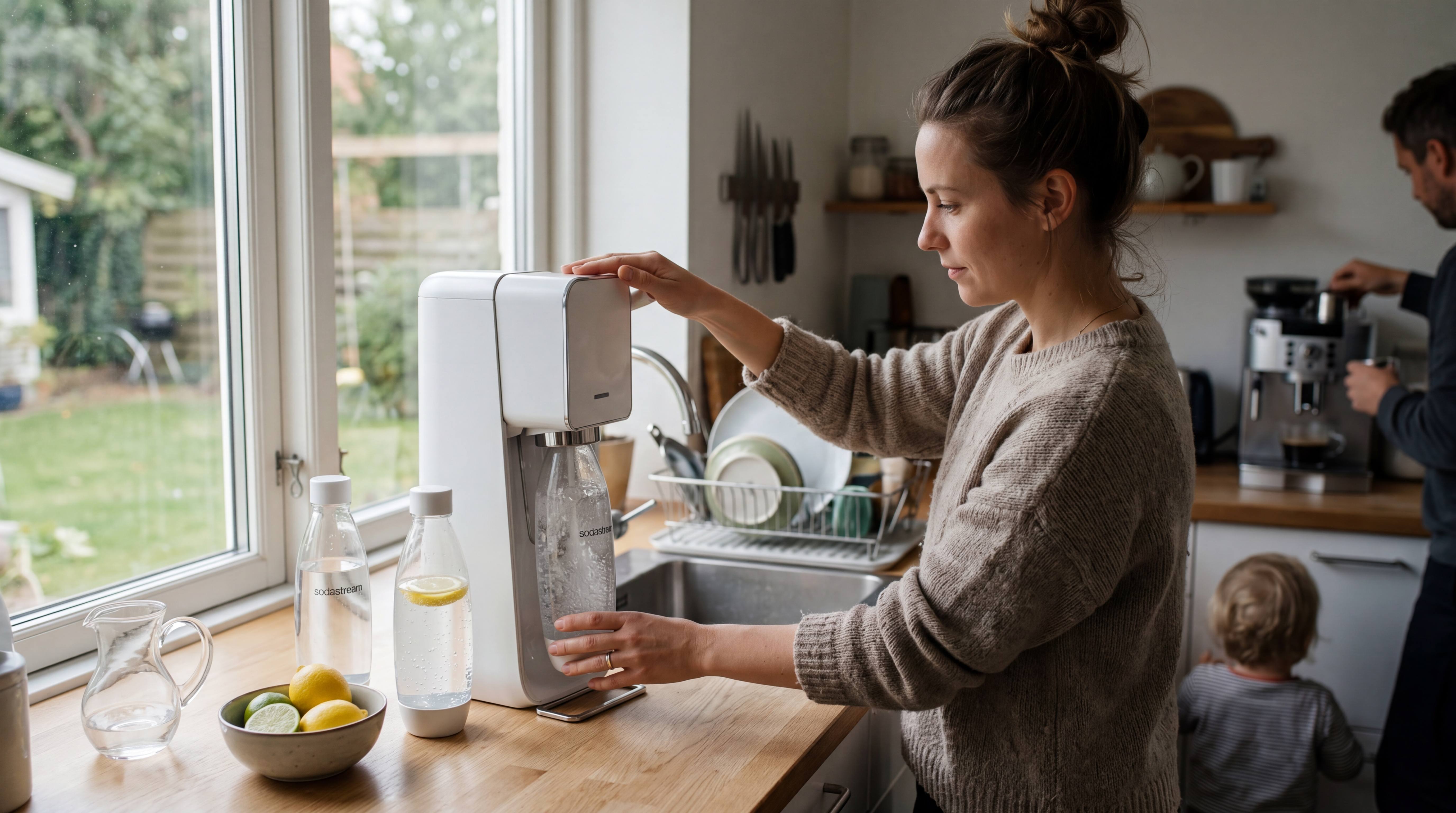
A large part of the soda maker market is driven by consumers who do not need an experimental beverage platform. They want a practical home carbonation system for daily hydration. They want to replace bottled sparkling water. They want to keep cold water in the fridge, carbonate it when needed, maybe add a slice of lemon, and move on with their day. For this kind of buyer, extra flexibility may not create extra value. It may only create more decisions, more cleaning, and more opportunities for misuse.
So when a brand builds a water-only machine, it is not necessarily falling short. Often it is making a strategic decision to optimize around reliability, ease, safety, and everyday simplicity.
This is also why many consumers remain happy with water-only systems for years. The product matches their real need. The mistake only happens when people assume that “soda maker” automatically means “all beverages welcome.” That assumption is where category confusion begins.
Why Any-Drink Carbonation Feels So Appealing to Consumers
If water-only logic is so strong, why does the idea of an any-drink soda maker attract so much interest?
The answer is simple: modern beverage culture is no longer just about hydration. It is about creativity, personalization, and experience.
Consumers today are far more interested in shaping drinks around mood, occasion, and dietary preference than they once were. They are experimenting with lower-sugar refreshments, homemade spritzers, botanical drinks, mocktails, tea-based beverages, fruit blends, and light cocktail-style serves. In this context, a machine that can only carbonate water may feel functionally useful but emotionally narrow.
The appeal of carbonating juice at home or sparkling a tea blend is not only about novelty. It is about range. One machine can potentially move from hydration to hosting, from weekday utility to weekend creativity, from plain refreshment to customized serving.
That is a powerful promise.
An any-drink soda maker aligns much more naturally with the idea of the modern kitchen as a beverage lab, not just a beverage station. It supports people who enjoy customizing drinks, presenting beverages to guests, or simply escaping the monotony of packaged options. It also connects better with the growing interest in low-alcohol and no-alcohol social drinks, where texture and presentation matter just as much as sweetness or flavor.
In this sense, broader carbonation capability expands the emotional meaning of the product. A water-only machine may help you drink more sparkling water. An any-drink system may help you think differently about what you drink altogether.
That is why this segment of the category continues to attract attention. It does not just offer another feature. It offers a different relationship with beverages.
The Real Technical Difference: Liquid Behavior Under Pressure

To understand why this distinction is so important, we need to move beyond marketing language and look at the liquid itself.
Water is structurally simple in this context. Under pressure, it absorbs carbonation in a relatively predictable way. When the gas is released, the reaction is manageable. This predictability is what makes water such a friendly carbonation medium.
But other beverages behave differently.
Juices often contain sugar, pulp, natural acids, and suspended particles. Tea-based drinks may contain dissolved compounds that influence foam behavior. Syrups change density and sweetness concentration. Some mixed drinks introduce botanicals, sweeteners, proteins, or flavor extracts that can destabilize the carbonation moment. Even small changes in liquid composition can change how aggressively a beverage foams when CO2 is introduced or when pressure is released.
This is where carbonation safety for beverages becomes a serious product issue rather than a fine-print warning.
If the system is not designed for those liquids, problems can occur. Foam can surge upward. Liquid can backflow into unwanted areas. Pressure release can become messy. Sticky residue can build up. Cleaning becomes more difficult. User confidence drops. The product may technically still function, but it no longer behaves in a stable, consumer-friendly way.
That is why compatibility is never just a yes-or-no statement. It reflects whether the machine’s design has anticipated the physical behavior of more complex liquids.
This is also the reason that consumers should be cautious about treating online hacks as proof of universal capability. A machine that appears to carbonate a non-water drink once under casual demonstration does not automatically mean it was designed for repeated, safe, clean, and satisfying use in that mode. Product design should be judged by sustainable use, not by experimental possibility.
So when brands differentiate between water-only and broader beverage carbonation, they are not simply segmenting the market for marketing purposes. They are often acknowledging the real physics of home use.
Water-Only Systems Are Stronger Than They Look
In online discussion, water-only machines are sometimes described as basic or limited. But that description misses their actual value.
A well-designed water-only system can be extremely strong in the areas that matter most for daily routine: speed, cleanliness, predictability, countertop simplicity, easy teaching, consistent carbonation, and low-friction use across household members.
That matters more than many people realize.
The best household products are not always the ones with the longest capability list. Very often, they are the products that remove hesitation. When a user knows exactly what the machine is for, exactly how it should be used, and exactly what result to expect, the product integrates more easily into everyday life.
This is why a water-only system often performs better than expected in real homes. It has a narrower mission, but a clearer one. It becomes part of a stable hydration habit. Fill bottle, chill water, carbonate, drink, repeat. There is almost no cognitive load. No decision fatigue. No wondering whether a certain juice concentration will foam too much. No concern about sticky cleanup after guests leave. No hesitation about which family member will use it correctly.
For households that primarily want sparkling water as an alternative to bottled water, this simplicity is not a compromise. It is the main benefit.
That is especially true in families with multiple users, in kitchens where countertop routines need to stay fast, or in homes where the machine is expected to support healthy daily drinking rather than beverage experimentation.
So while the broader market sometimes celebrates feature expansion, there remains a strong and legitimate place for focused products. A water-only soda maker is not less intelligent. In many cases, it is more disciplined.
Any-Drink Systems Are More Flexible, but Flexibility Has a Cost
The appeal of an any-drink soda maker is undeniable. But flexibility always comes with trade-offs, and mature consumers should understand them clearly.
The first trade-off is process. Once a machine is designed to handle more beverage types, the user is entering a more active role. Beverage selection matters. Temperature matters. Fill level matters. Flavor concentration matters. Cleaning matters more. Operation may involve more attention than a simple water-only cycle.
The second trade-off is mess risk. Even if the system is designed for broader compatibility, complex beverages are still more behaviorally active than plain water. Foam, fizz release, and residue remain part of the experience. The product may manage these issues well, but it cannot erase the underlying reality that more reactive liquids create more operational complexity.
The third trade-off is expectation management. Consumers sometimes imagine that an any-drink system will transform every beverage into a perfectly clean, restaurant-style sparkling serve with no learning curve. In practice, the results depend heavily on what is being carbonated and how the user approaches it. Some drinks respond beautifully. Others are better as post-carbonation mixtures rather than direct carbonation candidates.
The fourth trade-off is maintenance. A machine used only for water can stay relatively clean for a long time. A machine used for juices, syrups, teas, and flavored mixtures will naturally encounter more residue, more aroma carryover, and more cleanup responsibilities.
None of this reduces the value of the broader-capability model. It simply puts it in the right context. An any-drink system is best understood not as a universally better soda maker, but as a drink customization appliance for people who genuinely want to engage with beverages more actively.
For the right user, that flexibility is worth everything. For the wrong user, it can feel like unnecessary complication.
Who Should Choose a Water-Only Soda Maker
The most satisfied buyers are usually the ones who choose the machine that matches their real life rather than their imagined life.
A water-only soda maker is usually the better choice for buyers who fall into one or more of the following groups.
The first group is the hydration-first user. This person mainly wants plain sparkling water at home and sees carbonation as a way to drink more water, reduce bottled purchases, or make everyday hydration more enjoyable. They are not looking for beverage experimentation. They are looking for consistency.
The second group is the routine-driven household. In these homes, the machine may be used by multiple people, including family members with different habits. A water-only system reduces confusion. Everyone understands the workflow. The product becomes easier to share.
The third group is the low-maintenance buyer. Some people love customizable kitchen tools, but others want appliances that ask almost nothing from them. They want fast cleanup, stable use, and minimal risk of sticky residue or operational mistakes. For them, the focused design of a water-only machine is a clear advantage.
The fourth group is the space-and-speed kitchen. In many homes, the countertop is an active workflow area, not a display zone. Products that slow down the rhythm of cooking and cleaning tend to lose favor quickly. Water-only systems fit these homes better because they support quick use without much interruption.
The fifth group is the clarity-seeking buyer. These consumers do not want product ambiguity. They appreciate when a machine has a clear purpose and clear usage rules. Simplicity builds confidence.
For all of these users, the right question is not whether the machine can do more. The right question is whether it does the main job extremely well.
Who Should Choose an Any-Drink Soda Maker
An any-drink soda maker makes the most sense for users whose beverage behavior is naturally broader, more experimental, or more experience-driven.
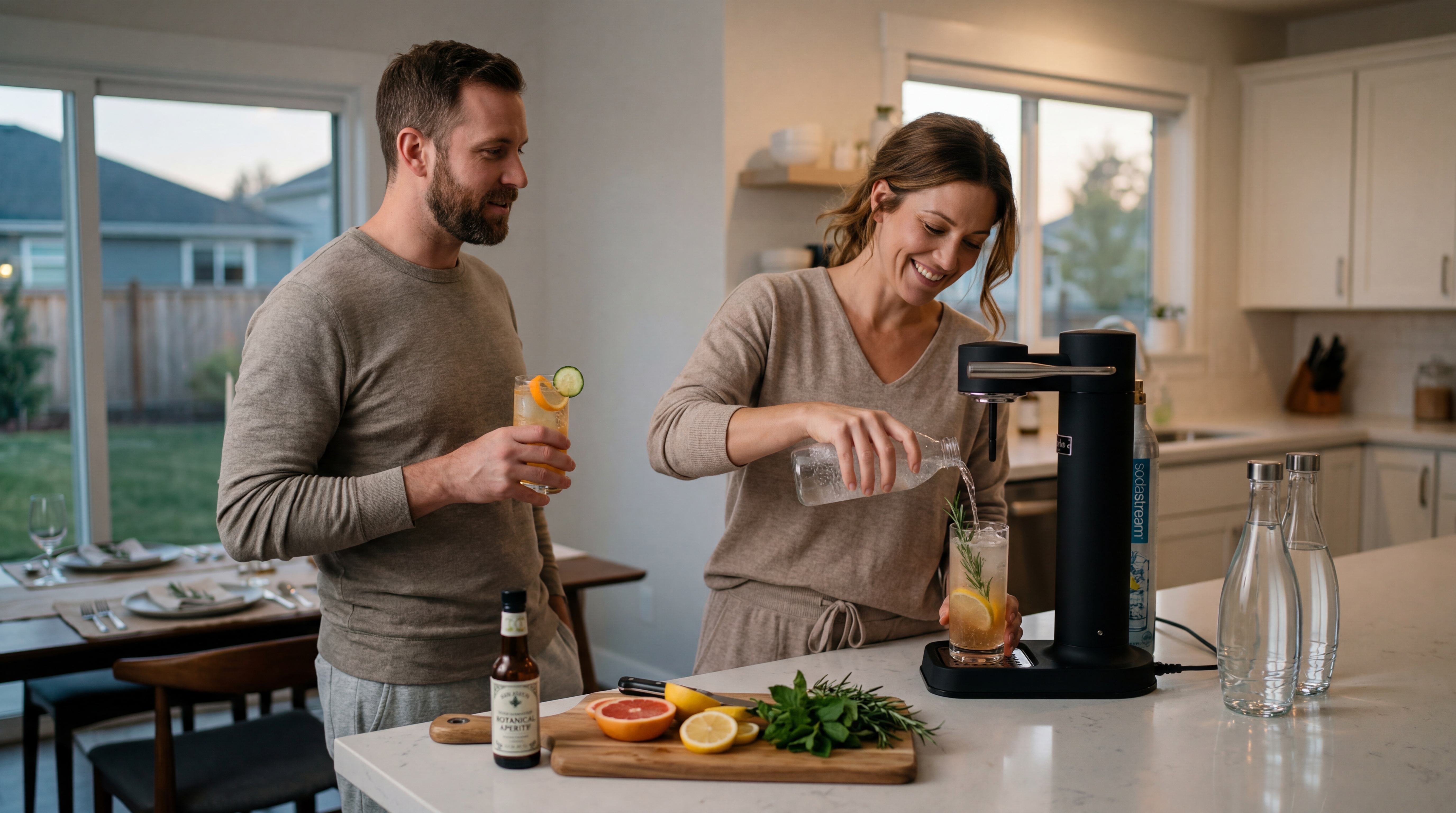
The first group is the flavor explorer. These consumers get bored with plain sparkling water alone. They want to try sparkling teas, fruit-based mixes, mocktails, diluted juices, or seasonal beverage concepts. They see the machine as a creative tool rather than just a hydration tool.
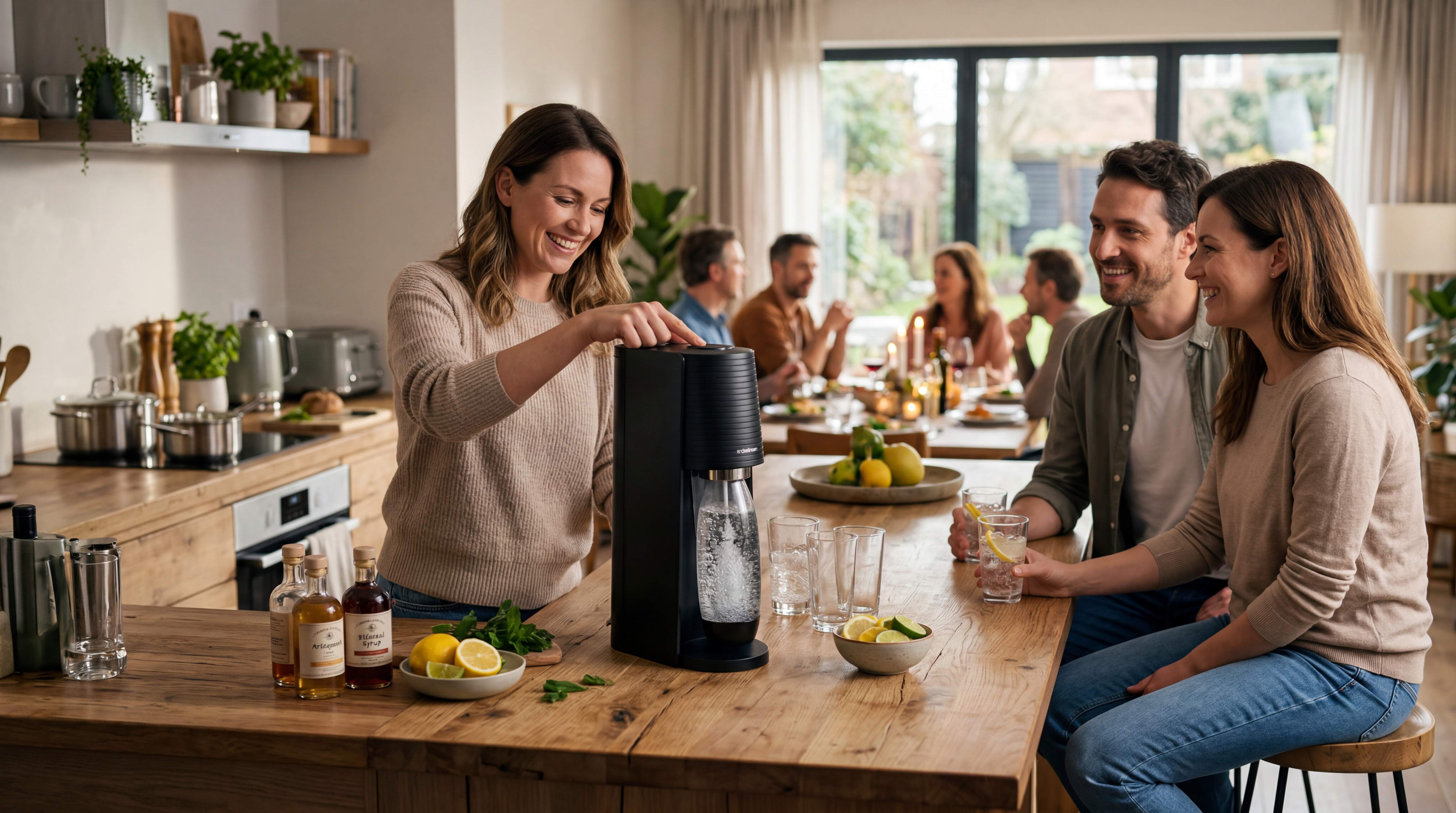
The second group is the host or entertainer. In homes where drinks are part of hospitality, the ability to create more varied sparkling beverages matters. Presentation matters. Customization matters. Guests do not all want the same drink. A broader-capability system supports that flexibility.
The third group is the lower-sugar lifestyle user who still wants variety. These buyers often want drinks that feel more interesting than plain water but less heavy than packaged soda. An any-drink system can help them build more nuanced beverages around fruits, herbs, tea, botanicals, or light mixers.
The fourth group is the kitchen hobbyist. Some consumers enjoy categories that reward experimentation. They do not mind learning how different liquids behave. They do not mind the possibility of extra cleanup if the reward is more creative control. For them, the machine becomes part of a broader culinary lifestyle.
The fifth group is the user who explicitly wants the best soda maker for flavored drinks rather than just a sparkling water machine. This is perhaps the clearest case. If flavor-led use is central, a water-only system may feel restrictive from the beginning.
For these users, the extra flexibility is not theoretical. It is the reason to buy.
What Bottle Material and System Architecture Tell You

Consumers often focus on whether a machine can carbonate different drinks, but they pay less attention to the clues hidden in the product architecture.
In reality, system architecture often reveals the intended use case long before the marketing copy does.
Bottle attachment style matters. Pressure release method matters. How the bottle sits in the machine matters. How easy it is to remove after carbonation matters. Whether the system feels designed around clean gas injection or around broader beverage management matters. These design choices are not random. They reflect the assumptions the brand has made about the liquid, the user, and the usage environment.
Bottle material matters too. A PET bottle soda machine may appeal because PET is lightweight, practical, and family-friendly, but PET-based systems are also often evaluated in terms of everyday convenience and repeat household use. Other bottle strategies may communicate different values such as ritual, appearance, or premium tabletop serving.
The key insight for buyers is that product design language tells a story. A machine designed around fast daily water carbonation often feels different from one designed around beverage experimentation. Even before a consumer reads the detailed specifications, the physical logic of the product often signals the intended lifestyle.
This is why good buying decisions are rarely made by looking at one feature alone. Consumers should read the machine as a system. What kind of liquids does it seem prepared to manage? How much user control does it assume? How easy will cleanup be? Does the design invite routine or experimentation? Does it appear optimized for one beverage behavior or many?
When these questions are asked seriously, product differences become much easier to understand.
The Buying Mistake Most Consumers Make

The most common buying error in this category is not choosing the wrong brand. It is choosing the wrong product philosophy.
Many consumers buy based on image, popularity, or general category excitement. They think, “I want a soda maker,” but they have not yet clarified whether they want a sparkling water habit or a beverage experimentation habit. As a result, they evaluate products too superficially.
A consumer who mainly drinks plain sparkling water may overbuy, choosing a more flexible system whose extra capability goes unused. Another consumer may underbuy, choosing a simpler machine and then feeling frustrated when they realize their actual interest lies in juices, spritzes, flavored beverages, or drink creativity.
This is why a real soda maker buying guide should not begin with brand ranking. It should begin with beverage identity.
What do you actually want this machine to do for your life?
Do you want to stop buying bottled sparkling water?
Do you want to make hydration more enjoyable without extra sugar?
Do you want to serve interesting drinks at home?
Do you want one system that can move between weekdays and weekends?
Do you enjoy beverage experimentation, or do you prefer beverage certainty?
These questions are more useful than broad comparisons because they reveal the user’s real need. Once the need is defined, the right machine type becomes much easier to choose.
The category feels confusing only when all soda makers are discussed as though they solve the same problem. They do not. Some are built for discipline. Some are built for range. The best machine is the one that aligns with the consumer’s actual beverage behavior.
The Market Is Moving from One Category to Two
For many years, consumers could think about soda makers as one broad product group. That is becoming less accurate.
The market is now slowly separating into two strategic directions.
The first direction is the hydration appliance: streamlined, reliable, water-first, easy to use, easy to clean, optimized for repeat daily carbonation. This product direction is likely to stay strong because the demand for home sparkling water remains durable and practical.
The second direction is the beverage creativity appliance: more flexible, more experience-driven, more aligned with recipes, mocktails, drink rituals, hosting, and broader beverage experimentation. This direction is attractive because it connects to premiumization, personalization, and lifestyle content.
These two directions will continue to overlap, but they should not be confused.
The first sells clarity. The second sells possibility.
The first reduces friction. The second expands imagination.
The first fits households that want stable utility. The second fits households that want a broader beverage canvas.
Understanding this split is important not only for consumers, but also for brands, retailers, and content creators. Brands that fail to communicate their product philosophy clearly risk attracting the wrong user. Retailers that group all systems together without proper explanation increase return risk and buyer confusion. Content creators who write generic rankings without discussing beverage compatibility miss one of the most important decision factors in the category.
The market is no longer asking for one soda maker story. It is asking for more precise ones.
Why This Difference Will Matter Even More in the Future
This distinction between water-only and any-drink systems will only become more important over time, because consumer beverage expectations are becoming more sophisticated.
People are no longer shopping for drinks the way they once did. They want more control over sugar, more flexibility around flavor, more alignment with routine, and more differentiation between everyday hydration and social beverages. They are also more aware of waste, packaging, and the cost of buying repeated ready-made drinks.
That means the soda maker category will increasingly attract different user motivations at once. Some consumers will continue to enter through practical sparkling water needs. Others will enter through drink creativity, home entertaining, lower-sugar living, or kitchen lifestyle design.
As those motivations diversify, the category cannot be explained through one generic promise. It will require more specific segmentation.
A buyer considering a sparkling beverage maker in the future will likely care about more than carbonation strength. They may care about compatibility, cleaning burden, ritual value, beverage aesthetics, family usability, and whether the product supports a broader home beverage culture. In that environment, product clarity becomes a competitive advantage.
The brands that win will likely be the ones that do not simply claim versatility or simplicity, but explain exactly which kind of beverage life they are built for.
Final Decision: Which One Is Right for You
So what does the difference really mean?
It means that choosing between a water-only soda maker and an any-drink soda maker is not a technical footnote. It is the central decision.
If your goal is reliable sparkling water, easier hydration, lower bottled water dependence, minimal cleanup, and straightforward daily use, a water-only machine may be exactly right. It is focused, efficient, and often better suited to real everyday life than consumers first assume.
If your goal is broader beverage freedom, flavor experimentation, sparkling teas, juice-based drinks, mocktails, hosting versatility, and a more expressive drink customization appliance, then the broader-capability route will likely feel much more satisfying. It opens more doors, but it also asks more from the user.
Neither product philosophy is inherently superior. The real difference is alignment.
A good buying decision happens when the machine’s beverage logic matches the household’s beverage reality.
That is the point most rankings miss, and it is the reason so many consumers misjudge the category at first. They think they are comparing machines. In truth, they are comparing lifestyles.
And once that is understood, the category becomes much easier to navigate.
Closing Perspective
The soda maker category is becoming more mature, and maturity always brings clearer distinctions. What once looked like a single product class is revealing itself as two different approaches to home beverage design.
One approach says: keep it simple, keep it clean, keep it daily.
The other says: make drinks more expressive, more flexible, and more customizable.
Both approaches are valid. Both have strong futures. But they are not interchangeable.
That is why consumers should stop asking whether a soda maker is good in general, and start asking a better question: what kind of drink life is this machine really built for?
When that question is answered honestly, the right choice becomes much easier.
And that is what the difference really means.
#AnyDrinkSodaMaker
#CarbonatingJuiceAtHome
#SparklingBeverageMaker
#BestSodaMakerForFlavoredDrinks
#HomeCarbonationSystem
#PETBottleSodaMachine
#DrinkCustomizationAppliance
#SodaMakerBuyingGuide
#CarbonationSafetyForBeverages
#KitchenAppliances
#SparklingDrinks
#HomeBeverageTrends
#CarbonationTechnology
#DrinkInnovation