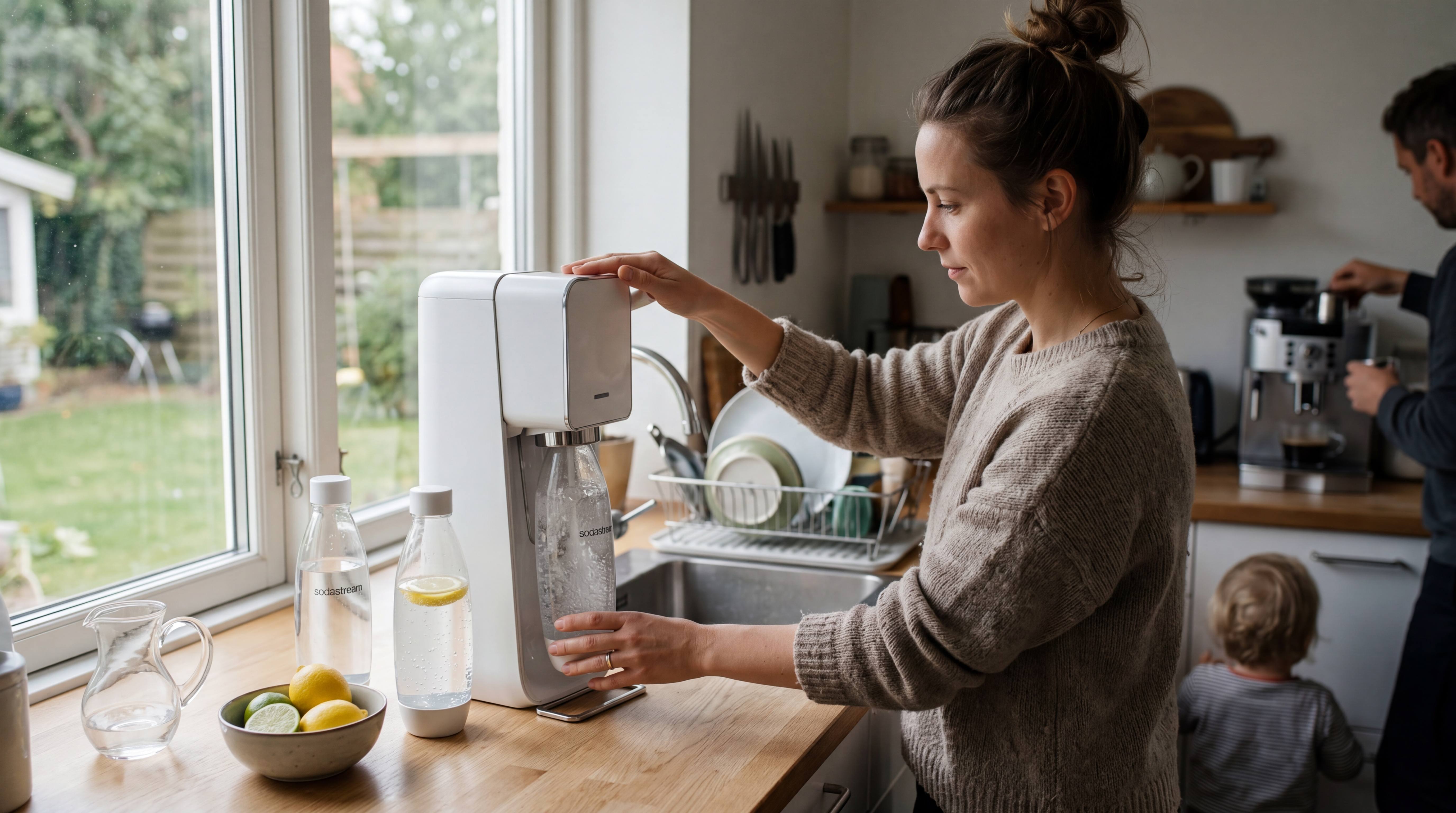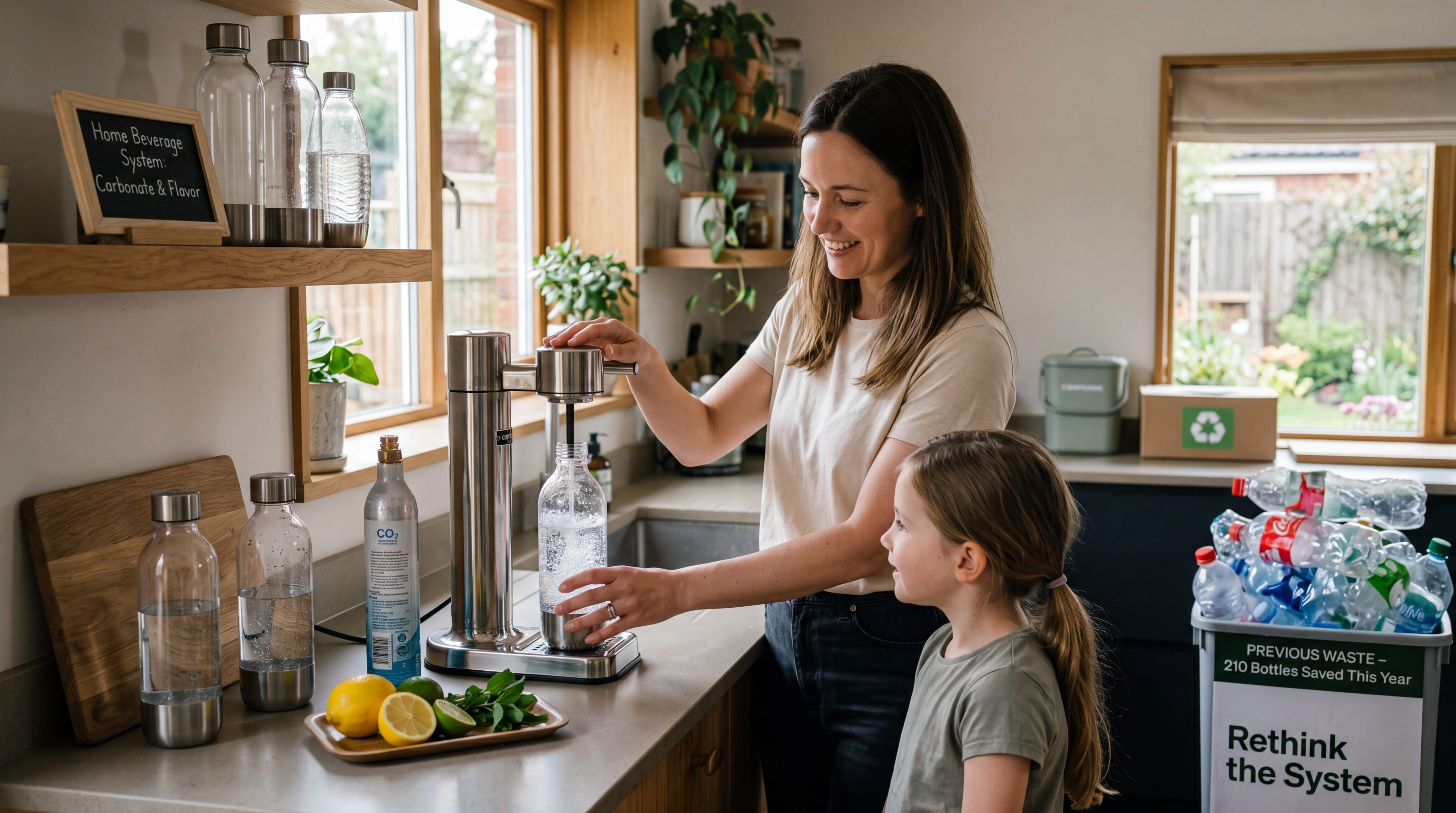
Why Soda Makers Are Becoming the New Hospitality Appliance in Modern Homes
Most Kitchen Appliances Serve the Household, but Only a Few Serve the Relationship Between People
Most kitchen appliances are purchased to solve private needs. A kettle boils water. A toaster prepares breakfast. A blender supports meal prep. A coffee machine serves routine, energy, and habit. These products matter because they improve domestic efficiency or comfort. They make life smoother for the people who already live in the home.
But some appliances become more important than their function suggests because they do something else: they improve how the home receives other people.
That is a very different kind of value.
A home is not only a place where meals are made. It is also a place where relationships are hosted. Friends stop by unexpectedly. Family members gather for dinner. Guests arrive for lunch, birthdays, conversations, or casual evenings. Children bring classmates home. Neighbors visit. Colleagues come over for a brief meeting. In all of these moments, the household is judged not only by its furniture or food, but by its ability to offer comfort without stress.
This is where the soda maker is changing categories.
Most people still see it as a personal-use device, something that produces sparkling water for one or two people who like bubbles. That definition is no longer large enough. Increasingly, the soda maker is becoming a home hospitality appliance. It is not only about what the household drinks. It is about what the household can offer.
That shift is important because hospitality has changed. Modern homes do not always want to stock multiple soft drinks, bottled sparkling waters, mixers, juices, and adult beverages just to be ready for every possible guest. That old model consumes space, money, and packaging, and it still often leaves the host underprepared. A refrigerator full of bottled products may look like abundance, but it often creates a strange kind of rigidity. There is inventory, but little flexibility. There are drinks, but not necessarily the right drinks.
A soda maker changes this dynamic by giving the home a more adaptable base. Instead of trying to predict every guest’s preference in packaged form, the household can begin with sparkling water and move outward into lighter flavoring, citrus, herbs, alcohol-free serves, meal drinks, or more elevated social drinks. The beverage is no longer pre-decided in a bottle from the store. It becomes something the home can shape in real time.
That is why this category is becoming more socially relevant. It is moving from private utility into social readiness. And once a kitchen product starts improving how the household receives people, it becomes much more than a machine.
Hospitality Has Become More Casual, but Expectations Have Not Become Lower
One reason soda makers are becoming more important is that hospitality itself has changed. People host differently now.
In many households, formal entertaining has declined, but casual entertaining has increased. Guests come over with less ceremony and more spontaneity. The evening may be relaxed rather than elaborate. A lunch may be improvised rather than planned two weeks in advance. Friends may drop by after work. Family may stay for a simple meal rather than a staged event. Children’s visits blend into adults’ routines. Even small gatherings now operate with a softer social style.
But casual hospitality does not mean low expectations. In fact, it can sometimes create more pressure.
Formal events come with preparation time and clear scripts. Casual hosting often arrives with less warning and fewer fixed rules, which means the home must be ready in a different way. It has to feel flexible. It has to offer something without looking like it tried too hard or too little. The modern host wants to seem relaxed, but still capable.
This is exactly where a soda maker becomes valuable.
A household that can produce guest-ready sparkling drinks in a few minutes gains a quiet kind of confidence. It does not need to apologize for having only plain water. It does not need to overcompensate with sugary packaged beverages. It does not need to keep a refrigerator crowded with bottled drinks that may or may not fit the moment. Instead, it can offer something clean, light, refreshing, and adaptable.
That adaptability is one of the defining features of modern hospitality. Today’s gatherings often include mixed preferences:
- someone wants plain sparkling water
- someone else wants lemon and mint
- another guest prefers a lighter social drink without alcohol
- children want something that feels special but not too sugary
- one guest wants a meal-friendly sparkling drink
- another just wants something cold and elegant in a glass
A soda maker supports this kind of variation surprisingly well. It allows the host to move from inventory-based hospitality to system-based hospitality. The household does not need to pre-buy every answer. It needs a better beverage base.
That is why at-home beverage hosting is becoming one of the strongest strategic directions in the soda maker category. The product no longer belongs only to hydration. It belongs to social adaptability.
The Host’s Real Problem Is Not “What Drink Should I Buy?” It Is “What Can I Offer Without Stress?”
The beverage problem in hospitality is often misunderstood.
Many people think the host’s challenge is product selection. Which sparkling water should I buy? Which soda should I keep? Which juice should be available? Should I get mixers? Do I need something adult, something child-friendly, something alcohol-free, something healthier, something premium-looking?
But the real problem is not the shopping list. The real problem is emotional and operational: what can I offer people without turning the kitchen into a storage problem, a planning burden, or an awkward moment of underpreparedness?
That is why the soda maker is so useful in this space. It gives the home a beverage answer that is not overcommitted to one kind of guest.
Traditional beverage hosting relies on guessing. The host tries to predict what future visitors may want and buys drinks in advance. This method is inefficient in several ways. It takes refrigerator space. It creates packaging waste. It often leads to leftovers that do not get used. It can be expensive relative to how often guests actually come. And even when the host does all of this, the selection still may not match the people who arrive.
A soda maker solves a different layer of the problem. It does not guess. It prepares.
That is a major difference.
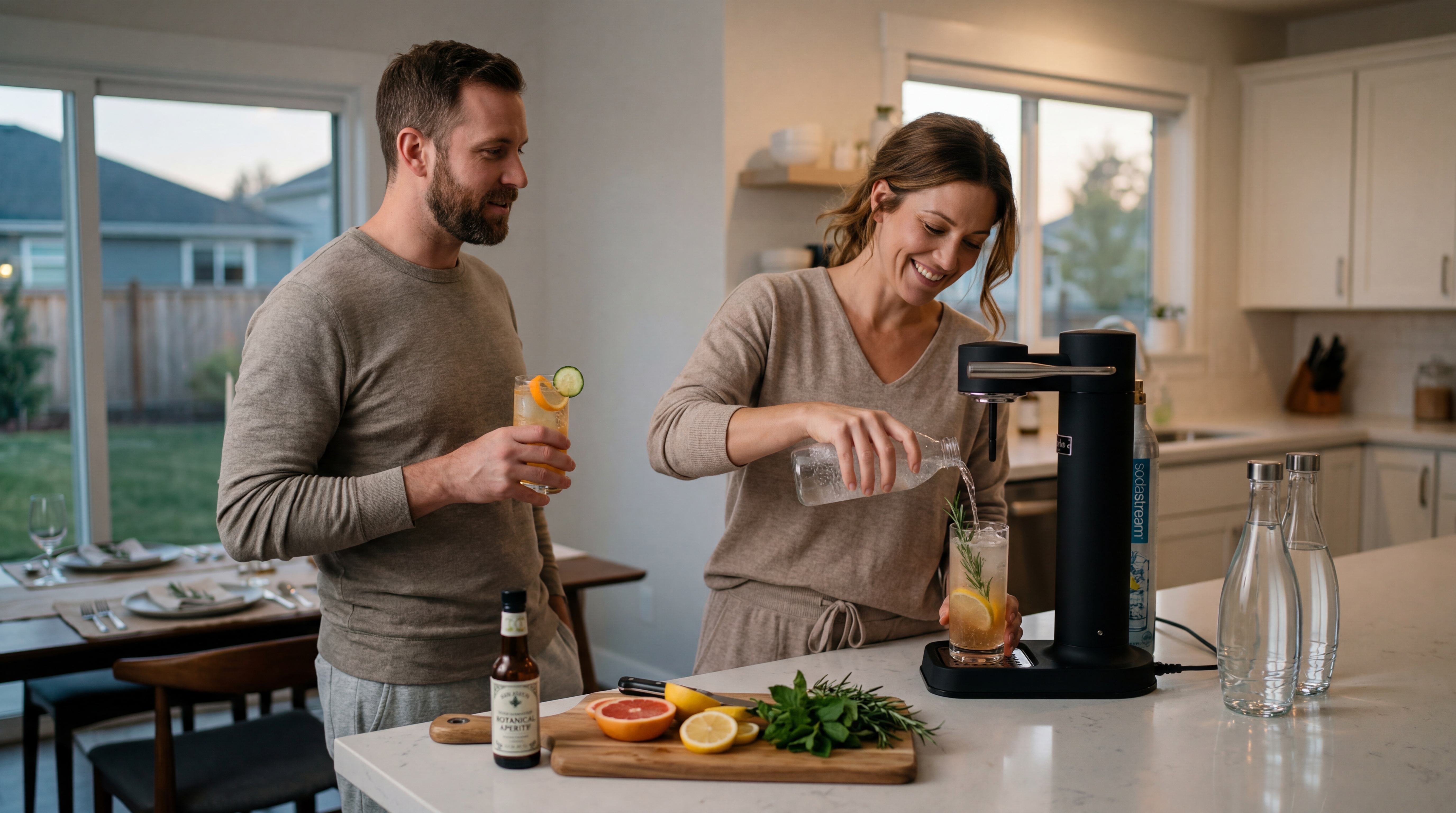
When a home has a social beverage system, it becomes easier to welcome a range of preferences from one flexible foundation. Sparkling water can be plain, lightly flavored, herb-infused, citrus-forward, dinner-friendly, brunch-ready, or turned into a home aperitif alternative that feels more social than water but lighter than alcohol. This does not require the host to perform a fully stocked beverage bar. It requires only a system that is ready to adapt.
The emotional value of that is substantial. A good host does not want to say, “Sorry, I only have tap water.” Nor do they want to open the fridge and discover that the only available drink is a random bottled soda left over from another week. A soda maker helps the host avoid both extremes. It offers a middle path: easy, customizable, and presentable.
This is why the category is becoming more relevant in homes where hospitality matters, even if those homes are not frequent party spaces. The host’s true need is not product accumulation. It is stress reduction with dignity.
A soda maker does that unusually well.
A Soda Maker Creates a Beverage Baseline, and Beverage Baselines Are More Powerful Than Beverage Stock

One of the strongest concepts in this category is the idea of the beverage baseline.
A household with no beverage baseline has to improvise every time people gather. It depends on whatever happens to be in the fridge, whatever can be found in the pantry, or whatever gets purchased in a rush before guests arrive. This makes hospitality feel inconsistent. Sometimes the home looks prepared. Sometimes it looks empty. Sometimes it overbuys. Sometimes it offers too little.
A soda maker creates a baseline.
That baseline is not “every drink imaginable.” It is something more useful: the ability to serve sparkling refreshment quickly and adapt it upward when needed. That alone changes the household’s social capability.
A baseline matters because most hospitality does not require abundance. It requires confidence. People do not necessarily need five branded drink options. They need to feel that the home can offer something intentional. A soda maker plus citrus, herbs, or a few simple additions can often create that feeling much better than a disorganized collection of bottled drinks.
This is one reason modern entertaining drinks have moved away from heavy, highly specific beverage inventories in many contemporary homes. Consumers increasingly prefer flexibility over stockpiling. They want fewer fixed products and more capacity to improvise elegantly.
A soda maker supports this because it anchors the beverage system around one repeatable center. It becomes a countertop drink station in the best sense of the phrase: not a bar, not a vending shelf, but a low-burden system the home can activate when needed.
This also gives the product a new kind of permanence. A machine used only for one person’s sparkling water may or may not justify permanent counter space. A machine that helps the home be guest-ready becomes much easier to keep visible and integrated.
That is why soda makers gain value when they stop being evaluated only through private use. A beverage baseline is a household asset, not just an individual preference.
The Best Hospitality Tools Do Not Perform the Entire Occasion. They Support It Quietly
A very useful way to understand why soda makers are becoming socially important is to compare them with other hospitality tools.
Some products dominate the occasion. A large grill becomes the event. A cocktail bar setup becomes the center of the evening. A raclette grill, fondue pot, or espresso machine can become a visible performance object. That is useful in certain settings, but it also changes the tone of hosting. It makes the appliance part of the show.
A soda maker usually works differently. Its strongest hospitality value is often quiet.
It helps the occasion without taking it over. It prepares sparkling water, supports a light mocktail, refreshes glasses, or gives guests options, but it does not need to become the evening’s personality. That is one reason it works so well in modern homes where people want the atmosphere to feel relaxed and natural rather than staged.
This is especially important for hosts who do not want entertaining to feel like labor. A soda maker can support the gathering without requiring a complicated setup, without a large collection of specialty ingredients, and without forcing the host into bartender mode for the entire night. It makes the household more capable without making the host more burdened.
That is one reason the category fits so well with today’s softer style of entertaining. It supports hospitality through flexibility, not spectacle.
A host can use it to prepare guest-ready sparkling drinks before dinner, refresh citrus waters during a meal, offer an alcohol-free option that still feels adult, or create a simple interactive moment at the counter where guests choose their own flavor direction. None of this requires performance-heavy hosting. It simply improves the house’s social fluidity.
And that kind of quiet support is often more valuable than dramatic functionality.
The Rise of the Alcohol-Light Social Home Makes Soda Makers More Relevant Than Ever
Another reason this category is expanding socially is that beverage expectations in adult gatherings are changing.
For many years, home hospitality was strongly organized around alcohol or sugary packaged drinks. If guests came over, the host offered wine, beer, soda, juice, or some combination of those. Today the field is much more nuanced. Many people still drink alcohol, but they do not necessarily want it to dominate every gathering. Others want lighter options, lower-alcohol moments, or beautifully served drinks that feel complete without being strong.
This is where the soda maker becomes especially valuable as a home aperitif alternative platform.
It allows the home to create drinks that feel sociable without depending on heavy sweetness or alcohol as the only route to interest. A sparkling drink with citrus peel, herbs, bitters-style notes, or light botanical character can feel adult, occasion-worthy, and aesthetically complete. The bubbles give the drink lift. The glass gives it presence. The household no longer has to choose between plain water and fully alcoholic hosting.
This middle space is commercially powerful because it responds to a real social shift. The modern home is looking for more beverage gradients:
- drinks for those who want alcohol
- drinks for those who do not
- drinks for weekdays
- drinks for meals
- drinks that feel social but not indulgent
- drinks that work across generations
A soda maker supports this range unusually well because it begins with neutral carbonation and builds upward. It does not lock the home into one identity. It gives the host more options at the moment of gathering.
This is one of the strongest reasons modern entertaining drinks increasingly include sparkling water systems, botanicals, citrus elements, fruit accents, and build-your-own-light-drink setups. The social beverage world is becoming less binary, and the soda maker fits the new middle territory.
That is a major category opportunity, and it is still under-recognized.
Hospitality Is Stronger When Guests Can Participate, Not Just Consume

One of the most underestimated strengths of the soda maker in social settings is participation.
Most hosted drinks are passive from the guest’s point of view. The host selects them, pours them, and offers them. That is perfectly fine in many contexts, but participation adds something different. When guests can shape their own drink lightly—choose plain sparkling water, lemon and mint, a fruit-forward glass, or a lighter herbal profile—the beverage becomes part of the social interaction instead of just part of the table.
This is why the soda maker can create an interactive drink experience without requiring a complex bar arrangement.
The interaction can stay very simple. A few citrus slices, herbs, berries, or light additions near the machine or the table can be enough. The point is not customization for its own sake. The point is that the host no longer has to guess every preference in advance, and guests feel more directly involved in the refreshment moment.
This works especially well in relaxed gatherings where people move between kitchen and dining area, where the social boundary between host and guest is soft, and where the home wants to feel open rather than rigidly managed.
It also helps across mixed groups. Adults can choose lighter or more expressive drinks. Children can feel included because they are not simply being handed a standard bottled soft drink. Guests with different dietary or lifestyle preferences can shape their own level of simplicity or flavor. That flexibility can make the gathering feel more inclusive without increasing the host’s workload.
In many kitchen categories, interactivity creates clutter. In this category, interactivity can actually reduce pressure because it distributes beverage preference more intelligently.
That is why a soda maker’s hospitality value is not only in what it produces. It is in how it changes the social behavior around the drink.
The Category Fits Small Homes and Large Gatherings for the Same Reason: It Lowers Beverage Inventory Pressure
Large gatherings often motivate beverage stockpiling, but small homes do not always have room for that kind of storage. This tension creates a practical hospitality problem.
A household may want to be ready for guests, but it does not want the fridge dominated by bottled drinks all week. It may want to offer good drinks at dinner, but it does not want to maintain a mini convenience store at home. It may want to keep options open without carrying the burden of options physically.
This is where hosting without bottled beverages becomes such a useful strategic phrase.
A soda maker allows the home to remain beverage-capable without remaining beverage-cluttered. That distinction matters. A cluttered home may still be stocked, but it often feels less organized, less intentional, and less efficient. A capable home, by contrast, can offer guests something good from a smaller number of repeatable tools.
This is one of the category’s quietest strengths: it reduces the need for anticipatory inventory. Instead of asking, “Which drinks do I need to buy before people come?” the host can ask, “What simple ingredients or additions do I want available if people come?” That is a lighter question, financially, spatially, and emotionally.
It also helps explain why the soda maker is relevant across different household sizes. In a small apartment, it helps preserve space. In a large family home, it helps preserve order. In both cases, the product works because it replaces beverage stock pressure with beverage system flexibility.
And when hospitality becomes easier to maintain, the home becomes more socially usable overall.
Soda Makers Are Becoming a Countertop Signal of Readiness

Some objects in a home communicate something before they are used. A well-placed coffee setup signals that the household can host a morning conversation. A large dining table signals that people gather here. A kettle, tea tray, or drinks cabinet can communicate quiet forms of welcome.
Increasingly, the soda maker is starting to play a similar role.
When it lives visibly and naturally in the kitchen, it signals that the home can provide refreshment with ease. It suggests not luxury in an old-fashioned sense, but readiness. Not over-preparation, but competence. That is a very contemporary form of hospitality.
This is why the soda maker increasingly works as a countertop drink station even when it occupies a small footprint. It tells the household—and indirectly tells guests—that the home is prepared to create drinks, not just open them. That may sound subtle, but in design-led or hospitality-aware households, these cues matter.
The countertop appliance of the future is often not the one that performs the most dramatic function. It is the one that quietly supports the home’s style of living. A soda maker fits that model very well because it participates in hospitality, wellness, convenience, and aesthetics at once.
That multi-role identity makes it much stronger than its simple mechanics suggest.
Brands That Keep Positioning This Category as “Just Sparkling Water” Are Underselling It
One of the biggest strategic mistakes in the market is overly narrow product storytelling.
When brands position soda makers only as sparkling water machines, they reduce the category’s emotional and commercial range. They frame it as hydration support rather than social infrastructure. That leaves too much value unexplained.
A stronger positioning recognizes that the soda maker can serve private hydration, family meal refreshment, guest hospitality, light social drinking, alcohol-free hosting, brunch culture, and everyday entertaining. In other words, it belongs not only in wellness messaging or sustainability messaging, but also in hospitality messaging.
This matters because consumers do not only buy appliances for what they do. They buy them for the kind of home life they support.
A product that supports at-home beverage hosting, guest-ready sparkling drinks, modern entertaining drinks, and a more flexible social beverage system deserves to be marketed with that wider identity. Otherwise, brands force the category to compete only in the narrowest part of its possible value field.
The households that understand this already behave differently. They keep the machine visible. They use it for meals, guests, and shared moments. They stop treating it as a niche hydration tool. The category’s next phase of growth will come from making that broader role more visible.
Final Perspective: A Soda Maker Becomes Socially Important When It Helps the Home Feel More Ready Than Stocked
The old model of beverage hospitality was based on stock. Buy enough bottled drinks, store enough options, and hope that the selection matches the people who arrive.
The new model is based more on readiness.
A soda maker fits this new model extremely well. It helps the home become beverage-capable without becoming beverage-heavy. It supports lighter, smarter, more flexible hospitality. It allows the host to offer refreshment without stress, without overbuying, and without forcing every gathering into the same drink format.
That is why the soda maker is increasingly becoming a home hospitality appliance. It strengthens at-home beverage hosting, makes guest-ready sparkling drinks easier to serve, supports modern entertaining drinks, builds a more adaptable social beverage system, can anchor a countertop drink station, works beautifully as a soda maker for dinner parties, offers a practical home aperitif alternative, creates an interactive drink experience, and makes hosting without bottled beverages far more realistic.
That is a much bigger story than “making sparkling water.”
It is the story of a home that can welcome people more easily.
And in modern domestic life, that may be one of the most valuable upgrades a kitchen product can offer.
#AtHomeBeverageHosting
#GuestReadySparklingDrinks
#ModernEntertainingDrinks
#SocialBeverageSystem
#CountertopDrinkStation
#SodaMakerForDinnerParties
#HomeAperitifAlternative
#InteractiveDrinkExperience
#HostingWithoutBottledBeverages
#KitchenAppliances
#HomeBeverageSystem
#ModernHospitality
#SparklingWaterLifestyle
#DrinkInnovation