Why Convenience Decides the Fate of a Soda Maker in Real Homes
Most Soda Makers Do Not Fail Because They Are Bad Products
One of the most useful truths in this category is also one of the least discussed: most soda makers do not disappear from everyday life because they are technically poor products. They disappear because they lose the daily convenience battle.
This distinction matters.
When consumers imagine appliance failure, they usually imagine obvious defects. The product breaks. The carbonation is weak. The machine feels cheap. The design disappoints. The brand overpromises. Those things do happen, but they are not the most common reason a soda maker stops being used. In many homes, the machine still works. It still makes sparkling water. It still looks acceptable on the counter. And yet, after a few weeks or a few months, the frequency drops. The product moves from daily use to occasional use, from occasional use to forgotten use, and in some cases from forgotten use to cabinet storage.
That kind of failure is not mechanical. It is behavioral.
A soda maker lives or dies on repetition. The machine must earn its place inside moments that happen when people are busy, distracted, thirsty, tired, hosting, cleaning, or simply not in the mood for extra steps. If the process feels even slightly more annoying than the value returned, the household begins to reduce use without formally deciding to. People do not usually say, “We have chosen to abandon the soda maker.” They simply stop reaching for it as often. That is how most small-appliance exits happen in real homes.
This is why soda maker daily usability is more important than many marketing stories suggest. Consumers may buy the category through aspiration, but they keep the category through convenience. The machine must fit ordinary life, not just ideal life.
That is especially true in modern households where beverage choices compete with extreme ease. A bottled drink can be opened immediately. A filtered water tap is already there. A kettle or coffee setup may already dominate routine. The soda maker enters a crowded field of habits, and habits are powerful. A new appliance does not become permanent just because it is interesting. It becomes permanent because it proves it can participate in repeated life with very little resistance.
That is why convenience decides the fate of the category. Not because consumers are lazy in some shallow sense, but because repeated domestic behavior follows the path of least friction. If the soda maker wins that path, it stays. If it loses it, even a beautiful product with solid performance can quietly fade from the household.
The Real Competition Is Not Other Soda Makers. It Is Everyday Ease

A soda maker is often evaluated against other soda makers. Consumers compare design, carbonation strength, bottle type, price, refill system, premium feel, and overall aesthetics. Those comparisons are useful, but they miss the deeper competition.
The real competition is everyday ease.
When a person wants a drink at home, they are not always deciding between one soda maker and another. Very often, they are deciding between the soda maker and a simpler action. Open the fridge. Pour water. Grab a bottle. Make tea. Pour juice. Drink nothing for now. Even if the soda maker is admired, it still has to outperform or at least justify itself against those existing routines.
This is why countertop beverage convenience matters more than feature lists suggest. A drink appliance that interrupts normal flow will struggle to win repeat use, even if it is objectively good. A machine that fits the home’s natural rhythm can become central even without dramatic technical differentiation.
That rhythm depends on timing and mood. Morning use is different from evening use. Solo use is different from family use. Guests create a different kind of pressure from private hydration. In all cases, the question is similar: does the machine feel easier than expected, or slightly harder than it should be?
Small differences matter enormously here.
If the bottle is awkward to insert, people notice.
If the refill is slightly annoying, people postpone it.
If the machine is hard to wipe down, people avoid using it before guests come.
If the bottle rotation is disorganized, the system feels incomplete.
If the machine sits in the wrong place, it starts losing frequency.
If the product asks for just one extra mental step too often, habit weakens.
None of these problems sound dramatic on their own. That is precisely why they are dangerous. They are not strong enough to trigger formal rejection, but they are strong enough to quietly reduce daily use. Over time, small friction beats good intention.
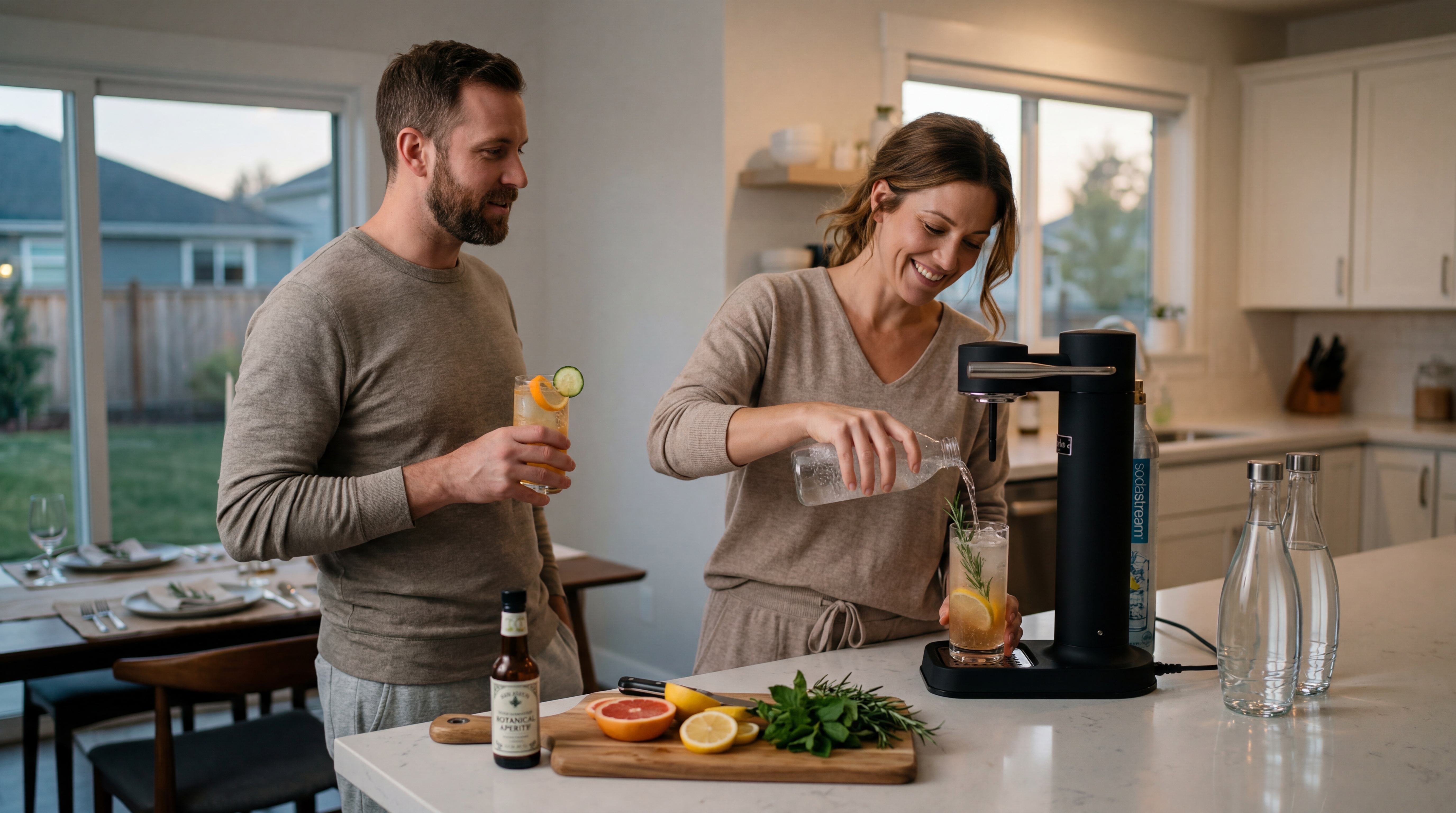
This is why the category should be understood not merely as a product category, but as a routine category. A repeat use soda maker has to succeed inside the home’s low-attention moments, not just inside the moments when the user is motivated. The machine must work when the user is halfway between tasks, when children are waiting, when someone is on a video call, when the kitchen is partially messy, or when the host wants to serve something quickly without starting a performance.
Once we understand that, convenience becomes the real battlefield.
A Product Becomes a Habit Appliance Only When It Removes Enough Resistance

Not every appliance becomes a habit appliance. Some are occasional tools. Some are event products. Some are single-use problem solvers. Others become woven into daily domestic life because they make a repeated action easier, more pleasant, or more desirable. Soda makers want to be in that second group, but they do not get there automatically.
A soda maker becomes a home drink habit appliance only when it removes enough resistance from the act of making a better drink.
This is a subtle but critical distinction. Many brands speak as though the value of the product lies in what it can produce. Sparkling water. Better drinks. Less packaging. More customization. Those benefits matter, but they are not enough on their own. A product can promise all of them and still fail to become habitual if the journey between desire and outcome is too long.
Habit appliances are successful because they shrink the gap between wanting and doing.
Consider the logic of good daily products. A good coffee setup becomes habitual when it makes the preferred cup easy enough to produce repeatedly. A good filtered water system becomes habitual when clean water becomes nearly automatic. A good electric kettle becomes habitual because the desired result arrives with almost no cognitive resistance. The same standard should be applied here.
A soda maker must not only create sparkling water. It must make the home feel that sparkling water, or a lightly customized sparkling drink, is close at hand. That “close at hand” feeling is everything. Without it, the machine stays optional. With it, the machine becomes default.
That is why convenience should be thought of as an architectural quality, not just a comfort feature. The product is designing the path between thirst and action. If that path is short, clear, and pleasant, habit forms. If that path is cluttered, fragile, or inconsistent, habit weakens.
This is where low friction beverage routine becomes such an important framework. The winning soda maker is rarely the one that looks the most impressive in isolation. It is the one that makes better beverage behavior easier to repeat than the alternatives surrounding it.
That is the point where the appliance stops being interesting and starts being essential.
The Counter Is a Behavioral Stage, Not Just a Physical Surface

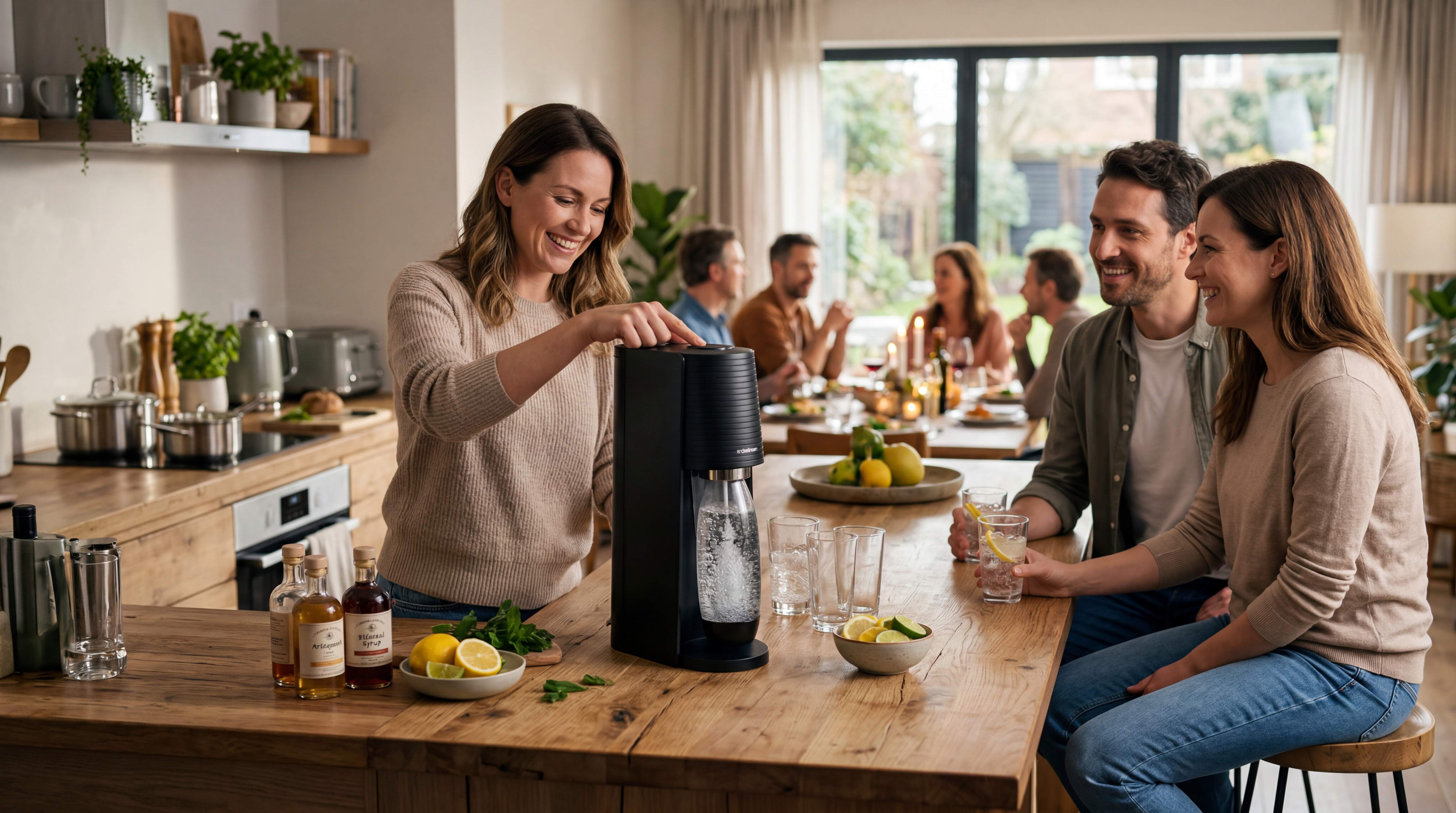
One of the biggest misunderstandings in kitchen product planning is to treat countertop placement as a pure space issue. It is not. The counter is a behavioral stage.
Where a soda maker lives changes what role it can play in the home. A machine that remains on the counter is participating in visibility, access, memory, and ease. A machine that gets stored away between uses is already fighting a much harder battle. Storage may save space, but it often removes the product from the household’s behavioral field. Out of sight usually means out of routine.
This is why kitchen workflow soda maker planning matters more than many buyers assume. The product does not simply need “somewhere to go.” It needs a location that allows it to enter daily action with minimal disruption.
The ideal place is usually not chosen by aesthetic symmetry alone. It is chosen by how well the machine relates to water access, bottle storage, glassware, refrigerator flow, and the rhythm of movement through the kitchen. If the user has to cross the room awkwardly, fetch a bottle from one side, fill it on another side, move back, and then search for citrus or ice elsewhere, the machine loses energy. If the flow feels continuous, the machine gains life.
This is also why some beautifully designed soda makers underperform in real homes. Their design may justify display, but their actual location may not support routine. Conversely, a simpler-looking machine in the right position can become indispensable because it is embedded correctly in the home’s practical choreography.
The counter also influences emotional use. A visible appliance invites quick decisions. It reminds the household what is possible. It quietly says, “You can make something better right now.” A hidden appliance says nothing.
That is why countertop presence is not just about showing off the machine. It is about keeping the beverage path mentally and physically short. The shorter that path, the stronger the habit.
Refill Simplicity Is Really About Trust, Not Just Supply
Many conversations about carbonation refills focus only on logistics. Can you exchange the cylinder locally? Is ordering easy? How much does it cost? These are valid questions, but they do not reach the deepest issue.
The deeper issue is trust.
A household will only fully adopt a soda maker if it trusts that the system will stay ready. Readiness is psychological as much as practical. When users are uncertain about refill timing, exchange effort, or whether they should “save the gas,” they begin using the machine more cautiously. Once cautious use enters the picture, habit weakens. The soda maker no longer feels abundant. It feels conditional.
That is why easy refill carbonation system design matters so much. Consumers do not just want access to gas. They want a refill structure that removes anxiety from continued use. They want to believe that frequent use will not lead to a frustrating pause in the routine. That feeling of continuity is central to appliance retention.
This is very similar to other household systems. A product becomes habitual when it feels reliably replenishable. Coffee drinkers keep using systems they trust. Filter systems remain central when replacements are easy. Soap dispensers feel natural when refills are obvious and accessible. Carbonation is no different.
If the refill system feels closed, inconvenient, or mentally expensive, the machine remains something the household likes but does not lean on fully. If the refill system feels smooth, the household begins to use the machine more freely. That freedom creates stronger category attachment.
So refill convenience is not a secondary issue. It is a behavioral permission system. It tells the household whether the product can be used generously or only selectively. The machines that survive long-term are usually the ones that make the answer feel generous.
Bottle Rotation Determines Whether the Product Feels Ready or Incomplete
One bottle can make a soda maker usable. It cannot always make it feel ready.
This is one of the quietest truths in the category. Many ownership frustrations come not from the machine itself, but from a weak bottle system. A household with too few bottles, poorly managed bottle placement, or inconsistent chilling often experiences the product as less useful than it could be. The machine works, but the ecosystem around it feels thin.
That is why bottle rotation deserves much more strategic attention.
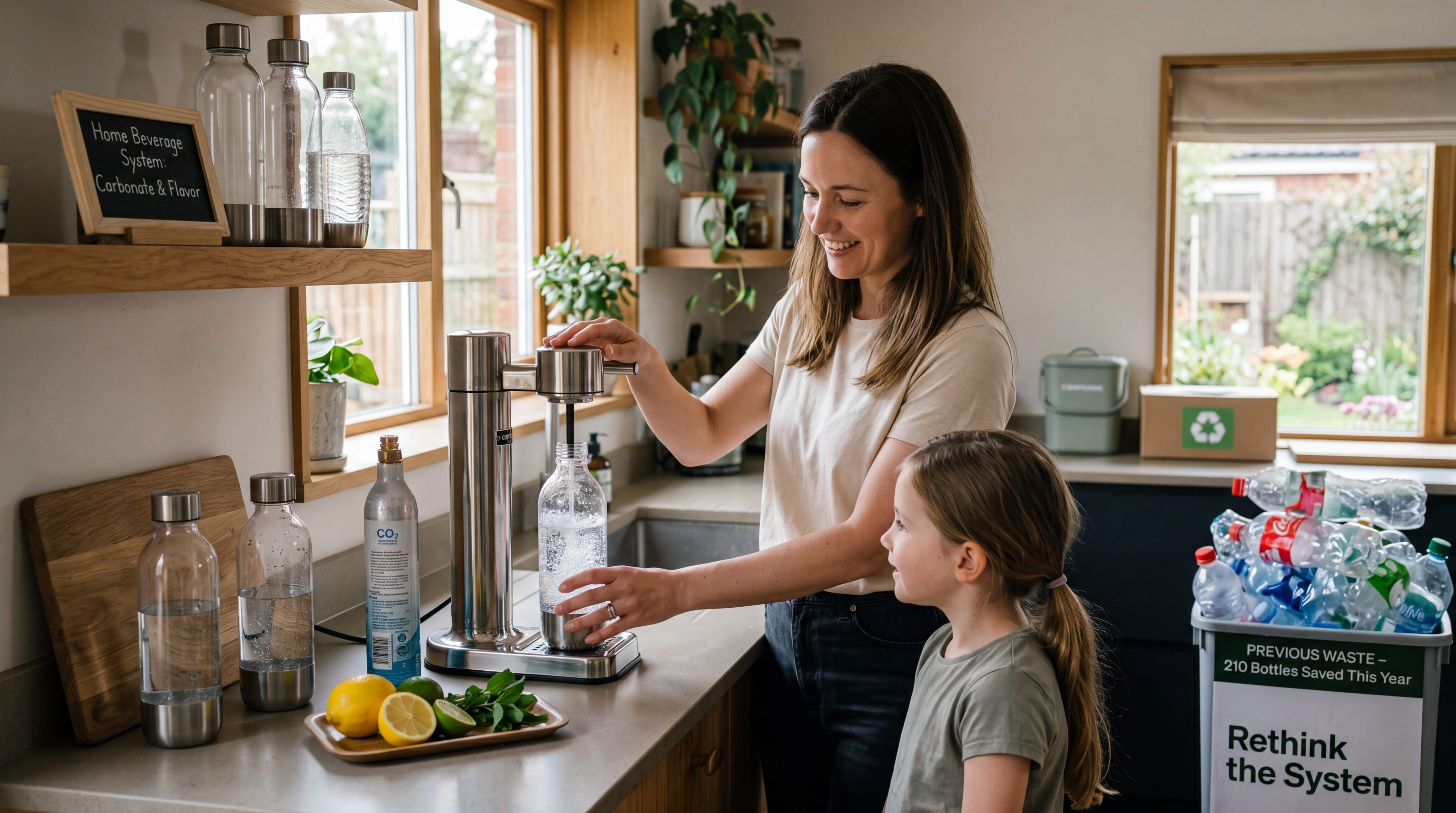
A good quick sparkling water routine often depends on bottle readiness. One bottle may be chilling, one may be on the counter, one may be in use, and one may be waiting to be washed or refilled. The exact number varies by household, but the principle is stable: a soda maker performs best when the bottle system supports continuity.
When bottle rotation is weak, the product begins creating avoidable pauses. There is no cold bottle ready. The only bottle available was not washed. The bottle that should be in the fridge is somewhere else in the house. Someone used the last prepared one at lunch. These are not dramatic failures, but they reduce the machine’s perceived value in real time.
This is especially true in family homes or homes where the soda maker supports guests. In those environments, the machine is rarely serving one perfectly controlled user. It is serving moving circumstances. The stronger the bottle rotation, the more the system feels like infrastructure rather than equipment.
Consumers often focus heavily on machine purchase and too little on support logic. But from a repeat-use perspective, support logic is often what decides whether the appliance feels effortless or incomplete. A soda maker with strong bottle rotation behaves like a ready beverage system. A soda maker with weak bottle rotation behaves like a machine still waiting to be organized.
Readiness wins.
Cleaning Tolerance Matters More Than Cleaning Difficulty

When consumers think about maintenance, they often ask whether the product is easy to clean. That is a good question, but it is not always the most revealing one. In real homes, soda maker cleaning tolerance can matter even more than objective cleaning difficulty.
This is because people do not all interpret maintenance the same way. One household sees rinsing a bottle and wiping a machine as almost effortless. Another experiences the same tasks as one more recurring burden in an already crowded domestic routine. The machine may not be difficult to maintain in any technical sense, yet it may still lose favor if the household’s tolerance for micro-maintenance is low.
That is why the category should be analyzed behaviorally. It is not enough to ask whether a soda maker can be kept clean. The more important question is whether the home will keep it clean at the level needed for the product to remain pleasant to use and nice to display.
This matters more than many brands admit.
If the machine begins to look slightly messy, it becomes less welcoming.
If flavored use leaves small traces, the household may retreat back to plain water only.
If bottles gather near the sink without a system, the appliance starts to feel like clutter.
If the host feels the setup is not tidy enough for guests, social use declines.
In other words, maintenance affects emotional accessibility. A clean, orderly machine invites use. A messy, slightly neglected machine discourages it, even if performance remains unchanged.
That is why convenience in this category is not only about immediate operation. It is about whether the full ownership cycle remains light enough to sustain. Use, rinse, refill, chill, serve, wipe, repeat. If that loop feels manageable, the machine remains central. If that loop starts to feel heavier than the value returned, the machine slowly drifts toward the margins.
Speed Matters, but Friction Predictability Matters Even More
Consumers often say they want a fast product. In many cases, what they really want is a predictable product.
Speed matters, of course. A soda maker that supports a quick sparkling water routine has a strong advantage. But speed alone is not the only factor that shapes satisfaction. In many households, the deeper issue is whether the machine behaves predictably every time it is used.
Predictable friction is easier to live with than irregular friction. If a product always asks for the same small set of simple steps, people adapt. If the steps vary, feel inconsistent, or sometimes become more cumbersome than expected, the product loses trust.
This is especially important because drink-making often happens during mentally crowded moments. A person may be preparing food, responding to children, setting the table, hosting guests, working from home, or transitioning between tasks. In those moments, cognitive smoothness matters. The user wants to know exactly how easy the next step will be.
That is why convenience-driven design is often about reliability of flow rather than dramatic time savings. A product that takes thirty predictable seconds can feel easier than a product that sometimes takes twenty seconds and sometimes turns into a small hassle.
This is where convenience driven drink system thinking becomes valuable. The home wants the machine to feel stable. Stable to operate. Stable to refill. Stable to clean. Stable to keep in rotation. Stable to offer to guests. Stable enough that the user stops thinking about the product and starts thinking only about the drink.
That is the point of maturity for any household system. The mechanism fades. The outcome remains.
The Best Soda Maker Is Usually the One That Feels Natural at the Wrong Time of Day

A very revealing way to evaluate the category is to stop imagining ideal use and instead imagine inconvenient use.
What happens when someone wants a drink quickly before a call?
What happens when dinner is half-finished and guests are already sitting down?
What happens when the kitchen is a little messy?
What happens when the household is tired?
What happens when children want something now, not after a demonstration?
What happens when the user is not in a “try something fun” mood?
These are the wrong times of day from a marketing perspective. But they are the right times of day from a retention perspective.
A soda maker that still feels natural under those conditions is likely to survive in real homes. This is because the product is no longer depending on enthusiasm. It is depending on fit. And fit is much more durable.
This is why the repeat use soda maker should be judged by ordinary pressure, not by ideal still-life scenarios. A product can look beautiful in promotional content and still feel too delicate, too slow, or too slightly-annoying to win difficult moments. Real adoption happens in those difficult moments.
The household that keeps using a soda maker long-term is usually not the one most impressed by the concept. It is the one that finds the machine easy enough when life is not calm.
That is a very different standard, and it is the one that predicts survival.
Why Novelty Creates the First Month and Convenience Creates the Fifth Year
Nearly every appliance category has an adoption curve. In the early stage, novelty drives behavior. People are curious. They enjoy trying the product, learning how it works, showing it to others, and discovering possibilities. This phase is important, but it is not the phase that determines long-term category strength.
The long-term phase is governed by something else: whether the novelty can collapse into convenience without losing value.
A soda maker has excellent novelty conditions. Bubbles are visible. The transformation feels satisfying. Guests notice it. The household experiments. The product feels modern, a little fun, and a little smarter than buying bottled sparkling water all the time. That novelty can drive several weeks of strong use.
But novelty is expensive energy. It cannot sustain daily behavior forever.
The products that remain in the home five years later are the ones that no longer need curiosity to justify themselves. They have become routine. They have become trusted. They have become easier than the alternatives in enough important moments.
This is why convenience should be treated as the category’s real retention engine. Not because novelty is unimportant, but because novelty only opens the door. Convenience decides whether the household keeps walking through it.
From a market perspective, this also explains why some products review well early and perform weakly in long-term household integration. Early enthusiasm is not the same as embedded use. A machine may impress reviewers and still fail to become a genuine home drink habit appliance.
That is why experienced consumers increasingly ask a more serious question: not “Is this exciting?” but “Will this still feel worth using when it is ordinary?”
That is the right question.
The Future of the Category Belongs to Appliances That Behave Like Infrastructure
The most durable consumer products often stop feeling like gadgets and start feeling like infrastructure. A good refrigerator is infrastructure. A good filtered tap becomes infrastructure. A dependable coffee setup can become infrastructure in many homes. The soda maker category is strongest when it moves in the same direction.
Infrastructure is not about glamour. It is about trusted repeatability.
A soda maker becomes infrastructure when the household stops planning around it and starts relying on it. When bottles are always somewhere in rotation. When the carbonation refill system feels normal. When guests can be served without stress. When the machine is part of meal logic, desk hydration, family drinks, or hosting readiness. When its place on the counter makes sense. When cleaning is manageable. When the full system feels lighter than the beverage alternatives it competes against.
That is why convenience is not a small design note. It is the pathway from novelty product to household infrastructure.
And infrastructure is where the category becomes truly valuable.
A product that behaves like infrastructure is harder to abandon because abandoning it would create an obvious gap. The home would feel less prepared, less fluid, less capable of producing the kinds of drinks and moments it has grown used to. That is the category’s strongest possible position.
Final Perspective: The Fate of a Soda Maker Is Decided in Ordinary Life, Not in Product Demos
When consumers first encounter the category, they are often drawn in by visible value: carbonation, style, sustainability, lifestyle appeal, drink ideas, or hospitality potential. All of that matters. But the true fate of a soda maker is usually decided somewhere much less dramatic.
It is decided on weekday mornings.
It is decided in the space between tasks.
It is decided by where the machine sits.
It is decided by whether bottles are ready.
It is decided by whether the refill feels manageable.
It is decided by whether cleaning feels small or cumulative.
It is decided by whether the household reaches for it when life is ordinary.
That is why soda maker daily usability should sit at the center of serious category thinking. The machine that supports a low friction beverage routine, offers true countertop beverage convenience, proves itself as a genuine repeat use soda maker, maintains an easy refill carbonation system, respects soda maker cleaning tolerance, behaves like a real home drink habit appliance, supports a quick sparkling water routine, fits the home as a kitchen workflow soda maker, and ultimately becomes a convenience driven drink system is the one that survives.
The best soda maker is not always the one that makes the strongest first impression.
Very often, it is the one that asks the least from the household while giving enough back every day.
And in real homes, that is what convenience means.