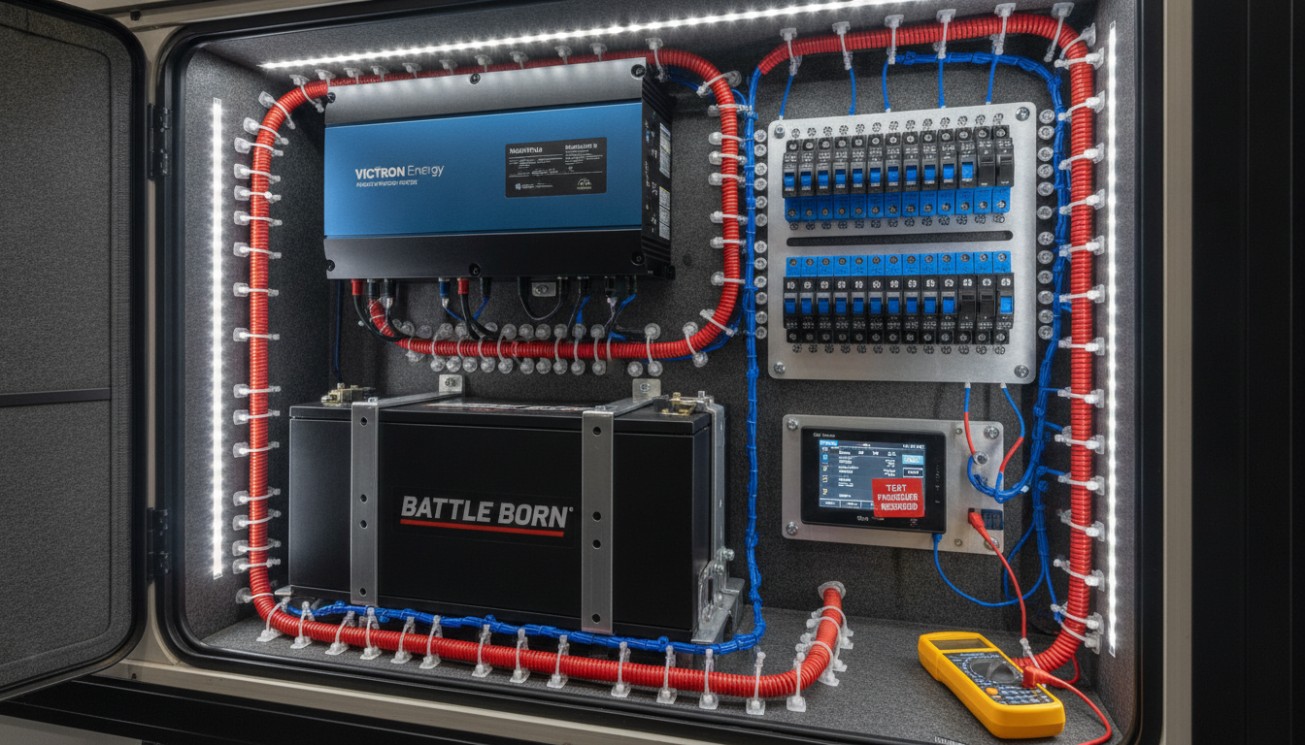
RV Power System Cost: Why the Cheapest Setup Is Not Always the Best Value
RV Power System Cost Is Not Just the Price of Panels and Batteries
When RV owners begin planning an off-grid electrical upgrade, cost is usually one of the first questions. How much does an RV solar system cost? How much should lithium batteries cost? Is a complete kit cheaper than a custom build? Is a large inverter worth the money? These are reasonable questions, but they often lead to incomplete answers. The real RV power system cost is not only the price of solar panels, batteries and an inverter. It is the cost of building a system that can safely, reliably and predictably support the way the RV is actually used.
A low-cost system can look attractive in a shopping cart. It may include solar panels, a battery, a charge controller and a basic inverter. But after installation, the owner may discover that the system does not recover energy fast enough, cannot support intended AC loads, has unclear wiring, lacks monitoring, cannot be serviced easily or becomes difficult to upgrade. In that case, the lowest upfront price may not become the best long-term value.
A reliable RV power system should be understood as mobile infrastructure. It must generate energy, store energy, convert energy, distribute energy, protect circuits, monitor performance and recover after real use. This connects directly to the larger RV power system architecture. Solar panels are only one layer. Lithium batteries are only one layer. Inverter chargers are only one layer. Cost should be evaluated across the full system, not only by comparing one product category.
This article does not repeat a basic RV solar sizing guide or a simple product comparison. It focuses on value logic. What makes one system cheap but fragile? What makes another system expensive but justified? Which cost items are visible at purchase, and which appear later through labor, troubleshooting, replacement, generator use, upgrade limitations or poor user confidence? For RV owners, suppliers and installers, these are the questions that turn RV solar system cost from a price discussion into a system design discussion.
The Three Cost Layers: Purchase Cost, Installation Cost and Ownership Cost
A practical way to understand off-grid RV system cost is to divide it into three layers: purchase cost, installation cost and ownership cost. Many buyers only see the first layer. Professional system planning considers all three.
Purchase Cost
Purchase cost includes the visible hardware: solar panels, lithium batteries, inverter charger, solar charge controller, DC-DC charger, cables, fuses, breakers, busbars, monitoring display, mounting hardware and distribution components. This is the easiest cost to compare because it appears in product listings and quotes.
However, purchase cost can be misleading. A system with low hardware price may omit important components. It may use undersized protection, weak monitoring or limited expandability. A higher purchase price may include better integration, documentation, service access, stronger safety design and long-term upgrade margin. The buyer should ask what is included and what is missing.
Installation Cost
RV installation cost includes labor, planning, roof work, cable routing, electrical compartment layout, AC/DC distribution work, configuration, testing and user handover. For a simple portable power station, installation cost may be minimal. For a fixed lithium-solar-inverter system, installation can become a major part of total cost because the system must be integrated into the vehicle.
Installation cost should not be viewed as waste. Good installation reduces risk, improves serviceability and helps the system perform as intended. Poor installation may save money upfront but create hidden future costs through troubleshooting, rewiring, component replacement or unsafe operation.
Ownership Cost
Ownership cost is the cost that appears after the system is installed. It includes maintenance, monitoring, generator fuel reduction or increase, failed components, expansion work, support calls, battery replacement cycles, lost campsite flexibility, user frustration and resale confidence. This is where a cheap system can become expensive. A system that cannot be diagnosed easily may cost more in labor. A system that cannot expand may force replacement instead of upgrade. A system that underperforms may push the owner back to generator use or campground hookups.
Why Cheap Systems Often Cost More Later

A low initial RV power system budget is not automatically wrong. Many users only need light power support. A weekend camper should not be pushed into a full-time off-grid system if the use case does not require it. The problem occurs when a cheap system is sold as if it can perform like a more complete system.
Undersized Solar Recovery
A system may include solar panels but not enough real recovery for the user’s daily energy consumption. The owner may still drain the battery after one or two days off-grid. If more panels must be added later, the system may need a larger controller, new wiring, roof layout changes or mounting modifications. A cheap solar plan can become expensive if it was not designed around real recovery.
Battery Capacity Without Charging Strategy
A large battery bank can create confidence at first, but if charging sources are weak, recovery becomes slow. This is why multi-source RV charging matters. Solar, shore power, alternator charging and generator input each affect long-term usability. A system with strong storage but poor recovery may cost more than its value suggests.
Inverter Size Without Supporting Infrastructure
A large inverter can power more AC appliances, but it also demands battery discharge capability, heavy cables, proper fusing, ventilation and circuit planning. A low-cost inverter upgrade may create hidden costs if the rest of the system cannot support it. The existing RV inverter charger guide explains why inverter decisions should begin with loads, not only wattage.
No Monitoring
A system without good monitoring leaves the owner guessing. They may not know whether the problem is battery reserve, solar input, inverter standby draw, charger behavior or appliance consumption. A proper RV energy monitoring layer adds cost, but it can reduce confusion, support better daily decisions and help diagnose issues before they become expensive.
Poor Serviceability
If the system is hard to access, unlabeled or undocumented, maintenance becomes more expensive. Future technicians may spend time simply understanding how the RV was wired. A serviceable design may cost more at installation, but it protects long-term ownership value. This is the core point behind RV power system serviceability.
Cost Driver 1: Lithium Battery Storage

RV lithium battery cost is often one of the largest hardware costs in an off-grid system. Lithium batteries are attractive because they can provide deeper usable capacity, lower weight, stable voltage behavior and strong cycle performance when properly integrated. But the right battery decision is not only about amp-hours.
Usable Energy Matters More Than Nameplate Capacity
Battery listings often emphasize amp-hours, but RV owners should think in usable energy. A battery bank must support actual loads, reserve needs and inverter demand. A system built only around a headline capacity number may still disappoint if the battery cannot deliver enough current, cannot charge properly in cold conditions or lacks useful monitoring.
BMS Limits Affect System Value
The battery management system protects the lithium cells, but it also defines operating limits. Maximum discharge current, charge current, temperature protection and communication features affect how the battery works inside the RV. A cheaper battery may be acceptable for light loads but unsuitable for high inverter demand or air conditioning. The guide on LiFePO4 RV battery upgrades explains why lithium should be treated as a system upgrade, not just a battery swap.
Battery Expansion Can Create Future Cost
If the first battery installation leaves no space, no busbar capacity, no monitoring adjustment plan and no charger margin, future expansion becomes harder. A lower-cost battery setup may be enough today but expensive tomorrow. A better value system plans reasonable expansion from the beginning, even if the owner does not buy maximum capacity immediately.
Cost Driver 2: Inverter Charger Capability

RV inverter charger cost varies widely because inverter chargers are not all designed for the same role. A small inverter may support device charging and light AC loads. A larger inverter charger may support microwave use, kitchen appliances, shore power charging, transfer behavior and selected AC circuits. The cost depends on power level, waveform quality, charging capability, transfer function, brand support and integration.
Standalone Inverter vs Inverter Charger
A standalone inverter converts battery DC power into AC power. An inverter charger can also charge the battery from shore power or generator input and may manage transfer behavior. For users who frequently plug into shore power or use generator backup, an inverter charger can simplify the system. For light users, a standalone inverter may be enough. The right choice depends on the system architecture.
High Loads Increase Surrounding Cost
Large AC loads increase more than inverter cost. They increase battery discharge requirements, cable size, fuse rating, heat management, AC distribution planning and monitoring needs. A system designed to run an RV air conditioner from battery, for example, is not just buying a bigger inverter. It becomes a high-load RV power system.
Transfer Behavior Affects User Experience
Inverter chargers with good transfer behavior can make the RV feel more seamless when moving between shore power and off-grid operation. That convenience may justify higher cost for full-time travelers or users who want household-style AC comfort. But it must be matched with clear circuit design and safe installation.
Cost Driver 3: Solar Generation and Roof Integration

RV solar system cost is often discussed through panel wattage. But solar cost includes more than panels. Mounting hardware, roof layout, cable entry, charge controller capacity, wiring, fusing, labor and future expansion all affect the true cost.
Panel Wattage Is Only the Visible Part
A 400W, 800W or 1200W array tells only part of the story. The system must fit the roof, avoid shading where possible, route cables safely, match controller capacity and connect into the battery system correctly. The RV solar panel wattage guide covers output tiers, but cost planning should include the installation and integration layers behind those tiers.
Roof Complexity Adds Cost
Air conditioners, vents, antennas, skylights, roof racks and curved surfaces can make solar installation more complex. A simple roof may accept panels easily. A crowded roof may require custom layout, smaller panels, raised mounts or portable solar supplementation. The roof is part of the cost equation.
Solar Expansion Should Be Planned Early
If the owner may expand later, the first installation should consider controller margin, cable routing and roof layout. Adding solar later can be more expensive if the original system was not designed for growth. In this sense, a slightly higher upfront installation cost can reduce later rework.
Cost Driver 4: Charging Sources Beyond Solar

Many buyers think solar is the whole charging strategy. In serious off-grid systems, solar is only one recovery source. Shore charging, alternator charging and generator charging can all affect the value of the system.
DC-DC Charging
A DC-DC charger adds hardware and installation cost, but it can turn driving time into useful battery recovery. For travelers who move frequently, this can be one of the best value upgrades. For RVs that stay parked for long periods, the value may be lower. The cost should be evaluated by travel behavior.
Shore Power Charging
Shore charging may already exist in older RVs, but lithium upgrades often require charger review. A charger that cannot properly charge LiFePO4 batteries may reduce the value of the battery upgrade. Replacing or upgrading the charger adds cost, but it may be necessary for reliable recovery.
Generator Compatibility
Some users want to eliminate generator use. Others want generator backup. Either way, the system should be honest. A well-designed solar-lithium system may reduce generator runtime, but if the user expects high-load operation in poor weather, generator compatibility may still matter. Cost should reflect the desired level of independence.
Cost Driver 5: AC/DC Distribution and Circuit Planning

RV installation cost often rises when AC and DC distribution must be modified. This is not a small detail. Distribution decides which circuits receive battery power, which remain shore-only and how loads are protected.
Selected Inverter Circuits
Some systems power only selected outlets from the inverter. Others create an inverter-supported subpanel. More complete AC integration can improve convenience but adds design and labor cost. The guide on RV AC/DC power distribution explains why load separation is essential for system usability.
DC Fuse Panels and Branch Circuits
Adding DC loads, USB outlets, fans, monitoring devices or communication equipment may require cleaner DC distribution. A low-cost installation may leave circuits grouped poorly or unlabeled. A better system separates essential loads, optional loads and future expansion points.
Labor Quality Shows Up Later
Clean routing, labeled wires, accessible panels and documented circuit logic may not look exciting in a quote, but they reduce troubleshooting time. Labor quality is a value item, not only an expense.
Cost Driver 6: Safety Protection

Safety protection can seem like invisible cost because it may not create immediate comfort. Fuses, breakers, disconnects, busbars, cable protection, grounding, bonding and thermal planning do not produce power. They control risk. This is why safety should be included in RV solar total cost.
Protection Devices Are Not Optional Extras
High-current lithium systems need properly selected protection. A cheap system may omit or under-spec protection devices to lower the visible price. That can create risk and future rework. The guide on RV power system safety explains why fuses, breakers, disconnects and BMS logic must work together.
Battery Disconnects and Service Isolation
Disconnects add cost, but they support maintenance and emergency isolation. Solar input, inverter circuits and charging sources may also need safe isolation planning. A system that cannot be isolated easily is harder to service.
Thermal and Cable Protection
Heat, vibration and cable abrasion are real mobile-system concerns. Proper routing, loom, grommets, clamps, ventilation and service access increase installation discipline. They may not be obvious to buyers, but they affect long-term safety and reliability.
Cost Driver 7: Monitoring and User Control

Monitoring is one of the easiest cost items to underestimate. A buyer may think a battery display or app is optional. In a simple system, that may be acceptable. In a serious lithium-solar-inverter system, monitoring is a major part of RV power system value.
Monitoring Reduces Guesswork
A useful monitor helps the owner see battery state of charge, solar input, inverter load and charging behavior. This can prevent unnecessary support calls and reduce misuse. It can also help users change habits, such as turning off inverter standby draw or using heavy appliances during better solar recovery.
Monitoring Supports Troubleshooting
When a system underperforms, monitoring helps identify whether the issue is generation, storage, conversion or consumption. Without data, troubleshooting becomes slower and more expensive.
Monitoring Improves Owner Satisfaction
A system that the owner can understand feels more reliable. Even if two systems have similar capacity, the one with clearer data may create better user confidence. That confidence has real value, especially for remote workers and full-time travelers.
Cost Driver 8: Documentation and Serviceability

A low-cost system often skips documentation. That may seem harmless until service is needed. A professional system should include a wiring diagram, component list, fuse ratings, charger settings, monitor settings and operating notes. This is part of RV power system value.
Documentation Reduces Future Labor
If a technician can understand the system quickly, service is faster. If every wire must be traced manually, labor cost increases. Documentation is a small upfront investment that can reduce future expense.
Documentation Supports Resale Confidence
An RV with a documented electrical upgrade may feel more trustworthy to a future buyer. Without records, expensive upgrades can look like unknown modifications. Good documentation turns an electrical upgrade into a clearer asset.
Serviceability Protects Upgrade Value
If the system has access panels, labels, busbar space, controller margin and clear routing, future upgrades are easier. If everything is crowded and undocumented, expansion becomes costly. This is why serviceability belongs in the cost discussion.
Budget Tiers: Matching Cost to Real Use
There is no universal best RV power system budget. The right budget depends on lifestyle, load profile, travel pattern and comfort expectations. A budget should be built around use case, not around the most popular online kit.
Light Weekend System
A light weekend system supports basic DC loads, device charging, lighting, fans and modest refrigeration support. It may include a smaller battery bank, limited solar, basic monitoring and a small inverter. The goal is not full independence. The goal is predictable short-trip support.
Best Value Logic
Do not overspend on a full-time system if the RV mainly uses campgrounds or short off-grid stays. Spend enough on safe wiring, proper fusing, simple monitoring and realistic recovery.
Practical Boondocking System
A practical boondocking system supports longer stays, stronger solar recovery, lithium storage, a useful inverter and possibly DC-DC charging. It should include good monitoring and better distribution. This tier often provides the best balance for many RV travelers.
Best Value Logic
Prioritize balance: enough battery reserve, enough solar recovery, enough inverter capability and enough monitoring to manage daily use. Avoid spending heavily on one layer while ignoring the others.
Remote Work System
A remote work system must support laptops, monitors, internet equipment, camera gear and quiet operation. It may not need the largest inverter, but it needs reliable daily recovery and clear energy data.
Best Value Logic
Spend on monitoring, reserve margin, solar recovery and charging diversity. Lost work time can be more costly than a slightly higher system budget.
High-Load Comfort System
A high-load system supports electric cooking, microwave use, large appliances or limited air conditioning. It requires stronger lithium storage, inverter capability, safety protection and AC distribution planning.
Best Value Logic
Do not buy high-load capability halfway. If the system is expected to support heavy AC loads, the battery, inverter, cables, fuses, monitoring and recovery sources must all match.
Full-Time Off-Grid System
A full-time off-grid system is mobile infrastructure. It may include large lithium storage, substantial solar, DC-DC charging, inverter charger integration, generator compatibility, detailed monitoring, documented safety protection and serviceable layout.
Best Value Logic
For full-time use, long-term reliability matters more than minimum upfront price. Documentation, supportability and expansion margin become part of the value equation.
Kit, Custom or Hybrid: How Format Affects Cost
System format also affects cost. A complete kit can reduce decision complexity. A custom system can match the vehicle more precisely. A hybrid approach can combine installed infrastructure with portable backup. Your existing RV solar kit with battery vs custom system guide covers this topic directly, but cost planning should add another layer: what does the format cost over time?
Complete Kit Cost Logic
A kit may reduce design time and simplify purchasing. It can be a good value when the components are well matched and the use case is clear. However, a kit can become limiting if it lacks expansion, documentation or flexibility.
Custom System Cost Logic
A custom system can cost more upfront because it requires planning and labor. It may offer better long-term value for complex vehicles, serious off-grid users or high-load systems. Custom does not automatically mean better. It only becomes better when design quality is strong.
Portable Backup Cost Logic
A portable power station can reduce installation effort and provide flexible backup. It may be valuable for renters, casual campers or users who want backup outside the RV. The existing portable power station vs fixed RV solar system article explains why convenience and architecture solve different problems.
How to Judge Whether an RV Power System Is Good Value
A good-value system is not always the cheapest system. It is the system that matches real use with the least waste, risk and future rework. A buyer should judge RV solar total cost by asking several practical questions.
Does the System Match the Load Profile?
A system that does not match actual loads is poor value at any price. Before buying hardware, the owner should list appliances, runtime, inverter loads and reserve needs. This connects directly to RV load planning.
Can the System Recover Energy Reliably?
Battery capacity is only useful when the system can recover after use. Solar, alternator charging, shore power and generator input should match the travel pattern. A large battery with weak charging is not strong value.
Is the System Safe and Serviceable?
If the system lacks protection, labels, access and documentation, future cost may rise. Serviceability is part of value, especially in systems that support remote travel or full-time living.
Can the System Expand Without Major Rework?
If the owner may add solar, battery capacity, inverter capability or DC-DC charging later, the first design should leave an upgrade path. Expansion margin can be cheaper than replacement.
Does the Owner Understand the System?
A system the owner cannot operate confidently may feel unreliable even when the hardware is capable. Monitoring, handover notes and clear circuit labels improve usability and reduce frustration.
Focused FAQ
What affects RV power system cost the most?
RV power system cost is affected by lithium battery capacity, inverter charger capability, solar array size, charging sources, AC/DC distribution, safety protection, monitoring, installation labor, documentation and future upgrade requirements.
Why does RV solar system cost vary so much?
RV solar system cost varies because systems differ in panel wattage, roof complexity, charge controller size, battery storage, wiring design, mounting labor, safety protection and system integration. Two systems with the same panel wattage may have very different quality and usability.
What makes a reliable RV power system worth more?
A reliable RV power system is worth more when it matches real loads, recovers energy through suitable charging sources, includes safe protection, provides useful monitoring, has serviceable wiring and can expand without major rework.
Is RV lithium battery cost worth it?
RV lithium battery cost can be worth it for users who need deeper usable capacity, lower weight, stronger discharge performance and longer off-grid capability. The value depends on charger compatibility, BMS limits, monitoring and how the RV is used.
Why is RV inverter charger cost higher than a simple inverter?
RV inverter charger cost is higher because an inverter charger can convert battery power to AC, charge the battery from shore or generator input and manage transfer behavior. It can simplify system operation when integrated correctly.
What is included in RV installation cost?
RV installation cost may include system planning, roof panel mounting, cable routing, battery installation, inverter wiring, charger configuration, fuse and breaker setup, AC/DC distribution work, testing, labeling and documentation.
How should I set an RV power system budget?
An RV power system budget should be based on camping style, daily loads, reserve needs, charging sources, inverter demand and upgrade expectations. A weekend camper, remote worker and full-time boondocker should not use the same budget logic.
What is RV solar total cost?
RV solar total cost includes hardware, labor, safety protection, monitoring, documentation, maintenance, future expansion and the cost of correcting mismatched equipment. It is broader than the price of a solar kit.
Conclusion: The Best RV Power System Value Comes from Balance
The cost of an RV power system should not be judged only by the cheapest solar kit, the largest battery discount or the highest inverter wattage. A good system is balanced. It matches real loads, provides enough reserve, recovers energy through realistic charging sources, protects wiring, supports monitoring, remains serviceable and leaves room for future needs. That balance is what creates true RV power system value.
A cheap system can be a smart choice when the use case is light and the installation is safe. An expensive system can be poor value if it is oversized in one layer and weak in another. The best value is not defined by price alone. It is defined by fit. A weekend camper should pay for simplicity and safety. A remote worker should pay for reliability and monitoring. A high-load user should pay for battery discharge capability, inverter support and protection. A full-time off-grid traveler should pay for system architecture, serviceability and long-term confidence.
For RV owners, the practical lesson is to ask better cost questions. Not only “How much is the battery?” but “Can the system recover after my real use?” Not only “How many watts of solar?” but “Will the roof layout, controller and battery storage make those watts useful?” Not only “How big is the inverter?” but “Can the battery, wiring and circuits support it safely?” Not only “What is the installed price?” but “Will I understand and maintain this system three years from now?”
For suppliers and installers, the opportunity is to sell value, not only equipment. Customers need transparent system tiers, use-case-based recommendations, honest performance expectations, documented protection and clear handover guidance. In the RV solar and storage market, long-term trust will belong to companies that explain total cost clearly. A reliable RV power system is not the cheapest bundle of parts. It is the most appropriate energy architecture for the way the owner actually travels.
#RVPowerSystemCost #RVSolarSystemCost #ReliableRVPowerSystem #RVLithiumBatteryCost #RVInverterChargerCost #RVInstallationCost #RVPowerSystemBudget #OffGridRVSystemCost #RVSolarTotalCost #RVPowerSystemValue