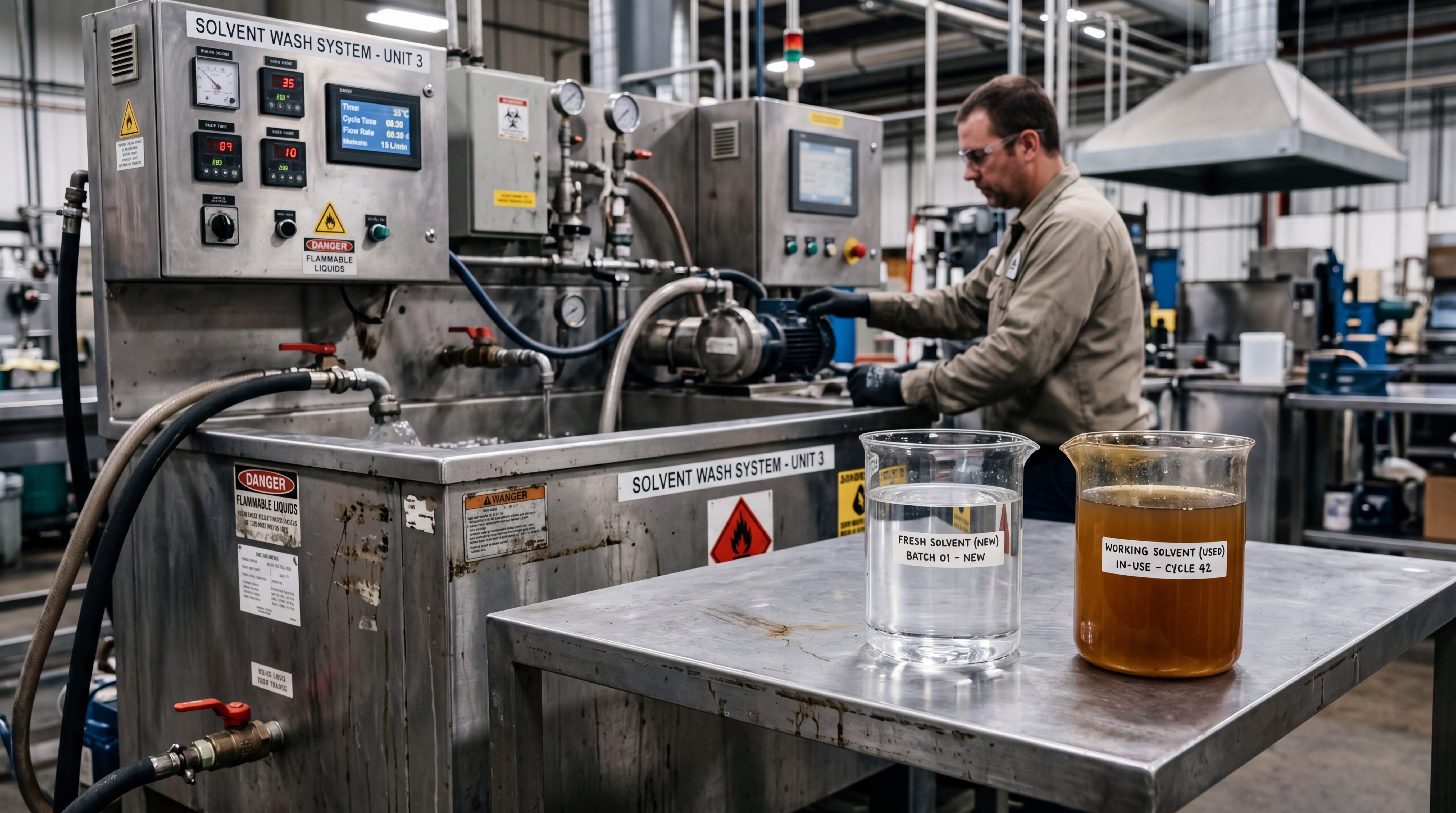
Why Hydrocarbon Solvents Still Matter in Modern Industry
Hydrocarbon solvents are no longer just background chemicals
For a long time, hydrocarbon solvents were discussed in industry as if they were simple utility materials. They were the liquids in the drum, the carrier in the formulation, the medium behind dilution, cleaning, extraction or transfer. In many companies, they were purchased with a narrow mindset: acceptable purity, workable price, basic documentation, and then onto the next line item.
That view is no longer enough.
In modern industrial practice, hydrocarbon solvents are not passive inputs. They actively shape process speed, formulation behavior, operator experience, equipment cleanliness, workplace risk, finished product appearance and, increasingly, the overall economic logic of production. Whether a company is working in coatings, adhesives, chemical processing, industrial cleaning, specialty formulations or selected life science and high-purity environments, the wrong solvent choice can create hidden inefficiency that is far more expensive than the initial purchase price. The right solvent choice, by contrast, can improve consistency, reduce complaints, support safer handling and make an entire production line more controllable.
That is one reason hydrocarbon solvents remain central to industrial chemistry. Another is that the category itself has become more sophisticated than many buyers realize. The market is not limited to a generic idea of mineral spirits or a loose distinction between “strong” and “mild” solvent. Today’s industrial solvents include a far more refined range of aliphatic solvents, aromatic solvents and dearomatized solvents, each with different performance profiles, odor characteristics, flash point ranges and application value. Official industry resources continue to emphasize both the breadth of hydrocarbon solvent families and the importance of responsible selection, safe use and supply-chain compliance.
What has changed most is not the chemistry alone. It is the decision framework around that chemistry. Solvent selection is now tied to performance targets, workplace expectations, VOC conversations, customer audits, product differentiation and total process cost. That is why hydrocarbon solvents still matter in modern industry, and why serious companies no longer treat them as interchangeable commodities.
The real value of hydrocarbon solvents begins with controllability

One of the most overlooked strengths of hydrocarbon solvents is controllability. In industrial systems, performance is not determined only by whether a substance can dissolve another substance. What matters is whether it can do so with the right speed, the right evaporation behavior, the right residue profile, the right operator experience and the right safety margin.
This is where hydrocarbon solvents continue to hold their position. Compared with many other solvent families, they offer a broad and tunable balance between solvency and process behavior. Some grades are selected because they evaporate at a rate that supports production rhythm without destabilizing the application. Some are valued because they bring lower odor characteristics and improved workplace acceptance. Some are chosen because they offer higher flash points, allowing a safer and calmer operating window in industrial environments. Others are selected because they deliver reliable compatibility with oils, waxes, resins, bituminous materials or specific hydrophobic systems that do not respond as effectively to oxygenated alternatives.
In other words, hydrocarbon solvents matter because they help manufacturers engineer process behavior, not just chemistry.
This is especially visible in plants that care about repeatability. A formulation team may notice that one solvent makes a coating easier to apply but also creates undesirable drying variation. A cleaning line may find that one product removes contamination rapidly but leaves a stronger odor and harsher operator experience than needed. A blending process may appear technically successful yet become commercially inefficient because the chosen solvent increases energy load, recovery burden or ventilation requirements. These are not small details. They are the difference between a workable process and an optimized one.
That is why the discussion has moved beyond “does it dissolve?” toward “what kind of production environment does it create?” Modern solvent selection increasingly treats hydrocarbon solvents as process design tools. This reflects broader industry messaging around safe, sustainable and responsible solvent use, rather than viewing solvents only through a narrow commodity lens.
Why the category is broader than many buyers assume

A recurring problem in the market is oversimplification. Buyers often speak about hydrocarbon solvents as though they form one flat category. In reality, the category includes multiple families with meaningful differences in solvency power, odor, flash point, composition profile and downstream application fit.
Aliphatic solvents are often associated with milder solvency, cleaner handling profiles and broad use in cleaning, thinning and dilution where aggressive solvency is not the main requirement. Aromatic solvents are typically associated with stronger solvency, especially in systems where the ability to interact with more demanding organic materials matters. Dearomatized solvents occupy an increasingly important position because they can provide a more balanced route for applications that want workable solvency with lower aromatics content and, in many cases, lower odor characteristics.
This is not just a marketing distinction. Major manufacturers explicitly segment hydrocarbon solvent portfolios by aromatic content, evaporation range and flash point, while high-purity suppliers also differentiate by chain length, purity level and consistency requirements for more demanding applications. Shell, for example, presents hydrocarbon solvents as a broad family that includes dearomatized grades with multiple flash point ranges and numerous industrial uses, while Haltermann Carless highlights product lines differentiated by hydrocarbon type and purity level, including grades above 99% and up to 99.75% for process-sensitive applications.
For industrial buyers, this matters because category language shapes purchasing mistakes. If a buyer only asks for “industrial solvents” or “hydrocarbon solvent” without specifying the real process priority, the supplier may return a technically acceptable option that is economically or operationally wrong. Two products may both belong to the hydrocarbon solvents family and still behave very differently in the plant.
So the first step in better solvent selection is intellectual honesty: the category is broader than it looks, and the performance differences inside it are commercially important.
Solvent selection is really a question of priorities, not labels
In many organizations, solvent selection still begins with the product label and ends with a short comparison table. That approach is too shallow for modern industry. The more useful way to choose hydrocarbon solvents is to begin with priorities.
What must the solvent actually do?
That question often reveals more than the product name. In one project, the real priority may be solvency power. In another, it may be evaporation control. In a third, it may be a safer flash point profile, reduced aromatic content, lower odor, improved batch consistency or better fit with customer-facing compliance expectations.
This is why experienced formulators and process engineers rarely evaluate solvents on a single dimension. A solvent that looks attractive because of price may create hidden instability in application. A solvent that looks excellent in laboratory dissolving tests may become less attractive when its odor profile affects the operator environment. A solvent that appears to be a strong technical match may fail commercially if it increases recovery losses, waste handling cost or approval time with downstream customers.
Good solvent selection is therefore an act of prioritization. It asks which variables are non-negotiable, which are adjustable and which can be optimized over time. Hydrocarbon solvents remain valuable precisely because the category offers enough range to support that prioritization. There is room for faster and slower evaporation behavior, lower and higher flash point strategies, stronger and milder solvency routes, and more specialized high-purity pathways where process consistency matters.
The implication is important: buyers should stop asking only “Which solvent is best?” and start asking “Which performance profile best supports our process, product and commercial reality?” Once the question improves, the solvent decision improves with it.
Performance is not one thing; it is a system of trade-offs
When people talk about solvent performance, they often compress it into a single vague idea. In reality, solvent performance is a system of trade-offs. Hydrocarbon solvents remain relevant because they allow these trade-offs to be managed with more nuance than many users expect.
The first trade-off is solvency versus selectivity. Stronger dissolving behavior can be useful, but it can also disturb components that the process would prefer to leave untouched. In industrial cleaning, for example, aggressive performance may remove the target contamination quickly, yet also create material compatibility concerns or greater exposure management needs. In coatings or adhesives, stronger solvency may help resin handling but alter open time, leveling behavior or substrate interaction in ways that are not automatically beneficial.
The second trade-off is evaporation speed versus process control. Rapid evaporation can support throughput and reduce waiting time, but it can also reduce working time, complicate application and amplify vapor management concerns. Slower evaporation may calm the process, improve wetting or support more even distribution, but it may also slow line speed and affect energy or drying requirements. This is why industrial solvents are often selected by boiling range and evaporation profile rather than by name alone.
The third trade-off is flash point versus operating convenience. Higher flash point materials can bring a more comfortable safety envelope in many operations, but that does not automatically make them ideal in every case. A process that depends on quick drying or rapid removal may find a very slow, high-flash product operationally inefficient. The right decision is not the “highest safety number” in isolation, but the balance between safety, productivity and end-use performance.
The fourth trade-off is odor and workplace experience versus solvency intensity. Low odor solvents have become more attractive in many settings because operator environment, customer expectations and perceived product quality increasingly matter. Yet low odor alone does not define suitability. The better question is whether a lower-odor route also preserves the process performance required by the application.
This trade-off mindset is one reason the hydrocarbon solvents category still matters. It offers room to optimize, and optimization is where industrial value is created.
The rise of dearomatized solvents shows where the market is going

One of the clearest signs of change in this category is the growing importance of dearomatized solvents. Their rising relevance says something bigger than product preference; it says the market is increasingly looking for balance.
In many applications, users no longer want to choose between extreme positions. They do not want a solvent system selected only for raw solvency, ignoring odor, operator environment and downstream expectations. But they also do not want to lose the practical benefits that hydrocarbon chemistry can provide. Dearomatized solvents speak to that middle ground.
By reducing aromatic content and often delivering lower odor characteristics, these products can help manufacturers pursue a more refined performance profile. Depending on grade and application, they may support better workplace acceptance, cleaner product positioning and a more modern conversation with customers who ask not only what works, but how it works, how it smells, how it is handled and how consistent it remains from batch to batch.
The category is now firmly established in major supplier portfolios. Shell’s published materials describe dearomatized hydrocarbon solvents across broad flash point ranges and position them for numerous industrial and process uses, while product data and portfolio architecture show how these materials are tuned for different evaporation and operating requirements.
For buyers, the lesson is strategic rather than fashionable. Dearomatized solvents are not automatically better in every application. But their growing prominence reflects a more mature market logic: performance today is evaluated together with odor, handling profile, application suitability and long-term value. That is a more advanced standard than simple solvent strength, and it is reshaping how hydrocarbon solvents are discussed across industries.
Why hydrocarbon solvents remain difficult to replace in practice
Many substitution conversations begin with confidence and end with compromise. On paper, replacing a hydrocarbon solvent can appear straightforward. In practice, the solvent is often doing more jobs than the team initially recognized.
A hydrocarbon solvent may be acting as a diluent, a carrier, a processing aid, a drying control tool, a cleaning medium, a viscosity management factor and an operator experience variable at the same time. Change the solvent, and all of those functions can shift together. That is why replacement projects so often take longer than expected.
In coatings, a new solvent may influence film appearance, wet edge, drying profile and odor. In adhesives, it may alter resin behavior, tack development or application ease. In cleaning, it may change removal efficiency, residue profile and equipment compatibility. In processing environments, it may influence separation performance, purity outcomes or total recovery economics.
This is one reason hydrocarbon solvents still matter: they are embedded in process logic, not just material lists.
Another reason is that hydrocarbon solvents often sit at a useful intersection of practicality and availability. The industry has spent decades building knowledge, supply routes, documentation systems and handling practices around them. Associations such as ESIG and SIA continue to publish resources focused on safe use, health risk management, transport and supply-chain compliance, which reflects how operationally central solvents remain across industrial activities.
That does not mean substitution should not happen. It means substitution should be treated as process redesign, not simple product exchange. The companies that understand this make better decisions. They do not replace one drum with another and hope for the best. They evaluate what the solvent is actually doing inside the system, then decide whether another path genuinely serves the same purpose.
Safety has become a business issue, not only an EHS issue
There was a time when solvent safety could be treated as a separate department concern. Today, that separation is no longer realistic. Solvent safety affects production uptime, insurance pressure, customer audits, site design, transport discipline, operator training and brand credibility. In that sense, solvent safety is now a business issue.
Hydrocarbon solvents are highly useful, but like other flammable liquids they demand disciplined handling. Industry guidance continues to stress risk assessment, ventilation, training, control procedures, bulk transfer precautions and awareness of static electricity as part of responsible solvent use. SIA’s safety materials and ESIG’s best-practice documents both reinforce that proper handling is inseparable from sustainable industrial performance.
What matters here is not fear-based messaging. It is maturity. A solvent that performs well but creates recurring handling incidents is not a high-value solution. A solvent with attractive cost per drum but poor transfer discipline, storage mismatch or weak operator understanding can become an expensive operational liability. By contrast, a solvent program aligned with site reality can improve stability across the plant.
That is another reason hydrocarbon solvents still matter. Their value is highest when technical choice and safety culture develop together. The best suppliers increasingly understand that they are not merely selling industrial solvents; they are supporting a handling environment, a documentation system and a practical route to repeatable use.
VOC and compliance discussions have changed the buying conversation
VOC language has changed how industrial buyers think about solvents, even when the immediate regulation does not apply in a simple way to every customer. The conversation is now broader than a technical threshold. It influences formulation strategy, customer communication, product positioning and the internal politics of procurement.
ESIG’s published guidance notes that organic solvents are central to many industrial applications while also sitting within VOC-related regulatory frameworks that affect how emissions and product use are discussed.
For industrial companies, the practical effect is clear. Buyers increasingly ask more precise questions. What is the aromatic content? What is the odor profile? How does the boiling range influence emissions behavior? Can a lower-aromatic or dearomatized route support the same application? How will this choice be explained during a customer audit or a supplier qualification review?
This does not mean every hydrocarbon solvent decision is driven by regulation. But it does mean the decision environment has become more sophisticated. Companies do not want a solvent that only works in the lab if it becomes difficult to defend in the market. They want a solution that performs, can be handled responsibly, aligns with documentation expectations and supports a credible long-term supply relationship.
That trend strengthens the importance of hydrocarbon solvents rather than reducing it. It pushes the market toward better-defined grades, clearer selection logic and more responsible use. In other words, the category becomes more professional, not less relevant.
Pure chemistry is not enough; consistency is now a competitive advantage
A major reason some buyers stay dissatisfied with industrial solvents is that they underestimate consistency. In solvent-dependent processes, the average product specification is not always the whole story. Batch-to-batch predictability matters. Impurity profile matters. Boiling behavior matters. Odor repeatability matters. In some cases, even slight drift can affect line performance, cleaning outcome, formulation stability or finished product feel.
This is why high-purity and tightly controlled hydrocarbon solvent lines hold strategic importance in more demanding sectors. Published supplier information from Haltermann Carless, for example, highlights hydrocarbon lines with purity levels from 95% to 99% and up to 99.75% for applications where process-related quality requirements are high.
The larger lesson extends beyond high-end sectors. Even in more conventional industrial use, consistency is often worth more than buyers first assume. A solvent that stays within a narrow and dependable operating window can reduce troubleshooting, improve process predictability and shorten approval cycles with downstream customers. In a world where manufacturers are trying to run leaner, faster and with fewer surprises, that consistency is not a luxury. It is part of operational efficiency.
So when we ask why hydrocarbon solvents still matter, one answer is this: they remain one of the most practical ways to bring controlled, repeatable organic process behavior into industrial systems. But that advantage only holds when the product quality and supply discipline behind the solvent are taken seriously.
Total cost matters more than drum price
Perhaps the most important commercial reason hydrocarbon solvents still matter is that they force serious buyers to think in terms of total cost rather than nominal price.
A cheaper solvent can be the most expensive option in the plant.
If it evaporates too fast, usage can rise. If it cleans poorly, cycle time can increase. If it creates more odor complaints, ventilation burden and operator dissatisfaction may grow. If it reduces batch consistency, the cost appears later in rework, downtime or customer dissatisfaction. If its documentation is weak, supplier approval becomes slower. If its recovery behavior is poor, waste and disposal costs quietly accumulate.
By contrast, a better-matched solvent may cost more per unit while reducing total process burden across multiple points: smoother operation, more stable product quality, fewer complaints, easier handling, stronger audit readiness and a more professional customer-facing story.
This is why hydrocarbon solvents should be evaluated as part of a process economics model. The relevant question is not “Which product is cheapest?” but “Which product produces the most reliable and defensible operating result?” That distinction separates short-term buying from long-term industrial thinking.
And this, ultimately, is why the category has not lost relevance. Hydrocarbon solvents remain valuable because they influence real industrial outcomes. They affect speed, stability, safety, cost, formulation quality and commercial credibility all at once.
The future of hydrocarbon solvents is more specialized, not less important

Looking ahead, hydrocarbon solvents are unlikely to disappear from serious industry. What is more likely is continued specialization.
The market is moving toward more clearly segmented grades, more application-led solvent selection, more emphasis on odor and handling profile, more interest in lower-aromatic options, tighter documentation expectations and stronger attention to purity and consistency. In parallel, safety, transport discipline and responsible use will continue to shape supplier credibility. Public industry organizations and major producers are already communicating in these terms, framing solvents as products that must be selected and managed with technical care, commercial awareness and operational responsibility.
That trajectory should not be misunderstood as a sign that hydrocarbon solvents are becoming less central. It means the opposite. As industrial systems become more demanding, the solvent conversation becomes more intelligent. Buyers care more about application fit. Customers ask more about responsible use. Plants need more predictability. Formulators need better balance. Supply chains need more resilience.
Hydrocarbon solvents still matter because industry still needs controllable organic performance, and it needs that performance in forms that are increasingly precise, safer to manage, commercially defensible and operationally reliable.
The companies that understand this will make better choices. They will stop treating solvents as anonymous background chemicals and start treating them as strategic process tools. Once that shift happens, hydrocarbon solvents are no longer invisible. They become what they have quietly been for a long time: one of the foundations of modern industrial performance.
#Industrial Solvents
#Aliphatic Solvents
#Aromatic Solvents
#Dearomatized Solvents
#Solvent Selection
#Solvent Performance
#Solvent Safety
#VOC Management
#Chemical Processing
#Industrial Cleaning
#Coatings and Adhesives
#Low Odor Solvents
#Process Efficiency
#Specialty Chemicals