Split Solar Water Heater vs Integrated Solar Water Heater: Which System Fits Your Market?
The Real Question Is Not Which System Is Better
When buyers compare a split solar water heater with an integrated solar water heater, the conversation often starts with a simple question: which one is better?
That question is too narrow.
In the solar hot water industry, the better system is not always the more advanced system, the larger system, or the more expensive system. The better system is the one that fits the building, climate, user behavior, installation environment, service capability, and sales channel.
A split solar water heater and an integrated solar water heater are not just two product shapes. They represent two different system logics. One focuses on simplicity and direct installation. The other focuses on flexibility, building integration, and system control.
For a homeowner, the decision may depend on roof appearance, water pressure, and maintenance access. For a distributor, the decision may depend on market price level, installer skill, after-sales cost, and product positioning. For a project buyer, the decision may depend on building structure, total hot water demand, installation standardization, and long-term operating stability.
That is why a serious solar water heater comparison should not only list advantages and disadvantages. It should explain where each system creates value and where each system may become the wrong choice.
Two Systems, Two Product Logics
An integrated solar water heater usually combines the collector and storage tank into one rooftop unit. The collector absorbs solar energy, and the tank stores hot water directly above or near the collector. This type of system is widely used in many warm and developing markets because it is straightforward, visible, and relatively easy to install.
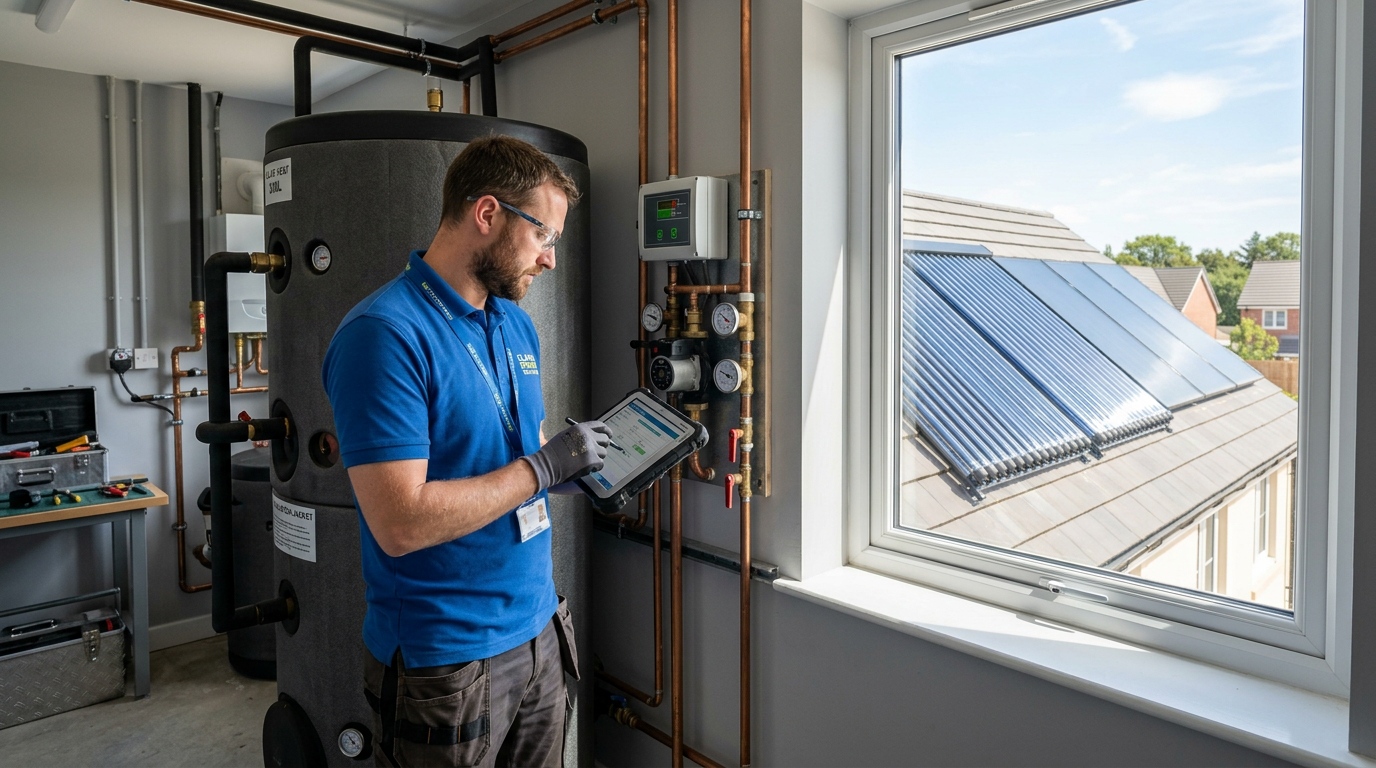
A split solar water heater separates the collector from the tank. The collector is placed on the roof or another sun-facing surface, while the storage tank is installed indoors, at ground level, in a utility room, on a balcony, or in a mechanical area. A split solar hot water system usually uses a circulation pump, controller, sensors, insulated pipelines, and sometimes a heat exchanger or backup heater.
The integrated system is closer to a product package. The split system is closer to a designed system.
This difference affects everything: cost, installation difficulty, maintenance, roof loading, appearance, climate adaptability, water pressure, and sales strategy.
For basic hot water demand in a warm region, an integrated solar water heater may be the most economical solution. For a modern villa, cold-climate home, high-pressure household, or project-based application, a split solar water heater may be a more suitable long-term solution.
Why Integrated Solar Water Heaters Remain Popular

The integrated solar water heater remains popular because it solves a real market need: affordable solar hot water with simple installation.
In many countries, especially in warm regions, customers want a practical way to reduce electricity or gas use for daily hot water. They may not need complex control systems. They may not require hidden tanks. They may not be concerned about architectural appearance. In these cases, a rooftop integrated unit can be a strong choice.
The biggest advantage is simplicity. The collector and tank are already designed as one unit. Installation is usually faster than a split solar hot water system. Fewer components are required. There is no need for a separate pump station in many common configurations. The installation team can complete the project with less technical complexity.
Cost is another reason. Because the structure is simpler, the product can often be sold at a lower price point. For price-sensitive markets, this matters a lot. A distributor selling to rural households, small homes, or entry-level residential customers may find that the integrated system has better acceptance.
The product is also easy to understand. When customers see the tank and collector together on the roof, they immediately understand that sunlight heats water. This visual simplicity can help sales in markets where solar hot water education is still developing.
For a solar water heater supplier, the integrated system also offers easier packaging and product standardization. A 100L, 150L, 200L, or 300L unit can be sold as a clear model. Dealers can stock standard units and explain them quickly.
However, the same simplicity that makes the integrated system attractive can also create limitations in more demanding applications.
Where Integrated Systems Can Become Limited

An integrated solar water heater becomes less suitable when the roof, building design, customer expectations, or climate requires more flexibility.
The first limitation is roof load. A rooftop tank filled with water can be heavy. For some houses, especially older buildings or lightweight roofs, this can become a structural concern. Even when the roof can technically support the load, the buyer may not want a heavy tank placed above living areas.
The second limitation is appearance. A large rooftop tank can affect the visual design of a modern house. In villa communities, premium residential areas, resorts, or architect-designed homes, the roofline may be part of the property value. A visible tank may not match the design language.
The third limitation is maintenance access. When the tank is on the roof, inspection and repair can be more difficult. Technicians may need roof access, safety equipment, and more time. In markets where labor cost is high, this can increase after-sales expense.
The fourth limitation is climate. In freezing regions, direct rooftop systems can face higher freeze risk if they are not designed properly. A basic roof mounted solar water heater may work well in warm climates but may require extra protection in cold environments.
The fifth limitation is system expansion. If the project requires larger storage, multiple collectors, backup heating, or integration with building plumbing, an integrated unit may not be flexible enough.
For these reasons, integrated systems are not weak products. They are simply better suited to certain markets and less suitable for others.
Why Split Solar Water Heaters Fit Modern Buildings

A split solar water heater is often chosen when the customer wants more control over layout, appearance, pressure, and system design.
The most visible difference is that the tank does not need to sit on the roof. Only the collector is installed on the roof. The tank can be placed in a more convenient or protected area. This makes the roof cleaner and reduces the load on the roof structure.
For modern homes and villas, this is a major advantage. The roof can remain visually simple, while the hot water tank is hidden in a garage, utility room, service cabinet, or outdoor equipment area. This makes the system easier to accept in premium residential projects.
A split solar hot water system also allows better integration with pressurized water supply. Many modern households expect stable shower pressure and comfortable hot water delivery. A properly designed split system can be paired with a pressurized tank and backup heating, making it more suitable for customers who expect comfort rather than only basic function.
The split layout is also more service-friendly. When the tank, controller, pump, or valve is installed at ground level or indoors, maintenance becomes easier. This is important for distributors and installers because service cost can decide whether a product is profitable in the long run.
For a residential solar thermal system, Split is especially attractive when the customer is not only buying a water heater but also buying a building-integrated energy solution. It gives more freedom to match the building, the user, and the climate.
The Cost Difference Is Really a Value Difference
Many buyers first compare the price of a split solar water heater and an integrated solar water heater. Usually, the integrated system appears cheaper.
But price alone does not explain value.
A split system contains more components. It may include a pump, controller, temperature sensors, expansion device, insulated piping, heat exchanger, backup heater, mounting accessories, and additional safety parts. Installation also requires more technical work. Therefore, the upfront cost is usually higher.
However, the buyer is not only paying for extra parts. The buyer is paying for layout flexibility, roof load reduction, indoor tank protection, better appearance, easier maintenance, and better system adaptability.
In a low-income rural market, these benefits may not be enough to justify the extra cost. In a villa market, premium residential market, cold-climate market, or project market, they may be exactly what customers need.
A smart solar hot water system selection process should not ask, “Which system is cheaper?” It should ask, “Which system creates the lowest total risk and highest customer value in this specific market?”
For example, if a distributor sells a cheap integrated system into a premium villa market, the customer may reject it because of roof appearance. If a distributor sells a high-end split system into a price-sensitive rural market, the customer may reject it because the cost is too high.
The right product depends on market position.
Roof Load and Building Structure
Roof load is one of the clearest reasons to choose a split solar water heater instead of an integrated solar water heater.
A water tank becomes much heavier when filled. A 200L tank contains about 200 kilograms of water before considering the tank body, support frame, collector, and mounting structure. For some roofs, this may be acceptable. For others, it may create concern.
An integrated unit concentrates more weight on the roof. This is not always a problem, but it must be considered carefully. In new buildings, structural design can account for it. In older buildings, informal housing, lightweight roofs, or buildings with unknown load capacity, the risk becomes higher.
A split solar hot water system reduces this concern by moving the tank away from the roof. The collector still needs stable mounting, but the heaviest part of the system can be installed on the ground or inside the building.
This is a powerful message for distributors. Many customers do not understand system architecture, but they understand roof safety. Explaining that Split keeps the heavy tank off the roof can immediately make the product value clearer.
For project buyers, roof load also affects engineering approval. A system that reduces roof weight may be easier to integrate into certain building designs.
Appearance and Architectural Acceptance
In some markets, solar water heaters are sold mainly as practical household equipment. In others, they are part of a modern home energy solution. These two markets require different visual strategies.
A roof mounted solar water heater with a visible tank may be acceptable for basic housing, rural homes, or cost-driven applications. The system is easy to recognize and easy to sell.
But in modern villa communities, premium residential developments, resort buildings, and architect-designed homes, appearance matters more. A large roof tank can make the building look less refined. Even if the system works well, the customer may not want it.
A split solar water heater creates a cleaner visual result. The roof can carry only flat plate collectors or evacuated tube collectors. The storage tank can be hidden. This makes the system more compatible with modern architecture.
This does not mean every customer will pay more for appearance. But in the right market, appearance is not decoration. It is part of product value.
For a solar water heater supplier, this creates a clear positioning opportunity. Integrated systems can be positioned for affordable, practical hot water. Split systems can be positioned for modern buildings, villas, high-comfort households, and project-based applications.
Climate Makes the Decision More Complex
Climate is one of the most important factors in solar hot water system selection.
In warm regions with little or no freezing risk, an integrated solar water heater can be very competitive. The system is simple, affordable, and effective. It can provide daily hot water without the complexity of pumps, glycol loops, or advanced freeze protection.
In colder regions, the decision becomes more complicated. A basic rooftop system may face freezing risk if water remains in exposed pipes or collectors. This can lead to damaged tubes, cracked pipes, blocked circulation, or service calls.
A solar water heater for cold climates often needs better freeze protection. A split system can be designed with an indirect loop, heat transfer fluid, heat exchanger, insulated piping, and controlled circulation. This does not mean every split system is automatically suitable for freezing conditions, but the architecture gives more design options.
Cold-climate markets also tend to value indoor equipment protection. Keeping the tank indoors can reduce exposure to harsh weather. Maintenance access is also better when technicians do not need to work on a snowy or icy roof.
In hot climates, however, split systems may face a different issue: overheating. If the system is oversized or if hot water use is low during strong sunshine, stagnation and high temperatures can become problems. Good controller logic, expansion design, pressure protection, and system sizing are important.
So climate does not simply say “Split is better” or “Integrated is better.” It defines what risks the system must manage.
Water Pressure and User Comfort

Water pressure is another important difference between entry-level and higher-end markets.
In many basic applications, users mainly want affordable hot water. They may accept lower pressure or simpler delivery. In those cases, an integrated solar water heater can meet the need effectively.
In modern homes, customer expectations are different. People expect stable shower pressure, comfortable temperature, and reliable hot water at multiple outlets. They may also want the solar system to work with electric, gas, or boiler backup.
A split solar water heater is often better suited to this comfort-oriented expectation. The tank can be pressurized, better insulated, and connected into the home’s plumbing layout more professionally. The system can also be configured with backup heating more conveniently.
This is especially important for a residential solar thermal system aimed at middle- and high-end households. In that market, customers do not only compare solar water heater prices. They compare comfort, reliability, appearance, and service experience.
For distributors, this means the sales language must change. Selling Split only as “solar energy saving” is not enough. It should also be described as a comfort-oriented hot water solution for modern living.
Installation Skill and Local Service Capability
One hidden factor in solar water heater comparison is installer capability.
An integrated solar water heater is usually easier to install. Because the main components are combined, there are fewer system design decisions on site. This makes it suitable for markets where installer training is limited or where fast installation is important.
A split solar hot water system requires more professional installation. The installer must understand collector placement, pipe routing, insulation, pump direction, controller wiring, sensor location, pressure testing, filling, air removal, and commissioning.
If the local installer network is strong, Split can perform very well. If the installer network is weak, Split may create after-sales problems even when the product itself is good.
This is an important point for B2B buyers. A distributor should not import a complex split system without training, manuals, spare parts, and technical support. The product must match the local service ecosystem.
A responsible solar water heater supplier should provide clear installation drawings, component lists, troubleshooting guides, and training materials. For project buyers, commissioning support may also be required.
In this sense, Split is not only a product choice. It is also a service capability choice.
Market Positioning: Entry-Level, Mid-Range, and Premium
A useful way to compare both systems is to map them against market positioning.
The entry-level market usually values price, simple installation, and basic performance. In this segment, the integrated solar water heater is often stronger. Customers may live in warm climates, have simple plumbing needs, and accept visible rooftop equipment.
The mid-range market may include urban homes, better-built houses, and customers who want improved water pressure or cleaner installation. In this segment, both systems can compete. The final choice depends on roof conditions, customer budget, and local installation capability.
The premium market values comfort, appearance, reliability, and professional integration. In this segment, the split solar water heater usually has stronger positioning. It can be presented as a modern hot water solution rather than a basic appliance.
Project markets are more varied. For low-cost housing projects, integrated systems may be attractive. For villas, resorts, apartments, guesthouses, schools, or small hotels, commercial solar water heating or semi-commercial split configurations may be more suitable.
This market segmentation helps suppliers avoid one common mistake: trying to sell one product type to every customer.
B2B Buyers Need a Different Comparison Method

A homeowner may compare two systems by asking about price, appearance, and daily use. A B2B buyer needs to compare more deeply.
For importers, wholesalers, and distributors, the decision affects inventory, marketing, installer training, spare parts, warranty cost, and customer complaints.
A good B2B solar water heater comparison should include these questions:
What type of buildings dominate the target market?
Are roofs strong enough for rooftop tanks?
Is the market warm, cold, humid, windy, or snowy?
Do customers care more about price or appearance?
Is water pressure an important buying factor?
Are installers trained enough for pump-and-controller systems?
Can spare parts be supplied quickly?
Is the target channel retail, project sales, wholesale, or installer-based distribution?
Will the product be sold as a low-cost appliance or as a professional hot water solution?
These questions are more useful than simply asking whether Split or Integrated is technically better.
For a solar water heater supplier, helping buyers answer these questions can create trust. It shows industry understanding and reduces the risk of selling the wrong product into the wrong market.
Application Scenarios: Which System Fits Where?

For rural homes in warm climates, an integrated solar water heater may be the most practical choice. The product is affordable, the concept is easy to understand, and installation can be straightforward.
For urban homes with stronger comfort expectations, a split solar water heater may be more attractive, especially when customers want better roof appearance and pressurized hot water.
For villas, the split option is usually stronger. Villa owners often care about architecture, roofline, maintenance convenience, and system quality. A visible rooftop tank may reduce acceptance.
For small hotels and guesthouses, the decision depends on hot water demand. A single integrated unit may not be enough. A larger split solar hot water system with multiple collectors and larger storage may be more practical.
For apartment projects, centralized or semi-centralized system design may be required. Split architecture can be easier to integrate into mechanical rooms and building services.
For cold regions, a solar water heater for cold climates should be carefully designed. Split systems with indirect circulation and proper protection can be suitable, but only if the supplier and installer understand freeze risk.
For low-budget markets, integrated systems may still dominate. For high-service markets, split systems may reduce maintenance difficulty and improve customer experience.
How to Present the Comparison in Marketing Content
When writing marketing content, many companies make the mistake of saying that their system is simply “better.” This is not convincing.
A stronger approach is to explain fit.
For an integrated solar water heater, the message can focus on simple installation, affordable cost, proven structure, and warm-climate household use.
For a split solar water heater, the message can focus on flexible installation, reduced roof load, hidden tank placement, modern appearance, pressurized hot water, easier service access, and better adaptability for advanced system design.
For project customers, the content should discuss system planning, collector area, tank capacity, backup heating, maintenance access, and lifecycle cost.
For distributors, the content should explain market segmentation. A buyer should understand which product to promote in which customer group.
This kind of content creates higher trust because it does not pretend that one system is always right. It shows that the supplier understands real-world applications.
Decision Guide for Buyers
A buyer can use a simple decision logic.
Choose an integrated solar water heater when the project is in a warm climate, the roof can safely support the tank, the budget is limited, the customer accepts visible rooftop equipment, and installation simplicity is important.
Choose a split solar water heater when roof load is a concern, architectural appearance matters, the tank should be protected or hidden, the customer expects pressurized hot water, maintenance access is important, or the project requires more flexible system design.
Choose a split solar hot water system with special attention to freeze protection if the market has cold winters. In this case, the system should be designed carefully with suitable circulation method, insulation, heat transfer strategy, and safety protection.
For commercial solar water heating, do not choose based only on product type. Start from hot water demand, usage pattern, available roof area, backup heating plan, and maintenance access. The best solution may involve a customized system rather than a standard household unit.
For any buyer working with a solar water heater supplier, the most important step is to provide real project conditions. Without climate, roof type, user number, water pressure requirement, installation distance, and backup heating plan, no supplier can recommend the right system accurately.
Focused FAQ
Is a split solar water heater always better than an integrated solar water heater?
No. A split solar water heater is better for some markets, but not all. It is usually more suitable for modern homes, villas, cold-climate applications, pressurized hot water systems, and projects where appearance or roof load matters. An integrated solar water heater can be better for warm climates, simple installations, and price-sensitive markets.
Why is an integrated solar water heater cheaper?
An integrated solar water heater is often cheaper because the collector and tank are combined into one rooftop unit. It usually requires fewer components than a split solar hot water system, which may include a pump, controller, sensors, insulated pipes, and extra safety parts.
Which system is better for villas?
A split solar water heater is usually better for villas because it keeps the roofline cleaner, allows the tank to be hidden, supports better system integration, and can provide a more premium hot water experience.
Which system is better for cold climates?
A solar water heater for cold climates should be designed with freeze protection. A split system can be suitable because it can support indirect circulation, heat transfer fluid, and indoor tank placement. However, the design must be correct. Not every split system is automatically safe for freezing regions.
Is a roof mounted solar water heater still a good option?
Yes. A roof mounted solar water heater can be a good option when the roof is strong enough, the climate is warm, the customer accepts the appearance, and the budget is limited. It remains a practical solution in many markets.
What should distributors consider before choosing a product line?
Distributors should consider climate, roof structure, customer income level, installer skill, service capability, spare parts availability, and sales channel. A serious solar hot water system selection process should match product type with market demand.
Can split systems be used for commercial projects?
Yes. Commercial solar water heating can use split system architecture, especially when larger storage, multiple collectors, backup heating, or centralized equipment rooms are needed. The system should be designed based on real hot water demand.
How should I compare suppliers?
A good solar water heater supplier should provide more than product price. Buyers should ask for system drawings, component specifications, installation manuals, warranty terms, spare parts support, and guidance for local market conditions.
Conclusion: Choose by Market Fit, Not by Product Preference
The difference between a split solar water heater and an integrated solar water heater is not only technical. It is strategic.
Integrated systems are strong where simplicity, low cost, and fast installation matter most. They are practical for many warm-climate residential markets and remain one of the most widely accepted solar hot water solutions.
Split systems are strong where flexibility, appearance, roof safety, pressure performance, maintenance access, and system integration matter more. They fit modern homes, villas, premium residential projects, cold-climate applications, and many small commercial scenarios.
A good solar water heater comparison should not end with a universal winner. It should help buyers understand market fit.
For B2B buyers, the right question is not “Which product is better?” The right question is “Which product can be sold, installed, serviced, and trusted in this target market?”
When that question is answered clearly, solar hot water system selection becomes much easier. Integrated systems and split systems can both create strong value, but only when they are positioned correctly.
#SplitSolarWaterHeater #IntegratedSolarWaterHeater #SolarHotWaterSystemSelection #SolarWaterHeaterComparison #SplitSolarHotWaterSystem #RoofMountedSolarWaterHeater #ResidentialSolarThermalSystem #CommercialSolarWaterHeating #SolarWaterHeaterForColdClimates #SolarWaterHeaterSupplier