How to Size a Split Solar Water Heater for Homes, Villas, and Small Commercial Projects
Sizing Is Where a Split Solar Water Heater Becomes a Real System
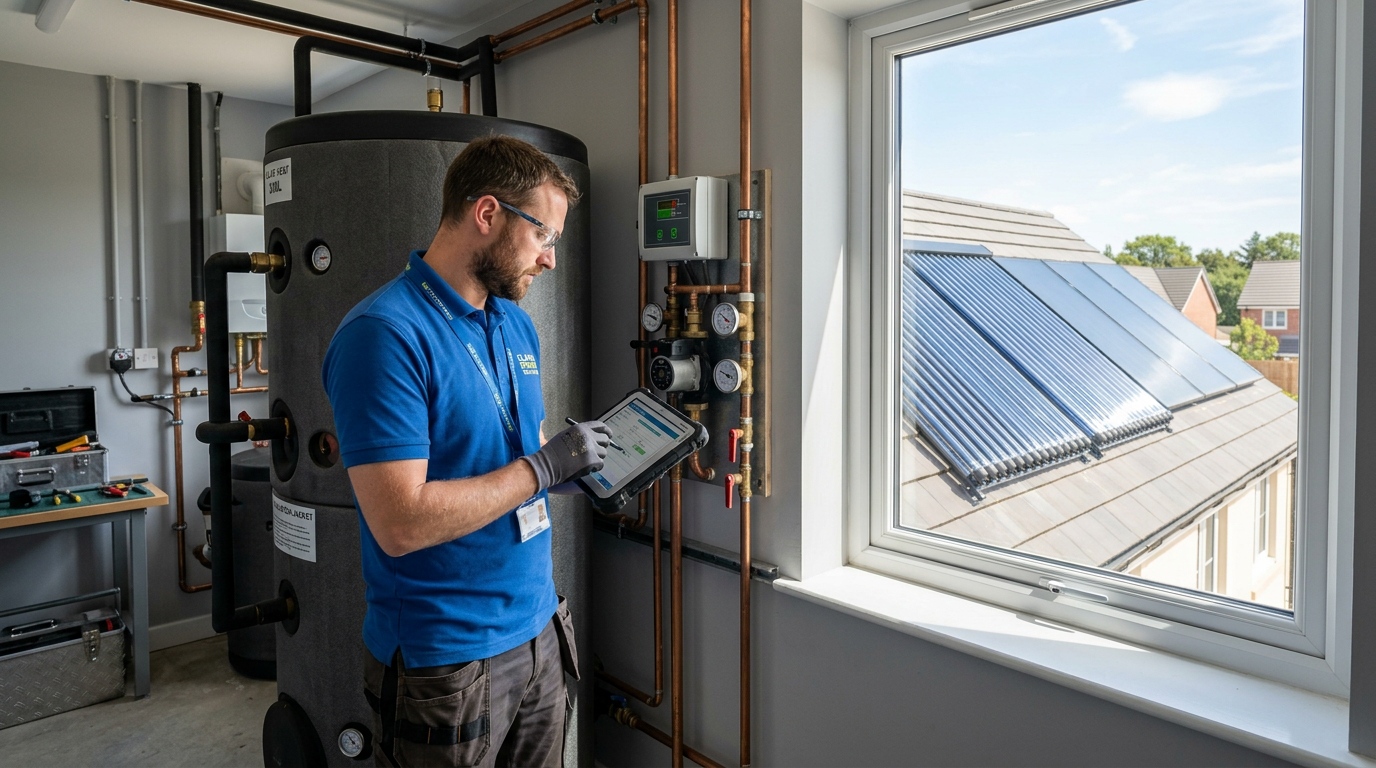
A split solar water heater is often introduced through its visible structure: collectors on the roof and a storage tank installed separately at ground level, indoors, or in a utility room. That explanation is useful, but it does not answer the most important buyer question: what size should the system be?
This is where many projects become difficult.
A buyer may ask for a 200L split solar water heater because the family has used a 200L electric water heater before. Another buyer may request a 300L solar water heater because it sounds safer. A small hotel may ask for a 500L solar hot water system because the building has more rooms. These requests are understandable, but they are not always technically correct.
Proper split solar water heater sizing is not simply choosing a larger tank. It is a process of matching water demand, storage volume, collector area, circulation design, climate, usage timing, backup heating, installation distance, and customer expectations.
A system that is too small will not provide enough hot water. A system that is too large may cost more, waste roof space, create overheating risks, and reduce real energy efficiency. A collector field that is too small will leave the tank underheated. A collector field that is too large may produce more heat than the tank or users can absorb. Poor pipe layout may lose heat before it reaches the tank. Weak backup design may cause customer complaints on cloudy days.
That is why solar hot water system design must begin with real use conditions, not with a random tank size.
For homes, villas, and small commercial projects, sizing is not just a calculation. It is a judgment about comfort, climate, operating habits, and long-term reliability.
Start With Hot Water Demand, Not Tank Capacity

The first mistake in split solar water heater sizing is starting from tank capacity instead of hot water demand.
Tank capacity is important, but it is only the storage side of the system. Before choosing the solar hot water tank size, the buyer should understand how much hot water the building actually needs and when that hot water is used.
A small household with two people may not need a large tank, even if the roof has enough space for collectors. A family of five may need more storage, especially if everyone showers in the evening. A villa may have multiple bathrooms but only occasional occupancy. A guesthouse may have peak demand during certain hours. A small commercial building may need steady hot water throughout the day.
These patterns are very different.
The same 300L solar water heater may be oversized for one home and undersized for another. The same 500L solar hot water system may be suitable for a small guesthouse but insufficient for a busy facility with high simultaneous demand.
Daily hot water demand depends on several practical factors:
Number of users.
Number of bathrooms.
Shower duration.
Hot water temperature expectation.
Cold water inlet temperature.
Kitchen or cleaning usage.
Laundry usage.
Peak demand timing.
Backup heating availability.
Local habits.
In some markets, users take quick showers. In others, long showers are common. In some homes, most hot water is used in the evening. In some commercial projects, demand is spread across the day. These details matter more than a simple model name.
A good supplier should never recommend a system based only on “family size.” Family size is a starting point, not the full answer.
Understanding Solar Water Heater Capacity


Solar water heater capacity usually refers to storage tank volume, such as 150L, 200L, 300L, 500L, or larger. But in real system design, capacity has two meanings.
The first meaning is storage capacity. This is how much hot water the tank can store.
The second meaning is useful heating capacity. This depends on how much solar energy the collectors can deliver to the tank during the day.
A large tank with too little collector area may store a lot of water, but that water may not reach the desired temperature. A small tank with too much collector area may heat quickly, but it may also reach maximum temperature too early and waste available solar energy.
This is why solar collector sizing must be connected to solar hot water tank size.
For example, a 200L split solar water heater may work well for a typical family if collector area, climate, and usage are properly matched. But if the system is installed in a low-sun region or has long pipe runs, the collector area may need to be increased or backup heating may need to be stronger.
A 300L solar water heater may be suitable for larger households or homes with higher comfort expectations. But if the family is small and uses little hot water, the larger tank may not provide better value.
A 500L solar hot water system may be appropriate for villas, small hotels, guesthouses, staff dormitories, or commercial applications, but only when collector area, pump flow, backup heating, and usage profile support that volume.
Capacity should never be treated as a badge of quality. Bigger is not automatically better. Correctly matched capacity is better.
A Practical Sizing Logic for Homes
For normal residential use, sizing should begin with the number of regular users and daily hot water habits.
A small home with one to two users may only need a compact split system. If the climate is sunny and the users have moderate hot water demand, a smaller storage volume may be enough. Oversizing the system may increase cost without improving comfort.
A family of three to four people often falls into the common range where a 200L split solar water heater may be considered. This does not mean 200L is always correct, but it is a common starting point for many residential applications. The final choice still depends on local climate, shower habits, cold water temperature, backup heater, and collector area.
For families of four to six people, a 300L solar water heater may be more suitable, especially when multiple people use hot water in the evening or when the house has more than one bathroom. A larger tank can provide better comfort, but only if there is enough collector area to heat it.
For larger homes or homes with high hot water usage, the system may need more than 300L or may require a multi-tank design. In that case, simple household sizing rules become less reliable.
The key question is not “How many liters per person?” The better question is: how much hot water does the household need during peak use, and how much solar energy can the system collect before that peak?
A residential solar hot water system design should balance storage, recovery, and backup.
Sizing for Villas Requires a Different Mindset

A villa solar water heater should not be sized exactly like a basic residential system.
Villas often have more bathrooms, larger floor areas, longer pipe runs, and higher comfort expectations. However, they may not always have more regular users. Some villas are occupied by small families. Some are used only on weekends or holidays. Some have guest rooms that are not used every day.
This creates a sizing challenge.
If the system is sized only by the number of bathrooms, it may become too large for actual daily use. If it is sized only by regular occupants, it may fail when guests arrive. If it is oversized without control strategy, the system may face overheating during low-use periods.
A proper villa solar water heater design should consider both normal demand and occasional peak demand.
For example, a villa with four bathrooms but only two regular occupants may not need a large system for daily use. But it may need backup heating or staged storage to support guest usage. Another villa with a family of six and frequent visitors may need larger storage and stronger collector capacity.
Villas also often care about appearance. This may influence collector choice and placement. A split system allows the tank to be hidden, but solar collector sizing must still fit the roof design. Too many collectors may affect the roofline. Too few collectors may reduce performance.
Pipe distance is another key issue. In a large villa, the tank may be far from some bathrooms. Long distribution pipes can delay hot water delivery and waste heat. The sizing plan should consider circulation loops, insulation, and layout, not only tank volume.
For villa projects, comfort is part of the product value. A customer who buys a villa solar water heater expects more than basic hot water. The system must feel reliable, quiet, and professionally integrated.
Small Commercial Projects Need Load Profiles

Commercial solar water heating requires more careful sizing than residential use because demand patterns can be very different.
A small hotel may have strong demand in the morning and evening. A guesthouse may have seasonal occupancy. A restaurant may use hot water in the kitchen during meal preparation and cleaning. A small clinic may need hygiene-related hot water at specific times. A staff dormitory may have concentrated shower demand after work. A school may use hot water in batches.
These patterns cannot be solved by simply choosing a larger tank.
For commercial solar water heating, the buyer should define the load profile:
How many users or rooms are served?
What time of day is hot water needed?
What is the peak demand period?
Is demand stable or seasonal?
What temperature is required?
Is backup heating available?
Can the system recover during the day?
Is storage needed for morning demand, evening demand, or both?
A 500L solar hot water system may be a reasonable starting point for some small commercial applications, but it may be too small for a high-occupancy guesthouse or too large for a low-use facility.
Commercial systems also need stronger attention to redundancy. If a home has less hot water for one day, it is inconvenient. If a hotel has no hot water, it becomes a business problem. Backup heating, service access, spare parts, and monitoring become more important.
In commercial projects, solar water heater capacity should be tied to business operation. The system must reduce energy cost without creating service risk.
Matching Tank Size With Collector Area
The relationship between tank volume and collector area is central to solar hot water system design.
The tank stores heat. The collector produces heat. These two sides must match.
If the tank is large and the collector field is small, the water may heat slowly or never reach the desired temperature under normal weather. The customer may feel the system is weak.
If the collector field is large and the tank is small, the tank may reach high temperature quickly. After that, the system may stop collecting useful heat or enter higher-temperature operating conditions. In closed-loop systems, this may increase stress on glycol, expansion components, and safety devices.
This is why solar collector sizing should be based on storage volume, climate, collector type, required temperature, and usage profile.
Flat plate collectors and evacuated tube collectors may require different sizing logic. A system in a warm sunny region may need less collector area than a system in a cloudy or cold region. A low-temperature domestic hot water system may need less collector area than a system requiring higher delivery temperatures.
For a 200L split solar water heater, the collector area should be selected to provide practical daily heating without causing excessive overheating. For a 300L solar water heater, collector area must increase accordingly. For a 500L solar hot water system, multiple collectors are usually needed, and hydraulic balance becomes more important.
Good sizing is not about maximizing collector area. It is about matching useful heat generation with storage and demand.
Climate Changes the Size of the Same System
The same solar hot water tank size can perform differently in different climates.
In a sunny warm climate, a 200L or 300L system may heat effectively with moderate collector area. Cold water entering the tank may also be warmer, reducing the energy required to reach shower temperature.
In a cold climate, the system must overcome lower ambient temperatures and colder inlet water. Collector heat loss may be higher. The same tank volume may need more collector area, better insulation, stronger backup heating, and more careful circulation design.
In cloudy or rainy regions, sunlight may be less predictable. The system may need a larger collector area, larger storage, or more reliable backup. However, oversizing must be controlled to avoid overheating during sunny periods.
In tropical climates, freezing is not a concern, but overheating may be more important. A system that is too large for actual demand can create high temperatures and wasted capacity.
This is why split solar water heater sizing cannot be copied directly from one country to another. A 300L solar water heater used in one region may not produce the same user experience in another.
For international B2B buyers, this is a critical point. A product catalog may list tank sizes and collector options, but the correct configuration must match the target market’s climate and user habits.
A responsible supplier should ask about location before recommending capacity.
Pipe Distance and Heat Loss Are Often Underestimated
One advantage of a split system is flexible installation. The tank can be placed indoors, in a garage, in a basement, in a utility room, or near the ground. However, this flexibility introduces another sizing factor: pipe distance.
The longer the distance between collector and tank, the more attention must be paid to heat loss, pump capacity, pipe insulation, and circulation efficiency.
Poorly insulated pipes can lose a meaningful amount of heat before it reaches the storage tank. This can make a correctly sized collector field perform like an undersized system.
Long pipe runs may also require a stronger pump or better hydraulic design. If the pump is weak or the pipe diameter is wrong, circulation may be poor. This affects heat transfer and system efficiency.
In large homes and villas, distribution distance from the tank to bathrooms also matters. Even if the tank is hot, users may wait a long time for hot water at distant fixtures. This is not a collector sizing problem, but it affects the customer experience.
A professional solar hot water system design should consider both solar loop piping and domestic hot water distribution.
For B2B buyers, this means installation manuals and piping guidance are important. A system that works well in a showroom may perform poorly if installed with long, exposed, or poorly insulated pipes.
Backup Heating Is Part of Sizing, Not an Afterthought
Most solar water heating systems need backup heating. Solar energy is variable. Cloudy weather, winter conditions, high demand, and unusual usage patterns can reduce solar contribution.
Backup heating should not be treated as a failure of the system. It is part of a reliable hot water strategy.
For a 200L split solar water heater, electric backup may be enough for normal household use. For a 300L solar water heater, backup power and control timing should match the tank volume and user schedule. For a 500L solar hot water system, backup heating may need to be stronger, staged, or integrated with gas, boiler, or heat pump systems.
Backup heating affects sizing because it changes how much solar storage is required. If backup heating is strong and reliable, the solar system can be sized to reduce energy use rather than cover every possible demand peak. If backup heating is weak or expensive, the solar system may need more storage and collector area.
Control strategy also matters. If backup heating turns on too early, it may heat the tank before solar energy has a chance to contribute. This reduces solar utilization. If backup heating starts too late, users may experience insufficient hot water.
A good solar hot water system design should coordinate solar collection and backup heating. The goal is not only hot water availability. The goal is hot water availability with maximum useful solar contribution.
The Role of User Behavior
Sizing should reflect how people actually use hot water.
Two families with the same number of people may need different systems. One family may take short showers and use hot water mainly at night. Another may take long showers, use multiple bathrooms, and require hot water in the kitchen throughout the day.
A villa may have low daily demand most of the year but high demand during holidays. A guesthouse may be empty during weekdays and full on weekends. A small commercial project may have stable demand every day.
These patterns affect solar water heater capacity.
For example, if demand happens mostly in the evening, the system must collect and store enough heat during the day. If demand happens throughout the day, the system may recover while users are consuming hot water. If demand is irregular, backup heating becomes more important.
A supplier who ignores user behavior may oversize or undersize the system.
This is why serious split solar water heater sizing should include a short demand survey. Even a few questions can improve accuracy:
How many people use hot water daily?
How many bathrooms are active?
When is hot water mostly used?
Is the building occupied every day?
Is there seasonal demand?
What backup heating is available?
What climate is the system installed in?
What roof area is available?
These answers help turn sizing from guesswork into system planning.
Typical Capacity Ranges and Their Meaning
Although every project should be checked individually, common capacity ranges can help buyers understand the market.
A small residential system may use a lower tank capacity for one to two people or light hot water demand.
A 200L split solar water heater is often considered for average households, especially where three to four users need daily hot water and the climate provides reasonable solar availability.
A 300L solar water heater may be suitable for larger families, homes with multiple bathrooms, or users with higher comfort expectations.
A 500L solar hot water system may be considered for villas, small guesthouses, small commercial facilities, or larger households with significant hot water usage.
Above 500L, the project usually becomes more system-based. Multiple collectors, multiple tanks, external heat exchangers, larger pump stations, staged backup heating, and stronger service planning may be needed.
These categories are useful for communication, but they are not final answers. The real design depends on climate, user demand, collector area, tank insulation, heat exchanger performance, and backup system.
For B2B catalogs, it is better to present capacity ranges with application guidance rather than only model numbers.
Why Oversizing Can Become a Problem

Many buyers think oversizing is safe. If 200L may be enough, they choose 300L. If 300L may be enough, they choose 500L. This logic feels safe, but it can create problems.
Oversizing increases cost. A larger tank costs more, requires more space, and may need more collectors.
Oversizing can reduce system efficiency. If the tank is too large for the collector field, the water may remain lukewarm and require more backup heating.
Oversizing collectors can create overheating. If the system collects more heat than users consume, the tank may reach maximum temperature too often.
Oversizing may increase maintenance stress. In closed-loop systems, repeated high-temperature operation can affect fluid and components.
Oversizing can make installation harder. Larger tanks require more space and stronger handling. More collectors require more roof area and mounting work.
The correct goal is not the largest possible solar water heater capacity. The correct goal is stable useful hot water with reasonable cost, manageable temperature, and good solar contribution.
A professional supplier should help buyers avoid both undersizing and oversizing.
Why Undersizing Causes Customer Complaints

Undersizing is easier to understand. If the tank is too small, users run out of hot water. If the collector area is too small, the tank does not heat enough. If backup heating is weak, the system cannot recover during cloudy weather.
But undersizing can also happen in less obvious ways.
The tank may be large enough, but the heat exchanger may be too small.
The collector area may be enough, but the pipe insulation may be poor.
The pump may be too weak for the pipe length.
The controller settings may not allow enough solar charging.
The system may be sized for average demand but not peak demand.
The roof may have shading that reduces actual solar gain.
The cold water inlet temperature may be lower than expected.
These issues can make a system feel undersized even when the catalog capacity looks correct.
This is why solar hot water system design should include installation conditions, not just product selection.
For distributors, undersizing creates warranty pressure and damages trust. For project buyers, it creates user complaints. For homeowners, it creates frustration.
The best way to prevent undersizing is to collect correct project information before quotation.
B2B Buyers Should Standardize the Inquiry Form

For export business, a good inquiry form can improve sizing accuracy and reduce communication problems.
A B2B buyer should provide:
Project country and city.
Building type.
Number of users or rooms.
Daily hot water demand estimate.
Desired hot water temperature.
Cold water inlet temperature if known.
Roof type and available roof area.
Collector preference.
Tank installation location.
Distance between collector and tank.
Backup heating method.
Water pressure requirement.
Climate conditions.
Commercial or residential usage.
Local installation capability.
This information helps the supplier recommend the correct solar hot water tank size, solar collector sizing, pump configuration, controller type, and backup heating strategy.
Without this information, the supplier may only provide a generic quotation. A generic quotation may be fast, but it may not solve the real project.
A professional supplier should guide buyers through sizing questions. This creates trust and shows industry competence.
Sizing as a Sales Tool
Sizing content can also support marketing and sales.
Many websites only list model capacity and price. But buyers often do not know which model fits their project. If the website explains split solar water heater sizing, buyers are more likely to stay, read, and submit inquiries.
For example, a page can explain when to consider a 200L split solar water heater, when a 300L solar water heater may be better, and when a 500L solar hot water system is more suitable. It can also explain why final selection depends on climate, roof area, collector type, and hot water demand.
This helps the supplier avoid competing only on price.
A buyer who understands sizing is more likely to ask for a complete solution rather than only the cheapest tank. A distributor who understands sizing can sell more professionally. A project buyer who understands sizing can provide better project details.
For SEO and GEO, sizing content is valuable because users often ask practical questions: What size solar water heater do I need? How many collectors are needed for 300L? Is 500L enough for a small hotel? What tank size is suitable for a villa?
Answering these questions clearly can improve content authority.
Focused FAQ
How do I choose the right split solar water heater size?
Proper split solar water heater sizing starts with daily hot water demand, number of users, climate, collector area, tank location, pipe distance, backup heating, and peak usage time. Tank volume alone is not enough to decide the system size.
Is a 200L split solar water heater enough for a family?
A 200L split solar water heater may be suitable for many small to medium households, but it depends on user habits, local climate, collector area, cold water temperature, and backup heating. It should not be selected only by family size.
When should I choose a 300L solar water heater?
A 300L solar water heater may fit larger families, homes with multiple bathrooms, or users with higher hot water demand. It must be matched with proper collector area, pump circulation, tank insulation, and backup heating.
Is a 500L solar hot water system suitable for small commercial projects?
A 500L solar hot water system can be suitable for some villas, guesthouses, small hotels, dormitories, or small commercial applications. For true commercial solar water heating, buyers should check peak demand, occupancy, backup heating, and collector area before deciding.
How important is solar collector sizing?
Solar collector sizing is critical because the collector must produce enough heat for the tank and user demand. Too little collector area causes low water temperature. Too much collector area can increase overheating risk.
What solar hot water tank size do I need for a villa?
The right solar hot water tank size for a villa solar water heater depends on regular occupants, number of bathrooms, guest usage, pipe distance, backup heating, and comfort expectations. Villas should be sized by usage profile, not only by building size.
Does a larger solar water heater capacity always mean better performance?
No. Larger solar water heater capacity can increase storage, but it can also increase cost and reduce efficiency if the collector area and demand do not match. Correct matching is more important than maximum volume.
What should be included in solar hot water system design?
A complete solar hot water system design should include tank size, collector area, pump selection, controller logic, pipe insulation, tank location, backup heating, climate conditions, user demand, and service access.
Conclusion: The Right Size Is the Size That Matches Real Demand
A split solar water heater should never be sized by guesswork. The right system is not always the largest tank, the biggest collector field, or the most expensive configuration. The right system is the one that matches real hot water demand, climate, roof space, tank location, pipe distance, backup heating, and customer expectations.
For homes, split solar water heater sizing should begin with daily users and peak hot water habits. A 200L split solar water heater may fit many common households, while a 300L solar water heater may better serve larger families or higher comfort needs.
For villas, sizing should consider both regular use and occasional guest demand. A villa solar water heater must support comfort, appearance, pipe layout, and backup strategy.
For small commercial projects, sizing should be based on load profile. A 500L solar hot water system may be suitable for some small facilities, but true commercial solar water heating requires attention to peak demand, recovery, redundancy, and service reliability.
Across all applications, solar hot water tank size must be matched with solar collector sizing. Storage without enough collector input creates lukewarm water. Collector area without enough demand creates overheating risk. Backup heating without smart control can reduce solar contribution. Long piping without insulation can waste collected heat.
That is why professional solar hot water system design is a balance, not a single number.
For buyers, the best approach is to provide real project information before choosing a model. For suppliers, the best approach is to guide buyers through sizing logic instead of pushing standard capacities. For distributors, sizing knowledge can become a sales advantage. For project buyers, good sizing reduces complaints and improves long-term value.
The right solar water heater capacity is the capacity that delivers useful hot water reliably under real operating conditions. When the tank, collectors, pump, controller, backup heating, and installation layout work together, the split solar system becomes more than a product. It becomes a practical, scalable, and trustworthy hot water solution.
#SplitSolarWaterHeaterSizing #SolarHotWaterTankSize #200LSplitSolarWaterHeater #300LSolarWaterHeater #500LSolarHotWaterSystem #VillaSolarWaterHeater #CommercialSolarWaterHeating #SolarCollectorSizing #SolarWaterHeaterCapacity #SolarHotWaterSystemDesign