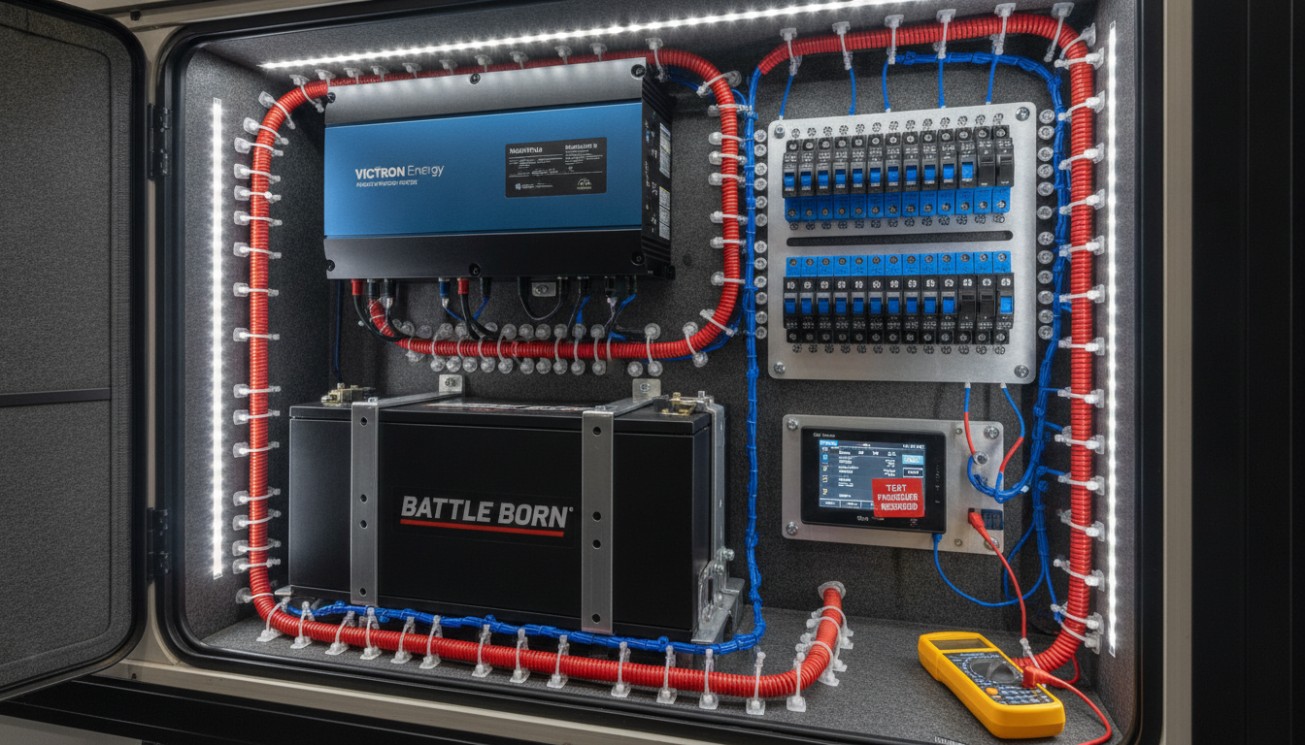
RV Load Planning for Power System Design: Build Around Real Appliance Behavior
RV Power Design Should Begin with Loads, Not Hardware
Many RV owners begin their electrical upgrade by asking product-centered questions. How many solar panels should I buy? Is a 3000W inverter enough? Should I choose 200Ah, 400Ah or 600Ah of lithium battery capacity? These are natural questions, but they are not the best starting point. A reliable system begins with RV load planning, because every solar panel, battery, inverter, charger, cable and fuse exists to serve real appliance behavior inside the vehicle.
A complete RV power system design is not only a collection of high-spec components. It is an energy workflow. Power is produced, stored, converted, protected and consumed. The consumption side is where the truth begins. A refrigerator that runs all day affects the system differently from a microwave that runs for five minutes. A laptop workstation may look small, but if it is used eight hours per day, it can become a major daily load. An air conditioner is difficult not only because it draws high power, but because it may need long operating time during hot weather.
This is why off-grid RV energy use should be studied before any purchase decision. A weekend camper, a remote worker, a full-time boondocker and a family using electric cooking may all say they want an RV solar system. In reality, they need very different systems. If the load profile is wrong, the system will be wrong. A large solar array may not solve an oversized inverter habit. A large lithium battery bank may not help if charging recovery is weak. A premium power kit may disappoint if the user expects to run appliances that exceed its practical limits.
This article does not repeat a basic solar capacity calculator. For pure sizing, readers can review the existing RV solar sizing guide. This article looks at the layer before sizing: how to understand appliance behavior, daily routines, inverter peaks, reserve strategy and recovery rhythm so the system can be designed around real life rather than catalog numbers.
The Difference Between Appliance Power and Daily Energy
The first mistake in RV electrical planning is confusing power with energy. Power is the rate of use at a moment. Energy is the amount used over time. An appliance may have a high power rating but low daily energy use if it runs briefly. Another appliance may have a small power rating but high daily energy use if it runs for many hours.
This distinction matters because different components respond to different problems. The inverter cares about momentary power and surge. The battery bank cares about total energy withdrawn. The solar array and charger care about how much energy must be recovered. Wires and fuses care about current flow. Monitoring cares about what is happening across time.
High-Power, Short-Duration Loads
Microwaves, electric kettles, induction cooktops, hair dryers and some power tools may draw heavy power, but they usually run for short periods. They place strong demand on the inverter, battery discharge capability, cables and protection devices. These appliances are central to RV inverter load planning, but they may not always dominate total daily energy if used briefly.
Low-Power, Long-Duration Loads
Refrigerators, fans, routers, Starlink terminals, lights, water pumps, control boards and laptops may look easier, but they often run for many hours. These loads are important for off-grid RV energy use because they quietly consume energy throughout the day and night. A fan running all night can matter more than a microwave used once.
Intermittent Automatic Loads
Some appliances cycle automatically. A refrigerator compressor, water pump, heater fan or air conditioning compressor does not always run continuously, but it may start and stop based on temperature, pressure or thermostat demand. These loads are hard for beginners to estimate because nameplate wattage does not tell the whole daily pattern.
Comfort Loads vs Essential Loads
Not every load has the same importance. Essential loads protect basic living: refrigeration, lighting, water pump, communication, safety devices and medical or work-critical equipment if applicable. Comfort loads improve lifestyle: entertainment, electric cooking, coffee machines, extra screens, gaming devices or air conditioning. A serious RV energy audit separates these groups because the system should protect essentials first.
Build a Load Map Before Building a Power System

A load map is a practical planning tool. It does not need to be perfect at the beginning. Its purpose is to reveal how the RV actually uses energy. Without a load map, buyers often overspend in one area and underbuild another. They may buy more panels but ignore battery reserve. They may buy a large inverter but not enough discharge capacity. They may install lithium batteries but keep an old charger that cannot recover them properly.
A useful load map should include four pieces of information for each device: power demand, expected daily runtime, whether the load is essential or optional, and whether it requires AC power through an inverter. This turns a confusing list of appliances into a system design conversation.
Example Load Categories
| Load Category | Typical Devices | System Impact |
|---|---|---|
| Essential DC Loads | Lights, water pump, vent fan, control boards | Influence baseline battery reserve and DC distribution |
| Cold Storage | 12V refrigerator, compressor fridge, freezer | Creates continuous daily energy demand |
| Remote Work | Laptop, monitor, router, Starlink, camera batteries | Requires predictable daytime and evening energy |
| Kitchen Loads | Microwave, induction cooktop, kettle, coffee maker | Drives inverter sizing and short peak demand |
| Climate Loads | Fans, heater blower, air conditioner | Can dominate energy use depending on season |
| Entertainment Loads | TV, audio system, gaming device, projector | Often optional but can add long evening consumption |
This kind of map helps turn vague demand into practical design logic. If the RV uses mostly DC loads, the system may stay simple. If the owner expects frequent AC appliance use, inverter and battery discharge planning become more important. If the owner works remotely, monitoring and recovery predictability become more valuable than a single large product specification.
Why Runtime Changes the System More Than Beginners Expect
Runtime is one of the most underestimated variables in RV load planning. Many buyers look at the wattage of an appliance but ignore how long it runs. A 1500W kettle used for five minutes may use less total energy than a 70W refrigerator running across the day. A laptop charger may seem small, but a full remote-work day can create a meaningful energy requirement.
This is why the best system design process asks not only “What do you want to power?” but also “How often and for how long?” The answer changes battery reserve, solar recovery and charging strategy.
Short Use Does Not Mean Low System Stress
A short-use appliance can still create high stress. A microwave may not consume huge daily energy if used briefly, but it can demand a strong inverter and high current from the battery. This affects RV inverter load, cable sizing and fuse selection. If the battery bank or inverter cannot support the surge or running load, the appliance may trip the system even when the battery appears full.
Long Use Does Not Always Need a Large Inverter
A long-use appliance may not need a large inverter if it is a DC load. A 12V refrigerator, LED lighting or DC fan may run directly from the DC distribution system. These loads may not stress the inverter, but they can quietly reduce RV battery reserve. This is why DC-side loads deserve as much attention as AC appliances.
Seasonal Runtime Changes Everything
Energy use is not fixed across the year. In summer, fans and air conditioning may dominate. In winter, heater fans, battery heating and shorter daylight may change the balance. In shoulder seasons, the system may feel oversized. A strong RV power system design must consider the worst meaningful travel condition, not only a mild-weather weekend.
Inverter Loads: The Moment When DC Storage Meets Household Expectations
Most RV owners do not think in DC and AC architecture. They think in comfort. They want coffee, warm food, charged devices, cold storage and sometimes climate control. The inverter is the bridge between battery storage and household-style appliances. This is why RV inverter load planning is one of the most important parts of system design.
An inverter does not create energy. It converts stored DC energy into AC power, with some efficiency loss. A large inverter makes more appliances possible, but it also increases installation demands. Larger inverter systems may require heavier cables, stronger battery discharge capability, better ventilation, careful AC distribution and more disciplined user behavior.
Continuous Power vs Surge Power
Many appliances require more power at startup than during normal operation. Motors, compressors and some electronic devices may create surge demand. If the inverter cannot handle the surge, the appliance may fail to start even if its running wattage appears acceptable. This is especially relevant for refrigerators, air conditioners, pumps and power tools.
Inverter Standby Consumption
A larger inverter may consume energy even when no major appliance is running. This standby draw can become meaningful over a long night or several days off-grid. Users who leave the inverter on continuously for convenience may lose energy without realizing it. A good monitoring system can reveal this hidden consumption.
Which Circuits Should Be Inverter-Powered?
Not every AC outlet in the RV needs inverter power. Some systems power selected outlets. Others support more complete AC distribution. The decision affects wiring complexity, transfer behavior and user expectations. A carefully planned system may provide inverter power where it is useful while avoiding unnecessary load exposure.
Battery Reserve Is Not Just Battery Capacity
Many articles discuss battery capacity, but RV battery reserve is a more practical idea. Capacity is the nominal size of the battery bank. Reserve is the usable energy left after real-world conditions, essential loads, inverter losses, weather uncertainty and user behavior are considered.
A 400Ah lithium battery bank may sound large, but the actual reserve depends on voltage architecture, usable depth of discharge, BMS limits, inverter demand, temperature and how quickly the system can recover. A smaller battery bank with realistic loads and strong charging may feel more reliable than a large bank that is difficult to refill.
Reserve for Night Use
Night use is unavoidable. Solar does not produce after sunset. Refrigerators, fans, devices, lights and control boards may continue to consume power. A good system should enter the night with enough reserve for normal use and emergency margin.
Reserve for Cloudy Weather
Solar production can drop sharply during cloudy days, shaded campsites or winter travel. A system designed only for perfect sun may disappoint. RV solar recovery planning should include lower-output days, not just ideal rooftop production.
Reserve for Unexpected Loads
Real RV life creates surprises. Guests may charge devices. Weather may demand more fan use. A laptop may run longer than expected. A refrigerator may work harder in heat. A reserve margin reduces anxiety and prevents the system from operating near its limit every day.
Solar Recovery: Replacing Energy Is Different from Producing Power

Solar panels are often marketed by wattage, but RV solar recovery is about how much usable energy returns to the battery during real conditions. A panel array may have a rated output, but actual recovery depends on sun angle, cloud cover, season, panel temperature, shading, roof layout, wiring, charge controller performance and battery state of charge.
This distinction is important because a system can look strong on paper but recover slowly in practice. A full roof of panels may underperform in forest shade. A portable panel may perform well when aimed at the sun but requires setup discipline. A high-output array may not deliver its value if the battery bank is already full during peak sun or if the charge controller is poorly matched.
Readers who need a wattage-focused comparison can review the existing RV solar panel wattage guide. In this article, the focus is different: how solar recovery fits into daily load behavior.
Recovery Should Match Consumption Timing
Energy timing matters. A remote worker may consume much of the energy during the day, when solar is also producing. A family may use more energy in the evening, after solar production stops. A refrigerator runs across both periods. A user who drives during the day may also recover energy through alternator charging. These patterns affect the value of solar, battery reserve and charging diversity.
Solar Cannot Fix Every Load Problem
Adding more solar is not always the correct answer. If the main issue is a large inverter left on overnight, better operating habits may help. If the problem is high AC cooking demand, inverter and battery discharge planning may matter more. If the owner parks in shade, portable solar or alternator charging may be more useful than additional fixed roof panels. If the battery is too small, solar may produce energy that cannot be stored effectively.
Portable Solar as a Recovery Tool
Portable solar can be valuable for RV owners who park in shade but can place panels in sunlight. It can also help renters, small vans or users with limited roof space. However, portable solar requires setup, storage, theft awareness and cable management. It should be treated as a flexible recovery layer, not a universal replacement for system planning.
Charging Recovery Must Include More Than Solar
A mature RV power system design looks beyond rooftop solar. Solar is quiet and automatic, but it is weather-dependent. Shore power is strong but location-dependent. Alternator charging is useful during travel but depends on driving time and proper current control. Generator charging can support backup use but adds fuel, noise and maintenance.
This is why RV electrical planning should identify all charging sources before components are selected. The owner should know how the battery will recover after a heavy-use day. If the answer is only “the sun,” then the design must be honest about weather and parking conditions.
Alternator Charging for Travel-Based Recovery
For travelers who drive frequently, alternator charging can become a major recovery source. A DC-DC charger can help control current and apply a suitable charging profile, especially when the house bank uses lithium batteries. This is particularly useful for van conversions, motorhomes and users who move between campsites often.
Shore Power for Reset Charging
Shore power can reset the system after several low-solar days. It may also support pre-trip charging before departure. If the system uses lithium batteries, the shore charger or inverter charger should be reviewed for appropriate settings. A lithium bank connected to an incompatible charger may not recover correctly.
Generator Backup for High Uncertainty
Some users want to eliminate generator use. Others see it as practical backup. The point is not whether generators are good or bad. The point is whether the system design honestly includes or excludes them. If a user expects air conditioning in poor solar conditions, backup charging may still be necessary unless the battery and inverter system is very large.
Four User Profiles and Their Load-First Design Logic
Different RV lifestyles create different energy patterns. A good RV energy audit should identify the user profile before recommending hardware.
Weekend Camper
The weekend camper usually has limited off-grid duration. Essential loads may include lights, water pump, small refrigerator support, phone charging and occasional fan use. This user may not need a complex system. The priority is simple operation, safe wiring, enough RV battery reserve for one or two nights and modest solar or shore charging recovery.
Design Priority
For this user, the system should avoid unnecessary complexity. A balanced small lithium battery, basic monitoring, suitable solar recovery and limited inverter use may provide a better experience than an oversized but confusing system.
Remote Worker
The remote worker has predictable daily energy demand. Laptops, monitors, routers, mobile hotspots, Starlink terminals, camera gear and device charging may run for long periods. This user may not need extreme peak power, but energy reliability matters. Losing power may mean losing work time.
Design Priority
The system should focus on daytime production, stable battery reserve, accurate monitoring and quiet operation. Off-grid RV energy use becomes a productivity issue, not only a camping comfort issue.
Electric Cooking User
Electric cooking changes the entire system. Induction cooktops, microwaves, electric kettles, coffee makers and air fryers can create heavy RV inverter load. Even if cooking time is short, the inverter, battery, cables and protection devices must support the current safely.
Design Priority
This user needs careful inverter sizing, strong battery discharge capability and clear expectations. Solar can help recover energy, but it does not directly solve high current demand during cooking moments.
Full-Time Boondocker
A full-time RV power system is closer to mobile infrastructure than a casual accessory. It may need large lithium storage, multiple charging sources, reliable monitoring, inverter charger integration, DC-DC charging, strong solar recovery and serviceable wiring documentation.
Design Priority
The system should be designed for repeatable daily operation, not occasional use. Redundancy, documentation and monitoring become more important. The owner needs to understand how to manage energy across changing weather and travel conditions.
How Load Planning Prevents Common Buying Mistakes
Good RV load planning prevents several expensive mistakes. It helps buyers avoid oversizing the wrong component, underestimating hidden loads and confusing marketing numbers with field performance.
Mistake 1: Buying Solar Before Knowing Consumption
Solar is attractive because it is visible and easy to compare. But buying panels before understanding daily loads can lead to mismatch. The user may buy too little solar for recovery or too much solar for a small battery bank. Solar should be selected after the energy demand and charging strategy are understood.
Mistake 2: Oversizing the Inverter Without Supporting It
A large inverter does not make a weak system strong. It may require a battery bank capable of high discharge current, larger cables, proper fusing and careful AC distribution. Without support, the inverter may trip, waste standby energy or create installation risk.
Mistake 3: Treating Lithium as a Simple Battery Swap
Lithium batteries can improve RV power dramatically, but they change charging behavior. The existing LiFePO4 RV battery upgrade guide explains why charger compatibility, alternator control, temperature protection and monitoring matter. Load planning adds another question: can the lithium bank support the actual appliance pattern?
Mistake 4: Ignoring Nighttime Loads
Many users plan around daytime activity but forget the overnight period. Refrigerators, fans, devices, control boards and heater blowers may continue running while solar is unavailable. Nighttime use is a major reason RV battery reserve matters.
Mistake 5: Copying Another RV Owner’s Setup
Online forums and videos are useful, but another owner’s system may fit a different climate, vehicle, travel rhythm and comfort expectation. A desert van traveler with open sun has different needs from a fifth-wheel owner in forest campgrounds. Copying components without copying the use case can create poor results.
A Practical Load-First Planning Sequence
The most useful planning sequence is not complicated. It simply forces decisions to follow energy behavior.
Step 1: List All Loads
Create a list of DC and AC devices. Include essentials, comfort items and occasional high-power appliances. Do not ignore small devices used for many hours.
Step 2: Estimate Runtime
Estimate daily use time for each load. Separate summer, winter and normal-season patterns if necessary. Runtime turns appliance wattage into daily energy demand.
Step 3: Identify Inverter Loads
Mark which loads require AC power. This helps define inverter size, surge demand, battery discharge requirements and which circuits should be inverter-supported.
Step 4: Define Reserve Days
Decide how much reserve is needed for nights, cloudy days or unexpected use. A weekend camper may need less reserve than a full-time boondocker.
Step 5: Match Charging Recovery
Plan how the battery will recover. Solar, shore power, alternator charging and generator backup should be matched with the travel pattern. RV solar recovery should be realistic, not based only on ideal sun.
Step 6: Select Components as a System
Only after the load and recovery pattern is clear should the buyer select batteries, panels, controllers, inverter chargers and monitoring tools. Readers comparing package formats can refer to the RV solar kit with battery vs custom power system article for a related buying decision.
Why Load Planning Matters for Suppliers and Installers
For suppliers, distributors and installers, load planning is not just a technical exercise. It is a better sales language. Many buyers cannot explain what they need in electrical terms. They explain lifestyle goals: more days off-grid, less generator use, safe laptop work, cold food, morning coffee, electric cooking or occasional air conditioning.
A supplier that translates these lifestyle goals into RV power system design will appear more professional than a supplier that only lists product wattage. Instead of asking “How many panels do you want?” the better question is “What do you need to run, for how long, and how do you travel?” This opens the door to more accurate recommendations.
Installers also benefit from load-first planning. It reduces after-sales disappointment because expectations are clearer. If a customer wants to run air conditioning overnight from battery, the installer can explain the system scale required. If a customer only needs weekend lights and charging, the installer can avoid overselling. If a customer works remotely, the installer can emphasize monitoring, battery reserve and reliable recovery.
For content platforms, this topic has strong value because it teaches readers how to think. It does not push a single product. It explains why different RV users need different systems. That gives the article longer-term usefulness and supports internal linking to more specific articles about sizing, lithium upgrades, wattage tiers and complete power system architecture.
Focused FAQ
What is RV load planning?
RV load planning is the process of listing the devices used inside an RV, estimating how much power they draw, how long they run and whether they require DC or AC power. It helps determine battery capacity, inverter size, solar recovery and charging strategy.
Why should RV power system design start with appliances?
RV power system design should start with appliances because the system exists to support real energy use. Solar panels, batteries and inverters should be chosen based on actual loads, not only on popular kit sizes or marketing wattage.
What is the difference between RV appliance power and energy use?
RV appliance power describes how much power a device draws at a moment. Energy use describes how much it consumes over time. A high-power appliance used briefly may consume less daily energy than a low-power appliance running all day.
How does load planning affect RV inverter size?
RV inverter load planning identifies which appliances need AC power and whether they have startup surge. This helps determine inverter capacity, battery discharge requirements, cable size and protection design.
Why is RV battery reserve important?
RV battery reserve is the usable energy left for night use, cloudy weather and unexpected demand. It is more practical than looking only at nameplate battery capacity because real systems lose energy through inverter use, temperature conditions and operating behavior.
Can solar recovery replace all other charging sources?
RV solar recovery can be enough for some users, but it depends on sunlight, roof space, shade, season, battery capacity and daily consumption. Many RV systems also use shore power, alternator charging or generator backup.
What should be included in an RV energy audit?
An RV energy audit should include essential DC loads, AC appliances, runtime, seasonal use, inverter loads, battery reserve needs and charging sources. It should also identify which loads are essential and which are optional comfort loads.
Is full-time RV power different from weekend RV power?
Yes. Full-time RV power usually requires stronger battery reserve, multiple charging sources, more detailed monitoring, better documentation and a more robust inverter and protection design. Weekend systems can often remain simpler.
Conclusion: Real Loads Create Real System Design
A reliable RV electrical system begins with real behavior. The most important question is not how many watts of solar fit on the roof or how large the inverter looks in a product listing. The better question is how the RV owner actually lives, cooks, works, sleeps, drives and recovers energy. That is the foundation of serious RV load planning.
When loads are understood, every major system decision becomes clearer. Battery capacity is selected to protect essentials and provide reserve. Inverter size is chosen to support real AC appliances without unnecessary waste. Solar is sized for realistic recovery rather than ideal conditions. Shore power, alternator charging and backup charging are included according to travel rhythm. Monitoring becomes a daily decision tool instead of a decorative display.
This is why RV electrical planning should move from component shopping to workflow design. A balanced system does not need to be the largest system. It needs to match the user’s energy pattern. A weekend camper, remote worker, electric-cooking user and full-time boondocker may all need different answers. The best system is the one that supports the right loads, at the right time, with enough reserve and a clear recovery strategy.
For RV owners, this approach reduces disappointment. For suppliers and installers, it creates better recommendations and more professional communication. For the wider RV solar and storage market, it shows why System content is different from ordinary product content. A true system is not built around parts first. It is built around use.
#RVLoadPlanning #RVPowerSystemDesign #OffGridRVEnergyUse #RVAppliancePower #RVInverterLoad #RVBatteryReserve #RVSolarRecovery #RVEnergyAudit #RVElectricalPlanning #FullTimeRVPower