上传

RJXA's Christmas approaches, it's time to refresh your fashion collections! Explore our high-quality lace, perfect for festive attire. Inquire now to enjoy holiday specials!

Member Center
Exit
Data is empty
0
qr Code Url

Scan the QR code to visit the mobile website

  • Home
  • Industrial
  • Renewable
  • Building & Home
  • Water Treatment
  • Automation
  • Kitchen
Home -News -
Robotics & Automation
-
AMR map validation system showing charging zone, receiving bay, picking area, assembly cell and dispatch routes
2026-05-21

From Pilot to Production: How to Validate AMR Navigation and Safety Modules Before Deployment

This article explains how manufacturers, integrators and warehouse operators should validate AMR navigation and safety modules before full deployment, covering site surveys, risk assessment, acceptance testing, commissioning, performance metrics and long-term maintenance.
Learn more
Large AMR fleet traffic management system coordinating routes, intersections and workstations in a smart warehouse
2026-05-21

AMR Fleet Traffic Management: How to Prevent Congestion, Deadlocks and Safety Risks

This article explains how AMR fleet traffic management affects route planning, intersection control, safety zones, deadlock prevention, mixed traffic coordination and scalable warehouse automation.
Learn more
AMR docking at an autonomous charging station with marked safety zone in a warehouse
2026-05-20

Precision Docking and Autonomous Charging: The Hidden Test of AMR Navigation Quality

This article explains why precision docking and autonomous charging are critical tests of AMR navigation quality, covering docking sensors, final alignment, QR/RFID references, charging station design, safety logic, mechanical tolerance and long-term reliability.
Learn more
Mobile robot sensor fusion system combining LiDAR, RGB-D camera, wheel odometry and fusion hub for warehouse navigation
2026-05-20

Sensor Fusion in Mobile Robots: Why One Sensor Is Never Enough

This article explains why AGV and AMR systems need sensor fusion for reliable localization, obstacle detection, navigation stability and safety behavior. It explores how LiDAR, cameras, encoders, IMU, safety scanners and other sensors work together in real industrial environments.
Learn more
Functional safety architecture for AMR with safety controller, safety laser scanners, drive system and brake system
2026-05-20

AGV and AMR Safety Standards: What Buyers Should Know Before Deployment

This article explains how AGV and AMR safety standards affect risk assessment, protective fields, speed control, safety-rated sensors, functional safety, site validation and project acceptance in real industrial deployments.
Learn more
AMR operational map showing no-go zones, speed zones, pick-up points, drop-off points and charging areas
2026-05-19

Mapping, Localization and SLAM: What AMR Buyers Must Understand Before Deployment

This article explains the difference between mapping, localization and SLAM in AMR systems, and shows how these concepts affect deployment quality, navigation reliability, map maintenance and long-term automation performance in factories and warehouses.
Learn more
AMR replanning from original path to safe path after detecting a worker and cart obstacle in a warehouse
2026-05-19

Dynamic Obstacle Avoidance for AMR Navigation

Learn why AMR dynamic obstacle avoidance needs LiDAR, costmaps, path planning, safety logic and real-time decisions in warehouses.
Learn more
Mobile robot sensor fusion architecture with LiDAR, depth camera, IMU, wheel encoders and navigation path
2026-05-19

Mobile Robot Sensor Selection for AGV and AMR Systems

Compare LiDAR, cameras, ultrasonic sensors, bumpers, encoders and IMU for AGV/AMR navigation, obstacle detection and safety.
Learn more
AGV with safety laser scanner showing warning field and protective stop zone around workers in a warehouse
2026-05-19

Safety Laser Scanners Are Not Just for Stopping Robots

This article explains how safety laser scanners protect people, support speed control, shape dynamic safety fields, assist obstacle detection, and strengthen AGV/AMR navigation safety in real industrial environments.
Learn more
Comparison of AGV fixed path navigation and AMR dynamic navigation with mapping in a warehouse
2026-05-19

From Guided Paths to Intelligent Navigation: How AGVs and AMRs Know Where to Go

This article explains the main AGV and AMR navigation methods, including magnetic tape, QR code, RFID, reflector laser navigation, LiDAR SLAM, visual navigation, and hybrid navigation. It helps buyers, engineers, and automation planners understand how to choose a practical navigation system for real factories and warehouses.

Learn more
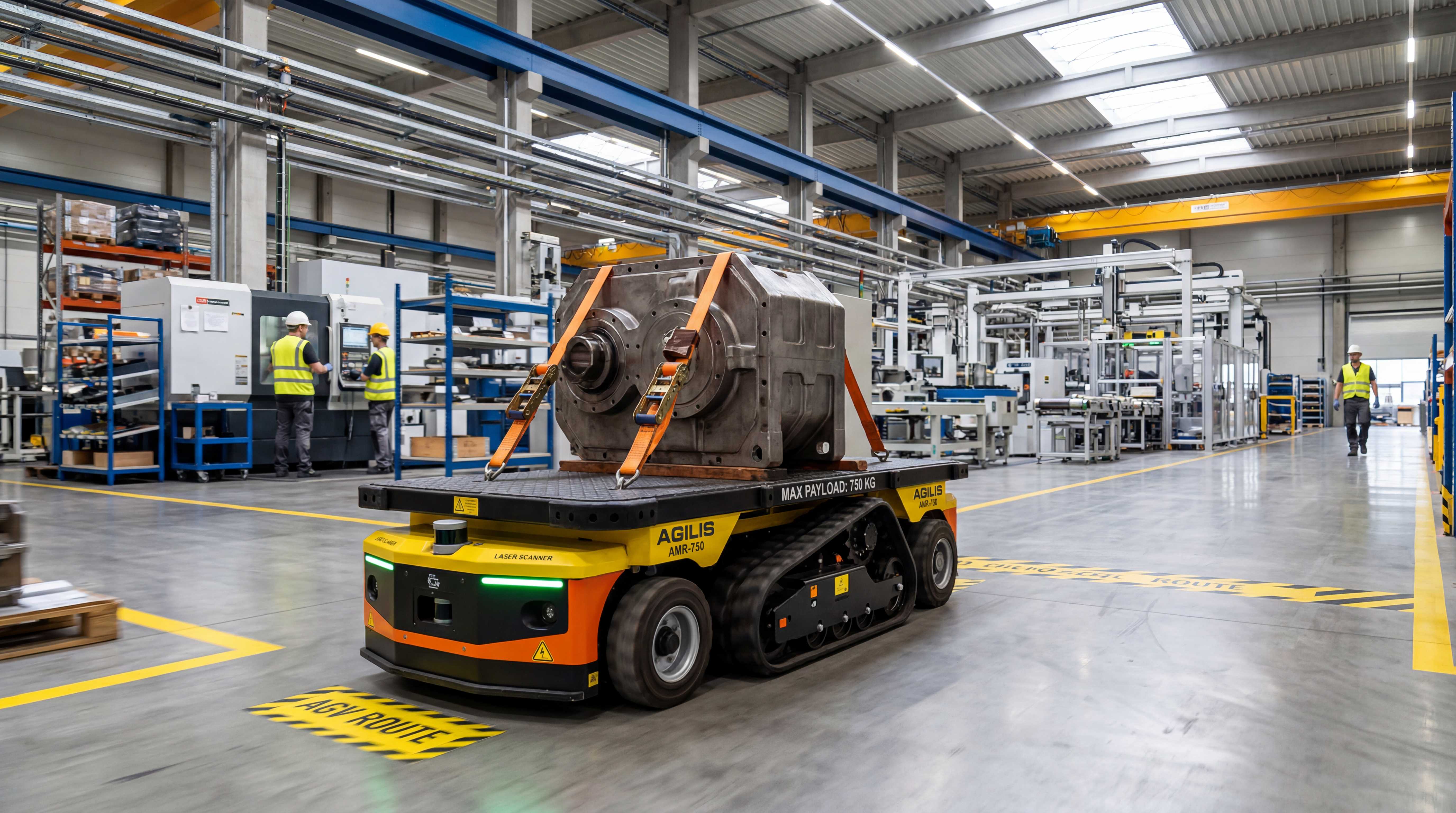
Heavy-payload AMR chassis transporting a large industrial mold on a factory route
2026-05-19

How to Buy a Heavy-Payload AMR Chassis: Specification, Acceptance Testing and Long-Term Value

Selecting a heavy-payload AMR chassis is not only a product comparison. Buyers need to define real load conditions, route requirements, docking accuracy, integration scope, safety validation, acceptance tests, ROI logic and long-term service capability before making a procurement decision.
Learn more
Heavy-payload AMR fleet integration with dashboard, charging station and conveyor system
2026-05-19

From One Robot to a Working Fleet: How to Integrate Heavy-Payload AMRs into Industrial Systems

A heavy-payload AMR project does not end when one robot completes one route. Long-term success depends on system integration, mission triggers, fleet management, traffic control, charging strategy, PLC communication, exception handling and measurable deployment performance.
Learn more
Heavy-payload AMR carrying an industrial load in a safe factory route
2026-05-19

Safety Is a System: How to Design Heavy-Payload AMR Operation Around People, Loads and Real Factory Traffic

Heavy-payload AMR safety is not only about sensors. It requires risk assessment, load stability control, safety field design, speed zones, emergency stop logic, worker training, traffic rules and continuous site management.
Learn more
Heavy-payload AMR navigating through a real factory with a large industrial load
2026-05-18

SLAM, QR Code or Hybrid Navigation How Heavy-Payload Chassis Should Navigate in Real Factories

Heavy-payload AMR navigation is not only about route finding. It must support stable movement under load, reliable localization, accurate docking, safe obstacle response and predictable operation in real factories and warehouses.
Learn more
Conveyor AMR with roller top module transferring goods in warehouse automation
2026-05-18

The Load Interface Problem Why Lifts, Rollers, Forks and Custom Fixtures Define Heavy-Payload AMR Success

A heavy-payload AMR becomes valuable only when the load interface fits the real material, station, pallet, rack, conveyor or fixture. This guide explains how lift modules, conveyor tops, fork modules, towing interfaces and custom AMR fixtures turn a mobile robot chassis into a working industrial application.
Learn more
Heavy-payload chassis drive type with omnidirectional AMR platform in a warehouse aisle
2026-05-18

Differential, Omnidirectional, Steering or Mecanum Which Drive Type Works Best for Heavy-Payload Chassis

The drive type of a heavy-payload chassis affects turning radius, aisle behavior, docking accuracy, load stability, floor wear, energy use and long-term maintenance. This guide explains how industrial buyers should compare differential drive AMR, steering wheel AGV, omnidirectional AGV and mecanum wheel AMR designs.
Learn more
Forklift alternative AMR supporting autonomous material flow in a smart factory
2026-05-15

From Forklift Traffic to Autonomous Material Flow: Where Heavy-Payload Chassis Creates Real Value

Heavy-payload chassis does more than replace forklifts. It helps factories and warehouses redesign heavy material flow with safer routes, predictable pallet movement, automated line-side delivery, work-in-process transport and scalable autonomous material handling.
Learn more
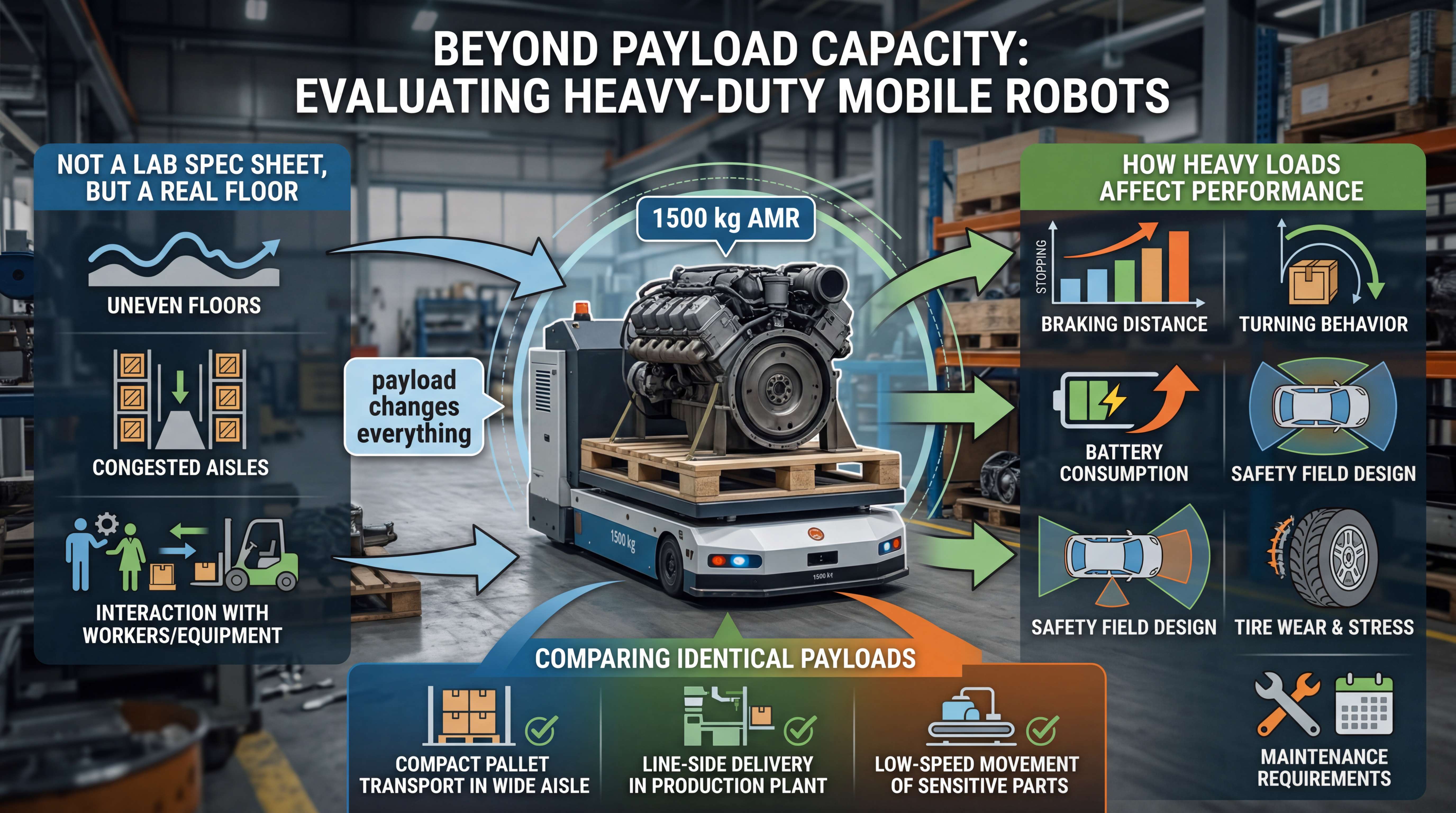
Heavy-payload AMR selection infographic showing factors beyond payload capacity
2026-05-15

Payload Capacity Is Only the Beginning How to Evaluate a Heavy-Payload Mobile Robot Chassis

A heavy-payload mobile robot should never be selected by payload rating alone. This guide explains how industrial buyers should evaluate load profile, stability, speed, braking distance, battery runtime, floor conditions, turning radius, safety margin and long-term operation before choosing a heavy-duty robot chassis.
Learn more
Heavy-duty AMR and autonomous forklift comparison for warehouse pallet transport
2026-05-15

Heavy-Duty AMR vs Heavy-Load AGV vs Autonomous Forklift: Which One Fits Your Material Flow?

Heavy-duty AMRs, heavy-load AGVs and autonomous forklifts can all move industrial materials, but they solve different problems. This guide explains how to choose the right automation platform based on routes, payloads, load interfaces, safety risks and system integration needs.
Learn more
Heavy-payload chassis carrying palletized industrial goods in a warehouse automation zone
2026-05-15

Heavy-Payload Chassis Is Not Just a Bigger AMR: What Industrial Buyers Should Know

A heavy-payload chassis is more than a stronger mobile robot base. It is an industrial motion platform designed for stable load handling, safer material flow, reliable navigation, system integration and long-term factory productivity.
Learn more
Factory team reviewing hidden delays, wait times, and replenishment performance while AMR mobile bases support internal material response
2026-04-27

The Real Value of an AMR/AGV Mobile Base Is Not Labor Replacement, but Faster Material Response on the Factory Floor

Many manufacturers invest in mobile automation expecting labor savings first. But the deeper value of an AMR/AGV Mobile Base often comes from material response time, line-side replenishment automation, and more stable internal flow. This article explains why factories that improve response speed, reduce waiting, and tighten point-of-use delivery usually gain more lasting value than factories focused only on headcount substitution.
Learn more
High-payload mobile base carrying a tall heavy structure with monitored operational stability in an industrial transport application
2026-04-27

A Heavy-Duty Mobile Base Is Not Just a Bigger Robot: What Really Determines Success in High-Payload Factory Transport

A heavy-duty AMR chassis or high-payload mobile base does not succeed simply because it can carry more weight on a specification sheet. Real success depends on dynamic load stability, load center control, floor bearing verification, braking behavior, structural rigidity, and the ability to move heavy loads repeatedly inside live industrial environments.
Learn more
Factory mobility platform deployed in a live production area as the first step in mobile-first automation
2026-04-27

Why More Factories Are Starting Automation With a Mobile Base Platform Instead of Waiting for a Perfect Full-System Transformation

Many factories no longer begin automation with a complete one-time redesign. Instead, they start with a factory mobility platform that can support staged deployment, flexible workflows, and future expansion. This article explains why a mobile-first automation strategy is becoming a more practical path for brownfield automation upgrade, reconfigurable factory flow, and scalable internal transformation.
Learn more
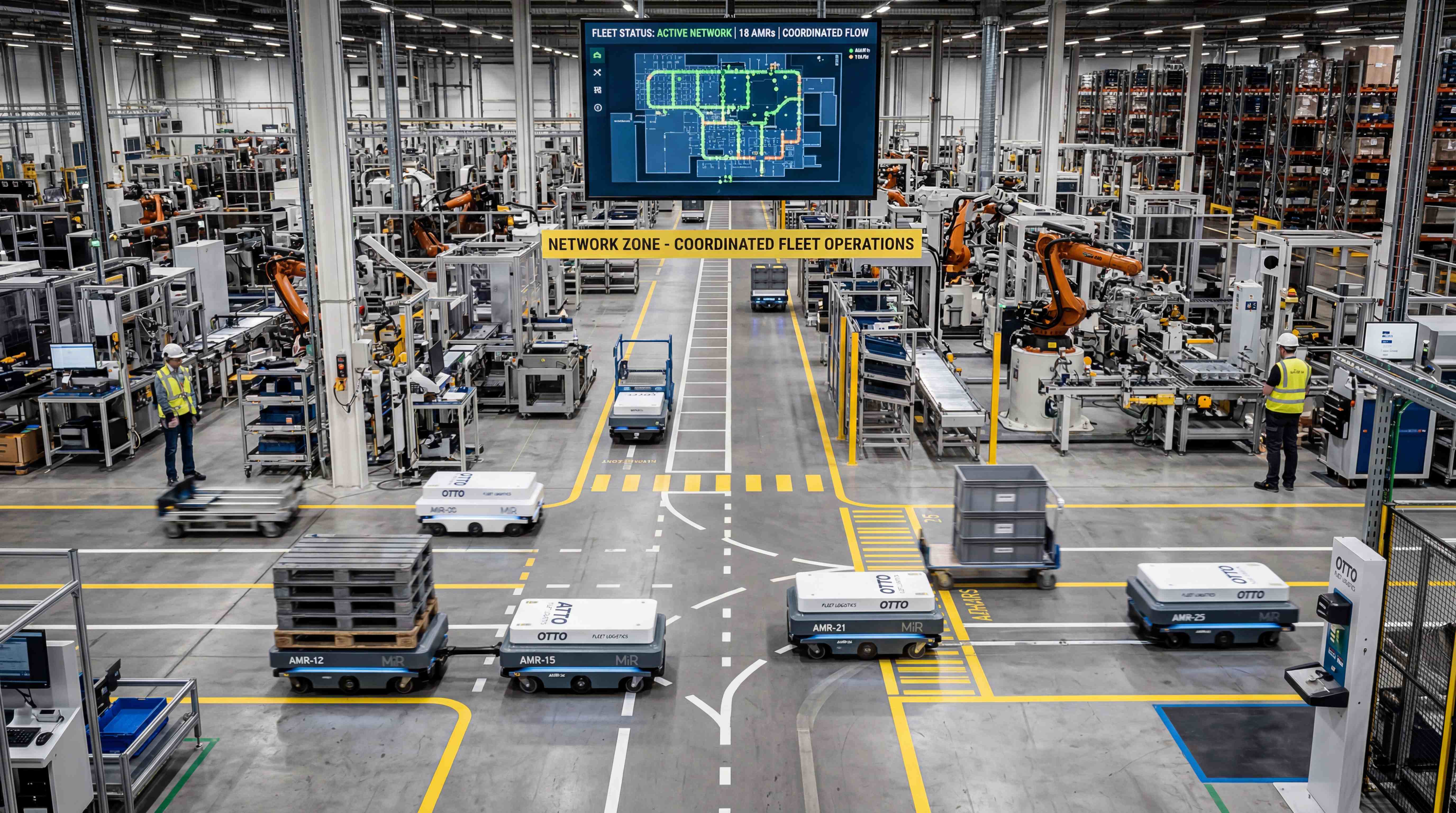
Coordinated multi-robot fleet operations managing route sharing, traffic flow, and production movement in a large smart factory
2026-04-27

Why the Hardest Part of Scaling an AMR/AGV Mobile Base System Is Not the Robot, but the Fleet Logic Behind It

A single AMR/AGV Mobile Base can look successful in a pilot, but large-scale value only appears when multiple vehicles share routes, charging resources, stations, and task priorities without creating congestion or confusion. This article explains why the real challenge in scaling mobile automation lies in fleet logic, dispatching, traffic control, recovery rules, and operational orchestration rather than in the robot hardware alone.
Learn more
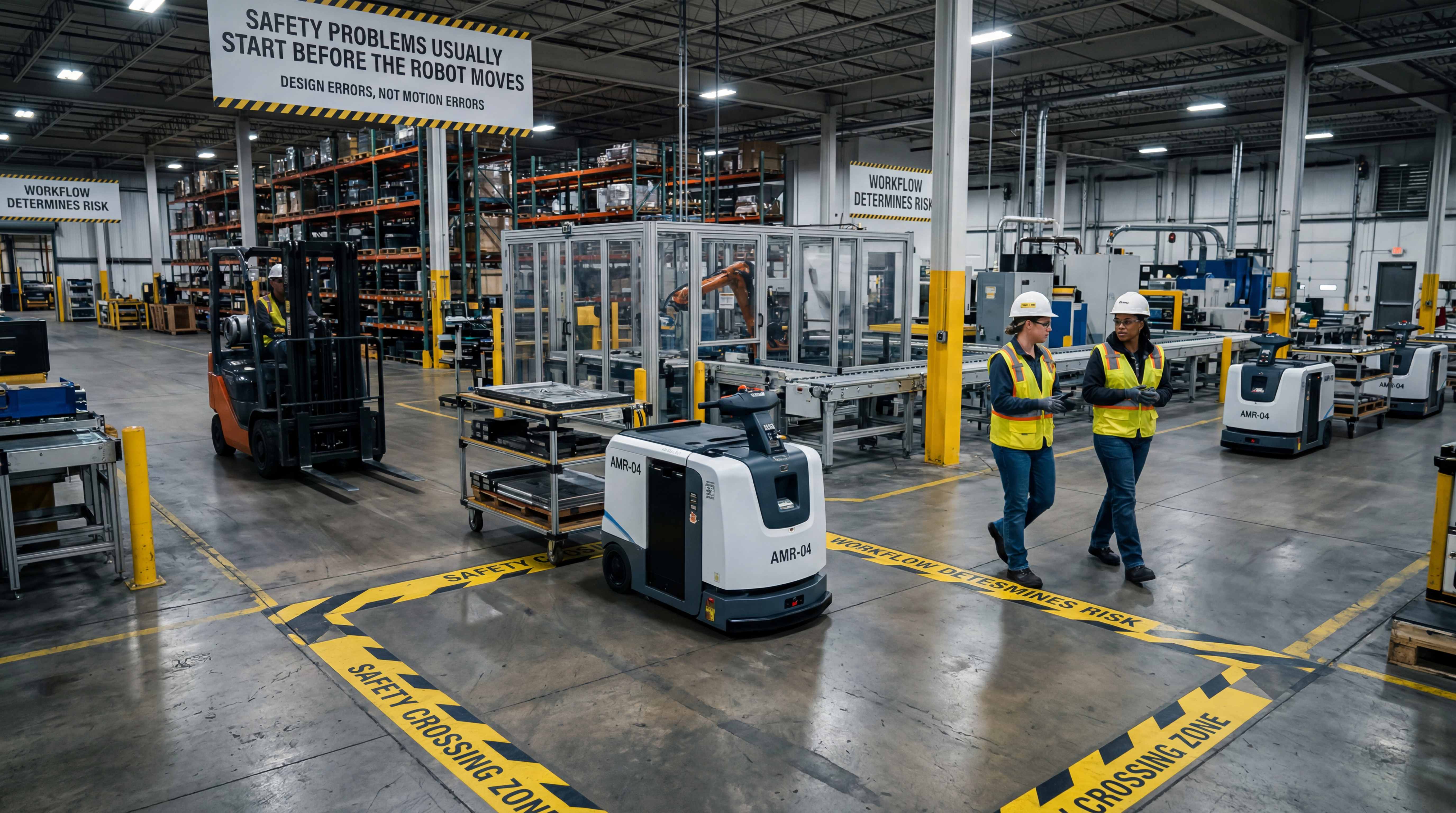
AMR safety crossing zone designed to manage human-robot and forklift interaction in a factory environment
2026-04-27

When an AMR/AGV Mobile Base Shares the Aisle With People, Safety Stops Being a Feature and Becomes a System

A mobile robot does not become safe simply because it can slow down or detect obstacles. In real factories, the safety of an AMR/AGV Mobile Base depends on route design, interaction rules, station behavior, traffic culture, speed logic, and system-level control. This article explains why effective safety in mixed industrial environments is built through operational architecture rather than sensor claims alone.
Learn more
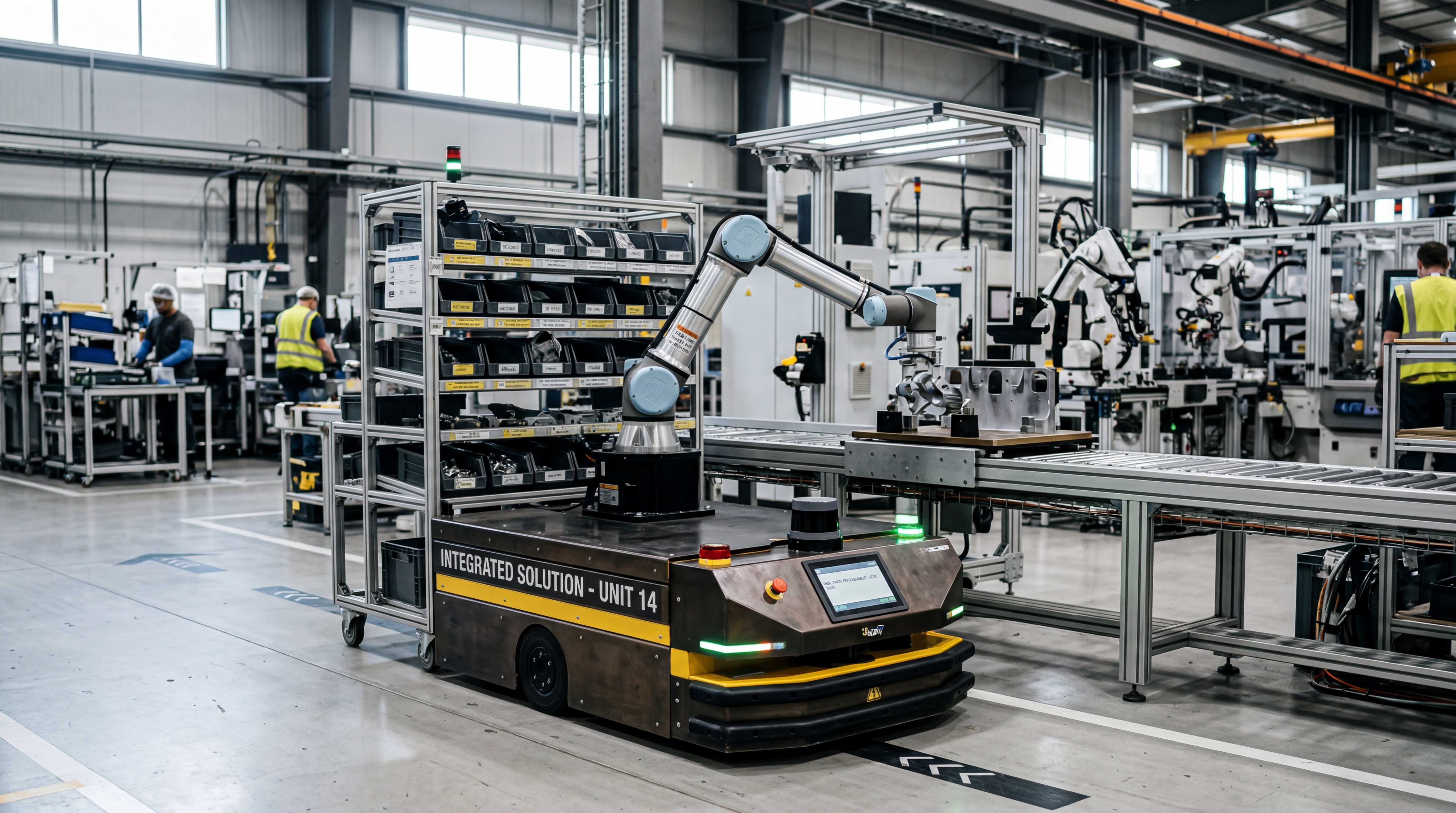
AMR mobile base integrated with a robotic arm, parts rack, and conveyor as a complete working unit in factory intralogistics
2026-04-27

An AMR/AGV Mobile Base Is Not the Final Product: Real Value Begins When It Becomes a Complete Working Unit

An AMR mobile base or AGV mobile base does not create business value simply by moving from point A to point B. Real value emerges when the base is combined with the right top module, transfer interface, docking logic, and workflow design to form a complete working unit inside factory intralogistics and material handling automation.
Learn more
AMR mobile base undergoing an operational feasibility test at a dock station in a real warehouse deployment environment
2026-04-27

Buying an AMRAGV Mobile Base Is Only the Beginning Delivery Feasibility Is What Decides Project Success

A mobile robot project does not succeed because the AMR mobile base or AGV mobile base looks capable in a demo. It succeeds because the full delivery path—site conditions, docking logic, integration, safety rules, traffic behavior, commissioning, and expansion readiness—has been defined realistically. This article explains why delivery feasibility is the real dividing line between a promising pilot and a dependable automation system.
Learn more
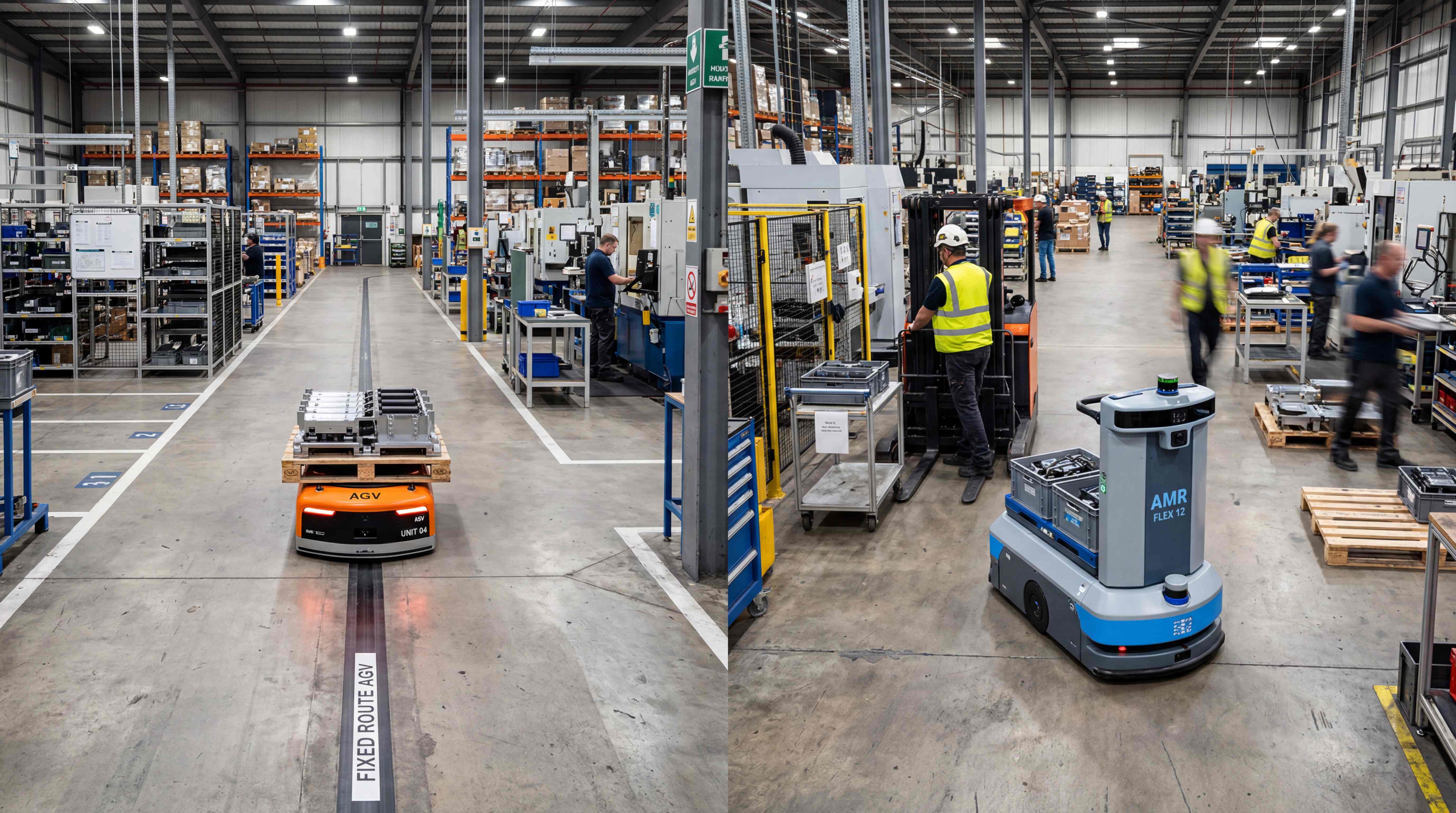
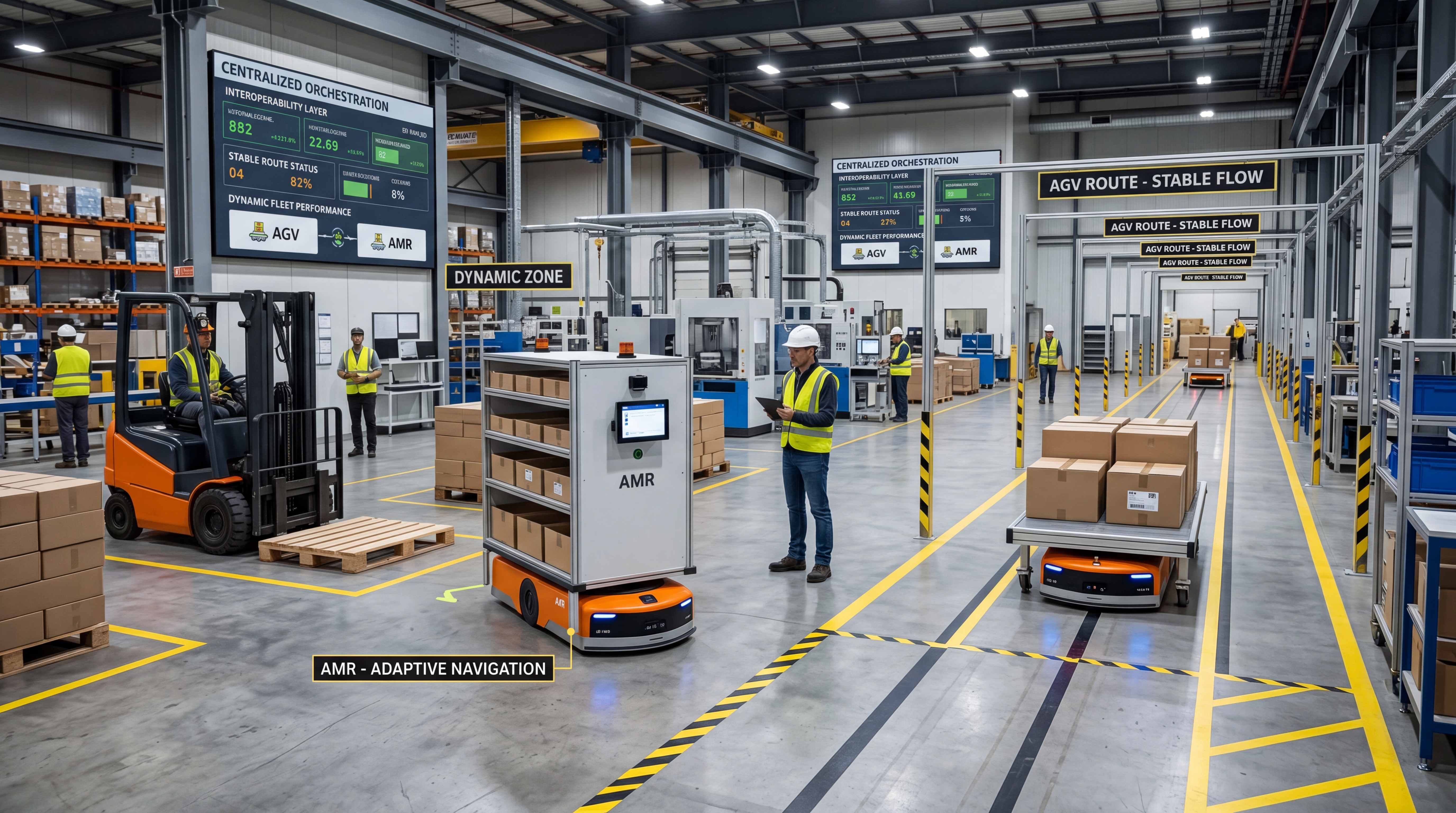
AGV fixed-route navigation and AMR flexible navigation compared side by side in the same factory environment
2026-04-27

There Is No Universally Best Navigation for an AMR/AGV Mobile Base—Only the Best Fit for the Site

Choosing navigation for an AMR mobile base or AGV mobile base is not about chasing the most advanced technology label. It is about matching route stability, traffic conditions, docking precision, environmental complexity, and future change. This article explains why the best mobile robot navigation strategy is always the one that fits the operating reality of the site.
Learn more
AGV and AMR mobile bases handling the same payload in different workflow conditions inside a factory
2026-04-24

How to Choose the Right AMR/AGV Mobile Base: Why Payload Alone Is Not a Real Selection Method

Choosing an AMR mobile base or AGV mobile base based only on payload is one of the most common mistakes in automation planning. This article explains how task profile, route variability, docking logic, floor conditions, safety, integration, and fleet scalability define the right mobile base far more accurately than a single load number.
Learn more
AMR and AGV mobile base systems operating together in a modern factory intralogistics environment
2026-04-24

AMR Mobile Base vs AGV Mobile Base: The Real Difference Is Not Navigation Alone

This article explains why the real difference between an AMR mobile base and an AGV mobile base goes far beyond navigation. From process design and infrastructure dependence to scalability, safety, system integration, and long-term factory intralogistics strategy, it offers a decision-level view for manufacturers, integrators, and automation buyers.
Learn more
  • 1
    Sitemap

    Industrial Components

    Kitchen Appliances

    Renewable Energy

    Building & Home Improvement

    Chemicals & Water Treatment

    Robotics & Automation

    Email:robertkileyman@gmail.com

    (508676)
    Email
    comment