
Can Robotic Case Picking Build Reliable Mixed-SKU Store Pallets?
Start With the Store Pallet, Not the Picking Robot
Robotic case picking can build mixed-SKU store pallets when the supplied system can handle the approved cases, assemble a suitable load and manage incomplete orders. A successful grip is only one part of reliable store pallet building. The purchasing requirement should describe what the store receives: the correct cases, in usable condition, on a transportable pallet, within the delivery window.
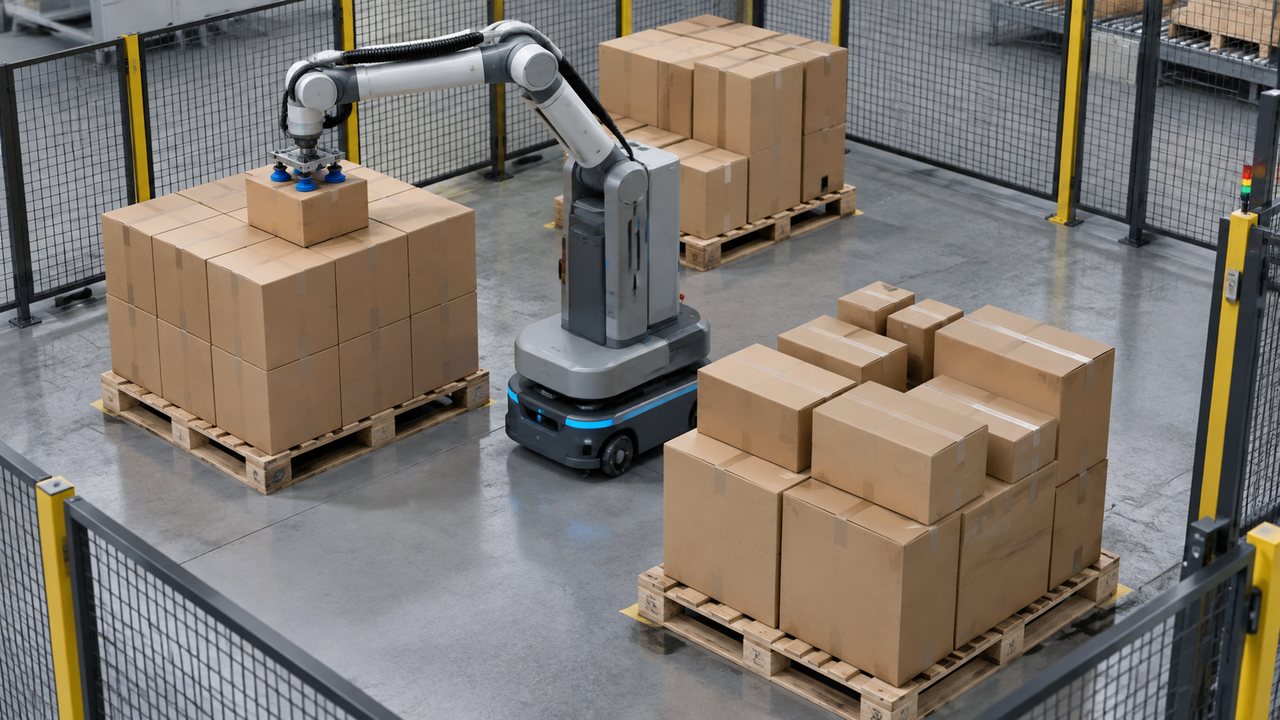
There is a timely reason to examine that requirement. In its October 21, 2026 announcement, KION reported delivering its Robotic Case Picker, RoCaP, to a ROSSMANN regional warehouse during October. The company said the customer ordered additional vehicles after the pilot. This is a supplier-reported deployment and follow-on order, not a published acceptance dataset for another warehouse. It supports taking the category seriously while leaving buyers responsible for verifying their own packaging, order profiles and operating conditions. The analysis below does not attribute its proposed workflow or numerical examples to that installation.
A store order might combine dense bottles, light paper products and small promotional cartons. Selecting the correct stock-keeping units does not establish that the combination can be stacked in the order presented. Neither does a stable pallet necessarily make replenishment convenient if workers must dismantle it to reach the first required department.
Define success with warehouse operations, packaging specialists, transport and store teams. Agree which constraints are mandatory and which preferences may be relaxed. Height, mass, supported packaging and delivery identity belong in the specification; store grouping and space utilization need explicit priorities when they compete.
Qualify Cases Before They Reach the Gripper
For carton handling, the useful input list describes real cases, including variation beyond nominal box sizes. Record dimensions and mass, but also packaging construction, closure, permitted orientation and the condition in which cartons arrive. The same product may use different packaging between suppliers, seasons or promotional campaigns.
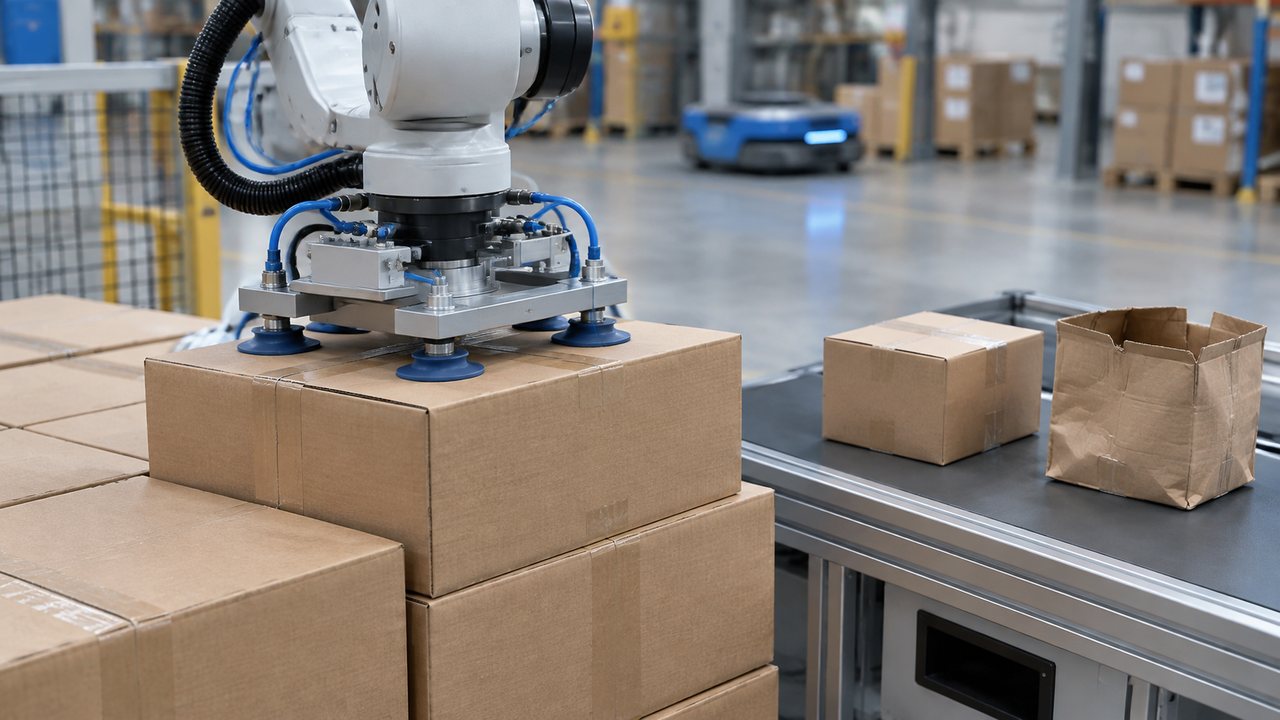
Schmalz's packaging application guidance identifies sealing and wear as relevant issues when vacuum cups handle porous, abrasive cardboard. That is a reason to evaluate the actual packaging and gripping arrangement. It is not evidence that every carton needs vacuum handling or that one gripper configuration covers an entire assortment.
Separate Recognition From a Qualified Grip
A camera may locate a case without establishing a usable contact surface. A handling trial should show whether the installed end effector can engage, retain, move and release that case without unacceptable damage. Ask which observations authorize the lift and which conditions cause rejection or another attempt.
Include cartons with normal production variation rather than presenting only pristine samples. Define permitted variation with the supplier: a visible crease, a repaired closure and exposed contents are different conditions. Unknown or unacceptable packaging needs a controlled destination, not repeated attempts until something moves.
| Case feature | Evidence to collect | Decision it supports |
|---|---|---|
| Dimensions, mass and orientation | Measurements from representative production samples and approved variants. | Whether the case fits the handling and stacking scope. |
| Accessible gripping surfaces | Closure layout, seams, openings and the proposed contact locations. | Which approach and end-effector configuration require testing. |
| Packaging condition | Defined acceptable variation, damage examples and rejection criteria. | When receiving should divert or assess the case. |
| Stacking restrictions | Packaging-supplier guidance and application tests for the proposed support and loading. | Where the case may appear within a mixed pallet. |
| Identity and revision | SKU, packaging version, supplier and effective date. | Which approved handling record applies to the incoming case. |
| Change ownership | Named approver and review triggers for packaging alterations. | Whether a new package requires additional qualification. |
Maintain separate outcomes for eligible, ineligible and not yet assessed cases. An assortment coverage figure should identify its denominator: SKU count, case volume or order lines. Handling most fast-moving cases can be useful even if the robot cannot handle most catalog entries, but the remaining work still needs capacity.
Build the Pallet in a Sequence the Load Can Survive
Mixed-case palletizing connects the order to a physical arrangement. The planner must respect the pallet, packaging and handling limits while deciding what comes next. Pallet load stability depends on the resulting support and packaging limits. A rule such as placing heavy products low may be a useful starting preference; it does not establish support, compression resistance or stability for every combination.
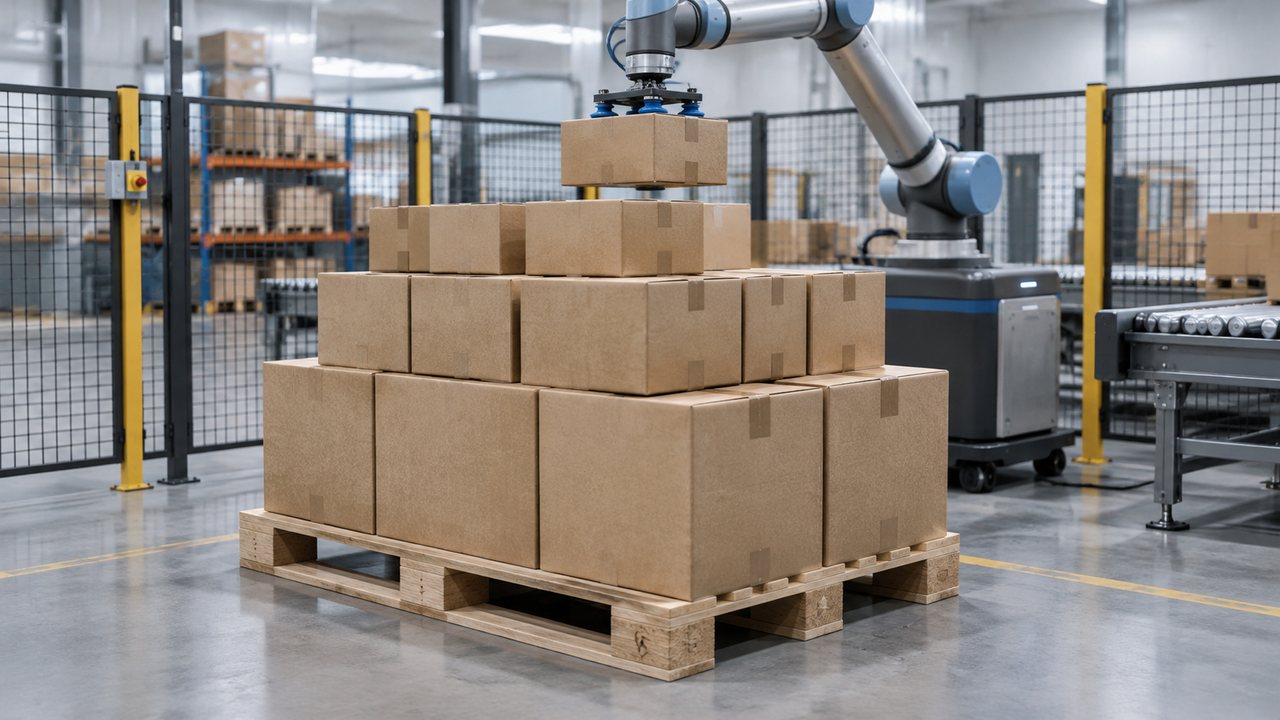
Dematic's mixed-case fulfillment description describes software managing workflows and pallet patterns to build stable, aisle-ready pallets. That example shows why the discussion needs to cover the complete pallet-building process. It does not mean every mobile case picker uses the same storage equipment, wrapping process or pallet-building method.
Ask What Supports the Next Case
Review the support available beneath each placement, the permitted orientation and the load imposed on the packaging below it. A geometrically convenient position may bridge a gap or concentrate load on an unsuitable panel. Packaging specialists should establish the applicable limits and testing; the purchasing team should require those limits to be represented in the approved plan.
Then challenge competing preferences. Suppose a store wants one department together, but completing that group would place a dense carton above a package with a lower stacking allowance. The system needs a defined response: change the arrangement, split the order across pallets or request an approved exception. It should not silently treat a replenishment preference as more important than a physical limit.
Test the pallet during construction as well as after completion. A partially built arrangement may require different handling restrictions from the finished, secured load. Define when the pallet may move, what temporary stabilization is required and who confirms readiness before transport.
Stretch wrapping is another qualified process. Lantech's containment-force guidance explains that measured results can vary between loads and locations on a load. For this purchase, request a packaging plan and verification method for the intended combinations. Do not use a generic film setting as proof that every mixed pallet will survive its distribution route.
Make Inventory and Transport Support the Picking Sequence
A pallet plan creates demand for particular cases at particular times. Confirm how inventory becomes available to satisfy it. A mobile picker visiting stock locations faces a different supply arrangement from a fixed robot receiving sequenced cases. A quotation should identify which activities the proposed equipment performs and which remain with existing warehouse systems.
Follow one order through replenishment, case identification, picking, placement and pallet release. Who notices that the next required SKU is unavailable? Can another eligible case be placed without invalidating the build? Where does the order wait if it cannot continue? These decisions affect buffer space and service reliability.
Where AMRs move source or destination pallets, reserve space for arrival, exchange and departure. A robot capable of producing picks continuously may still wait for an empty pallet or a cleared outbound position. Record who authorizes each handoff and confirms the load's physical location; the site's material-handoff validation guide explains that interface evidence.
Keep case, pallet and order identities connected. A pallet identifier alone does not establish that every expected case is present. Record accepted placements and approved removals, including manual corrections, so the shipping record reflects what is physically dispatched.
Treat Partial Pallets and Exceptions as Normal Work
Partial pallet handling deserves a designed workflow. A pallet may be incomplete because the order is small, a case is unavailable, packaging was rejected or the shipping cutoff arrives before completion. Those situations require different decisions even when the physical result looks similar.
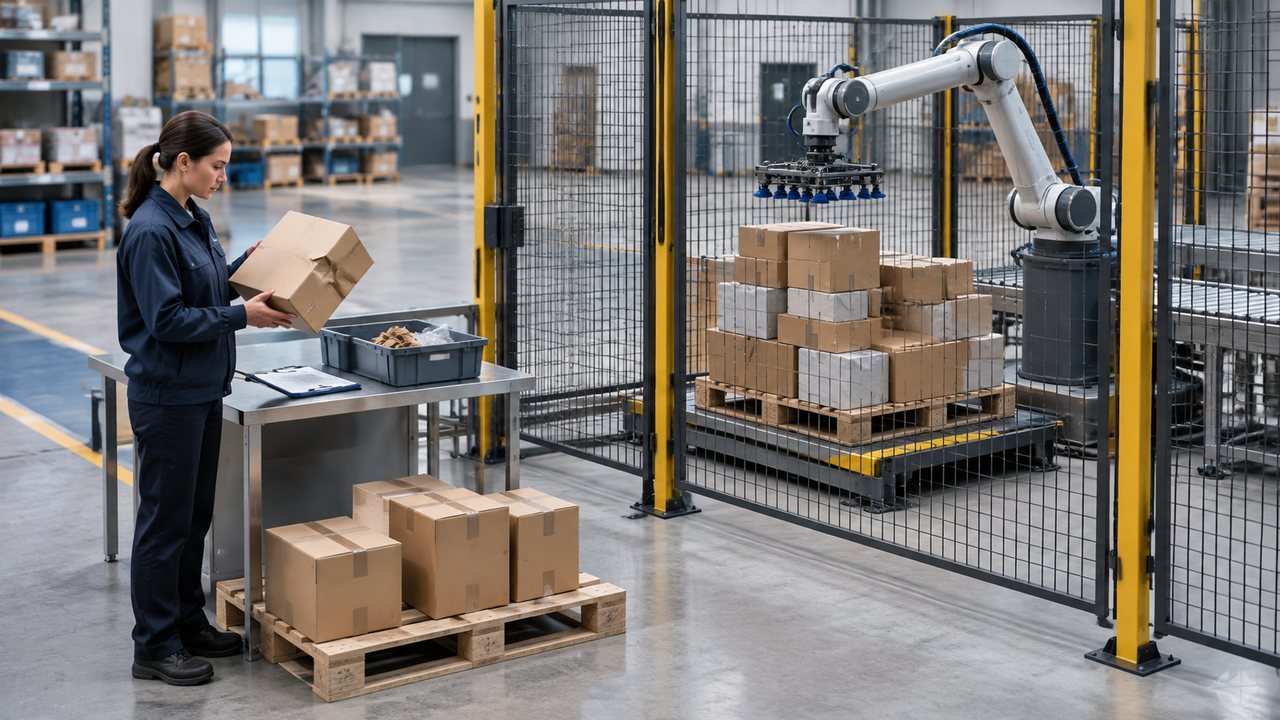
Specify whether the system may finish a short order, hold an incomplete order, transfer it for manual completion or rebuild it. Record the approved contents and missing work at every transfer. A partially built pallet returned later must be identified and checked against its actual condition before the previous plan resumes.
Do not assume that stored placement coordinates remain correct after manual handling. Someone may remove a damaged carton, replace it with another packaging version or move the pallet. Define the observations and authorization needed to continue, without prescribing one sensing method for every supplier.
Managing warehouse picking exceptions requires a properly equipped review area. It needs accessible handling space, suitable equipment, staff availability and a clear disposition process. Workers should address cases through the approved access and isolation arrangements, rather than enter an active robot workspace to preserve a throughput figure.
Keep planned manual work separate from equipment faults. Some packages may always follow a manual route. Others may be normally eligible but require intervention because of damage or missing information. Counting both as one exception rate hides whether the design needs more coverage, better incoming quality or maintenance.
Request the time and skills needed for each exception class. A supervisor answering an alert, a worker retrieving a carton and a technician repairing a gripper are different resources. Manual capacity should be available when orders need it, not merely somewhere within the weekly staffing total.
Worked Example: Enough Picks, Too Few Released Pallets
Consider an original hypothetical planning example: a four-hour wave contains 600 cases assigned to 16 store pallets. The pallet contents vary. Assume 564 cases are eligible for the automatic process and 36 follow a planned manual-completion route. These values are invented to explain the capacity test, not reported deployment results or supplier specifications.
Assume the cell completes three eligible cases per available processing minute, already allowing for ordinary retries within that processing time. Separately, pallet exchanges and planned cell interruptions occupy 24 minutes. Do not subtract those interruptions again from the case rate. Manual-completion work takes an assumed 1.5 person-minutes per excluded case and can occur alongside the automatic work at an approved separate station.
| Planning item | Calculation | Result |
|---|---|---|
| Available wave duration | 4 hours × 60 | 240 minutes |
| Automatic case-processing time | 564 cases ÷ 3 cases/minute | 188 cell-minutes |
| Cell time including separate interruptions | 188 + 24 | 212 minutes |
| Remaining cell-time allowance | 240 − 212 | 28 minutes |
| Manual-completion workload | 36 cases × 1.5 person-minutes | 54 person-minutes |
| Staff time actually allocated within the wave | Assumed available coverage | 30 person-minutes |
| Uncovered manual workload | 54 − 30 | 24 person-minutes |
The automatic cell fits the aggregate time budget, but the complete wave does not have enough manual coverage. At the assumed handling rate, 30 person-minutes complete 20 excluded cases, leaving 16 outstanding. Which store pallets remain blocked depends on the allocation of those cases. A high automatic completion count cannot answer that question.
Because the two activities overlap, adding 54 manual minutes to 212 cell minutes would also be misleading. The constraints belong to different resources. Test their timing together, including when partial pallets reach the manual station and how much work can be completed before dispatch.
Options include adding qualified coverage, changing the assortment assigned to this process, improving a specific packaging family or moving a permitted cutoff. Compare those options before purchasing another picking robot. This is a capacity illustration, not an ROI calculation; actual staffing, costs and service effects need site evidence.
Accept the Complete Order, Not a Successful Pick
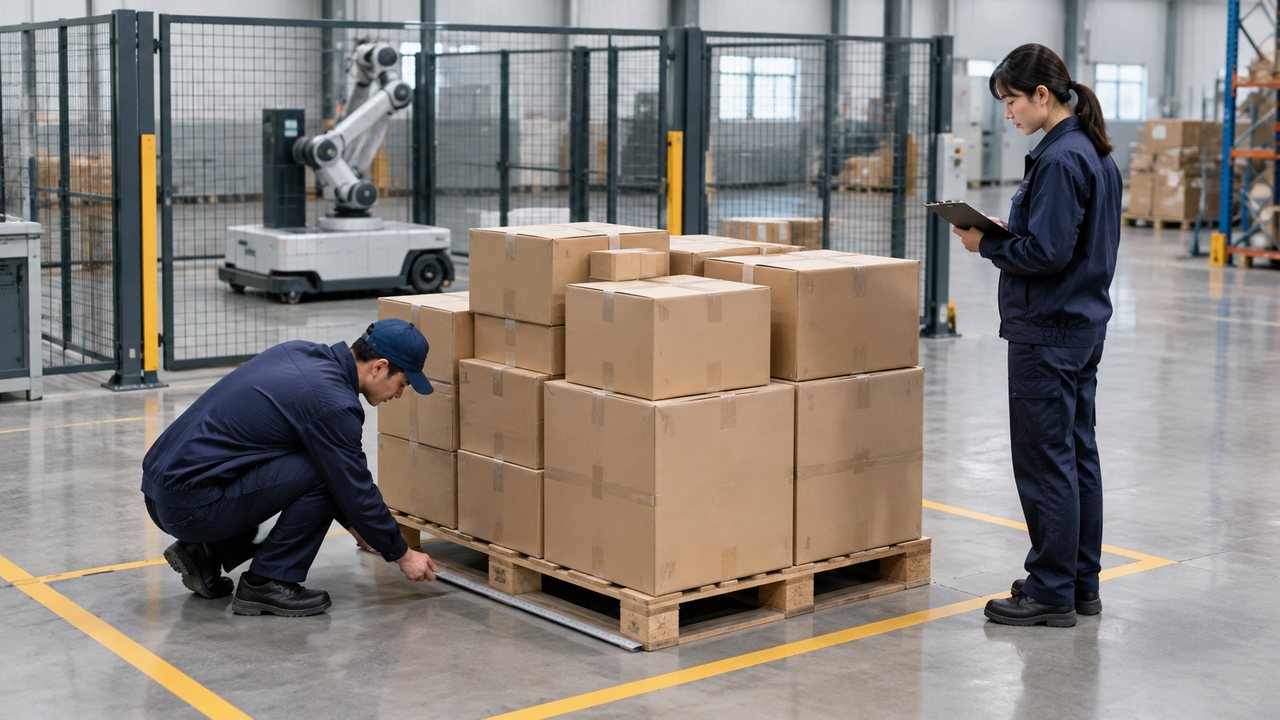
A useful robotic picking acceptance test follows cases through to released store pallets. Agree the representative assortment, packaging variations, order profiles and operating windows before testing. Include difficult approved combinations and normal partial orders; do not let a convenient demonstration assortment become the unstated production boundary.
Keep the Measures Distinct
Report first-attempt pick success separately from eventual completion after retries. Record cases correctly placed, cases damaged, wrong-case events, manual touches and pallets released by their deadline. State the denominator for every rate and retain rejected inputs. Removing difficult cases from the test without reporting them can make equipment performance look better while concealing the work left to the warehouse.
Damage inspection needs an agreed scope. Visible carton deformation, closure damage and product condition are not identical measures. Define what can be checked during production and what requires sampled examination by the responsible quality team. Compare incoming and outgoing condition so pre-existing damage is distinguishable from damage introduced during handling.
Inspect the finished load after representative transfers and an agreed distribution evaluation appropriate to its intended journey. Include the receiving team's ability to unload and replenish from it. A pallet that remains upright beside the robot has not demonstrated performance through every downstream handling step.
Exercise interrupted work: an unavailable SKU, rejected carton, occupied output position, manual removal and an incomplete pallet returning to the process. Verify identity, remaining quantity, physical condition and authorization before continuation. Require the proposed suppliers to show who resolves a disagreement between the order record and the load.
Retain results by case family and order type, not just an overall average. The site's AMR acceptance-testing guide provides the wider commissioning context. Here the additional release condition is a correct, usable mixed pallet with a defined route for everything that automation cannot complete.
Buy Coverage That Can Be Maintained as Packaging Changes
When comparing robotic case picking solutions in warehousing, request an agreed eligible assortment, excluded work, demonstrated order profiles and responsibility for maintaining those definitions. Ask who approves a new carton supplier, changed package dimensions or promotional bundle, and what evidence is needed before that change enters automatic production.
Price the surrounding service: case presentation, replenishment, empty pallets, exception stations, packaging verification, software changes, operator training and support. Specify whether assortment expansion is included or requires engineering and additional testing. A low robot price can leave substantial work outside the contract.
Phase the purchase around a useful, bounded order population. The first release should prove that its cases arrive intact and its orders leave on time with the declared manual effort. Expand when new evidence supports broader coverage, rather than treating one successful pallet pattern as approval for the next assortment.
Focused FAQ
What is robotic case picking?
It is the automated selection and handling of whole cases for an order. It differs from picking individual items from inside a case. The supplied scope may include travel, identification, gripping and pallet building, or only some of those steps. Define the complete workflow before comparing equipment.
Can a robot pick damaged cartons?
Some supplied systems may support specified damage conditions, but there is no universal allowance. Define acceptable defects, inspection responsibilities and rejection rules for the actual packaging. A successful lift does not prove that the carton remains suitable for stacking or that its contents are undamaged.
Does mixed-SKU palletizing always put heavy cases at the bottom?
Weight is one input. The permitted arrangement also depends on support, packaging strength, orientation, stability and store requirements. Ask how the planner resolves conflicting constraints and what it does when an order cannot form an approved pallet. Do not substitute one sorting rule for application testing.
What happens when only part of a store pallet is complete?
The operating plan should define whether it waits, moves to manual completion, ships under an approved shortage decision or is rebuilt. Preserve its identity and actual contents. If someone changes the load, verify the resulting condition before resuming the earlier placement plan.
Which throughput figure should procurement request?
Request correctly completed cases and usable pallets released within the agreed service window, alongside retries, damage, exclusions and manual effort. Peak picks per minute can describe one machine activity. It does not include every dependency that determines whether a store order is ready to leave.
Can case-picking automation eliminate all manual work?
Only the agreed and demonstrated scope can support a labor claim. Replenishment, excluded packaging, inspection, partial orders, maintenance and recovery may remain. Measure the required work by task and time window, then ensure the planned staffing can support the promised dispatch service.
Evidence note: sources checked October 27, 2026. The KION announcement supplies current deployment context; the Schmalz, Dematic and Lantech pages describe their respective technologies and guidance. The procurement framework, scenarios and calculations here are original analysis, not measured customer results or specifications for RoCaP.


