What Is a Pressurized Solar Water Heater and Who Actually Needs One?
Not Every Solar Water Heater Is Built for Modern Water Pressure

In many homes, the real problem is not whether hot water can be produced by solar energy. The real problem is whether that hot water can be delivered with stable pressure to the shower, the kitchen, and multiple outlets at the same time. That is exactly where a pressurized solar water heater becomes important. A standard solar water heating system may generate hot water efficiently, but if the system is not designed for pressurized operation, the user experience can still feel outdated, weak, or inconsistent. Solar water heaters are widely used for domestic hot water and can work across different climates, but system selection has to match the plumbing conditions of the building rather than the solar resource alone.
For many buyers, the phrase high pressure solar water heater sounds like a marketing upgrade. In reality, it is a system compatibility issue. Once a building uses pressurized municipal supply, a booster pump, or several bathrooms drawing water at the same time, the hot water system is no longer just a heating device. It becomes part of the building’s pressure-bearing plumbing network. That is why pressure-rated systems are repeatedly positioned for high-rise homes, pump-assisted installations, and multi-bathroom use.
A Pressurized Solar Water Heater Is a Plumbing Match, Not Just a Solar Product
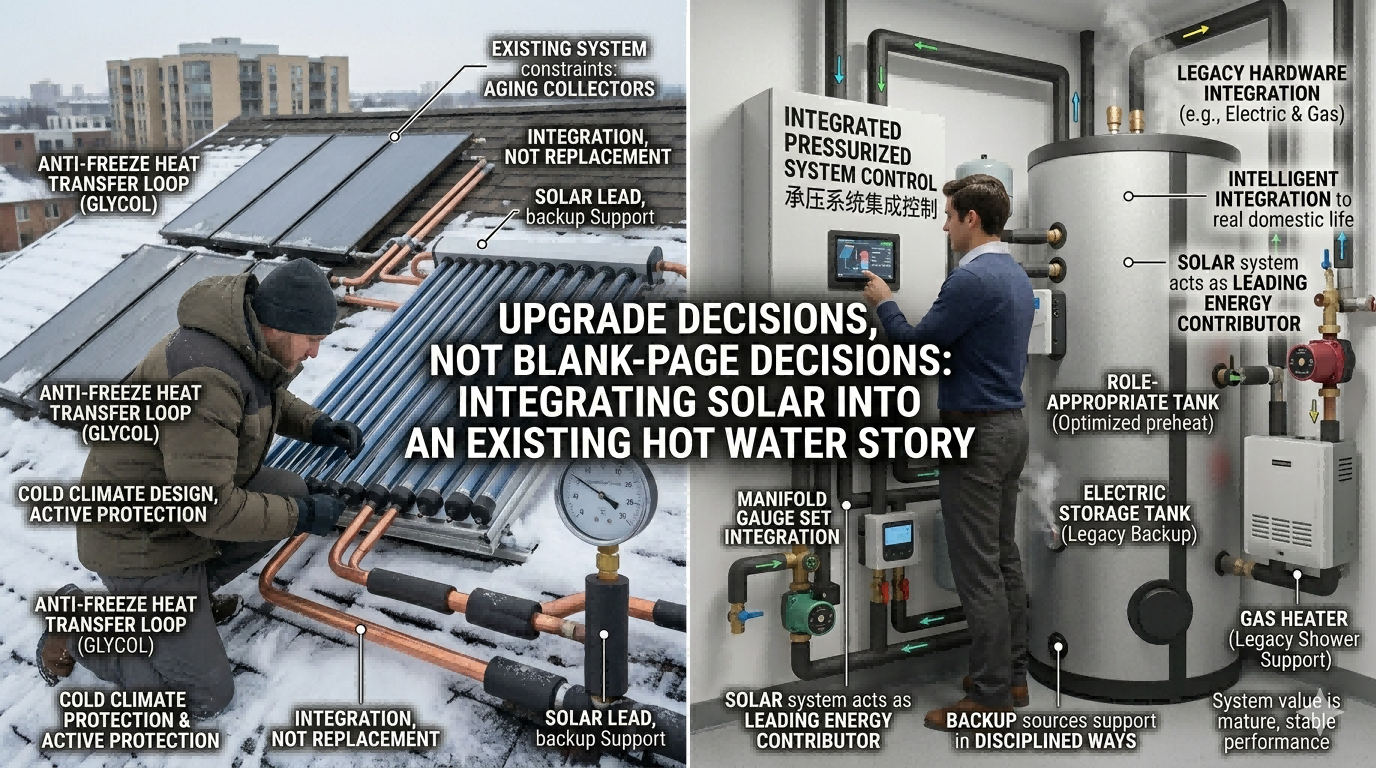
A pressurized solar water heater is a solar hot water system engineered to operate under positive water pressure. In practical terms, this means the tank, internal pathways, safety components, and outlet design are intended to work with pressured water supply conditions rather than relying only on gravity-fed flow. Some pressure-rated systems in the market explicitly state pressure tolerances in the 5 to 8 bar range, which shows that pressure capability is treated as a core engineering parameter rather than a side feature.
This distinction matters because hot water comfort is not defined only by temperature. It is also defined by delivery performance. A home may have adequate solar gain and enough stored hot water, yet still disappoint the user if the shower pressure drops whenever another tap opens. That is why a pressure solar water heater system is usually chosen not by people who simply want “solar,” but by people who want solar hot water to behave like a modern, reliable household utility.
The First Sign You Need a Pressurized System: Your Building Is Taller Than Your Roof Setup Wants It to Be

The most obvious use case is the solar water heater for high-rise building application. In taller homes or multi-storey residences, water delivery is more demanding because the system must serve outlets located at different elevations and often under more complex distribution conditions. In those environments, pressure capability stops being optional. It becomes part of basic functionality. This is exactly why pressure-rated units are commonly marketed for high-rise buildings rather than only for ground-level houses.
A common mistake in the market is assuming that “solar water heater” is a category, when in fact it should be understood as a family of system architectures. A non-pressurized setup may still work well in simpler conditions, especially where gravity-fed delivery is acceptable. But in vertical residential layouts, a pressurized system usually aligns better with real-life expectations: stable shower performance, smoother outlet response, and less compromise in daily use.
The Second Sign: Your Home Uses a Booster Pump
The second major signal is the presence of a booster pump. Once a house relies on boosted water supply, the hot water system is exposed to a more demanding hydraulic environment. A conventional low-pressure solution may become the weak link. This is why product guidance for pressure-capable water heaters repeatedly highlights booster pump compatibility. In practical terms, the system must not only heat water efficiently; it must also withstand the pressure conditions created by the broader plumbing setup.
From an industry perspective, this is where many procurement decisions go wrong. Buyers compare collector efficiency, tank capacity, or price per liter, but forget to ask whether the system architecture matches the building’s pressure profile. A mismatch here does not always fail on day one. Sometimes it shows up later as unstable outlet performance, safety valve discharge, leakage anxiety, or shortened service life. DOE maintenance guidance also underscores that solar water heating systems require ongoing attention to issues such as scaling, corrosion, and freezing, which reinforces the idea that system durability depends on proper matching, not just initial heating performance.
The Third Sign: More Than One Bathroom Matters More Than Bigger Tank Capacity
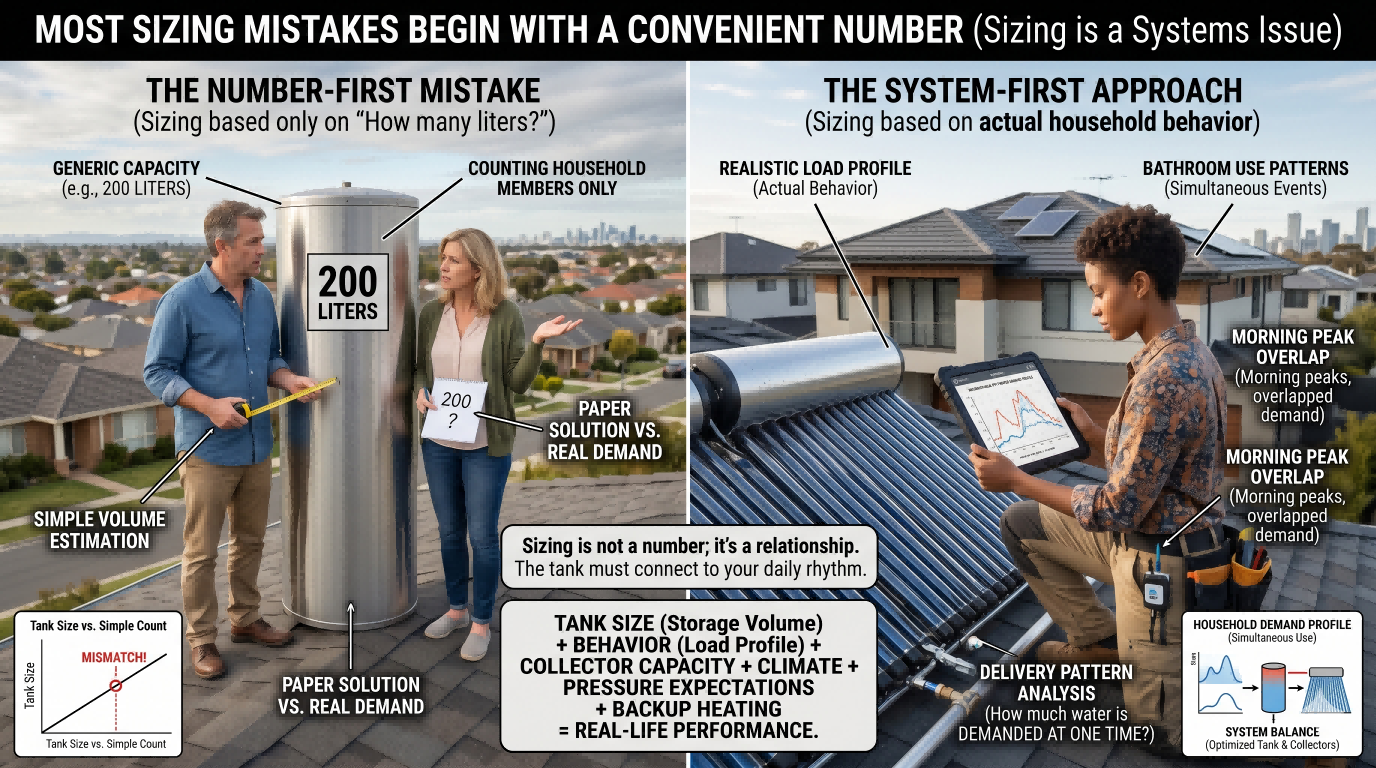
A surprising number of buyers focus first on capacity: 150 liters, 200 liters, 300 liters. Capacity matters, but in many modern homes, simultaneous demand matters more. A solar water heater for multiple bathrooms must do more than store enough hot water. It must also deliver that hot water in a way that feels consistent when several outlets operate close together. That is why pressure-rated systems are commonly promoted for homes with multiple bathrooms, not merely larger families.
This is a crucial distinction for content strategy as well. When talking about Pressure systems, the conversation should not revolve only around “how many liters do I need?” A more advanced article should ask, “How many hot water events can happen at the same time, and what pressure experience does the user expect?” That is a much more professional way to frame the category.
What Buyers Usually Get Wrong About Pressurized Solar Water Heaters
The first misunderstanding is thinking that pressure-rated means faster solar heating. It does not. Solar collection efficiency depends on collector design, solar conditions, system layout, heat transfer, and storage logic. Pressure rating is about compatibility with the water delivery environment, not magical thermal gain.
The second misunderstanding is assuming a pressurized system is only for luxury homes. That is too narrow. In reality, any home with modern plumbing expectations, municipal pressure supply, a pump-assisted system, or multiple simultaneous points of use may be a better candidate for a pressurized solar hot water system. That is why manufacturers present pressurized and non-pressurized options according to water supply conditions rather than purely by price tier.
The third misunderstanding is focusing only on the collector. In solar thermal, people often get attracted by evacuated tubes, flat plate appearance, or roof aesthetics. Those choices matter, but the system should first be judged by application fit. A well-matched pressurized system can outperform a poorly matched “higher efficiency” system in actual user satisfaction because delivery stability is part of performance.
Pressurized Does Not Mean “Best” for Everyone
A strong blog in this category should not pretend that pressurized systems are universally superior. That would sound commercial, not credible. The more accurate industry view is that pressurized solar water heaters are better where pressure-bearing delivery is necessary, while non-pressurized systems may still be adequate in simpler use cases, especially where gravity-fed setups are acceptable and plumbing expectations are less demanding. Even manufacturers that offer pressure-rated products often present different configurations based on whether the incoming water supply is steady and pressurized.
This is important because real authority comes from correct system recommendation, not from always pushing the higher-spec option. The strongest renewable energy brands do not just sell “more advanced” equipment. They help buyers avoid category mistakes.
How to Judge Whether a Pressurized Solar Water Heater Is Right for Your Project

A practical decision process starts with five questions.
What kind of water supply does the building use?
If the house depends on consistent municipal pressure or uses a booster pump, a pressurized solar water heater should be evaluated first rather than last. Pressure-bearing compatibility is already part of the installation environment.
How many outlets may use hot water at the same time?
If the answer is “more than one, regularly,” then outlet performance becomes a system-level issue, not just a storage issue. That makes a pressure-capable design much more relevant.
Is the project a high-rise or multi-storey residence?
Vertical distribution adds practical pressure demands. In those cases, the question is not whether solar can heat water, but whether the system can deliver that water properly to real use points.
Is the buyer replacing an older system or designing for a modern bathroom experience?
A modern shower expectation usually implies stable flow and less tolerance for weak or fluctuating delivery. Content written for international buyers should acknowledge that comfort is part of system value.
Is the purchase decision being made on tank size alone?
If so, the buyer is probably under-evaluating the system. Tank size is important, but pressure compatibility, outlet behavior, safety components, and building conditions should be assessed before capacity becomes the headline decision.
In This Category, Pressure Is Really About Confidence
The reason the Pressure subcategory deserves its own content strategy is simple: it speaks to a different type of buyer mindset. This buyer is not asking, “Can solar heat water?” That question has already been answered. Solar water heating is an established way to provide domestic hot water and can be deployed broadly when the system is designed appropriately. The real question now is, “Can solar hot water work reliably in my actual building conditions?”
That shift changes the entire tone of the content. The blog should move away from general solar enthusiasm and toward system suitability, pressure compatibility, plumbing integration, and user experience. In other words, Pressure is not a cosmetic product label. It is a category built around confidence in delivery.
Final Thought
A high pressure solar water heater is not simply a more expensive version of a solar water heater. It is the correct response to a specific set of building realities: high-rise layouts, pressure pump systems, and homes where hot water must be delivered smoothly across multiple outlets. When the plumbing environment is modern and demanding, the hot water solution must be modern and compatible as well. That is where a pressurized solar water heater proves its real value—not in theory, but in the daily experience of using hot water without compromise. Product literature in this category consistently ties pressure-rated models to high-rise use, pressure-pump compatibility, multiple bathrooms, and defined operating pressure capacity, which is exactly why this topic has enough depth to stand alone as a full content line.
#HighPressureSolarWaterHeater
#SolarHotWaterSystem
#SolarWaterHeaterGuide
#SolarThermal
#DomesticHotWater
#HighRiseBuildingSolutions
#BoosterPumpCompatible
#MultiBathroomHotWater
#RenewableEnergy
#SolarWaterHeating
#PressureVsNonPressure