上传


Member Center
Exit
Data is empty
0
qr Code Url

Scan the QR code to visit the mobile website

  • Home
  • Industrial
  • Renewable
  • Building & Home
  • Water Treatment
  • Automation
  • Kitchen
Home -News -
Industrial Components
-
Trailer coupler and tongue jack beside a truck, with release checks and warnings against forcing the connection.
2026-10-23

Trailer Coupler Won't Release? Why Your Tongue Jack Is Lifting the Truck

Understand why a trailer coupler can stay on the hitch ball while the tongue jack raises the truck. Separate latch problems, connection loading and weight distribution procedures, then use manufacturer examples and a service record to guide dealer, fleet and OEM decisions.
Learn more
Trailer tongue jack on gravel with examples of jack feet, support pads and raised blocks.
2026-10-22

What Should You Put Under a Trailer Tongue Jack? Blocks, Height and Stacking

Choose what goes under a trailer tongue jack by checking usable height, foot compatibility and permitted stacking. Compare manufacturer ratings, work through a height example, and build a complete accessory specification for trailer dealers, rental fleets and OEM buyers.
Learn more
Utility trailer with a jockey wheel outside a workshop, alongside gravel, slope and wheel attachment examples.
2026-10-19

Can You Move a Loaded Trailer on Gravel with a Jack Wheel?

A larger jack wheel may help with uneven ground, but it cannot establish permission to move a loaded trailer. Compare moving-load limits, wheel upgrades, gravel conditions and trailer dollies through a practical yard scenario, with manufacturer evidence and guidance for dealers, rental fleets and OEM buyers.
Learn more
Technician checking a digital trailer jack scale while a colleague records the reading beside an enclosed cargo trailer.
2026-10-16

Can You Measure Tongue Weight at the Trailer Jack Why Scale Readings Differ

Can a reading taken at the jack stand in for tongue weight at the coupler? This guide explains scale types, measurement height, weight-distribution effects and model-specific correction methods. Includes a worked comparison and a measurement record for trailer dealers, fleets and OEM buyers.
Learn more
Pickup truck hitched to an enclosed cargo trailer with an electric tongue jack, above power-source planning icons.
2026-10-14

Can an Electric Trailer Jack Run from a 7-Pin Plug Without a Trailer Battery?

Compare factory 7-way jacks, approved auxiliary cords and battery-powered installations. Learn why a matching plug may not deliver usable power, how vehicle output limits affect selection, and what dealers, rental fleets and trailer buyers should confirm before ordering.
Learn more
Lowered pickup tailgate contacting a trailer jack housing, with a checklist of vehicle, hitch and jack fitment factors.
2026-10-13

Trailer Jack Hits Your Tailgate? Measure Clearance Before You Buy

A practical guide for trailer owners, dealers and fleets facing tailgate interference. Learn what to measure, when jack rotation is allowed, how low-profile designs differ, and why longer ball mounts and hitch extenders need separate checks. Includes a worked clearance comparison and supplier inquiry checklist.
Learn more
Cordless drill connected to a trailer tongue jack beside the coupler and safety chains.
2026-10-12

Can You Use a Drill on a Trailer Jack Compatibility, Adapters and Load Limits

Find out whether your trailer jack supports drill operation. Compare factory drive interfaces and approved retrofit kits, separate drill lifting limits from static ratings, and use a compatibility worksheet before buying. Includes documented manufacturer examples and guidance for dealers, fleets and OEM buyers.
Learn more
Technician inspecting an actuated valve on a test bench with pressure gauges and a tablet.
2026-10-01

Automated Ball Valve FAT: Tests, Acceptance Criteria and Required Records

A practical guide for B2B buyers, EPC teams, and skid builders to verify automated ball valves before shipment. Includes an acceptance matrix, a worked test-disposition example, retest controls, and a release dossier checklist.
Learn more
Two workers beside a solar surveillance trailer with stabilizer legs resting on pads at a construction site.
2026-10-01

Construction Site Camera Trailer Jacks: Footplates, Ground Contact and Settlement

A practical guide for construction site teams, surveillance trailer operators and OEM buyers. Review the footplate, pad and ground interface, document each support position, recognize changes during deployment and route settlement concerns to the right technical owner.
Learn more
Engineer reviewing valve drawings beside a laptop displaying a 3D valve model.
2026-09-30

Automated Ball Valve RFQ Checklist How to Make Supplier Quotes Comparable

A practical B2B guide to specifying automated ball valve packages, comparing supplier quotations, and closing technical gaps before purchase. Includes an RFQ response matrix, a worked quote comparison, document requirements, and a controlled award checklist.
Learn more
Concept illustration of a radar speed trailer with stabilizer legs and colored movement envelopes.
2026-09-30

Message Sign and Radar Trailer Jacks: Specifying the Deployment Footprint

Evaluate message sign and radar trailer jacks through transport outlines, deployed support footprints, moving-part envelopes and operator access. Includes a supplier drawing checklist and a worked comparison showing why a compact trailer may still need more usable site space.
Learn more
Yellow towable light tower with a folded mast and support jacks beside a pickup truck.
2026-09-29

Towable Light Tower Jacks: Reviewing Deployment and Transport Integration

Assess towable light tower jacks through transport, site deployment, mast operation, service access and stowage. This guide gives OEMs, rental fleets and procurement teams a five-state review matrix and a factory acceptance record for checking clearance, retention and configuration changes.
Learn more
Solar surveillance trailer with a raised camera mast, tilted solar panels and deployed support legs on sandy ground.
2026-09-29

Trailer Jacks for Solar Surveillance Trailers An OEM Specification Guide

An OEM guide to specifying jacks for solar surveillance trailers. Define each support position, mounting interface, adjustment range, ground contact and supplied kit, then compare supplier proposals with a configuration matrix and verify the approved package through a pilot build.
Learn more
Quality inspector checking a trailer jack shipment during warehouse receiving inspection.
2026-09-26

Trailer Jack Incoming Inspection: An Acceptance Checklist for B2B Buyers

A B2B receiving-inspection guide for trailer OEMs, importers and quality teams. Define lot identity, sampling logic, defect severity, dimensional and functional checks, measurement traceability, quarantine and supplier-feedback rules before production jacks are released to stock or assembly.
Learn more
Rental yard staff inspecting an electric trailer jack during a trailer-to-tow-vehicle handoff.
2026-09-25

Manual vs. Electric Trailer Jacks: A Total Cost of Ownership Guide for Rental Fleets

A fleet-focused cost model for rental operators comparing manual and electric trailer jacks. Measure hitching labor, maintenance, electrical support, downtime, spare parts and replacement cycles, then calculate break-even usage with your own operating data instead of relying on purchase price alone.
Learn more
Technician testing an electric trailer jack with a multimeter connected to the trailer battery.
2026-09-24

Electric Trailer Jack Voltage Drop Testing: A Diagnostic Guide for Fleet Workshops

A workshop-focused guide for fleet technicians, service managers and distributor support teams. Learn how to test electric trailer jacks under load, separate battery, power-path, ground and mechanical faults, interpret current draw, document repeatable results and avoid unnecessary motor replacement.
Learn more
Corroded marine trailer jack wheel and mounting hardware beside a saltwater shoreline.
2026-09-23

Marine Trailer Jack Corrosion Testing: How to Evaluate Supplier Test Reports

A B2B guide for boat-trailer OEMs, importers and quality teams reviewing marine jack corrosion evidence. Learn how to match coatings to components, read ASTM B117 and ISO 9227 reports, distinguish exposure hours from service life, verify sample identity and define purchase acceptance criteria.
Learn more
Two people reviewing a trailer frame with a front toolbox and a partially visible jack.
2026-09-22

Weld-On vs. Bolt-On Trailer Jacks: An OEM Mounting and Integration Guide

An OEM integration guide for trailer engineers, manufacturing teams and B2B buyers. Compare direct-weld, welded-receiver, bolted-flange and clamp mounts, then review interface drawings, clearance tolerances, joint controls, finishing, service access and production-release evidence.
Learn more
Red trailer jack with a hand crank and footplate mounted on an agricultural drawbar.
2026-09-21

How to Verify Trailer Jack Load Ratings Before Placing a Bulk Order

A technical buying guide for OEMs, importers and supplier quality teams. Learn how to distinguish lift and support ratings, match test reports to the quoted configuration, verify standards and laboratory scope, and document a release decision before ordering trailer jacks in bulk.
Learn more
Black square-tube trailer jack with a side crank, mounting brackets and loose fasteners.
2026-09-20

Trailer Jack RFQ Checklist Key Specifications to Include Before Requesting Bulk Quotes

A practical RFQ guide for trailer OEMs, importers, distributors and fleet buyers. Define load ratings, mounting interfaces, supplied accessories, quality evidence, MOQ and service support. Includes a specification worksheet, supplier deviation register, ready-to-adapt RFQ message and an illustrative quote comparison.

Learn more
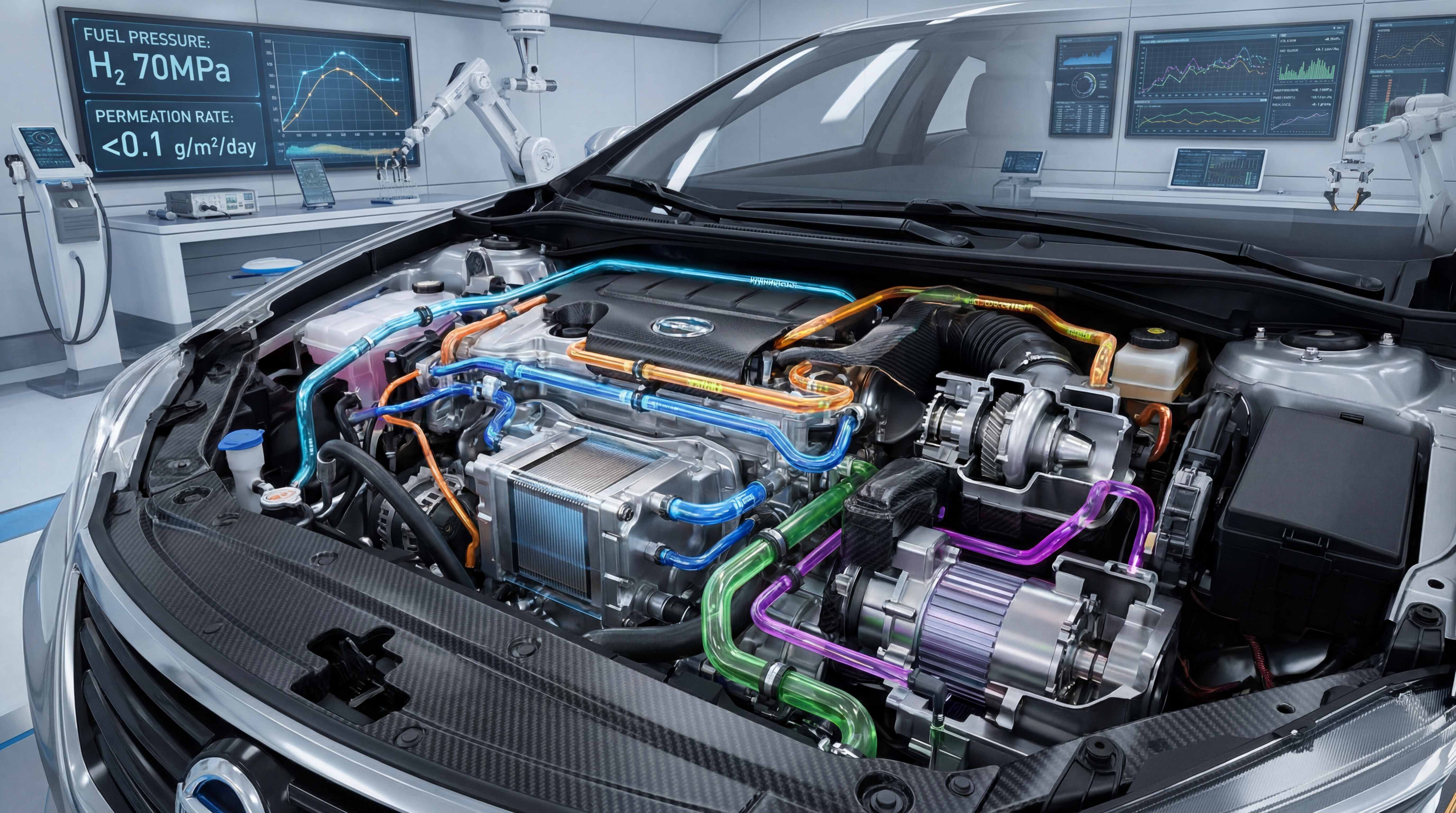
Future fuel line design concept showing hydrogen pressure, low permeation data and advanced vehicle fluid routing in a laboratory environment
2026-06-01

Future Fuel Line Design: How Hybrid Vehicles, Alternative Fuels and Aftermarket Demand Are Changing the Industry

Fuel line design is entering a new phase. Even as electric vehicles grow, fuel systems remain important in hybrids, range extenders, performance vehicles, commercial fleets, off-road machinery and global aftermarket repair. This article explains how alternative fuels, low-permeation requirements, lightweight materials, supplier capability and future service demand are reshaping fuel line products.
Learn more
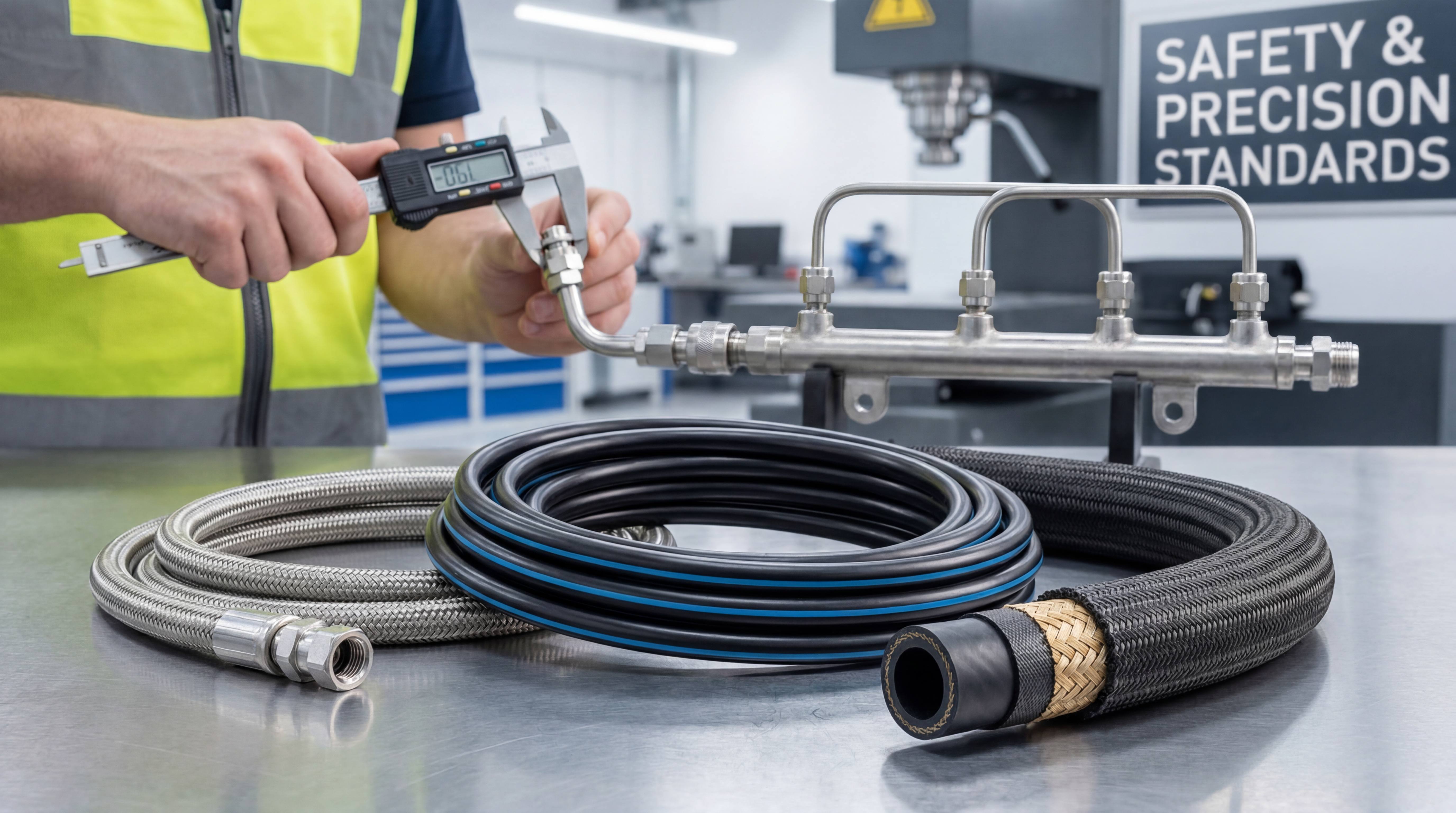
Fuel line quality inspection with braided hose, nylon tubing, metal fuel rail and precision measurement in a standards lab
2026-06-01

Fuel Line Standards and Quality Testing: What B2B Buyers Should Check Before Sourcing

Fuel line sourcing is not only about size, price and appearance. B2B buyers must evaluate fuel line standards, pressure ratings, material compatibility, batch consistency, connector quality, test documentation and supplier reliability before choosing fuel hoses, tubing or complete fuel line assemblies. This guide explains how professional buyers can reduce sourcing risk and build a stronger fuel line supply chain.
Learn more
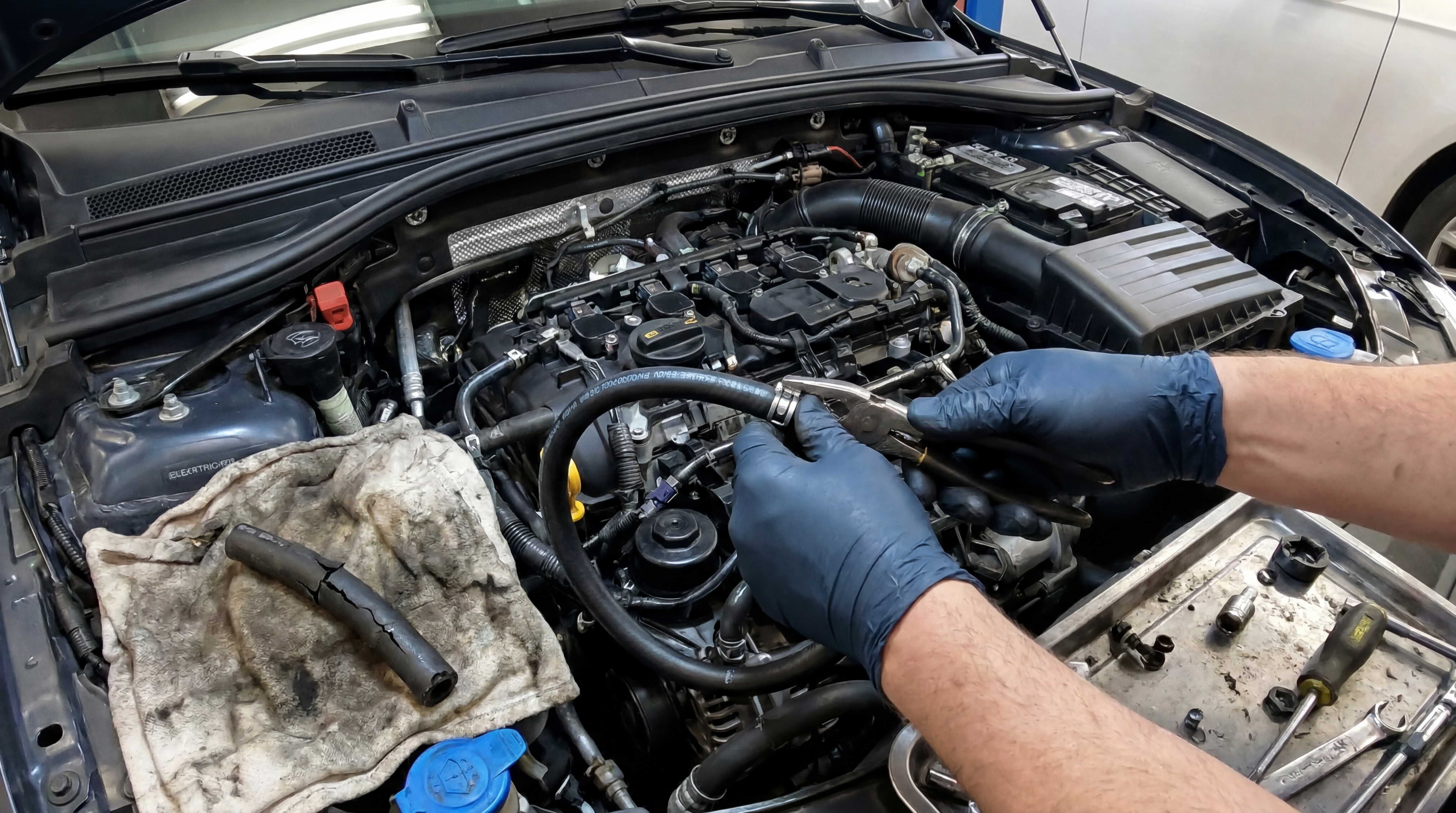
Mechanic replacing damaged rubber fuel hose in engine bay during fuel line repair and replacement service
2026-06-01

Fuel Line Repair or Replacement? How to Diagnose Leaks, Fuel Smell, Rust and Pressure Loss

Fuel line problems are not always obvious. A vehicle may have fuel smell without visible leakage, pressure loss without a broken hose, rusted hard lines under the chassis, aging rubber sections near the engine, or damaged nylon connectors near the tank. This guide explains how to inspect fuel lines, identify common failure patterns, and decide whether repair or full replacement is the safer choice.
Learn more
Performance engine bay showing routed fuel lines, AN fittings, hard lines and fuel rail connections
2026-06-01

Fuel Line Routing and Installation Mistakes: Heat, Abrasion, Vibration and Bend Radius

Fuel line routing is one of the most overlooked parts of fuel delivery system reliability. A correctly selected hose can still fail if it is routed near heat, rubbed against sharp edges, bent too tightly, unsupported, twisted at fittings or installed with poor clamps. This guide explains how routing decisions affect fuel hose safety, leak prevention, service life and vehicle performance.
Learn more
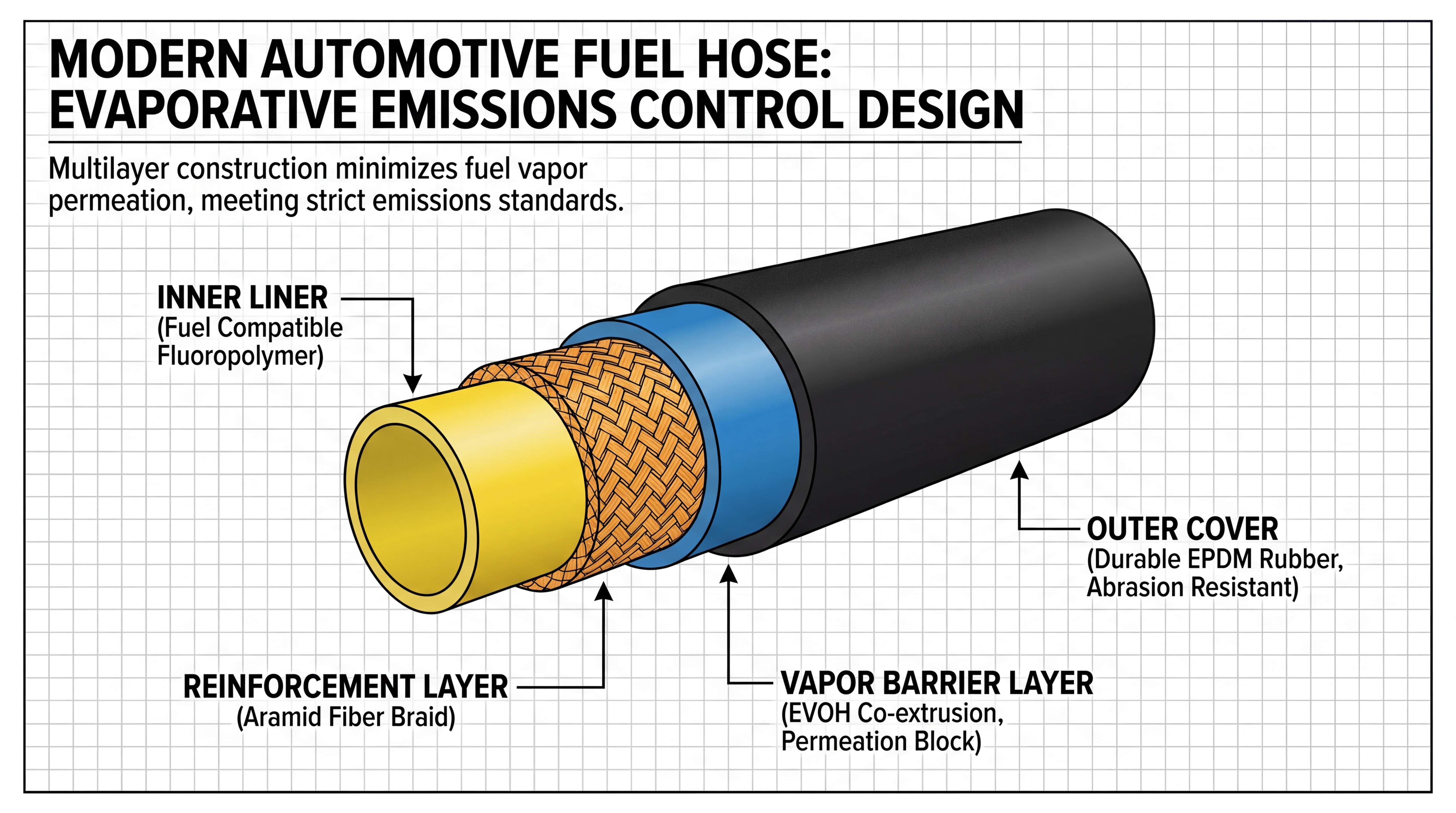
Modern automotive fuel hose design for evaporative emissions control with inner liner, reinforcement layer, vapor barrier and outer cover
2026-06-01

Low-Permeation Fuel Lines: Why Emissions Standards Are Changing Fuel Hose Design

Fuel lines are no longer judged only by whether they leak liquid fuel. Modern fuel delivery systems also need to control fuel vapor permeation, fuel odor and evaporative emissions. This guide explains how low-permeation fuel lines, multilayer hose structures, barrier layers and EVAP system requirements are changing fuel hose design for OEM, aftermarket and B2B applications.
Learn more
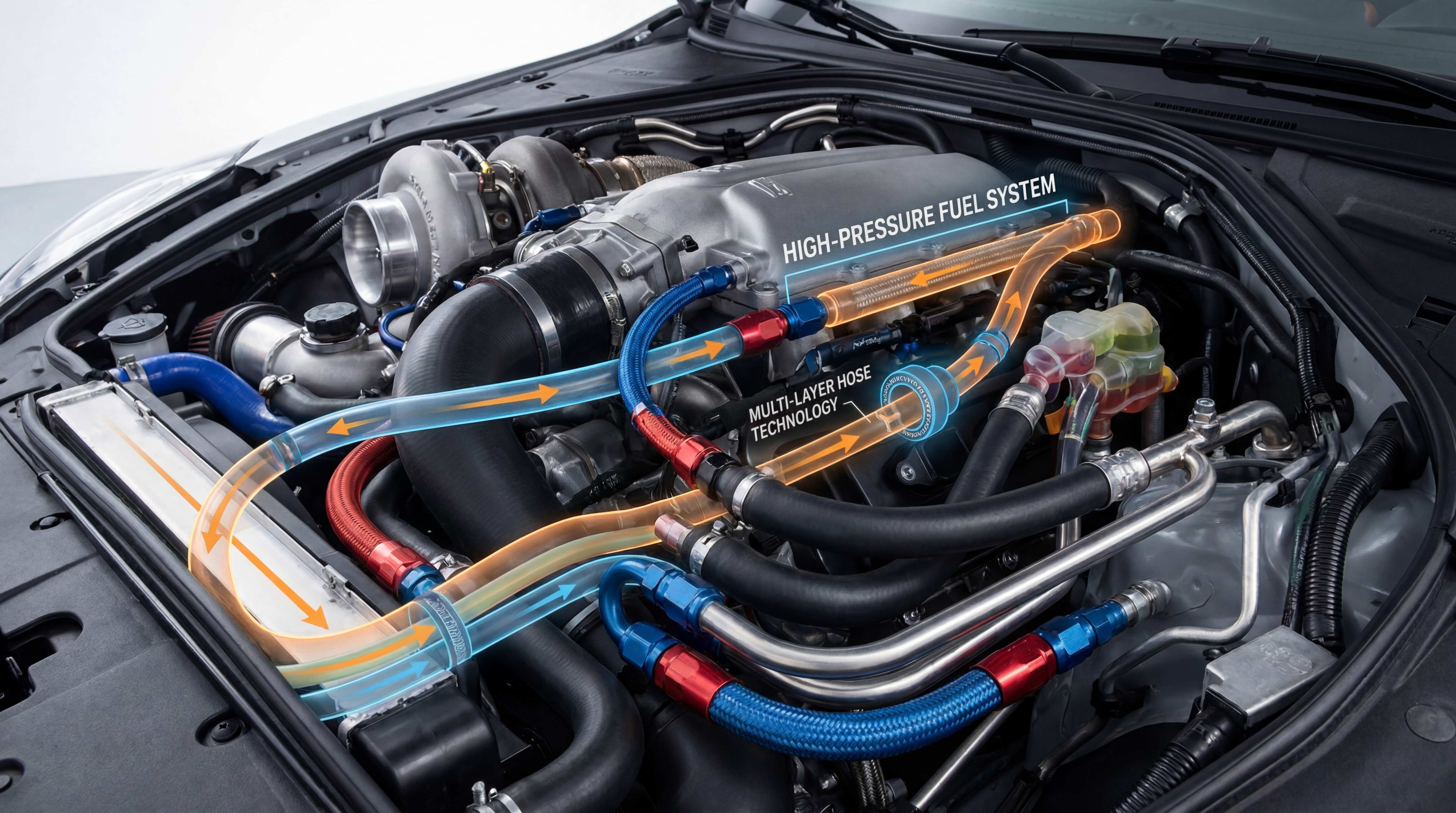
High-pressure fuel system with multi-layer fuel hose technology showing fuel flow, vapor control and engine bay routing
2026-06-01

Why Modern Fuels Are Harder on Fuel Lines: Ethanol, E85, Methanol and Biodiesel Compatibility

Modern fuels are changing the way fuel lines are selected, installed and maintained. Ethanol blends, E85, methanol, biodiesel and alternative fuel formulations can affect hose liners, seals, vapor permeation, fittings and long-term fuel system reliability. This guide explains why fuel hose compatibility matters and how to think about fuel line selection in a multi-fuel market.
Learn more
AN fuel fittings and braided fuel lines connected to a performance fuel rail and fuel pressure regulator
2026-06-01

AN Fittings, Hose Ends and Quick Connectors: The Hidden Risk in Fuel Line Assembly

Fuel line safety is not decided by the hose alone. A reliable fuel delivery system also depends on the right fittings, hose ends, quick connectors, clamps, seals and installation method. This guide explains how fuel line connectors work, why compatibility matters, and how poor assembly can create leaks, pressure loss and long-term reliability problems.
Learn more
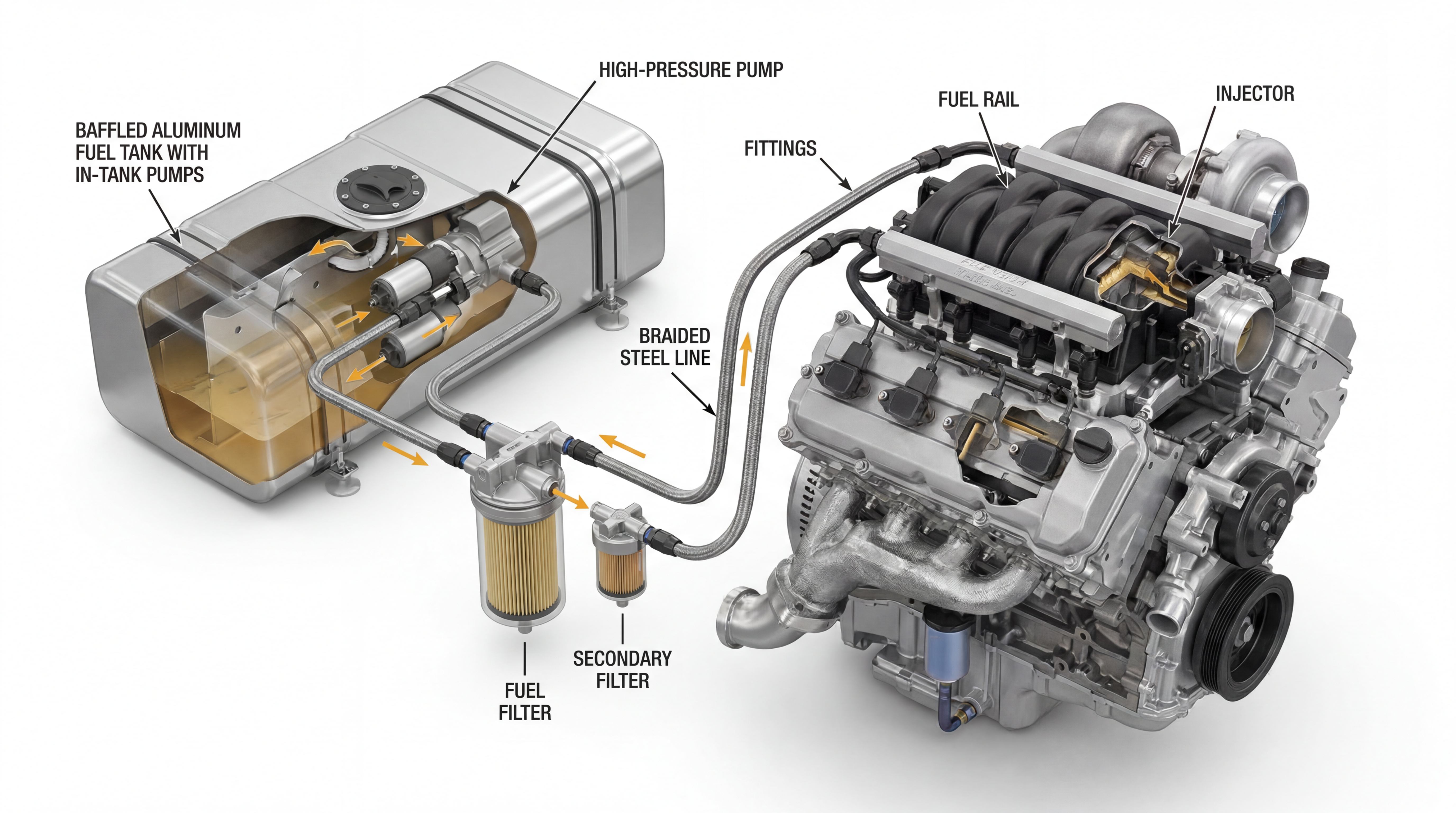
High-pressure fuel line system showing fuel tank, in-tank pumps, filters, braided steel lines, fuel rail and injectors
2026-06-01

Fuel Line Size Guide: How to Choose the Right Diameter for Carburetor, EFI and Turbo Builds

Fuel line size is not only about choosing a larger tube or copying another vehicle’s setup. The correct diameter depends on fuel pressure, flow demand, engine power, fuel type, pump capacity, regulator layout, feed line design and return line strategy. This guide explains how to think about fuel line sizing for carburetor, EFI and turbocharged fuel systems.
Learn more
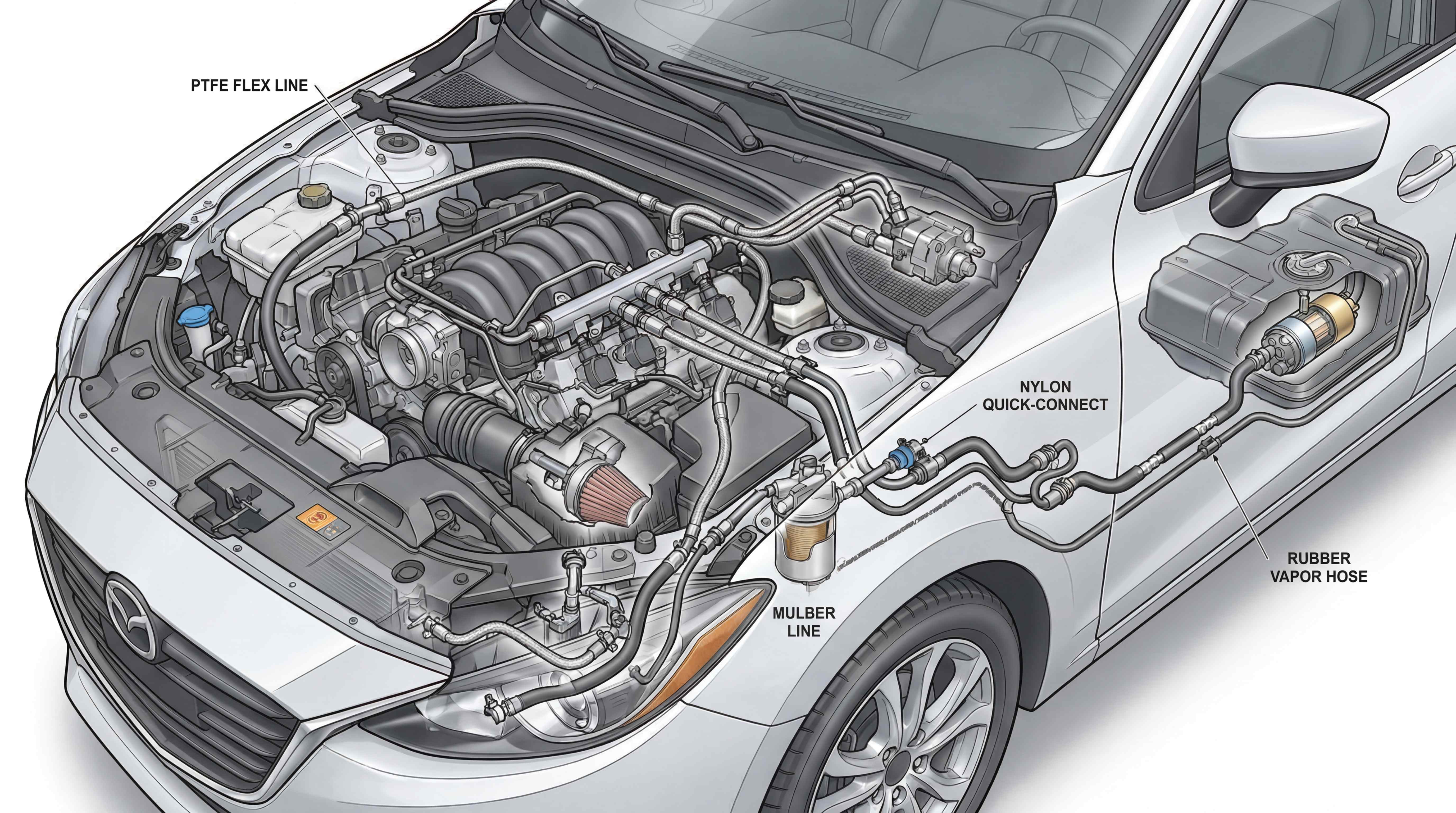
Modern vehicle fuel line system showing PTFE flex line, nylon quick-connect tubing and rubber vapor hose routing
2026-05-29

PTFE vs Rubber vs Nylon vs Metal Fuel Lines: Which Material Works Best?

Fuel line material affects fuel compatibility, pressure resistance, vapor control, installation safety and long-term reliability. This guide compares PTFE, rubber, nylon and metal fuel lines to help readers understand where each material works best in modern fuel delivery systems.
Learn more
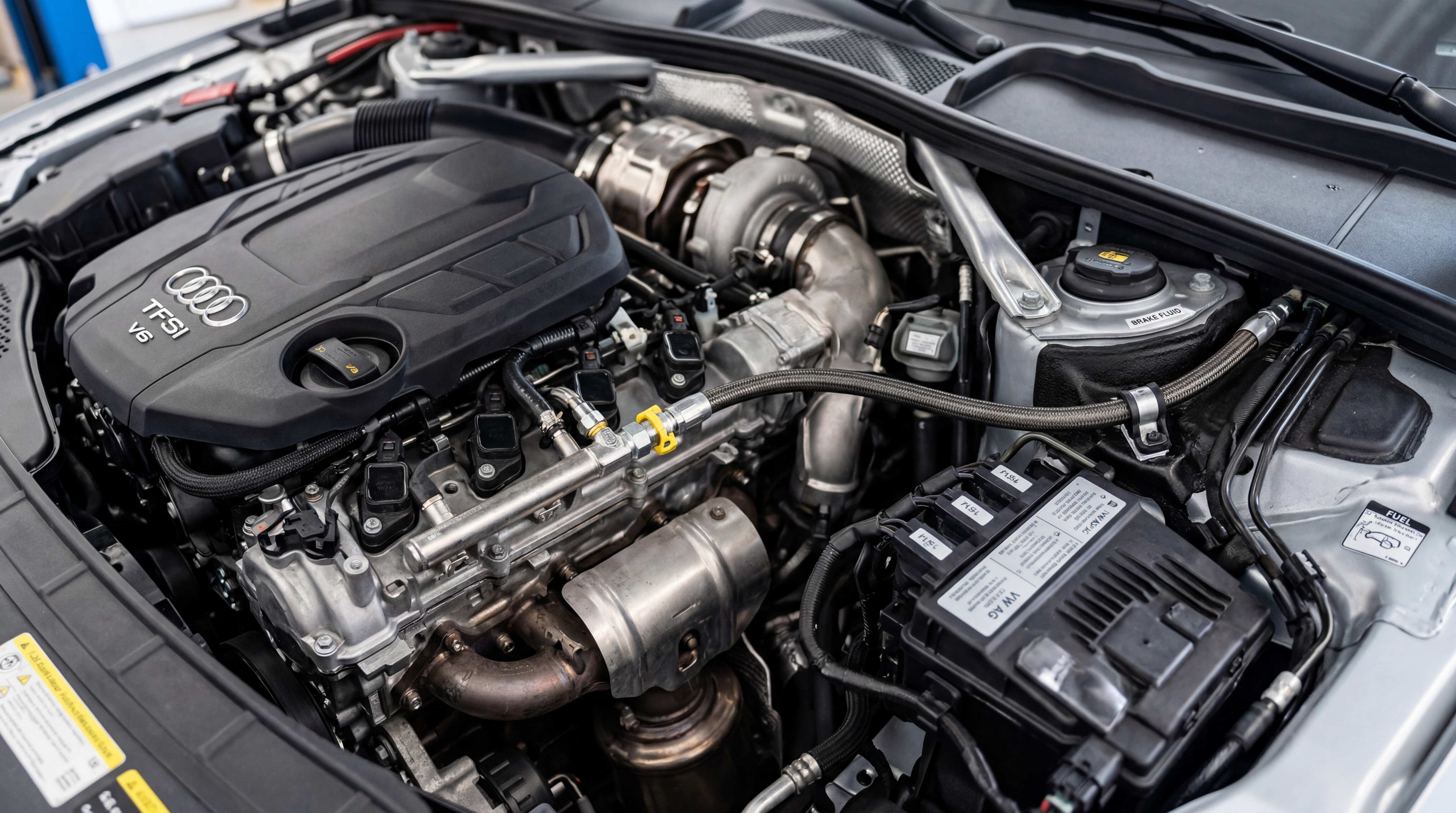
Modern engine bay showing fuel line routing, fuel rail connections and high pressure fuel delivery components
2026-05-29

What Are Fuel Lines? A Complete Guide to Fuel Delivery Lines in Modern Vehicles

Fuel lines are not just simple tubes under a vehicle. They are part of a complete fuel delivery system that connects the tank, pump, filter, engine and fuel control components. This guide explains how fuel lines work, what types are used, and why materials, routing, pressure, connectors and safety matter in modern vehicles.
Learn more
  • 1
  • 2
  • 3
  • 6
    Sitemap

    Industrial Components

    Kitchen Appliances

    Renewable Energy

    Building & Home Improvement

    Chemicals & Water Treatment

    Robotics & Automation

    Email:robertkileyman@gmail.com

    (508676)
    0
    Service

    Email
    comment