Evacuated Tube or Flat Plate Which Collector Works Better in a Pressurized Solar Water Heating System
The Wrong Debate Starts with “Which Collector Is Better?” The Right Debate Starts with “Better for What System?”
In the solar thermal industry, people often ask a question that sounds technical but is actually too shallow: should you choose an evacuated tube solar water heater or a flat plate solar water heater? At first glance, the debate looks simple. One side is usually marketed as more advanced, more efficient, and more suitable for difficult climates. The other is often presented as cleaner, sturdier, more architectural, and more established in conventional hot water design. That surface-level comparison is common, but it rarely leads to the best project decision.
The real problem is that collectors are too often judged in isolation. Buyers compare appearance, price, or a few headline performance claims without asking how the collector behaves inside a pressurized solar hot water system. That is where the actual engineering decision begins. A collector is not just a rooftop component. It is part of a larger thermal and hydraulic system that includes storage, circulation, pressure-bearing components, control logic, safety strategy, and real household demand patterns.
This matters because a pressurized solar water heater does not simply need heat collection. It needs controllable, reliable, application-appropriate heat collection. In a low-demand or loosely matched system, a collector might look impressive in a brochure and still perform poorly in practical use. In a properly designed project, the collector must fit the operating pressure, the thermal demand pattern, the building type, the climate conditions, the installation constraints, and the maintenance reality of the end user.
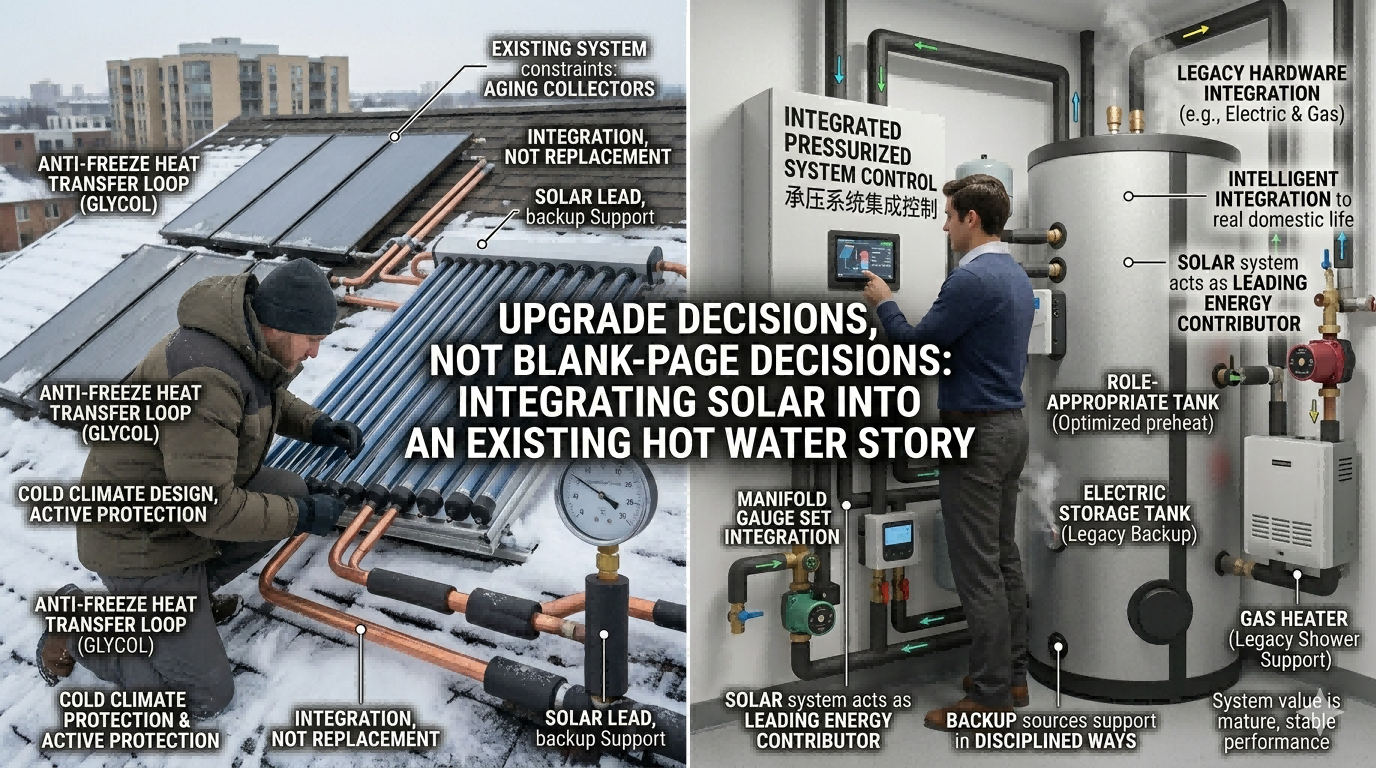
That is why the debate around evacuated tube vs flat plate becomes much more interesting once pressure enters the conversation. Pressure changes expectations. In a high pressure solar water heater, the user is not just expecting water to become hot at some point in the day. The user expects reliable domestic hot water delivery as part of a modern plumbing environment. That means the collector should not be chosen for its theoretical peak advantage alone. It should be chosen for the way it contributes to stable system behavior over time.
In real projects, the better collector is not the one that wins a generalized argument. It is the one that fits the project logic more accurately. That is why a serious solar thermal collector comparison must begin with the full system, not the collector image on the roof.
In a Pressurized System, the Collector Has More Responsibility Than People Think

When people talk about collectors, they often reduce them to one task: absorbing solar energy. Technically that is true, but practically it is incomplete. In a solar collector for pressurized system design, the collector also influences how the system handles morning warm-up, midday gain, overheating risk, cold-weather resilience, integration with storage capacity, and user expectations around hot water continuity.
This is especially important in a pressurized solar water heater because the system is usually selected for buildings with higher functional expectations. These may include multi-storey homes, comfort-oriented residences, urban housing, or projects where the hot water system must align with modern pressure-bearing plumbing. In those environments, collector choice becomes more than a heat-source decision. It becomes part of performance management.
A collector that gains heat very aggressively may sound attractive. But if the storage volume, control strategy, pipe insulation, or demand pattern do not support that behavior, the system can become harder to manage rather than easier to appreciate. On the other hand, a collector that behaves in a more moderate and stable way may support better overall user satisfaction if the project values predictability and easier thermal balance.
That is why the best solar collector for pressurized system selection cannot be made from collector specifications alone. It must be made by asking how the collector interacts with the rest of the system. A strong collector in the wrong system is not a strong project. A balanced collector in the right system often creates better long-term value.
Why Evacuated Tube Collectors Attract So Much Attention
The evacuated tube solar water heater has become highly visible in global markets for a reason. It offers a clear visual identity, a strong technological image, and a performance narrative that appeals to both distributors and end users. The tube structure itself immediately communicates that the product is solar-driven and thermally specialized. Many buyers perceive it as more advanced than a standard panel-style collector before they even understand how it works.
From a technical standpoint, the evacuated tube route is appealing because it is often associated with strong thermal capture under challenging conditions, especially where ambient temperatures are lower or solar input is less forgiving. In content marketing, that makes it easy to position as a serious answer for projects that want higher energy utilization or better performance outside ideal warm-weather conditions. This is one reason the solar water heater for cold climate discussion often leans toward evacuated tube systems.
But the appeal of the evacuated tube solar water heater goes beyond climate. It also fits the commercial instinct to sell visible technical sophistication. If a buyer is already considering a high pressure solar water heater, they may be inclined to assume that the more technically distinctive collector is automatically the better match. That assumption is understandable, but it can still be too simplistic.
The stronger argument for evacuated tube is not that it always wins. The stronger argument is that it works particularly well in projects where heat retention, colder ambient conditions, or stronger thermal response during less ideal weather are genuine priorities. In those projects, tube-based collection can support the broader goals of the pressurized solar hot water system more effectively than a flatter, more conventional collector route.
Why Flat Plate Collectors Still Matter in Serious Pressurized Projects
The market sometimes treats the flat plate solar water heater as if it belongs to an older or less exciting product generation. That is a mistake. Flat plate technology remains highly relevant, especially in projects that value structural simplicity, architectural integration, predictable operation, and balanced performance across ordinary domestic hot water needs.
A flat plate solar water heater is often a strong candidate where the building design benefits from a cleaner roof profile, where the system needs to look more integrated with the building envelope, or where the project team values a more familiar and straightforward collector format. In many serious projects, especially those with stable hot water demand and reasonable solar conditions, flat plate collectors are not a compromise. They are a rational engineering choice.
This becomes particularly important in a pressurized solar water heater because not every high-functioning system needs the most aggressive-looking or most heavily marketed collector technology. A project may prioritize everyday reliability, easier service logic, moderate thermal behavior, and long-term system stability over the pursuit of a more dramatic collector identity. In such a case, a flat plate solar water heater may work better precisely because it fits the project discipline more closely.
Another point that is often overlooked in evacuated tube vs flat plate debates is that collector choice should reflect the entire thermal personality of the system. Some projects benefit from fast, concentrated heat gain. Others benefit from smoother, easier-to-manage operation. A collector that aligns with the storage strategy and demand curve of the building is usually more valuable than a collector that merely looks superior in isolated marketing language.
Efficiency Alone Is Not the Right Standard in a Pressurized Solar Hot Water System
One of the biggest mistakes in solar thermal collector comparison is treating efficiency as if it were a single universal metric with a single practical meaning. Efficiency sounds authoritative, but in real system design it is incomplete. A collector can have strong heat capture characteristics and still be a less suitable choice if the project struggles with overheating control, low daytime demand, undersized storage, poor hydraulic balance, or mismatched user behavior.
In a pressurized solar hot water system, performance should be judged at the system level rather than at the collector headline level. That includes:
- how quickly useful heat is produced under the project’s real weather pattern
- how well the system stores and distributes that heat
- how well the system avoids becoming thermally unstable
- how naturally the collector works with pressure-bearing components and domestic hot water delivery
- how manageable the system remains over time
This is why the question “Which is the best solar collector for hot water?” cannot be answered with a single technology name. The more accurate question is: which collector creates the best thermal behavior for this particular pressurized domestic hot water project?
A collector that performs impressively under laboratory or idealized discussion may not create the most satisfying daily experience in a home with irregular demand, limited maintenance attention, or a roof layout that complicates the design. Likewise, a collector that seems less glamorous on paper may become the better long-term answer because it fits the building, the storage tank, and the family’s actual use profile more cleanly.
Cold Climate Is Important, But Climate Alone Does Not Choose the Collector
The phrase solar water heater for cold climate is one of the most commercially powerful ideas in solar thermal marketing. Cold weather creates immediate buyer anxiety. People worry about poor winter performance, heat loss, slow recovery, and whether solar thermal can still feel worthwhile outside warm regions. Because of that, collector conversations often become climate conversations very quickly.
Climate matters, but it should not dominate collector choice in a shallow way. A project in a colder region does not automatically require one collector type without further analysis. What matters is how cold climate interacts with the project’s daily use pattern, backup heating strategy, installation quality, pipe routing, insulation discipline, and system control philosophy.
This is where the evacuated tube solar water heater often earns its reputation. In projects where lower ambient temperatures make heat retention more valuable, evacuated tube designs can offer a stronger argument. But this should not be misunderstood as an automatic dismissal of the flat plate solar water heater. If a cold-climate project has strong solar exposure, good system design, disciplined installation, appropriate storage, and a sensible backup strategy, flat plate can still be a valid route depending on the project logic.
The right lesson is this: climate is a filter, not a verdict. It helps narrow the discussion, but it does not finish it. A professional solar collector for pressurized system decision always asks what the building needs across the whole year, not just what sounds safer in winter conversation.
Overheating Risk Is the Part Many Buyers Notice Too Late
While cold-climate discussions get a lot of attention, overheating is the issue many buyers underestimate. In a pressurized solar water heater, overheating risk is not merely a technical curiosity. It affects system stability, component stress, user confidence, and long-term maintenance behavior.
This is why collector choice should never be separated from stagnation management, demand timing, storage capacity, and control logic. A collector that is very effective at capturing heat can become difficult to live with if the building’s hot water demand does not absorb that heat smoothly. This is especially true in homes with seasonal occupancy differences, daytime absence, or usage patterns that are lower than the collector field was designed around.
In this context, evacuated tube vs flat plate is not just a contest about who can collect more. It is also a question of how the project handles surplus thermal gain. A collector that looks like the stronger option under one argument may require more thoughtful system control under another. A collector that appears more moderate may create a calmer and more forgiving system for everyday residential use.
This is a major reason why experienced project evaluation does not stop at collector enthusiasm. It asks what happens on the hottest days, during low-demand periods, and when the family’s routine changes. The best pressurized solar hot water system is not the one that sounds most powerful at noon. It is the one that behaves intelligently across the full operating reality of the project.
Roof Design, Building Form, and Aesthetic Expectations Also Matter
Technical buyers sometimes resist aesthetic considerations because they sound non-engineering. That resistance is a mistake. In residential and especially urban projects, the way a solar thermal system looks on the roof can significantly affect customer satisfaction, project approval, and perceived product quality.
The flat plate solar water heater often has an advantage in projects where the roof composition and architectural appearance matter strongly. Its panel-like form can feel more integrated, more uniform, and more aligned with contemporary building design. This can be important in premium residences, planned communities, and projects where the roof is highly visible.
The evacuated tube solar water heater, by contrast, has a more explicitly technical and mechanical appearance. In some markets, this is a strength because it visually communicates solar technology and performance. In others, it may feel more industrial than the building owner wants. Neither response is universally correct. It depends on the project’s identity and the buyer’s priorities.
In a pressurized solar water heater project, aesthetics should not override performance logic, but they should be included in the decision. A system that performs well and looks coherent with the building is easier to sell, easier to accept, and often more satisfying to own. A system that creates visual resistance may encounter buyer hesitation even when the collector choice is thermally defensible.
Maintenance Philosophy Is More Important Than Buyers Admit
Many collector decisions are made with an optimistic assumption: that the system will be monitored, cleaned, checked, and serviced with reasonable discipline. In reality, maintenance attention varies widely. Some owners are proactive. Others are not. Some projects have professional maintenance access. Others rely on minimal intervention until something becomes visibly wrong.
This matters because the best solar collector for pressurized system is not only the one that performs well when everything is ideal. It is also the one that fits the maintenance reality of the project. A building with skilled facility oversight may be comfortable with a more technically assertive solution. A residential project with limited technical engagement may benefit from a collector route that supports easier day-to-day ownership and less perceived system complexity.
This is another reason generalized solar thermal collector comparison can mislead buyers. People are often shown the strengths of collector technology but not asked how the system will actually be lived with over five or ten years. In a high pressure solar water heater, long-term performance is shaped not only by collector capability, but by whether the whole system remains understandable, serviceable, and confidence-inspiring for the owner.
The Better Question Is Not “Which Technology Wins?” but “Which Project Type Are We Designing For?”

A useful way to break the collector debate is to stop asking for a universal winner and start asking what type of project is being designed.
Project Type 1: Cold and performance-sensitive residential use
If the project is heavily influenced by lower ambient temperatures and the buyer is specifically concerned about retaining strong thermal performance in less forgiving conditions, the evacuated tube solar water heater often becomes a stronger candidate. In this type of solar water heater for cold climate project, heat retention and off-ideal condition performance can be central to the decision.
Project Type 2: Architecturally conscious modern residence
If the project is a design-conscious home that values roof integration, visual cleanliness, and balanced everyday domestic hot water performance, the flat plate solar water heater may fit better. In this case, the collector is part of the building composition as much as it is part of the hot water system.
Project Type 3: High-demand domestic comfort project
If the building is a pressurized solar water heater application with high comfort expectations, multiple outlets, and modern pressure-bearing plumbing, both collector routes can work. The right decision depends on how the project prioritizes thermal aggressiveness versus thermal balance.
Project Type 4: Conservative long-term ownership mindset
If the buyer values clarity, moderation, predictable system behavior, and straightforward ownership over visually dramatic technology choices, the flat plate solar water heater may offer a more comfortable match.
Project Type 5: Technically ambitious or climate-challenged installation
If the project is technically ambitious, climate-sensitive, or designed to extract stronger solar performance from a difficult environment, the evacuated tube solar water heater may better support the goals of the pressurized solar hot water system.
Pressurized Systems Need Collector Matching, Not Collector Hype

One of the weaknesses in current solar thermal sales language is that collectors are often sold through identity. Tubes are sold as advanced. Flat plates are sold as proven. Those labels may influence first impressions, but they are not enough for real design.
A solar collector for pressurized system should be selected through matching logic. That means asking:
- What climate behavior matters most here?
- How aggressive or moderate should the thermal gain profile be?
- What does the building’s daily hot water demand look like?
- How much storage support does the system have?
- How disciplined will the installation and maintenance be?
- How important are roof appearance and structural simplicity?
- What level of control and safety management is appropriate for this owner or project team?
Once those questions are asked, the debate becomes much more professional. The collector is no longer a symbol. It becomes a system-fit decision. That is exactly how serious pressurized solar water heater projects should be evaluated.
Why Some Buyers Choose the Wrong Collector for the Right Reason
Interestingly, buyers often make the wrong collector decision for a reason that sounds rational. They want “better performance,” “better comfort,” or the “best solar collector for hot water.” Those goals are reasonable. The problem is that they interpret “better” too narrowly.
Some buyers choose an evacuated tube solar water heater because they want the most technically impressive option, even when their project may benefit more from a calmer, simpler, more architecturally integrated collector route. Others choose a flat plate solar water heater because they want simplicity, even when their climate or performance goals might justify a more thermally assertive system.
The mistake is not caring about performance. The mistake is failing to define performance properly. In a pressurized solar hot water system, performance means the combination of heat capture, thermal stability, system manageability, domestic comfort, and long-term project fit. Once performance is defined this way, the right collector choice often becomes clearer.
Collector Choice Should Follow Demand Profile, Not Just Collector Reputation
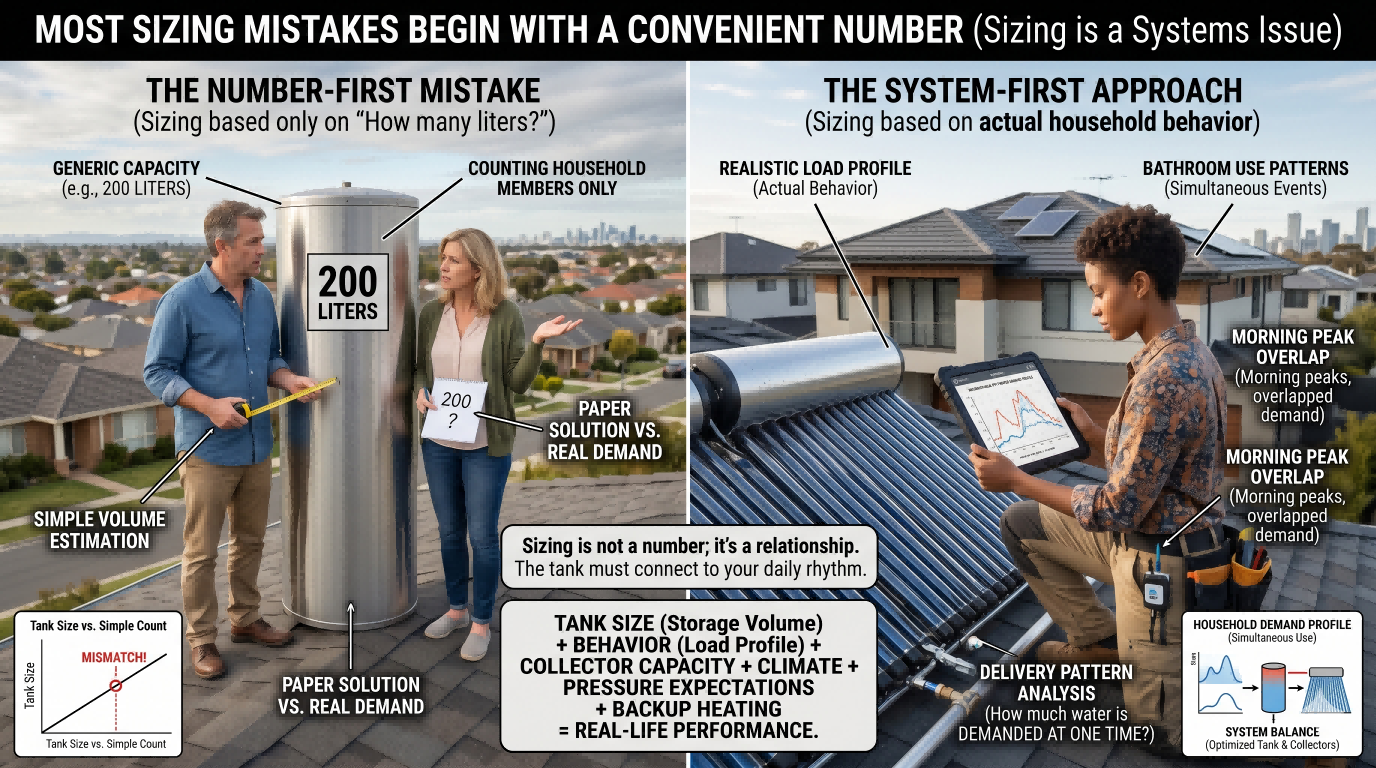
Another overlooked issue is demand profile. A project with steady, predictable domestic hot water use may respond differently to collector choice than a project with irregular occupancy, heavy seasonal variation, or sharp peaks and valleys in usage. The more unstable the demand profile, the more carefully the collector should be matched to storage and control logic.
This is why a solar thermal collector comparison should include questions about who uses the building, when they use hot water, and how consistently they do so. A collector that is ideal for a busy year-round family home may be less ideal for a property with intermittent use. A collector that works well in a tightly engineered system may become less attractive in a more casually managed residential environment.
In a pressurized solar water heater, demand profile matters even more because user expectations are usually higher. The system is expected to deliver not only hot water, but well-managed hot water. That raises the importance of choosing a collector whose behavior makes sense for the project’s real-life consumption rhythm.
A Mature Solar Thermal Strategy Chooses Balance Over Marketing Drama
As the market matures, the strongest solar thermal decisions will increasingly come from balance rather than marketing drama. This is particularly true in the evacuated tube vs flat plate discussion. The winning project is rarely the one that chases the loudest technical claim. It is the one that aligns collector behavior with building reality.
A mature pressurized solar water heater strategy understands that collector choice is not about declaring one technology modern and the other outdated. Both the evacuated tube solar water heater route and the flat plate solar water heater route remain valid. The key is knowing when each one serves the project better.
This mindset is more useful for manufacturers, distributors, installers, and end users alike. It encourages better system recommendations, lower mismatch risk, and stronger long-term customer satisfaction. It also creates better content, because it respects the real complexity of the decision instead of forcing every project into the same sales narrative.
Final Thought
The debate between evacuated tube solar water heater and flat plate solar water heater only becomes meaningful when it is placed inside the logic of a pressurized solar hot water system. Outside that context, the conversation is too general to be truly useful. Inside that context, the collector decision becomes far more interesting and far more important.
A pressurized solar water heater is chosen because the project requires reliability, compatibility, and domestic hot water performance that fits modern pressure-bearing use. That means the collector should be selected not by image, not by trend, and not by isolated headline claims, but by how well it supports the full operating character of the system.
Sometimes that will point toward an evacuated tube solar water heater, especially in climate-sensitive or more thermally demanding applications. Sometimes it will point toward a flat plate solar water heater, especially where design balance, architectural integration, and steady system behavior matter more. The better answer is not universal. It is contextual.
That is the real lesson behind any honest solar collector for pressurized system decision. The collector that works better is the collector that fits the system better. And in solar thermal design, system fit is always more valuable than collector hype.
#PressurizedSolarWaterHeater
#EvacuatedTubeSolarWaterHeater
#FlatPlateSolarWaterHeater
#PressurizedSolarHotWaterSystem
#EvacuatedTubeVsFlatPlate
#SolarCollectorForPressurizedSystem
#HighPressureSolarWaterHeater
#SolarThermalCollectorComparison
#BestSolarCollectorForHotWater
#SolarWaterHeaterForColdClimate
#SolarThermal
#DomesticHotWater
#RenewableEnergy
#SolarHotWaterEngineering