 2026-08-04Hydrogen-Fired Furnaces: How to Qualify Refractories Before the Fuel SwitchHydrogen conversion changes more than fuel carbon: it can alter water-vapor loading, local oxygen potential, flame behavior, heat flux, product oxidation and cold-zone condensation. This guide shows how industrial plants can qualify refractory linings through exposure mapping, laboratory scenarios, instrumented test panels and controlled commissioning.
 2026-08-04Alternative Fuels in Cement Kilns: How Chemistry Redraws the Refractory Wear MapAlternative fuels do more than replace heat: their moisture, ash, chlorine, sulfur, alkalis, particle size and feed point can change combustion, volatile circulation, coating behavior and zone-specific refractory wear. This guide gives cement plants a fuel-to-lining causal map, monitoring plan and controlled trial protocol for safer thermal substitution.
 2026-08-04Low-Carbon Refractories How to Buy a Smaller Footprint Without Buying a Shorter CampaignA buyer-focused framework for comparing cradle-to-gate refractory carbon data, supplier evidence, recycled-content claims and service-life outcomes without allowing a lower PCF number to weaken lining safety, process stability or campaign value.
 2026-08-04From Spent Lining to Qualified Feedstock: How Circular Refractory Materials Are Recovered and ReusedA technical guide to converting dismantled furnace linings into traceable secondary raw materials through selective demolition, sorting, contamination control, beneficiation, lot testing and application-specific qualification—not by crushing mixed waste and calling it circular.
 2026-08-04From Visual Inspection to Predictive Refractory Lining ManagementA practical framework for turning visual inspections, thermal surveys, 3D point clouds and operating history into location-based wear trends, repair scopes and remaining-life decisions—without confusing a dashboard, digital twin or AI model with validated engineering evidence.
 2026-08-04Refractory Dry-Out Explained: Moisture Migration, Spalling Risk, and Faster Furnace Start-UpA field-oriented guide to controlling moisture release from monolithic refractory linings. It explains water inventories, pressure buildup, thermal instrumentation, venting, hold logic, fast-dry materials, acceptance records, and the decisions that protect safety without extending an outage unnecessarily.
 2026-08-04Why Refractory Linings Fail Early: Diagnosing Corrosion, Thermal Shock, and WearPremature lining loss is rarely explained by one photograph or one test result. This field-to-laboratory guide separates symptoms from mechanisms and root causes, showing how to investigate corrosion, thermal shock, abrasion, erosion, installation defects and operating excursions—and convert evidence into corrective actions that prevent recurrence.
 2026-08-04Beyond Calcium Aluminate Cement: Choosing Binder Systems for Modern Monolithic RefractoriesBinder choice controls far more than room-temperature set. This guide compares hydraulic, hydratable-alumina, sol-gel and phosphate systems across mixing, placement, curing, dryout, intermediate-temperature strength, ceramic bonding and process compatibility—helping formulators and installation teams select the bond for its complete lifecycle.
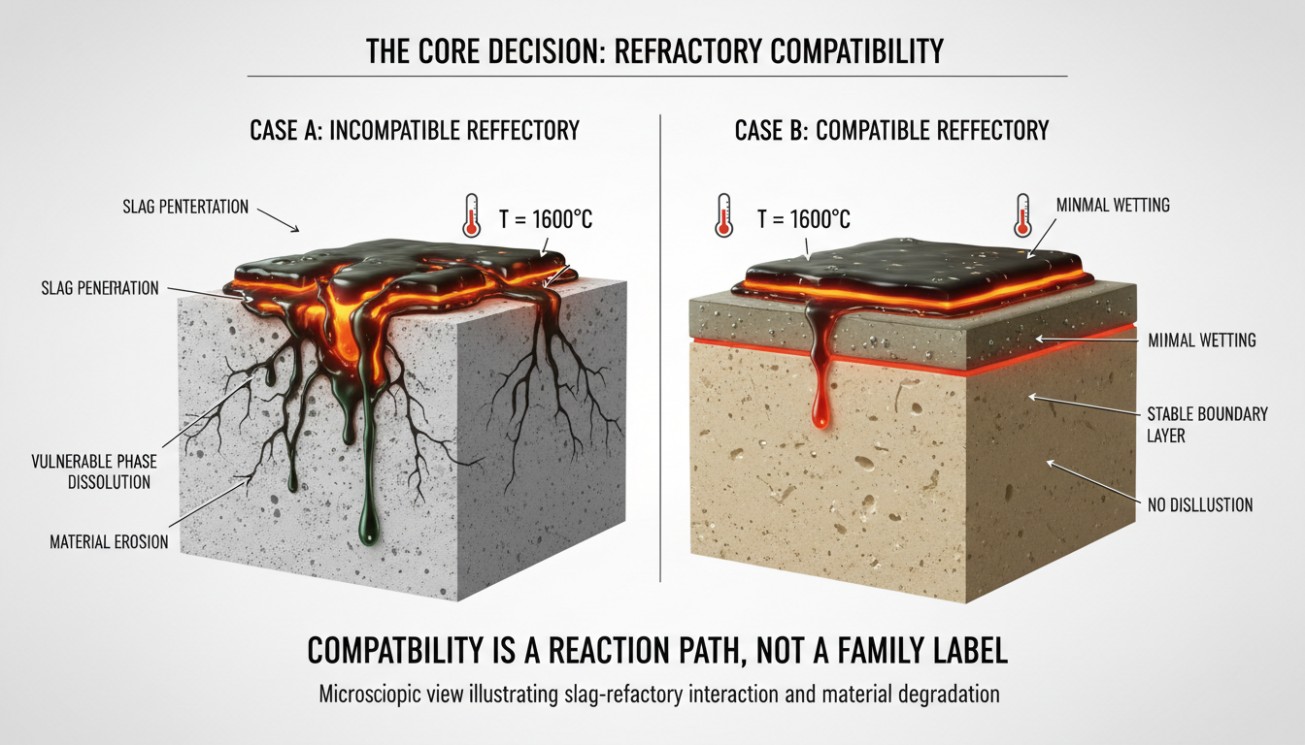 2026-08-04Slag–Refractory Reactions: Why Basicity Alone Cannot Predict Lining LifeA refractory may survive the temperature and still fail through wetting, penetration, dissolution or an unstable reaction layer. This guide explains how slag composition, redox conditions, viscosity and microstructure control attack—and how buyers and engineers can build laboratory and post-mortem evidence that predicts the real service reaction path.
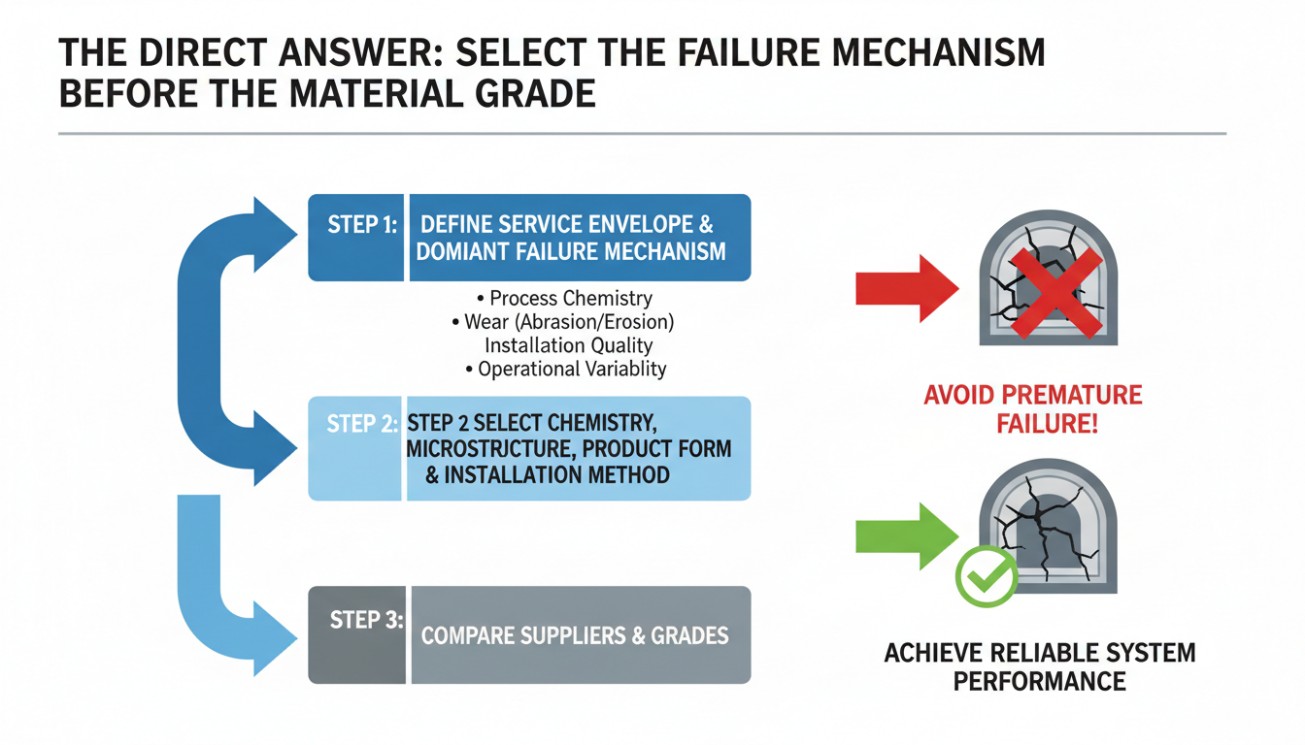 2026-08-03Refractory Selection Starts with Process Chemistry, Not Maximum TemperatureA high-temperature rating does not prove that a refractory will survive a real furnace. This guide builds a failure-first selection method around slag and feed chemistry, atmosphere, thermal cycling, mechanical wear, lining geometry, installation and field validation—helping engineers and buyers specify materials for the actual service envelope rather than a single catalog number.
 2026-08-03How to Qualify a Boiler Water Treatment Supplier: Evidence, Service and Lifecycle RiskChemical price reveals very little about whether a boiler water-treatment supplier can protect a steam system. This procurement guide shows how industrial plants can define the service boundary, test treatment claims, audit monitoring evidence, compare lifecycle cost and contract for measurable performance without outsourcing technical ownership.
 2026-08-03Boiler Layup Is Water Treatment Choosing Wet, Dry or Film-Forming Shutdown ProtectionAn offline boiler does not stop being a water-treatment asset. This guide shows how operators should choose and verify wet, dry, nitrogen-assisted or film-forming layup by corrosion mechanism, equipment boundary, shutdown uncertainty and restart requirements—not by outage duration alone.
The hottest section
Latest Column